Catégories
Uncategorized

Netflix Buys WB and HBO in Historic 83B$ Megadeal

Netflix took the entertainment world by surprise by announcing plans to acquire Warner Bros. and HBO in a deal valued at 82.7 billion dollars, a megatransaction that would instantly position the company as one of the most powerful forces in the global streaming industry. In a statement on its website, Netflix described the move as «Netflix to Acquire Warner Bros. Following the Separation of Discovery Global for a Total Enterprise Value of $82.7 Billion (Equity Value of $72.0 Billion)» and framed the acquisition as a way to expand its reach. The company said the transaction «unites Warner Bros.’ iconic franchises and storied libraries with Netflix’s leading entertainment service, creating an extraordinary offering for consumers» while promising to «maintain Warner Bros.’ current operations». Netflix added that the combination would «offer more choice and greater value for consumers, create more opportunities for the creative community and generate shareholder value», concluding that the acquisition «will strengthen the entertainment industry».

https://twitter.com/ABC/status/1996929482020544775

Under the terms of the deal, Netflix says it has entered into «a definitive agreement under which Netflix will acquire Warner Bros., including its film and television studios, HBO Max and HBO», bringing almost all of Warner Bros. Discovery’s core entertainment assets under its control. The company describes the transaction as a cash-and-stock offer valued at «$27.75 per WBD share (subject to a collar as detailed below), with a total enterprise value of approximately $82.7 billion (equity value of $72.0 billion)». According to Netflix, the acquisition is expected to close only after the previously announced separation of WBD’s Global Networks division, Discovery Global, into a new publicly traded company, a structural step that is now anticipated to be completed in Q3 2026, clearing the way for regulatory review and final approval of the takeover.

An unprecedented streaming offer

With the Warner Bros. deal, Netflix presents the acquisition as a way to fuse two major entertainment catalogues into what it calls an unprecedented streaming offer. In its announcement, the company says: «This acquisition brings together two pioneering entertainment businesses, combining Netflix’s innovation, global reach and best-in-class streaming service with Warner Bros.’ century-long legacy of world-class storytelling.» It highlights that «beloved franchises, shows and movies such as The Big Bang Theory, The Sopranos, Game of Thrones, The Wizard of Oz and the DC Universe» will sit alongside Netflix hits like «Wednesday, Money Heist, Bridgerton, Adolescence and Extraction». Co-CEO Ted Sarandos links the move directly to the company’s core identity, stating: «Our mission has always been to entertain the world,» and adding that by bringing together Warner Bros. classics «from timeless classics like Casablanca and Citizen Kane to modern favorites like Harry Potter and Friends» with Netflix’s own «culture-defining titles like Stranger Things, KPop Demon Hunters and Squid Game», the combined catalog will «give audiences more of what they love and help define the next century of storytelling.»

Getty Images

According to Netflix, the deal will not close immediately but only after a key restructuring step at Warner Bros. Discovery has been completed. The company says: «The transaction is expected to close after the previously announced separation of WBD’s Global Networks division, Discovery Global, into a new publicly-traded company, which is now expected to be completed in Q3 2026.» Netflix co-CEO Greg Peters presents the timeline as part of a long-term strategy, saying: «This acquisition will improve our offering and accelerate our business for decades to come,» and praising Warner Bros. as a studio that «has helped define entertainment for more than a century». He argues that Netflix’s «global reach and proven business model» will give a broader audience access to the worlds Warner’s creators build and «create more value for shareholders.» Warner Bros. Discovery boss David Zaslav echoes that message, calling Netflix and Warner Bros. «two of the greatest storytelling companies in the world» and saying that by «coming together with Netflix, we will ensure people everywhere will continue to enjoy the world’s most resonant stories for generations to come.»

https://twitter.com/netflix/status/1996912825508462707
Catégories
Uncategorized

Netflix compra WB y HBO en un megadeal histórico de 83.000 millones de dólares

Netflix sorprendió al mundo del entretenimiento al anunciar sus planes de adquirir Warner Bros. y HBO en una operación valorada en 82.700 millones de dólares, una megatransacción que situaría instantáneamente a la compañía como una de las fuerzas más poderosas de la industria mundial del streaming. En un comunicado en su página web, Netflix describió la operación como « Netflix adquirirá Warner Bros. tras la separación de Discovery Global por un valor total de 82.700 millones de dólares (valor de capital de 72.000 millones de dólares) » y enmarcó la adquisición como una forma de ampliar su alcance. La compañía dijo que la transacción « une las franquicias icónicas y las bibliotecas históricas de Warner Bros. con el servicio de entretenimiento líder de Netflix, creando una oferta extraordinaria para los consumidores », al tiempo que prometió « mantener las operaciones actuales de Warner Bros. Netflix añadió que la combinación « ofrecerá más opciones y mayor valor para los consumidores, creará más oportunidades para la comunidad creativa y generará valor para los accionistas », concluyendo que la adquisición « fortalecerá la industria del entretenimiento ».

https://twitter.com/ABC/status/1996929482020544775

Según los términos del acuerdo, Netflix dice que ha firmado « un acuerdo definitivo en virtud del cual Netflix adquirirá Warner Bros., incluidos sus estudios de cine y televisión, HBO Max y HBO », con lo que casi todos los principales activos de entretenimiento de Warner Bros. Discovery pasarán a estar bajo su control. La empresa describe la transacción como una oferta en efectivo y acciones valorada en « 27,75 dólares por acción de WBD (sujeto a un collar como se detalla más adelante), con un valor total de la empresa de aproximadamente 82.700 millones de dólares (valor de capital de 72.000 millones de dólares) ». Según Netflix, se espera que la adquisición se cierre sólo después de la separación previamente anunciada de la división Global Networks de WBD, Discovery Global, en una nueva empresa que cotice en bolsa, un paso estructural que ahora se prevé que se complete en el tercer trimestre de 2026, despejando el camino para la revisión regulatoria y la aprobación final de la adquisición.

Una oferta de streaming sin precedentes

Con la operación de Warner Bros., Netflix presenta la adquisición como una forma de fusionar dos importantes catálogos de entretenimiento en lo que denomina una oferta de streaming sin precedentes. En su anuncio, la compañía afirma: « Esta adquisición une dos negocios de entretenimiento pioneros, combinando la innovación de Netflix, su alcance global y el mejor servicio de streaming de su clase con el legado centenario de Warner Bros. de narración de historias de primera clase » Destaca que « queridas franquicias, programas y películas como The Big Bang Theory, Los Soprano, Juego de Tronos, El Mago de Oz y el Universo DC » se sentarán junto a éxitos de Netflix como « Wednesday, Money Heist, Bridgerton, Adolescence y Extraction ». Ted Sarandos, codirector ejecutivo de la empresa, vincula esta decisión directamente a la identidad de la empresa: « Nuestra misión siempre ha sido entretener al mundo », y añade que al unir los clásicos de Warner Bros. « desde clásicos atemporales como Casablanca y Ciudadano Kane hasta favoritos modernos como Harry Potter y Friends » con los propios « títulos que definen la cultura como Stranger Things, KPop Demon Hunters y Squid Game », el catálogo combinado « ofrecerá al público más de lo que ama y ayudará a definir el próximo siglo de narración de historias. »

Getty Images

Según Netflix, el acuerdo no se cerrará inmediatamente, sino sólo después de que se haya completado un paso clave de reestructuración en Warner Bros. Discovery. La compañía dice: « Se espera que la transacción se cierre después de la separación previamente anunciada de la división Global Networks de WBD, Discovery Global, en una nueva empresa que cotiza en bolsa, que ahora se espera que se complete en el tercer trimestre de 2026. » El co-CEO de Netflix, Greg Peters, presenta el calendario como parte de una estrategia a largo plazo, diciendo: « Esta adquisición mejorará nuestra oferta y acelerará nuestro negocio en las próximas décadas », y elogia a Warner Bros. como un estudio que « ha ayudado a definir el entretenimiento durante más de un siglo ». Argumenta que « el alcance global y el modelo de negocio probado » de Netflix darán acceso a un público más amplio a los mundos que construyen los creadores de Warner y « crearán más valor para los accionistas » El jefe de Warner Bros. Discovery, David Zaslav, se hace eco de ese mensaje, calificando a Netflix y Warner Bros. como « dos de las mejores compañías de narración de historias del mundo » y afirmando que « uniéndonos a Netflix, nos aseguraremos de que la gente de todo el mundo siga disfrutando de las historias más resonantes del mundo durante generaciones »

https://twitter.com/netflix/status/1996912825508462707

Catégories
Uncategorized

Failure for Trump’s ceasefire plan in Sudan

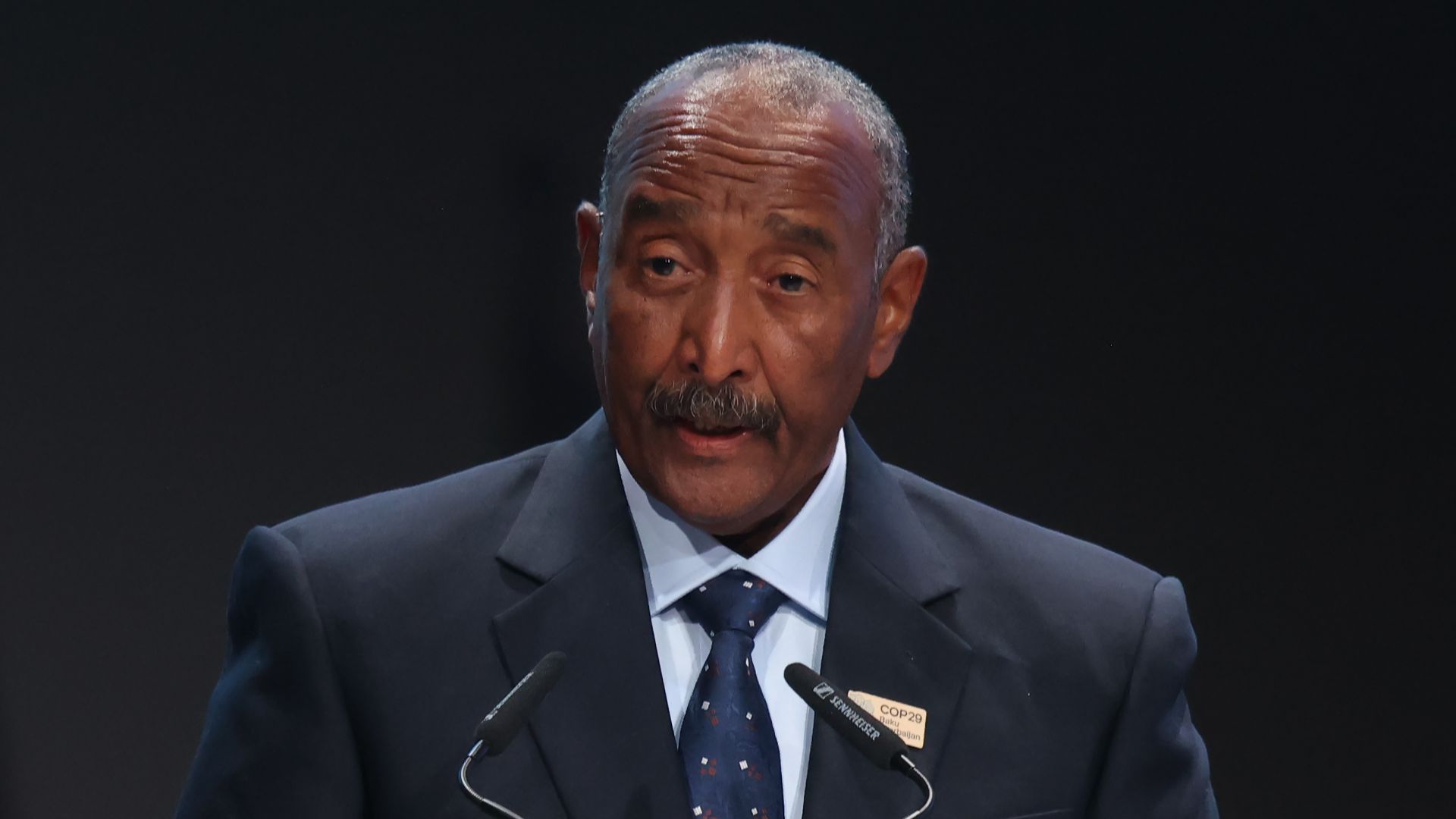
The Trump administration’s attempt to secure a peace deal in Sudan is likely to fail, with Abdel-Fattah Burhan, a senior Sudanese general, expressing strong opposition to the US-led ceasefire proposal aimed at ending the war that has raged in Sudan since 2023.

General Burhan denounces the proposal as « the worst document to date » and accuses the US of trying to « impose conditions on us ».

Getty Images

At war since 2023

The conflict in Sudan, which escalated dramatically in 2023, pits the Sudanese Armed Forces (SAF), led by Sudan’s de facto leader Abdel-Fattah Burhan, against the Rapid Support Forces (RSF) commanded by Mohamed Hamdan Dagalo, known as Hemedti.

Getty Images

What began as a power struggle between two former allies who jointly took control in 2019 quickly turned into one of the world’s deadliest urban wars, devastating Khartoum and spreading to Darfur and other regions. Millions of civilians were displaced, basic services collapsed and widespread atrocities were reported, particularly in Darfur where ethnic targeting resurfaced. Despite multiple international attempts at mediation, a lasting ceasefire was not possible, with both sides accusing each other of atrocities and refusing to give ground.

Getty Images

United States accused of « biased mediation

Abdel-Fattah Burhan insisted that « nobody can threaten us or dictate conditions to us », while rejecting accusations of warmongering: « We are not warmongers and we do not reject peace ». He stressed, however, that his army would only agree to a ceasefire when the Rapid Support Forces (RSF) withdrew completely from civilian areas. Sudan’s top general called the US mediation attempt a « biased mediation », claiming that it « eliminates the armed forces », « dissolves the security agencies » and « keeps the militias where they are », and accused the Trump administration of lying.

Getty Images

Burhan’s rejection further complicates ongoing diplomatic efforts, as the US plan had been presented as the basis for the next round of negotiations.

Several international players, including the UN, the African Union and key Arab states, had seen the US proposal as the last serious attempt to secure a pause in the fighting. On the US side, officials privately claim that Burhan’s stance is primarily aimed at buying time on the ground and consolidating its military lines. For the Trump administration, this setback is significant, as Trump was particularly keen to add Sudan to his list of peace deal trophies.

Getty Images
Catégories
Uncategorized

Der wahre « Sleepy Joe » könnte nun Trump sein, der eine Stunde lang eingenickt ist, während sein Kabinett ihn vor der Kamera lobte

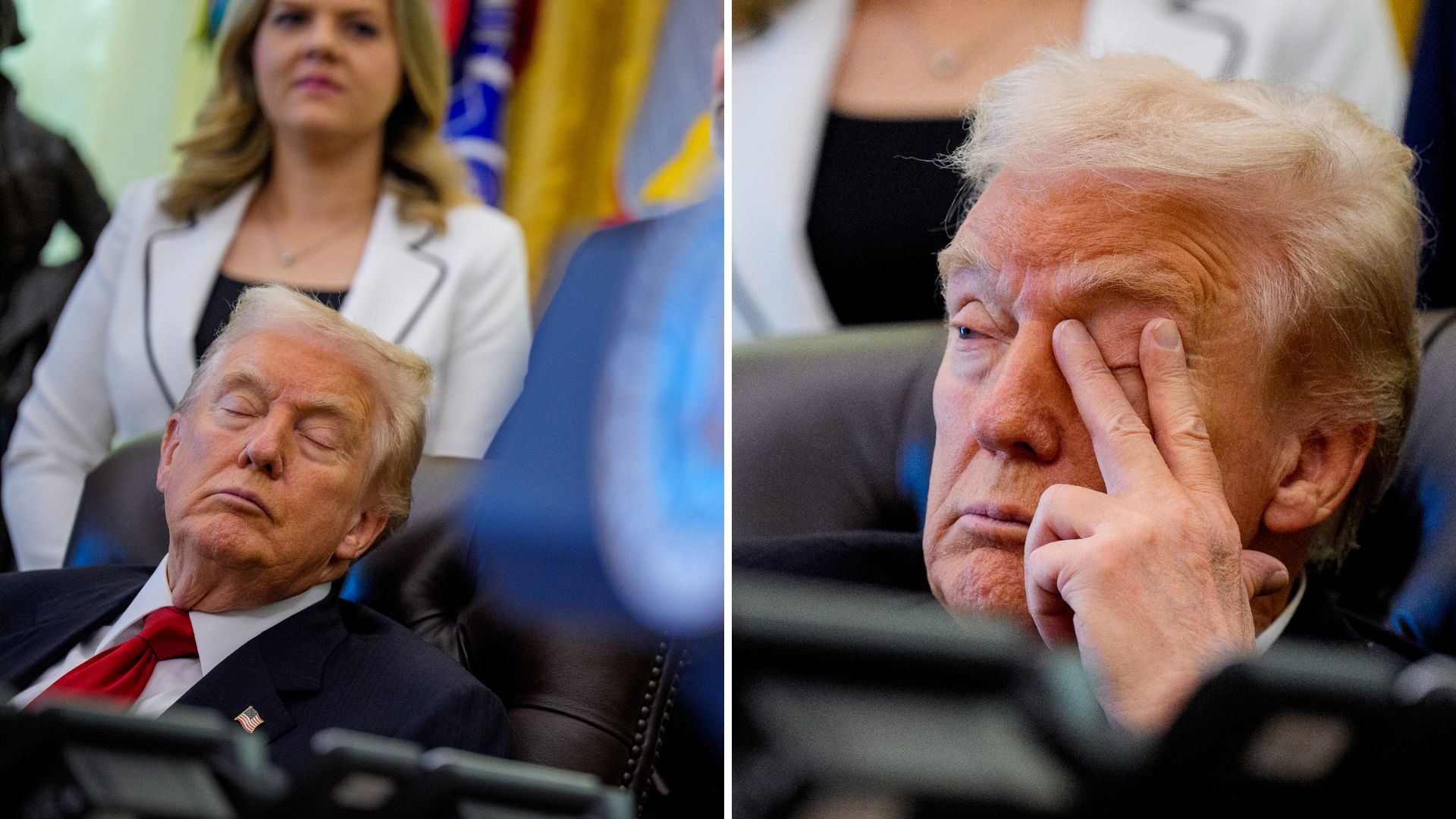
Trump wird zum « Sleepy Joe » seiner eigenen Angriffe. Jahrelang baute er eine zentrale Säule seiner politischen Botschaft auf der Behauptung auf, dass es Joe Biden an Energie, Ausdauer und Wachsamkeit fehle – ein Narrativ, das er mit ständigem Spott, viralen Clips und dem mittlerweile ikonischen Spitznamen, den er bei jeder Kundgebung wiederholte, verstärkte. Jetzt schläft Trump im wahrsten Sinne des Wortes bei der Arbeit. Er wurde dabei erwischt, wie er etwa eine Stunde lang einnickte, während sein Kabinett ihn vor der Kamera lobte, und er kann es nicht länger verbergen, da Nahaufnahmen seiner hängenden Augenlider auf allen Sendern zu sehen sind. Was einst als peinlicher Moment durchging, entwickelt sich nun zu einem Muster, das von Mainstream-Medien und Faktenprüfern dokumentiert wird, während sich einige konservative Kommentatoren auf Fox News bemühen, sein Nickerchen mitten in der Sitzung als Zeichen von Brillanz oder als cleveren Schachzug darzustellen. Das Ergebnis ist ein surrealer Split-Screen: Trump bezeichnet Biden in seiner Rhetorik immer noch als « Sleepy Joe », während die visuellen Beweise zunehmend darauf hindeuten, dass der Präsident, der vor der Kamera erschöpft aussieht, Trump selbst ist.

Doch diese Geschichte kehrt zurück: Während einer anderen Kabinettssitzung, die von der Kamera gefilmt wurde, kämpfte Trump mehr als eine Stunde lang sichtbar gegen den Schlaf an – und verlor ihn oft, indem er über weite Strecken die Augen schloss, während seine eigenen Sekretäre ihn mit Lob überschütteten. Es war nicht der erste derartige Moment, aber es fällt ihm immer schwerer, das zu verbergen, vor allem, wenn Nahaufnahmen jedes langsame Blinzeln einfangen. Und obwohl Trump betonte, er sei « schärfer als vor 25 Jahren », erzählte das Filmmaterial eine ganz andere Geschichte – die eines Präsidenten, der jetzt genau die Anzeichen von Müdigkeit zeigt, die er einst gegen seinen Rivalen einsetzte.

« Sie werden mich nie vor Kameras schlafen sehen »

-Donald Trump

Auf der Wahlkampftour

Trumps größte Hits gegen Bidens angebliche Schläfrigkeit lesen sich jetzt wie eine Vorbereitung auf sein eigenes Dilemma. Im November 2021, nachdem Biden während des COP26-Klimagipfels in Schottland sichtlich die Augen geschlossen hatte, schickte Trump eine E-Mail an seine Unterstützer, in der er spöttisch erklärte: « Niemand, der wahren Enthusiasmus und Glauben an ein Thema hat, wird jemals einschlafen! » In den folgenden Jahren griff er immer wieder dasselbe Thema auf, bezeichnete Biden bei Kundgebungen als « Sleepy Joe » und beschwerte sich nach Bidens feuriger Rede zur Lage der Nation Anfang 2024, dass « er die meiste Zeit so aussieht, als würde er einschlafen » Im Juni 2024 eskalierte er zu der pauschalen Behauptung, dass « er bei jeder einzelnen Veranstaltung einschläft »

Im September 2024 wiederholte Trump diese Behauptung im Wahlkampf, indem er sich über Biden lustig machte, weil er angeblich am Strand eingeschlafen war, und seine Zuhörer fragte: « Wie kann man einschlafen, wenn die Kameras toben? »

Dem Podcast-Moderator Andrew Schulz sagte er sogar: « Sie werden mich nie vor den Kameras schlafen sehen. »

Diese Zitate kollidieren nun unangenehm mit den Bildern von Trump, der offenbar fast eine Stunde lang vor seinem eigenen Kabinett eingenickt ist.

Getty Images

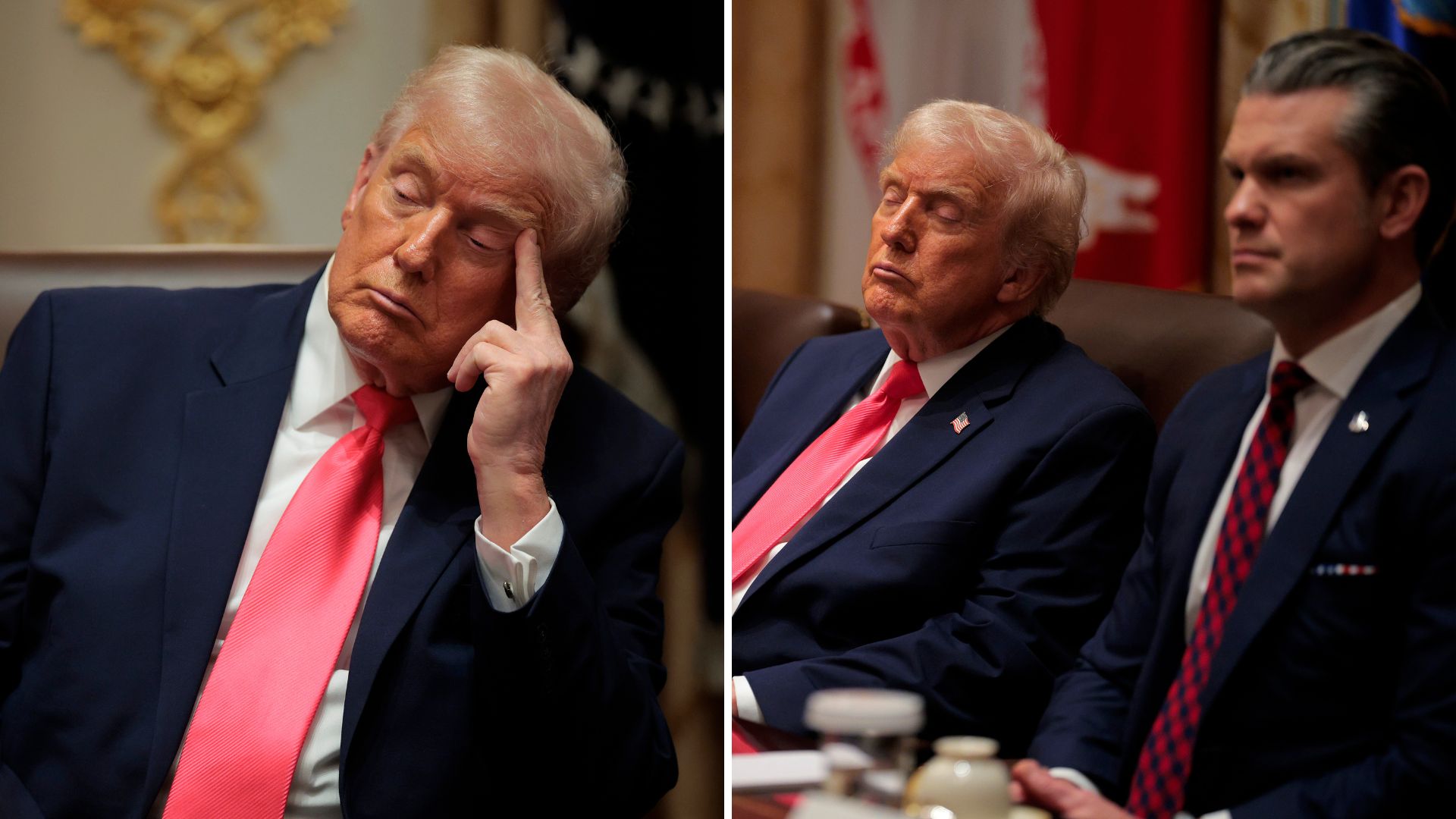
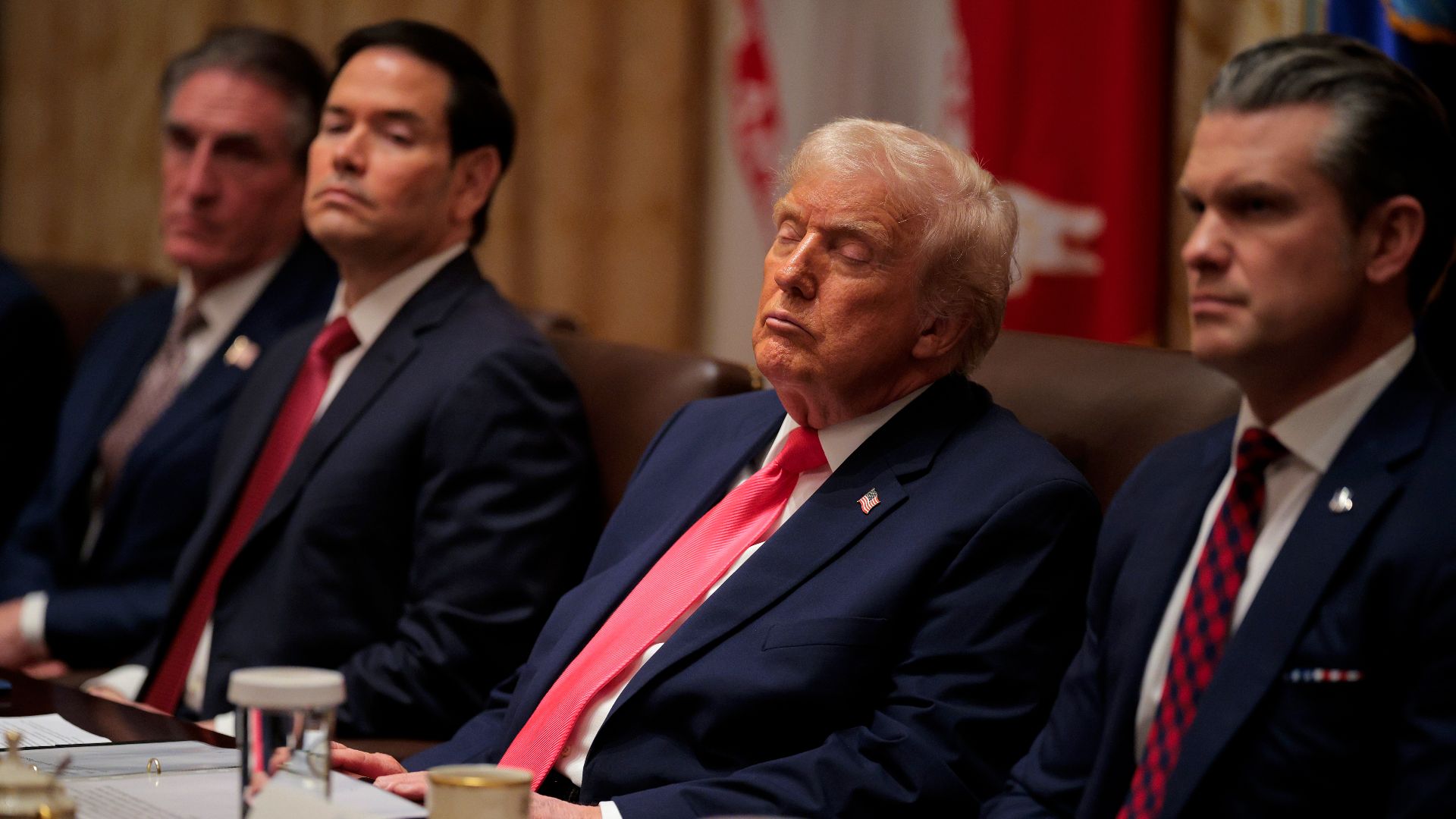
Während Trump in der Mitte des langen Kabinettstisches saß, hielten seine Sekretäre abwechselnd glühende Monologe über seine Führungsqualitäten, seine Handelspolitik, seine Umstrukturierung von Bundesbehörden und sogar über seine angeblichen globalen Errungenschaften – eine orchestrierte Kaskade des Lobes, die oft mehr nach einem Treuekonzert als nach einer politischen Sitzung klang. Doch während sie ihn mit Superlativen lobten, schien Trump immer wieder in den Schlaf zu fallen, seine Augen schlossen sich über weite Strecken, während er in seinem Stuhl leicht nickte, und der Kontrast zwischen ihrer geskripteten Begeisterung und seiner sichtbaren Müdigkeit wurde von Minute zu Minute surrealer. Spätestens als Kristi Noem ihren inzwischen vertrauten Umweg « Danke, dass es in dieser Saison keine Hurrikane gibt » begann, wurde die Szene fast absurd Die Szene war fast schon absurd: ein Präsident, der durch seine eigene Mythenbildung döst, während sein Kabinett Errungenschaften ausschmückt, die er noch nicht einmal wach gehört hat.

Getty Images

Ein früherer Auftritt im Oval Office

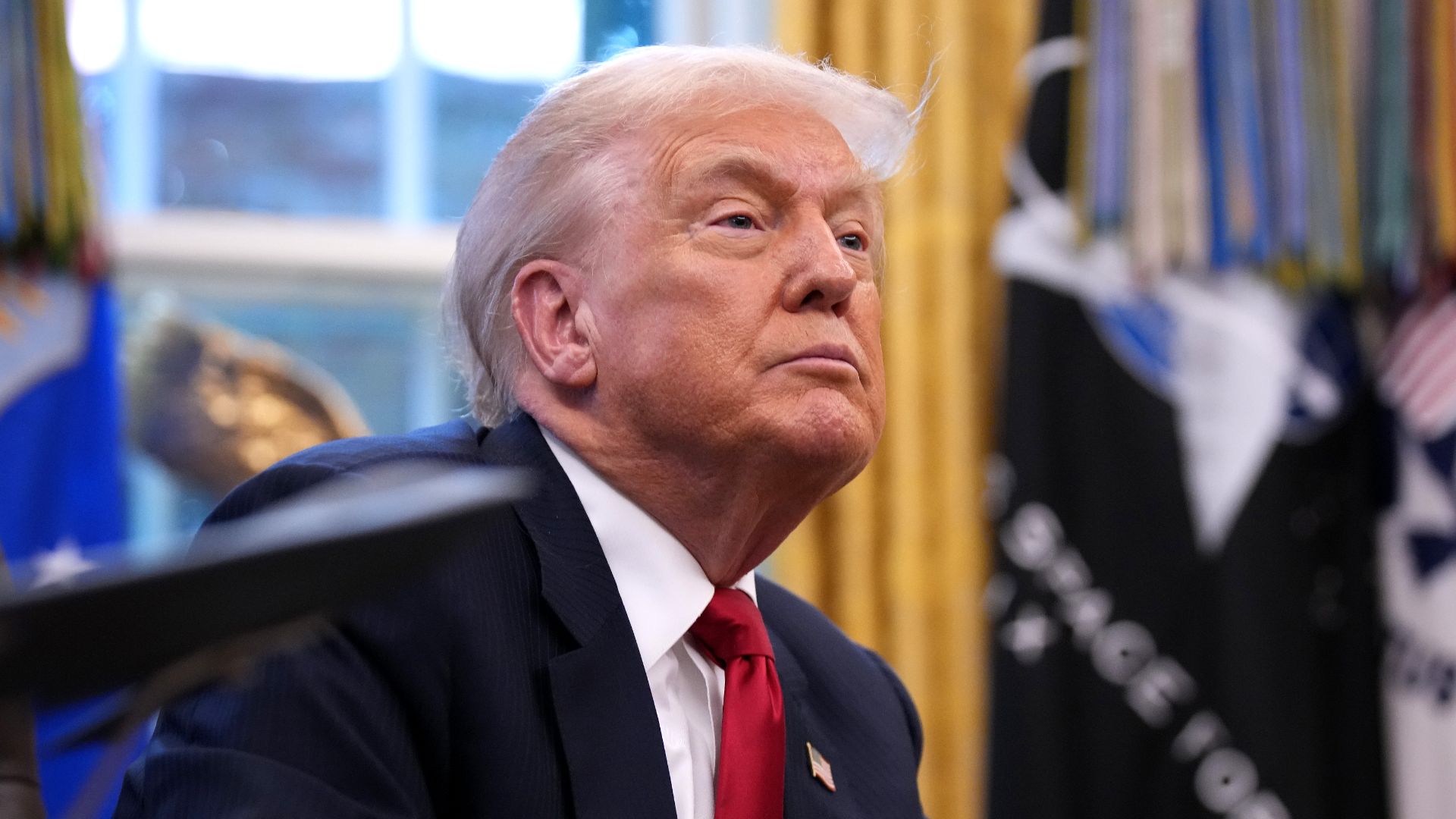
Bei diesem früheren Auftritt im Oval Office war das Muster bereits zu erkennen. Am Resolute Desk sitzend, verbrachte Trump lange Zeit mit geschlossenen Augen, während Helfer und Gäste nur wenige Meter entfernt sprachen. Die Pausen in seinem Gesichtsausdruck gingen weit über ein normales Blinzeln hinaus und gingen in Sequenzen über, in denen er völlig losgelöst vom Raum wirkte. Kameraperspektiven von verschiedenen Sendern fingen alle dasselbe ein: einen Präsidenten, der kurzzeitig nicht mehr reagierte, während die Mikrofone noch eingeschaltet waren. Die Bilder machten in den sozialen Medien die Runde, nicht nur, weil er müde aussah, sondern auch, weil sie in direktem Widerspruch zu seiner eigenen Angeberei standen, einschließlich seiner Prahlerei gegenüber einem Podcast-Moderator: « Sie werden mich nie vor Kameras schlafen sehen »

Getty Images

10 original DIY Advent calendar ideas to make with children of all ages

Catégories
Uncategorized

Trump aplaza la subida de aranceles a Canadá entre un mar de polémicas

Después de amenazar a Canadá hace más de un mes con otra subida de aranceles, parece que Trump le ha perdido el gusto a la guerra comercial, o quizá se le ha olvidado.

Es como si nadie quisiera recordarle al profesor que hay que entregar los deberes.

Amenaza de aranceles en octubre

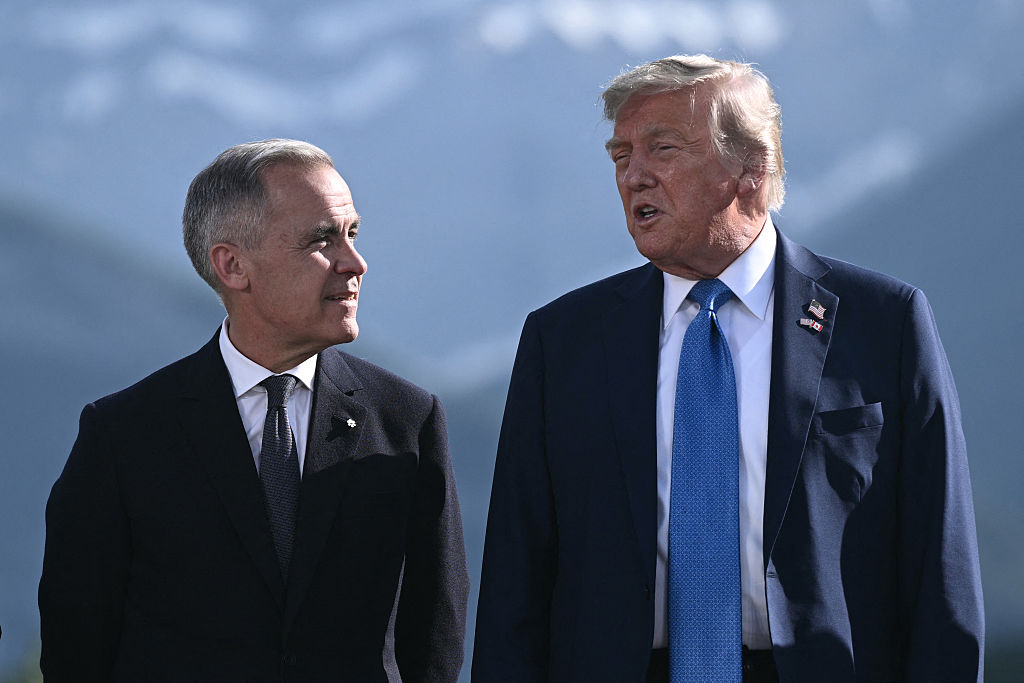
El presidente de EEUU, Donald Trump, habla con la prensa mientras se reúne con el primer ministro canadiense, Mark Carney, durante la cumbre del Grupo de los Siete (G7) en el Pomeroy Kananaskis Mountain Lodge en Kananaskis, Alberta, Canadá, el 16 de junio de 2025. (Foto de Brendan SMIALOWSKI / AFP) (Foto de BRENDAN SMIALOWSKI/AFP vía Getty Images)

Donald Trump anunció en Verdad Social que aumentaría los aranceles a los productos canadienses en un 1 por ciento después de que la administración Ford publicara un anuncio durante el primer partido de la Serie Mundial.

El anuncio en cuestión mostraba fragmentos de un discurso de Reagan en el que se le oía decir: « Cuando alguien dice, impongamos aranceles a las importaciones extranjeras, parece que está haciendo lo patriótico al proteger los productos y empleos estadounidenses….pero a la larga, esas barreras comerciales perjudican a todos los trabajadores y consumidores estadounidenses. Los aranceles elevados conducen inevitablemente a represalias por parte de los países extranjeros y al desencadenamiento de feroces guerras comerciales. »

Trump casi inmediatamente tuvo una rabieta, publicando « LOS ARANCELES SON MUY IMPORTANTES PARA LA SEGURIDAD NACIONAL, Y LA ECONOMÍA, DE LOS EE.UU. Basado en su comportamiento atroz, TODAS LAS NEGOCIACIONES COMERCIALES CON CANADÁ SE TERMINAN POR LA PRESENTE. »

Trump afirmó que le dijo al gobierno de Ontario que retirara el anuncio, pero no le hicieron caso.

Sí, es triste que un líder mundial haga un berrinche por un anuncio de ataque bastante insulso (¿alguna vez ha visto los que publica su administración?), pero esta es la realidad en Estados Unidos.

Una amenaza olvidada

Parece como si Trump se hubiera olvidado por completo de la amenaza, y no parece que nadie tenga prisa por recordárselo. Los periodistas estadounidenses no le han insistido (como canadiense, se lo agradezco) y, según informa Politico, no se ha creado ningún documento oficial sobre la subida del 10%.

Tal vez todo esté perdonado después de que Carney se disculpara con Trump en la cumbre de Cooperación Económica Asia-Pacífico en Corea del Sur.

Quizá Carney pueda aprovechar el encanto con el que el recién elegido alcalde de Nueva York, Zohran Mamdani, hipnotizó a Trump durante el fin de semana.

Por su parte, Doug Ford no se disculpó por el anuncio: « Están hablando de ello en Estados Unidos, y no hablaban de ello antes de que yo pusiera el anuncio. Me alegro de que Ronald Reagan fuera un libre comerciante », dijo Ford.

Según los expertos, la subida del 10% podría poner en grave peligro la industria automovilística canadiense, dependiente del acero, incluso más de lo que ya lo han hecho los aranceles vigentes.

Un funcionario estadounidense sugirió que el Gobierno de Trump había optado por aplazar la imposición de aranceles adicionales -y, en su lugar, por lanzar la amenaza- mientras ambas partes se preparan para futuras conversaciones.

Catégories
Uncategorized

Ucrania ataca a la flota rusa en aguas internacionales

Ucrania golpea la flota energética rusa en aguas internacionales, lo que supone una escalada decisiva en su campaña para perturbar los ingresos de Moscú en tiempos de guerra. A finales de noviembre, drones navales ucranianos atacaron dos petroleros -el Kairos y el Virat- cuando transitaban por el Mar Negro frente a la costa de Turquía, lejos de las aguas territoriales rusas. Ambos buques están vinculados a la llamada « flota en la sombra » rusa, la red de viejos petroleros que eluden las sanciones y mantienen el flujo de petróleo ruso a pesar de las restricciones occidentales. Funcionarios de seguridad ucranianos afirmaron que los buques no transportaban crudo en ese momento, sino que se dirigían a cargar exportaciones rusas sancionadas, lo que los convierte en objetivos de gran valor en el esfuerzo de Kiev por socavar el sustento financiero de Moscú. Los ataques inutilizaron ambos petroleros y obligaron a las autoridades marítimas regionales a intervenir de urgencia, lo que puso de manifiesto que no se trataba de un acto de sabotaje interno, sino de una operación marítima transfronteriza en un corredor internacional estratégicamente sensible.

Después de que los ataques iniciales inutilizaran los dos petroleros objetivo, el alcance total de los daños se hizo evidente cuando los equipos de emergencia se acercaron a los buques. Los drones no se habían limitado a detener su tránsito, sino que habían desgarrado las secciones inferiores de los cascos, provocando una inundación progresiva que obligó a las tripulaciones a desconectar los sistemas eléctricos para evitar incendios. Los registros de tráfico marítimo muestran que ambos barcos estuvieron a la deriva durante horas, dando señales de socorro mientras las autoridades regionales emitían alertas de navegación para evitar colisiones. Los remolcadores enviados desde puertos cercanos se esforzaron por estabilizar los petroleros, cuyos sistemas de lastre en mal estado los hicieron escorar bruscamente con el oleaje. Las evaluaciones preliminares compartidas con las aseguradoras indicaron que las salas de máquinas de ambos buques habían absorbido una cantidad considerable de agua, lo que hacía casi imposible realizar reparaciones a corto plazo y aumentaba la probabilidad de que quedaran fuera de servicio durante meses. Las secuelas pusieron de relieve cómo un solo golpe ejecutado con precisión puede extenderse hacia el exterior, deteniendo operaciones, desencadenando costosos esfuerzos de recuperación e introduciendo una nueva incertidumbre en la tensa cadena de exportación rusa.

Getty Images

En el último año, Ucrania ha atacado repetidamente la infraestructura energética de Rusia en ataques confirmados por funcionarios regionales rusos e informes independientes. Los drones ucranianos han atacado refinerías de petróleo en regiones como Riazán, Krasnodar y San Petersburgo, interrumpiendo temporalmente las operaciones de procesamiento, según las autoridades regionales y los medios de comunicación estatales rusos. Varios depósitos de combustible e instalaciones de manipulación de petróleo también han sido alcanzados en ataques atribuidos a Ucrania, incluidos sitios cerca de San Petersburgo y en las regiones del sur de Rusia. Kiev ha declarado que estas operaciones pretenden reducir la capacidad de Rusia para financiar su guerra mediante la exportación de energía. Las evaluaciones de los servicios de inteligencia occidentales y los análisis de Reuters han señalado que los repetidos ataques han obligado a cerrar temporalmente varias refinerías, lo que ha llevado a Rusia a desviar parte del suministro de crudo y a acelerar los trabajos de reparación. Estos incidentes confirmados constituyen el telón de fondo de la reciente ampliación de los ataques de Ucrania a objetivos marítimos vinculados al sistema ruso de exportación de petróleo.

« La solución más radical es aislar a Ucrania del mar, entonces la piratería será, en principio, imposible »

-Vladimir Putin

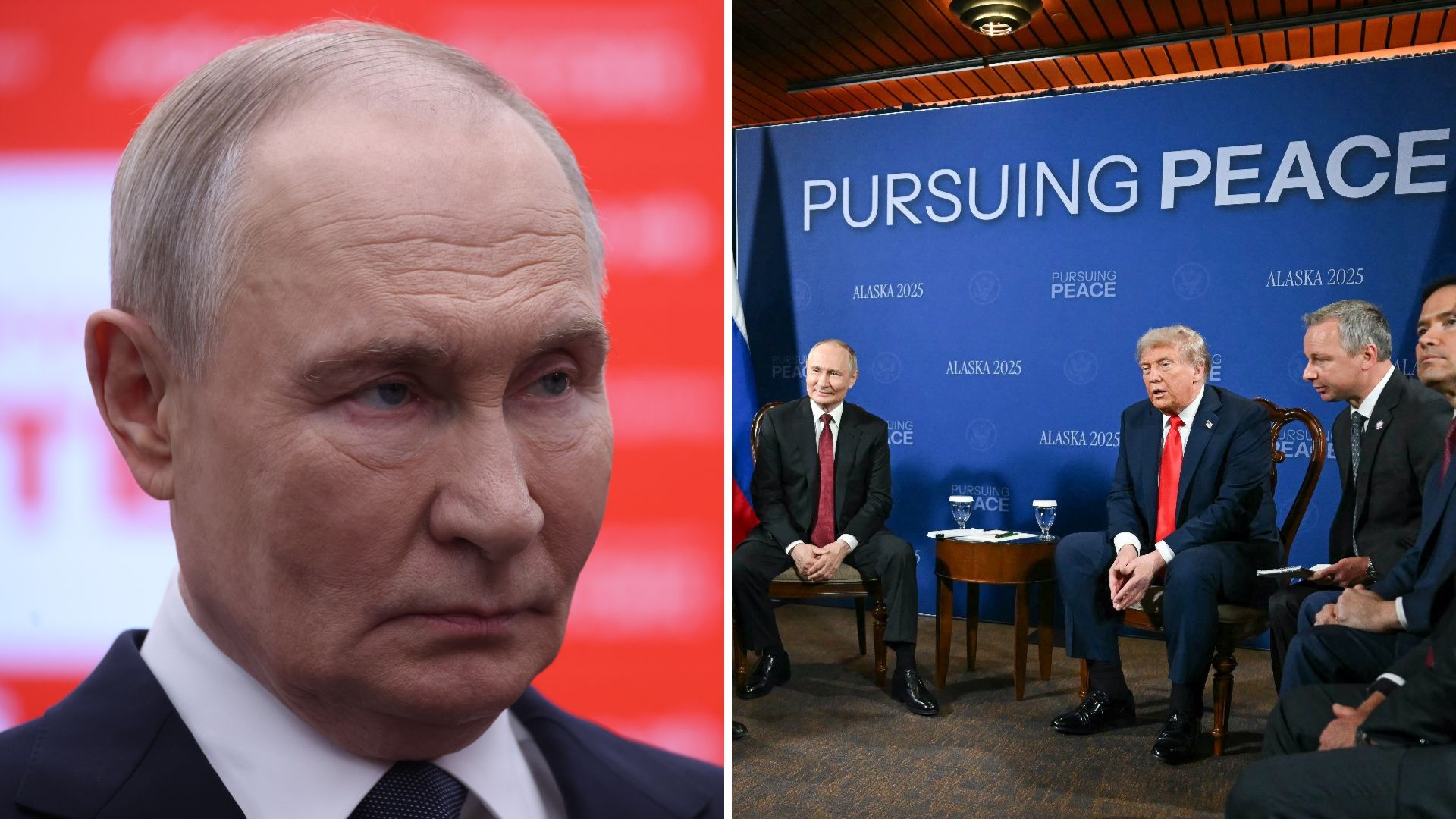
Los últimos ataques de Ucrania se desarrollan en un contexto de intensa polémica en torno al plan de paz entre Trump y Rusia, que los principales medios estadounidenses y europeos han calificado de profundamente desestabilizador para Kiev. Según The New York Times y France 24, la propuesta que están debatiendo Trump y Vladimir Putin exigiría a Ucrania ceder territorio y abandonar su antiguo intento de ingresar en la OTAN, condiciones que las autoridades ucranianas han rechazado pública y firmemente. El Washington Post ha informado de que el plan ha alarmado a los gobiernos europeos, que temen que legitime las ganancias territoriales de Rusia y debilite los acuerdos de seguridad colectiva en el continente. Reuters ha señalado igualmente que los dirigentes ucranianos ven las negociaciones con profundo recelo, interpretándolas como un marco diplomático construido en gran medida sin la participación de Ucrania. Mientras se desarrollan estos debates, Ucrania sigue llevando a cabo ataques contra infraestructuras energéticas rusas, acciones que ponen de relieve la determinación de Kiev de hacer valer su propia influencia en un momento en el que los debates internacionales sobre su futuro se desarrollan en gran medida por encima de sus intereses.

Tras los ataques con drones del 29 de noviembre contra los petroleros Kairos y Virat, vinculados a Rusia, el gobierno ucraniano confirmó la operación, enmarcándola como un golpe a la capacidad de Moscú para financiar la guerra a través de las exportaciones de petróleo. Aunque el Presidente Zelenskyy ha instado anteriormente a los socios internacionales a que incluyan en una lista negra y bloqueen la flota rusa en la sombra -calificando a estos buques de importante mecanismo de evasión de sanciones-, no ha hecho ningún comentario público específico sobre este ataque en concreto. Putin, por el contrario, respondió con amenazas explícitas, denunciando el ataque como piratería y declarando: « La solución más radical es aislar a Ucrania del mar, entonces la piratería será, en principio, imposible » Advirtió además de que Rusia « intensificaría los ataques contra instalaciones y buques ucranianos… y tomaría medidas contra petroleros de países que ayudan a Ucrania » Por ahora, no hay constancia verificada de que Donald Trump haya comentado los ataques a los petroleros.

Catégories
Uncategorized

The real «Sleepy Joe» might now be Trump, caught nodding off for an hour while his Cabinet praised him on camera

Trump is becoming the «Sleepy Joe» of his own attacks. For years, he built a central pillar of his political message on the claim that Joe Biden lacked energy, stamina, and alertness — a narrative he reinforced with constant mockery, viral clips, and the now-iconic nickname he repeated at every rally. Now Trump is literally sleeping on the job, caught nodding off for about an hour while his Cabinet praised him on camera, and he can no longer hide it as close-up shots of his drooping eyelids ricochet across every network. What might have passed once as an awkward moment is turning into a pattern, documented by mainstream outlets and fact-checkers, even as some conservative commentators on Fox News scramble to spin his mid-meeting naps as a sign of brilliance or a clever power move. The result is a surreal split-screen: Trump still branding Biden as «Sleepy Joe» in his rhetoric, while the visual evidence increasingly suggests that the president who looks exhausted on camera is Trump himself.

But that storyline is boomeranging back: during another Cabinet meeting filmed on camera, Trump spent more than an hour visibly battling — and often losing — a fight against sleep, his eyes closing for long stretches as his own secretaries showered him with praise. It wasn’t the first such moment, but it’s becoming harder and harder for him to hide, especially when close-up shots capture every slow blink. And despite Trump insisting he’s «sharper than I was 25 years ago,» the footage told a very different story — one of a president now displaying the very signs of fatigue he once weaponized against his rival.

«You’ll never see me sleeping in front of cameras.»

-Donald Trump

On the campaign trail

Trump’s greatest hits against Biden’s supposed sleepiness now read like a setup for his own predicament. Back in November 2021, after Biden visibly closed his eyes during the COP26 climate summit in Scotland, Trump blasted out an email to supporters sneering that «Nobody that has true enthusiasm and belief in a subject will ever fall asleep!» He kept leaning on the same theme over the next years, branding Biden «Sleepy Joe» at rallies and, after Biden’s fiery State of the Union in early 2024, complaining that «most of the time, he looks like he’s falling asleep.» In June 2024, he escalated to the blanket claim that «He falls asleep at every single event.»

By September 2024, Trump was still drilling the same line on the campaign trail, mocking Biden for supposedly dozing on the beach and asking his crowd, «How do you fall asleep when cameras are raging, right?»

He even told podcast host Andrew Schulz: «You’ll never see me sleeping in front of cameras.»

Those quotes now collide awkwardly with the images of Trump apparently nodding off for close to an hour in front of his own Cabinet.

Getty Images

As Trump sat at the center of the long Cabinet table, his secretaries took turns delivering glowing monologues about his leadership, his trade policies, his reshaping of federal agencies, and even his supposed global achievements — an orchestrated cascade of praise that often sounded more like a loyalty recital than a policy meeting. Yet while they lauded him with superlatives, Trump appeared to drift in and out of sleep, his eyes closing for long stretches as he nodded slightly in his chair, the contrast between their scripted enthusiasm and his visible fatigue growing more surreal by the minute. By the time Kristi Noem launched into her now-familiar detour «Thank you for no hurricanes this season.» The scene had become almost absurd: a president dozing through his own mythmaking, as his Cabinet embellished accomplishments he wasn’t even awake to hear.

Getty Images

An earlier Oval Office appearance

In that earlier Oval Office appearance, the pattern was already on display. Seated at the Resolute Desk for what was supposed to be a tightly choreographed event, Trump spent long stretches with his eyes drooping shut as aides and guests spoke just a few feet away, the pauses in his expression stretching well beyond a normal blink and turning into sequences where he looked completely disconnected from the room. Camera angles from different networks all captured the same thing: a president slipping into brief pockets of unresponsiveness while the microphones were still live. The images rocketed around social media not just because he looked tired, but because they clashed so directly with his own bravado, including his boast to a podcast host that «You’ll never see me sleeping in front of cameras.»

Getty Images
Catégories
Uncategorized

Ukraine Strikes Russia’s Shadow Fleet in International Waters

Ukraine hits Russia’s energy fleet in international waters, marking a decisive escalation in its campaign to disrupt Moscow’s wartime revenue. In late November, Ukrainian naval drones struck two tankers — the Kairos and the Virat — as they transited through the Black Sea off the coast of Turkey, far outside Russian territorial waters. Both vessels are tied to Russia’s so-called “shadow fleet,” the network of aging, sanctions-dodging tankers that keep Russian oil flowing despite Western restrictions. Ukrainian security officials said the ships were not carrying crude at the time but were en route to load sanctioned Russian exports, making them high-value targets in Kyiv’s effort to undermine Moscow’s financial lifeline. The strikes disabled both tankers and forced emergency responses from regional maritime authorities, underscoring that this was not a domestic act of sabotage but a cross-border, maritime operation in a strategically sensitive international corridor.

After the initial strikes disabled the two targeted tankers, the full extent of the damage became clear as emergency responders approached the vessels. The drones had not merely halted their transit — they had torn into the lower sections of the hulls, causing progressive flooding that forced crews to shut down power systems to avoid electrical fires. Maritime traffic records show both ships drifting for hours, signaling distress as regional authorities issued navigation alerts to prevent collisions. Tugboats dispatched from nearby ports struggled to stabilize the tankers, whose compromised ballast systems left them listing sharply in the swells. Preliminary assessments shared with insurers indicated that the engine rooms of both vessels had taken on significant water, making short-term repairs nearly impossible and raising the likelihood that they will be sidelined for months. The aftermath underscored how a single precisely executed strike can ripple outward — halting operations, triggering costly recovery efforts, and inserting new uncertainty into Russia’s tightly stretched export chain.

Getty Images

Over the past year, Ukraine has repeatedly targeted Russia’s energy infrastructure in strikes confirmed by Russian regional officials and independent reporting. Ukrainian drones have hit oil refineries in regions such as Ryazan, Krasnodar, and St. Petersburg, temporarily disrupting processing operations according to regional authorities and Russian state media. Several fuel depots and oil-handling facilities have also been struck in attacks attributed to Ukraine, including sites near St. Petersburg and in Russia’s southern regions. Kyiv has stated that these operations are intended to reduce Russia’s ability to finance its war through energy exports. Western intelligence assessments and Reuters analyses have noted that repeated strikes have forced temporary shutdowns at multiple refineries, prompting Russia to reroute some crude supply and accelerate repair efforts. These confirmed incidents form the backdrop for Ukraine’s recent expansion of attacks to maritime targets linked to Russia’s oil-export system.

«The most radical solution is to cut Ukraine off from the sea, then piracy will be impossible in principle.»

-Vladimir Putin

Ukraine’s latest strikes unfold against a backdrop of intense controversy surrounding the Trump–Russia peace plan, which major U.S. and European media have described as deeply destabilizing for Kyiv. According to The New York Times and France 24, the proposal being discussed between Trump and Vladimir Putin would require Ukraine to cede territory and abandon its long-standing bid for NATO membership — conditions Ukrainian officials have publicly and firmly rejected. The Washington Post has reported that the plan has alarmed European governments, who fear it would legitimize Russia’s territorial gains and weaken collective security arrangements on the continent. Reuters has similarly noted that Ukrainian leaders view the negotiations with deep suspicion, interpreting them as a diplomatic framework built largely without Ukraine’s participation. As these debates unfold, Ukraine continues to carry out strikes on Russian energy infrastructure — actions that underscore Kyiv’s determination to assert its own leverage and agency at a moment when international discussions about its future are taking place largely above its head.

Following the November 29 drone strikes on the Russian-linked tankers Kairos and Virat, the Ukrainian government confirmed the operation, framing it as a blow to Moscow’s capacity to fund the war through oil exports. While President Zelenskyy has previously urged international partners to blacklist and block Russia’s shadow fleet — calling these vessels a major mechanism of sanctions evasion — he has not issued a specific public comment on this particular attack. Putin, by contrast, responded with explicit threats, denouncing the strike as piracy and declaring: «The most radical solution is to cut Ukraine off from the sea, then piracy will be impossible in principle.» He further warned that Russia would “intensify strikes on Ukrainian facilities and vessels … and take measures against tankers of countries that help Ukraine.” As of now, there is no verified record of Donald Trump commenting on the tanker strikes.

Catégories
Uncategorized

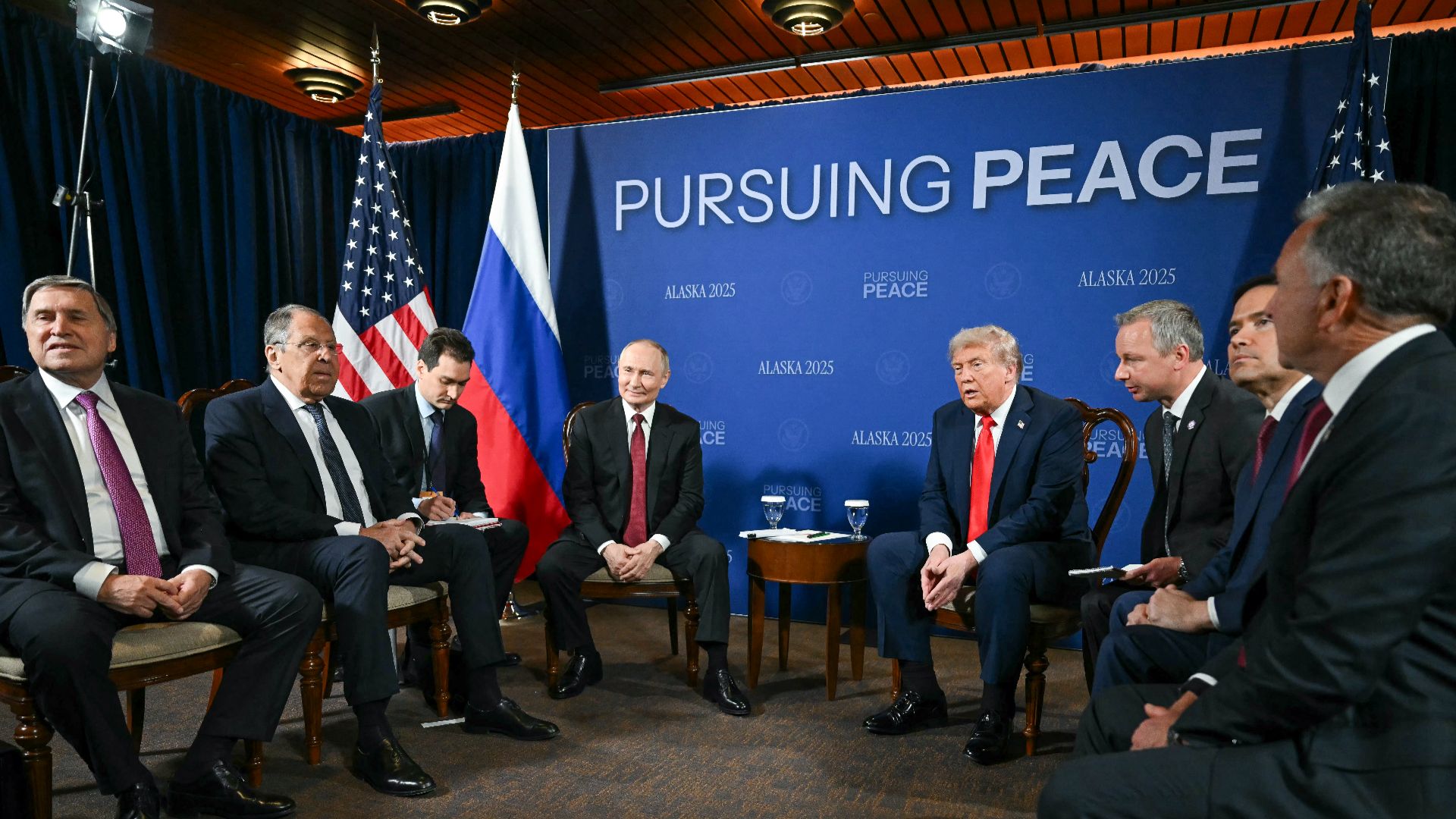
Putin’s threats grow more erratic as he vows to seize Donbas and warns Europe of war

Hours before a new round of US–Russia contacts aimed at exploring a possible framework for peace, Vladimir Putin delivered one of his most confrontational statements in months, vowing that Russia would seize the entire Donbas region and warning that Europe could face war if it chose to challenge Moscow. His comments, made just as American representatives prepared to arrive in Moscow for preliminary talks, underscored a widening gap between diplomatic efforts and the Kremlin’s increasingly erratic rhetoric. By insisting that Donetsk and Luhansk would fall «militarily or otherwise» while cautioning Europe that Russia was «ready» for conflict, Putin set a tense tone that threatened to overshadow any tentative steps toward negotiation.

In his televised remarks on the battlefield situation, Putin hardened Russia’s position on the Donbas, presenting the fate of the region as non-negotiable and setting out a blunt ultimatum for Kyiv. He stated that Russia’s goal was to assert full control over Donetsk and Luhansk, describing this as a matter of time rather than choice. As he put it, «Either we liberate these territories by force of arms, or Ukrainian troops leave these territories.» By framing the issue in such stark terms, he effectively ruled out any compromise over the status of the Donbas and signaled that Moscow is prepared to sustain a long and costly campaign. Putin went further by insisting that Russia would secure these territories «militarily or otherwise», a phrase that leaves the door open to additional tools of pressure, from political coercion to economic leverage, while reinforcing the impression that, in his view, the end state is fixed and only the method remains in question for the Kremlin.

Getty Images

When he turned to Europe, Putin’s rhetoric grew even more confrontational, shifting from territorial claims in Ukraine to a direct warning aimed at Western capitals. Addressing the possibility of a deeper European role in the conflict, he delivered a stark message that cast Russia as fully prepared for a wider confrontation. «If Europe suddenly wants to fight with us and starts it, we are ready right now», he said, presenting Moscow as both confident in its military strength and unafraid of escalation. He then added a chilling line about the consequences of such a clash:

«There would be no one to negotiate with in Europe.»

Taken together, these comments amount to a threat that any move by European states to challenge Russia more directly could trigger a level of destruction that would obliterate the very partners Washington is trying to involve in a peace framework, undercutting diplomatic efforts and amplifying concerns about how unrestrained and volatile the Kremlin’s messaging has become.

Ukraine wants «real peace, not appeasement»

Ukraine’s response to Putin’s latest comments was immediate and defiant, with both President Volodymyr Zelensky and senior officials rejecting any suggestion that Kyiv might retreat from the Donbas or accept Moscow’s territorial demands as the price of peace. Zelensky and his team have repeatedly stressed that Ukraine will not withdraw its troops from the territories it still controls in Donetsk and Luhansk, nor legitimize Russia’s claim over land seized by force, framing Putin’s ultimatum as a continuation of the same coercive tactics that began with the 2014 annexation of Crimea. Ukrainian diplomats underlined that peace talks must not become a new version of appeasement, with Foreign Minister Andrii Sybiha insisting that Ukraine wants «real peace, not appeasement» and warning against repeating the historical mistakes of rewarding aggression. Kyiv has also bristled at the broader threat directed at Europe, arguing that Putin’s warning that «there would be no one to negotiate with in Europe» only proves why the EU and NATO must stay united behind Ukraine, maintain sanctions and military support, and refuse any deal that would cement Russian control over occupied regions.

Getty Images

European leaders reacted to Putin’s latest threats with a mix of public condemnation and concrete moves to harden the continent’s defences, framing his comments as proof that Russia remains a direct and long-term danger to European security rather than a partner for compromise. In Brussels and key capitals, officials stressed that warning Europe it could be destroyed if it confronted Moscow would not split the alliance but instead reinforce the urgency of staying united behind Ukraine and resisting any peace terms built on territorial concessions.

EU institutions have kept up sanctions and financial support while exploring the use of frozen Russian assets to fund Kyiv’s war effort, and NATO’s new secretary general has underlined that the alliance is «ready and willing» to defend itself against any attack, explicitly responding to Putin’s war talk. At the same time, the EU is pushing ahead with its Readiness 2030 defence initiative, which seeks to massively increase joint spending on air and missile defence, artillery, drones and other critical capabilities, marking a strategic shift toward a more militarily assertive Europe designed precisely to deter the kind of escalation Putin is now openly threatening.

A network of influential US businessmen and Russian oligarchs

The current US effort to negotiate a Ukraine peace plan has increasingly centered on direct, often discreet discussions between American envoys and the Kremlin, with figures such as Steve Witkoff and Jared Kushner holding extensive talks with Vladimir Putin on a 28-point framework that critics argue mirrors many of Russia’s demands while sidelining Kyiv.

Reports indicate that the US delegation has explored options involving partial sanctions relief or economic incentives for Moscow as part of a potential ceasefire, raising concern in Ukraine and Europe that Washington may be prioritizing geopolitical expediency over Ukrainian sovereignty. Adding to the controversy, investigative outlets have reported that a network of influential US businessmen and Russian oligarchs sees the negotiations as an opening for future energy, infrastructure, and investment deals — fueling suspicion that the proposed peace plan risks blending diplomatic concessions with lucrative private interests rather than ensuring a transparent, Ukraine-first process.