Routines play a key role in the smooth day-to-day running of a family. They provide structure, security and a sense of unity, especially in a world where time is short and obligations are piling up. But not all rituals are created equal. Some routines become real pillars for the family, while others, too rigid or ill-adapted, can generate tension, fatigue and frustration. It’s not enough to set up a routine for it to work. Each routine must match the rhythm and meet the real needs of each member of the household. In this article, we present seven of the best tried-and-tested family routines. We’ll also show you seven others that are too restrictive and struggle to stand the test of time. it’s up to you to find the right balance!

Routines play a key role in the smooth day-to-day running of a family. They provide structure, security and a sense of unity, especially in a world where time is short and obligations are piling up. But not all rituals are created equal. Some routines become real pillars for the family, while others, too rigid or ill-adapted, can generate tension, fatigue and frustration. It's not enough to set up a routine for it to work. Each routine must match the rhythm and meet the real needs of each member of the household. In this article, we present seven of the best tried-and-tested family routines. We'll also show you seven others that are too restrictive and struggle to stand the test of time. it's up to you to find the right balance!
1. The quiet evening ritual (reading, cuddling, trading)

This routine includes reading, cuddling and friendly trade. It helps them fall asleep, bond emotionally and talk calmly. It's a special time for parents and children to listen to each other. It creates a gentle transition to sleep, reassures the child and brings the day to a close in a climate of tenderness and trust.
2. Screen-free family meals (at least 1/day)

The screen-free family meal creates a space for listening, authentic connection, conviviality and cohesion. It encourages communication, listening and sharing between household members. It's also a time for transmitting values. It encourages full presence and helps everyone to feel valued, heard and supported in their day.
3. Express cleaning in team mode (5-10 min)

Team Express Housework turns a chore into a quick, fun and collective activity. In 5 to 10 minutes, the whole family contributes according to their abilities. This ritual reinforces a sense of responsibility and cooperation. This routine eases the burden on parents, promotes joint effort and creates a climate of solidarity within the household.
4. Visual planning or family planning
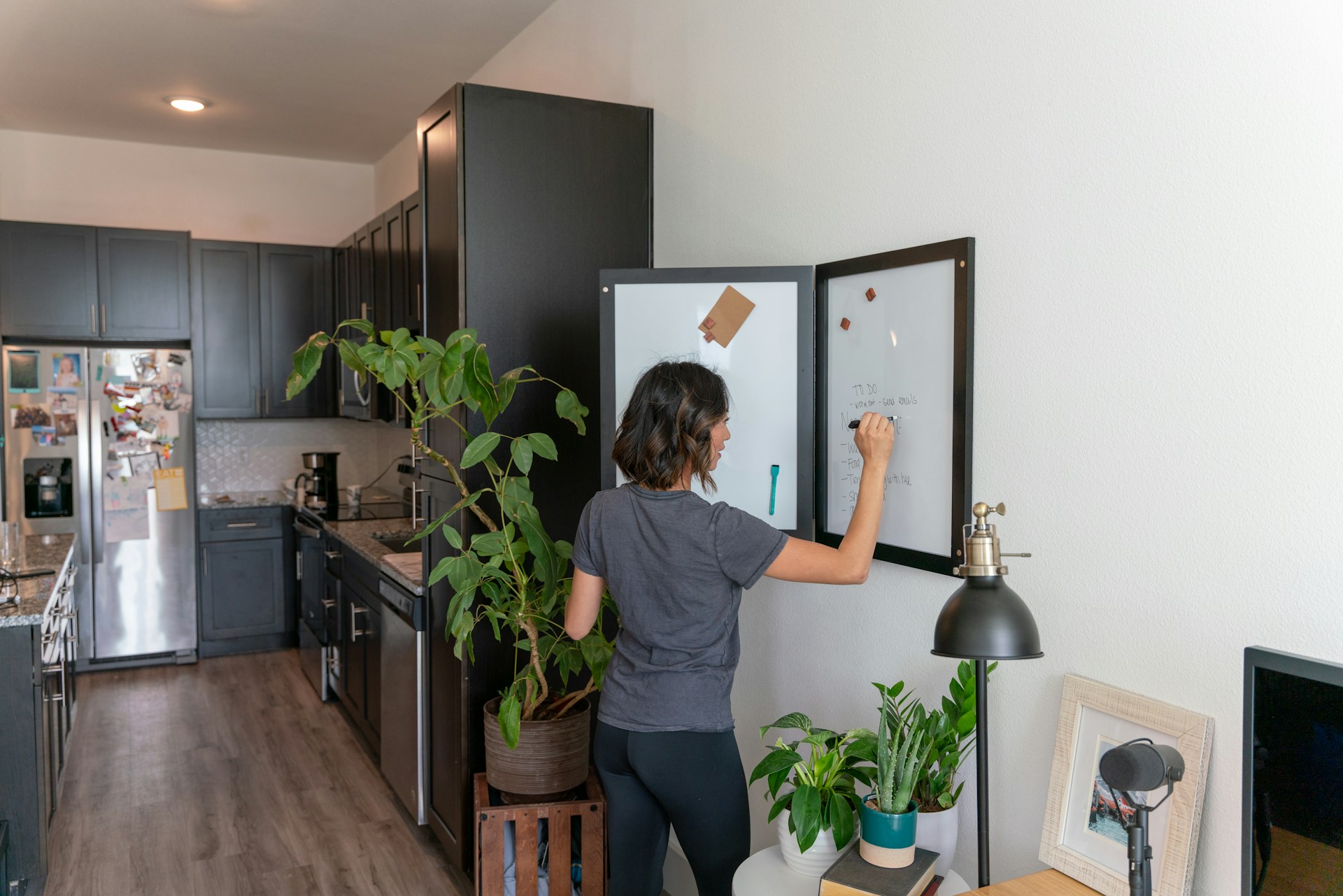
The visual planner or family chart helps everyone get their bearings during the week, anticipate activities and organize themselves better. It encourages children's autonomy, reduces forgetfulness and conflicts, and reinforces communication within the home. It's a simple, visual tool for a smoother, more serene family life.
5. A simple outing or activity together every week

Sharing a simple activity every week strengthens family ties. It creates shared memories and moments of complicity. These regular breaks allow us to get away from the daily grind and reconnect without distraction. They enhance the value of time spent together, even in simplicity. It's a precious routine for nurturing family harmony.
6. The "no rush" moment in the morning (advance preparation the day before)
This routine sets the tone for the day, without shouting or stress, in a calm, good-humored atmosphere. It's only possible with advance preparation the day before. It reduces stress, forgetfulness and tension, while providing quality family time. This routine creates a more relaxed, structured atmosphere from the moment you wake up.
7. Weekly family check-in (5-10 min)

A weekly family "check-in" creates a caring and rewarding space for discussion. It's an opportunity to take stock of the week. Everyone can express their feelings, celebrate successes and tackle future challenges. In 5 to 10 minutes, this routine strengthens listening, communication and family cohesion.
1. Plan everything down to the minute

Planning everything down to the minute creates constant pressure. There's no room for the unexpected, spontaneity and changing needs of family members. This rigidity can, in the long run, become stressful, frustrating and confrontational. Such a routine is difficult to maintain over time, and undermines the balance and flexibility of daily life.
2. Forcing daily educational activities to take place at set times

Imposing daily, fixed-time educational activities at home can become a source of frustration. This is particularly true when the child is not receptive or is tired. This rigidity limits spontaneity and the pleasure of learning. in the long term, it risks discouraging the child and damaging motivation, making the routine difficult to maintain.
3. Require a complete tidy-up every evening

The obligation to tidy up completely every evening can quickly become restrictive and a source of tension, especially after a long day. It can be tiring for children and parents alike. It creates unnecessary pressure, and can also turn a moment that's supposed to be soothing into a stressful chore. in the long term, routine loses its meaning and becomes difficult to stick to.
4. Forcing people to talk about their emotions every night

Whatever their age, people don't always have the desire or the words to talk about their emotions. Forcing them to talk about it every night can put unnecessary pressure on them. Such demands can make the trade seem artificial, leading to rejection. in the long term, it can undermine trust and spontaneity in family communication.
5. Making Sunday a "perfect day" for the whole family
Sunday is a day of rest, and the desire to make it a perfect day sets high expectations. The moment of relaxation then becomes an obligation, a source of stress and disappointment. This requirement leaves little room for spontaneity and improvisation. in the long term, this undermines shared pleasure and makes it difficult to maintain a routine.
6. Keeping to a rigid vacation schedule

Vacations, synonymous with freedom and relaxation, are a time to breathe. It's important not to be too rigid with your schedule, programming every hour. This can prevent you from making the most of this time with your family. Over time, this break can turn into a stressful, tiring and frustrating obligation, contrary to its original purpose.
7. Limit screens with ultra-strict control and no dialogue

Managing screen overload at home is essential. However, it's best to adopt an approach based on co-regulation, example and dialogue. Rigid prohibitions can create a climate of tension, conflict and resistance. This weakens communication and mutual trust. This routine is difficult to maintain over time.