Categories
Cottage Life

We picked our favourite Italian meal kit for cozy fall and winter dining

We cottagers might mourn the end of summer, but we’re just as quick to embrace fall. After all, we’re all about comfort, and what could be more comfortable than hikes without blackflies, afternoon naps with wool blankets, chilly evenings by the fire, and of course, our favourite comfort foods?

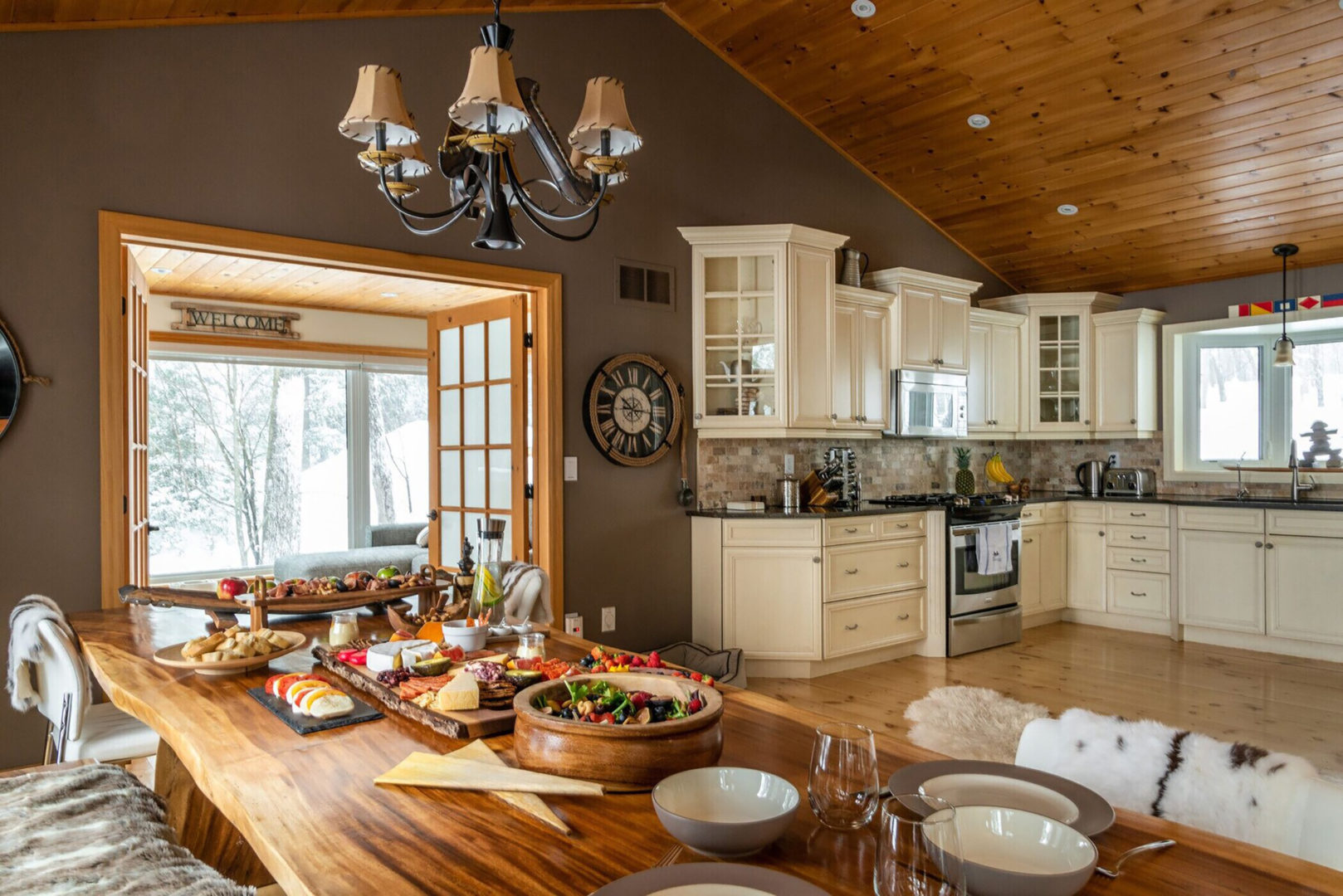
After trying a week’s worth of PORTA’s authentic and easy-to-prepare Italian meal kits, including their new fall-friendly risotto options, we discovered that restaurant-quality comfort food doesn’t require braving the cold. 

What is PORTA?

Promising “traditional Italian in 15 minutes or less,” PORTA, which literally means “door” or “carry,” brings Cosimo Mammoliti’s 30 years of chef experience to doorsteps throughout a large swath of Ontario, making at-home Italian comfort food more accessible than ever.

The process

I tried plenty of delivery-based meal kits during the pandemic, and PORTA’s flexible service is one of the simplest I’ve used. To start, visit eatporta.com and build a box by selecting from a variety of high-quality Italian dishes that are flash-frozen and vacuum-sealed for freshness. You can choose from pastas, pizzas, and new savoury risottos ($7.50 per serving), along with authentic Italian desserts and pastries. 

You can choose between a small (six items), medium (nine items), or large (15 items) box and select the frequency of delivery (weekly, bi-weekly, or monthly), all with the option to change meals or skip weeks whenever you want. The dishes then arrive right at your door in a box packed with dry ice, and the portions are perfect for two, with no unused ingredients or leftovers going to waste.

Ready to get started? Here are our top picks for fall, whether you’re preparing them at home or bringing them to the cottage:

Our fall favourite:

New to PORTA’s meal-kit options are three restaurant-quality risotto dishes, each of which you can easily prepare in under 15 minutes. Living up to the “restaurant quality” claim, the ingredients are all top-shelf. The risotto is made with Acquerello rice that’s been imported from Italy, and it’s a favourite of many of the world’s top chefs, as it passes through twenty selection and processing steps to combine the simplicity of cooking white rice with the nutrient density of whole-grain versions. The result is perfect risotto with less stirring and a shorter cooking time.

Other fresh, in-season ingredients are included based on the recipe you choose. Mantova features seasonal butternut squash, while Milano is a traditional saffron-based risotto dish. But our favourite is the savoury Bassano with its flavourful porcini mushrooms.

For pasta lovers:

All of PORTA’s pasta offerings ($18.99 for two servings) are enticing, but Ostia, named for a harbour city in Ancient Rome, stands out with its “cacio e pepe” (cheese and pepper) sauce featuring pecorino cheese and black pepper. Like all PORTA pasta, it’s made fresh and flash-frozen for maximum flavour.

For family pizza night:

Most door-delivery pizza has fallen far from the Italian ideal, and home-oven options haven’t done much to repair that tradition. But PORTA’s ten-inch handmade, Roman-style striata pizzas (available for $11.99) raise the bar with quality ingredients, light texture, and a crispy finish. Toppings include sophisticated creations like Checco (spinach, goat cheese, caramelized onions, lemon zest) and Carmela (mixed mushrooms, truffle oil, parsley), but the simple Peppino, with its San Marzano sauce, fresh mozzarella, and smoky pepperoni, is sure to please the whole family.

For anyone with a sweet tooth:

PORTA also offers classic Italian desserts, ready-to-eat right out of their reusable jars. These range from best-selling Tiramisu and Chocolate Mousse to their Butterscotch Budino and—our favourite—the Panna Cotta topped with fresh raspberry compote. And don’t forget the hand-rolled flaky pastries, which make the perfect grab-and-go cottage breakfast!

Ready for restaurant-quality Italian food at home? Visit eatporta.com to get started, and use code WELCOME20 to save 20% off your first box.

Categories
Cottage Life

6 questions you should ask before building a cottage

If you’re considering building your dream cottage, you may find that your bold vision of summers at the lake is grounded when a project starts hitting snags. Some setbacks are inevitable, especially with lingering supply-chain issues, but to keep the process on the rails, your best bet is to work with professionals who understand the ins and outs of building in cottage country.

“The best thing you can do before you start planning is to make an appointment with your Beaver Homes & Cottages Design Consultant,” says Kyle Duguay, Beaver Homes & Cottages’ Package Sales Marketing Manager. “Not just to ask whatever questions you already have, but to figure out what questions you need to ask. Because if this is the first time you’ve done this, you probably don’t know everything you need to ask.”

So whether you’re still looking for a qualified builder or you just want to get the most value out of someone you’ve hired, here’s what to ask before shovel hits dirt.

How soon should you start planning?

If there’s one key piece of advice that takes precedence when you’re planning a cottage, it’s that the sooner you start planning, the better your project will go. “If people are thinking about building next spring or summer, they really need to start planning now if they haven’t done so already,” Duguay says.

Obviously, a big part of that is because of the supply issues left over from the pandemic. “Things are normalizing, but they’re still taking some time. Different products have different lead times, and you never know what’s going to get pushed out for whatever reason,” he explains. “Just going through the building-application process, finding and vetting contractors, who are very likely booking into 2023 and may already be booked up, can be time-consuming, so you want to start getting those plans in place and start having those conversations.”

Should you buy an existing cottage or build a new one?

Of course, if you’re eager to spend summers at the lake without having to plan a new build, buying an existing cottage or lake home may sometimes be the best option. “It’s definitely more convenient, so long as you can find the right building on the right piece of property. And if it’s the right fit for you, then why put yourself through the stress of building from scratch?” Duguay says.

But if you’re looking for an existing cottage, you’re going to be dealing with obvious limitations based on what’s in the market in your chosen area. “The reason people choose to build is that, especially in recreational areas, there isn’t a lot of inventory. So in many cases, your best bet is to first find the right location, and then build the right house or cottage on it.”

How can you find the right contractor to build your cottage?

Once you’ve decided to build and you’ve got your plan in place—a crucial step that your Beaver Homes & Cottages Design Consultant will guide you through—you’ll need to book the right contractor to get the project underway. But finding the best builder for your project isn’t so simple, especially if you’re not familiar with the area where you’re building. “A lot of times, people are building in areas where they don’t live, so they don’t know the contractors in the area,” Duguay explains. “There are lots of ways to find them. You can search online for contractors. You can check with local lumber yards and building centres for contractors they deal with. And if you’re dealing with a Beaver Homes & Cottages Design Consultant, they can definitely refer you to some reputable builders.”

But it doesn’t end with a list of names from a credible source. Duguay stresses three steps in your assessment: you need to make sure they’re good at what they do, they need to be available within your timeframe, and they need to be a good fit, personality-wise. “You can have the best contractor in the world, but if it’s not a good fit for you, you’re going to be butting heads all throughout the project, and it’s going to be a miserable experience for everybody,” he explains.

References are another key piece of the selection process. “Don’t just ask for the references; you also need to check those references,” he insists. “You want to hear the good, the bad, and the ugly from the customers they’ve dealt with. Even if it was a positive experience, you can still gain insights about whether they’ll be the right fit for you.

How can you find the right lot to build on?

Once you’ve decided to build, you’ll need to find the right property to build your dream cottage. But don’t assume that every plot of land can accommodate your vision. “If you see a piece of property that comes up for sale every twelve months, there could be an issue with buildability,” Duguay says. “So you need to do your due diligence to make sure you can actually build what you’re hoping to build.”

That means you’ll need to work with a real-estate agent who understands the difference between buying an existing house or cottage and buying a lot for building your own. It also means that, before you make an offer, you’ll need to sort out any setbacks you might be dealing with. “Ask what kind of easements or right-of-ways are on the property,” he advises. “You could have all sorts of restrictions that narrow your building envelope, limiting what you can build or where you can build. Maybe there’s a nice river running through the property, and you want to look out the kitchen window right onto that river. But with unexpected setbacks, you might need to build in a spot where you can’t even see it from the second-story window.”

What are the hidden costs of building a cottage?

Depending on the property you purchase, you might also be facing a number of hidden costs that you didn’t anticipate when budgeting for the build. One of the big ones, Kyle advises, is the cost of excavating if you’re building on bedrock. “Excavation and blasting can easily be five figures. I’ve heard of people spending $50,000 just to blast out the rock to put in the footings.”

Other hidden costs can spring up where you least expect them. “You need to think about the services you need to run into your property,” he says. “Most cottage properties aren’t on municipal services, so you need to know how much it’ll cost to run the electricity in. Do you need to run additional poles? Do you have to drill a well? And how much will the septic system cost? These are all things beyond the house proper that you’ll have to invest in.”

And of course, every would-be builder has to consider the cost of securing local permits. “Permits are something most people are aware of, but they might not be aware of how much they cost. It can vary, and you might need multiple permits depending on where you’re building,” he cautions. “And beyond permits, a lot of places are now instituting development fees. So the permit might be $2500, but then there’s a $10,000 development fee on top of that.”

Finally, too many people forget to budget taxes into the cost of their overall build. “If you forget the taxes in Ontario, you’re automatically thirteen per cent over budget,” he says. “So you need to take your total budget and then work backwards, taking all of the soft costs—the permits, development fees, and other things—and then factor in the taxes, so the actual amount of money you have to play with is probably less than you think. And one of the main jobs of a Beaver Homes & Cottages Design Consultant is to help you stay within the budget that you set.”

What should you prioritize in your cottage design?

Once the contractor’s been secured, the land has been approved, and the hidden costs have been accounted for, the real fun can begin, as you start working with your consultant to bring your vision to life. But you’ll need to ask some crucial design questions to make sure you get the most value out of your budget. In particular, figure out which parts of the design are worth investing in up front. “You want to prioritize what’s important to you and your family in terms of how you plan to use the cottage,” Duguay says. “Is it just for your immediate family? Are you planning to rent it out? Do you want a bungalow if you’re trying to avoid stairs as you get older? Do you need a main-floor master bedroom or a garage? What about a separate garage for cottage toys?”

Most importantly, you should focus your money on the things that you can’t easily change later on. “Invest your money in the structure and the bones of the house, maybe at the expense of having really nice flooring,” Duguay says. “Because the finishes and fixtures are all things that can be upgraded down the road. Whereas if you don’t have the bones right, you might be looking at putting an addition on, which is a lot more expensive than doing it right in the first place.” You’ll also want to strongly consider low-maintenance products and finishes so that you can spend your time at the cottage relaxing instead of coping with constant upkeep.

As you begin the process of building your dream cottage, you’ll encounter plenty of other questions along the way. And your Beaver Homes & Cottages Design Consultant will be there to help you answer them. The key is to start sooner rather than later. “It all comes down to asking the right questions early so you can get all your ducks in a row,” Duguay says. “If you do that, it makes your life easier.”


Ready to bring your vision to life? Reach out to your local Beaver Homes & Cottages Consultant and start the conversation today at beaverhomesandcottages.ca.


Categories
Cottage Life

Stolen trailer full of Muskoka chairs worth $110K, says OPP

Keep your eyes peeled for Muskoka chairs that are suddenly on sale. It may warrant a call to the police.

The Ontario Provincial Police’s (OPP) Bracebridge detachment is investigating the theft of a 24-foot enclosed trailer stolen from the Muskoka Chair Company’s property on Henshaw Lake Road in Muskoka Lakes Township on Halloween night.

Inside the trailer were 180 Muskoka chairs, unassembled and packaged in boxes. Each chair is valued at approximately $500.

Muskoka Chair Company
Photo Courtesy of Bracebridge OPP

Between the trailer and the Muskoka chairs, the stolen goods are valued at $110,000.

“As a small business, we feel this invasion of our space deeply. It’s honestly infuriating. Please keep your eyes peeled, and if you see this trailer anywhere, please call the local police,” the Muskoka Chair Company wrote in a Facebook post.

A family-run business founded in 1995, the Muskoka Chair Company is well known for its colourful, reclining chairs crafted from cedar, recycled plastics, and other materials. The iconic chairs have become symbols of cottaging in Ontario, dotting docks across the province.

It’s unclear exactly when the theft occurred, but a white pick-up truck was caught on camera on the night of October 31, the night of the theft, driving away from the Muskoka Chair Company property with the trailer.

Stolen Trailer
Photo Courtesy of Bracebridge OPP

“Any information from the public is usually what helps us get some movement in an investigation,” says Provincial Constable Samantha Bigley. “Anyone in the area that may have video footage from their own private properties, some people have their own surveillance cameras or video doorbells, those sorts of things can give us more clues on how to identify the suspect vehicle. Information from the public is always key in helping solve these.”

The Bracebridge OPP asks anyone with information or video footage of the stolen trailer to contact (888)310-1122. If you want to remain anonymous, meaning you won’t have to testify in court, call Crime Stoppers at 1-800-222-8477 or submit your information online at www.crimestopperssdm.com. Providing Crime Stoppers with information could lead to a $2,000 cash reward.

Categories
Cottage Life

Cottage Q&A: Dust control on a gravel road

Do you have any suggestions for dust control on a gravel road?—Phyllis Allen, via email

We assume this road is a private road, since generally, dust control on a municipal road would be the responsibility of your township. We also assume that you’ve posted signs asking drivers to curb their speed, since that’ll help reduce the dust. (If drivers are using this road when they shouldn’t be, you have every right to post “No Trespassing” signs.)

But back to the dust. “The accepted method for dust control is calcium chloride,” says Don Mackenzie, a technical consultant for Hutcheson Sand & Mixes in Huntsville, Ont. “It binds to the finer aggregate particles in gravel, which are the ones that cause the dustiness.” 

It’s possible to hire small trucks from companies that distribute calcium chloride to apply it to your road in liquid form. It’s worth it, says Jeff Waldon, the roads supervisor for the Township of North Kawartha. “It really is a great product.” A once-a-year treatment may be enough. (You can also buy bags of flaked calcium chloride to apply yourself, ideally with something like a fertilizer sprayer, but the dust-suppressing effect won’t last as long.)

But here’s the thing: most gravel roads need other forms of TLC, grading, for example, to keep the gravel in place and to prevent potholes. This is why some groups, such as the cottagers on Malachi Lake, Ont., pay a company to do regular maintenance. As part of that, the company applies magnesium chloride (it works similarly to calcium chloride). Six kilometres of road was treated five or six years ago, says Al Campbell, the lake association’s road manager. “And the treatment is still working.” Unfortunately, it was expensive, he admits—about $12,000 to $13,000.

How to fix 8 common cottage road problems

Way cheaper? Water. But it’s not practical, says Waldon. You’d need a water truck, and “you’d be constantly watering. Watering and watering.” 

There’s got to be a better way! The Kenogamissi Hydro Road Committee, which maintains a portion of the road into Kenogamissi Lake, near Timmins, Ont., is investigating using RAP—reclaimed asphalt paving, a.k.a. recycled asphalt—as a coating substitute for “A” gravel (the layer of fine material that usually tops a gravel road). A side benefit? It controls dust. The group sources the RAP from a local paving company. “It’s basically the ground-up asphalt that comes up during a ‘shave and pave,’ ” says Brian Jones, a committee member. Chunks of old asphalt are milled into a grainy mix of aggregate and asphalt cement and compressed. 

Cottage Q&A: Road quality and cottage property value

The Kenogamissi crew has only used RAP on a test portion of the road, but so far, Jones has been pleased with the results. The material cost is similar to that of gravel, rainfall hasn’t washed it away, and it has stood up to Jones’s steel-toed boots when he attempted to forcibly dislodge the millings. 

There’s no one-size-fits-all fix for a dusty road. And the only truly free solution—no money, no time—would be to let the road fall into an undriveable state. “Leave lots of potholes and lots of washboarding, and people will slow down or avoid the road altogether,” says Don Mackenzie. You wouldn’t have much dust. You’d just have all kinds of other road problems.

This article was originally published in the September/October 2022 issue of Cottage Life magazine.

Categories
Cottage Life

Ontario government proposes extending Rondeau Provincial Park cottage leases

Once again, the Ontario government has decided to spare Rondeau Provincial Park cottage owners…for the time being.

On October 26, the Ministry of Environment, Conservation, and Parks (MECP) proposed a two-year extension to the cottage leases in Ontario’s second-oldest provincial park. The proposal would allow owners to remain in the park until December 31, 2024. The proposal is currently open to public consultation.

The cottagers, who occupy 279 privately-owned cottages on approximately one per cent of Rondeau Provincial Park’s 8,000 acres, own their cottage structures but lease the land from the provincial government. This tenancy agreement has been in place in Rondeau since 1894 when the government first surveyed 20 cottage lots within the provincial park.

This is the third lease extension the provincial government has enacted in the last five years, and the Rondeau Cottagers Association isn’t happy about it.

“We’re quite disappointed that it’s come to this. We’re angry, we’re frustrated with the level of incompetence and intransigence in the bureaucratic field. And here we are again, another two-year temporary solution, which really just continues to forestall the problem that’s been going on for 60 years,” says Keith Graham, a director of the Rondeau Cottagers Association.

In May of 2021, the Rondeau Cottagers Association and the municipality of Chatham-Kent, which houses Rondeau Provincial Park, proposed a long-term solution to the provincial government. Chatham-Kent would pay the provincial government a lump sum and would then resell the land to the cottagers, rather than the government having to deal with 279 individual transactions.

The total value of the lots was estimated at $29.2 million. To sweeten the deal, Chatham-Kent also offered to transfer Clear Creek Conservation Area, a Carolinian forest approximately 20 kilometres from the provincial park, to the province in exchange for the 40 acres of land.

This way, cottagers would keep their properties and Chatham-Kent, which receives tax payments from the cottagers, would maintain a significant section of its tax base.

“The prior minister and his staff were very supportive of that. They thought it was a perfect solution,” Graham says. “And then I’d say it got down to the bureaucrats and nothing happened.”

Over the last several months, the government stopped answering cottagers’ calls. “They’ve been unwilling to engage in any manner,” Graham says.

The cottage leases were set to expire at the end of 2022. Up until last week, when cottagers received a letter about the short-term extension from the government, owners weren’t sure whether their cottages were going to be demolished in January.

Graham says it feels like the government is yanking them around. With no long-term solutions on the horizon, cottagers have spent the last five years deciding whether it’s worth paying to repair and upkeep their properties.

The government has been tight-lipped on future plans for the park. When asked why the government would want cottagers out of the park and what its plan was beyond December 2024, the MECP did not respond in time for publication.

There has been some pressure from environmentalists who were opposed to the private sale of the park land. In 2021, activist Ken Bell started an online petition lobbying the MECP to make the land public, claiming that cottagers have damaged the park’s ecosystem.

But Graham says this claim has no founding. “They don’t understand that the park was created for cottaging. It’s the only park that we’re aware of that was created for that purpose,” he says. “It’s a park that has more species of flora and fauna, more protected species, than anywhere else in the province. They’re obviously flourishing here, and our community has been here for 120 years. So, it’s pretty obvious we’re not hurting the environment.”

Approximately 10 years ago, the cottagers’ association and the provincial government conducted separate water quality tests. Both studies showed that the water was in great shape. Graham says he hoped this would show that cottagers weren’t poisoning the environment.

He also points out that demolishing cottages in the park, along with infrastructure, such as hydro lines and septic systems, would cause more damage to the environment than leaving the cottages as they are.

It seems many park users agree. During the public consultation period for the last cottage lease extension, the comments were overwhelmingly in support of cottagers staying in the park.

Over the next two years, cottagers will remain on tenterhooks waiting for the government to make a decision. From the cottagers’ perspective, Graham says buying the cottages through Chatham-Kent is still the most viable option.

“Two of the three parties want to find the solution. One part of the other party, the political leadership, knows they need to find a solution and have tried to do that in the past. Although, they never take the final step,” Graham says. “Meanwhile, the people in the middle, the bureaucrats, keep stalling things and nothing happens.”

Categories
Cottage Life

Appellants say Tiny Township’s STR rules insufficient for addressing ‘ghost hotels’

Community members in Tiny are pushing back against the township’s new short-term rentals regulations. Two separate appeals have been filed with the Ontario Land Tribunal over the new zoning bylaw changes that were approved by the township in October to assist with the new short-term rental regulations. The changes include a definition for short-term rentals, parking standards for rental units, and a ban on renting out accessory structures such as bunkies.

The appeals were filed by Good Neighbours Tiny, a group promoting “family-oriented residential neighbourhoods”, and the so-called Tiny Township Association of responsible short-term rental owners. 

“When you have both sides appealing the regulation, in this case, the zoning bylaw, it likely means that you didn’t do your job well and you failed to bring forth the regulation that actually fulfills its purpose and intention,” says Jelena Vuckovic, of the Tiny Township Association of Responsible Short-Term Rental Owners.

Jelena Vuckovic and her family during Christmas at their cottage in Tiny. Photo courtesy of Jelena Vuckovic

Vuckovic has owned a property in Tiny since 2020 and has been renting it out periodically to earn supplemental income. “We are just trying to stay afloat in this economy, put our kids through school, and make financial decisions that make sense for us now and when we retire,” she says. 

Vuckovic would like to see Tiny strengthen its current bylaw enforcement to bring problem rentals under control. “I think most of the complaints and issues can effectively be resolved by implementing and enforcing the existing regulations already at the Township’s disposal such as noise bylaws and building and fire codes,” she says.

Debbie Galbo and Jennifer Hierholzer of Good Neighbours Tiny also filed an appeal against the township’s new zoning regulation. They are neighbours in Tiny and both live next to a rental property which they say has housed many large and noisy groups over the last year. “It’s been a nightmare,” says Galbo. They’ve had to deal with garbage and parked cars filling up the street, and countless noise disturbances. 

Good Neighbours Tiny would also like to see the township strengthen bylaw enforcement. They would like to see bylaw officers accessible on evenings and weekends, to better deal with excessive disturbances. “We can tell you we don’t need bylaw on Tuesday at noon,” says Hierholzer. “Generally the bylaws are not being broken during the day, it’s in the middle of the night.”

Shawn Persaud, the director of planning and development at Tiny, says the new zoning bylaw doesn’t permit tourist establishments in residential areas, but it does codify where short-term rentals are permitted. “Basically, they’re permitted in all residential areas,” he says. This is something Galbo and Hierholzer would like to see changed. As they see it, there should be a separate classification and ban on short-term rentals being operated as so-called “ghost hotels” which they define as properties owned and operated for the sole purpose of short-term renting. “They should have had clear definitions of the ‘ghost hotels’ so they can shut them down immediately,” says Hierholzer.

Persaud says short-term rentals were legal before the bylaw, but the changes introduced by the Township are a move to regulate the industry. “Our interpretation is short-term rentals have always been permitted in Tiny Township,” says Persaud. “However, we needed to regulate it because it was getting out of hand as far as the number, as well as the duration of use and that, was really creating a negative impact.” 

Vuckovic also says that “ghost hotels” are an issue in Tiny, but she says the vast majority of rental owners she’s talked to are part-time renters like herself. She acknowledges the new short-term rental regulations don’t account for the differences between the two groups. While the bylaw prohibits corporations from owning short-term rentals in Tiny, Vuckovic says nothing prevents individuals from operating ‘ghost hotels’.

Vuckovic says she supports the idea of a short-term licensing system but says costs related to the new licensing regime, including a $1,500 fee as well as costs for electrical, HVAC, and wood-burning appliance inspections, will push small-time rental operators like herself out of the market. “Instead of driving out illegal ‘ghost hotels’, it will drive out families like mine,” she says.

Current deputy mayor and councillor-elect Steffen Walma says the township believes in its current short-term rental regulations, but the appeals will be weighed through the judicial system. “People have the ability to challenge laws/bylaws at any level of government,” he said. “The township believes what we have done is fair, in the best interest of the community, and procedurally correct.” 

Categories
Cottage Life

Having trouble waking up? Try a sunrise alarm clock

Our editorial team independently selects these products. If you choose to buy any, we may earn a commission that helps fund our content. Learn more.

Fall and winter mean dark mornings that make it hard to wake up. Enter the best invention to ever grace your nightstand: the sunrise alarm clock. You can mimic summer cottage mornings with the soft light and the birds chirping, all with the touch of a button. We can’t promise you’ll jump out of bed whistling, but these sunrise alarm clocks just might make those early winter wake-ups a bit more tolerable.

Categories
Cottage Life

This year’s most popular destinations for vacation rentals in Canada

Looking to go on an amazing vacation with your loved ones in the coming months? Whether you’re hoping for beautiful autumnal hikes, a big-city adventure or an epic ski holiday, you’ll find the perfect whole-home rental for your trip on Vrbo Canada

From coast to coast, here are ten destinations that are popular this year for fall and winter getaways.  

Vancouver, BC

From beautiful beaches to great shopping, Vancouver’s got it all. Book a charming home in Kitsilano a high-rise apartment or condo downtown and your family will be well situated to explore the city’s many attractions. In the fall, you can take a hike up the famous Grouse Grind, visit the Vancouver Art Gallery, catch a movie at the Vancouver International Film Festival, experience award-winning restaurants and shop at the Granville Island Public Market

Whistler, BC

This four-season resort town one-and-a-half hours north of Vancouver is popular with skiers, snowboarders and outdoors enthusiasts alike. In the fall, there are golf courses and mountain biking trails to enjoy, and for winter the 8100-acre Whistler Blackcomb resort is North America’s largest ski resort with over 200 runs. Book a modern condo or ski-in/ski-out townhome on Vrbo and be at the heart of the action. Many rentals even include access to hot tubs and heated pools, so you can have some fun après-ski time, too. 

Kelowna, BC

Fall is a lovely time to visit Kelowna, a city in the Okanagan Valley of British Columbia. From sailing to trail rides and scenic hikes to wine festivals, you’ll find many agri-tourism attractions while the leaves will be changing colours, the weather will still be good – so there are opportunities to go apple picking or experience a corn maze with your family.

Banff, AB

Banff is stunning year-round, but it’s a truly magical destination in winter. Vacation home rentals are available right in the national park, and from there you’ll be able to ski and snowboard at nearby alpine resorts, visit the Banff Upper Hot Springs and take a gondola up Sulphur Mountain. From Banff, it’s also possible to take a quick day trip to explore the Columbia Icefield or go ice skating on Lake Louise, either on your own or as part of a guided tour.

The Blue Mountains, ON

Just over two hours’ drive from Toronto, this town in Grey County is liveliest during the winter season. Blue Mountain Resort is a popular local ski and snowboard destination, and there are several other ski clubs nearby. In the area, there is also mountaintop skating, an indoor-outdoor aquatic centre, an adults-only Nordic spa, and many family-friendly restaurants and quaint shops.

Toronto, ON

As the fourth largest city in North America, Toronto offers plenty of attractions for visitors any time of year. Book a vacation home downtown, and you can walk or take public transit to top destinations such as the Art Gallery of Ontario, The Royal Ontario Museum and the CN Tower. In the fall and winter, you can attend an NBA game, browse the eclectic shops at Kensington Market, and get into the holiday spirit at Distillery Winter Village.

Muskoka Lakes, ON

Fall is a beautiful time to be in Muskoka with the leaves changing colours. There is a local Oktoberfest celebration, and the cranberry harvest at Muskoka Lakes Farm & Winery typically starts in late September for you to enjoy. Cottage rentals are more available and affordable in the shoulder season, and you can still partake in activities such as kayaking, hiking, and golfing.   

Mont-Tremblant, QC

In the winter, Mont-Tremblant offers snow enthusiasts opportunities for skiing, snowboarding, snowshoeing, fatbiking, alpine touring and more. Through Vrbo, you can book a ski-in/ski-out vacation rental for your family right in the ski resort’s pedestrian village, where there are shops, restaurants, and children’s playgrounds. 

Montreal, QC
To experience autumn in Montreal, start by seeing the fall colours at the city’s botanical garden or Mount Royal Park, and then explore the historic Old Montreal neighbourhood. You can book tickets for one of the local film festivals, or city’s restaurant week, MTLàTABLE, which is taking place from November 3–13 this year.

Prince Edward Island

If you’re thinking of visiting Prince Edward Island this fall, you don’t want to miss the annual PEI Fall Flavours Festival, which takes place from September 8 to October 8, 2022. It’s an opportunity to meet top Canadian chefs, go on unique culinary tours and, of course, enjoy the area’s incredible seafood. 

Want to embrace the ultimate “together” experience this season? Learn more about finding the perfect rental with the help of Vrbo.

Categories
Cottage Life

7 tips to keep your plumbing from freezing

Getting water to the cottage is only half the battle. Reduce the risk of your indoor plumbing freezing with these tips.

1) Open cupboard doors below your sinks so that warm air can circulate and get to plumbing on the back wall.

2) Open interior doors to promote consistent temperatures throughout the cottage.

3) Seal up holes or cracks around cables and sill plates that allow cold air to blow in.

4) Insulate or install heating cable in sensitive areas (e.g., unheated basement or plumbing that runs on an exterior wall).

5) Have a backup power source. Jeremy Begin, the owner of Cottage Country Plumbing in Bracebridge, Ont., recommends having a generator on hand to power heaters and heating cable in the event of a power outage.

6) Set the heat to at least 13°C when you’re not at the cottage and don’t turn the thermostat down at night.

7) Ask someone to keep an eye on things while you’re away. “Have a property manager, maintenance person, or friend check on your property,” says Begin. Ideally, every couple of days, but at least once a week. He most frequently gets calls about frozen pipes in January, when the temperatures drop to -30°C or -40°C overnight.

This article was originally published in the Winter 2021 issue of Cottage Life magazine.

Categories
Cottage Life

B.C. gov. bans use of rodenticides over concerns about food chain seepage

B.C. is changing its approach to rodent management.

On October 28, the province’s Ministry of Environment and Climate Change announced that it is permanently banning the widespread sale and use of second-generation anticoagulant rodenticides (SGARs).

These are chemical agents designed to kill rodents by preventing their blood from clotting, causing internal bleeding. Rodenticide poisons have become the default strategy worldwide for handling rodent problems, but they come with a number of side effects.

The B.C. government implemented an 18-month ban on SGARs in July 2021 to further understand the poison’s effects. After public consultations and consultations with experts, the government decided to make the ban permanent starting January 21, 2023, when the temporary ban expires.

SGARs are often mixed with an attractant, such as peanut butter, and baited inside small black boxes. The chemicals are highly toxic to all types of wildlife, and there have been cases where animals other than rats and mice have been poisoned, such as squirrels, cats, and even dogs.

The B.C. government is concerned about secondary poisoning. The deadly chemicals can last in the rodent’s tissues for up to 24 months, even after death. Any predator that eats an infected rodent is at risk of secondary poisoning.

Between 1988 and 2003, scientists collected 164 B.C. owls to test for rodenticide. The study found that 70 per cent of the owls had detectable liver residues of at least one anticoagulant rodenticide. The study did note, however, that only six of the owls died from rodenticide poisoning. The rest died from other circumstances.

Secondary poisoning from rodenticide is most common among raptors, but it has also been found in other predators, such as coyotes and foxes. There is concern among experts that predators are dying through secondary poisoning and effectively allowing rodent populations to thrive and spread diseases contagious to humans.

Despite the risks associated with SGARs, the government is making exceptions to the ban. To balance the need to protect wildlife, while protecting the delivery of essential services, the government said that agricultural operators and essential service providers, such as hospitals, grocery stores, and even telecommunication services, will be allowed to continue purchasing SGARs. The SGARs can only be purchased and used by a licensed pesticide applicator.

Before using SGARs, the pesticide applicator must identify the species of rodent and monitor the population size to assess the risk. After using SGARs, they must properly dispose of the dead rodents, so that they don’t pose a threat to other wildlife. Vendors can only sell SGARs to licensed applicators and they must keep track of all sales for at least three years.

Tips for deterring rodents

  • prune excessive vegetation where rodents might nest
  • ensure doors and windows are flush with their frames
  • plug any holes with steel wool (mice can fit through a hole the size of a dime and rats a hole the size of a quarter)
  • keep all attractants, such as food and compost, in sealed bins

Not everyone agrees with these exceptions, though. B.C.’s Society for the Prevention of Cruelty to Animals (SPCA) said that all anticoagulant rodenticides should be banned. The organization noted that compliance with proper SGARs use has been lax in the past. In 2019, provincial officers conducted 311 SGARs inspections. Only 39 per cent of those inspected complied with proper protocols. The organization is concerned that this type of misuse could continue.

SPCA also pointed out that first-generation anticoagulant rodenticides (FGARs) are still legally available for use. These products are slower-acting and less potent than SGARs, but can still pose a poisoning risk to wildlife.

Instead, SPCA is advocating for more humane rodent management strategies, such as prevention.

“The BC SPCA is committed to supporting the transition from rodenticides to more humane pest control strategies,” the organization said in a statement, “and is working with municipal staff to ensure there is a sustainable plan for their communities.”