Regardless of what major smartphone manufacturers like Apple and Samsung claim, their devices are still relatively easy to break, especially regarding the front and back glass.
That could change if Corning’s claims surrounding Gorilla Glass Victus 2 are accurate. The glassmaker says smartphones that feature its glass should be capable of surviving a 1m drop directly onto concrete. Further, the company says that Victus 2 will still be able to make it through a 2m drop on smoother surfaces like asphalt, withstand 20 one-metre drops in a row, and remains insusceptible to scratches, just like Victus 1.
It’s unclear what Corning has changed regarding its Victus glass to add this extra durability. That said, a video featuring the company’s VP Scott Forester (see below) says that the glassmaker used more “stress profiles” to find a design to withstand concrete better.
“Over 30 percent of the drops they were having were on concrete, more than any other surface,” says Forester in the video.
It’s unclear what devices will feature Victus 2, but we’ll likely see it first in Samsung’s S series smartphones and then possibly a version of the glass tech Apple’s iPhone. Apple recently partnered with Corning for its exclusive ‘Ceramic Shield’ glass.
Will Corning’s Gorilla Glass Victus 2 live up to its lofty claims? Only time will tell.
“Some games and apps might experience lower than expected performance or stuttering on Windows 11, version 22H2. Affected games and apps are inadvertently enabling GPU performance debugging features not meant to be used by consumers,” reads the blog.
As a safeguard, Microsoft had initially applied a compatibility hold, which prevented devices that were likely to be affected by the issue from being offered or installing Windows 11, version 22H2. Further, for those already on the 22H2 update, Microsoft recommended updating their games, and gaming-related applications to the latest version available.
Now, however, Microsoft has removed the Compatibility Hold, and a new Windows Update KB5020044 is available to install that offers a fix to the performance issues. That is all that the company said. It did not mention what exactly was causing the problem, or what it changed to fix it.
However, the company did share that the update includes regular bug fixes that Microsoft normally includes with its monthly releases, alongside new Windows Spotlight features, OneDrive subscriber storage alerts, total OneDrive storage visibility in the ‘Accounts’ page, and more.
Read the complete Windows Update KB5020044 release notes here.
According to details shared by Twitter employees, Blue will relaunch with a one-cent price increase from $7.99 to $8 in the U.S. and will require phone number verification. It’s unclear if that’s the only tool Twitter will deploy to verify Blue subscribers or if the company has plans for another, more thorough system. Moreover, Musk’s refreshed Blue cost $9.99 in Canada when it initially launched — it’s unclear what, if any, price increase it will get with the relaunch.
Particularly interesting is the reported plan to dodge Apple’s App Store fees. Musk recently went on a Twitter tirade accusing Apple of hating free speech after the company allegedly reduced its ad spending on Twitter. During the tweetstorm, Musk posted about Apple’s 30 percent App Store fee, claimed Apple threatened to withhold Twitter from the App Store and tweeted then deleted a meme about going to war with Apple.
Twitter seeks to dodge 30 percent Apple fee amid falling ad revenue
Musk’s attack on Apple was hardly a surprise. Many saw it coming amid Musk’s pivot to Blue subscriptions to make money for Twitter (primarily offered through the App Store, where Apple takes a cut) as the platform’s ad revenue plummets. Platformer reported that Twitter’s ad losses were growing, with revenue in Europe, the Middle East, and Africa (EMEA) down 15 percent year-over-year and weekly bookings down 49 percent.
It’s not immediately clear how Twitter will dodge the App Store fees, but the most likely approach will be offering Blue only through Twitter’s website and not as an in-app purchase. If that’s the path Twitter takes, it’ll be interesting to see how Apple responds. Last year, Apple won a stay on implementing changes to the App Store that would allow apps to direct users to alternative payment options (itself a part of the results from the Epic Games vs. Apple lawsuit).
However, Apple is still bound by an agreement with the Japan Fair Steering Commission, which requires Apple to let ‘reader’ apps (Netflix, Spotify, Amazon’s Kindle app, etc.) directly link their customers to their own sign-up sites. If Twitter falls into the reader app category, it may be able to push people to sign up for Blue elsewhere, effectively avoiding Apple’s fees. If Twitter doesn’t fall into that category of apps but pushes the change through anyway, Apple might remove it from the App Store as it has done with other apps and games (notably, Fortnite). If that happens, it’ll likely cause quite a stir, especially since Musk has already stoked concerns that Apple will remove Twitter from the App Store.
You can follow the tumultuous timeline of Musk’s Twitter takeover here.
As more satellite internet providers have joined the race, SpaceX’s Starlink saw a slight dip in its speeds over the last quarter.
According to Ookla, Starlink’s download speeds over Q3 dropped at least 14 percent in Canada. Download speeds sit at 65.80Mbps, and upload speeds are 9.21Mbps.
Comparatively, fixed broadband speeds improved by eight percent in Canada, reaching download speeds of 115.18Mbps and upload of 29.29Mbps.
Even with slower speeds, customers should be able to stick to their regular connectivity habits, with the biggest issue lying in multiplayer online games. “Without a doubt, Starlink often can be a life-changing service for consumers where connectivity is inadequate or nonexistent,” the analysis states.
Ookla’s reports show Starlink’s speeds also decreased in the U.S. over the last quarter. The figure comes as the company expands its services worldwide, including in Canada’s north. Starlink had 400,000 users during the second quarter of this year.
Canadians filed 12,790 complaints about their service providers this year.
The figure is a 25 percent decrease from the year prior, according to the Commission for Complaints for Telecom-Television Services’ (CCTS) annual report.
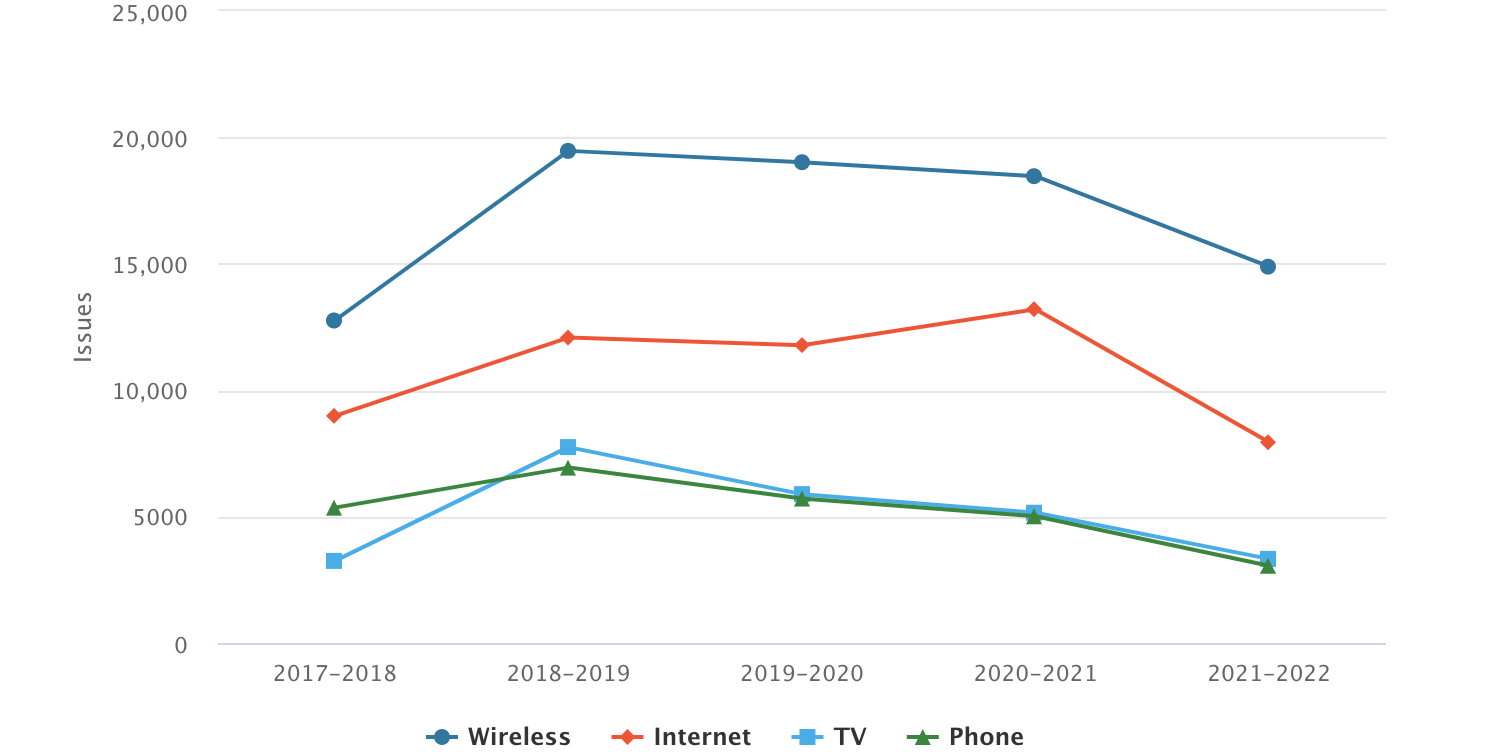
Covering complaints between August 1st, 2021 and July 31st, 2022, the complaints covered nearly 30,000 issues. Wireless issues represented 51 percent of the issues, and internet problems represented 27 percent od the issues. Internet issues decreased by 40 percent over the year, while wireless issues decreased by 19 percent.
A five-year view of issues by service type. Image credit: CCTS
Wireless
Despite the decrease in wireless issues, they represent a larger present of all issues compared to last year, which sat at 44 percent in the last report.
Problems with wireless romaing charges increased by 130 percent, returning to levels seen prior to the pandemic.
Wireless device financial plan issues increased by 142 percent, a “troubling trend” the CCTS is “concerned” about.
Issues with chargeable messages, which include nationwide and international longdistance calls, increase by 39 percent.
Internet
Figures in the internet category fair better compared to the wireless category. Issues were raised 7,939 times, the lowest in five years.
Quality of service remains the most common issue. Incorrect charge relating to monthly price plan is the second most complained about issue, and disclosure issues are third.
Disclosure
Out of all the issues raised over the past year, disclosure continues to be the most complained about issue, representing 13 percent of the overall figure.
Bell represents the highest proportion of all disclosure issues at 19 percent, however, the carriers year-over-year complaints dropped by 49 percent in the category.
Discloure complaints dropped across nine providers, but that wasn’t the case for Telus. The company represents nine percent of all disclosure issues and saw its its complaints increase by four percent.
Disclosure issues are categorized by type of service. Image credit: CCTS
Contract conflicts with agreement is the most common problem with disclosures. “[This] concerns a conflict or mismatch between what a customer has agreed to purchase and what their contract indicates,” the report states.
Out of the big three, Bell represents the highest proportion of this problem, with 20 percent of the overall grievances.
The second most common disclosure problem is when providers fail to provide customers with information about promotios. Rogers leads in the category with 19 percent of the issues this year.
Now is a great time to upgrade to Spotify Premium if you aren’t currently a subscriber.
As part of a new promotion, the music streaming platform is offering Spotify Premium for free for three months. After the three-month trial is over, you’ll be charged the standard $9.99 per month. The Premium version of Spotify offers ad-free music listening, unlimited skips, higher-quality streams and offline listening via downloads.
According to Spotify’s website, the offer ends on December 31st, 2022. It’s worth noting that this deal isn’t available to current Premium subscribers or users located in Quebec.
No matter if you’re a content creator or photography enthusiast, a camera is your gateway to capturing your vision. Those who enjoy a vintage, stylish aesthetic to pair with their top-of-the-line photography experience, need to look no further than Nikon’s Z fc.
Nikon’s Z fc is an APS-C mirrorless camera. It’s the second crop-sensor camera from Nikon using the company’s Z mount. Though Nikon serves up contemporary specs with its latest offering, the camera’s design evokes an older era of photography.
The look of the Z fc feels very much inspired by the camera company’s 35mm FE series. Complete with that same late-70s aesthetic, Nikon’s Z fc allows users to tweak an assortment of settings to get a real ownership over how a video or photo turns out. While offering a durable design made up of magnesium alloy, aluminum dials and leather, the Nikon Z fc is suitable for on-the-go vlogging. It can also make for a great stationary camera for streaming in-studio content creation.
We took a look at the Nikon Z fc to get a feel for what the camera offers. As mentioned, the camera features an APS-C image sensor backed by Nikon’s EXPEED 6 processor. This allows the camera to produce professional-looking videos and stills in various environments, even in low-light settings. The camera offers a 20-megapixel resolution with 11 fps @ 12-bit RAW and 9 fps @ 14-bit.
Admittedly, I’ve grown accustomed to point-and-click or plug-and-play cameras over the years. Whether it’s the onboard camera of an iPhone or a USB Elgato cam, the physical act of tuning dials and perfecting a shot has long been lost for me. However, Nikon emphasizes the ownership of setting up frames or videos across the many mechanical controls. The Z fc supports a shutter speed and ISO dials, with each having a satisfying click to it. While the Nikon Z fc does support a 3-inch 1.04m-dot screen, the viewfinder provides a much more authentic experience. However, this is Nikon’s first Z-mount camera with a fully articulated screen. The Vari-angle screen can help users take photos or videos at low angles without compromising the shot.
The sheer amount of options available is great for someone to dip their toes back into photography, and is also a dream for those that enjoy obsessing over the perfect shot. The Z fc’s ISO sensitivity ranges all the way up to 51,200, though it’s expandable to 204,800. Users can reliably take compellingly composed shots even under low-light environments. Nikon also provides 20 Creative Picture Controls. These “filters” are visible in real-time, so creators never have to guess what the shot will look like.
These options are paired with the elegant design of the camera. Nikon currently offers the Z fc in six colours on top of the classic Silver and Black. These range from ‘White,’ ‘Natural Gray,’ ‘Sand Beige,’ ‘Coral Pink,’ ‘Mint Green,’ and an all-Black option.
The Nikon Z fc offers uncropped 4K video @ 30fps. Users can gain access up to 120 fps high-speed video recordings with 1080p resolution. This makes for a great video solution for content creators shooting within a home studio for livestreaming, podcasting, etc. Maximum recording time is set for 29 minutes, 59 seconds. There’s also a dedicated video setting on the camera, allowing users to swap between photo and video modes. Additionally, creators can take advantage of several baked-in photography and video settings, along with perks such as audio level control, shutter speed lock and exposure adjustments.
Like other cameras in Nikon’s Z series, the Z fc can be used to broadcast and live stream content. Using the HDMI input, the Z fc can be connected to a video capture device like the Elgato Camlink 4K. Creators can then set up the Z fc as a live-streaming camera source. Alternatively, the camera is capable of acting as a webcam during video conferences, podcasts, etc. The Z fc’s USB-C port also acts as a charger when plugged into a compatible USB source. The USB-C Power Delivery feature enables the camera to be used extensively when streaming without worrying about a loss in battery life.
While maintaining a familiar, retro design, the Nikon Z fc is fairly lightweight at just short of 1lb. It measures 5.3 x 3.7 x 1.7-inches. This makes for a great on-the-go camera kit if you’re vlogging out of the studio. Creators are able to rotate the camera’s screen for selfie shots and videos. Plus, the Z fc integrates a really neat Eye AutoFocus function. This feature locks onto the eyes of the subject in the shot so it follows them when recording videos and taking selfies. Adding a further piece of mind, Nikon says the Z fc offers dust and moisture resistance.
The Z fc includes a micro HDMI, a USB-C, and microphone ports. The USB-C is a USB 3.2 Gen 1 Superspeed sport, which enables faster data transfers. This should delight content creators who intend to shoot longer videos in 4K. The inclusion of a 3.5mm microphone port is also a solid addition as users can plug their preferred audio equipment into the camera. However, do note that it does not have a headphone jack so audio playback must be monitored via the built-in speaker.
As far as the battery is concerned, CIPA estimates the One EN-EL25 rechargeable Li-ion battery can retain a life spanning 300 shots. This equates to roughly 75 minutes of video recording. The battery can be easily fixed to its wall charger. Alternatively, the USB-C port can be used to charge the device as well. However, depending on the shoot and the project, it may be wise to carry a spare battery.
The Nikon Z fc provides a ton of flexible options and manual control over shots and video. For a vlogger on the run or someone hunkered in a studio or office, the Z fc melds retro style with premium professionalism.
The Nikon Z fc is now available at a starting price of $1,299.
Image credit: Nikon
The story is sponsored by Nikon.
MobileSyrup publishes sponsored posts. These partnerships do not influence our editorial content.
Samsung Electronics will reportedly introduce the Galaxy S23 series in February, according to Korea JoonAng Daily, which says it was told the news by an unnamed Samsung executive
“The S23 series will be shown during our own Unpacked event in the United States, which will be held in February,” the executive said to Korea JoonAng Daily. This timeline is very similar to previous S series releases and is likely accurate.
The source didn’t reveal the specific city or exact date, but media outlets believe it will take place in San Francisco in the first week of February.
Qualcomm said in a conference call earlier this month that the S23 lineup will be powered by its Snapdragon 8 Gen 2 chipset. Additionally, it’s rumoured that the S23 cost more than the S22 and S21 series due to inflation.
The S23 Ultra is rumoured to sport a 200-megapixel camera sensor. Further, the S23 and S23+ are both expected to feature the same design and features as their predecessor. According to leaker Ice Universe, the handsets will offer the same screen, same sensor, same camera and a similar battery.
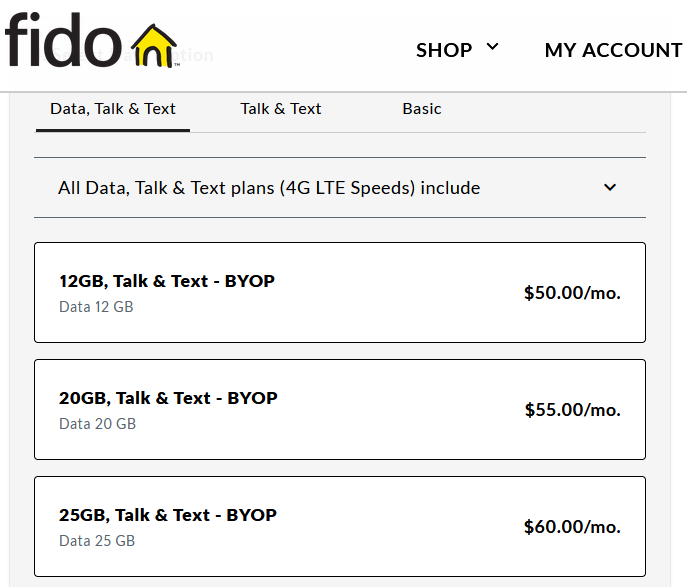
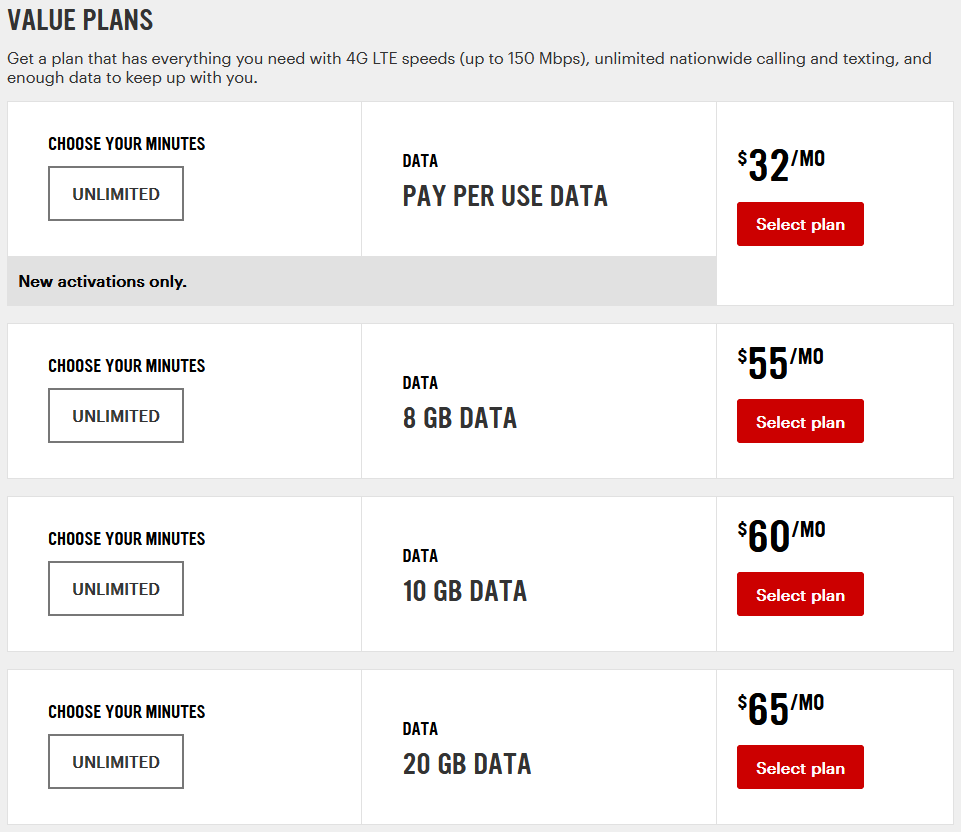
Fido, Koodo, and Virgin Plus removed their promotional plans, and the new plans on offer are… not so great. Of course, it’s hard to compare to the excellent $45/mo 50GB and $30/mo 20GB plans on offer over Black Friday. Still, I expected there might be something better.
You can find the new plans listed below, divided by carrier. One thing worth keeping in mind is all the plans with data include unlimited talk and text.
Spotify users can rejoice now that Wrapped 2022 is live, offering insight into what each user listened to. Beyond that, Spotify has also shared several stats regarding Canada’s most streamed tracks and albums.
To check your Wrapped list, update your Spotify app to at least ‘version 8.78.8.’
Unsurprisingly, Toronto native Drake was the most streamed artist in Canada in 2022, but Harry Styles’ As it was took the top spot as the most streamed song in the country (and the world). His latest project was also the number one most-streamed album, likely due to the extraordinary amount of streams for As it was.
Globally the most streamed artist is Bad Bunny, followed by Taylor Swift, Drake, The Weeknd and BTS.
All of these stats follow pretty closely in the footsteps of last year but notably, the song Heat Waves, by Glass Animals, won the top slot in the ‘Most shared lyrics’ category.
Regarding podcasts, the always classy Joe Rogan experience took the top spot with Call Her Daddy, and Anything goes with Emma Chamberlin filling out the podium.