This upcoming Friday is the post-American Thanksgiving shopping holiday, ‘Black Friday,’ which, over the last few years, has become a major sale event in Canada.
As always, this is the ultimate shopping holiday (next to Boxing Day in Canada), where retailers discount a ton of products by significant margins. Tech products like TVs, smartphones, phone plans, audio equipment, video games and more will all be on sale.
MobileSyrup has nearly countless deal posts up on our site (welcome to DealSyrup 🧟♂️) to help you navigate Black Friday, including the particularly hawt ones linked below:
For this week’s Community Question, we want to know, what are you planning to purchase on Black Friday? Or, are you waiting for Boxing Day? Maybe you’d rather not join in on the rampant consumerism?
I’m probably going to grab a few games, an extra SD card and a charger.
Let us know in the comments below what you plan to buy on Black Friday.
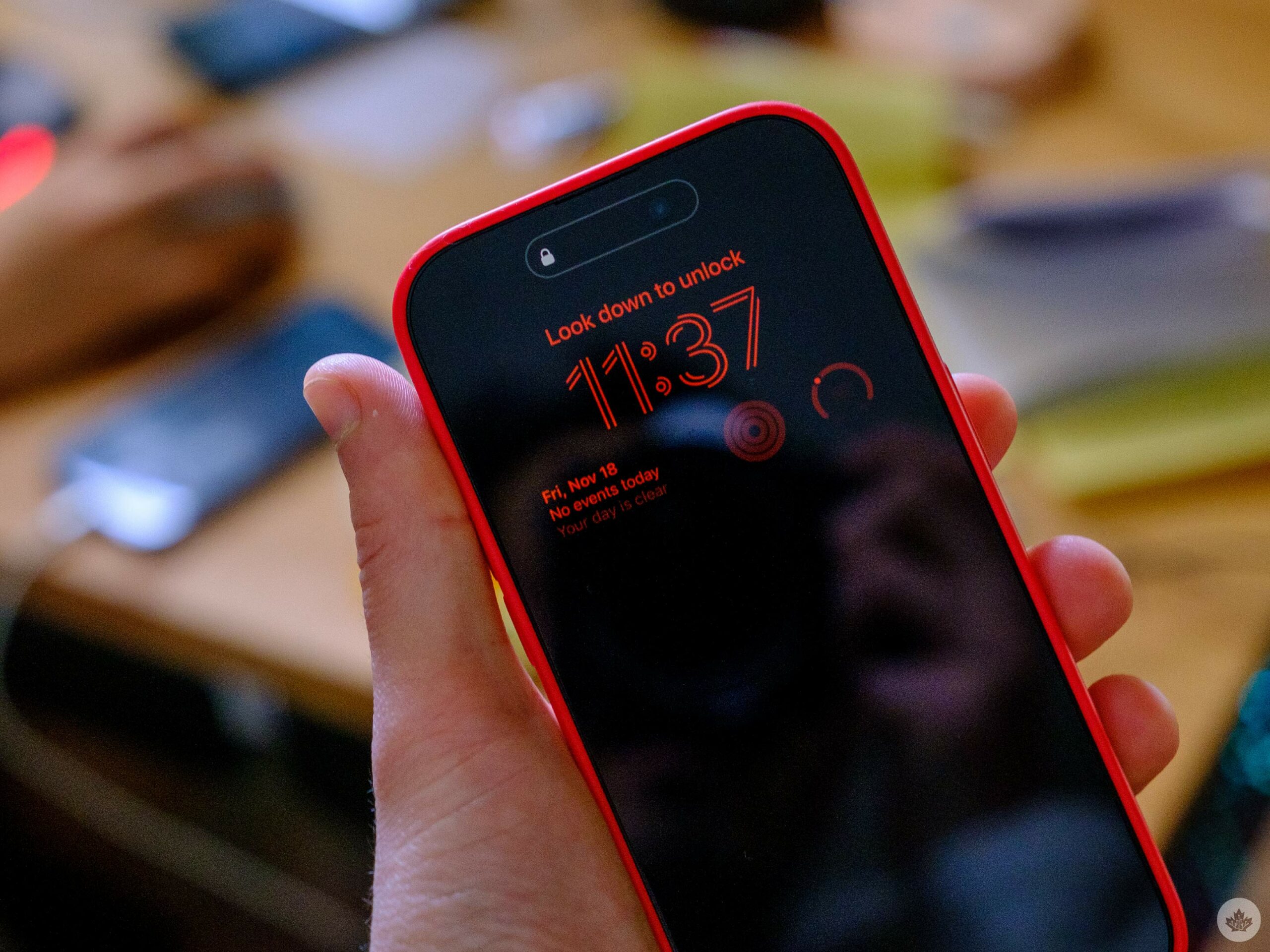
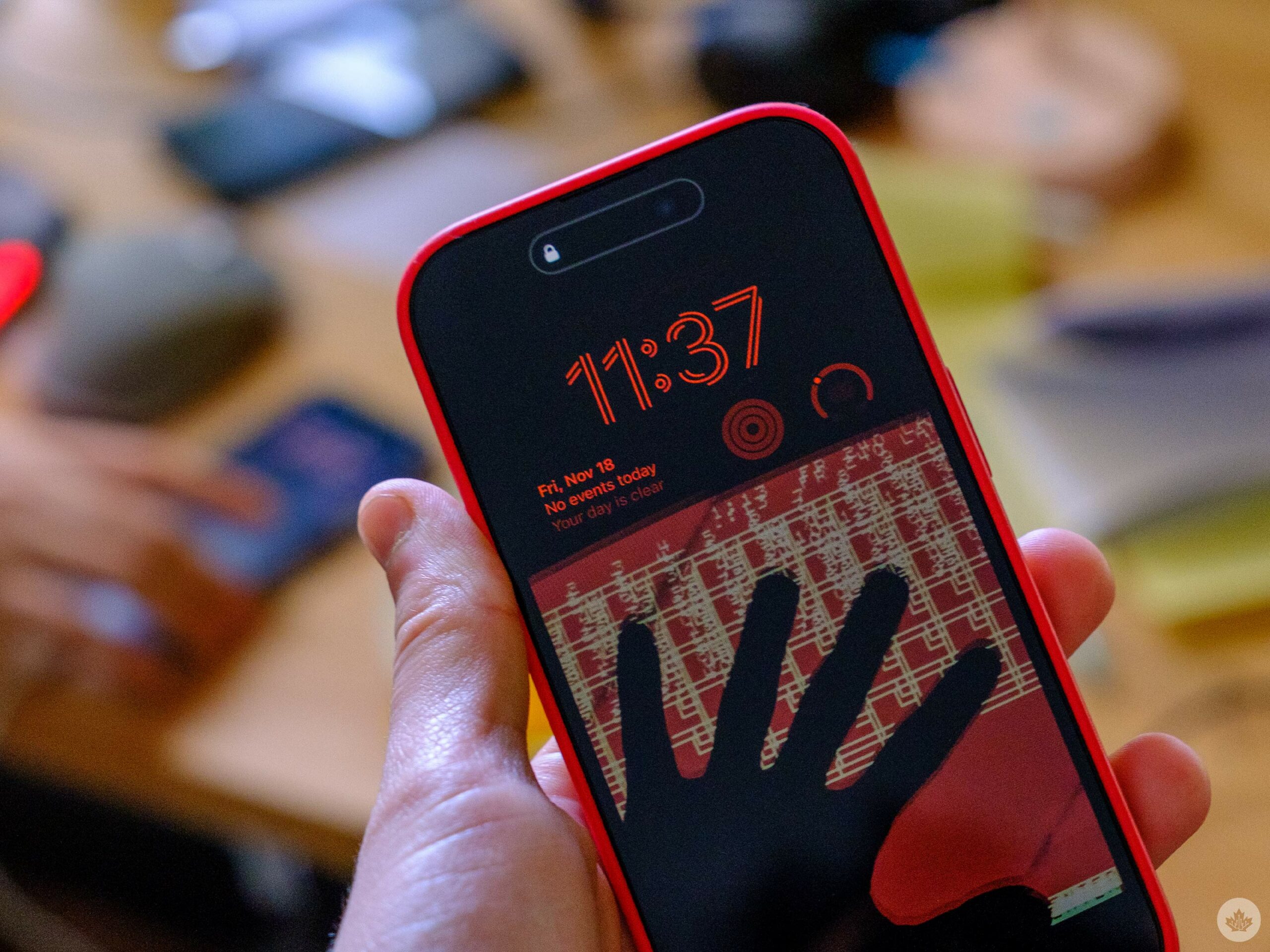
Apple’s iOS 16.2 beta three has added two new key toggles to the always-on display (AOD) feature that’s available on iPhone 14 Pro and iPhone 14 Pro Max.
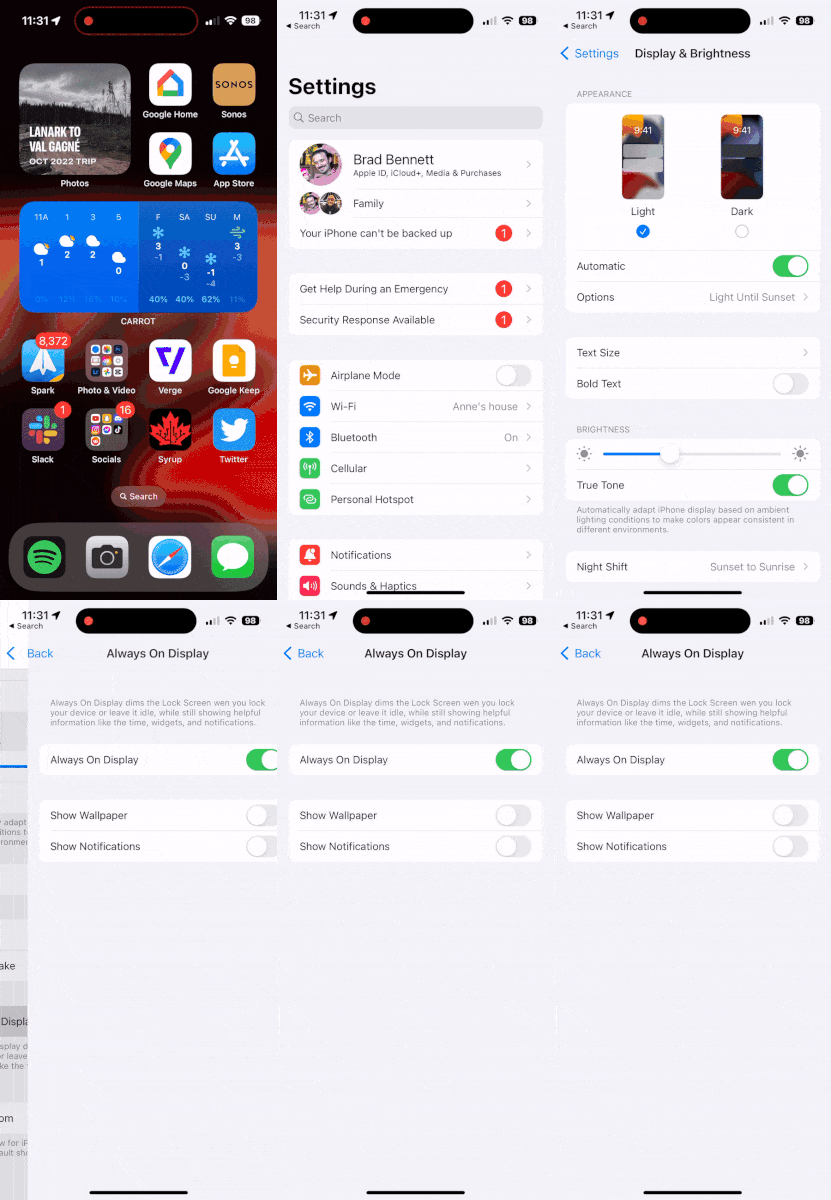
Now when you dive into your AOD settings, you can disable the wallpaper and notifications from appearing on the screen. This makes the Always-on display look more subtle, which I find less distracting. To test these settings yourself, you need to be in the iOS beta or wait until the stable iOS 16.2 drops.
If those conditions are met, jump into the Settings app > Display & Brightness > Always On Display.
The new minimal option
The original AOD
One thing I enjoy about the AOD is it maintains the custom font and colour of your lock screen clock and widgets. It looks really nice, especially with some of the more ‘out there’ font choices. I do wish Apple would develop a more subtle way for notifications to roll through, but for now, I keep them turned off since they’re just too distracting.
Perhaps linking the AOD to Focus modes would be cool so you could set a notification type or contact group to be allowed to pop through the always-on display. One feature I do like on the AOD is the ability to see the now-playing information. It’s greyed out a bit to be less distracting, but it’s nice to always have play/pause controls handy.
It’s also worth noting this display shouldn’t impact battery life substantially. Apple says that it turns off the display when it detects its face down, in a bag, or when it’s being used for something like Continuity camera or has a Sleep focus turned on. You can read more about the setting on Apple’s support page.
Every week, MobileSyrup outlines some of the most notable movies and TV shows that recently hit Canadian streaming platforms.
Our ‘Streaming in Canada’ column typically focuses on new content from Amazon Prime Video, Crave and Netflix, but other services like Apple TV+ and Disney+ are mentioned when relevant. Premium video on demand (PVOD) platforms are also fair game as movies continue to come to digital early amid the COVID-19 pandemic.
Finally, we’ll highlight shows or movies that are made by Canadian companies, involve notable Canadian cast or crew and/or are filmed in Canada.
Amazon Prime Video
The People We Hate At The Wedding [Amazon Original]
Two dysfunctional siblings are invited, along with their mother, are invited to the wedding of their estranged half-sister.
Based on Grant Ginder’s 2016 novel of the same name, The People We Hate At The Wedding was directed by Claire Scanlon (The Unbreakable Kimmy Schmidt) and stars Allison Janney (Mom), Kristen Bell (The Good Place), Ben Platt (Dear Evan Hansen) and Cynthia Addai-Robinson (The Rings of Power).
Amazon Prime Video Canada release date: November 18th, 2022 Genre: Comedy Runtime: 1 hour, 40 minutes
Sugar is based on the true story of two Quebecer influencers, dubbed the “Cocaine Cowgirls,” who were convicted in 2018 of smuggling cocaine into Sydney, Australia aboard a luxury cruise ship.
Notably, Sugar is Prime Video’s first Canadian feature film, was directed by Indian-Canadian filmmaker Vic Sarin (Partition) and stars Katherine McNamara (Shadowhunters) and Vancouver’s Jasmine Sky Sarin. It was also filmed in Montreal.
The full list of movies and shows hitting Amazon Prime Video Canada this month can be found here.
Apple TV+
Spirited [Apple Original]
This riff on A Christmas Carolfinds Clint Briggs visited by the Ghost of Christmas Present, who then helps the spirit to reexamine his own past.
Spirited was directed by Sean Anders (Daddy’s Home), stars Vancouver’s Ryan Reynolds (Deadpool), Will Ferrell (Anchorman), Octavia Spencer (The Help) and Sunita Mani (Mr. Robot), and features original music from Oscar winners Benj Pasek and Justin Paul (La La Land).
Apple TV+ Canada release date: November 18th, 2022 Genre: Christmas musical-comedy Runtime: 2 hours, 7 minutes
Find out what’s coming to Apple TV+ in November here.
Crave
Canada’s Drag Race: Canada vs. the World [Crave Original]
Canada hosts this worldwide competition featuring drag queens from past RuPaul’s Drag Race seasons.
Canada’s Drag Race hosts Brooke Lynn Hytes, Brad Goreski and Traci Melchor return for this series. Canadian Prime Minister Justin Trudeau also makes a guest appearance, marking the first time in Drag Race history that a world leader has appeared on one of the shows.
Crave release date: November 18th, 2022 Genre: Reality competition Runtime: Six episodes (half an hour each)
Stream Canada’s Drag Race: Canada vs. the World here.
A Christmas Story Christmas
Thirty years after the events of A Christmas Story, Ralphie returns to his old home with wife and children to give his family a magical Christmas.
A Christmas Story Christmas was directed by Clay Kaytis (The Angry Birds Movie) and features returning stars Peter Billingsley (Ralphie) Ian Petrella (Randy), Scott Schwartz (Flick), R. D. Robb (Schwartz) and Zack Ward (Scut), while Julie Hagerty (Marriage Story) joins the cast.
CTV News’ The Pope’s Apology: Reporter’s Notebook By Jill Macyshon and Creeson Agecoutay
CTV News correspondents Jill Macyshon and Creeson Agecoutay reflect on their coverage of the Pope’s visit to Canada to apologize for the Catholic Church’s residential schools and the healing process of Indigenous families.
Crave release date: November 18th, 2022 Genre: News special Runtime: 1 hour
Stream CTV News’ The Pope’s Apology: Reporter’s Notebook here.
The Sex Lives of College Girls (Season 2)
After the fall break, the girls’ next semester is filled with new faces, parties and predicaments.
The Sex Lives of College Girls was created by Mindy Kaling (The Office) and Justin Noble (Brooklyn Nine-Nine) and stars Pauline Chalamet (The King of Staten Island), Markham, Ontario’s Amrit Kaur (The D Cut), Reneé Rapp (the Mean Girls musical) and Alyah Chanelle Scott (Walk Off).
Crave release date: November 17th, 2022 (first two episodes, two new episodes every Thursday) Genre: Comedy Runtime: 10 episodes (around 30 minutes each)
A standard Crave subscription is priced at $19.99/month, with Starz costing an additional $5.99/month. A mobile-only subscription is also available for $9.99/month.
The full list of movies and shows hitting Crave this month can be found here.
Disney+
Disenchanted [Disney+ Original]
Gisele, Robert and Morgan move to Monroeville, but Gisele’s attempt to use magic causes the whole sleepy suburban town to turn into a real-life fairy tale.
Disenchanted was directed by Adam Shankman (Hairspray) and features returning stars Amy Adams (Giselle), Patrick Dempsey (Robert), James Marsden (Edward) and Idina Menzel (Nancy), while Maya Rudolph (Saturday Night Live) and Yvette Nicole Brown (Community) join the cast.
Thor himself, Chris Hemsworth, takes on various challenges across the world in an effort to discover how to combat aging and discover the full potential of the human body.
Disney+ Canada release date: November 16th, 2022 Genre: Documentary Runtime: Six episodes (44 minutes to 1 hour, 15 minutes each)
After nearly three decades as Santa Claus, Scott discovers a new clause that causes him to rethink his role as both Santa and father.
The Santa Clauses was created by Jack Burditt (Modern Family) and features returning The Santa Clause stars Tim Allen (Scott), Elizabeth Mitchell (Carol), Eric Lloyd (Charlie) and David Krumholtz (Bernard), while Kal Penn (Harold & Kumar) joins the cast.
Disney+ Canada release date: November 16th, 2022 (first two episodes, new episodes every Wednesday) Genre: Christmas comedy Runtime: Six episodes (around 30 minutes each)
A standard Crave subscription is priced at $19.99/month, with Starz costing an additional $5.99/month. A mobile-only subscription is also available for $9.99/month.
The full list of movies and shows hitting Crave this month can be found here.
Netflix
The Cuphead Show! Part 3 [Netflix Original]
Mugman gets lost in actual hell, leaving Cuphead to save his younger brother.
Based on Canadian developer Studio MDHR’s hit Cuphead video game, The Cuphead Show! was developed by Dave Wasson (Mickey Mouse) and features the voices of Tru Valentino (The Rookie), Frank Todaro (Transformers: War for Cybertron Trilogy), Grey DeLisle (Avatar: The Last Airbender) and Wayne Brady (Whose Line Is It Anyway?).
Netflix Canada premiere date: November 18th, 2022 Genre: Animated comedy Runtime: 13 episodes (11 to 26 minutes each)
In the third and final season, Jen and Judy must deal with another shocking crash.
Dead to Me was created by Liz Feldman (The Ellen Degeneres Show) and stars Christina Applegate (Married… With Children), Linda Cardellini (Freaks and Geeks), James Marsden (Enchanted) and Max Jenkins (High Maintenance).
Netflix Canada premiere date: November 17th, 2022 Genre: Black comedy Runtime: 10 episodes (28 to 39 minutes each)
A young orphan teams up with an outlaw to journey through a land of dreams to reunite with her late father.
Slumberland was directed by Francis Lawrence (The Hunger Games series) and stars Jason Momoa (Aquaman), Marlow Barkley (Single Parents) and Kyle Chandler (Friday Night Lights). It’s worth noting that the film was shot in Toronto.
Netflix Canada premiere date: November 18th, 2022 Genre: Family Runtime: 2 hours
The full list of movies and shows hitting Netflix Canada this month can be found here.
Paramount+
Smile
After witnessing a patient commit suicide, a therapist proceeds to go through increasingly disturbing circumstances that she believes are supernatural.
Smile was directed by Parker Finn (feature directorial debut) and stars Sosie Bacon (13 Reasons Why), Jessie T. Usher (The Boys), Kyle Gallner (Veronica Mars), Robin Weigert (Deadwood) and Kal Penn (Harold & Kumar).
Original theatrical release date: September 30th, 2022 Paramount+ premiere date: November 17th, 2022 Genre: Psychological horror Runtime: 1 hour, 55 minutes
It was 2008 and I was in eighth grade math class. Free from our overbearing teacher in a tucked-away corner of the room, my group and I began excitedly talking about video games. As someone who was both woefully bad at math and socially awkward, those gaming conversations were escapist highlights in my time at middle school. Eventually, I mentioned that I recently got a PlayStation 3 and, without missing a beat, the girl at my table asked me a pivotal question: “have you tried Uncharted?” As she raved about how fun and graphically impressive the game was, I became intrigued. “Cool,” I thought, “I guess I have a new game to try out.” But little did I know just how much it would resonate with me.
Greatness from small beginnings, indeed
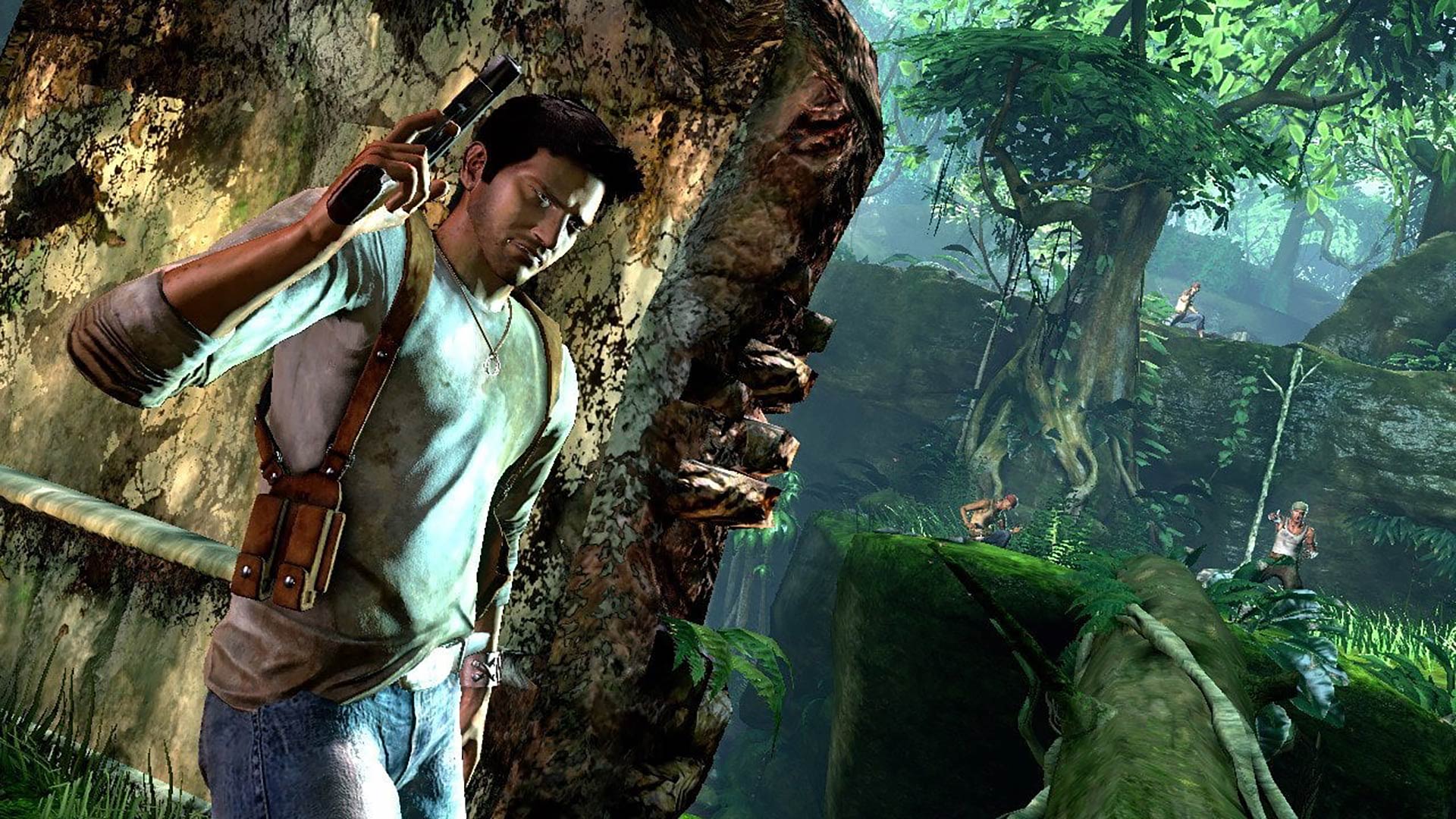
Nate might be a capable fighter, but he’s not always a confident one.
Developed by Crash Bandicoot and Jak and Daxter maker Naughty Dog, Uncharted: Drake’s Fortune debuted on the PlayStation 3 on November 19th, 2007. Fifteen years ago today — can you believe it? Man, do I have a lot of fond memories of that first game. While it certainly shows its age in several ways, particularly the shooting mechanics and level design, it also feels lovably quaint in today’s market of bloated, 100-hour long experiences. Moreover, treasure hunter Nathan Drake’s (Nolan North) quest to find the fabled El Dorado alongside journalist Elena Fisher (Emily Rose) and mentor Victor Sullivan (Richard McGonagle) is exactly the sort of pulpy fun you’d want from an adventure. Thanks to the wonderful creative vision of writer-director Amy Hennig and top-notch performances, the characters were all eminently likeable.
But beyond that, they feel human, and not just because of the beautifully photorealistic visuals. In the late 2000s, Nathan Drake was a revelation. Sure, we’d seen that kind of charmingly rogueish character many times before, particularly in the highly influential Indiana Jones series, but it felt rare for games. Beneath all that bravado lay quite the flawed character, brought to life through a magnificent, believable performance from North. Besides being a thief, Nate suffered from his own insecurities; unlike traditionally badass, hypermasculine gaming icons like Master Chief, Kratos or Marcus Fenix, Nate was rough-around-the-edges. He often stumbled and fell. He screamed whenever a grenade landed a few feet away. He let out exasperated grunts when diving into cover. He’d talk to himself to try to put any fears about his increasingly perilous situations to rest. The way he used humour to mask these insecurities felt deeply relatable, and it further connected me to the character. Even though he would still do pretty crazy things, which later games would only double down on, these little touches of characterization were nonetheless crucial. Most importantly, even 15 years later, this sort of writing, while intentionally lighthearted, still somehow feels natural, unlike, say, the flippant Joss Whedon-esque dialogue we’ve seen in modern media.
All in all, Drake’s Fortune felt like a significant next step forward for storytelling in video games, and it got me even more interested in the potential of the medium.
Nate’s adventures inspiring my own
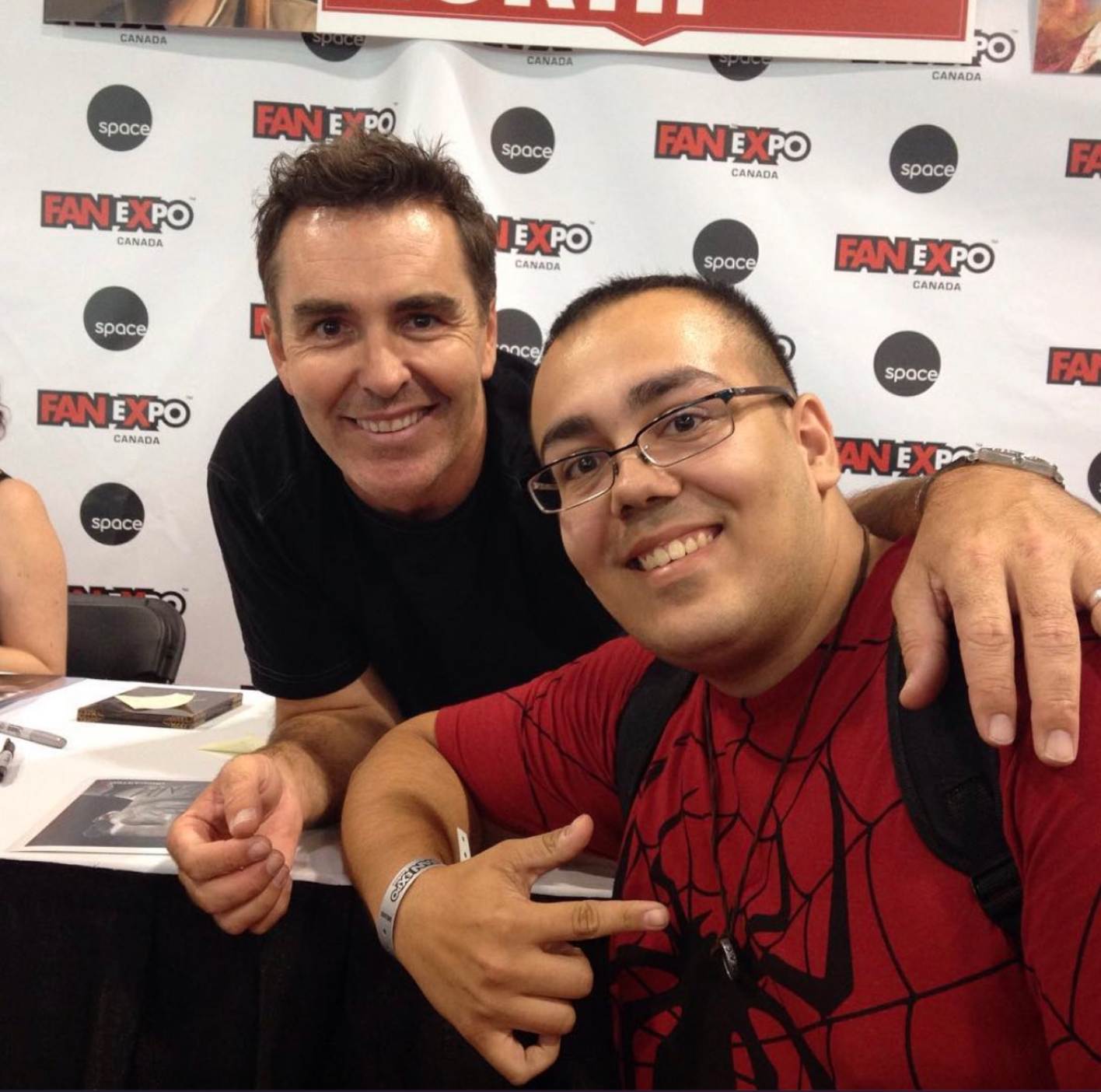
Me with North at Fan Expo Canada 2015. (If you can’t tell, I’m wearing Nate’s ring.)
But if Drake’s Fortune gave me a taste of what modern gaming could be, its 2009 sequel was the delicious main course. Indeed, Uncharted 2: Among Thieves was, in every conceivable way, a vast improvement upon its predecessor — a remarkable achievement across the board and, to this day, the greatest gaming sequel ever made. The core shooting and melee was tightly improved, level design was greatly expanded to refreshingly afford verticality and stealth options, the globe-trotting plot was more engaging, the cast of characters grew to include more interesting and morally grey figures, and the setpieces, punctuated with Greg Edmonson’s fantastic, eclectic score, were thrilling and immaculately designed. Best of all, Nate himself was taken to another level, thrust into the shadier world of the titular thieves while caught up in a lovable love triangle between Elena and newcomer Chloe Frazer (Claudia Black). The ability to play through a Hollywood blockbuster — several, even, given the perfectly paced 10-ish-hour campaign — is a level of cinematic that games had only dreamed of at the time.
Had Uncharted 2 only featured that masterful campaign, it would still be one of my all-time favourite games. But Naughty Dog also included multiplayer, which was truly a game-changer. The criminally underrated online suite offered a compelling Halo-esque arena shooter setup that emphasized multi-level environments and the ability to fight from any position, including from ledges. It was exhilarating to clamber up to a camper’s perch, pull them off to their doom and then, while hanging, pepper an adjacent enemy with my pistol. In this day and age of battle passes and grind-heavy live services, or even just games that emphasize complex loadouts, Uncharted 2‘s multiplayer is especially beautiful in its simplicity. Factor in additional modes like Plunder (an entertaining riff on capture the flag) and tough-as-nails co-op missions set in sections of the single-player campaign and Naughty Dog had a real gem on its hands. (The addition of multiplayer skins from fellow PlayStation franchises like inFamous and Killzone was also rad.)
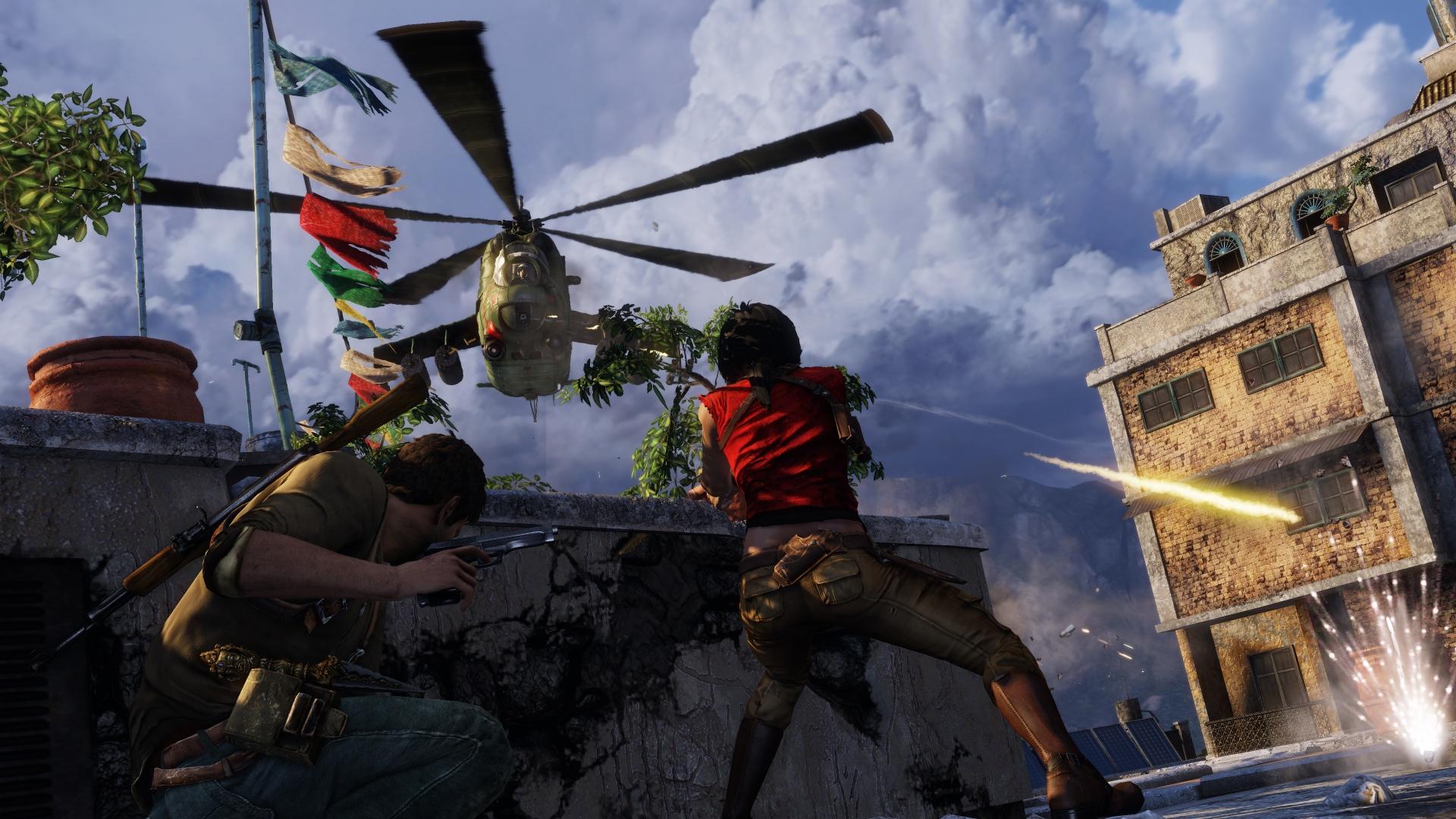
The setpieces in Uncharted 2 were leaps and abounds above anything in the first game.
But above all else, Uncharted 2 proved a really big social experience for me. While I have fond memories playing Halo with cousins while in Florida, those visits were infrequent and we never played outside of that. Other multiplayer experiences, like Smash Bros., were also pretty much only local for me. Uncharted 2, though, marked my first real online game. As someone who was inherently introverted, the idea of getting to interact from people within the comfort and safety of my own home was divine. And boy, did I ever. So many hours in high school were spent playing Uncharted 2 both alone and with one of my best friends, Daniel. Even though the game didn’t support local co-op, we had such a time passing around the control and revelling in each other’s online successes and failures. Hell, when I stayed over at Daniel’s house, his mum even had to come down in the middle of the night to stop us from playing. I didn’t have a lot of friends in high school, so getting to bond more with one of my closest pals was quite meaningful.
Pretty much everything I’ve said so far also extends to 2011’s Uncharted 3: Drake’s Deception. Although some half-baked story threads and pacing issues make its campaign a bit of a step down overall from its predecessor, it certainly upped the ante with even more delightfully insane setpieces and a tantalizing look at Nate’s background and relationship with Sully, a fan-favourite character who was sadly underused in the second game. From the early London bar fight and flashback museum chase to fleeing a capsizing boat and hanging from a falling plane, Drake’s Deception is full of unforgettable moments.
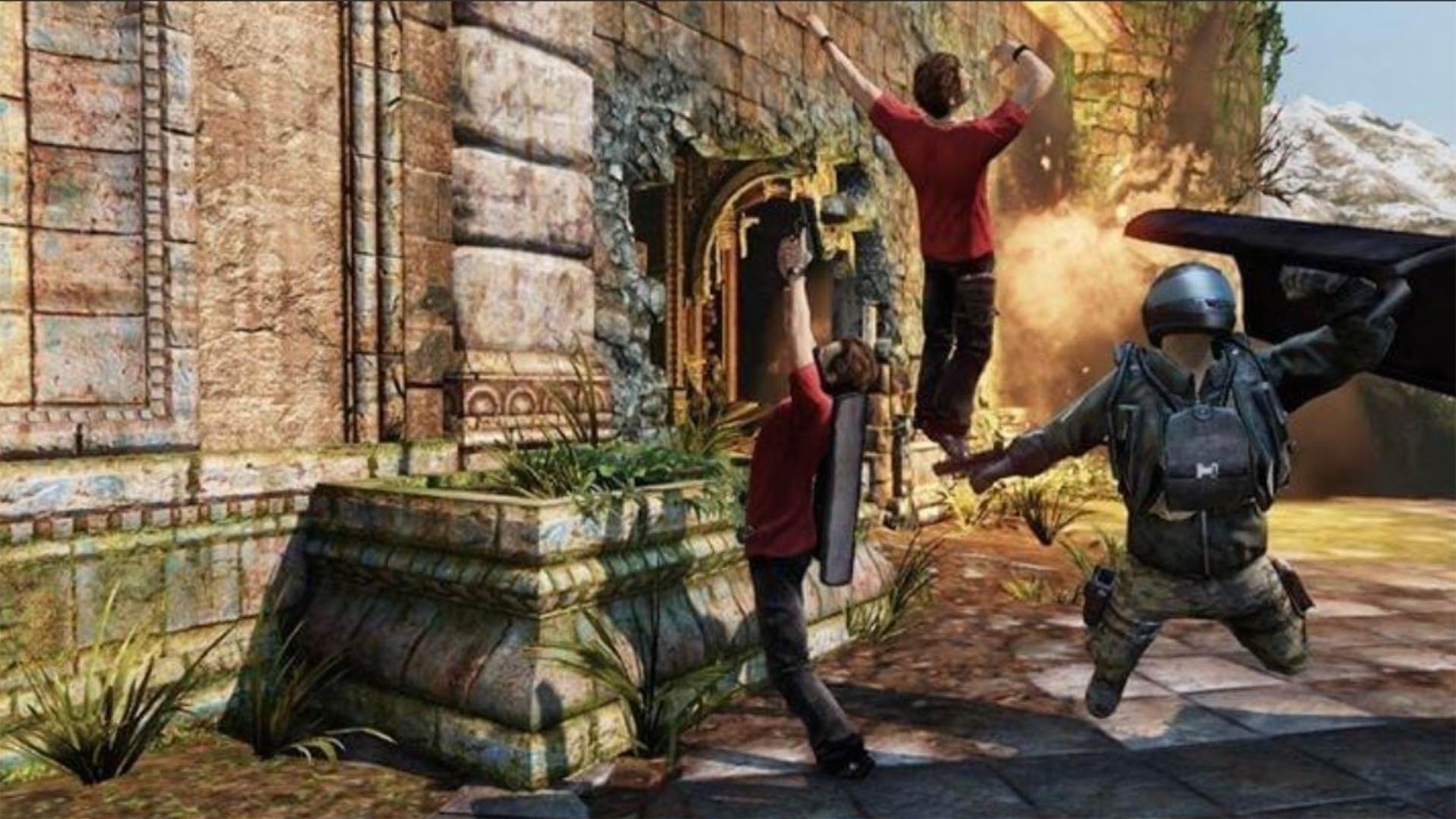
My friends and I got up to all kinds of hijinks in Uncharted 3 multiplayer. (Seen here: one of us accidentally dropping a ‘Mega Bomb’ Kickback that hilariously killed our entire team.)
Again, though, it was that multiplayer that really got its hooks into me. Looking back, it was definitely busted in a lot of ways. The focus on Call of Duty-esque loadouts led to a lot of imbalance, and the “Kickbacks” — powerful abilities like being able to spawn an RPG or go invisible — often only added to that. But the hell if I cared — Uncharted 3 multiplayer was a blast from day one! After having my mum drive me around the Greater Toronto Area to track down early access beta codes at Subway (remember that strange partnership?), I was hooked. The maps were larger and more varied, the addition of a ‘Buddy system’ was a novel way to encourage and reward cooperation and the steady updates (including neat experimental game types) made me more than happy to keep coming back.
Best of all, I came across a lot of great people through Uncharted 3. I had historically only played games locally, so it was mind-blowing to think that you could make friends without meeting them. But now, being just a bit more confident in online interactions following Uncharted 2, I found myself reaching out more. I fondly remember playing on the Sanctuary map and getting killed by someone with a PSN ID that was a reference to Final Fantasy, my all-time favourite series. Admiring both his skill and good taste in games, I sent him a DM, and before you know it, we shared our real names and started talking regularly on Facebook. We still talk regularly to this day, despite him being in England, and he’s even promoted my work on MobileSyrup and donated to my Extra Life charity streams. Through him, I met another cool person, Scarlett, a fellow Canadian and gaming enthusiast. Despite our different time zones, the three of us thankfully managed to coordinate some play sessions, and they were a blast. Through them, I was introduced to other Uncharted fans on Facebook, which only further helped me come out of my shell. This, in turn, encouraged me to play other games online, and I even made a good friend in the U.S. through Dissidia 012 Final Fantasy.
Nate grew up, and so did I
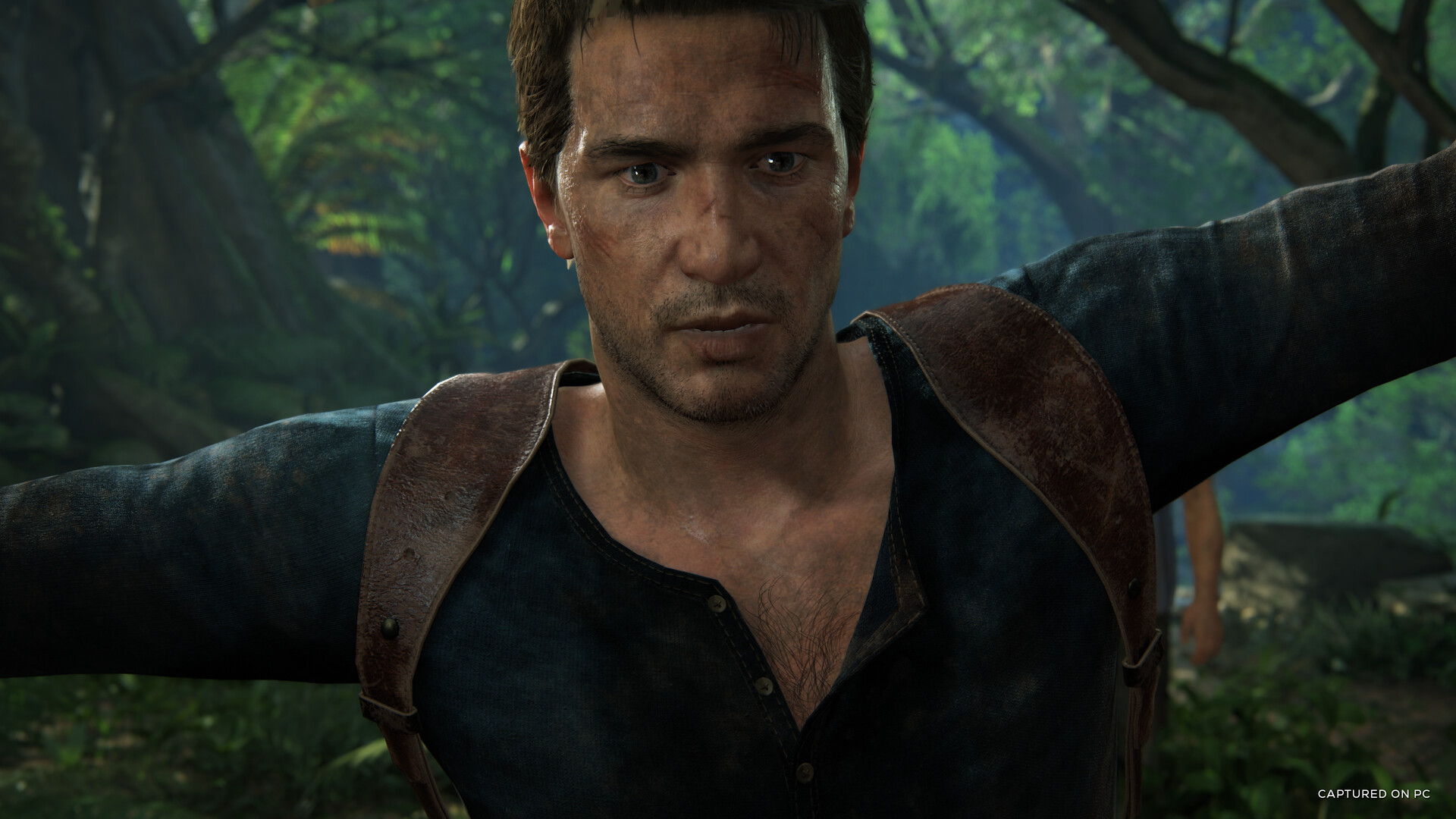
The recently released PC version of Uncharted 4: A Thief’s End.
Then there’s 2016’s Uncharted 4: A Thief’s End, many people’s favourite Uncharted. That said, I’ll confess that I still prefer Among Thieves and Drake’s Deception; A Thief’s End‘s bloated runtime, pared down melee combat, comparatively fewer setpieces and somewhat grating character of Sam, Nate’s brother, drag down its otherwise exceptional campaign. I also found the multiplayer, which focused on earning money from kills to buy tedious AI-controlled “Sidekicks” to help you, a step down from the previous games. Still, it’s a great game overall, made even more impressive when you consider that Hennig left the project early on and the version we got, led by The Last of Us‘ Neil Druckmann and Bruce Straley, was effectively made in just over two years (If only they didn’t have to crunch on it, though).
And while I didn’t stick with the multiplayer much, it’s A Thief’s End‘s narrative that I still think of often. Druckmann and Straley were candid about wanting to tell “a meaningful human story with complex relationships, complex characters” within Uncharted‘s traditionally lighthearted framework, and boy, did they ever. In fact, the pair did a masterful job in balancing the warmth and levity of Hennig’s work with the more mature and nuanced storytelling of The Last of Us,which was itself partly inspired by Uncharted 2. While Nate had gotten just a bit deeper in every prior Uncharted, it was A Thief’s End that truly made him three-dimensional. His sense of humour remained, but this obsession with adventure — an addiction that leads him to be rather shitty to Elena — felt all too real. The simple, quiet moments in Nate’s domestic life, like reminiscing on old adventures in his attic and even using a toy gun to shoot targets in a dorky-yet-understandable display of his longing for more, truly elevated the character. (Even if, unfortunately, the whole “ludonarrative dissonance debate — the criticism that Nate is sort of a murdering psychopath in gameplay — would still remain.) This deeper characterization led some genuinely heartwrenching scenes between Nate and Elena, where the latter becomes, rather justifiably, distraught over his constant lies and dangerous habits, even as he pathetically tries to explain them away.
Nate and Elena are better than ever in Uncharted 4.
*Note: Spoilers below for the ending of Uncharted 4*
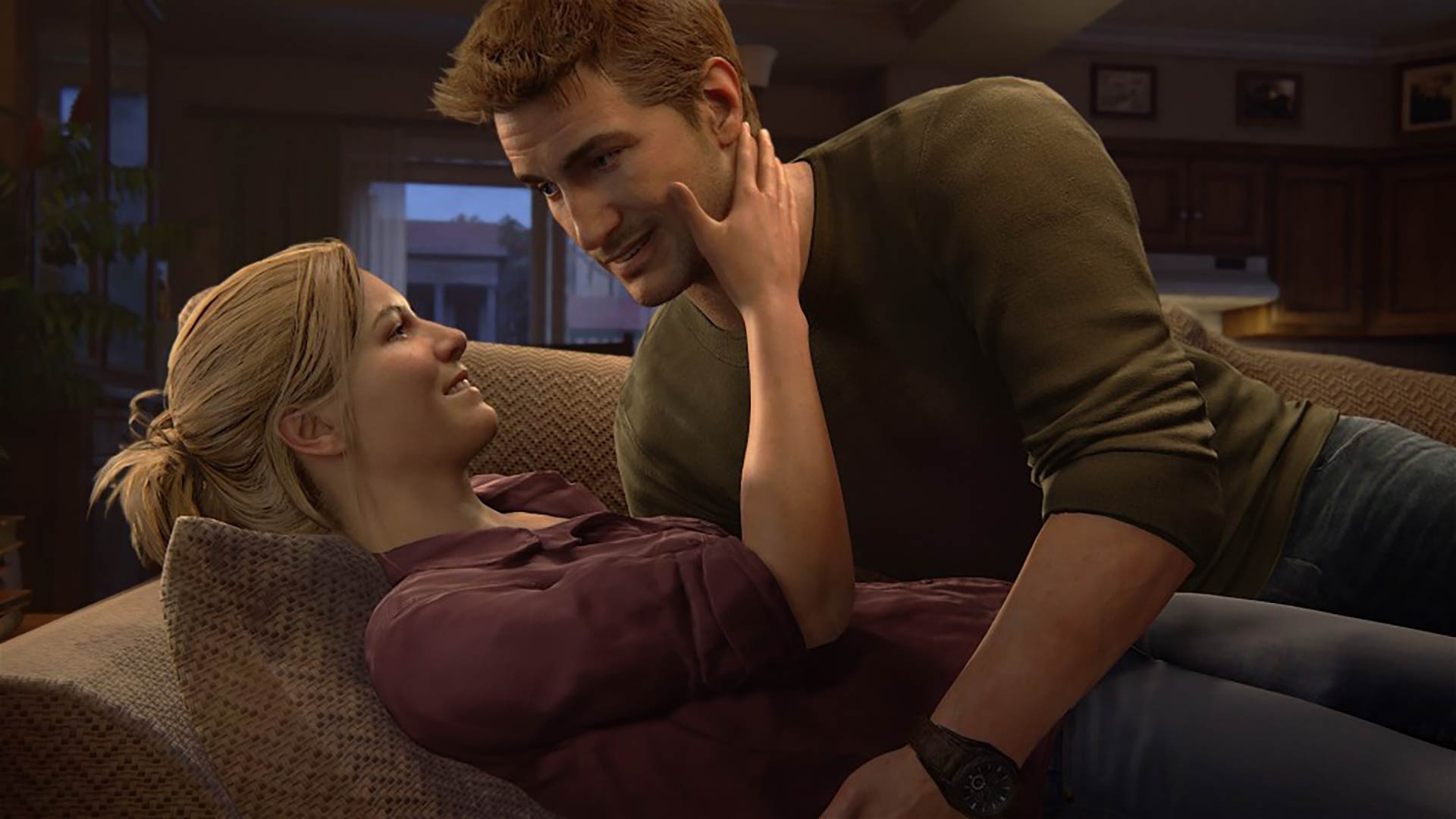
Best of all, Druckmann and Straley were deliberately misleading in the decidedly somber marketing, making you think that Nate or even supporting characters like Sully or Sam were very likely to die. But instead, they gave us a beautifully heartwarming ending for Nate. In a great cap to his character arc, our hero walks away from his self-destructive path to be with Elena and, in fitting married life fashion, actually compromises — in this case, by them both going on safer, more legal adventures as salvagers. Beyond that, Nate and Elena properly settle with a daughter, Cassie (Kaitlin Dever), who proves to be an endearing “best-of-both-worlds” mixture of her parents. This culminates in an utterly sweet ending in which Nate and Cassie fondly recount their past adventures — those that we, the players, went on in the previous games — while the final shot, set to a more tender version of Edmonson’s stirring “Nate’s Theme,” rests on an image of younger Nate and Sam from A Thief’s End and Nate, Elena and Sully from Drake’s Fortune. It’s a beautiful conclusion that brings me to tears every time.
In many ways, A Thief’s End has deeper resonance because it reflects how the Uncharted series grew up with me. Playing Nathan Drake’s last adventure in 2016, when I was in completely new territory — juggling university, part-time work and dating — hit different. Nate was older, more grown-up, and so was I. He was screwing up, just like me. In a sense, it felt like catching up with an old friend, with all of the emotions that brings. Then, one year later, we got The Lost Legacy, which offered new horizons for the series via different lead characters, Chloe and A Thief’s End‘s Nadine Ross (Laura Bailey). This, too, paralleled my own new path — landing my current full-time job at MobileSyrup. What’s more, I actually got to interview Naughty Dog about The Lost Legacy, which was a surreal opportunity for the dorky kid who grew up playing Crash Bandicoot.
Chloe and Nadine proved that Uncharted can thrive without Nate.
At this rate, it’s unclear what lies in store for Uncharted. The highly successful franchise is clearly important to Sony, especially as it just launched a movie adaptation with Spider-Man‘s Tom Holland, but we don’t actually know anything else beyond a planned sequel to that. Rumours have also suggested another studio, possibly MLB The Show developer Sony San Diego, may be working on a new Unchartedwith the assistance of Naughty Dog. Given how well The Lost Legacy served as proof-of-concept for a Nate-less Uncharted, it’s easy to see another character (Cassie? Sam? Sully? Someone new entirely?) being given their own game.
But whatever happens with Uncharted, I’m just grateful for the ride. The franchise has been around for more than half my life, and it’s been a constant source of joy and connection during that time. Further, I may very well have not even pursued a career in journalism — fuelled by a desire to one day do something writing-related with games — had I not been inspired by the likes of Uncharted. Happy 15th anniversary to this marvelous series, and thanks for the memories, Naughty Dog.
The Competition Tribunal has completed week two of its hearing into the Rogers-Shaw merger, and the public had a front-row seat. Chief Justice Paul Crampton started the week by addressing the hearing’s lack of transparency and unnecessary in-camera sessions, leading to once-confidential documents being available for public view. The move led to several revelations.
More on the merger, and other telecom news in Canada, is recapped below.
Business
Telus attempted to sway the outcome of the Rogers-Shaw merger. Details were shared in internal documents presented during the Competition Tribunal’s hearing. The project called ‘Project Fox’ included Telus meeting with politicians “to kill, shape and slow the deal.”
The hearing also revealed that Distributel wanted to buy Freedom Mobile and made two proposals to Rogers. Distributel made the offers before Bell announced plans to purchase the company (subject to regulatory approval).
SaskTel has added $100 million to its Rural Fibre Initiative. The project connects Saskatchewan residents with SaskTel’s infiNET Service, delivering internet speeds close to 1Gbps. The additional funds will connect 80 towns and villages.
As the demand for new phone numbers in Canada continues to grow, the Telecommunications Alliance is introducing new area codes across the country. Residents in Southwestern Ontario will see a new 382 area code in June 2023. The area code will serve areas that have access to 226, 519, and 548 area codes.
The federal government has ended its partnership with Bell Let’s Talk. The annual mental health initiative sees the telecom giant donate every time people use #BellLetsTalk on social media on the designated day.
Deals
With Black Friday around the corner, carriers have released deals on devices and services. A full rundown of all the deals is available here. Some of the discounts are highlighted below.
Freedom is offering savings on Samsung and Pixel devices for Black Friday. Learn more here.
SaskTel is putting discounts on its wireless and wireline services, including offering $100 in credit for new internet customers.
Fido’s Black Friday deals include various device discounts, such as the Google Pixel 6a 128GB with Fido Payment Program for $10/mo for 24 months. A list of discounts is available here.
A 17-year-old hiker in India is crediting the Apple Watch for saving his life, after he fell 150 feet down a valley and broke both his ankles.
Smit Mehta, along with three of his friends, was out on a trek at a hill station in Western India near Mumbai on a rainy day. On his way back from the trip, due to the rainy conditions, Mehta slipped into the valley, and fell roughly 130-150 feet in.
Mehta suffered two broken ankles during the ordeal and quickly realized that he didn’t have his phone with him when he fell. However, Mehta was wearing his Apple Watch Series 7, and noticed that the watch was connected to a cellular network. “Soon, I saw that I was getting signal on the Watch and immediately called my parents and friends,” said Mehta in a statement given to Times of India. “I weighed 99kgs at the time of the fall and I am over 6 feet tall, so it wasn’t easy at all.”
Reportedly Mehta was the seventh accident on that hiking route on that particular day.
Mehta shared his location with his parents, and he was soon taken to a local hospital. Due to delayed medical attention, Mehta’s wounds were infected, and he had to be shifted to a bigger hospital, where he underwent surgery and is currently rehabilitating.
Mehta says that he had read similar stories of people around the globe that were lucky enough to have their Apple Watch on them when they got into sticky situations, like a kayaker from Sydney that was swept 4km out to sea, but was able to call for help with his Apple Watch.
Subsequently, Mehta wrote to Apple CEO Tim Cook to share his story, and to his surprise, Cook replied back on November 10th:
Smit,
I’m so glad you are on the road to recovery. It sounds like a terrible accident. Thanks so much for sharing your story with us.
Alongside the Surface Pro 9, Microsoft released a new version of its Surface Laptop, the Surface Laptop 5. Also like the Surface Pro 9, the Laptop 5 is a minor, iterative update offering little more than a spec bump and new colour options.
That’s not necessarily a bad thing, of course. The Surface Laptop series already offered some of the best designs and hardware of all Windows laptops – that hasn’t changed with the Laptop 5. At the same time, it’s growing more clear where Microsoft could make improvements to the Surface Laptop line to modernize the hardware (most of which could be done without significantly altering the hardware).
So with all that said, let’s dig into the Surface Laptop 5 and look at what’s new, what hasn’t changed, and what Microsoft should upgrade for the Laptop 6.
Specs
Display: 13.5-inch PixelSense display, 2256×1504 pixel resolution, 3:2 aspect ratio
Processor: 12th Gen Intel Core i7-1265U
Memory: 16GB
Storage: 512GB
Dimensions: 308 x 223 x 14.5mm
Weight: 1,297g
Camera: 720p HD front camera with Windows Hello
Operating System: Windows 11
Battery: Up to 18 hours of “typical device usage”
Connectivity: Wi-Fi 6, Bluetooth 5.1
Sensors: Ambient light sensor
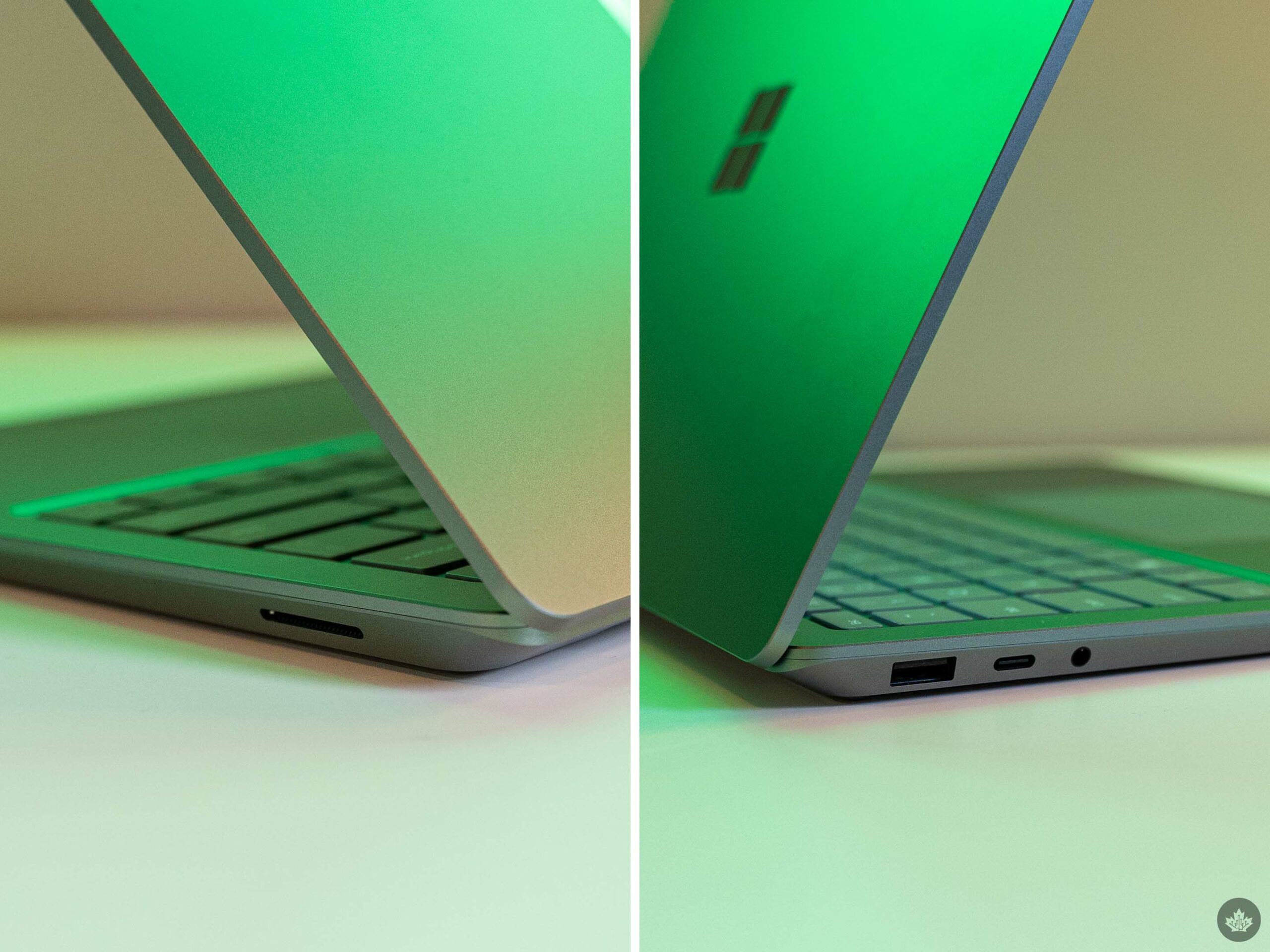
Ports: 1x USB-C with USB 4.0/Thunderbolt 4, 1x USB-A 3.1, 1x Surface Connect, 1x 3.5mm headphone hack
Graphics: Intel Iris Xe
Note: The specs above are for the specific Surface Laptop 5 model I tested. You can find a full breakdown of specs for both the 13.5- and 15-inch models here.
You’ve seen this before
The Surface Laptop 5’s limited ports.
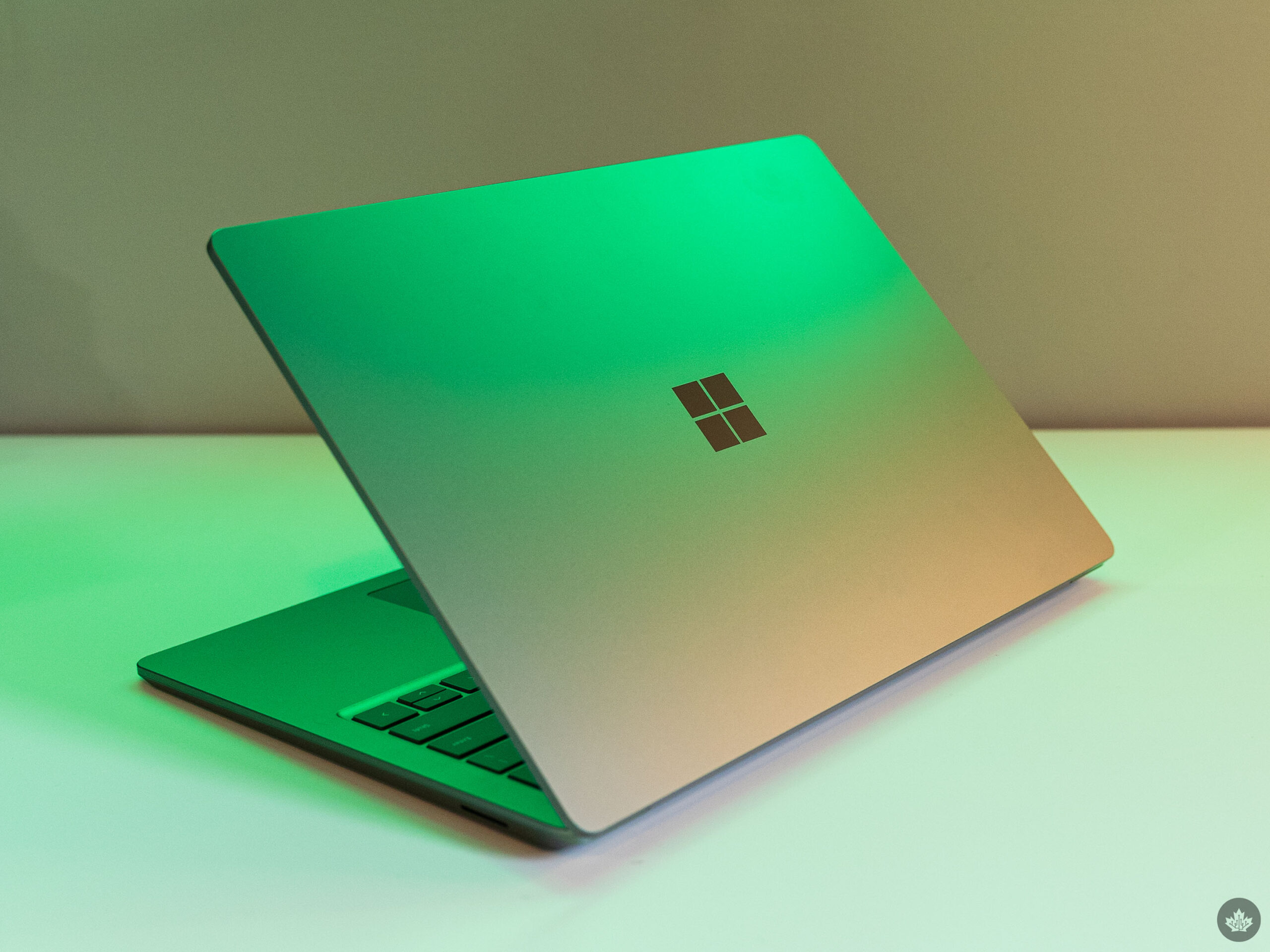
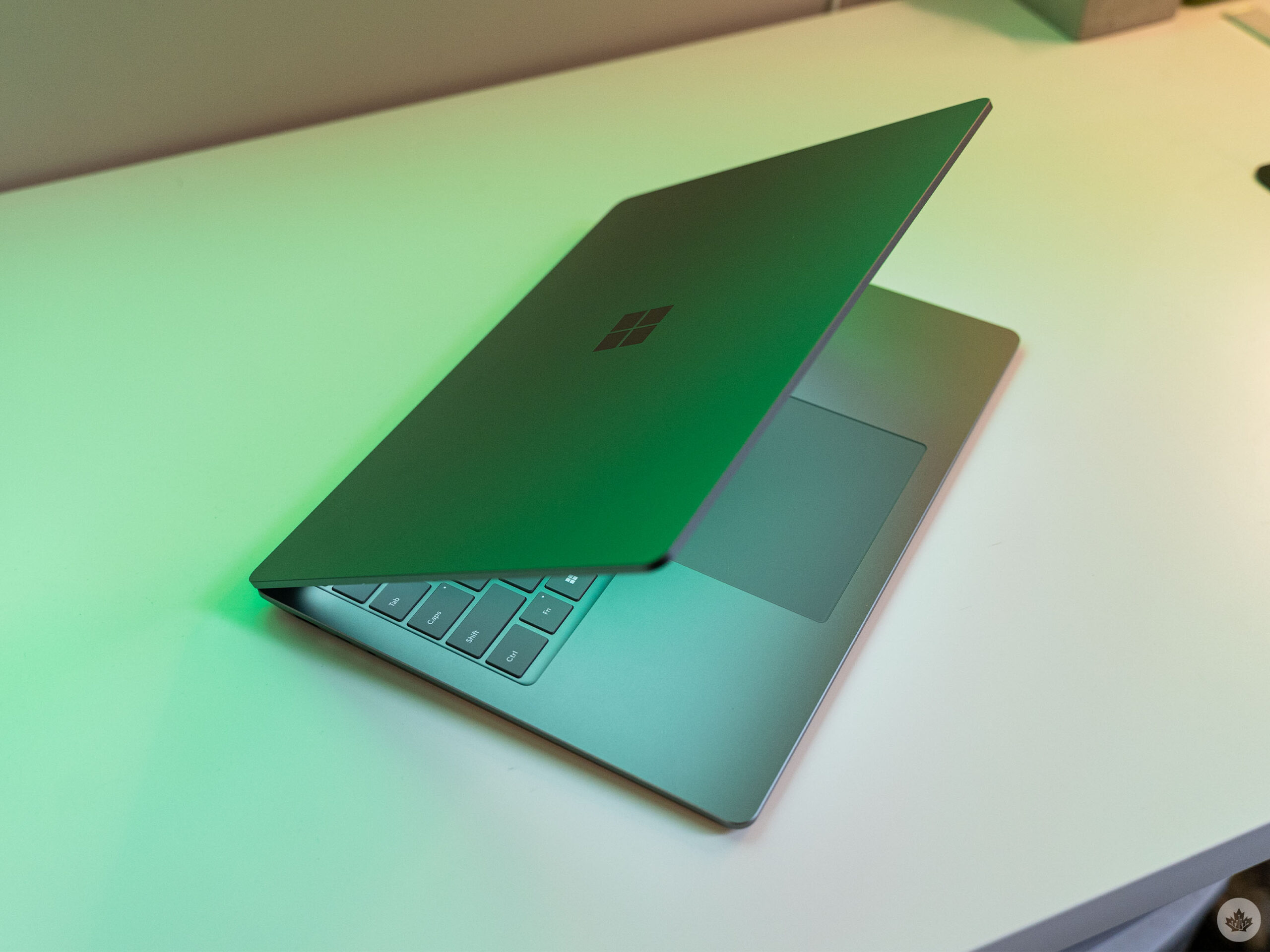
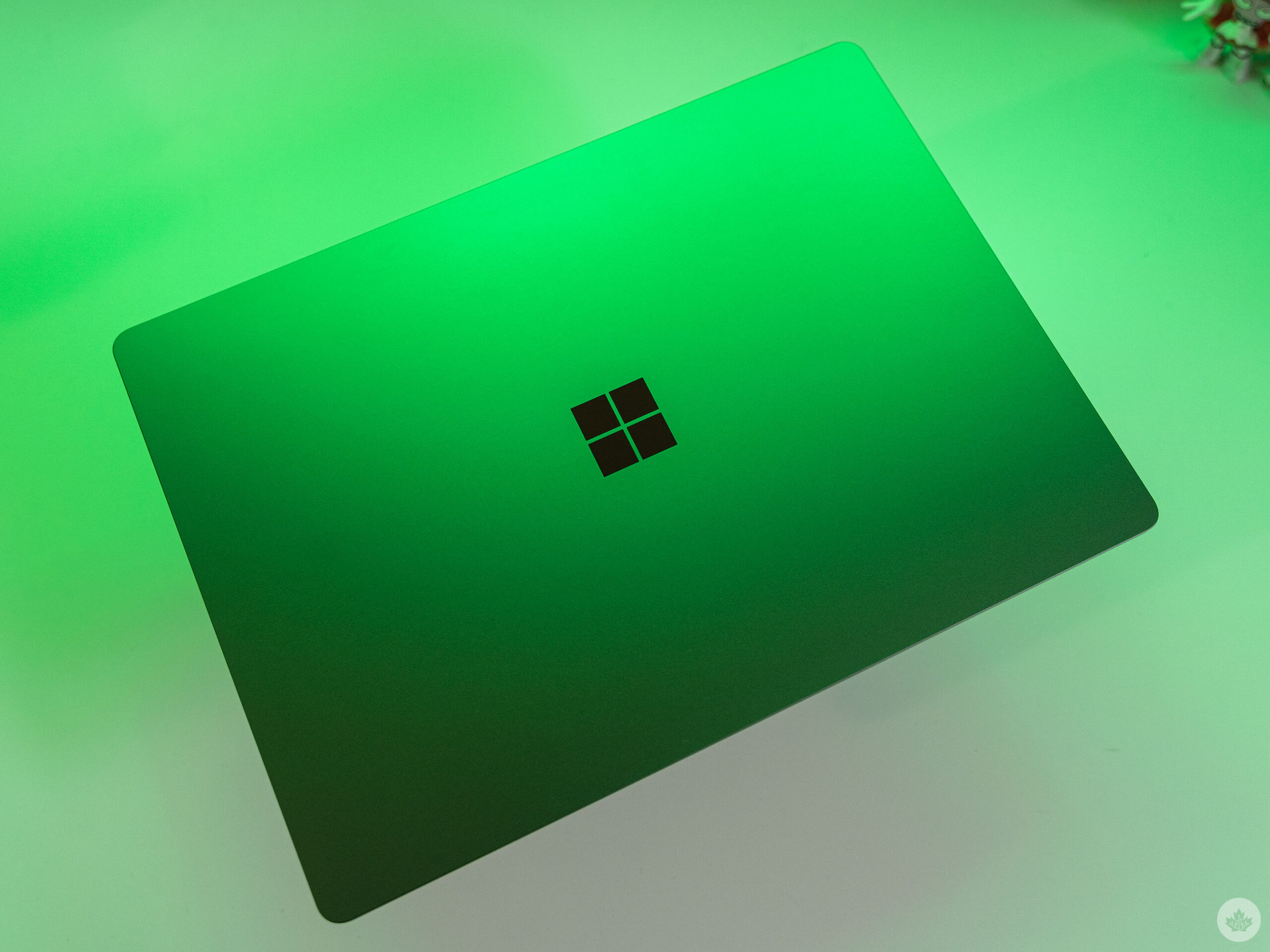
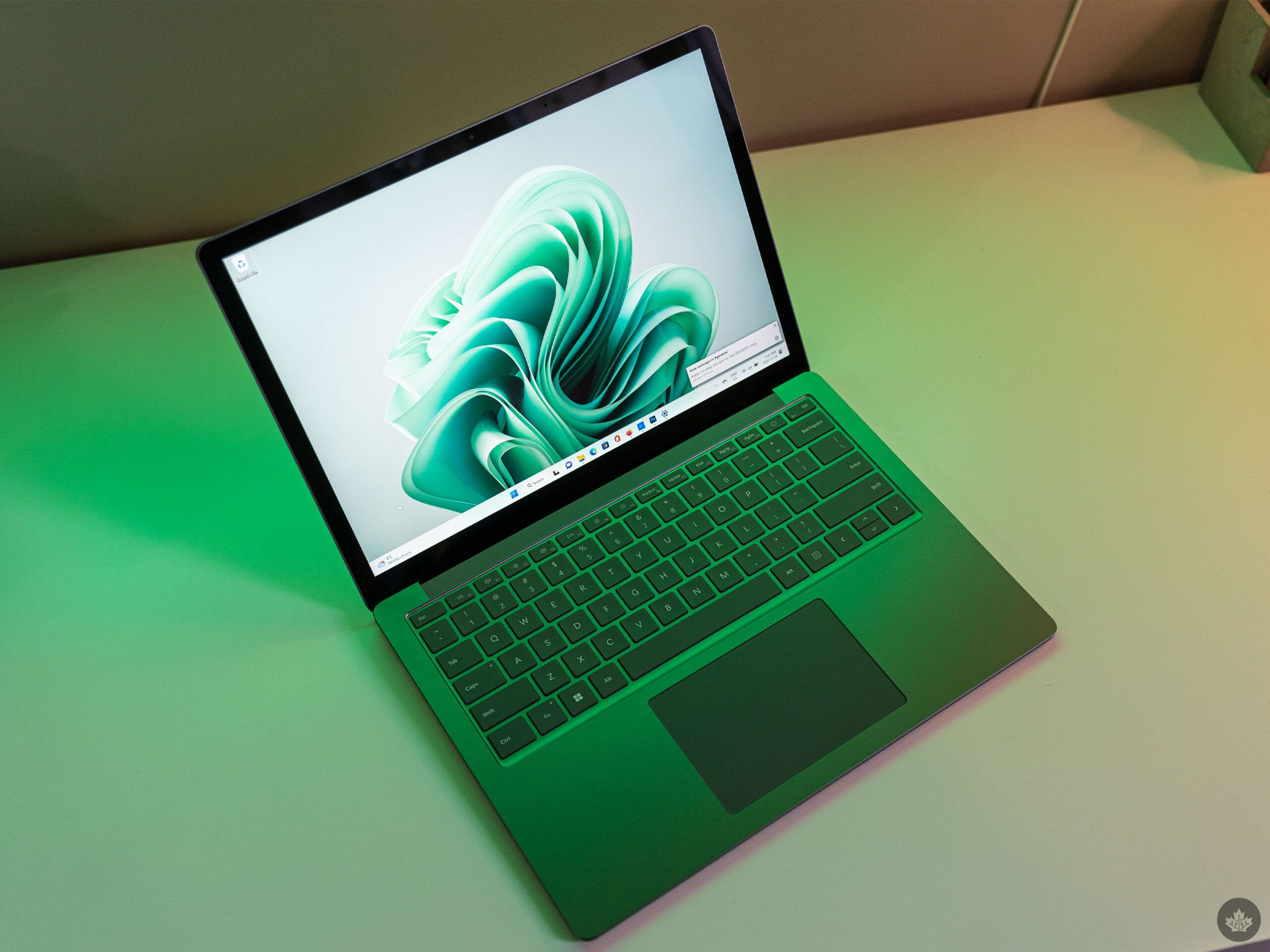
The Surface Laptop 5 looks like the Laptop 4, which looked like the Laptop 3. Not much has changed and, unless you pick up the excellent new ‘Sage’ colourway (which is what I tested for this review), there’s nothing visually different about the Laptop 5 from its predecessors. Along with ‘Sage,’ the other colours are ‘Platinum’ (which includes the Alcantara palm rest), ‘Matte Black’ and ‘Sandstone.’
Like previous models, the Surface Laptop 5 comes in two sizes, 13.5-inch and 15-inch. The 15-inch only comes in ‘Platinum’ (metal instead of Alcantara) and ‘Matte Black,’ however. Notably, the 15-inch Surface Laptop 5 doesn’t have an AMD Ryzen chip this year, instead only offering the 12th Gen Intel Core i7-1255U CPU and various RAM and storage configurations ranging from 8GB/256GB at the entry-level to 16GB/512GB at the high end.
The 13.5-inch Laptop 5 does offer some variants with the 12th Gen Core i5-1235U alongside more expensive versions with the same i7-1255U as the 15-inch. (An odd aside, my review Laptop 5 lists its CPU as the i7-1265U, not the i7-1255U it should have, according to Microsoft’s website. I’ve reached out to Microsoft to clarify these details, but the company did not respond ahead of publication.)
What would an AMD Laptop 5 be like?
Microsoft’s decision to go all-in on Intel chips with the Surface Laptop 5 this time around is particularly interesting, especially given that the 12th Gen Intel Core i7 in my review unit didn’t significantly outperform the AMD Ryzen 7 4980U from the Surface Laptop 4 I tested.
Unfortunately, I haven’t tested an Intel-powered Surface Laptop 4, so I can’t say how the Laptop 5 has improved, but I did test a Surface Pro 8 with the 11th Gen Intel Core i7-1185G7. That’s the same i7 chip available in the 13.5-inch Surface Laptop 4 and, theoretically, should have similar performance.
The good news is the 12th Gen i7 in my Surface Laptop 5 outperformed the 11th Gen i7 in the Surface Pro 8. That’s expected, but it’s good to see it confirmed in tests. That should mean anyone sporting an Intel-powered Laptop 4 would get some performance uplift moving to the Surface Laptop 5, although I’d argue it’s not enough to warrant the upgrade.
As for those with a Surface Laptop 4 sporting the Ryzen 7 4980U, it’d be more of a lateral move. In some tests, the 12th Gen i7 in the Laptop 5 outperformed the 4980U while in other tests, like Cinebench, the 4980U remained king.
Plus, even with the Intel Xe graphics, the Laptop 5 isn’t really intended for gaming and you shouldn’t expect it to fill that role.
Keep it plugged in for the best performance
Of course, benchmarks are just one part of the story. In real-world use, the Surface Laptop 5 handled just about everything I threw at it with ease. Similar to the Pro 9, I ran the Laptop 5 as my daily driver for several days of work, which involved running a ton of Firefox tabs, Photoshop, streaming music, and more. I noticed some stuttering when I connected the laptop to an external display over USB-C, but beyond that, performance was fairly reliable.
I also typically ran the Laptop 5 in the ‘Best Performance’ mode when plugged in to eke out extra power. On battery, I kept it on the ‘Recommended’ setting since, like past Surface Laptops, this one continues the trend of limiting performance to extend battery life. I had thought the AMD Surface Laptops were bad for throttling performance, but the Laptop 5 throttles just as much. In my tests, the Surface Laptop 5 performed almost half as well when running on battery.
The upside, however, is that the laptop didn’t feel significantly slower on battery, even with the reduced performance. That is one note in the Laptop 5’s favour, since the AMD-powered Laptop 4 felt noticeably worse when running on battery.
Speaking of battery, the Surface Laptop 5 plummeted about 40 percent over about 2.5 hours of regular use (which mostly included writing in a Google Doc with about 20 browser tabs open and editing a picture in Photoshop). You could likely extend the battery life with lighter usage, but battery remains one of the weaker points on this laptop.
Thicc bezels
I really appreciate finally getting to test a 13.5-inch Surface Laptop. The past few Surface Laptops I tested were the larger 15-inch versions, but I tend to prefer smaller laptops since they’re lighter and easier to carry around. However, I was surprised by how big the 13.5-inch Laptop 5 is, especially compared to other Windows laptops with similar screen sizes, but which have much smaller bodies.
There are two main reasons for the size discrepancy. First, the Surface Laptop line uses a 3:2 aspect ratio for the display, which means it’s taller than the 16:9 and 16:10 displays you typically find on Windows laptops. The extra height is a nice bonus, however, especially for people like me who spend most of their day working in text documents.
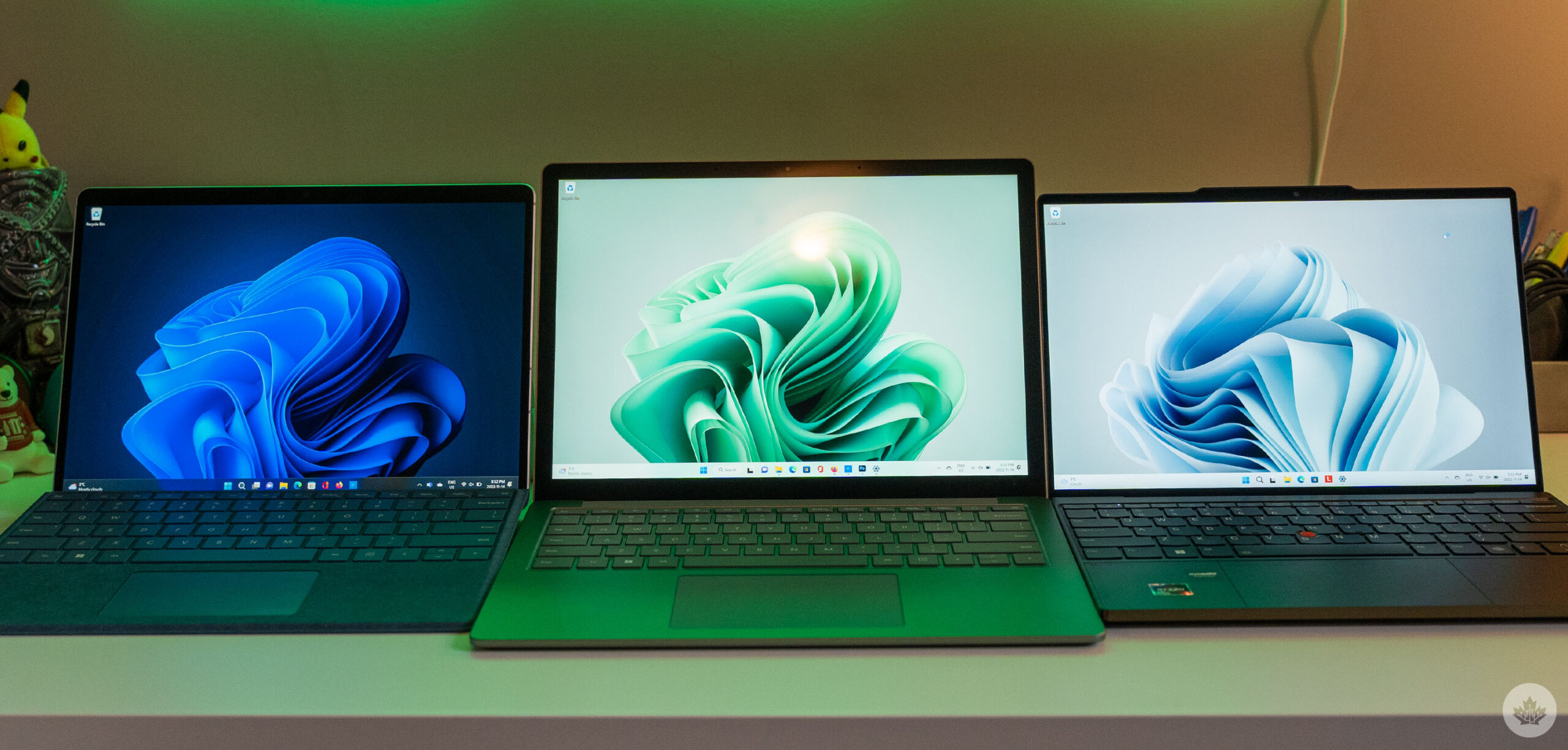
While I don’t mind having a larger laptop footprint for the benefits of a 3:2 display, it’s worth noting that Microsoft could trim the bezels on the Laptop 5 significantly. With the right approach, the Surface Laptop 5 could fit a larger display into the same footprint, or even shrink the size of its laptops without significantly reducing the display size just by trimming the bezels.
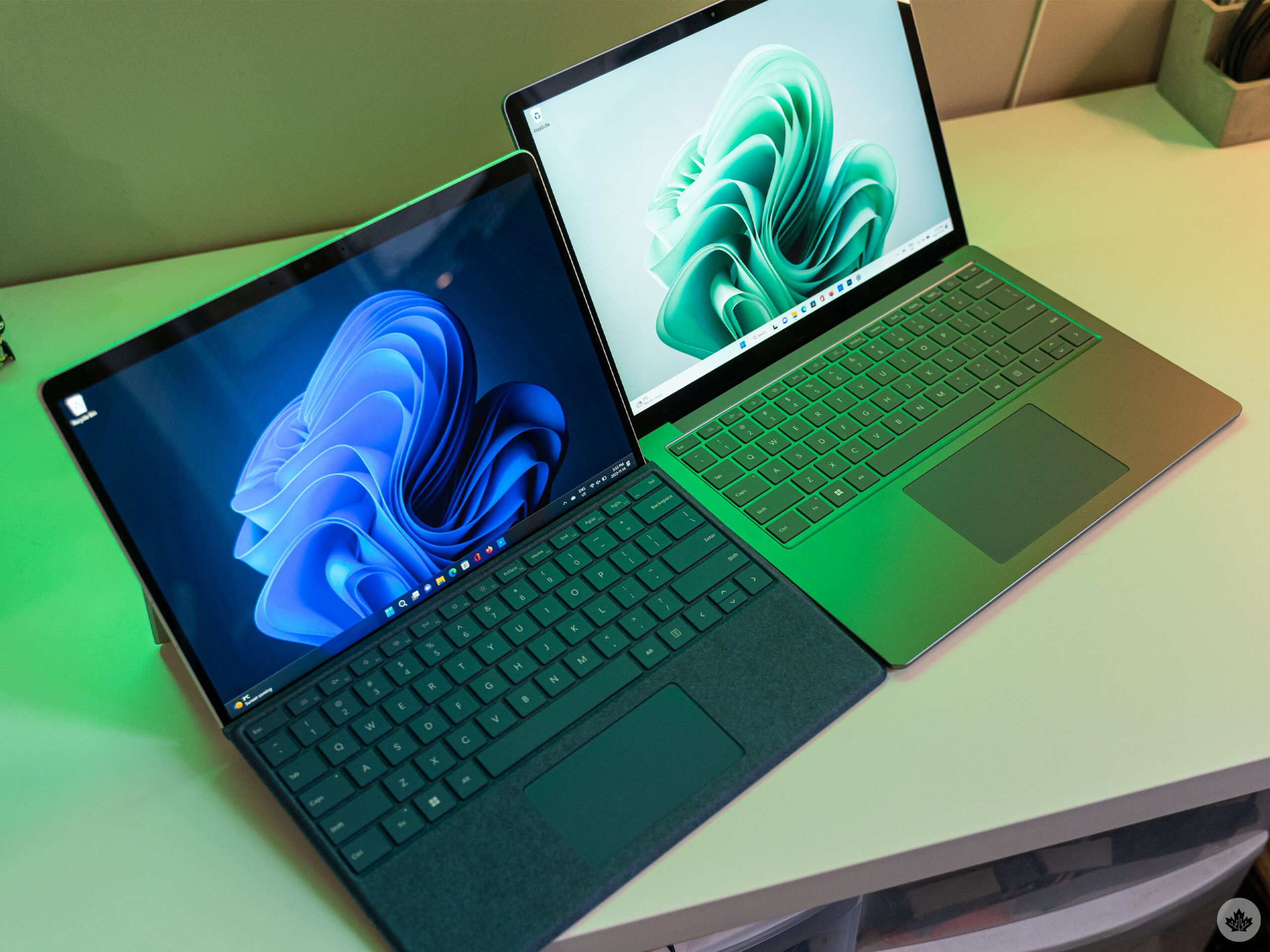
From left to right: Surface Pro 9, Surface Laptop 5, Lenovo ThinkPad Z13.
For example, this Lenovo ThinkPad Z13 offers a 13.3-inch display with a 16:10 aspect ratio, which means it’s not as tall as the Laptop 5’s 13.5-inch display. However, the smaller bezels help to significantly reduce the overall footprint of the laptop. Likewise, the Surface Pro 9 sports a 13-inch display with a 3:2 aspect ratio. It’s a smaller screen, but the slimmer bezels again help to reduce the overall footprint of the device.
Ultimately, the size of the bezels on the Laptop 5 are a minor complaint. They don’t adversely affect the laptop beyond making it look slightly dated.
Moreover, the display still looks excellent. My only real complaint here is the lack of a high refresh rate. It’s a real bummer that Microsoft put a 120Hz refresh rate on the Surface Pro 9 but not the Surface Laptop 5.
Everything else
Don't talk to me or my son ever again.
Beyond that, there’s not much else to say about the Surface Laptop 5. The keyboard is still killer, and the trackpad remains good, although it could be a bit larger. The speakers sound good as well, although I prefer to use headphones whenever I need to listen to music or watch a video.
Like with previous Surface Laptops, the port situation is disappointing. There’s a Surface Connect port, which is Microsoft’s proprietary magnetic charger. On one hand, I like the Surface Connect port and it’s very satisfying to connect and disconnect the magnetic charger. On the other, just about everything has moved to USB-C now – I ended up not even taking the Laptop 5’s charger out of the box because I mainly used a USB-C cable for charging off the doc station I have at my desk, which conveniently lets me connect an external monitor too.
Microsoft does still include an old USB-A port, which is nice on the rare occasion I need one. Unfortunately, that’s it aside from the 3.5mm headphone jack. Three ports just doesn’t feel like enough, and I’d happily trade the Surface Connect port for another USB-C port.
Windows Hello remains a great option for unlocking the laptop, although as someone who still regularly wears a mask, it makes using the Laptop 5 a little more challenging when working on the go. It’d be nice to have a fingerprint unlock option as well for the times when I can’t use my face.
Surface Pro 9 (left) and Laptop 5 (right).
Finally, when it comes to price, the Surface Laptop 5 remains on the higher side compared to similarly specced Windows laptops. The 13.5-inch Laptop 5 starts at $1,299.99 for the i5 variant with 8GB of RAM and a 256GB SSD and climbs all the way to $2,209.99 for the i7 variant with 16GB of RAM and a 512GB SSD (the model I tested). The 15-inch starts at $1,689.99 and climbs to $3,119.99.
That puts the Surface Laptop 5 on the higher end – a quick search of laptops on Best Buy with similar specs to the Laptop 5 I reviewed revealed options ranging from about $900 to $2,000 or sometimes more. I bring this up mainly to point out that if the main thing you care about is the internal hardware, you can save a decent chunk of money going with other manufacturers like HP, Dell, Acer, and more. As an example, this HP laptop sports the same internal specs as the Surface Laptop 5, double the SSD storage and a 15.6-inch display for $1,149.99 (and it’s even on sale until November 24th for $999.99). Is the hardware as nice as what you’d get with the Surface Laptop 5? No. But for about $1,000 less, that might be a worthwhile trade-off for many.
Notably, Best Buy is also selling open-box versions of the above-mentioned machines. These open-box machines have been thoroughly tested and certified, and are in mint condition and cosmetically flawless:
Twitter’s future looks increasingly uncertain as employees resign and new owner Elon Musk continues to drop the ball. Some predict Twitter will break in the coming days or weeks. Whether or not Twitter dies (my money is on the service limping along as an empty husk of what it once was), you may want to pull your data out, so you have a backup if the service does collapse.
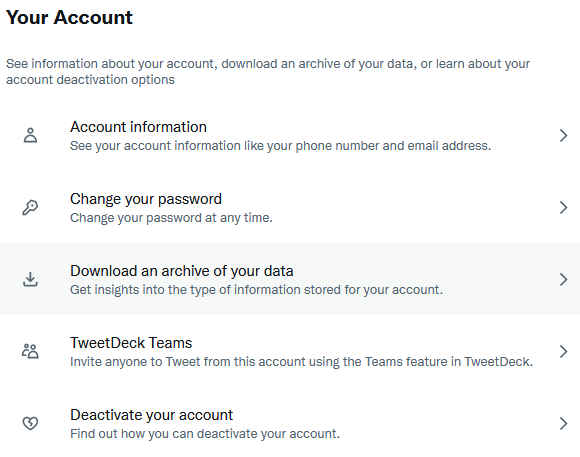
Thankfully, Twitter offers a built-in tool for doing this. To access it, open Twitter and click ‘More’ > ‘Settings and Support’ > ‘Your account’ > ‘Download an archive of your data.’ You’ll need to enter your password, and then a verification code will be sent to either your email or phone number (I’d recommend email since when I went through the process, I got an error when trying to use SMS). You can also do this from Twitter’s mobile apps.
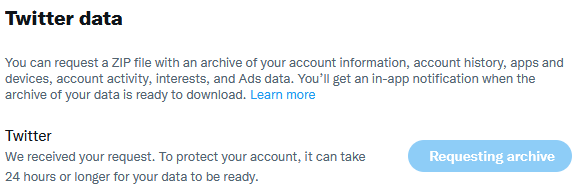
Once you’ve verified yourself, click the blue ‘Request archive’ button. Twitter will then start preparing the archive, which will be available to download as a zip file. The Twitter site notes that it can take 24 hours or longer for the data to be ready.
Data in the archive will include account information, history, apps and devices, account activity, interests, and ad data.