SpaceX had plans to create a futuristic transportation system called the Hyperloop. Those plans have hit an indefinite pause.
Plans for the subway of the future involved levitating pods across tubes of tunnels under found Elon Musk’s futuristic transportation venture, the Boring Company.
But as reported by Bloomberg, a prototype of the tunnel, first unveiled in 2018, has been paved down and replaced with a parking lot for SpaceX employees. There are no signs of the tunnel along Jack Northrop Avenue, located near Space Exploration Technologies Corp’s Hawthorne, California office, the publication notes.
While there is no clear indication as to if and when the Hyperloop could come back, Musk has teased the idea regardless.
Hyperloop could do that trip in less than half an hour
But it seems like the world’s richest man is preoccupied with other things, namely his bid to make money from Twitter users after buying the company for $44 billion.
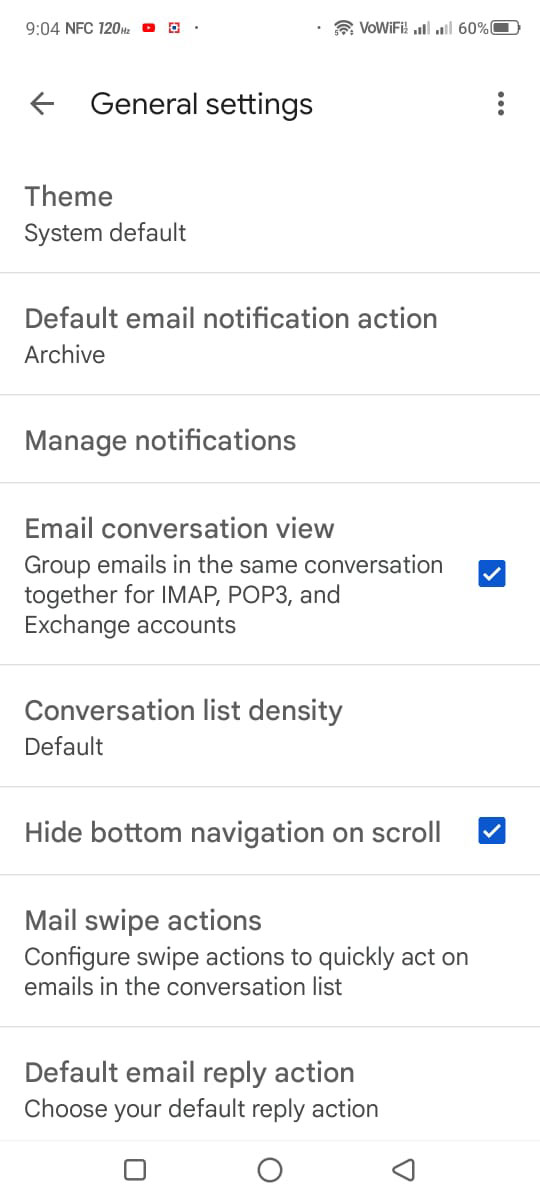
Google removed text labels from its Gmail app for Android back in September, and that change makes all the more sense now.
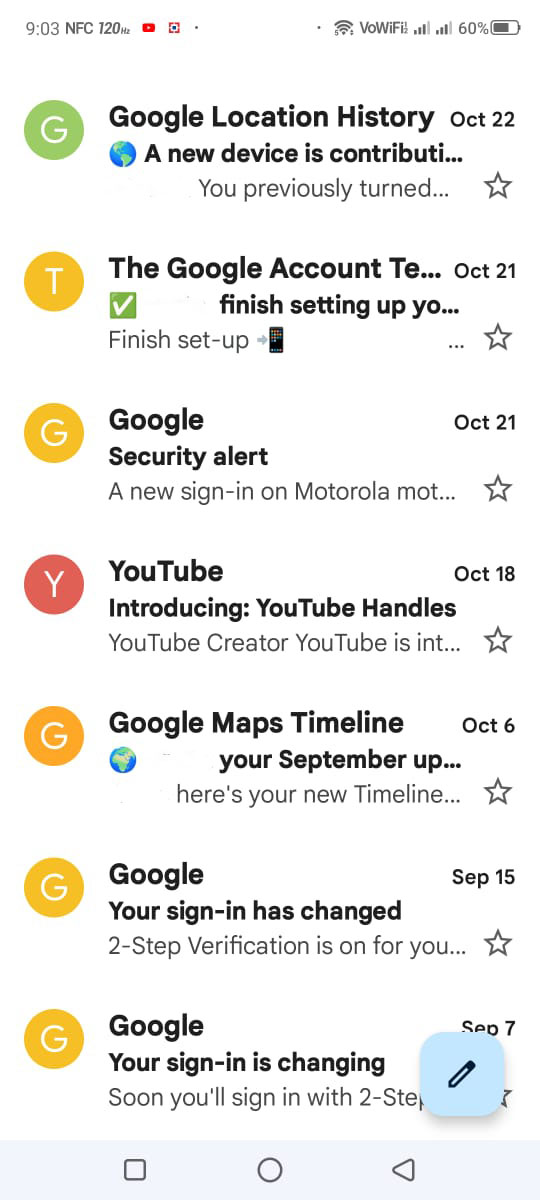
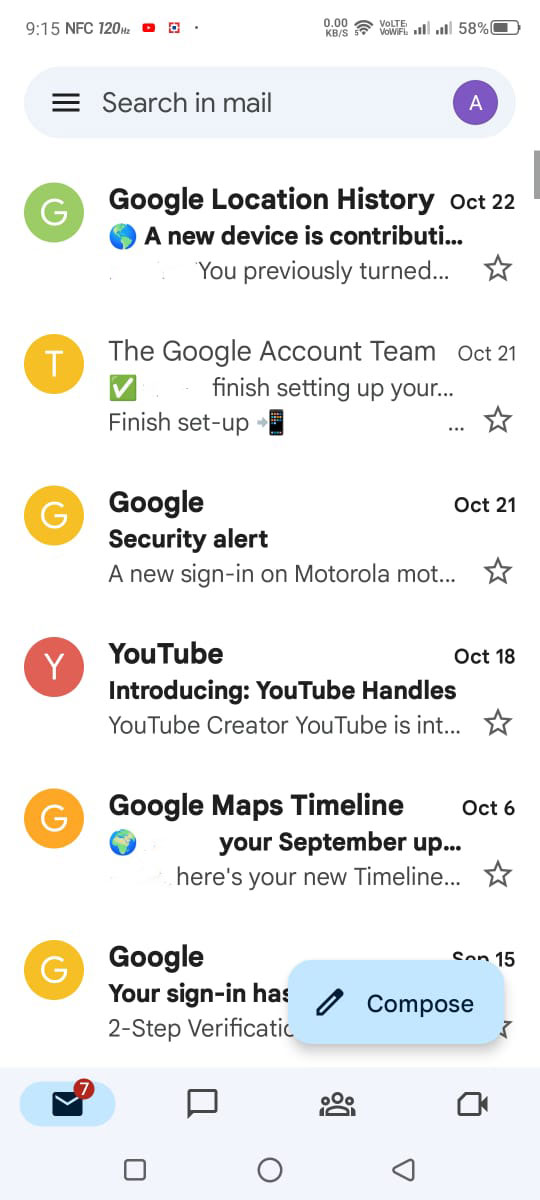
As shared by 9to5Google, Google is trying to make the bottom bar on its Android Gmail app more “persistent.” Previously, the bottom bar on the Android Gmail app, which houses the ‘Mail,’ Chat,’ Spaces,’ and ‘Meet’ buttons, would disappear when you scrolled down in your inbox, only to reappear when you scrolled back up.
Similarly, the bottom bar would disappear when you opened an email but pop back up when you exited the email and returned to your inbox.
For those who’d like to keep the bottom bar available at all times, Google had a “Hide bottom navigation on scroll” setting, which could be toggled off (toggled on by default). However, even with the setting disabled, the bottom bar would disappear when you would open an email.
With the new update, Google is making it so that the bottom bar behaves the same way when you’re reading an email like it does when you’re scrolling through your inbox. This means that when you scroll down in an email, the bottom bar will disappear and pop right back up when you scroll up, making the ‘Mail,’ Chat,’ Spaces,’ and ‘Meet’ buttons available to you at all times.
According to 9to5Google, the feature appears ready to be implemented on iOS, while it has rolled out for some Android devices with Gmail version 2022.10.02.
Montreal, QC, Canada – September 4, 2021: Quebecor headquarters in Montreal, QC, Canada. Quebecor Inc. is a Canadian diversified media and telecommunications company.
Québecor’s CEO has full faith in the upcoming hearing between Rogers, Shaw, and the Competition Bureau.
“WebelievethattheupcomingCompetitionTribunalhearingwilldemonstrateclearlythattheacquisitionofFreedom by QuébecorwillbringtotherestofCanada some healthycompetitionandlowerpricesthat have been the norm inQuebecformanyyears,” Pierre Karl Péladeau said during a conference call discussing the company’s Q3 results.
The hearing, set to begin next week, will examine the Competition Bureau’s application to block Rogers’ $26 billion takeover of Shaw. The bureau has argued the deal will reduce competition in Canada’s wireless sector, leading to higher bills, among other issues for Canadians.
Rogers and Shaw agreed to sell Freedom Mobile to Québecor subsidiary Vidéotron to appease worries. Freedom’s sale is contingent on the larger deal. However, the Competition Bureau says it will accept nothing other than a full blocking of the Rogers and Shaw merger.
Approval from the Competition Bureau is just one avenue of approval the companies need for the Rogers-Shaw merger. Approval from the Canadian Radio-television and Telecommunications Commission (CRTC) came earlier this year. Conditional approval from Innovation Minister François–Philippe Champagne came last month when he laid out conditions for Vidéotron’s acquisition of Freedom Mobile.
The conditions include Vidéotron keeping the attained licenses for 10 years and offering wireless prices that are comparable to Quebec.
Assuming all approval is achieved, Péladeau signalled the company will be able to start operating quickly. “Despite the fact that the transaction is not approved, we have a pretty good idea about how the networks work [and] what kind of technology Shaw/Freedom is using. We obviously have a good relationship with wireless equipment suppliers.”
The company further reported it increased its mobile customer by 2 percent and its internet customer by 3 percent in its third quarter.
Over half of its internet customers were VMedia customers that Québecor inherited after it acquired the company earlier this year.
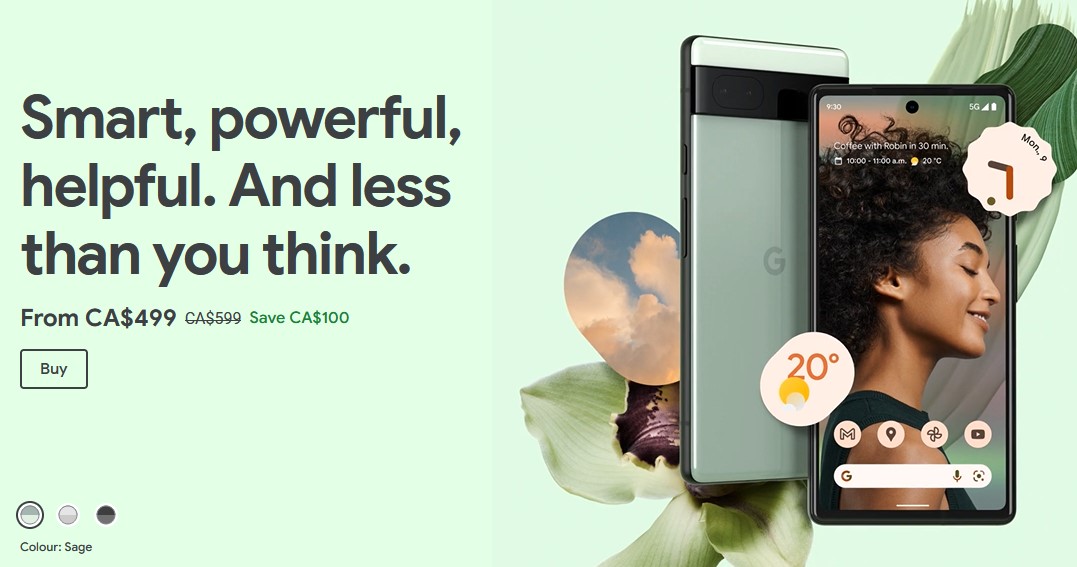
Google’s excellent mid-range Pixel 6a got its first official discount in the Canadian Google Store. The smartphone is now available for $499, a $100 discount.
This price drop arguably makes the Pixel 6a even better value for those who want to Pixel experience, but don’t necessarily want to fork out the money for a Pixel 7 or 7 Pro. The most significant drawbacks to the 6a include that it runs on the Tensor chip (the 7 series sport the newer Tensor G2) and that it sports worse camera hardware (12-megapixel main sensor vs. the 50-megapixel sensor in the 7 series).
Despite that, the Pixel 6a camera still puts out some impressive shots thanks to Google’s image processing software, and the performance bump for Tensor G2 isn’t huge (although not negligible). There’s also the 60Hz display — as nice as it’d be to have a higher refresh rate, the savings outweigh that particular downside, in my opinion.
When I wrote the Pixel 6a review earlier this year, I thought it was too good for the price. But the $100 discount makes it an even better value.
MobileSyrup utilizes affiliate partnerships. These partnerships do not influence our editorial content, though MobileSyrup may earn a commission on purchases made via these links.
When the credits started rolling in God of War Ragnarök, I was surprised to feel tears running down my face.
Not necessarily because of anything that happened in the final moments, mind you, though that certainly contributed to it. Rather, it was the catharsis of seeing this second chapter in the deeply affecting father-son story of Kratos and Atreus through to the end that hit me so hard. Upon completion, I began reflecting on the powerful journey I went on with these characters, and, in turn, just how much they’ve come to mean to me.
Rarely do I have such a reaction upon finishing a game, so when I do, I know I’ve experienced something special. But Ragnarök is indeed special — a brilliant culmination of everything developer Santa Monica Studio (SMS) has learned while making its nearly 20-year-old God of War series to create something truly unforgettable.
2018’s soft reboot of the God of War series won many over, myself included, for its riveting, sophisticated tale of fatherhood. As someone who’s estranged from his dad, Kratos’ parental struggles — the desperate attempt to prevent Atreus from suffering from the sins of the father — hit particularly close to home. “We must be better,” Kratos tells his son in the reboot, imploring that they break the cycle of violence perpetuated by both god and man. But what does that actually mean?
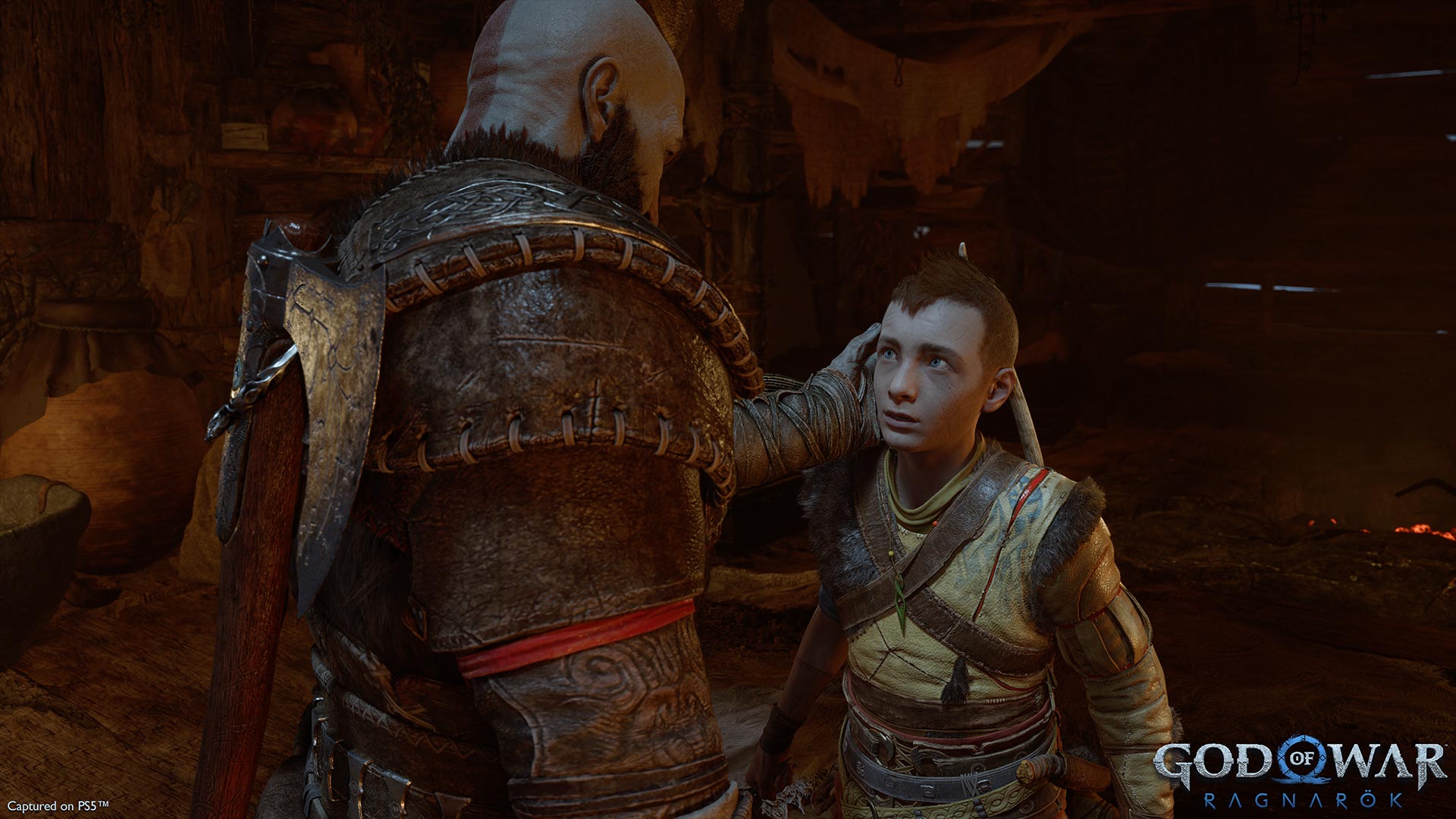
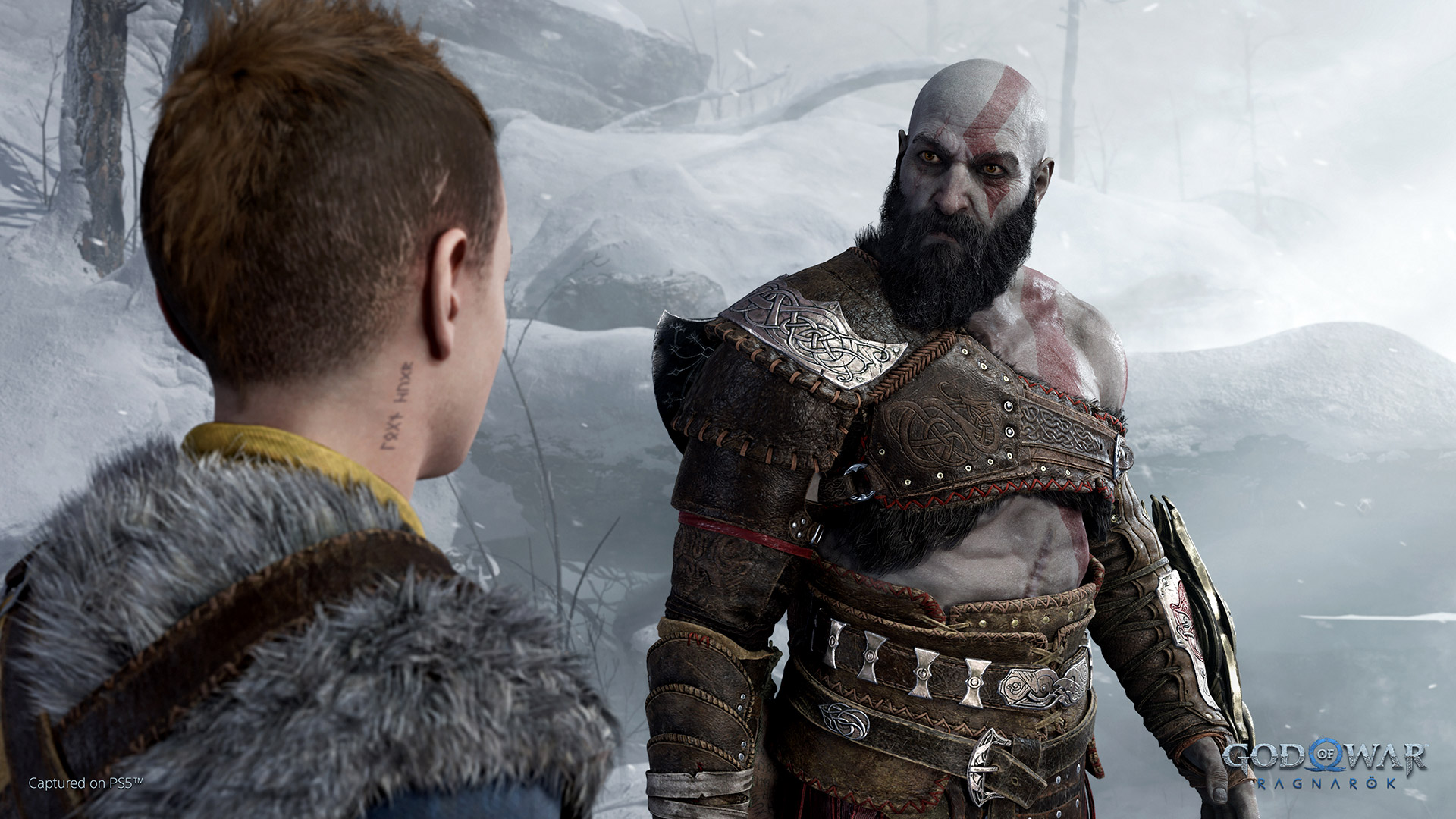
Despite a far bigger cast this time around, Kratos and Atreus’ relationship remains the beating heart of Ragnarök.
In God of War Ragnarök, SMS’ attempt to answer that question results in one of the most gripping stories I’ve seen in a game. Faced with the titular Norse apocalypse, Kratos and Atreus set off on a journey to save the Nine Realms while seeking answers about the latter’s mysterious identity as Loki. Naturally, our story begins with Kratos hesitant to leave their home, concerned with putting Atreus in too much danger by falling into conflict with Odin and his fellow Asgardians. But over the course of the narrative, the world-weary warrior undergoes a profound — and even soulful — arc in which he develops just a bit more empathy for both his son and the world around him. He realizes that it’s not enough to just tell your son to do something — you have to lead by example. The lengths to which Kratos goes for his son in Ragnarök — something I would have yearned to see from my own father — proved to be genuinely moving to me.
Sure, he may not be the kindest or most forthcoming parent, but he demonstrates his love in the ways he can. And as is the case with the first game, Ragnarök doesn’t shy away from the atrocities that Kratos has committed, but it also never fails to remind us of our innate capacity for good. All of this depth is believably conveyed through a mesmerizing performance from Christopher Judge (Stargate SG-1), who expertly balances Kratos’ intimidating gravitas with his tender and more emotionally vulnerable side. And with the one-shot camera‘s return in Ragnarök, SMS is able to provide us with lingering close-ups that really let you soak up all of these raw, subtler moments.
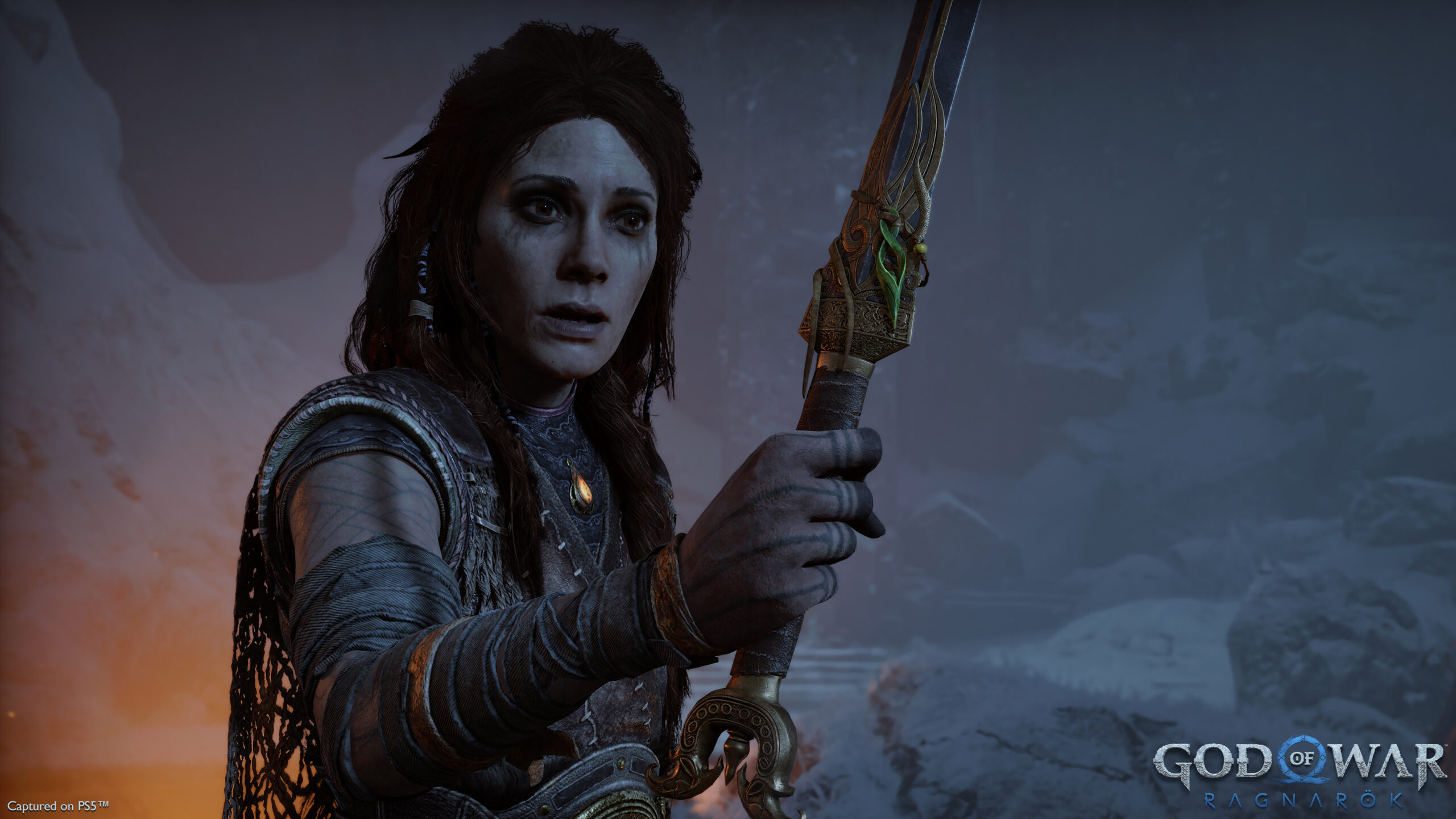
Freya is one of Ragnarök’s best and most nuanced characters.
Of course, none of that succeeds unless Atreus himself is also compelling, and thankfully, he’s arguably more so than Kratos himself. Certainly, Ragnarök had tricky ground to navigate with Atreus, given that he’s now three years older and could have come off as an overly angsty and annoying teen, but SMS and actor Sunny Suljic (Killing of the Sacred Deer) effortlessly imbue Atreus with so much heart. Suljic, who’s grown so much since the last game that his voice had to be edited in parts, is impeccable, shifting between Atreus’ rebelliousness, complicated feelings over his mysterious identity and proclivity to help people with ease. Like Kratos, Atreus has a splendid arc; if the first game was about him proving himself to his father, Ragnarök is a coming-of-age story about discovering his own self-worth — something to which we can all undoubtedly relate.
Returning characters also have significantly more screentime and nuance. Much of Mimir’s (a spellbinding Alastair Duncan) role in this game revolves around confronting figures from his past to atone for the sins he committed when trying to curry favour with Odin. In this way, he finds common ground with Kratos, and the pair share some strong heart-to-heart conversations. Freya, meanwhile, is back to seek vengeance against Kratos for killing her son, Baldur, in the first game, but we also come to learn far more about her troubled past. Sensitive writing and actress Danielle Bisutti’s incredible performance beautifully convey all of this anguish, and it results in Freya being Ragnarök‘s most sympathetic character. Even Brok (Robert Craighead) and Sindri (Toronto’s Adam J. Harrington), the two Dwarven smiths who previously served as comic relief, have much more meaningful parts to play, with the latter even striking up a friendship with Atreus.
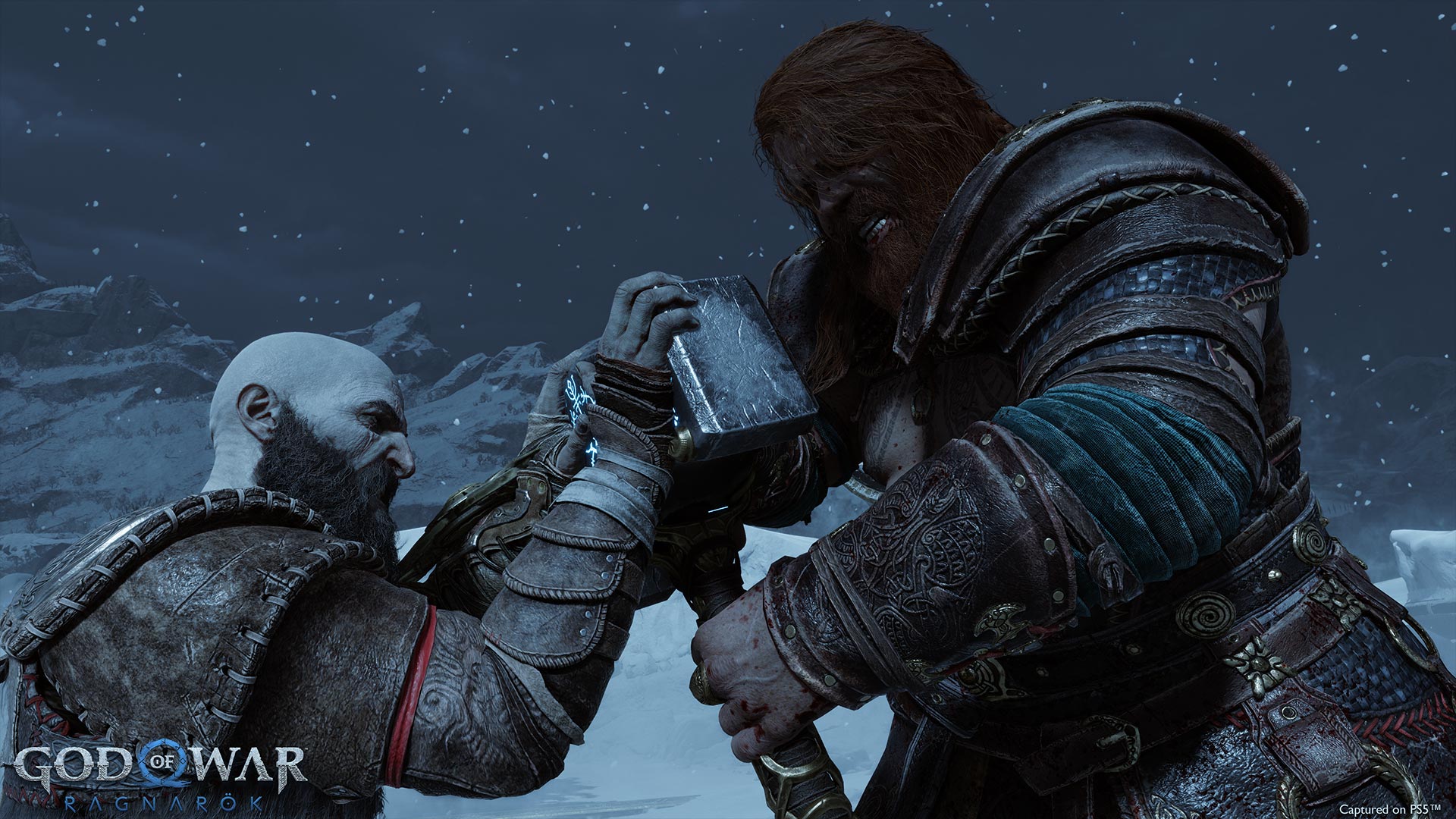
Rest assured that there are many more surprises beyond Kratos vs. Thor.
Then we have Ragnarök‘s new characters. Part of the intrigue in the first God of War were the constant teases that Odin and the rest of the Norse pantheon were quietly observing Kratos and Atreus. Naturally, then, there was much anticipation as to how SMS would ultimately portray them. That’s to say nothing of the fact that many people already have their own impressions of these deities based on the versions seen in the Marvel Cinematic Universe.
Given all of that, you’ll be pleasantly surprised by how cleverly they’re used in Ragnarök. As voiced by Richard Schiff, Odin has a rather James Woods-in-Hercules sort of panache, which makes him feel simultaneously charming and sleazy. By contrast, there’s more than meets the eye with Thor (Ryan Hurst), whose gruff and drunken demeanour belies his complicated family dynamics. And in spite of the ridiculous pushback from racist trolls, Angrboda (Laya De Leon Hayes) is a particular delight — a kind-hearted, exuberant teen who shares a wonderfully endearing dynamic with Atreus and reminds us of his youthful innocence. There are other Norse figures whose roles I wouldn’t dare spoil, but suffice it to say that seeing who pops up and when — as well as the unique ways in which they individually test Kratos and Atreus — only serves to elevate Ragnarök‘s already fantastic core father-son story, especially in the absolutely thrilling final act.
If it ain’t broke
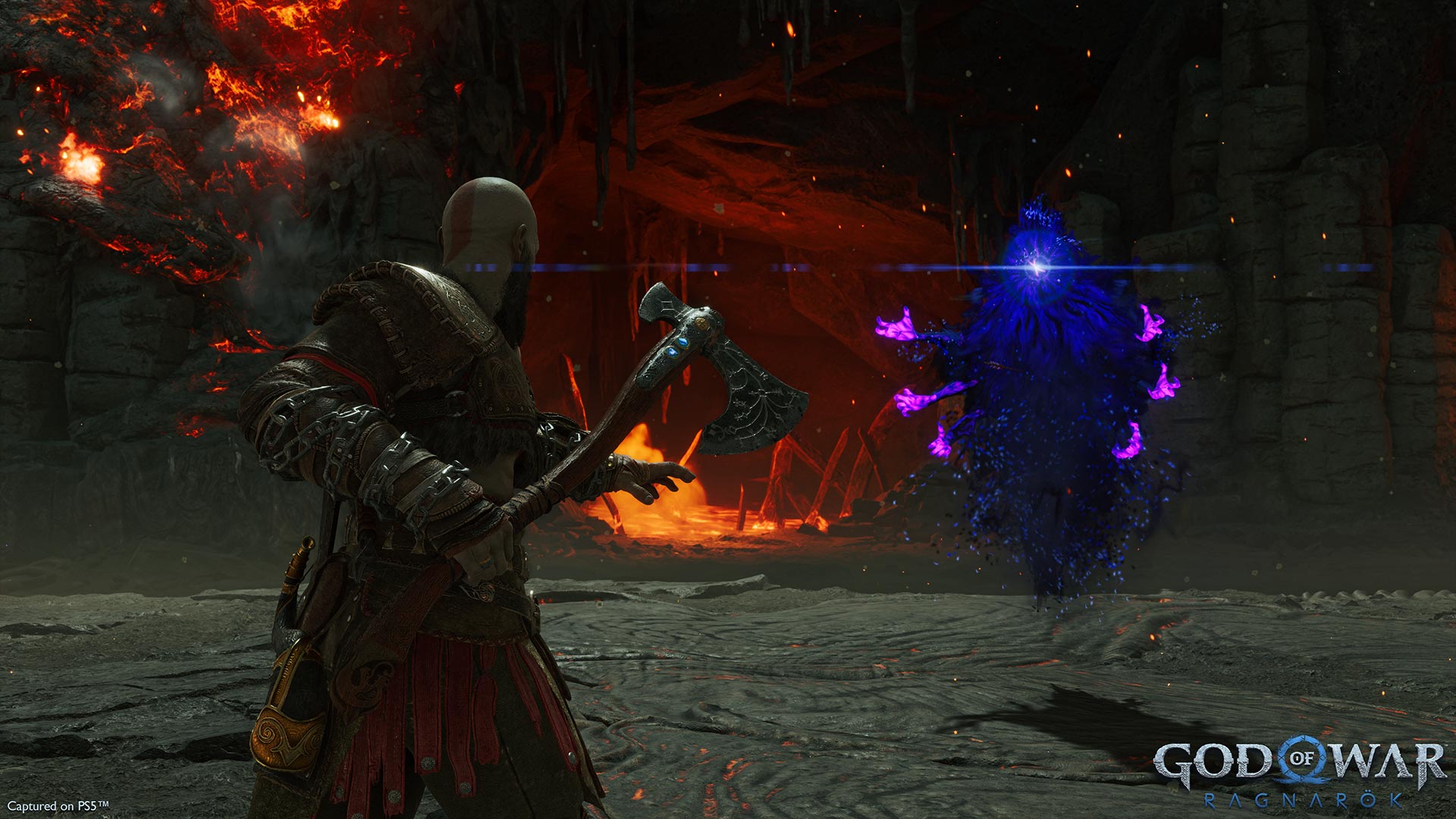
The Wight is one of many new and interesting enemy types in Ragnarök.
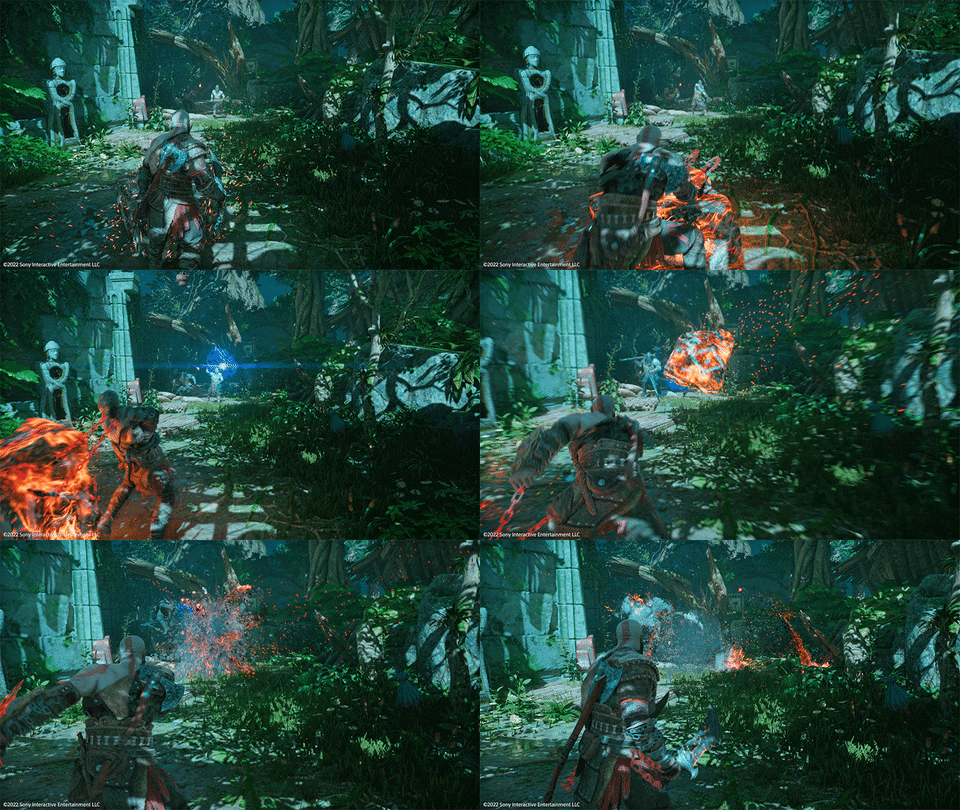
While Ragnarök‘s exponentially grander narrative ambitions and wider cast of characters are quite prominent, you might not immediately notice what’s changed with the actual gameplay. Indeed, it certainly feels a little too familiar at first, with many of Kratos’ moves and animations resembling those found in the 2018 predecessor. Once again, Kratos wields his Leviathan Axe for crunchy, weighty melee combos and oh-so-satisfying Mjölnir-esque throws and callbacks, and both are even more impactful thanks to the PS5 DualSense controller’s haptic feedback. Also making a return are the Blades of Chaos, whose long-ranged attacks still feel refreshingly distinct from the up-close-and-personal Axe. Powerful Runic attacks (super moves that have cooldowns) also come back and are as handy as ever. But if the weapons themselves largely function the same, it’s the litany of smaller added flourishes that really shake up the flow of combat.
The biggest of these is the introduction of Elemental statuses to your weapons — ‘Frost’ for your Axe and ‘Burn’ for the Blades. Operating independently from the classic stun metre for powerful finisher moves, these Elemental moves hinder your enemies in several useful ways. Do you want to freeze enemies to render them immobile for devastating follow-up attacks? Focus on putting skill points and gear crafting towards quickly building out your Axe’s Frost affinity. Invest enough into such a build and you can charge your Frost gauge for more powerful ice-based attacks or even imbue your slashes with wickedly cool projectile waves. On the flip side, maybe you’ll opt for enemies to take periodic Burn damage, in which case you spec out your Blades and, eventually, inflame them for added power.
Many combat areas also have a newfound layer of verticality to them, and only with the Blades of Chaos’ new grapple move are you able to ascend them. This makes battles feel even more dynamic, as you have to maintain situational awareness and zip between levels to manage all kinds of foes. Hacking up a few beasts on the ground, dodging an incoming energy blast from an overhead enemy, seamlessly launch myself up to their platform to finish them off before slamming back down with an earth-shattering landing smash never gets old. Throw in additional combo moves with Atreus’ magical arrows (thanks to a deeper skill tree for the lad) and an additional shield type that lets Kratos decide to prioritize blocking or parrying and you’re afforded far more choice in combat than before. When you factor in all of this, there’s a rousing, almost balletic, rhythm to each fight, cementing Ragnarök as having one of my favourite action game systems to date.
If that weren’t enough, Ragnarök also meaningfully addresses its predecessor’s most glaring flaw: a lack of enemy variety. In the 2018 game, you’d fight far too many variants of the same sorts of trolls and ogres, which became grating before too long. Now, though, the number of different enemy types is vast. Take Odin’s fearsome Einherjar forces, who can infect you with Bifrost to make subsequent blows extremely harmful. These feel markedly different from the Light Elves, who dual-wield swords for vicious flurry attacks, the graceful-yet-deadly bow-clad horsemen or the wraith-like Wights that can split into pesky little wisps. Minibosses are also appreciably diverse, ranging from fearsome Draugr to towering knights and electric alligator-like Dreki. Some enemies are also resistant to the Axe or Blades, which is a smart way to keep you on your toes and further switch things up a bit. Far be it from me to spoil the larger boss fights, but rest assured that the Kratos and Thor fight that’s been heavily featured in marketing is both early in the campaign and just one of many pulse-pounding, tense and titanic encounters that Ragnarök has to offer.
Grander scope, deeper design
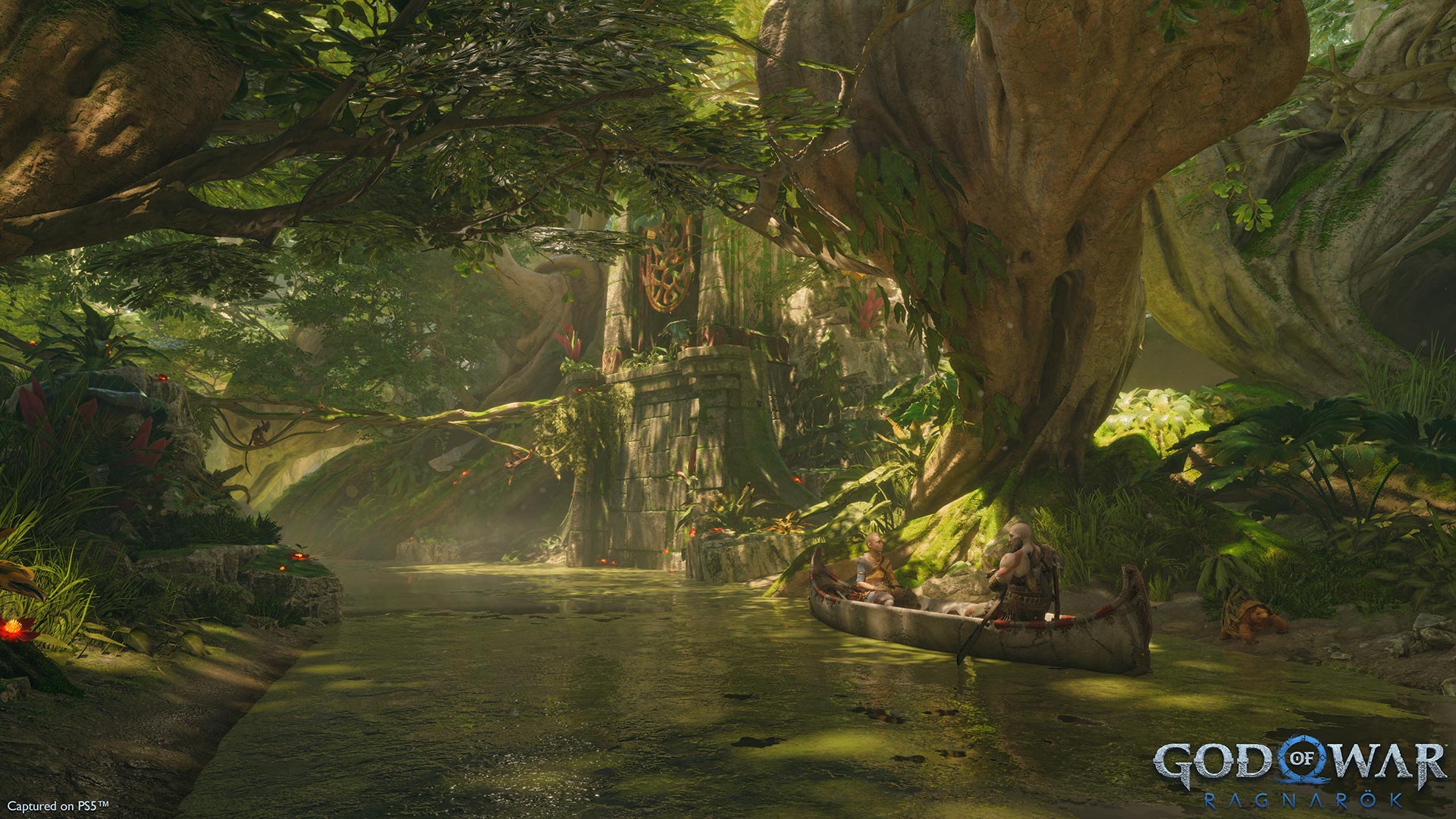
Vanaheim’s dense and humid forests contrast nicely from the darker and colder Realms you’ll visit.
As the finale to God of War‘s Norse arc, all nine mythological realms can be visited in Ragnarök, giving the game an appropriately massive sense of scope. Impressively, each realm is stunningly distinct. Covered in ice by the apocalyptic Fimbulwinter, the key returning area of Midgard must now be navigated by a wolf-drawn sled, and it makes the once-lively lakes feel chillingly eerie and haunted. This is in stark contrast to the expansive, luscious and wildlife-filled forestry of Vanaheim, or the tight, claustrophobic and sweltering platforms of the hellish Muspelheim. On PS5, the flexible Performance Modes also meant I could have all of this displayed in gorgeous 4K fidelity while maintaining 40fps, which I found was a perfect balance of visual splendour and fluid gameplay.
Overall level design is also uniformly excellent across the board. While retaining the original game’s deliberate pacing and meticulously crafted interconnected areas of the original game, the Metroidvania-lite approach of returning with new equipment to open up previously inaccessible areas is more prevalent here, thus encouraging greater exploration. I was particularly impressed by Ragnarök‘s far more intricate puzzles, which rely more on thoughtful geography and environmental awareness. One enjoyable recurring puzzle type comes in the form of the Twilight Stones, Elven rocks that reflect your Axe in an arc with added force. Finding out where to position yourself so you can hit a switch at an angle or even leveraging the Stones while in combat proves consistently rewarding.
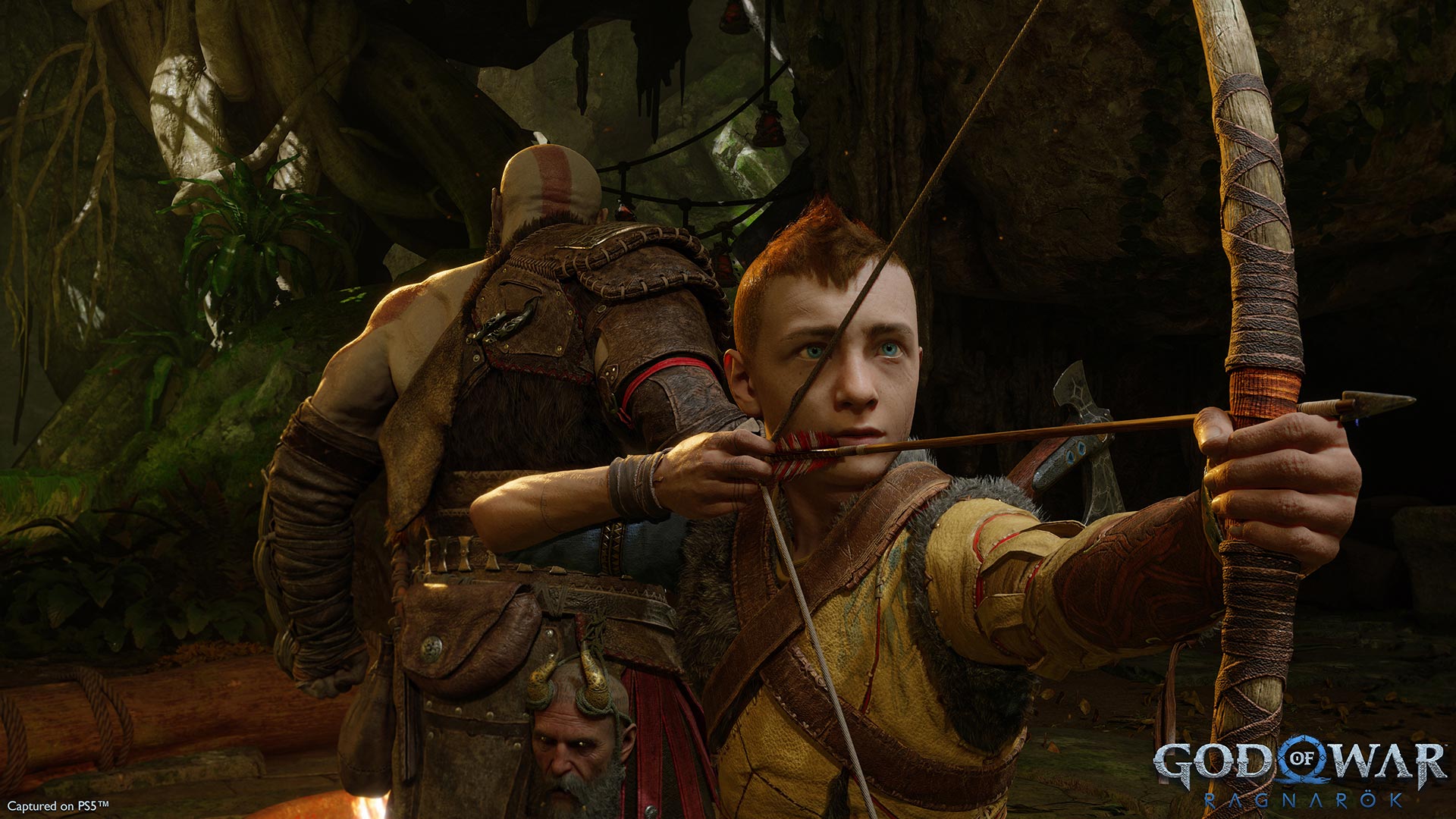
Atreus and his bow play a more active role in puzzles this time around.
Atreus himself also helps diversify puzzles, as there are many more that require his arrows this time around. Occasionally, there will be distant targets you’ll have to inflame with your Blades, and only by correctly lining up a string of Atreus’ new Sigil arrows to create a chain reaction will you actually reach them. It’s an engaging challenge that requires you to carefully scan the area to figure out what to do while also creating, through mechanics, a tighter connection between you and Atreus. The only downside here, honestly, is your companions’ annoying tendency to spell things out for you through dialogue. In more than a few instances, I would take but a brief moment to ponder upon what I had to do, only for an NPC to practically give away the solution. This is a disappointing trend in the AAA space, with sister PlayStation exclusive Horizon Forbidden Westbeing one of the biggest offenders, and it’s unfortunate that Ragnarök offers no option to turn it off.
Another rare shortcoming in Ragnarök is the frustratingly repetitive sidequest design, many of which boil down to “Defeat [x] number of special Draugrs” or “find one special flower in each realm.” While 2018’s God of War suffered from a similar issue, you’d have hoped that this would have been improved in the sequel. Thankfully, what’s also carried over from the first game, at the very least, is the injection of narrative morsels into each quest. Whether it’s freeing a giant creature to help Mimir rectify a past transgression or Kratos relating to a spirit’s desire to find closure with his son, practically every sidequest provides sharply written insight into each character. The bountiful amounts of gear, crafting materials and XP that you receive from these quests certainly don’t hurt, either.
An epic in every sense of the word
So many feels.
God of War Ragnarök epitomizes what it means for a developer to be at the top of its game. Across virtually every facet of design, Santa Monica Studio has purposefully built upon the foundations of every prior God of War entry, showing a level of maturity and self-reflectiveness that we’ve seen from few other teams. Small issues aside, the magnificent, emotionally-charged and intensely personal narrative, perfectly refined combat and awe-inspiring level design all come together to result to create a bonafide masterpiece. Not only is this now my 2022 Game of the Year, but it’s also one of my favourite games of all time, and an experience I won’t ever forget.
God of War Ragnarök releases exclusively on PlayStation 4 and 5 on November 9th and costs $79.99/$89.99. Those interested in reading about the game’s wide variety of accessibility features can do so here.
MobileSyrup utilizes affiliate partnerships. These partnerships do not influence our editorial content, though we may earn a commission on purchases made via these links that helps fund the journalism provided free on our website.
Qualcomm expects to continue providing the “vast majority” of modem chips for iPhones in 2023 amid Apple’s ongoing struggle to get in-house modem chips off the ground.
Per a Bloomberg report, Qualcomm previously expected to provide roughly 20 percent of the 5G modem parts for the 2023 iPhones. However, according to comments from the company’s recent earnings report, Qualcomm thinks it will retain its current foothold, noting that Apple won’t move to its in-house modem design for the 2023 iPhones.
Several reports pegged 2023 as the year Apple would ship an iPhone sporting an in-house 5G modem, which the company has been working on for years. Apple and Qualcomm settled a lawsuit in 2019, and Apple began using the company’s modems in iPhones again, but also started work on its own modem to eventually replace Qualcomm’s. However, a Bloomberg report from July 2022 said Apple’s modem efforts had so far failed, in part due to an overheating issue.
Now, Apple’s modem timeline could see in-house modems in iPhones in 2024.
Despite the good news for Qualcomm on the continued use of its modems in iPhones, the company is still struggling with a wider slump in smartphone demand. Bloomberg reported that the company delivered a far weaker forecast than expected and saw shared slide as much as 8.4 percent in trading.
Just a few days after Halloween and Nintendo has already unveiled its list of Canadian Black Friday deals.
First up is a discounted $399 Mario Kart 8 Bundle, which you’ll probably recognize since the gaming giant has offered that the last few Black Fridays. Like last year, though, it’s also throwing in a three-month Nintendo Switch Online Individual membership on top of a Mario Kart 8 Deluxe voucher at no additional cost. Mario Kart 8 Deluxe is priced at $79, while three months of Switch Online costs $9.99, so you save $89 total with this bundle.
On top of that, Nintendo is offering up to $40 off a variety of Switch games:
Animal Crossing: New Horizons — $54.99 (regularly $79.99)
Big Brain Academy: Brain vs. Brain — $29.99 (regularly $39.99)
Bravely Default II — $54.99 (regularly $79.99)
Fire Emblem Warriors: Three Hopes — $54.99 (regularly $79.99)
The Legend of Zelda: Breath of the Wild — $54.99 (regularly $79.99)
The Legend of Zelda: Link’s Awakening — $54.99 (regularly $79.99)
Mario Kart Live: Home Circuit — $89.99 (regularly $129.99)
Mario Party Superstars — $54.99 (regularly $79.99)
WarioWare: Get It Together! — $44.99 (regularly $64.99)
These physical game deals start November 20th at retailers across Canada. Additionally, Nintendo says it will run digital eShop Black Friday promotions, which will be announced at a later date.
Twitter layoffs are coming. While there’s been some debate about how many Twitter employees stand to lose their jobs — some reports went as high as 75 percent — it looks like about half the company’s employees could get let go.
According to a report from Bloomberg, Twitter’s new CEO and dude who desperately wants you to think he’s cool, Elon Musk, plans to cut 3,700 Twitter jobs. Currently, the Twitter workforce stands at roughly 7,500 people. The information comes from people with knowledge of the matter, who said Musk plans to inform affected staffers on Friday. Moreover, Musk plans to reverse the company’s work-from-anywhere policy and force employees to return to the office, although there may be some exceptions.
Musk and a team of advisors reportedly considered a variety of layoff scenarios and policy changes at Twitter, and the people who spoke to Bloomberg noted plans could still change. One scenario reportedly included offering laid-off workers 60 days’ worth of severance pay.
Once the layoffs were sorted, Twitter’s chief accounting officer, Robert Kaiden, left the company. Kaiden marks one of the last pre-Musk executives to depart the company, according to Bloomberg.
Layoffs were an expected part of Musk’s Twitter takeover. Musk made it clear from the start that he intended to fire people, with the only real question being how many people would lose their jobs. Since taking over, Twitter staff have reportedly worked long hours and over the weekend on various projects for Musk, under threat of being fired if they missed the deadline.
Meanwhile, leaders were tasked with drawing up lists of employees who could be cut, and senior personnel were told to target a 50 percent reduction in headcount, Bloomberg reported. Musk reportedly had engineers and director-level staff from Tesla review the lists, which were drawn up and ranked based on individuals’ contributions to Twitter’s code. Musk previously tweeted about focusing on Twitter’s core product, noting that “Software engineering, server operations & design will rule the roost.”
All these cuts come as Twitter contends with massive debt from the Musk acquisition. The Wall Street Journal reported that Musk’s purchase saddled Twitter with $13 billion USD (about $17.95 billion CAD) in debt, with interest payments expected to total $1 billion USD (roughly $1.4 billion CAD) annually. That debt appears to be driving much of Musk’s decision-making as he rushes to make cuts and introduce changes to squeeze a profit from Twitter. Along with cutting staff, plans include increasing the cost of Twitter Blue to $8/mo, adding verification to Blue, and introducing a paywalled video feature.
For the latest on the Musk x Twitter news, check out MobileSyrup’s coverage here.
MobileSyrup utilizes affiliate partnerships. These partnerships do not influence our editorial content, though we may earn a commission on purchases made via these links that helps fund the journalism provided free on our website.
Bell said it activated a “record” number of new broadband customers in the last year.
The company’s third-quarter results for 2022 show this figure increased by 50.3 percent year-over-year.
Similar numbers were also reported in its retail internet category, where Bell says it received the highest number of activations in the last 17 years.





 Many combat areas also have a newfound layer of verticality to them, and only with the Blades of Chaos’ new grapple move are you able to ascend them. This makes battles feel even more dynamic, as you have to maintain situational awareness and zip between levels to manage all kinds of foes. Hacking up a few beasts on the ground, dodging an incoming energy blast from an overhead enemy, seamlessly launch myself up to their platform to finish them off before slamming back down with an earth-shattering landing smash never gets old. Throw in additional combo moves with Atreus’ magical arrows (thanks to a deeper skill tree for the lad) and an additional shield type that lets Kratos decide to prioritize blocking or parrying and you’re afforded far more choice in combat than before. When you factor in all of this, there’s a rousing, almost balletic, rhythm to each fight, cementing Ragnarök as having one of my favourite action game systems to date.