Far ahead of Black Friday on November 25th, Best Buy has launched several early offers tied to the annual sale extravaganza, including deals on Google devices, Garmin products, Samsung wearables and more.
Best Buy says that all of its ‘Black Friday Price Now‘ deals offer a guarantee that if the retailer lowers the price during its actual Black Friday sale, the company will refund the difference. For Best Buy’s weekly ‘Top Deals,’ follow this link.
Below are all of Best Buy’s early Black Friday offers:
MobileSyrup utilizes affiliate partnerships. These partnerships do not influence our editorial content, though we may earn a commission on purchases made via these links that helps fund the journalism provided free on our website.
Best Buy has launched its ‘Top Deals’ for the week of October 21st to the 24th. This week’s offers include Google products, an iRobot Roomba vacuum and even an electric scooter. For Best Buy’s early Black Friday offers, follow this link.
Below are all of Best Buy’s top deals for this week:
MobileSyrup utilizes affiliate partnerships. These partnerships do not influence our editorial content, though we may earn a commission on purchases made via these links that helps fund the journalism provided free on our website.
The Show 5 has a 5.5-inch display and comes with 6-months of free Amazon Music.
MobileSyrup utilizes affiliate partnerships. These partnerships do not influence our editorial content, though we may earn a commission on purchases made via these links that helps fund the journalism provided free on our website.
Developed by Atlus, the Persona series is one-half high school simulator, the other half dungeon-crawling role-playing game (RPG). In all of these games, you primarily control a recently enrolled high school student who must also get to know the surrounding area that you’ll be spending your time in.
During the high school segments, you interact with other classmates, listen to lectures and even engage in mid-term exams to test your knowledge. These often play out similarly to a visual novel, as the Persona games often don’t have cinematic cutscenes except for select story beats.
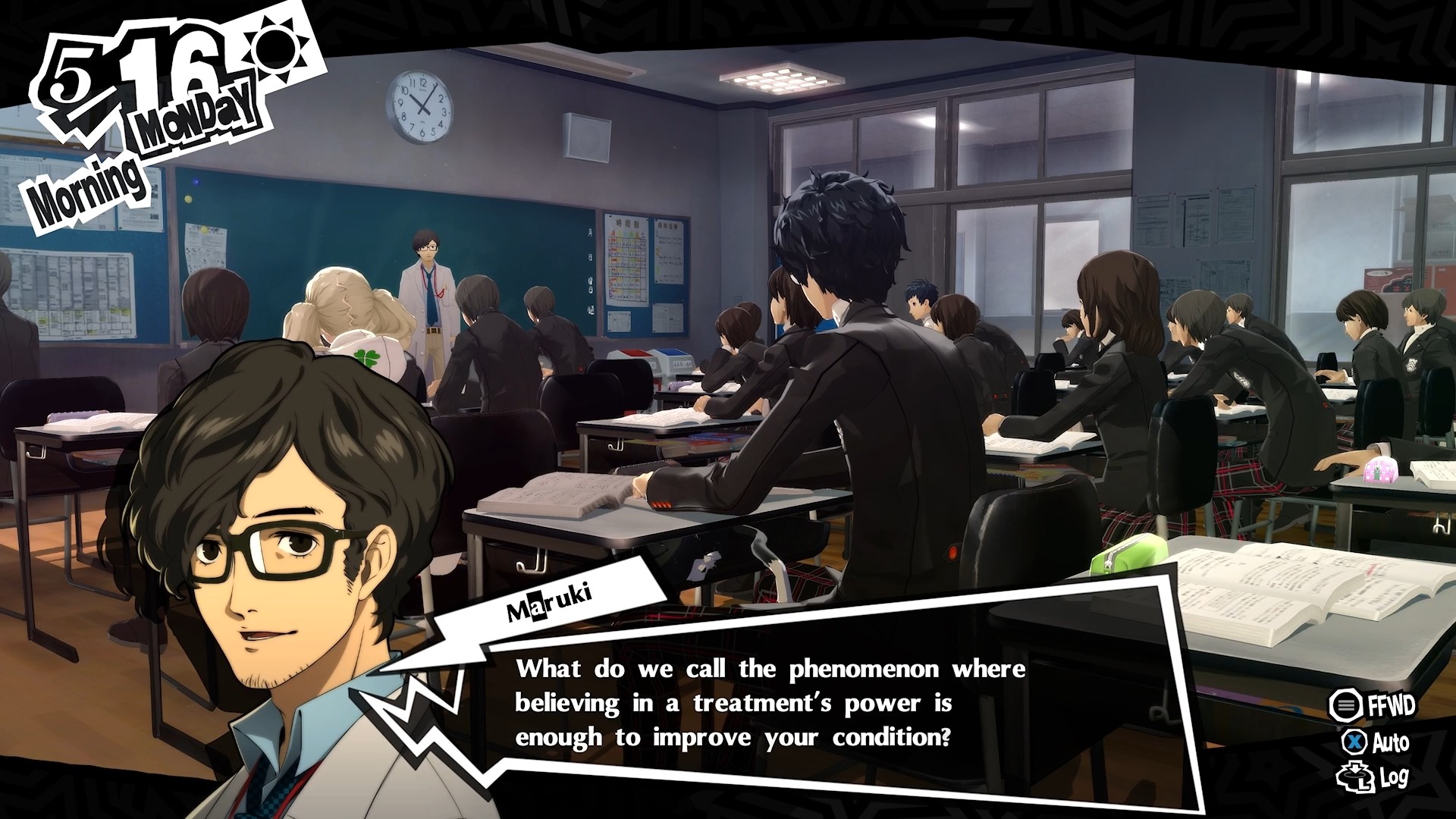
School counsellor Maruki is one of the new characters introduced in Persona 5 Royal.
During the RPG aspects of a Persona game, you control a party and navigate through a labyrinth-like area (typical for a dungeon crawling game) until you reach your objective. The gameplay is also quite standard for an RPG as it revolves around a turn-based system. However, while I never played any of the Persona games until 2017, I did experience the fantastic music through another Atlus game, Catherine, which I adore because it flips the narrative on how to approach a puzzle game.
Since music often entices me to try other forms of media I wouldn’t typically consume, I was happy to give Persona 5 a chance.
Wake Up, Get Up, Get Out There
After sinking over 80 hours into the game, I was enamoured with the entire experience.
I was so interested in the Persona series as a whole that I went back and played Persona 4, Persona 3 FES and even the spin-off games (infamously spending 50-plus hours in Persona 4: Dancing All Night). Since my current spare time is more limited compared to my student days, I now set personal yearly video game goals. One is to play a Final Fantasy title per year. The other is to play a Persona game. I am that engrossed.
When I play story-driven games such as Nier: Automata or Final Fantasy VII, I often look at them either through a philosophical lens or just how compelling the characters are through their own personal hardships. However, unlike some other narrative-focused games, the Persona games have genuinely shaped my outlook on life as I constantly find who I really am.
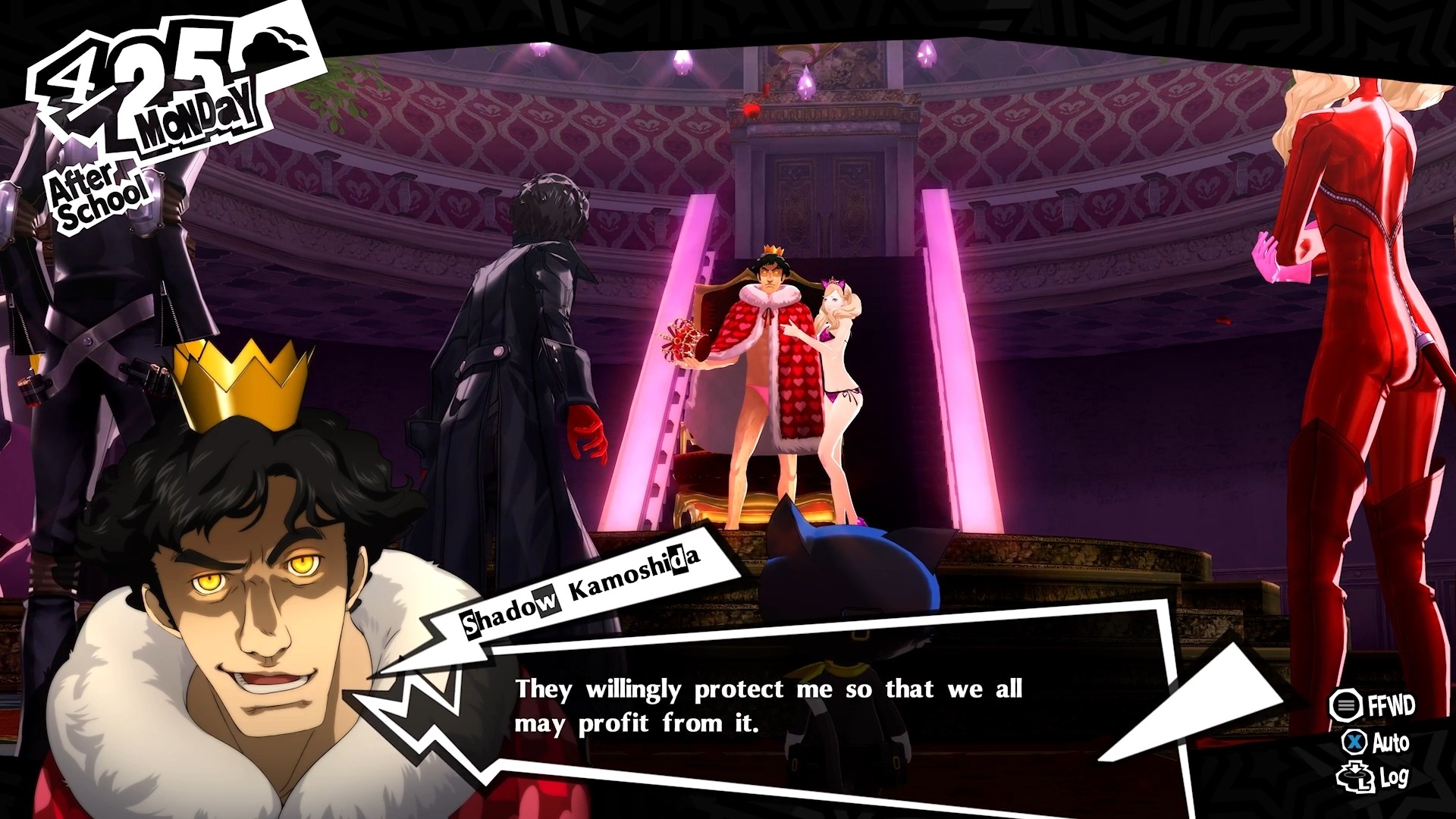
In Persona 5, Kamoshida is a coach at your school and one of the many morally bankrupt people you’ll encounter.
As you’ll find out if you play these games, underneath the high-school anime setting is a message about many personal struggles that a human being faces. For example, Persona 5’s core theme is rebelling against societal norms and bringing justice to those abusing their power. While this also currently applies to our own society, there’s a deeper, more personal message that I took away by the end of the game: having faith in yourself while pursuing your own creative goals.
Often, we seem to push away our creative side to conform to a hierarchy tied to your personal life. During my third year as a journalism student, I was constantly afraid of life after university, especially when there are so many financial insecurities in a creative space. My “hierarchy” was society’s financial burden, an issue only further highlighted as the years have gone by.
While this might sound absurd to learn from a video game, Persona 5 taught me to battle through those insecurities, even if it presents a great challenge. That lesson helped me truly enjoy my fourth year in university both socially and academically, especially at a time where I was coming out of a long-term relationship and it was my first year of essentially being alone.
On top of the overall story reflecting this message, this also resonates with one of your party member’s arcs as she experiences doubt in her athletic abilities and severe depression about a past traumatic event. Seeing this person overcome that major challenge was not only heartwarming, but genuinely inspiring.
Memories of You
Another experience that really stuck with me was from Persona 3. This game does not shy away from the discussion of death, a topic that I personally find both intriguing and terrifying.
While I won’t spoil Persona 3, there is a specific interaction with a dying man that left a lasting impression on me and changed my view on death. This specific side story teaches you not to let the fear of dying stop your own personal goals or else it will prevent you from living a fulfilling life.
This is what I love about the Persona series. Whether it’s rebelling against a corrupt society, embracing your true personality or dealing with the concept of death and loss, Persona has always dealt with topics that question your approach to life.
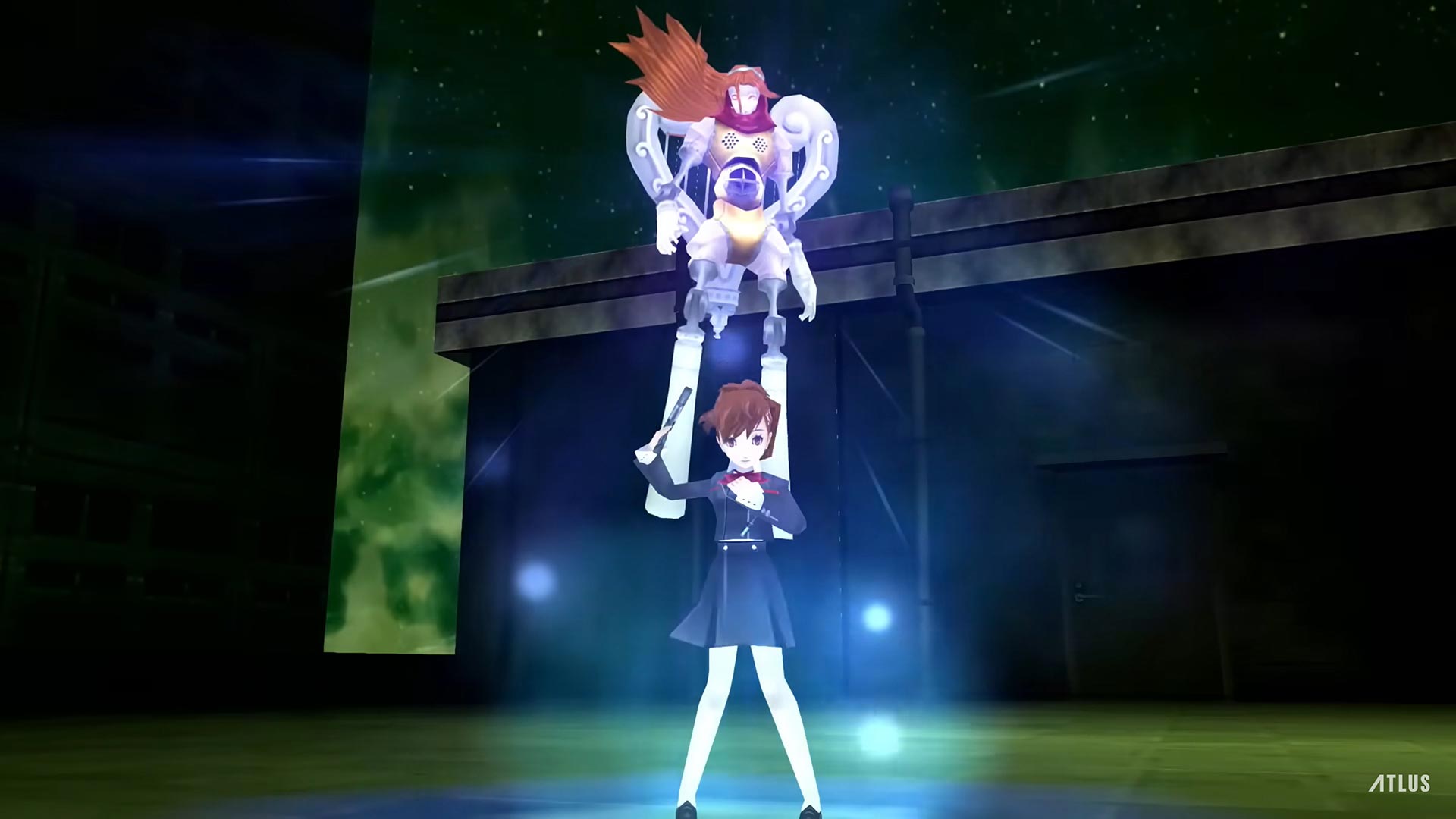
The female version of the Persona 3 protagonist summoning a Persona.
These themes are also integrated into the gameplay mechanics. The word “Persona” isn’t just a name; in this series, it means a “shadow of your true self.” From a gameplay standpoint, it’s a mechanic for battling enemies that lets you summon everything from the Norse god Thor to a phallic creature on wheels.
From a narrative perspective, though, gaining a Persona reflects how your party members learn to overcome challenges and grief. It doesn’t mean that they quickly overcome their hardship; rather, it’s a slow, methodical way that you gradually experience as you hang out with them.
What I find fascinating about this series is how party members are treated during your playthrough. In other games, party members can often be seen as a means to progress the story. In Persona, though, the NPCs you interact with feel three-dimensional and honestly become your own friends. When you’re not battling monsters in the dungeons, you feel like you’re hanging out with an actual person, even if it’s a small intimate moment like going to the gym or simply sitting by the local park. For example, during training sessions with your friend Ryuji Sakamoto, you come to learn about his troubled upbringing and his goal to help the previously-abused school track team, even though he was ousted for standing up to the previous coach.
At the same time, your own actions guide who you choose to interact with. For example, in Persona 5 Royal, you have a few options to hang out with friends after school. You can’t hang out with everyone, so you have to choose whether to eat ramen with Ryuji or help Yusuke with his painting.
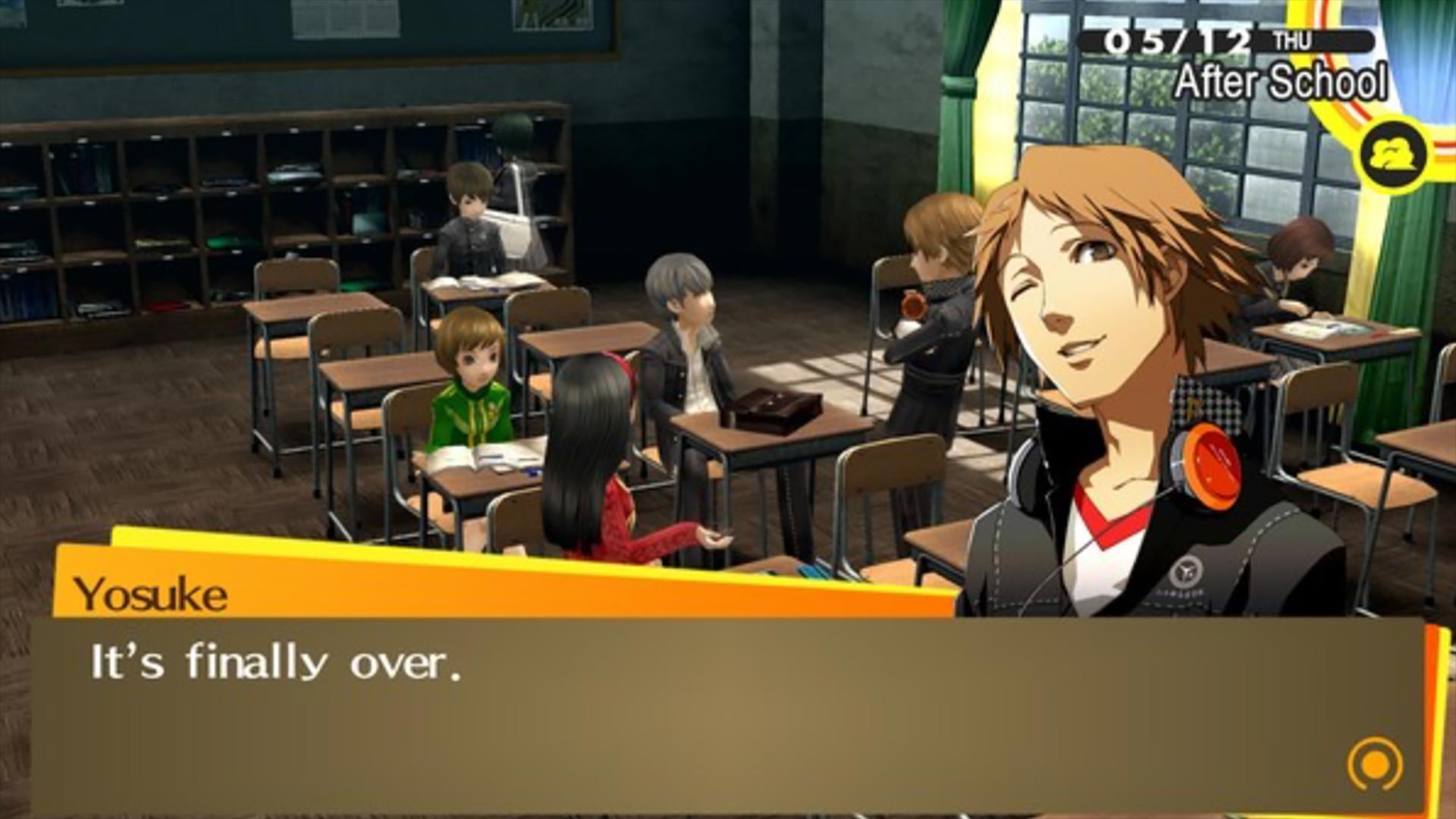
Yosuke is the first friend you make in Persona 4.
It’s a valid complaint that the Persona games are too long, as you’re spending 70-100 hours depending on your pace. However, when you eventually have to say goodbye to your friends and the credits start rolling, it’s impossible not to cry when you’ve devoted so much time getting to know them. It also makes playing the spin-off titles (which have no right to be that good) a joy to go through, as they serve as reunions with your pals.
Not to say that the music doesn’t also add to your emotions. The ending songs, especially “Never More,” are iconic because they beautifully encapsulate your feelings by the end of your playthrough. This song now feels tied to me personally because I now attribute “Never More” to one of my best friends leaving Canada to become a school teacher in Japan.
Obviously, most people in the West wouldn’t understand the Japanese lyrics (unless you translate or speak the language), but composer Shoji Meguro knows how to capture your emotions through music. His soundtracks are simply brilliant and show his range by using genres such as rock, pop and jazz. These songs have even led to fan-created remixes by combining Persona 4 music with popular artists such as Bruno Mars.
Pursuing My True Self
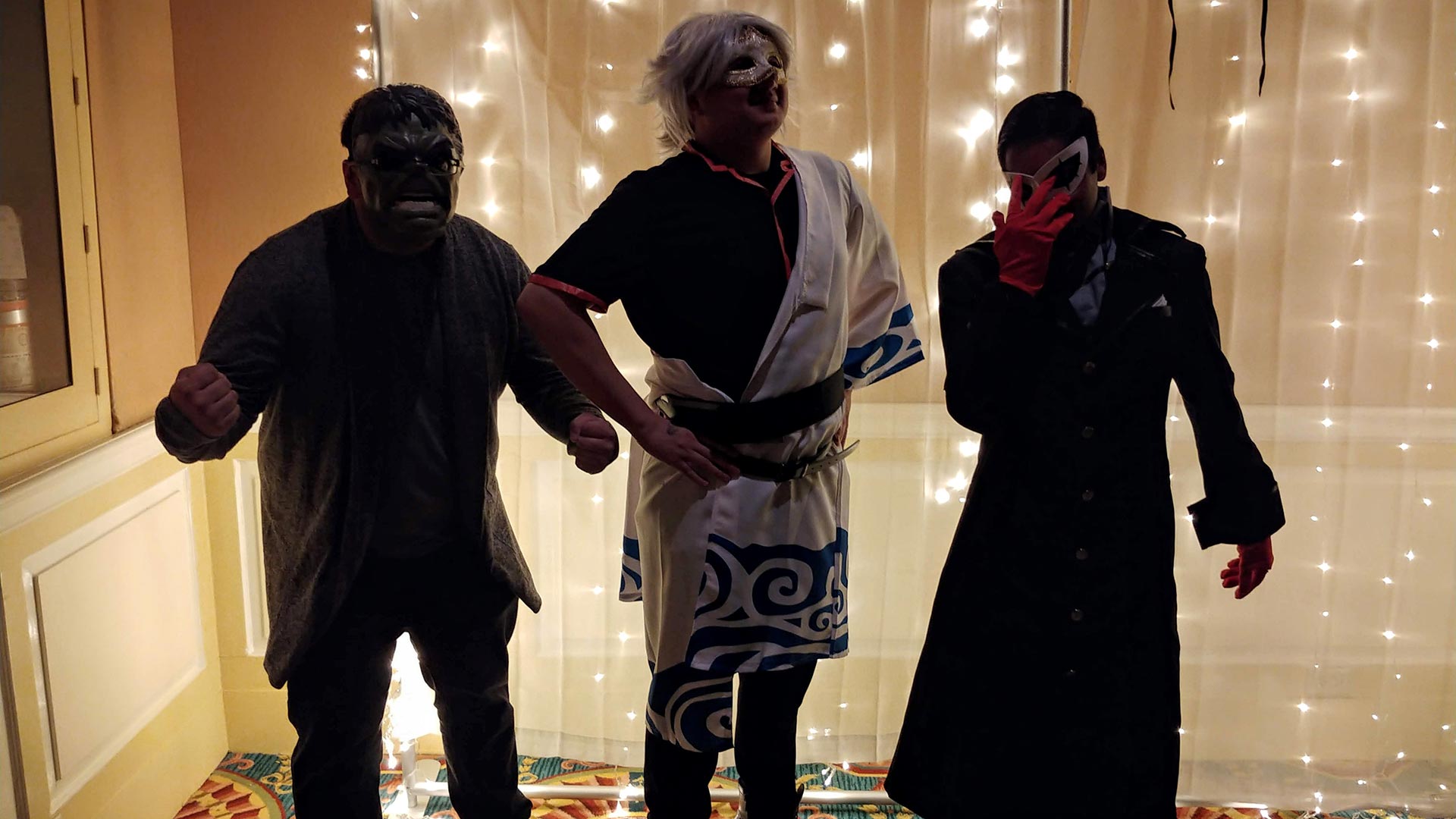
From left to right: Brad (Smart Hulk from Avengers: Endgame), Richard (Gintoki from Gin Tama) and me (Persona 5’s Joker).
I can’t tell you enough how Persona has impacted my own life, but my hope is that this helps you to play these games.
Since November 2017, I’ve met my best friends Richard and Brad Shankar (MobileSyrup’s gaming editor), delved into budget cosplays and spent lots of money on Persona merchandise. While I touched on the overall themes and how it’s helping to find myself, there are so many lessons that Persona could teach you that vary from my own.
However, the Persona series was previously PlayStation exclusive, making some of the games quite inaccessible because. Thankfully, all of the mainline games (barring the original Persona and its sequel) will be available on Xbox One, Xbox Series X/S, PlayStation 4/5, the Nintendo Switch and PC. Persona 5 Royal, the definitive version of the original Persona 5, is out now, with the other games releasing a few months after.
If you don’t know where to begin, I think Persona 5 Royal is a perfect starting point in terms of both gameplay and narrative, especially with the addition of the third semester. It not only introduces a great villain (an aspect that the series has admittedly lacked) but also enhances your party members’ stories.
For now, the series is rightly celebrating its 25th anniversary, which is no small achievement. I can safely say that the Persona series has changed my life, and I’m not afraid to admit that.
On October 15th, #a11yTO Gaming made its grand return to Toronto.
For attendees, the conference was a chance to reconvene after a long time away during COVID. More importantly, though, it was an opportunity for learning.
After speaking with Saylor last year, I’ve developed a far greater appreciation for the importance of accessibility, so I was eager to learn more at #a11yTO Gaming. With a slew of accessibility experts from Ubisoft, Eidos Montreal and more in attendance, there was so much to take in. Here are some of my big takeaways.
First, some numbers
Before I get into the actual conference, though, you should have some context. According to Microsoft, there are 400 million gamers around the world have some form of disability. That right there dispels any notion that accessibility is some sort of niche. (Not to mention the fact that, as pointed out at #a11yTO by accessibility advocate David Dame, “we will all be disabled one day, some of us just beat you to it.”) These communities face all sorts of barriers, such as a lack of colour contrast options the visually impaired, overly complex button inputs for those with motor limitations or insufficient closed captioning for the deaf or hard of hearing.
But while awareness of accessibility has been increasing through the aforementioned games and events like #a11yTO and Xbox’s recent Accessibility Showcase, there’s still a lot of work to be done. For example, in a 2022 Game Developers Conference survey, only 39 percent of respondents said they had implemented accessibility measures into their games. One developer even noted that “there is still a lot of pushback in implementing accessibility features.” While this person was referring to their own team, this could also apply to gamers at large, many of whom lack empathy and even try to gate-keep players who seek accessibility options.
Clearly, then, there are many areas of improvement, and #a11yTO Gaming showcase a variety of tips and initiatives to help with just that.
What even is accessibility?
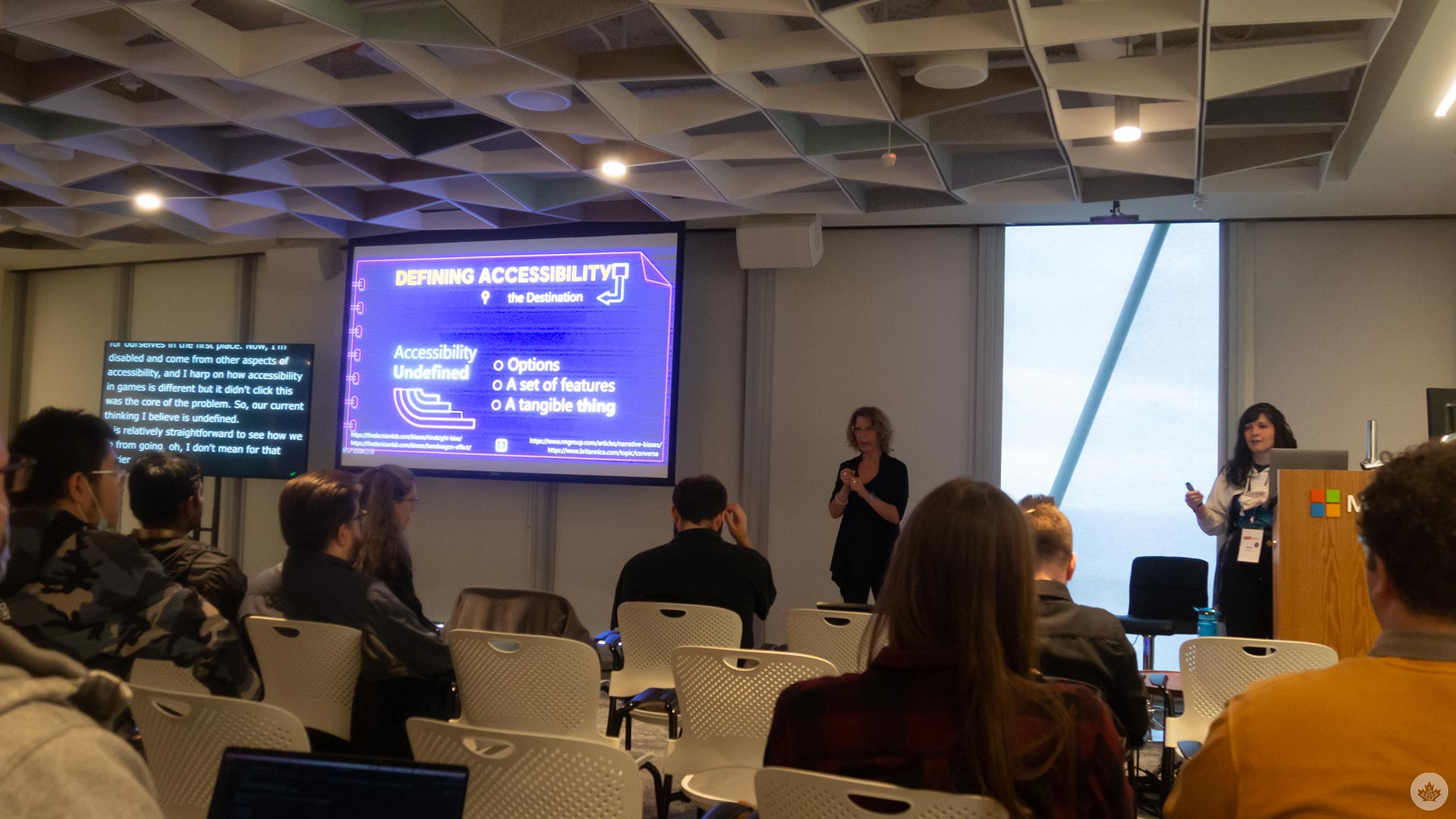
Aderyn Thompson giving a talk on accessibility at #a11yTO Gaming.
Many people might think of basic things like subtitles or customizable controls as accessibility, but it goes a lot deeper than that.
During a talk at #a11yTO, Aderyn Thompson, Ubisoft’s accessibility design lead, took the time to properly define accessibility. For Thompson, who’s non-binary and uses they/them pronouns, accessibility refers to “a player’s access to the gaming experience that’s either improved, or impeded, by the decisions made.”
However, they noted that many developers fall into the trap of using checklists to see measure their games’ accessibility, pointing out how the commonly used Web Content Accessibility Guidelines (WCAG) are convoluted with “guidelines for your guidelines,” to which the audience chuckled in agreement.
Thompson notes that accessibility isn’t simply a set of features, but rather, something that needs to be baked into the core design.”There are no such things as features for blind or deaf or cognitive or motion accessibility. We could centre specific players in how we brainstorm solutions, but then we expand our view,” they explained. “This way, we can avoid neglecting overlaps conflicting barriers, and, in the end, we make a more universal and less likely stigmatizing design.”
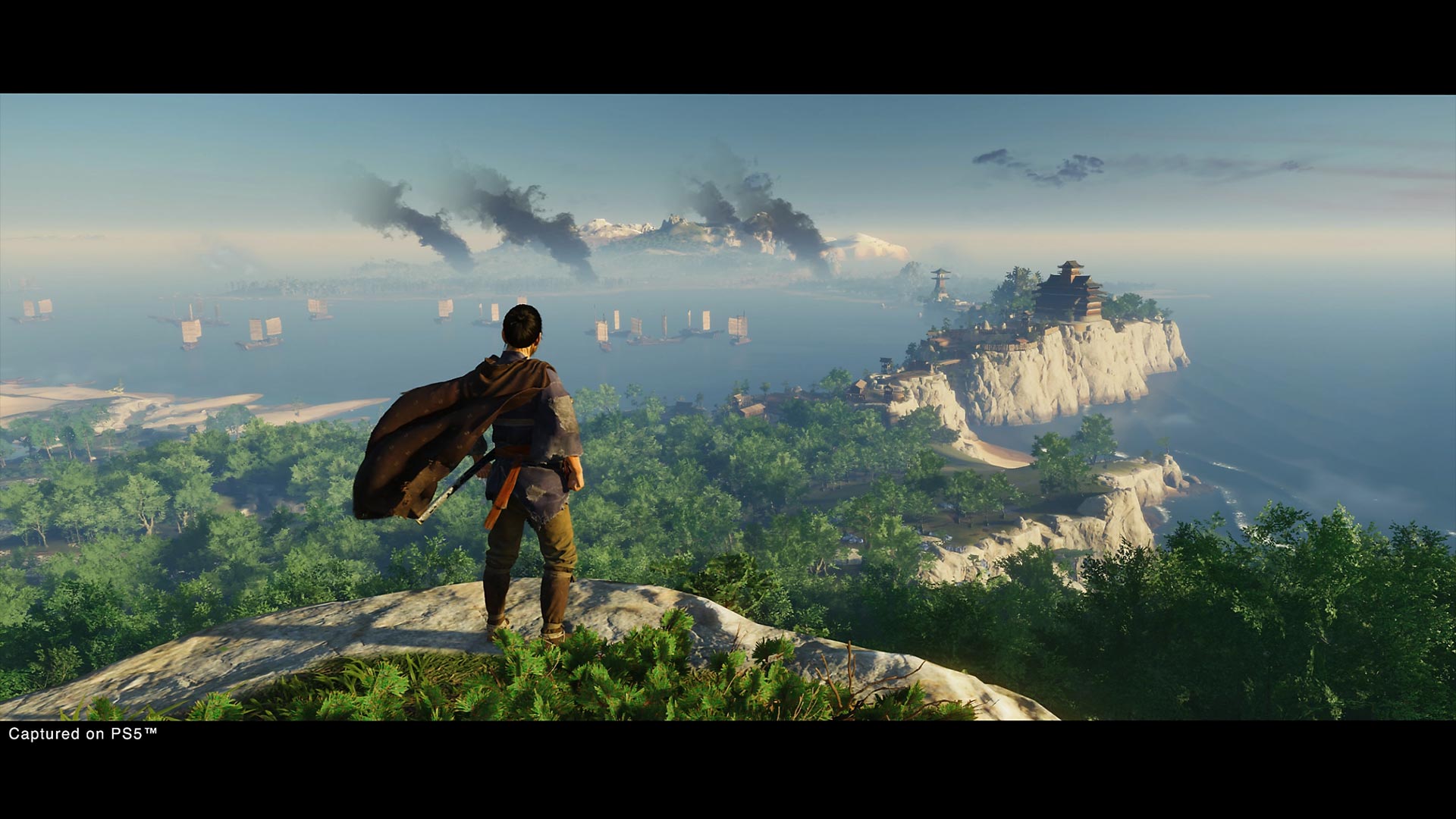
Many players embraced Ghost of Tsushima’s hands-off approach to exploration, but Ubisoft’s Aderyn Thompson says there are a few ways it could have been more inclusive. Image credit: PlayStation
To illustrate this, Thompson outlined how two beloved PlayStation games were inaccessible in ways many players likely might not have considered. First, they brought up how Ghost of Tsushima had well-received elements like the ‘Guiding Wind’ or wild foxes to help steer players towards points of interest in a more natural, UI-free way. While Thompson praised the creativity behind all of this, they also noted how they “rely on the sensory processes of seeing, listening and thinking,” which could present barriers for disabled players. “Imagine how much the universal player experience could be improved for everybody,” Thompson said, by including features like haptics and visual information for audio cues. Indeed, the eventual PS5 Director’s Cut did add some of this and received praise from both gaming accessibility site Can I Play That? and general players for the enhanced immersion.
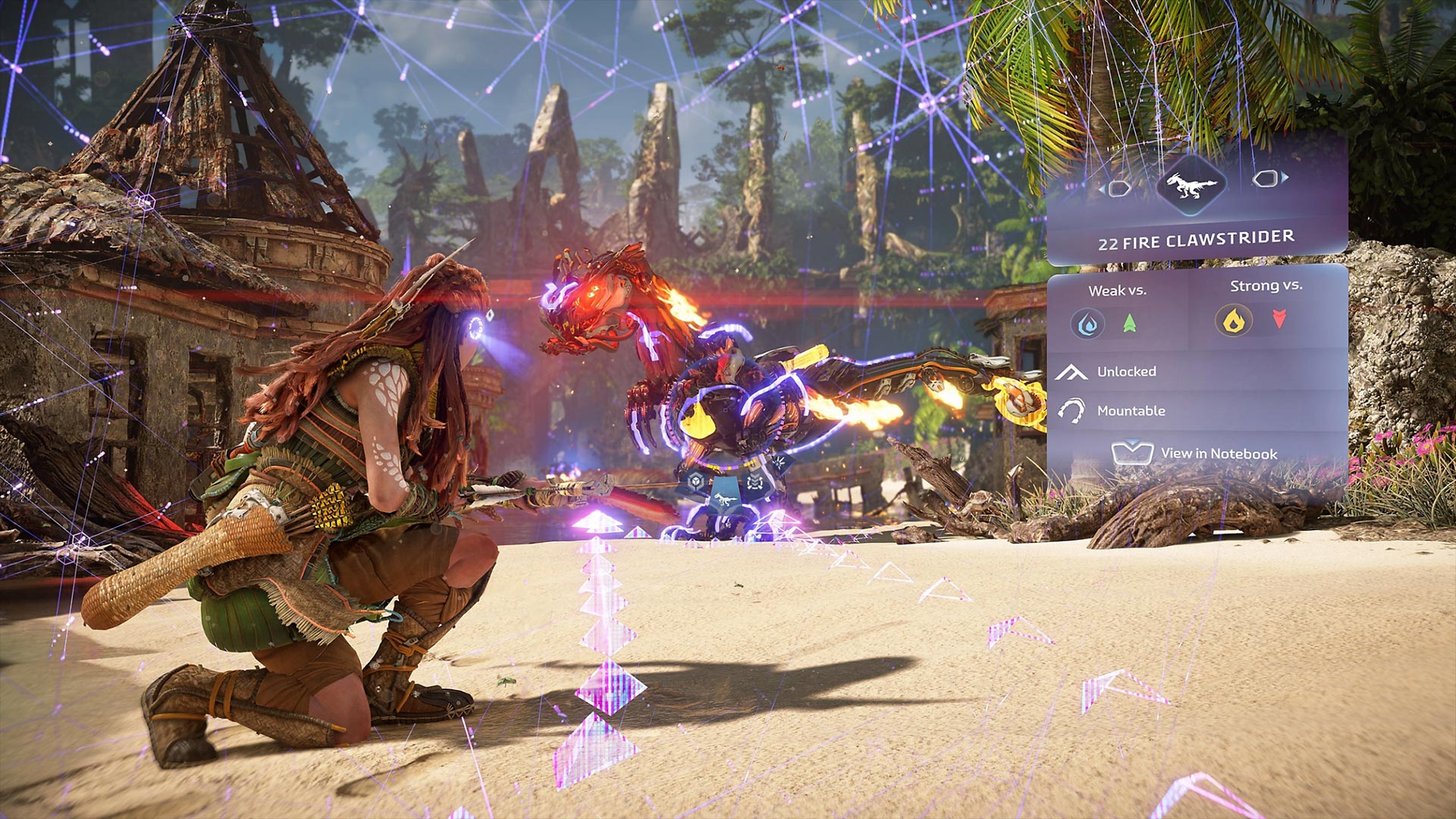
Where Ghost of Tsushima‘s minimalist approach was perhaps too limiting for some, Thompson observes that another PlayStation game, Horizon Forbidden West, could be too much for players. In this case, Thompson actually consulted on the Horizon sequel, so there’s an added layer of self-reflection here. They explain that they saw several streamers resort to using protagonist Aloy’s spear for basic melee attacks, despite the fact that this sort of play is “ineffective” compared to the “mind-blowing player agency” afforded by the combat. The reason for this, Thompson speculates, is that the “intensity” of fights — which require you switch between many different weapons on the fly while jumping, dodging and scanning enemies with Aloy’s Focus for weaknesses — may have been overbearing.
The Focus mechanic in Horizon Forbidden West. (Image credit: PlayStation)
As a result, players might have found mashing the melee button to be simpler than the more intensive archery. “If we broaden our understanding of cognitive load and motor capabilities, we could have addressed this,” Thompson said. They noted that the Focus already has some strong accessibility aspects, like clear highlighting for “precision and visibility,” but focusing on “fundamentals like interface, slice and contrast and player’s reaction capabilities” could have benefited more people, disabled or otherwise.
Thinking outside the box
We’ve mentioned games with extensive lists of accessibility features, like The Last of Us or Guardians of the Galaxy. But #a11yTO also provided some examples of games that, like Thompson mentioned, take accessibility one step further.
They specifically cited Hades‘ God Mode, a variation on a difficulty mode that makes you take less damage over time — something that can benefit anyone who’s struggling with the game. Praise was also given to games that offer unique ways of conveying messages to players, like Deathloop‘s floating text (narratively justified as representations of protagonist Colt’s inner thoughts) or the helpful notes that players can leave each other in From Software titles like Bloodborne.
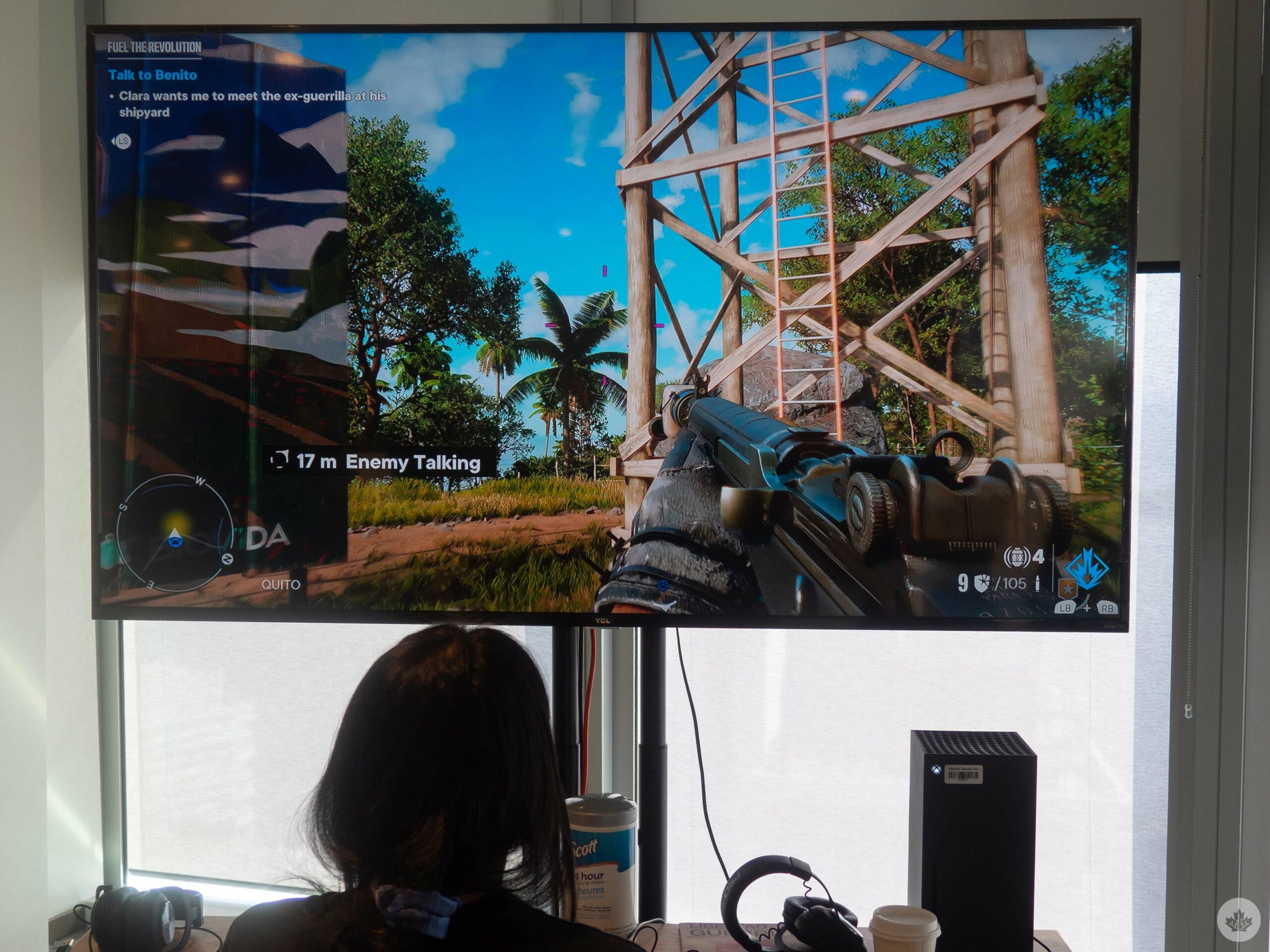
One of Far Cry 6’s accessibility features provides captions so players can follow on-screen prompts to find out where an enemy’s voice is coming from.
In his own panel, Ubisoft Toronto game designer Douglas Gregory explained how simply offering players more versatility can be good accessibility design. He gave an example of a Far Cry 6 tester who had visual impairments and wanted to avoid a heated firefight. As a result, his strategy was to pick up a sniper rifle and pick off enemies from afar at his own pace. However, he also equipped a widespread shotgun so he could run up close and shoot point blank without having to carefully aim.
Gregory noted that some developers’ first reaction might be that this is a sort of exploit that “breaks” the game and, therefore, should be fixed. But he realized the accessibility value in having this as a viable tactic on top of the player just having a good time with it. “How can we make this strategy as fun, varied and interesting as any other part of our gameplay?” he says of the ethos behind its inclusion.
Other examples he brought up of accessibility integrated into the gameplay include the level slider in The World Ends With You (“tune your experience to what’s right for you in the moment”) and even co-operative play (“you can accomplish things that would have been overwhelming all alone”).
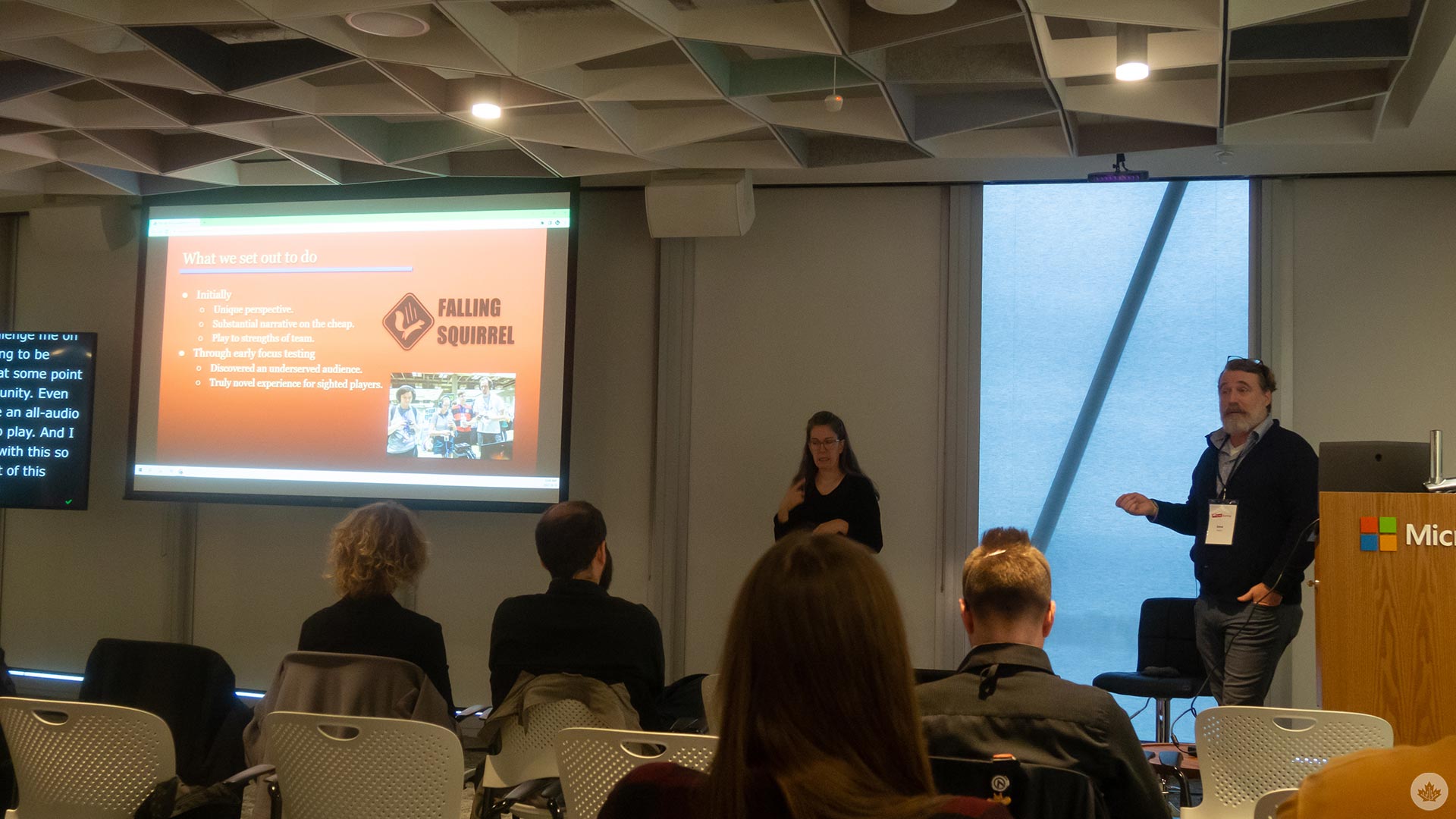
Dave Evans giving a panel on The Vale: Shadow of the Crown.
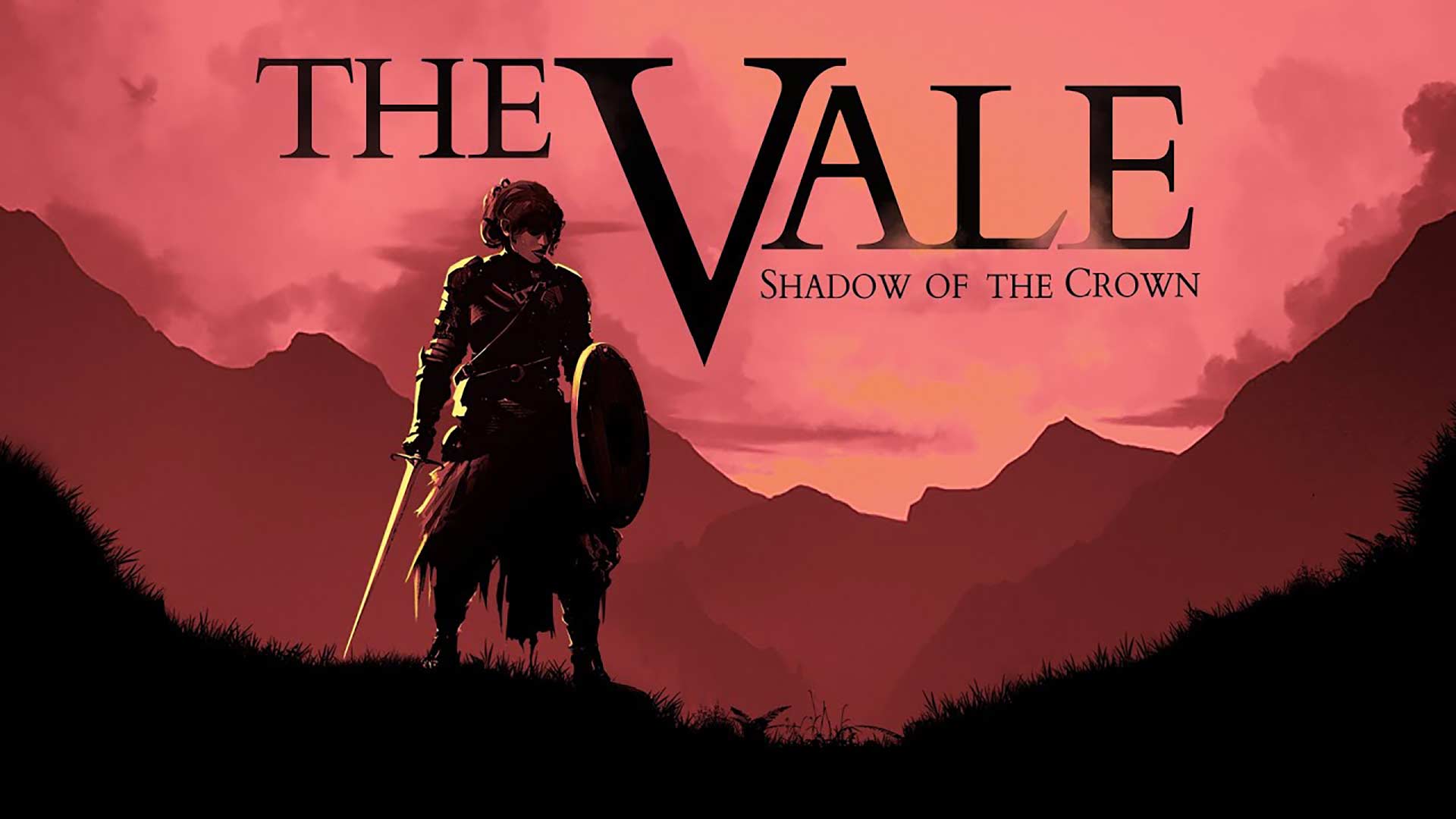
Dave Evans, founder and creative director at St. Catharines, Ontario-based indie developer Falling Squirrel, did something even more unique: he made a game that can be played entirely without sight. Enter The Vale: Shadow of the Crown, a action-adventure game about a blind Medieval warrior that leverages 3D audio and haptic controller feedback for its narrative and gameplay. Players have to listen to audio cues like enemy sounds or narration to progress.
Evans, a veteran of the gaming, film and TV industries, said during a panel that The Vale came about from a desire to find other ways to tackle narrative besides cutscenes.
“The one thing that drove me nuts about working on [cinematics] is how siloed the development of the narrative in a cinema was from the actual gameplay,” he said. The goal was to not have players “sitting idly by watching [cinematics] to get that exposition.” Cognizant of budget constraints as an indie developer, though, he soon came up with the idea of creating a game that didn’t use visuals. This would help save money and, he quickly realized, open it up to disabled players. From there, he teamed up with the Canadian National Institute for the Blind and members of the blind community for support.
On top of adding accessibility, Evans said making The Vale audio-only provided sighted players with novel experiences he hadn’t considered.
The Vale: Shadow of the Crown. (Image credit: Falling Squirrel)
“A lot of people were playing away from the screen. They’re just sitting on the couch, closing their eyes, lying down and playing the game. I don’t play too many games that way. And I realized, ‘wow, what a great way to play a game,” he said. “And you know, late at night, you’re wanting to get away from screens, you don’t want eyestrain. So people who are sighted now finding that this novel experience has other benefits as well.”
Evans admitted that The Vale is not perfect; some members of the community were “split” on the “blind swordsman trope,” although he worked to ensure the character “was not defined by that disability.” He also said next steps for a game like The Vale would include offering a dialogue skip and improving options for the hearing impaired and non-English speakers.
Still, The Vale is an impressive and original game, especially from a small indie studio, and it highlights how thinking outside of the box for game concepts can also lead to accessibility. In this way, blind and visually impaired users get a game that is easily playable, while sighted people have an experience that is quite different from anything else they’ll have come across. In end, Evans said that “accessibility-based design did not compromise the game and lead to better experiences for all.”
Increasing awareness within the industry
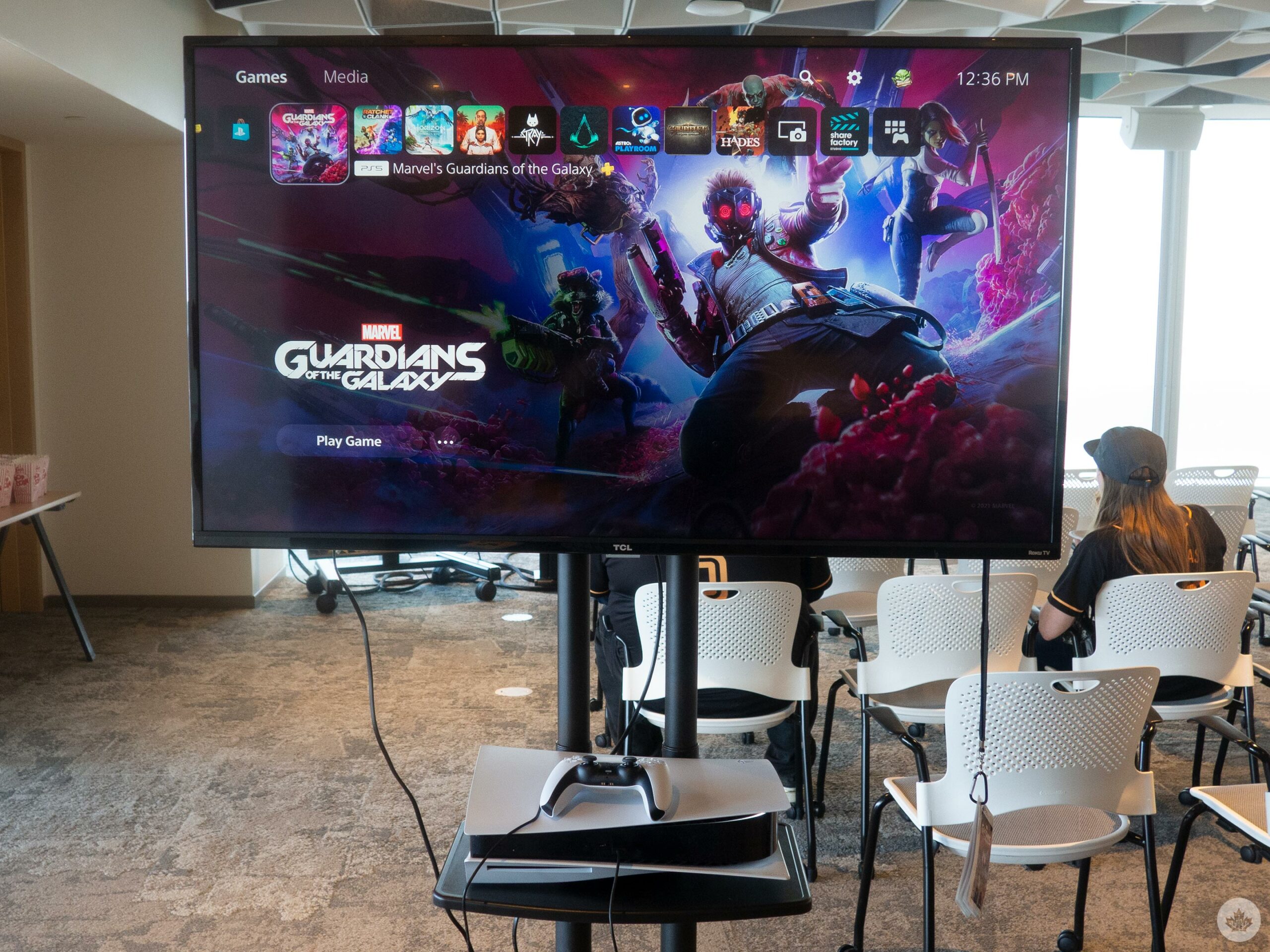
Rodrigo Sanchez, senior accessibility specialist at Marvel’s Guardians of the Galaxy developer Eidos Montreal, told me about one novel way his team is promoting inclusivity in games.
He says each new employee at the studio is asked about what they know about accessibility and how they think it may relate to their role. “Some people are like ‘this is what I do but I don’t know how it intertwines,’ so we meet with them and show them how it can intersect with their role,” explains Sanchez.
The idea is to provide broader education on accessibility and show them that it doesn’t just apply to specific areas. “It really gives them a great notion of ‘even outside of my day-to-day life, there’s accessibility around me, so how do I interact with that?’” He says Douglas Gregory heard of this whole on-boarding process and wanted to learn more to try to share it with other teams.
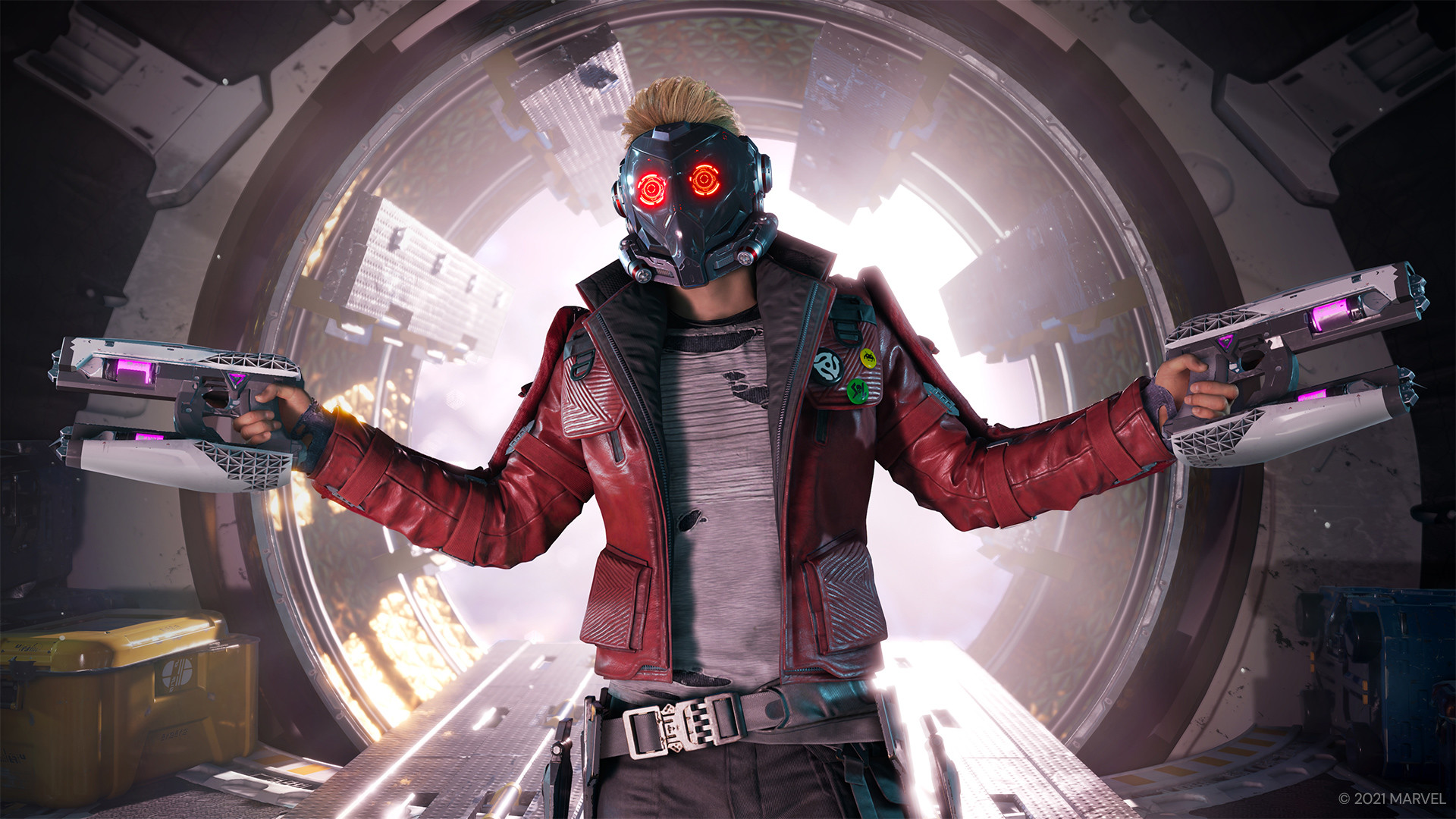
In Marvel’s Guardians of the Galaxy, Star-Lord’s visor offers high contrast options for colourblind players. (Image credit: Eidos Montreal)
Sanchez also echoes what Thompson said about guidelines not being enough.
“You can’t just have a checklist — it’s very difficult. That’s something we took into consideration,” he said. “Guidelines might be very broad and may not pertain to your specific role, so we’re going through it and customizing for your specific role.”
Beyond that, Eidos Montreal holds monthly accessibility meetings to champion the work that’s been done, outline what more can be done, provide feedback, and more. And even though Eidos Montreal is now owned by Embracer Group, Sanchez says the team will continue to collaborate with studios at former parent company Square Enix on accessibility initiatives for the time being.
Going beyond the games themselves
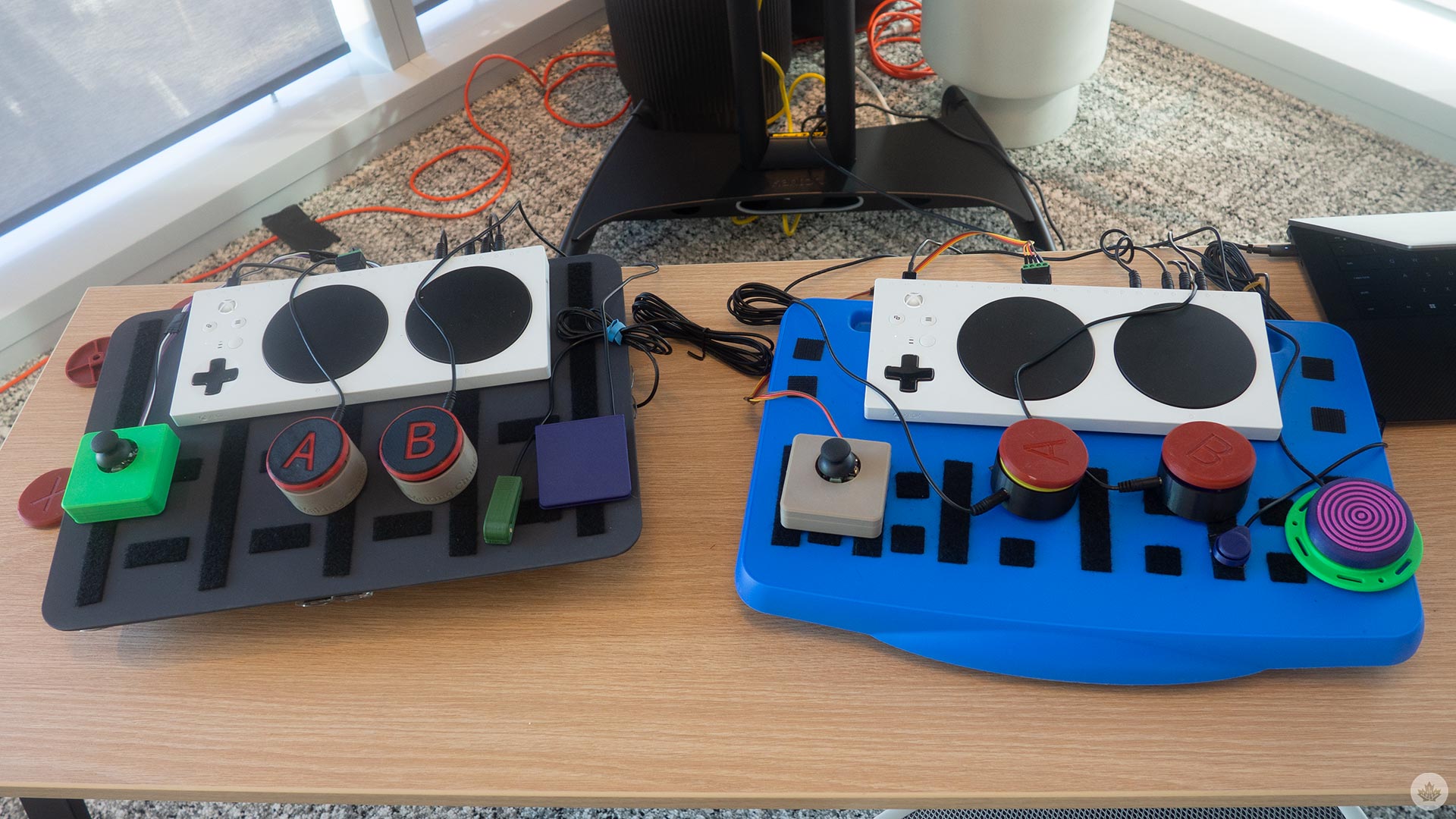
Makers Making Change produced 3D-printed switches that could be connected to the Xbox Adaptive Controller for those with limited mobility.
While this speaks to what developers are doing in their projects, #a11yTO Gaming also demonstrated some other accessibility initiatives.
Throughout the event, Microsoft’s Xbox Adaptive Controller was on display, a unified hub that works with a range of devices to help those with limited mobility.
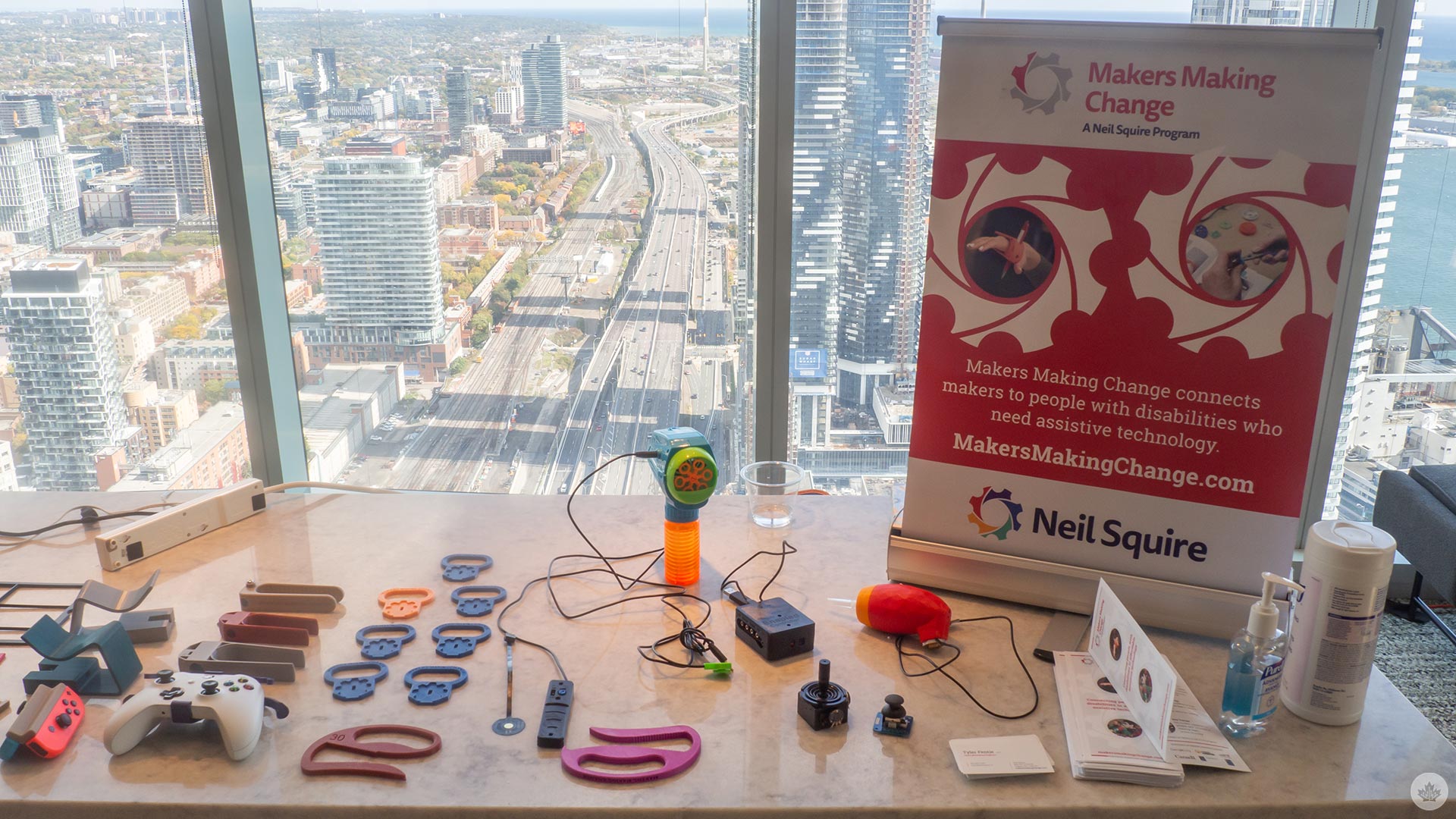
Makers Making Change, a gaming division of the Canadian accessibility technology non-profit Neil Squire Society, was also in attendance. A representative, junior mechanical engineer Tyler Fentie, was on hand to present some of the group’s work. Part of that includes providing a wide variety resources on assistive technologies for new gamers and clinicians/secondary users, as well as fundraising for initiatives like giving kids accessible toys for the holidays.
Makers Making Change has all sorts of DIY accessories that can be used to help making everyday gaming controllers more accessible.
According to Makers Making Change, switches and switch-accessible toys can be expensive, easily exceeding $100 each. But one especially neat thing that the organization does is help reduce these costs by taking existing devices, like battery-operated toys, and reassembling them switch jacks at a significantly lower cost — sometimes $5 or less.
Further, Makers Making Change has an open source collection of assistive technology solutions that you can use yourself or even have one of the organization’s volunteer makers build for you. Some of these DIY kits were on display at the conference, connected to Xbox Adaptive Controller for use in games like Ubisoft’s Brawlhalla.
Capcom has revealed a full gameplay demo for its highly anticipated remake of Resident Evil 4.
While the game was first unveiled in June, this is the first time we’re seeing more than a few seconds of gameplay from the remake, simply titled Resident Evil 4.
In the footage, protagonist Leon S. Kennedy quietly works his way through some catacombs, and we see him crouching, which wasn’t a move in the original game. Once Leon gets to the surface, we see one of Resident Evil 4‘s most iconic sections — the early village level. Here, Leon faces off against a slew of returning Ganados enemies, including the fearsome Chainsaw Man.
Leon has other new moves besides a crouch, including the ability to parry the chainsaw with his gun. We also get a look at the fan-favourite Merchant. All in all, the game looks outstanding, taking the photorealistic visual style of the recent Resident Evil 2 and 3 remakes while adding a few new mechanics.
Additionally, Capcom showed a story trailer for Resident Evil 4, which offered our first full look at Ashley Graham, the president’s daughter whom Leon must save. A few new story moments were also teased, including an expanded role for Ada, Leon’s on-again, off-again ally, and a scene where Ashley appears to be infected with the Las Plagas virus.
The original Resident Evil 4 debuted on the Game Cube in 2005, revolutionizing the survival horror and third-person genres with its over-the-shoulder gunplay. Hopefully, the remake is able to balance remaining faithful to that legacy while making some meaningful changes along the way. For instance, original RE4 director Shinji Mikami previously said he hopes the remake will improve the story, which he says he only had three weeks to write.
We’ll find out for sure when the new Resident Evil 4 launches on March 23rd, 2023 on PS4, PS5, Xbox Series X/S and Steam.
Elsewhere in the Resident Evil Showcase, we got a new trailer for Shadows ofRose, a new piece of story DLC that follows Rose Winters, protagonist of Ethan Winters, after the events of last year’s Resident Evil Village. Shadows of Rose is included in the Winters’ Expansion, which also adds a new third-person mode and fan-favourite Lady Dimitrescu and two other new characters for Mercenaries Mode. A 60-minute demo for the new third-person mode will also be available starting October 20th.
RE: Verse, a multiplayer experience that’s free to all owners of Resident Evil Village, also got a new trailer ahead of its October 28th launch.
Resident Evil isn’t the only horror series that got a big showcase this week. Yesterday, Konami officially unveiled the long-rumoured Silent Hill 2 remake for PS5 and PC, developed by Bloober Team (The Medium), as well as several other entries in the long-running horror series.
While the Canadian foldable market is dominated by Samsung, elsewhere in the world, manufacturers like Xiaomi, Oppo, and Huawei are also exploring foldables. Beyond these manufacturers, there’s also Motorola, which once upon a time launched a foldable in Canada, but seems to now be avoiding our market.
The company has been working on its Razr line for the past few years, first releasing its most recent Razr in China before bringing it to an international market (likely not including Canada) in the coming weeks. Now, a new rumour indicates the company will launch two Razr-branded devices next year.
According to the prolific leaker Evan Blass, Motorola could launch two Razr devices next year, codenamed ‘Juno’ and ‘Venus.’ The current Razr 2022 is codenamed Maven, not a Roman goddess.
There are gonna be two RAZRs next year: one codenamed Juno, and the other Venus. (The one about to launch, a.k.a. razr 22, is Maven.)
At the recent Lenovo Tech World 2022, Motorola parent company Lenovo revealed a rollable phone that unrolls vertically. It’s possible that this might one of the handsets that Motorola will launch next year.
Unfortunately, we probably won’t get either device in Canada given the company has shifted its focus to other markets like China.
Warsaw, Poland – 10.06.2020: Youtube app on the smartphone. Youtube videos and films. Video streaming. Surrounded by true wireless earbuds. Watching films with Galaxy Buds – TWS.
Google has announced that it will be raising the price of its YouTube Premium family plan.
In an email to subscribers, the company confirmed that starting November 21st, the family plan will cost $22.99/month, up from the current $17.99 monthly cost. The family plan allows six users to share the same Premium account and watch YouTube videos ad-free.
It should be noted, however, that this doesn’t seem to apply to the individual YouTube Premium membership, which costs $11.99/month. Google also confirmed to The Verge that those who were grandfathered into a lower price for YouTube Premium as former Google Play Music subscribers will keep their reduced rate until April 2023.
For now, though, it’s not yet clear whether this change will take effect in Canada. We’ve reached out to Google for confirmation and will update this story once a response has been received.
Microsoft is working to bring Android 13 to Windows 11, along with a few new features like picture-in-picture (PiP).
As spotted by Windows Latest, Microsoft’s GitHub page for the Windows Subsystem for Android (WSA) includes a roadmap detailing upcoming plans for the WSA. The roadmap lists Android 13, as well as the following features:
file transfer
shortcuts
picture-in-picture (PiP)
local network access by default
The WSA, for those unfamiliar with it, is the foundation for running Android apps from the Amazon Appstore on Windows 11. Unfortunately, it’s not clear what this change will mean for the WSA. Likely, it will enable support for the latest APIs and any Android 13-specific features, but we’ll need to wait and see.
As for the other listed features, PiP is a standout. That should enable media from Android apps to display over other parts of Windows, but it remains to be seen how Microsoft implements the feature. Shortcuts may enable easier access to certain things within apps.
Unfortunately, the roadmap only reveals what Microsoft is working on, not how these things will work in practice. We’ll have to wait to learn more.



 Rodrigo Sanchez, senior accessibility specialist at Marvel’s Guardians of the Galaxy developer Eidos Montreal, told me about one novel way his team is promoting inclusivity in games.