Categories
Mobile Syrup

Roblox bans developer behind game claiming to feature Kim Kardashian’s sex tape

Roblox, a children’s video game most adults (like myself) don’t understand, was featured in a rather negative way during the premiere of The Kardashians on Disney+’s Star.

In the premiere episode of The Kardashians, Kim Kardashian’s six-year-old son, Saint West, finds an ad for a Roblox game on their iPad that claims to feature unreleased footage of her 2007 sex tape. Though many assumed this was a very dark publicity stunt on the family’s part to promote the new iteration of their popular reality show, it appears that wasn’t the case.

In a statement to several publications (via The Verge), a Roblox spokesperson said the following:

“The referenced video was never available on our platform — we have strict moderation and policies to protect our community, including zero tolerance for sexual content of any kind which violates our Community Rules. The text reference to the tape that got around our filters was quickly taken down and fortunately visible only to an extremely small number of people on the platform. We also swiftly took down the associated experience and banned the community developer involved with the incident.” 

During the episode, Kardashian says that, “This all started earlier at the barbecue. It was clickbait insinuating that if you click on it, there was gonna be a new sex tape coming out.”

“Had my son been a bit older and been able to read, like, I would’ve been mortified, but I.. died inside,” Kardashian continues. Kardashian then goes on to say that she has “all the time, all the money, and all of the resources to burn them [Roblox] all to the fucking ground.” She also calls Kanye West, her former husband, to discuss the incident.

Amid the ongoing COVID-19 pandemic, the already very popular game creation title skyrocketed in user numbers. Roblox is free-to-play with in-game purchases via Robux. The title currently has over 164 million active users.

Via: The Verge

Categories
Mobile Syrup

The VinFast is ready to be the Mazda of the EV world with the new VF8

VinFast, a new automaker that first appeared in 2017, is finally ready to show the world what it’s made of.

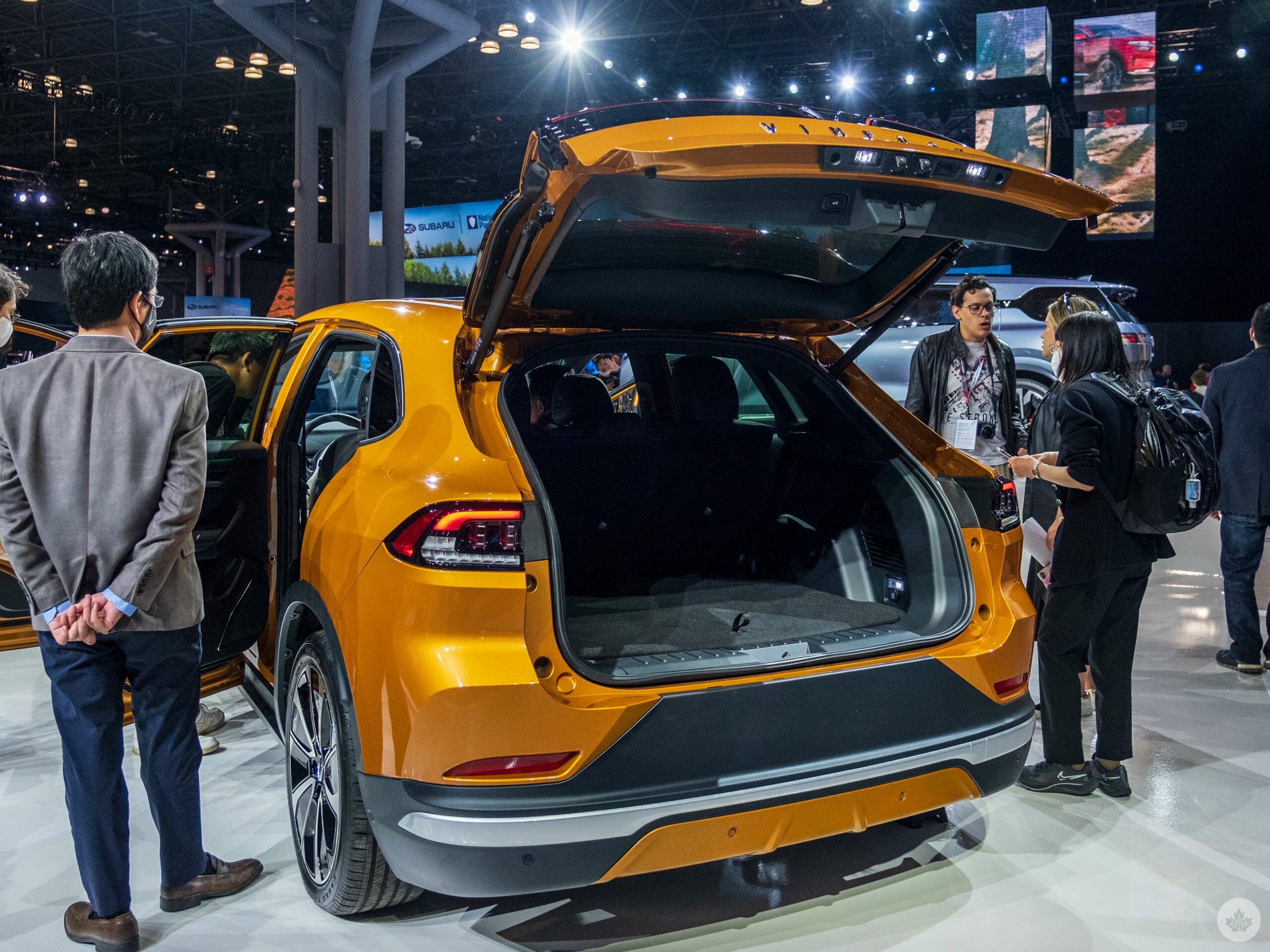
I briefly went hands-on with the VF8, the model that’s coming to Canada, hopefully, at the start of 2023, and I walked away impressed with the vehicle. From the display booth to the demos, there was a lot of VinFast to see at the Auto show.

There are three cars in the company’s lineup so far: the VF9 reminds me of a Toyota forerunner; the VF7, which is still closer to the prototype or concept stage than the release; and finally, there’s the VF8, a modern crossover.

VinFast says the VF8 and VF9 launch in Vietnam in May, the U.S. in the fall/winter and likely Canada at the end of the year or the start of 2023.

Where did this company come from?
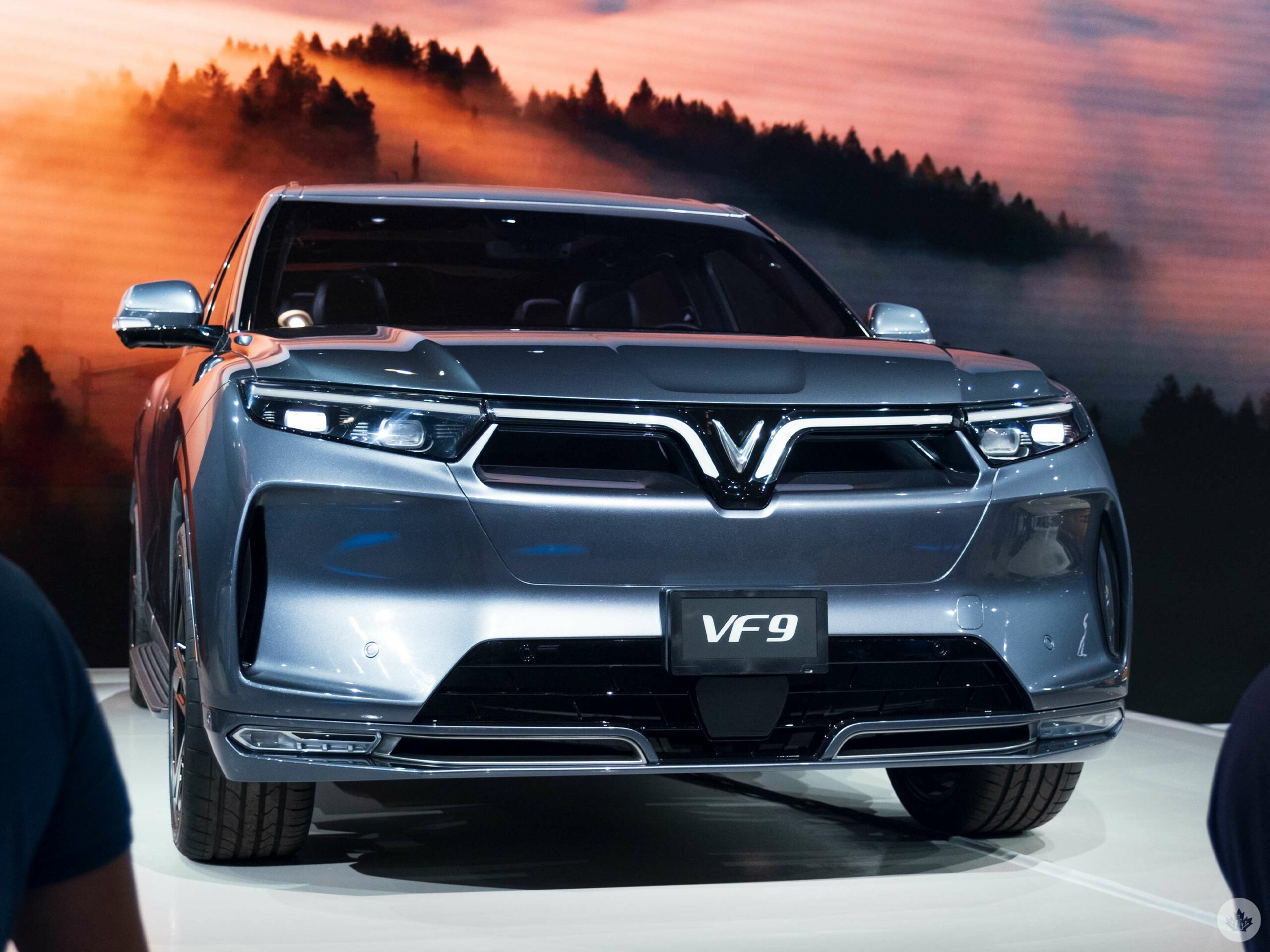
If you’re like me, the name VinFast feels like it’s come out of nowhere. Since Vietnamese cars rarely make it to the world stage, it hasn’t made many headlines in the West, but it’s been slowly building since 2017 with the help of the country’s richest man, Phạm Nhật Vượng. The company started by repurposing BMWs for Vietnam and has grown to the point where it’s taken ownership of a GM plant in the country and has an exclusive license to build a global small car from GM and sell it under the VinFast name.

Now it’s ready to take on the world as it outlined its future plans at the New York Auto Show, including its intention to build an EV assembly plant in North Carolina and a U.S.-based IPO on the stock market.
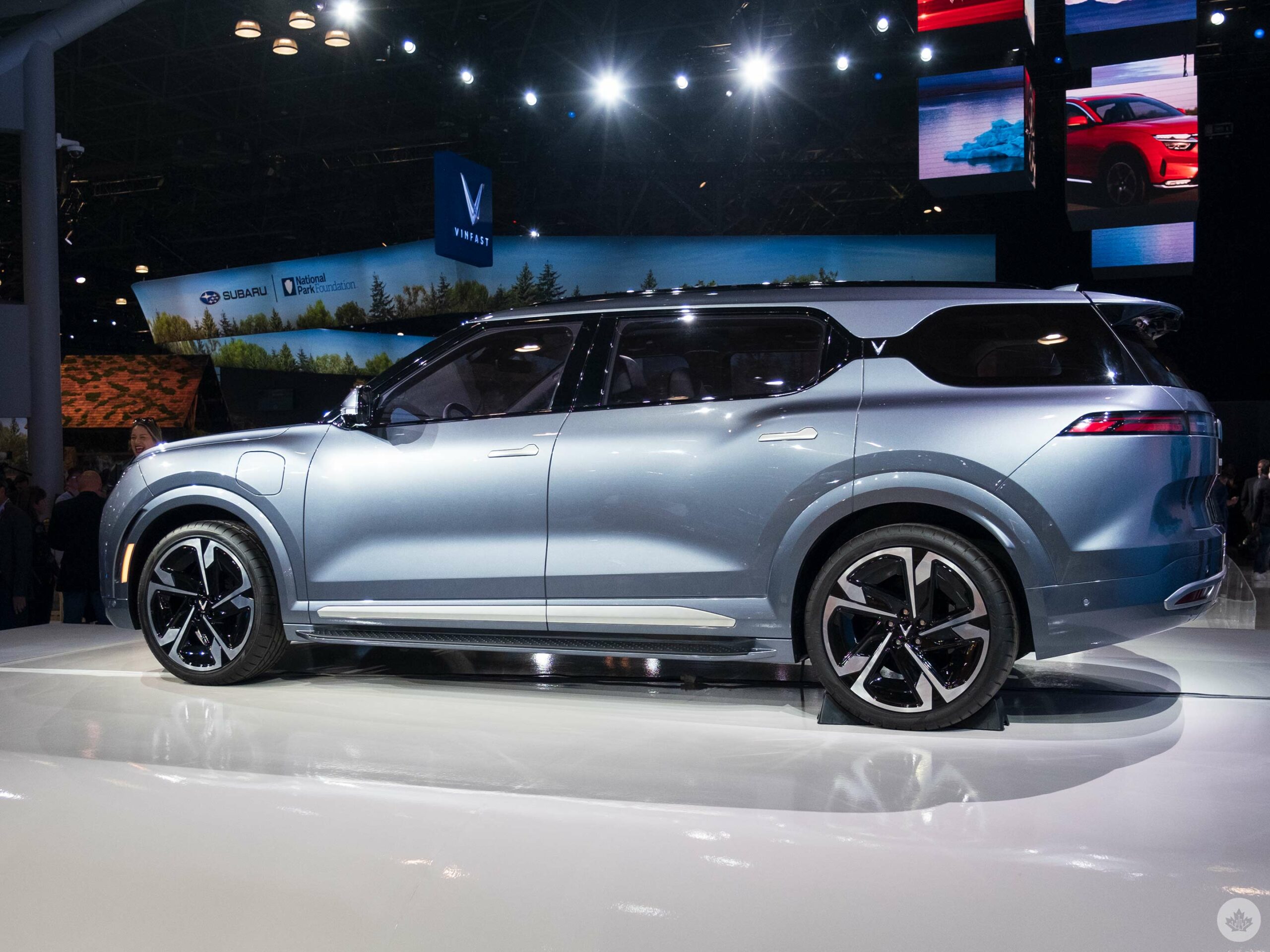
From a Canadian perspective, the company reminds me of Huawei when it first started to gain market share and brand recognition in the West. There were VinFast posters all over the New York Auto Show, big and small, which helped to get people talking about the company, but only time will tell how effectively VinFast has spread its message across the continent. After reading coverage from other publications and chatting with the company, there seems to be a lot of ambition, planning, and enthusiasm for this global launch.

VinFast told Yahoo Finance the U.S. is a key market for its long-term strategy, and that’s why it’s building a factory in the country. The company has big plans for the North American market and wants to show the U.S. consumer base that it’s taking the market seriously. It’s an intelligent plan on VinFast’s part since the U.S. is an important market to gain a foothold in if it aims to take on the rest of the world.

The VF8
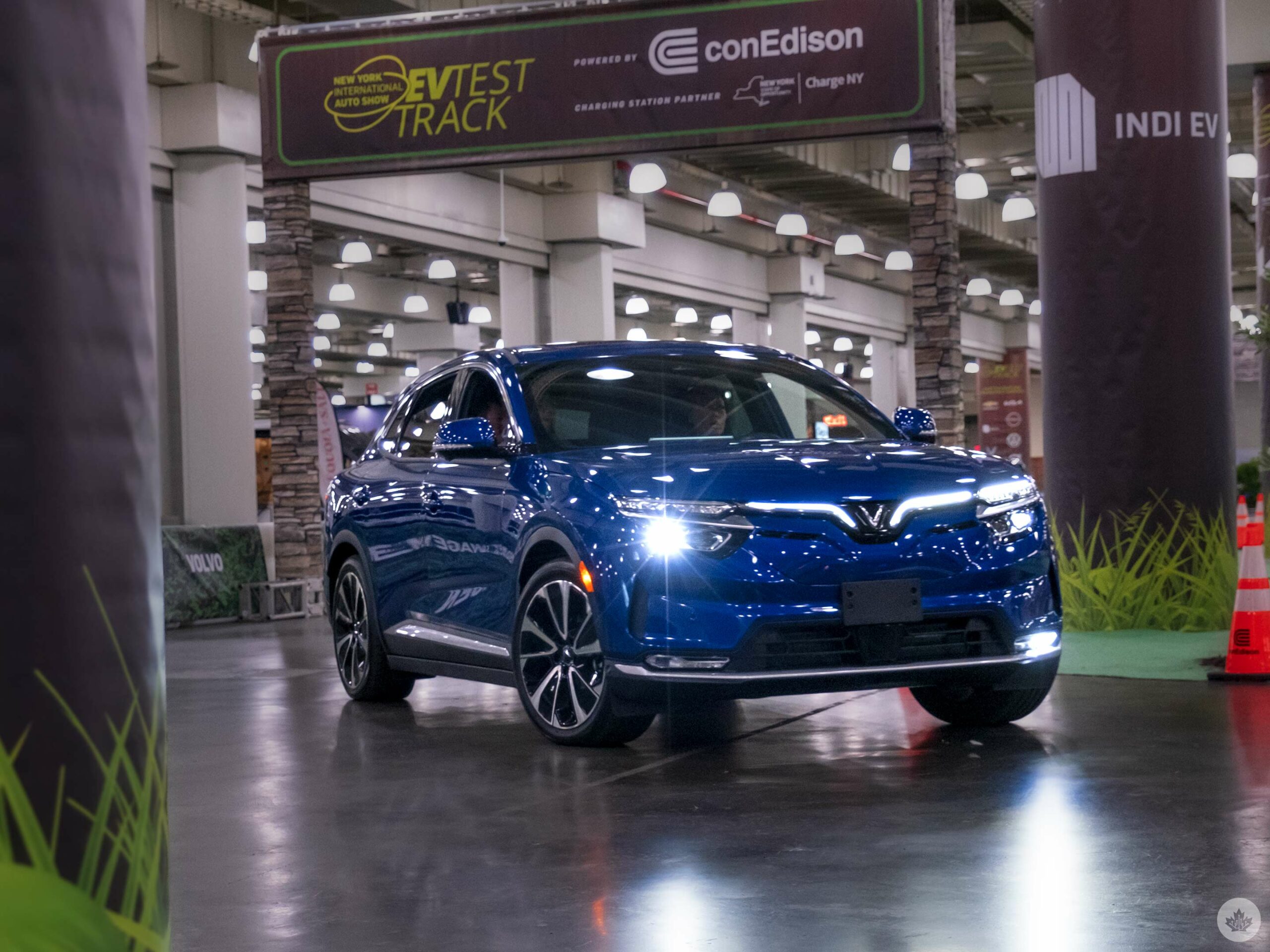
The trim shown off at the auto show is VF8 Plus, which includes larger wheels, a sunroof, a half-second faster 0-100km/h time and a few other perks over the standard VF8 Eco.

The company says that the Plus is rated to drive 445km per charge and the Eco maxes out at roughly 469km. Yet, the most interesting thing about the battery is the company’s unique subscription service model. It allows drivers to pay a monthly fee while they own their car to get their battery swapped out when it drops below 70 percent health. The company hasn’t announced how much this chops off the car’s roughly $51,000 CAD expected price, but it should bring it to a more reasonable cost.
However, in a sense, this creates a system where there are two car payments, one for the car and another for the battery. Plus, the battery payment would never end. That said, I do like the Apple Care-like of piece-of-mind that it adds to the EV experience, I’m just not sure if people are worried enough about battery health to make this a hot selling feature. Paying a small fee every month forever, on the other hand, seems like the type of thing that could annoy prospective drivers.

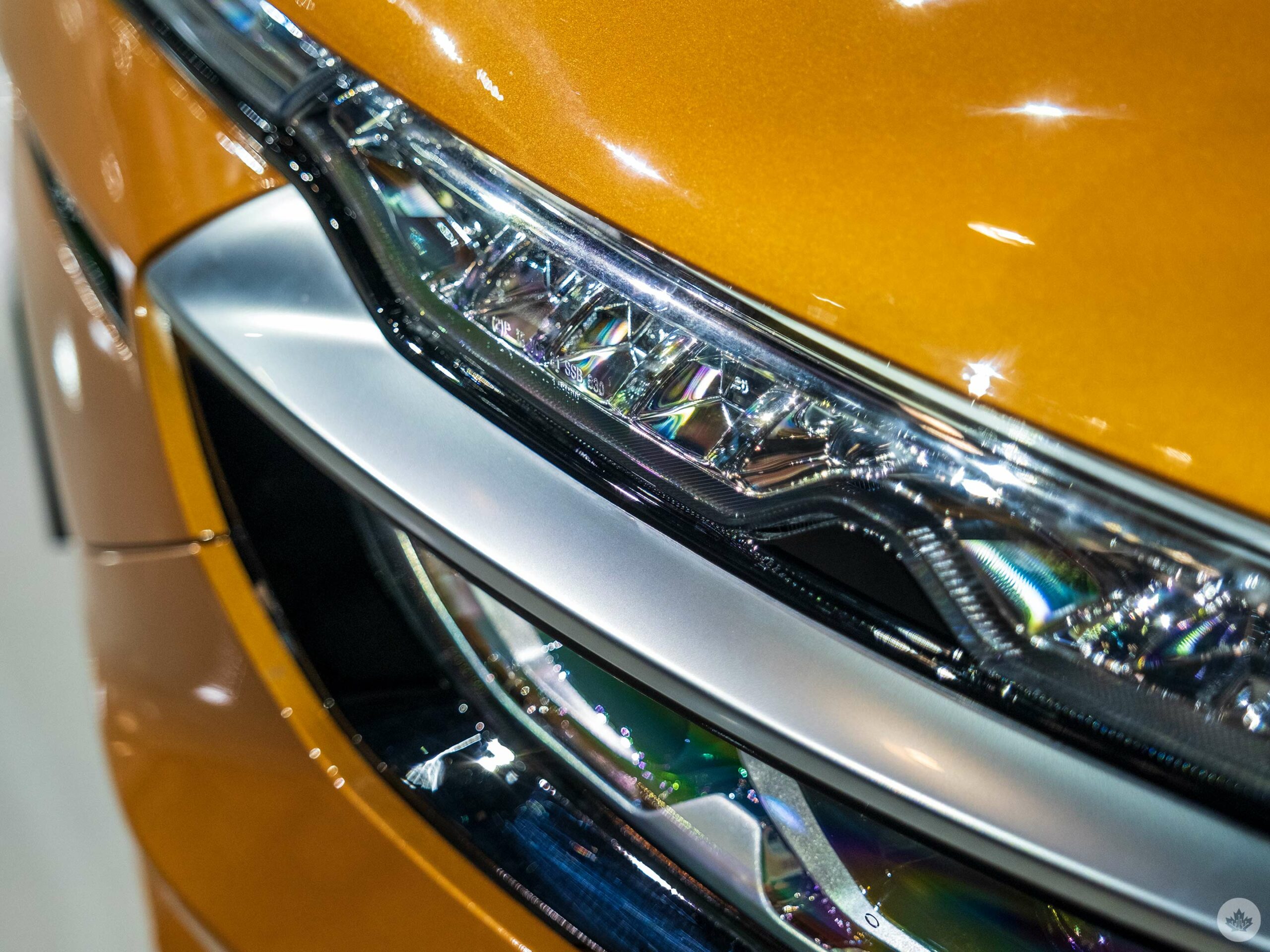
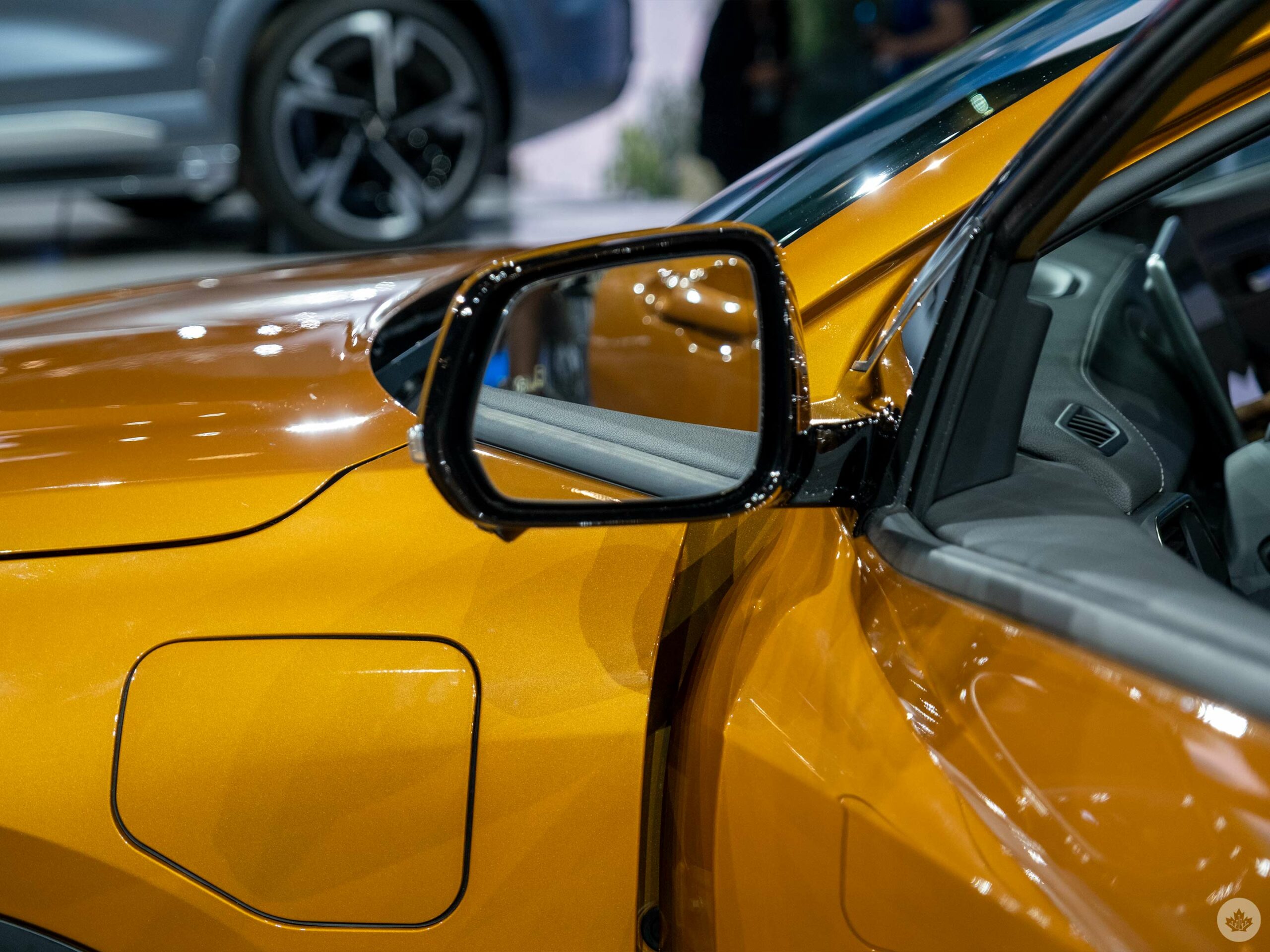
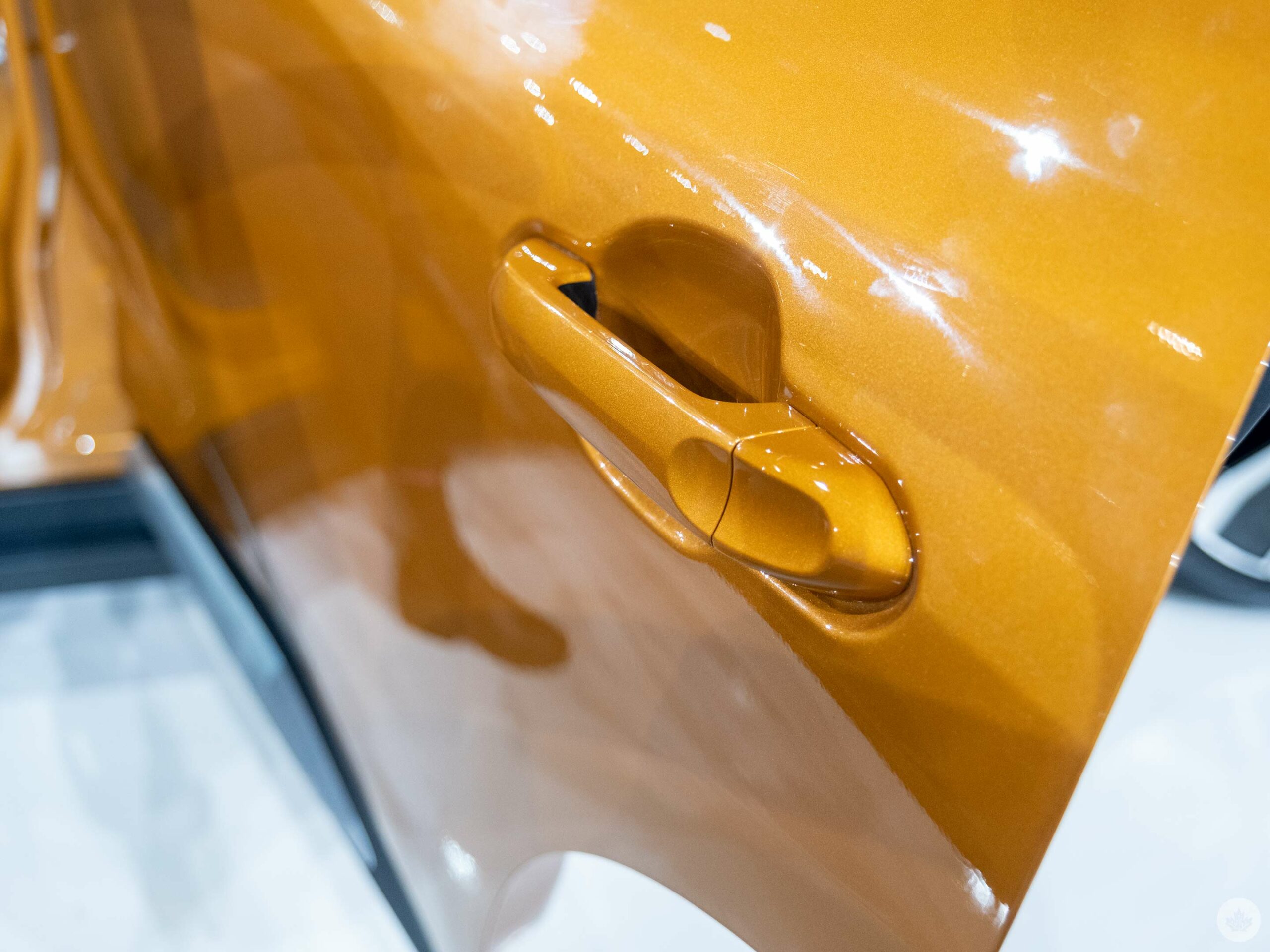
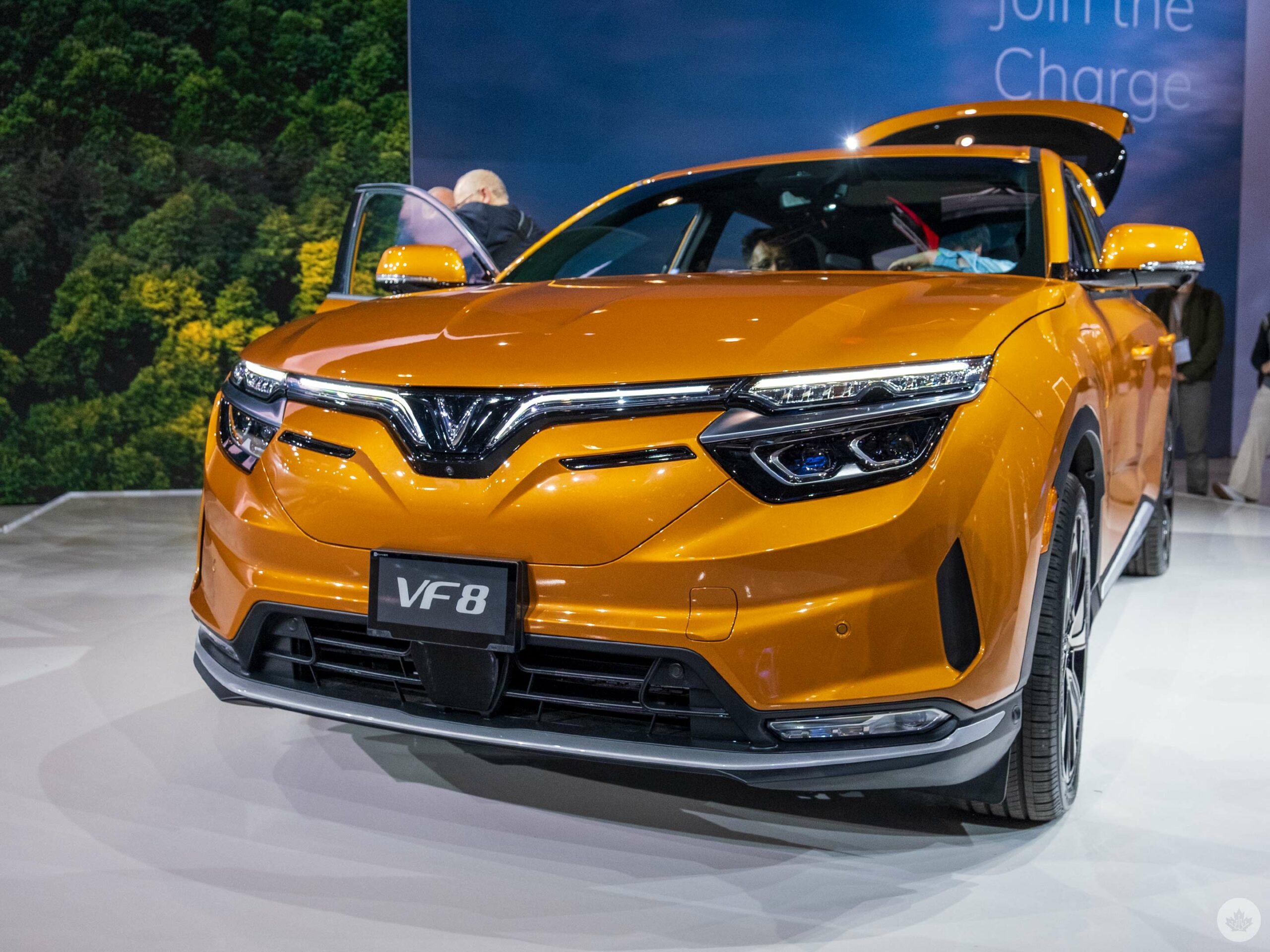
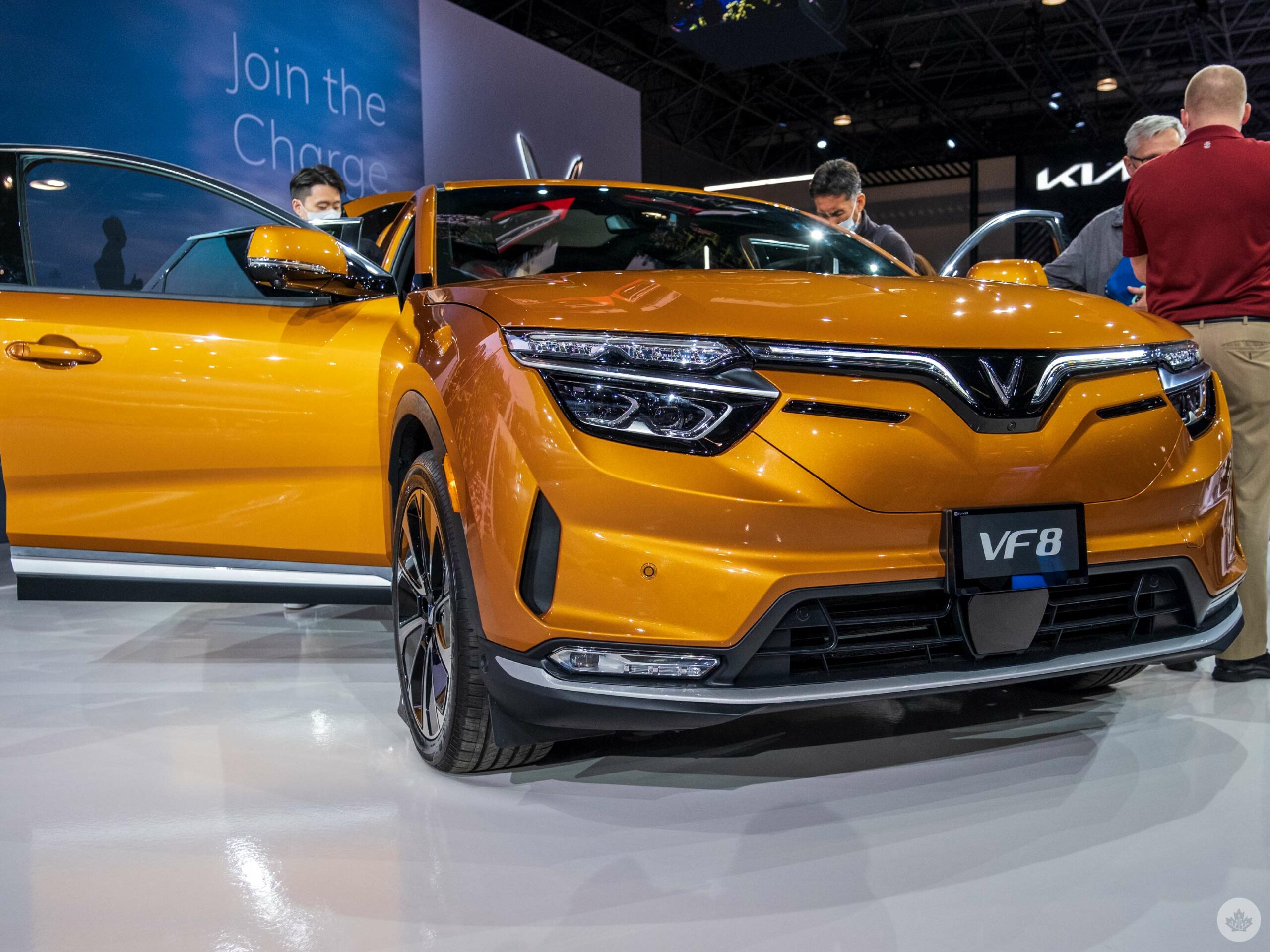
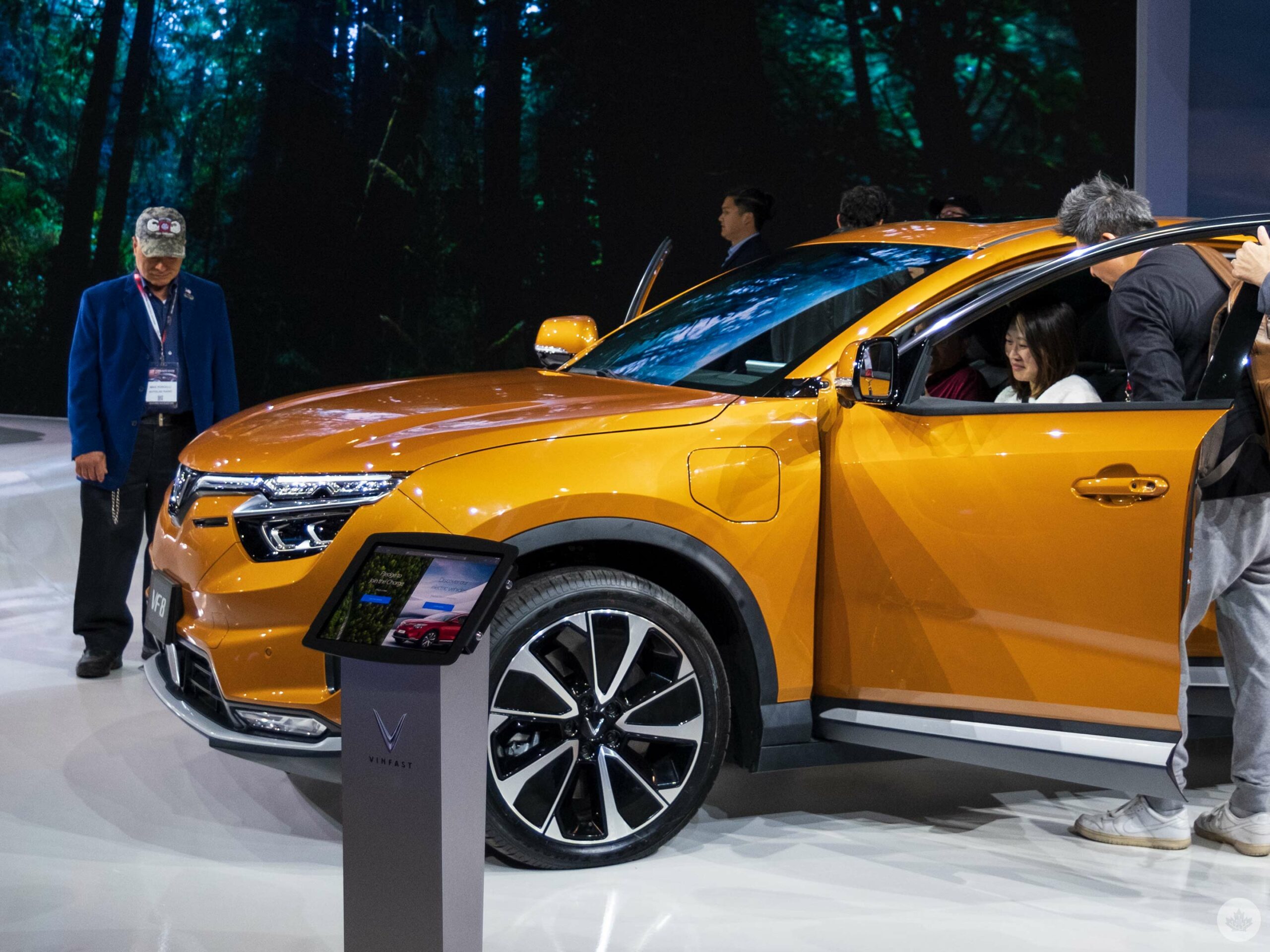
From the outside, I like the car’s look and the yellow/orange hue. It pops on stage and I think it looks sporty but still casual in an understated way. The company’s online configurator doesn’t list this colour, so it remains to be seen if it will be available at launch.
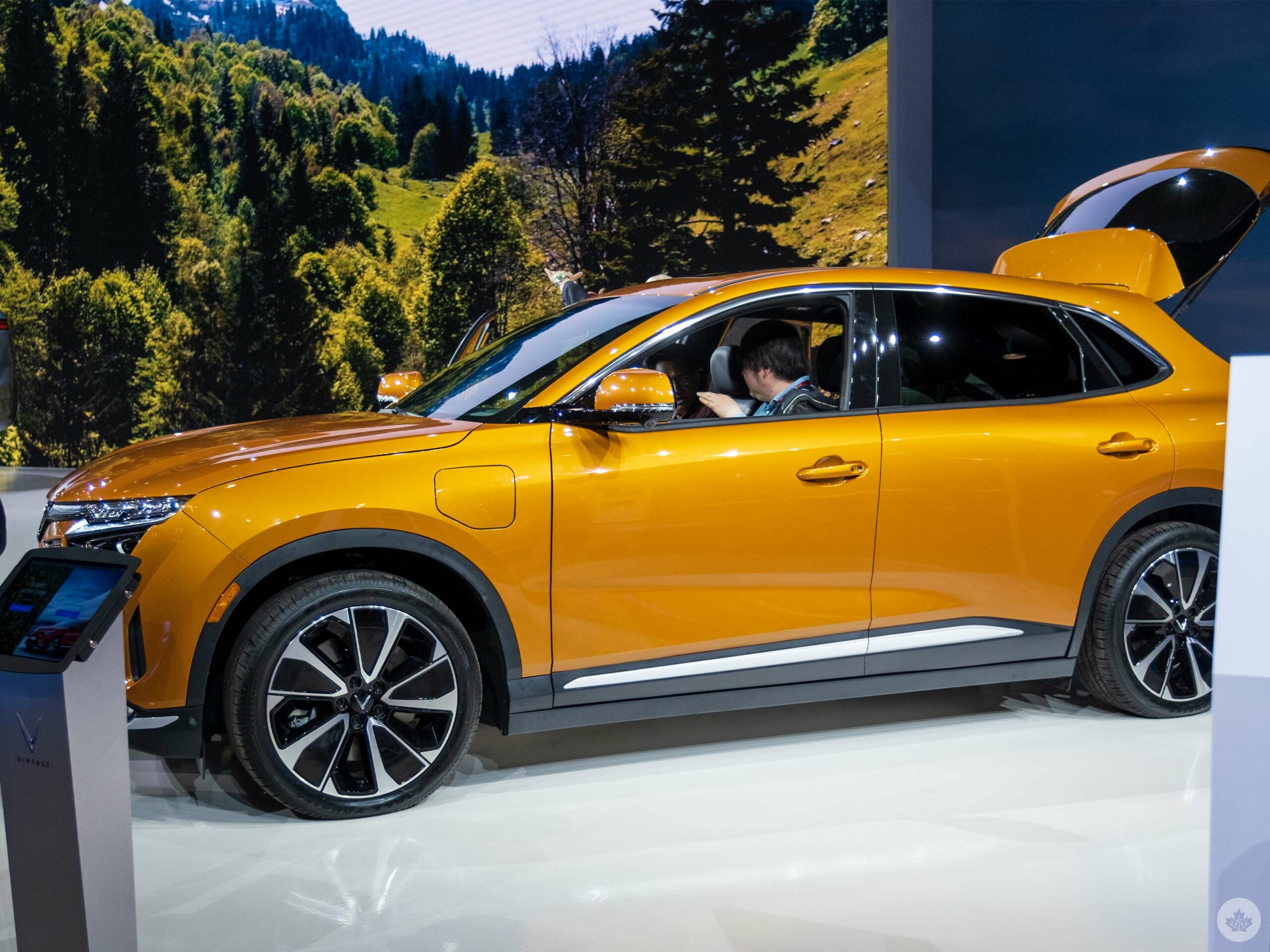
There’s not a lot to say about the car’s appearance, but there are some cool details in its headlights. And integrating the ‘V’ logo effect into the front accent lights looks undeniably cool. I didn’t mind the hood lines either. They don’t stand out, but it’s sporty enough that most people won’t feel nerdy driving it. To me, the overall design gave off Mazda vibes through its sportiness and economical value. The VF9 felt more like a premier Toyota to me with heavy-handed 4Runner vibes.

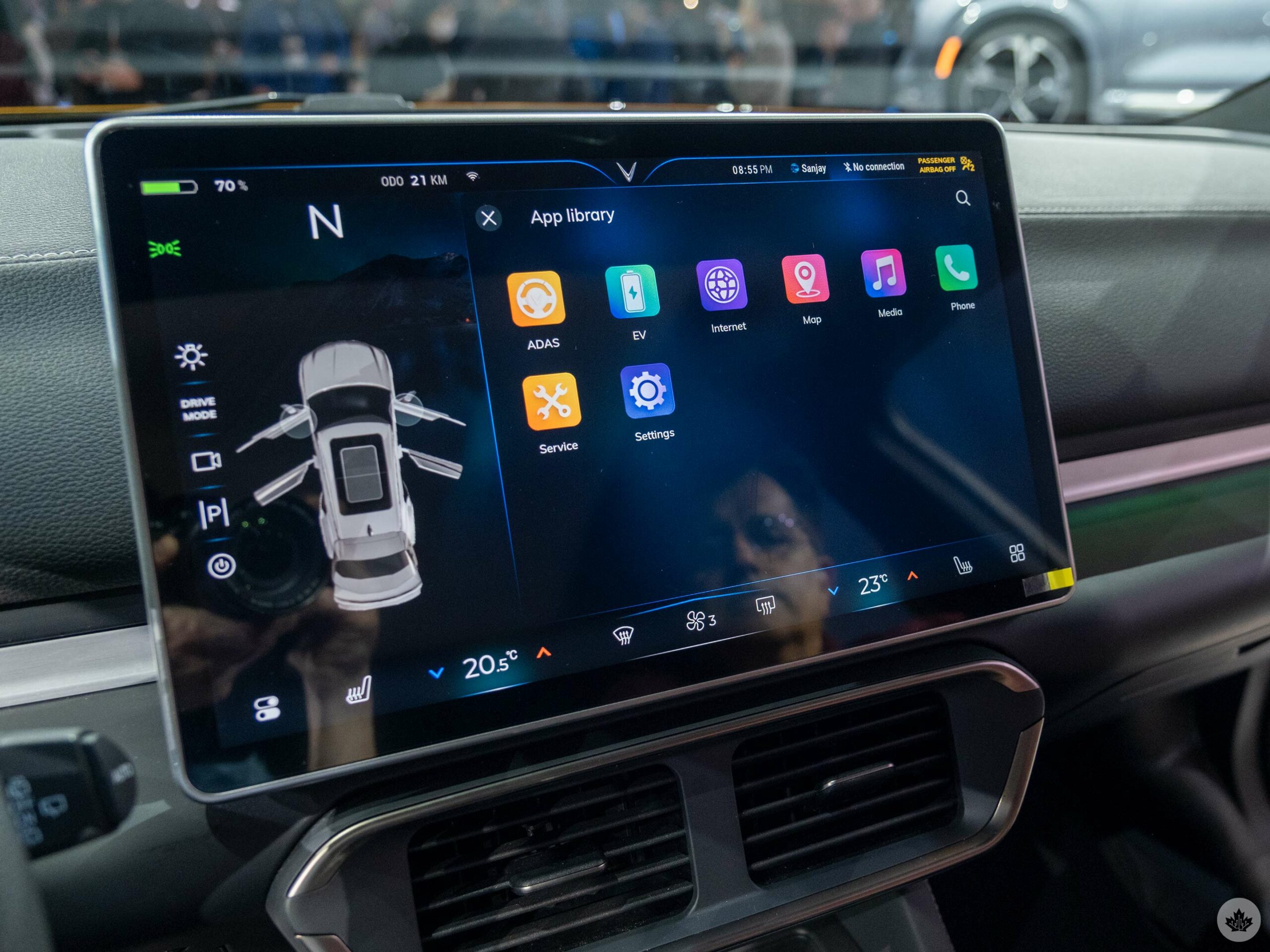
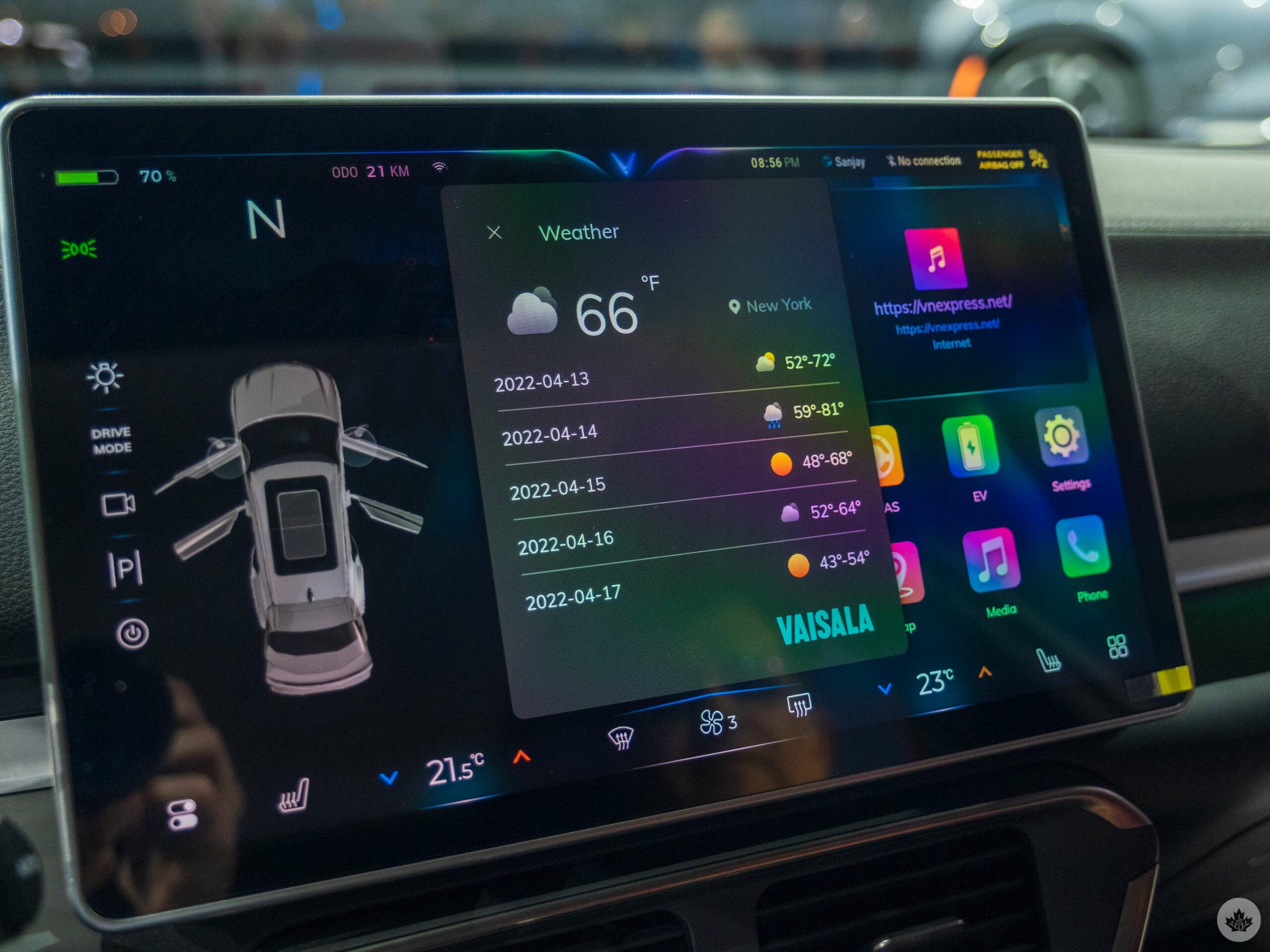
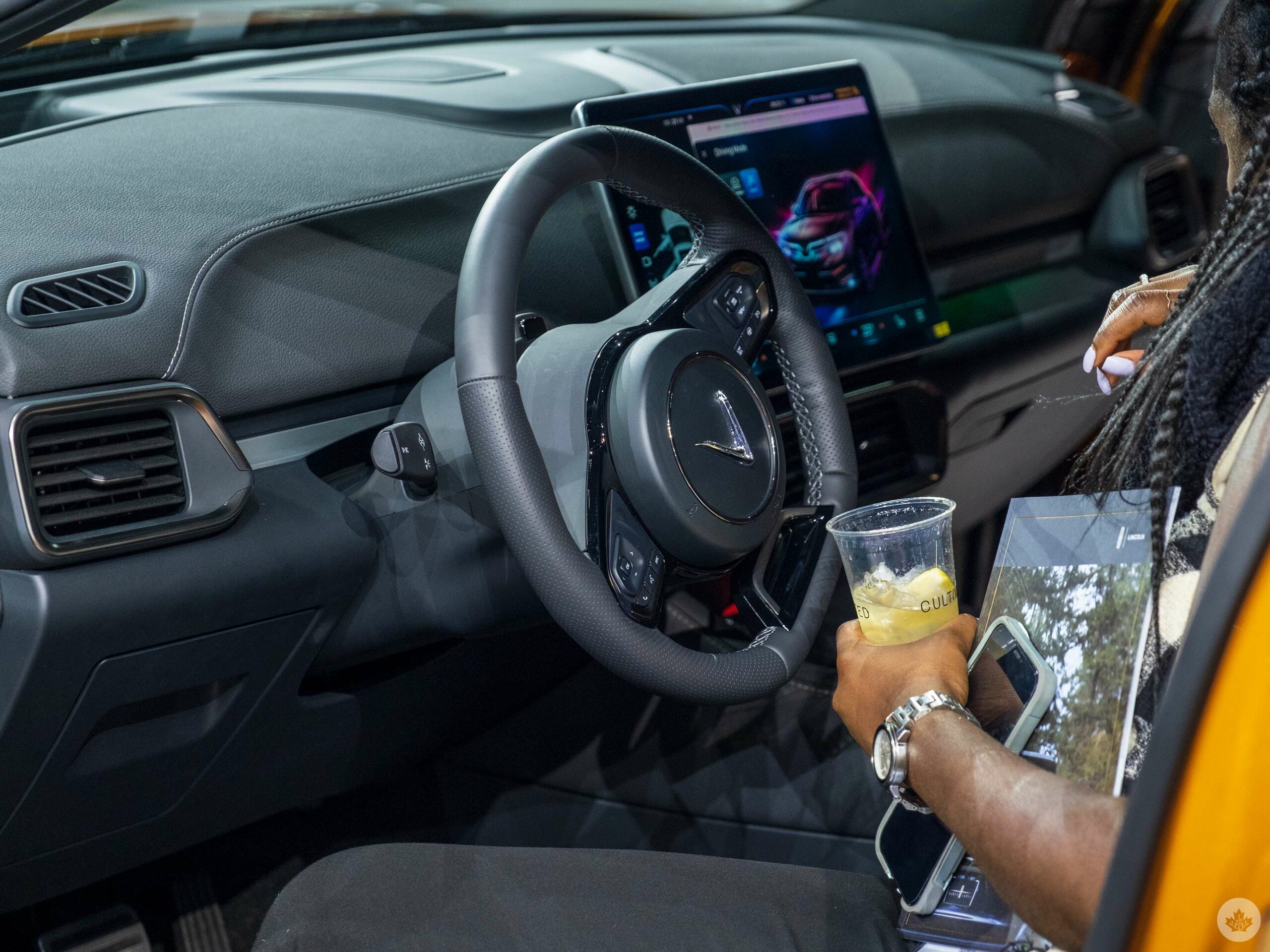
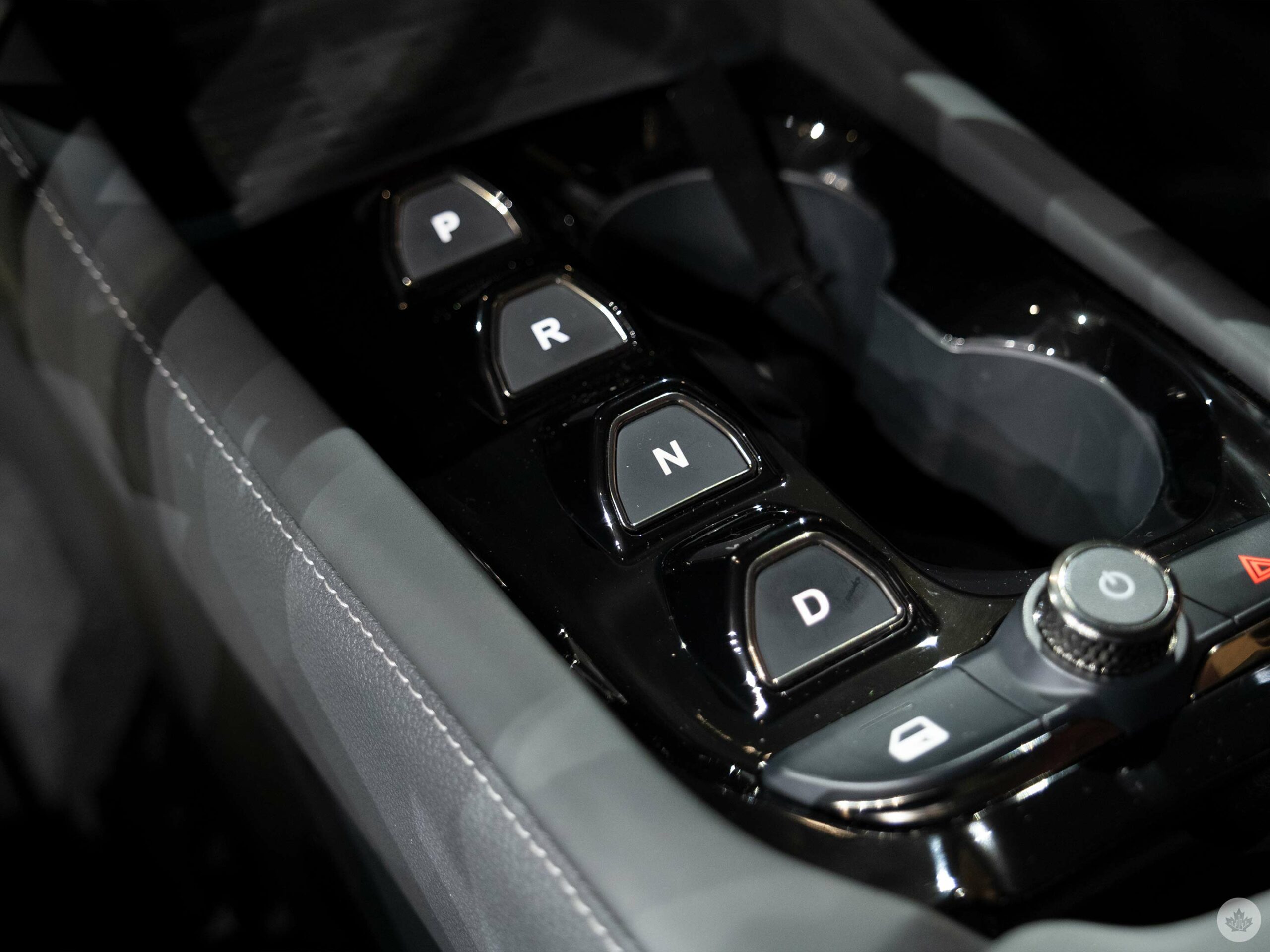
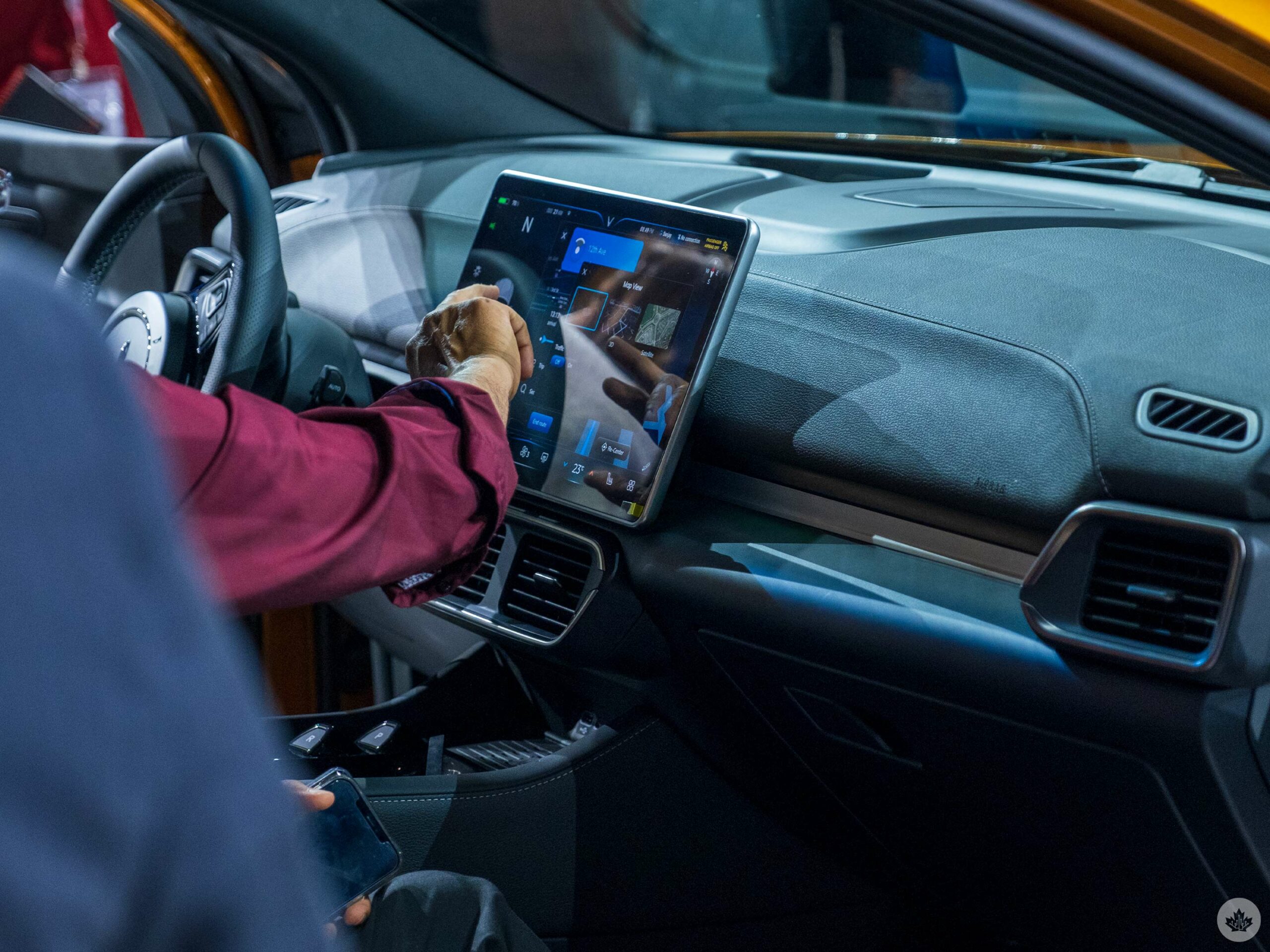
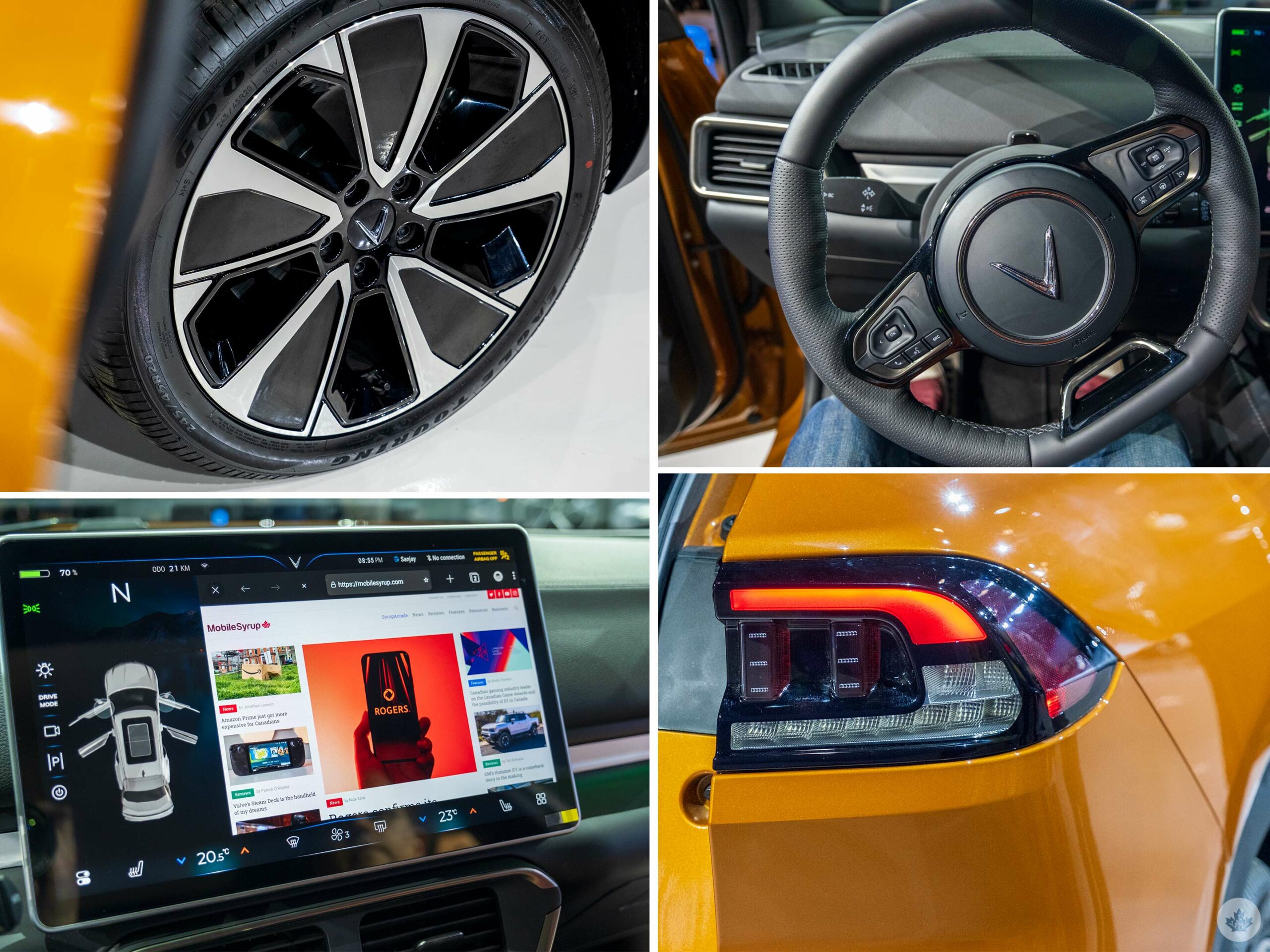
Inside the vehicle, the style is just as unobtrusive, with a few buttons, a physical volume knob and an expansive touch screen in the centre. Like a Tesla, there’s no instrument cluster since that info sits on the left side of the large 15-inch infotainment display. There’s also a heads-up display that the driver can see floating above the hood to make watching your speed feel more like a traditional car.
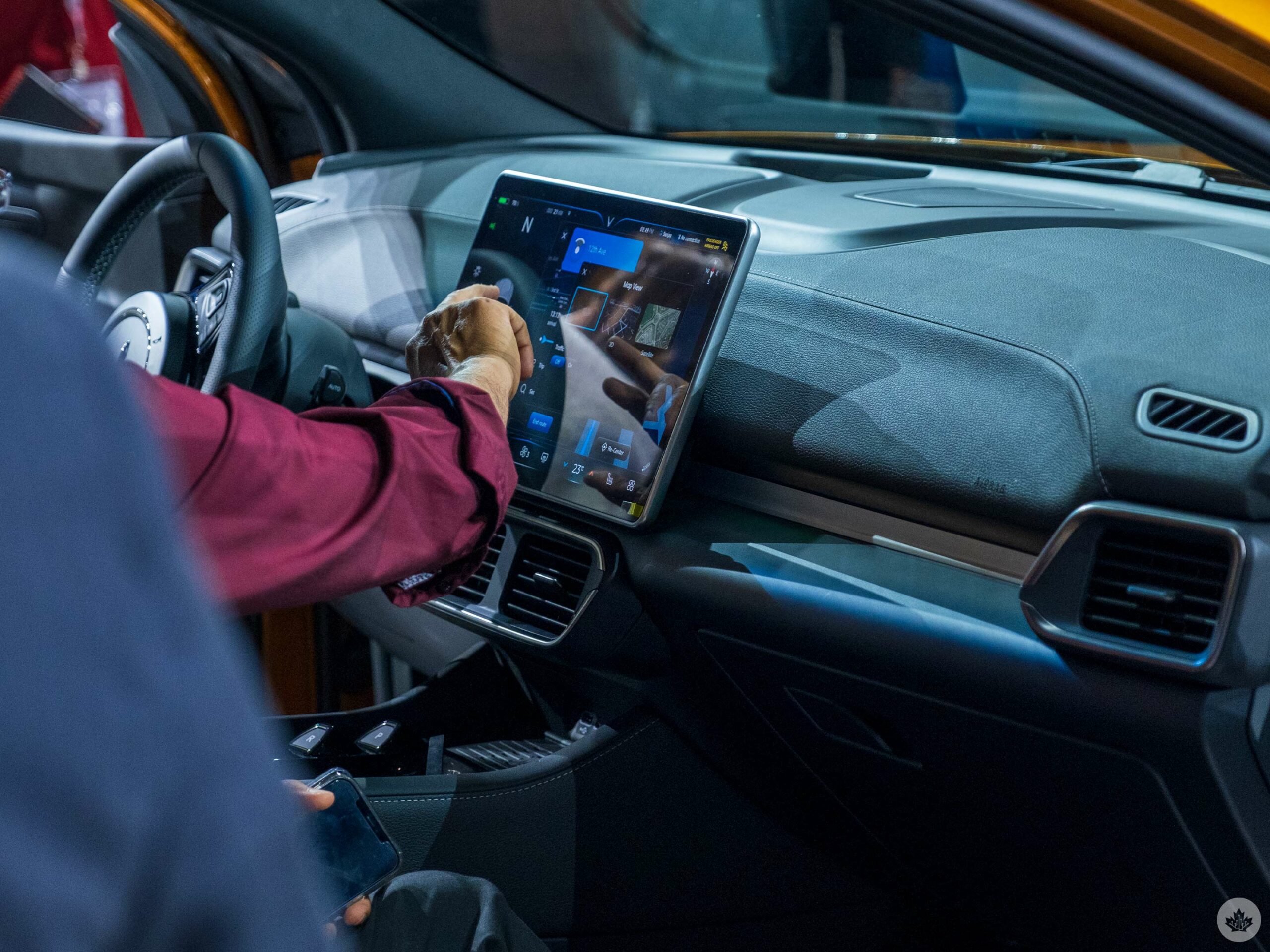
The display seemed well laid out in my brief time with the VF8, and a product manager ran through some simple functions like using a voice assistant to warm up the car, and the company’s companion app. It all looks standard and straightforward. I like the large touchable buttons on the screen and their iOS influence, but once I started navigating menus, the company’s lack of software design prowess began to appear. It seems functional, but VinFast has a long way to go to unify its software presence.

The companion app allows drivers to start the car remotely or even perform tasks like popping open the charging port. I didn’t get to spend much time with the app, but the main screen shows nearby charging stations. The app also includes options for controlling climate, setting up valet mode, summoning the car and more. It remains to be seen what the app will be capable of doing when the car launches.

vinfast-headlight
vinfast-mirror-chargingdoor
vinfast-handle
vinfast-homescreen
vinfast-weather-page
vinpilot
vinfast-front-2
vinfast-front
vinfast-trubnkj-
vinfasrt-front-quarter
vinfast-vf8-interior
vinfast-drive-park
vinfast-front-console

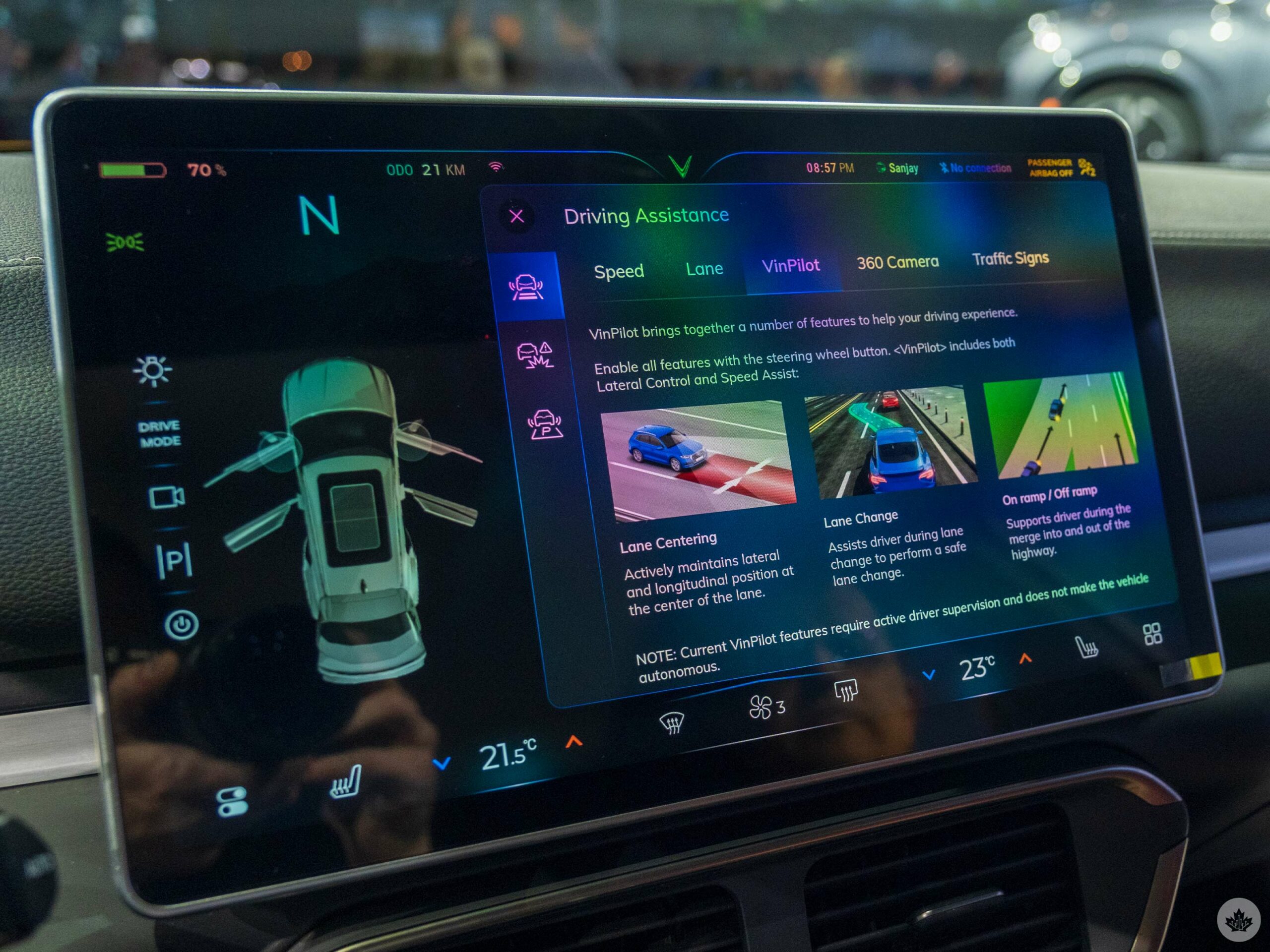
VinFast’s website mentions that it uses partners to develop a lot of its tech, so it’s hard to know what came from the company’s mind and what came off the shelf. Even the car’s appearance was outsourced to the Italian car design house Pininfarina. Outsourcing the design is one thing, but the infotainment and other tech could end up biting the company in the long run, like OnePlus with Cyanogen mod many years ago. Beyond the infotainment, VinFast loaded up the car with sensors and cameras to enable a plethora of driver assistance features. This includes lane assist, lane changing assist, hands-free highway driving, collision warnings and mitigations and more. I could not test out any of these features during my time checking out the car.

Overall I walked away from the VinFast booth excited to see a new EV challenger, especially one from a country like Vietnam that’s not known for making cars. EVs are shaking up the world so much that even a country embroiled in conflict when Japanese automakers like Toyota finally came to North America in the 1950s is finally getting their chance to join the automotive big leagues. It’s an exciting time to be a car nerd.
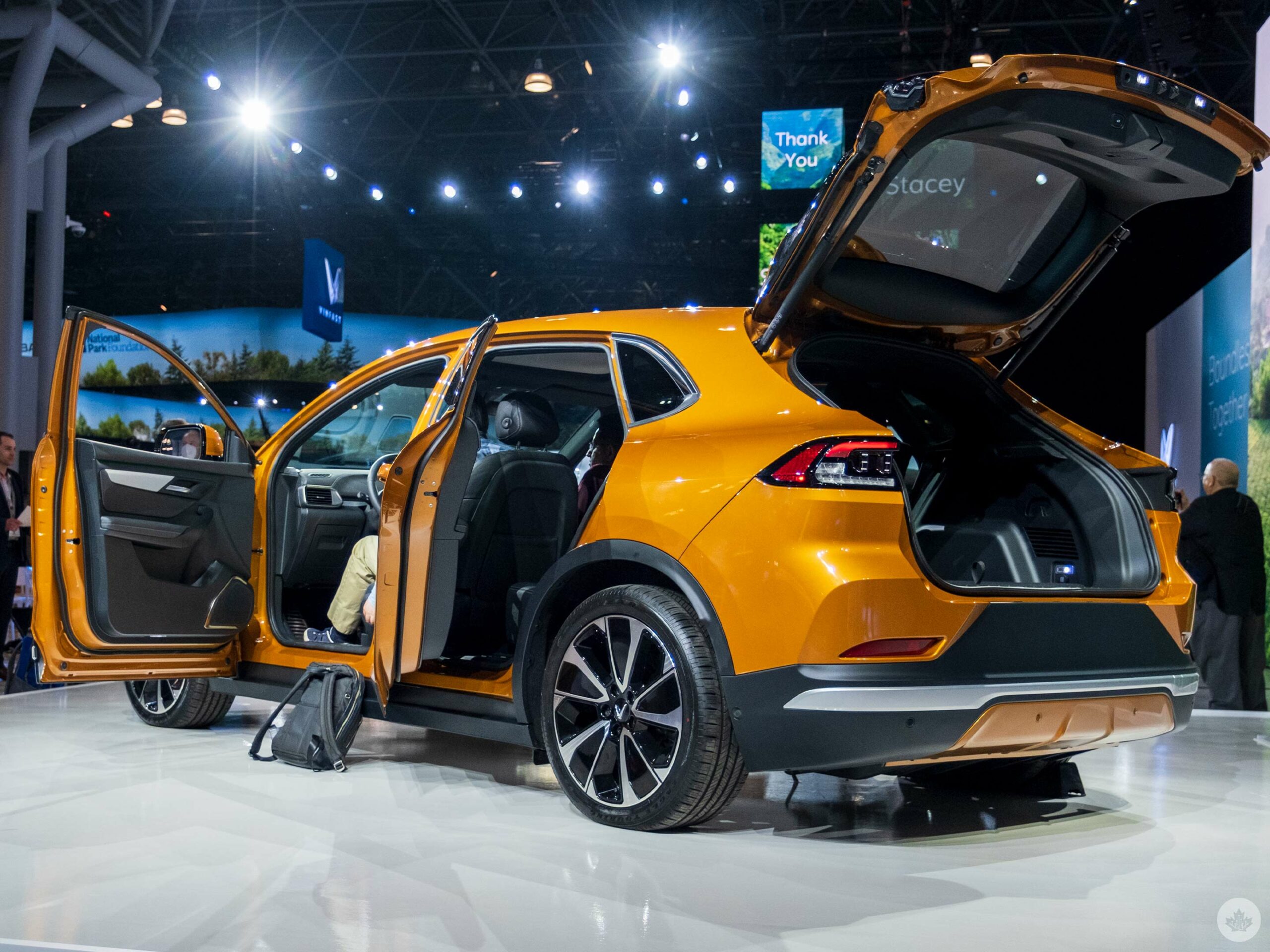
With all of this in mind, I’m still a little skeptical of VinFast, given the company appeared out of nowhere with three vehicle models and lofty ambitions. I could only poke around this orange VF8 for roughly ten minutes, and then I rode in another car for maybe five minutes. It’s also important to mention that I couldn’t shake the possibility that these vehicles were put together for the New York Auto Show and that the actual consumer versions could be missing features.

Checking out VinFast’s website doesn’t help this feeling either given its very budget-looking design, NFT incentives and other pre-order bonuses like a stay at a resort in Vietnam. Hopefully, as we get further through 2022, the company will let its cars do the talking.

Categories
Mobile Syrup

Tesla sets disappointing EV precedent by removing included chargers from new vehicles

Telsa and Elon Musk have decided to remove the Mobile Charger from all future Tesla deliveries. Even if you ordered your car months ago, it will now arrive without a charger.

And the chargers that you need to power up an electric vehicle (EV) cost a lot more than an iPhone brick.

Before we get into this, I’ll briefly explain the different chargers that Tesla offers and the variety of chargers that owners typically use.

Understanding all the Tesla chargers

Tesla Charger

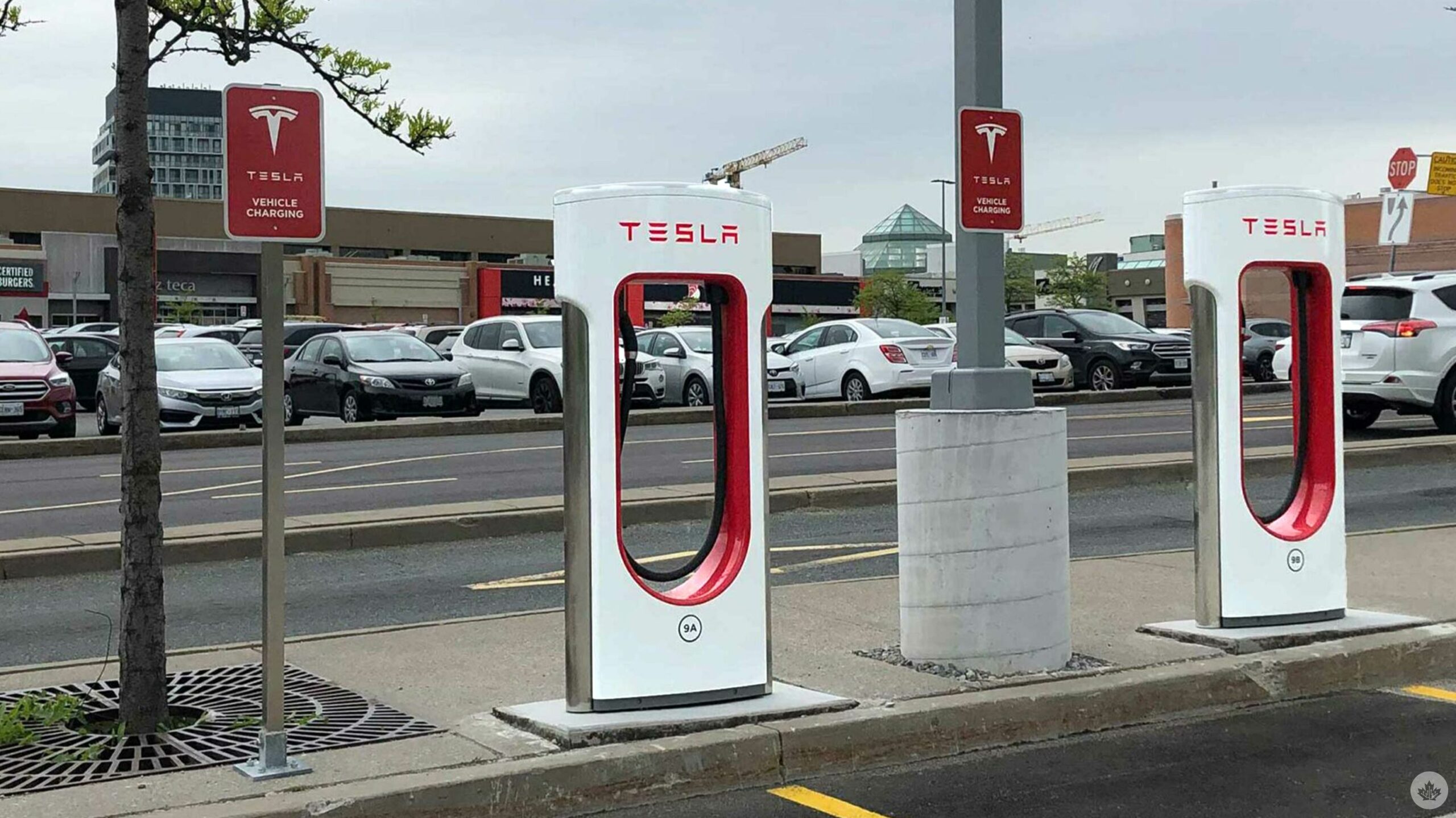
The most common Tesla charger that people recognize are the company’s Supercharger stations. These large stations can top up a Tesla in around an hour or less, depending on how much electricity they’re rated to handle. Newer Stations can push a max of 250kW, and older options max out between 75kW and 150kW.

The next fastest charger is a Tesla Wall Connector. These smaller chargers need to be installed by an electrician at your home but can charge moderately fast at a rate of around 67km per hour, according to Telsa’s website.

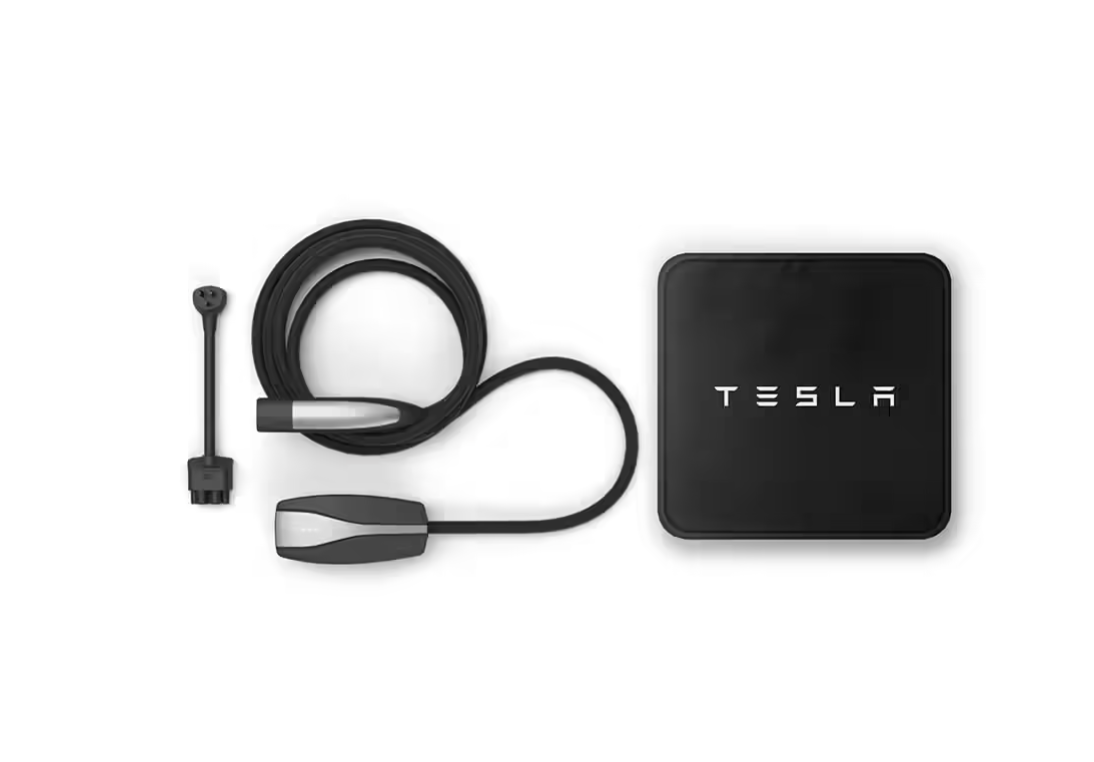
After that, the Mobile Connector is the slowest. This is the model that no longer comes with Tesla purchases. The option used to include Tesla cars and uses an outlet type called the NEMA 5-15. It can plug into traditional three-pronged 120-volt outlets and provide around 4km of range per hour.

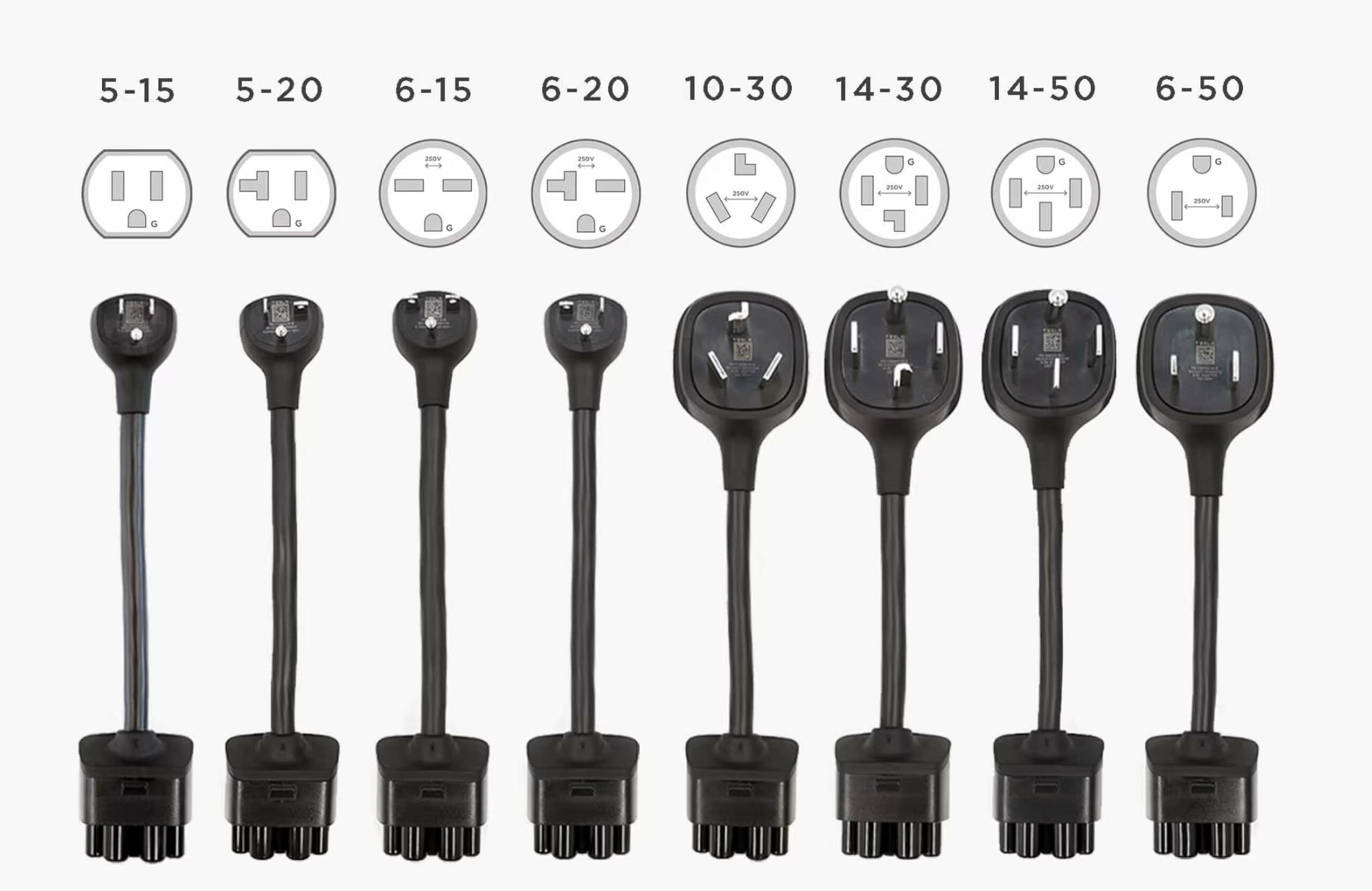
You can get adapters for this charging cable (pictured above) that allow it to plug into larger 240-volt outlets like a stove or a dryer. The Nema 14-50 adapter also used to come with Tesla purchases, but the company removed it at some point.

You now need to buy these adapters separately. They allow you to charge your Telsa at a rate of 14-30km per hour, depending on what car you have and how much power your outlet can give.

You can learn more about charging a Tesla here.

What’s being removed

All Tesla purchases previously came with the Mobile Connector in North America with the regular 120-volt adapter (Nema 5-15). Now you need to pay $275 for that cable.

Tesla says it’s removing the charger from the car because most people don’t use it. I’d argue that’s not the point. This charger is so slow that most people likely won’t want to use it. However, it’s not about wanting to use it, but rather having it available when you need it.

Imagine driving to visit a friend in a small town. Perhaps that town only has one fast charger? If that charger is broken, then what are you going to do without a slow charger in your frunk as a backup?

Tesla is likely correct when it says that most people won’t use this charger, but anyone who goes on road trips knows how important it is as a failsafe when you run into an issue.

After almost being stranded in am EV Porsche, I don’t feel comfortable driving more than a few hundred kilometres without a 120-volt charger or at the very least a 240-volt charger in the car with me. While the 240-volt is a lot faster, actually finding places that have an outlet close enough to a parking spot is really difficult.

Even if most drivers never use these chargers at home, I truly think there should be a short version placed inside of every EV in case of emergencies. Sure it might take a long time to charge using this cable, but it will allow you to plug into way more places and could be the difference between driving or towing your car home.

When Tesla first announced that it was pulling the charger, the Mobile Charging kit started at $400 USD (roughly, $500 CAD). After some backlash, the company dropped that price down to $275 CAD. However, this version only comes with the 120-volt (Nema 5-15) adapter. The rest of the Nema adapters cost another $245 CAD. This means having a complete set of emergency chargers in your trunk will cost $520 CAD.

Source: Elon Musk, Tesla Store, Electrek

Categories
Mobile Syrup

Telus offered Canadians the fastest mobile speeds this past quarter: report

Telus continues its mobile lead in Canada by being ranked the fastest mobile operator during the year’s first quarter.

Ookla’s Speedtest Intelligence reported the provider offered download speeds of 94.48Mbps. The Vancouver-based phone provider has ranked first in every quarter of Ookla’s Speedtest since Q3 2020.

Bell offered the second fastest mobile download speeds with 86.06Mbps, and Rogers was third with 71.70Mbps. This is the same order of scores the big three reported in Ookla’s last quarterly mobile report.

Fido offered speeds of 66.85Mbps, Vidéotron 58.82Mbps, and Freedom Mobile 43.83Mbps.

Despite Freedom Mobile offering the slowest speeds among the top six, it topped the list for providing the lowest latency at 18ms. The brand has been offering the lowest latency since Q4 2020. This is the first time Freedom has lowered the latency since Q2 2021.


Vidéotron offered the highest consistency score at 92.2 percent. The score measures the consistent quality of service with at least 5Mbps download speeds and 1Mbps minimum upload speed.

Telus also ranked first on 5G performance with a median download speed of 162.47Mbps. This is the first time Telus has reported the highest score in this category. Since Ookla started tracking it in Q2 2021, it was a title Bell consistently held.

On specific devices, the Galaxy S22 Ultra was rated as the fastest phone this quarter, beating out the iPhone 13 Pro Max, iPhone 13, and iPhone 13 Pro.

Fixed service

Like Telus, Shaw continued to hold onto its position as providing the fastest fixed broadband services this quarter with download speeds of 213.47 Mbps. The company has held the position since Q1 2021.

Bell offered the lowest latency at 5ms, and Rogers had the best consistency score with 89.8 percent.

Rogers ranked as the fastest provider for fixed services in New Brunswick, Newfoundland and Labrador, and Ontario. Shaw was the quickest provider in B.C., Alberta, Manitoba, and Saskatchewan. Bell was the fastest provider in Nova Scotia and Quebec.

Source: Speedtest

Categories
Mobile Syrup

Leaked iPhone 14 case schematics indicate the iPhone mini is dead

It looks like the iPhone mini line’s days are numbered.

This shift in the upcoming iPhone line’s size lineup has been long rumoured, but now, more fuel has been added to the rumour fire. Schematics leaked by a user on Weibo, a notable China-based social media platform, show off the rumoured iPhone 14 line’s case design.

Backing up several previous rumours, there are two 6.1-inch and 6.7-inch iPhones, but no 5.4-inch iPhone mini. Apple’s iPhone 14 Pro models appear to feature three lenses and a LiDAR scanner, just like the iPhone 13 Pro/Pro Max, while the iPhone 14 offers two lenses, like the iPhone 13/13 mini.

The Weibo user also goes on to say the iPhone 14 Pro features a front-facing shooter with an “exclamation point camera design” similar to Samsung’s Galaxy S series, according to 9to5Mac. On the other hand, the rumoured iPhone 14 and iPhone 14 Max will still feature the now-familiar display notch. This corroborates earlier rumours from often-reliable TF International Securities Apple analyst Ming-Chi Kuo citing the shift in size and the addition of a new A16 chip.

In the past, Bloomberg’s Mark Gurman has also reported that at least some of Apple’s iPhone 14 devices will feature a front-facing hole-punch camera.

Apple’s iPhone 14 line will likely be revealed this fall during the tech giant’s annual fall hardware event.

Image credit: @ShrimpApplePro

Source: @ShrimpApplePro Via: 9to5Mac 

Categories
Mobile Syrup

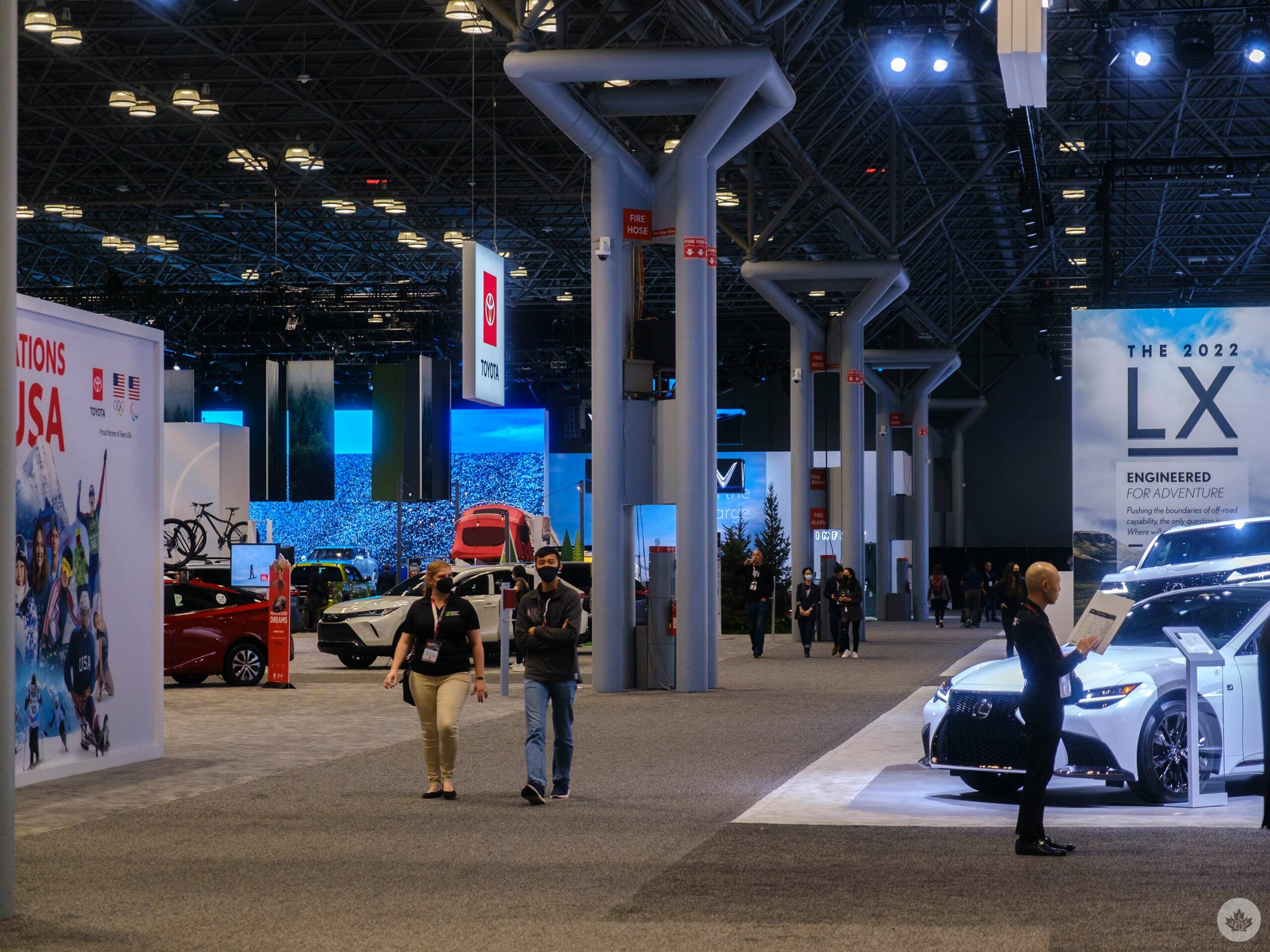
The New York Auto Show featured a surprising lack of automakers

Last week was my first time at the New York Auto Show, and while it lived up to the hype in some ways, it also disappointed me in others.

Legacy automotive companies like Ford, GM, Subaru and Toyota offered large displays at their booths, but others felt small and lacklustre in comparison. Many automakers like BMW, Audi, Mazda and others didn’t even bother to show up at all.

As a journalist attending the event, the reduced automaker count meant that I had less to cover and, in turn, there was less walking to see it all, but it also signifies the end of large tradeshows to an extent. There’s the death of E3, and Computex, CES and other tradeshows becoming less relevant over the last few years, but seeing the state of the New York Auto Show in person made me wonder how much longer it will be around before all automotive companies just hold their own online or in-person events.

Still, the Autoshow was fun for what it was, and it was nice to check out several upcoming electric vehicles (EVs) under one roof. Three EVs even won the most prestigious show awards, which was exciting. Hyundai’s Ioniq 5, my current favourite EV, took home the top prize, while the Mercedez EQS won the top luxury car and the Audi E-tron won the top performance car.

These three champions suggest to me that people are finally ready for EVs, and if automakers continue releasing them, they’ll steadily grow in popularity. It’s also great to see the Ioniq 5 win since the car feels expertly designed and offers a level of attention to detail you don’t often see in mid-range SUVs.

A personal highlight from the show was the VinFast booth. The Vietnamese automaker burst onto the scene this year with an impressive crossover called the VF8. It’s unclear how effectively the company will market and sell the car globally when it releases towards the end of the year, but it clearly had an exciting and surprising presence at the New York Autoshow.

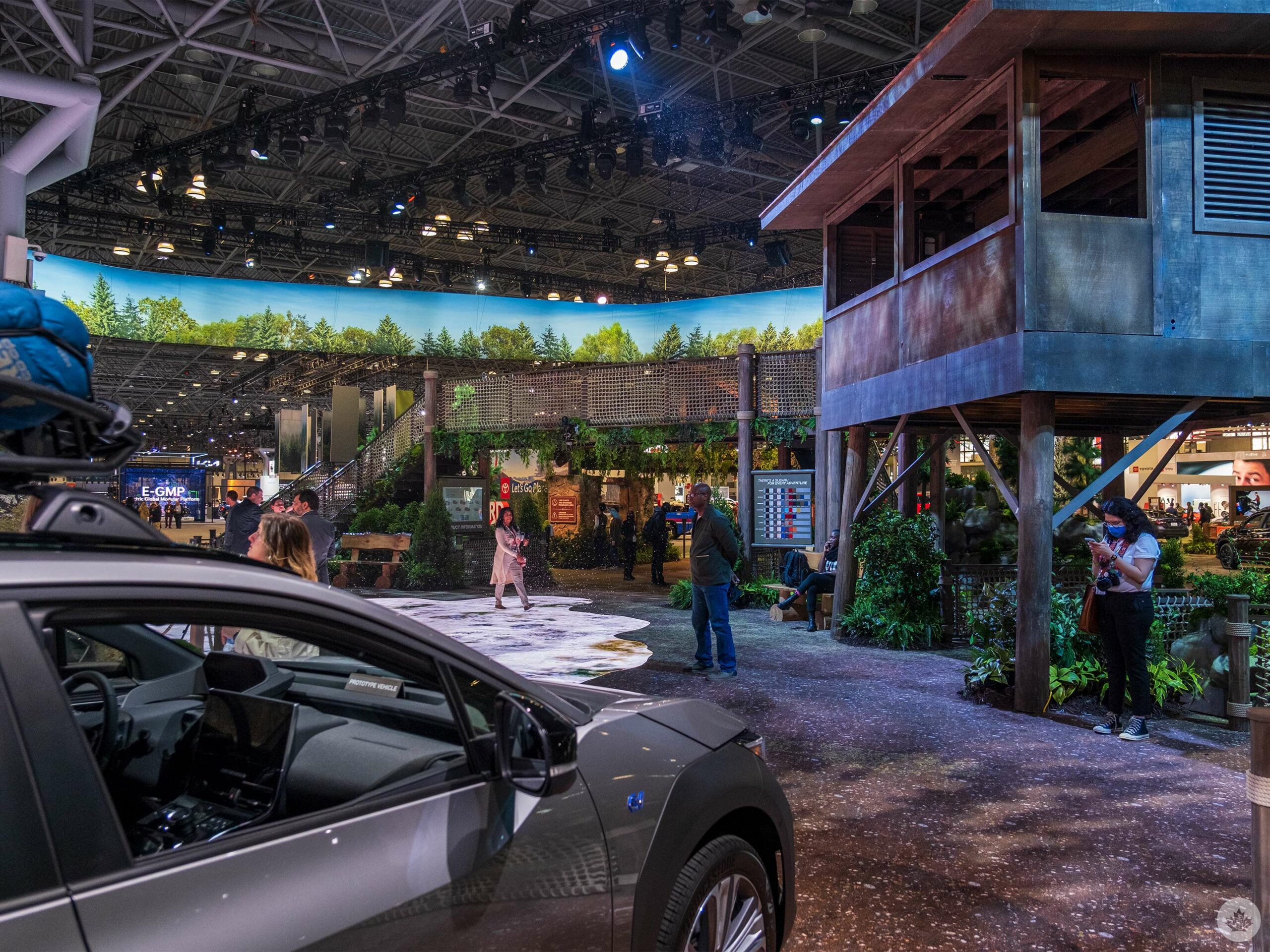
Catch me chilling in the Subaru clubhouse.

Other personal highlights included Subaru’s booth since I like the look of the Solterra so much. The company also went all out with a bubble machine to replicate a snowstorm inside and built a giant tree fort.

This was a little extra, obviously, but compared to the boring booths most automakers had set up, it was certainly unique. The screen tech that the company was using on the floor was also very cool and helped the booth change climates to show off all the terrain the Solterra is rated to handle.

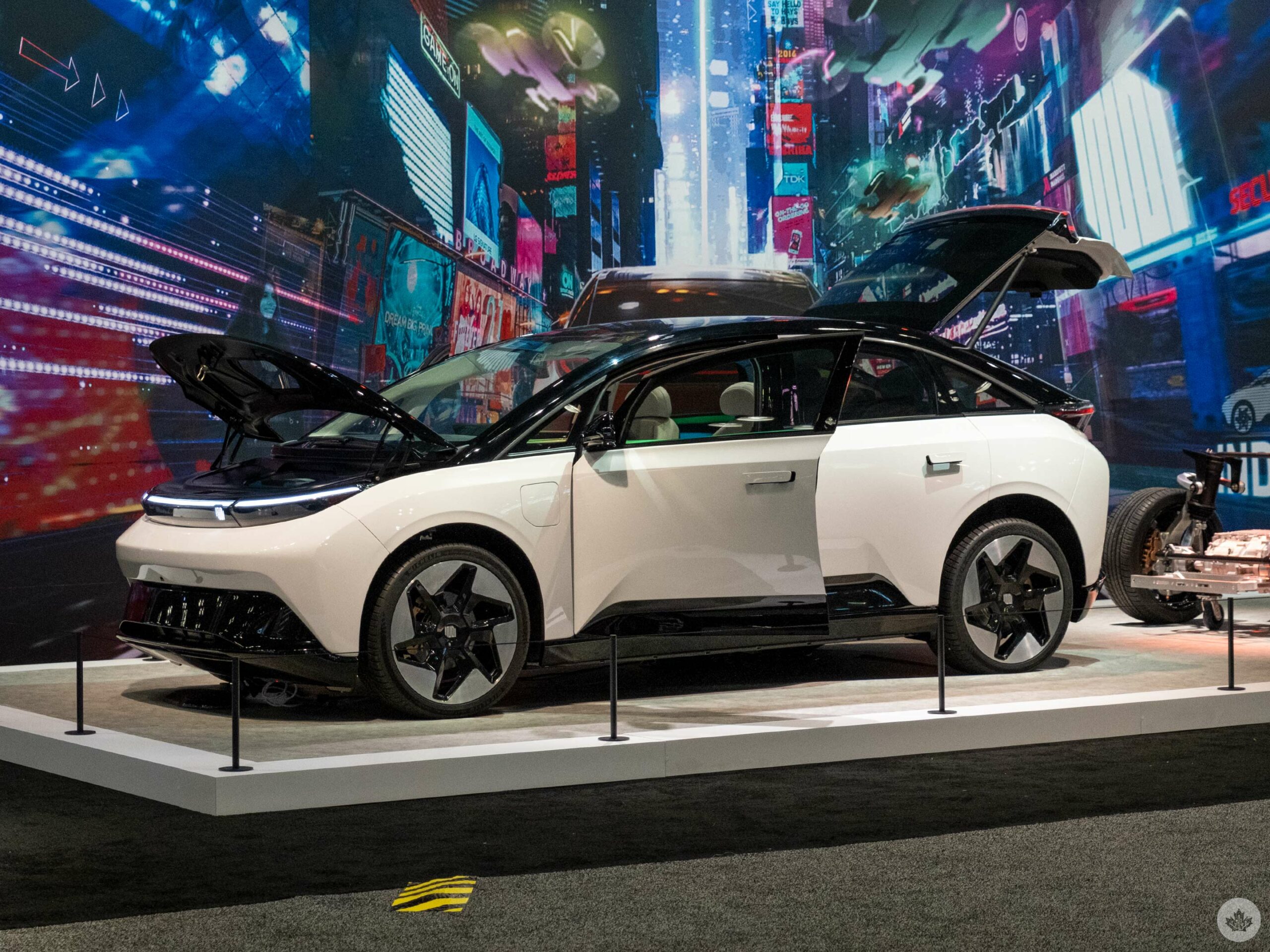
A look at the INDI EV.

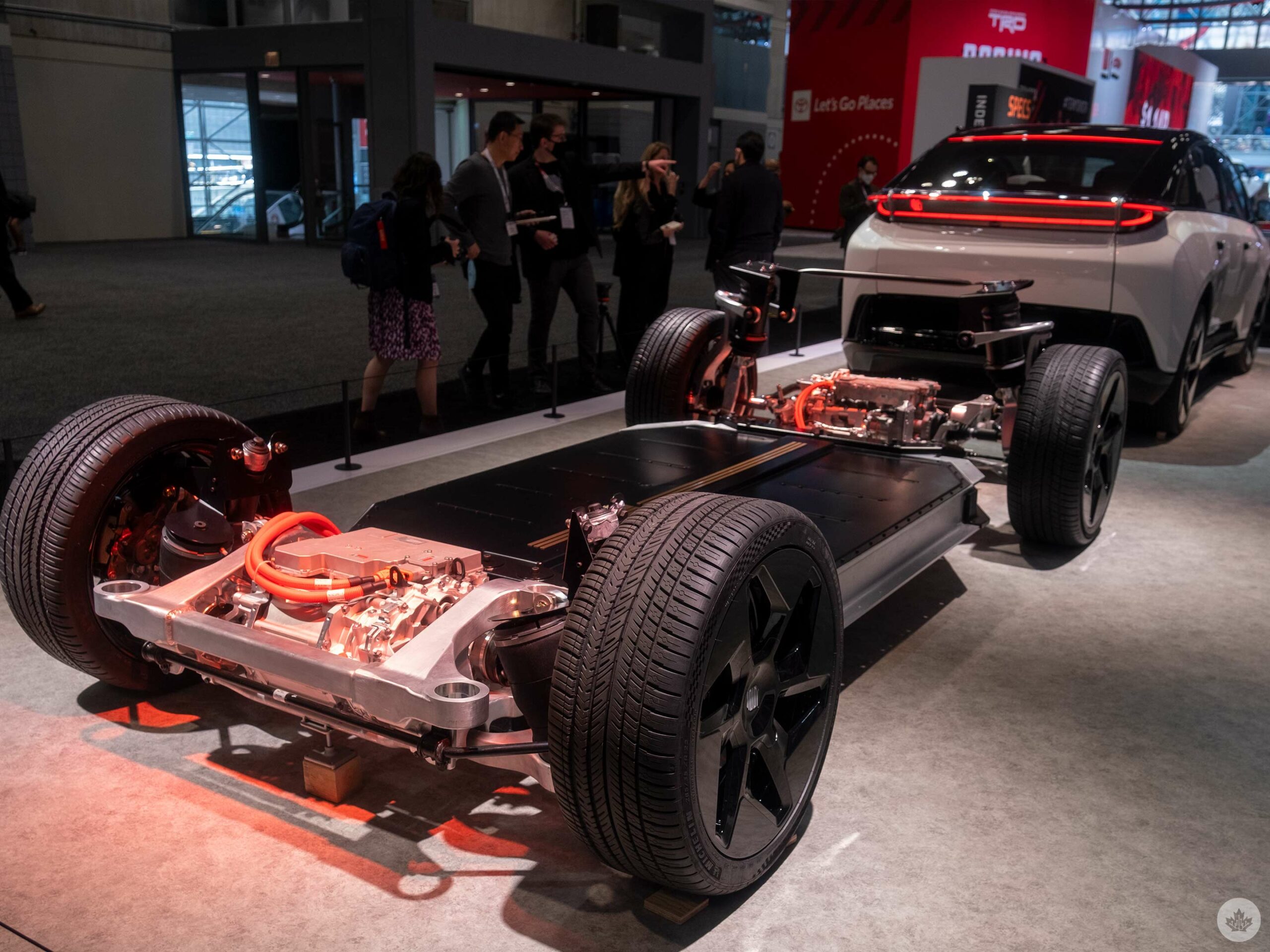
A tiny booth that was tucked off to the side was INDI EV’s. This car company is new and is taking a very nerdy approach to its vehicle so far. It looks like an EV concept car from the outside and even has a plexiglass panel in the hood to show off some of its PC components.

Inside there are two screens for the passenger, and one is even a full Windows PC. It’s pretty cool, but I’m not sure if it’s something consumers are actually looking for. The Southern California-based company still has a long way to go actually to get people to buy its cars. Still, since we’ve seen so many other industries adopt gamer aesthetics successfully, this car might be wild enough to work.

I’m not sure if the lack of grandeur at this year’s New York Autoshow was COVID-19 related or just a sign of the times, but walking away from the show, I was struck by the lack of noteworthy news that came out of it.

Of course, what disappointed me the most was the lack of vehicles made out of Lego. There was a Lego Bugatti at the first Toronto Auto Show I attended, and so far, nothing has lived up to that.

Categories
Mobile Syrup

Check out these promotions from Amazon’s ‘Daily Deals’ store

Amazon Canada has discounted several Bluetooth speakers and headphones, along with promotions on Anker and FireTV products as part of its ‘Daily Deals’ promotion.

Check out the deals below:

Save up to 22 percent on Anker Soundcore headphones

USB C Charger, Anker 32W 2 Port Charger with 20W USB C Power Adapter: $27.99 (regularly $34.99)

Save up to 27 percent on Fire Tablets

Insignia 50-inch 4K U HD HDR LCD Smart TV – Fire TV Edition – 2020: $449.99 (regularly $499.99)

Save up to 31 percent on Kids Fire Tablets

Fire TV Stick 4K streaming device with Alexa Voice Remote: $54.99 (regularly $69.99)

Save up to 38 percent on Blink Smart Home Security Cameras and Doorbells

TP-Link AX6600 WiFi 6 Gaming Router (Archer GX90) – Tri-Band Gigabit Wireless Internet Router: $299.99 (regularly $399.99)

Save up to 28 percent on JBL portable speakers

Beats Studio3 Wireless Noise Cancelling Over-Ear Headphones with Apple W1 Headphone Chip: $271.30 (regularly $399.95)

Save up to 14 percent on Polk speakers

TP-Link Tapo Smart Cam Pan Tilt Home WiFi Camera: $44.99 (regularly $49.99)

Save up to 31 percent on video games and video game accessories

HORI Nintendo Switch PAD Mini, Pokémon Black and Gold Pikachu: $26.80 (regularly $31.92)

Save up to 15 percent on computer accessories

Save up to $200 on select Acer products

MobileSyrup utilizes affiliate partnerships. These partnerships do not influence our editorial content, though we may earn a commission on purchases made via these links that helps fund the journalism provided free on our website.

Image credit: Amazon

Source: Amazon

Categories
Mobile Syrup

Where to stream Better Call Saul’s final season in Canada

Two years after Season 5, the sixth and final season of Better Call Saul will finally premiere on April 18th.

However, it should be noted that the 13-episode Season 6 is being split in two. The first half will kick off with a two-episode premiere on the 18th and run until May 23rd, with the latter half picking up on July 11th and concluding on August 15th.

For this final season, AMC is doing something a little different — the series will air on both its TV network and its AMC+ streaming service. This means that those who have AMC’s TV channel and cord-cutters alike can tune into the Season 6 premiere on April 18th at 9pm ET.

AMC+ costs $6.99 CAD/month in Canada and is available exclusively as a channel on Amazon Prime Video and Apple TV.

Set before the events of Breaking Bad, Better Call Saul follows fan-favourite Jimmy McGill/Saul Goodman (Bob Odenkirk) as he works to become the lawyer who eventually meets Walter White (Bryan Cranston). In the final season, Jimmy and Kim (Rhea Seehorn) get up to even shadier business while Gus (Giancarlo Esposito) and Mike (Jonathan Banks) wage war against Lalo (Tony Dalton). Quebec City’s own Michael Mando co-stars as Nacho.

Note: if you’re looking to watch Better Call Saul‘s first five seasons, you’ll need to head to Netflix Canada.

Image credit: Sony Pictures Television/AMC

Categories
Mobile Syrup

Public Mobile’s new flash sale offers 2GB bonus data for six months

Telus flanker brand Public Mobile has gone live with its Vaisakhi promotion, which offers new customers 2GB of additional bonus data every month for six months, along with 750 long-distance calling minutes for calls made to India.

The only requirement to claim the promotion is that you need to be a new customer Public mobile customer, and be enrolled in any one of Public Mobile’s $25+ plans.

To claim the offer, you need to head to Public Mobile’s website and submit your email on the homepage by today, April 18th. Expect to receive an email from Public Mobile containing a promo code in the next few days. Activate a new $25+ line with the promo code before April 29th, and the bonus data/long-distance minutes will be applied to your account within two business days.

Check out all $25+ Public Mobile plans below:

  • $25 for 500MB data, unlimited Canada-wide minutes and unlimited international texting
  • $35 for 2.5GB data, unlimited Canada-wide minutes and unlimited international texting
  • $40 for 4.5GB data, unlimited Canada-wide minutes and unlimited international texting
  • $50 for 10GB data, unlimited Canada-wide and U.S. minutes with unlimited international texting
  • $60 for 15GB data, unlimited Canada-wide and U.S. minutes with unlimited international texting
  • $70 for 20GB data, unlimited Canada-wide and U.S. minutes with unlimited international texting

Learn more about the promotion here.

Source: Public Mobile

Categories
Mobile Syrup

Apple reportedly still working on HomePod/Apple TV combo with FaceTime camera

Apple is reportedly still developing a HomePod that features a built-in Apple TV and a FaceTime camera, according to Bloomberg’s Mark Gurman.

In his latest ‘Power On’ newsletter, Gurman says that the new HomePod is still on the way and emphasizes that the smart speaker remains “at the centre of Apple’s approach” to the home. This echoes what Tim Twerdhal, Apple’s vice president of product marketing for home audio, outlined in an interview with MobileSyrup last May.

Gurman first reported rumours of this combined device late last year, stating that the camera would be used to make video calls through a television, similar to Microsoft’s ill-fated 2nd-gen Kinect for the Xbox One. Since that initial rumour, this is the first time we’ve heard the project is still in development.

It’s unclear when Apple will show off its HomePod/Apple TV hybrid device. Apple discontinued its larger HomePod in March 2021 in favour of the smaller HomePod mini that launched in 2020.

Apple likely aims for this new HomePod concept to be the true successor to the original version of the smart speaker.

Source: Bloomberg