Categories
Mobile Syrup

Peter Jackson’s Weta FX chooses Vancouver for its second VFX studio

The world-renowned VFX studio co-founded by Peter Jackson has opened up shop in Vancouver.

Weta FX, the company behind the effects of Jackson’s iconic The Lord of the Rings trilogy, has announced that its first-ever expansion beyond its native New Zealand will be in the B.C. city.

The Vancouver-based VFX office will initially be filled by 75 artists and collaborate with Weta FX’s Los Angeles-based corporate office.

On top of the LOTR series, Weta FX has worked on such major films as James Cameron’s Avatar, the modern Planet of the Apes trilogy and Shang-Chi and the Legend of the Ten Rings, and TV shows like Game of Thrones, The Umbrella Academy and Moon Knight. Currently, the new Vancouver office is set to contribute to ongoing VFX work for Cameron’s Avatar sequels, the first of which is set to hit theatres this December.

In November 2021, San Francisco-based video game software development company Unity Technologies acquired Weta’s tech assets for $1.625 billion USD (about $2.03 billion CAD), although the actual VFX company remains majority owned by Jackson.

On top of many movies and TV shows regularly filming in Vancouver, the city has become a major hub for animation and visual effects companies. For example, Sony Pictures Animation’s Oscar-winning Spider-Man: Into the Spider-Verse was primarily animated at the company’s Vancouver division, while Disney opened its own animation studio in the city last year. Local studio WildBrain also produces The Snoopy Show for Apple TV+ alongside an upcoming Sonic the Hedgehog series for Netflix.

Image credit: New Line Cinema

Via: The Hollywood Reporter

Categories
Mobile Syrup

HTC One M7 versus Nexus 5: Which smartphone was better?

Almost 10 years ago, HTC and LG were leaders in the smartphone market and for both of those companies, 2013 was a very important year.

What I’m talking about is more important than most of the other events that happened that year, including the birth of Prince George, the launch of The Last of Us and Lady Gaga’s return to the spotlight — the release of the HTC One M7 and Google’s Nexus 5.

A while back we asked what your favourite phones were, and many of you chose the HTC One M7 and Nexus 5. With that in mind, let’s take a step back in time and remember these smartphone titans that had us Android nerds giddy with joy. In 2013, I went out and bought an HTC One, so I have fond memories of that device, but I also used to work at Best Buy and was envious of the Nexus 5 owners. I played with Google’s device whenever I got the chance.

This is all based on tech specs, our previews/reviews of the two smartphones and, of course, my own personal opinion. We encourage you to share your thoughts on this nostalgic look back at the two iconic phones below:


HTC One (M7)

LG Nexus 5

Display

4.7-inch Super LCD3, 1080 x 1920-pixel resolution

4.95-inch True HD IPS+, 1080 x 1920-pixel resolution,

Processor

Snapdragon 600

Snapdragon 800

RAM

2GB GB of RAM

2GB GB of RAM

Storage

32GB, 64GB

16GB, 32GB

Dimensions (in.)

137.4 x 68.2 x 9.3 mm

137.9 x 69.2 x 8.6 mm

Weight

143g

130g

Rear Facing Camera

4-megapixel (f/2.0 aperture + ultrapixel)

8-megapixel (f/2.4)

Front Facing Camera

2.1-megapixel

1.3-megapixel

OS

Android 4.1.2 (Jelly Bean) upgradable to Android 5.0 (Lollipop), Sense UI 5

Android 4.4 (Ice Cream Sandwich) upgradable to Android 6.0 (Marshmallow)

Battery

2,300mAh battery

2,300mAh battery

Network Connectivity

GSM / HSPA / LTE

GSM / HSPA / LTE

Sensors

Accelerometer, gyro, proximity, compass

Accelerometer, gyro, proximity, compass

SIM Type

Micro SIM

Micro SIM

Launch Date

March 1, 2013

November 1, 2022

Misc

Colours: Black, Silver, Red, Blue, Gold | Infrared

Colours: Black, White, Red

Display

HTC One (M7)

4.7-inch Super LCD3, 1080 x 1920-pixel resolution

LG Nexus 5

4.95-inch True HD IPS+, 1080 x 1920-pixel resolution,

Processor

HTC One (M7)

Snapdragon 600

LG Nexus 5

Snapdragon 800

RAM

HTC One (M7)

2GB GB of RAM

LG Nexus 5

2GB GB of RAM

Storage

HTC One (M7)

32GB, 64GB

LG Nexus 5

16GB, 32GB

Dimensions (in.)

HTC One (M7)

137.4 x 68.2 x 9.3 mm

LG Nexus 5

137.9 x 69.2 x 8.6 mm

Weight

HTC One (M7)

143g

LG Nexus 5

130g

Rear Facing Camera

HTC One (M7)

4-megapixel (f/2.0 aperture + ultrapixel)

LG Nexus 5

8-megapixel (f/2.4)

Front Facing Camera

HTC One (M7)

2.1-megapixel

LG Nexus 5

1.3-megapixel

OS

HTC One (M7)

Android 4.1.2 (Jelly Bean) upgradable to Android 5.0 (Lollipop), Sense UI 5

LG Nexus 5

Android 4.4 (Ice Cream Sandwich) upgradable to Android 6.0 (Marshmallow)

Battery

HTC One (M7)

2,300mAh battery

LG Nexus 5

2,300mAh battery

Network Connectivity

HTC One (M7)

GSM / HSPA / LTE

LG Nexus 5

GSM / HSPA / LTE

Sensors

HTC One (M7)

Accelerometer, gyro, proximity, compass

LG Nexus 5

Accelerometer, gyro, proximity, compass

SIM Type

HTC One (M7)

Micro SIM

LG Nexus 5

Micro SIM

Launch Date

HTC One (M7)

March 1, 2013

LG Nexus 5

November 1, 2022

Misc

HTC One (M7)

Colours: Black, Silver, Red, Blue, Gold | Infrared

LG Nexus 5

Colours: Black, White, Red

Round One

In the first round, we’ll talk about body and display.

The HTC One M7 featured a 4.7-inch display that was slightly smaller than the Nexus 5’s 4.95-inch screen. Both offer a 1080 x 1920 pixel resolution, which means the One M7 features a better pixel density, but the Nexus 5 had a bigger panel.

The One M7 was heavier than the Nexus 5, weighing in at 143g compared to the Nexus 5’s 130g. The weight was due to the HTC One’s aluminum back and frame, which was heavier than the plastic back and frame of the Nexus 5. HTC’s device was also slightly thicker than the Nexus 5.

I found that the HTC One M7 felt more solid in my hand due to the aluminum frame, which might be why many modern devices still feature aluminum frames. However, that’s not to say the Nexus 5 wasn’t an incredibly solid device. Back in 2013, former MobileSyrup managing editor Daniel Bader said that Google’s smartphone felt “extremely solid.” This was primarily because of the phone’s rubbery rear material, according to Bader’s reporting.

Because HTC’s smartphone featured two speakers flanking the display, smartly utilizing the device’s bezel space, it looked better than the Nexus 5. I also just loved that metal body.

Winner: HTC One M7

Round Two

In this round, we’ll talk about both devices’ processors.

HTC’s One M7 featured Android 4.1.2 as a base for HTC’s Sense UI 5. In those days, Android skins offered a clunky experience that sometimes added additional lag to the phone’s experience. HTC Sense UI 5 was definitely better than what was available with competitors like Samsung’s TouchWiz, LG’s Optimus UI and Sony’s Xperia UI. But nothing could beat stock Android. Don’t get me wrong, I like HTC’s Sense UI 5, which offered a minimalistic design, a scrolling news aggregator called BlinkFeed and more. However, at the top of the user experience was Nexus’ stock Android.

HTC’s One M7 features a Qualcomm Snapdragon 600 processor, compared to Nexus’s Snapdragon 800-series processor. Qualcomm’s 600 processor was designed for high-tier devices and improved battery life, but the Snapdragon 800 processor offered superior processing and was for premium-tier phones.

Both devices featured 2GB of RAM, but the Nexus 5 offered a stock Android experience that used less RAM than Sense UI 5. However, the One M7 sported up to 64GB of storage, and the Nexus 5 only had up to 32GB of storage. Neither of these devices had expandable storage.

Winner: Nexus 5

Round Three

This round is all about the camera.

On paper, the Nexus 5 should win this bout; however, HTC also had some tricks up its sleeve. The HTC One M7 offered a 4-megapixel camera, but it also boasted HTC’s “Ultrapixel” technology, something that phones still implement today. The phone featured larger two micro pixels on its sensor, compared to the 1.1 microns of most phones of that era, allowing 300 percent more light to enter its sensor. The technology led to brighter pictures in non-optimal lighting situations. This resulted in Bader writing that “this is the best low-light camera you can buy.” The One M7’s pictures were sharp, detailed, and offered a lot of light.

Here’s a personal anecdote: back in 2013 I took plenty of photos at a darkly-lit event with my HTC One and the images ended up looking better than those snapped by a photographer with a DSLR.

HTC also offered its Zoe feature (Zoetrope), which shot a burst of photos that came to life in a short GIF-like video, similar to Apple’s ‘Live Photo’ technology that released several years later. The HTC One’s optical stabilization also helped prevent photos from becoming blurry.

The Nexus 5, on the other hand, featured an 8-megapixel sensor with 1.9-micron pixels. However, according to our review of the device, the Nexus 5 was unreliable. Bader explicitly mentions that the low-light images paled in comparison to the HTC One M7’s.

Winner: HTC One M7

HTC’s One M7 also had better battery life than the Nexus 5, with Google’s device dying around dinner time, while the HTC One would last all day. Additionally, the One M7 featured excellent Beats by Dre stereo speakers. That said, the Nexus 5 was $200 more affordable than the $630 HTC One.

Overall, I’d say the HTC One is the winner

Why does this matter? It doesn’t, but it’s fun to compare two competing devices released nine years ago. It’s also interesting that several of the HTC One M7’s key features are still available in modern smartphones.

Here are our original (ancient) reviews of the HTC One M7 and the Nexus 5. 

Let us know in the comments below which of these smartphone titans you preferred.

Categories
Mobile Syrup

Squid Game creator’s upcoming film ‘Killing Old People Club’ will be even more violent

Netflix hit, Squid Game, is full of death, but the series’ creator, Hwang Dong-hyuk, is working on something even more violent.

Dong-hyuk is already writing a new 25-page script for Killing Old People Club, a film inspired by an Umberto Eco novel, according to Variety.

“It will be more violent than ‘Squid Game,” teased Dong-hyuk to Variety. He also made a joke about needing to hide from old people once the movie releases. Dong-hyuk says that this will be “another controversial film,” and that it currently has the working title K.O Club.

Dong-hyuk hopes that the new show will be available on Netflix by 2024.

Squid Game evolved into a worldwide phenomenon that was streamed by 111 million viewers when the series launched in the fall of last year.

Source: Variety

Categories
Mobile Syrup

Roku and Amazon extend their multi-year agreement

Roku and Amazon have reached a multi-year extension of their agreement.

“Roku and Amazon have reached a multi-year extension for their distribution agreement. Customers can continue to access the Prime Video and IMDb TV apps on their Roku devices,” writes Roku in a press release.

Roku added Amazon Prime Video to its devices back in 2018. The terms of this new agreement were not disclosed, but it means that Amazon’s Prime Video app will continue to be available on Roku devices.

Any Amazon customers with a Prime membership can use Amazon’s music and video streaming platforms at a $79.99 per year cost.

Source: Roku

Categories
Mobile Syrup

Tesla delivers 310,000 vehicles in Q1 2022 amid ‘exceptionally difficult’ quarter

Tesla delivered roughly 310,000 vehicles in the first quarter of 2022, an increase of approximately 20,000 compared to the last quarter in 2021 when the company delivered 308,000 EVs.

As usual, the company sold way more Model Y and Model 3 vehicles (295,324) compared to its more expensive Model S and Model X trims (14,724).

Musk tweeted that the quarter was “exceptionally difficult” due to supply chain issues and the lockdowns at the Shanghai Tesla factory.

That said, the company is still growing quarter over quarter. It also opened a new factory in Berlin recently and has plans to open another in Austin, Texas. These should help increase production and deliveries even more.

Source: @ElonMusk Via: The Verge  

Categories
Mobile Syrup

DJI’s next mini drone may include obstacle avoidance and a better camera

DJI’s most consumer-friendly drone might be getting an even more consumer-friendly refresh sometime in 2022. This update could include longer flight times, better obstacle avoidance and an improved camera.

The new drone is rumoured to be called the DJI Mini 3 Pro, which might suggest that there will be a ‘Pro’ and a ‘Standard’ version of the next Mini. I’d expect the Pro to offer more features, but they may be software-only like DJI did with the Mavic 3 and Mavic 3 Pro. In that case, the Pro version featured more storage and access to additional file codecs.

In the new leaks, the Mini 3 Pro appears to weigh 249-grams, making it suitable for flying without a license in Canada. If you want to fly a drone that weighs more than 250g, you’re legally required to complete an online course.

As a DJI Mini 2 owner, I’m the most excited to see what kinds of other camera improvements the company puts in the drone this time. According to a tweet from known DJI leaker Jasper Ellens, the new DJI Mini 3 Pro will feature an improved gimbal and a larger f/1.7 aperture instead of f/2.8, which should allow for more light to reach the camera.

The lens is also more recessed, suggesting that it might catch less glare and that the revamped gimbal position will be able to rotate the camera in new ways.

Other changes spotted in this leak suggest that there will be more obstacle avoidance sensors on the front and rear of the drone to help prevent it from crashing into things. These sensors could also help the drone automatically track and follow you. This feature has been exclusive to DJI’s premium drones for the past few years, but it would make sense for it to come to the Mini given it’s become popular with content creators.

Apart from the tweaked design, the final change is that the battery — at least in the 3 Pro — is reportedly 2,453 mAh, instead of the 2,250 mAh that the DJI Mini 2 features.

Ellens predicts that DJI Mini 3 Pro will be announced at some point over the next two weeks.

Source: Jasper Ellens Via: The Verge

Categories
Mobile Syrup

Google’s April update is now available for supported Pixel devices

Google’s April software update for its supported Pixel devices is rolling out now. Supported Pixel devices in the Pixel 3a series, Pixel 4 series, Pixel 4a series, Pixel 5 series and the Pixel 6 series.

Yes, finally, the Pixel 6 series is getting the update at the same time as other devices.

This update includes the following :

Battery and Power
  • Additional improvements for wireless charging performance with certain accessories (Pixel 6 & 6 Pro only)
Camera
  • Fix for issue causing front-facing camera preview in certain apps to appear zoomed in  (Pixel 6 & 6 Pro only)
  • Fix for issue occasionally causing green screen to appear in camera preview (Pixel 6 & 6 Pro only)
User Interface
  • Fix for crash in System UI while using apps in Picture-in-Picture (PIP) mode in certain conditions
  • Fix for issue causing error message to display when setting up certain live wallpapers
  • Fix for issue causing notification shade and Quick Settings to appear invisible after changing wallpaper in certain conditions
  • Fix for issue occasionally causing animation to display incorrectly when canceling a search in the app drawer
  • Fix for issue occasionally preventing navigation in overview screen while TalkBack is active
  • Fix for issue occasionally preventing recents button to show the overview while using 3-button navigation with third-party launchers

Additionally, the security patch mentions about five fixes that moderate from high to moderate severity.

The update should be hitting your device over the air. If you can’t wait for the over-the-air update, the OTA files and factory images are now available.

Recent Pixel 6 updates have either launched late or included a series of random bugs, so if you’re rocking one of those devices, hopefully, this patch isn’t too problematic.

Source: Google, (2) 

Categories
Mobile Syrup

Epic Games’ Ukraine fundraising effort raised $144 million across two weeks

Today marks the end of Epic Games’ fundraising initiative for Ukraine within Fortnite. Between March 20th and April 3rd, the publisher raised $144 million USD (about $179 million CAD) in proceeds to donate to humanitarian efforts. This fundraiser began in a response to the ongoing conflicts between Ukraine and Russia.

As Fortnite kicked off its most recent season, Epic Games announced that the total of all in-game purchases made across two weeks will be donated to Ukraine relief efforts. As the two-week period of the charity concludes, Epic Games will begin donating the full $144 million.

Rather than donate the accumulative amount to a single group, Epic Games is donating to a series of different Ukraine relief efforts. These include Direct Relief, the United Nations High Commissioner for Refugees, the United Nations Children’s Fund, and the World Food Programme.

Given the anticipation of Fornite Chapter 3 Season 2, the game saw a staggering $36 million raised during its first day. The new season introduced beloved character skins for Doctor Strange as well as Prowler. A brand new mode where the building is removed was initially tested and is now a permanent mode for the battle royale.

The momentum hardly waivered with players all contributing to the grand total but purchasing V-bucks for in-game skins and accessories. Epic Games confirms that V-bucks and cosmetic purchases from retail cards are donated to Ukraine efforts as well.

In addition to Epic Games, Microsoft has pledged to donate its net proceeds. All purchases of Fortnite content on the Microsoft Store over the last two weeks are also being donated.

Epic Games joins a growing list of companies striving to contribute to Ukraine relief funds. Riot Games, Humble Bundle, and more have raised money for charity.

Source: The Verge

Image credit: Epic Games

Categories
Mobile Syrup

Hertz orders 65,000 Polestar 2 EVs for its rental fleet

Hertz is purchasing a whopping 65,000 electric vehicles (EV) from Swedish-based automotive company Polestar. The deal struck between the two companies will cover the next five years as Hertz increases its supply of rentable vehicles.

Hertz’s deal with Polestar focuses mainly on the Polestar 2 hatchback sedan. However, Hertz and Polestar agree that it may expand to include other models down the road. The deal sees vehicles available to rent in Europe first. North America and Australia will follow shortly after later this year.

In addition, Hertz has noted that Polestar vehicles will be available for ride-share drivers as well.

This global partnership is one facet of Hertz’s overall plan to beef up its rental vehicle selection. More recently in October 2021, Hertz partnered with Tesla to purchase 100,000 EVs from the company.

The Polestar 2 is one of the available EV models the company provides on the market. Hertz’s deal covers “up to” 65,000 vehicles. However, the rental company can choose to purchase less over the next five years.

In 2021, Polestar sole 29,000 vehicles. That number alone is a drastic increase from what was sold in 2020. Though, the company aims to sell more than double that number by the end of 2022. Hertz may be a major player in that goal being reached.

As of the time of writing, Hertz has not announced pricing details or the availability of the rentals. However, given the structure already established by the Tesla Model 3 rentals, we can assume there will be premium rental rates associated.

Hertz is increasing its investment in EVs by solidifying its deal with Polestar and previously Tesla. This will likely increase and develop as time goes on and the scaling of its rental supply increases.

Via: Engadget

Categories
Mobile Syrup

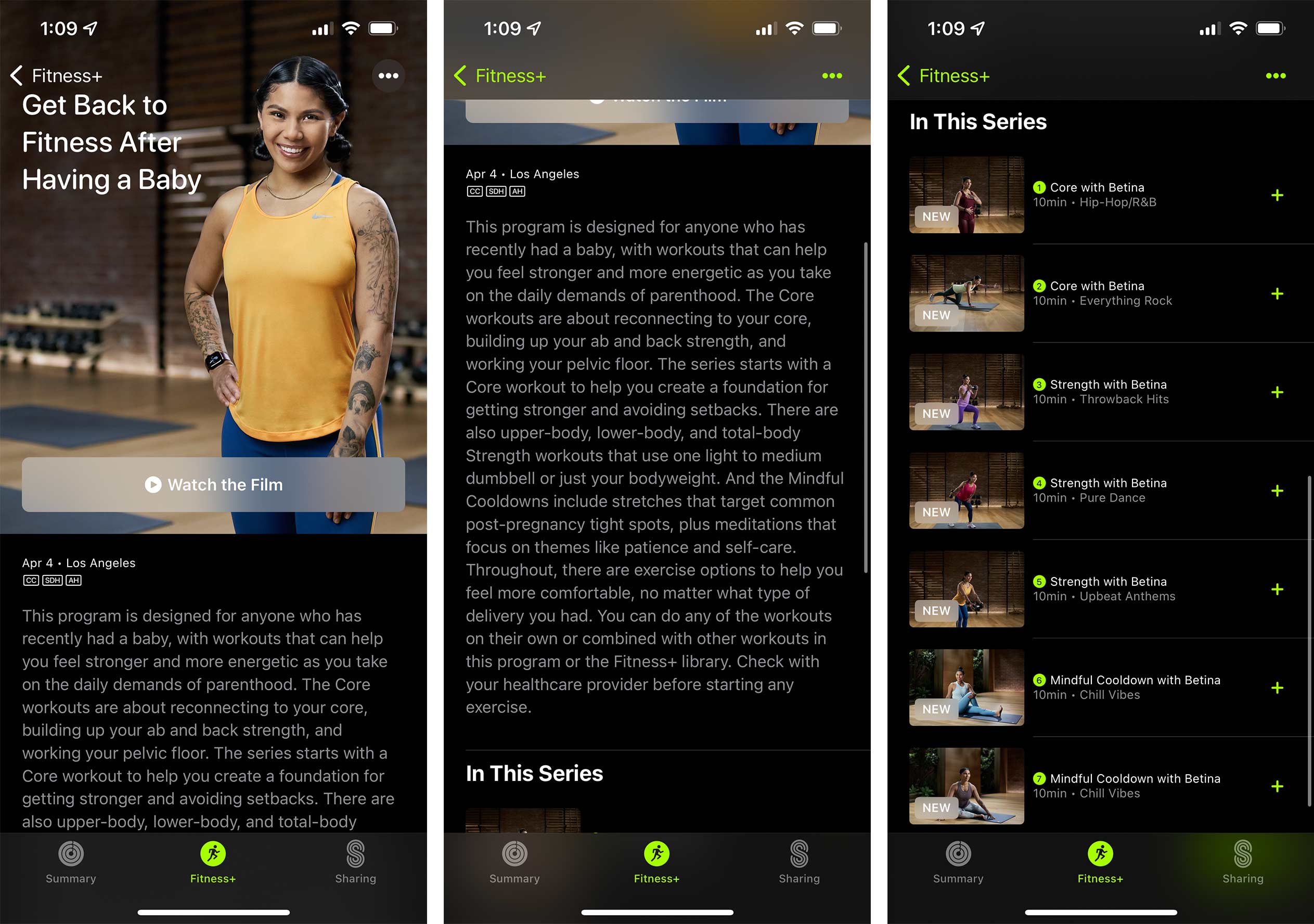
Apple launches new Fitness+ program for new parents

To expand on its growing Fitness+ program, Apple’s team has developed a new regime to help new moms.

This follows last year’s Apple fitness+ workout for pregnant users and brings that chapter full circle. There are seven classes in the program, including two core workouts, three strength routines and two mindful cooldowns.

Since Apple Fitness+ trainer Betina recently had a baby, she leads these classes, but there will be two other trainers who are also moms backing her up to help users see easier and harder variations of each workout. These are ideal for helping new moms start slowly and work their way by using the same postpartum exercises daily.

The Fitness+ team and the Apple Health clinical team worked closely on this program since working out after childbirth needs more targeted activities to address specific post-pregnancy complications. This includes the expected pelvic floor and kegel exercises plus working on single-sided movements to help regain balance and others to help with urinary issues or muscle strains.

The way that these teams work together is interesting as well. The doctors on the clinical teams are able to help address the issues women typically have after birth, and then the Fitness+ team breaks it down into more of a story/workout, kind of like a journalist to some extent.

Most users should start with the first episode on the Fitness+ playlist, but they’re more freeform after that. Each episode also begins with a line about asking your doctor if you’re ready to start being more active again.

Apple Fitness+ costs $13 per month or $100 a year and includes a vast variety of fitness classes ranging from walking, running, strength, rowing and more. You can read more about Apple Fitness+ here.