Categories
Mobile Syrup

OnwardMobility shuts down, officially kills planned 5G BlackBerry

Earlier this month, reports detailed the alleged death of OnwardMobility’s 5G BlackBerry smartphone. There were a few possible causes for the phone’s demise, including that BlackBerry pulled its licensing agreement with OnwardMobility. However, OnwardMobility has confirmed that it’s not just the 5G BlackBerry — the whole company is dead too.

As spotted by Android Police, a new update on the OnwardMobility website declares the company is shutting down:

“We want to thank you all for the tremendous amount of support that you have given us since we first launched OnwardMobility. However, it is with great sadness that we announce that OnwardMobility will be shutting down, and we will no longer be proceeding with the development of an ultra-secure smartphone with a physical keyboard.

“Please know that this was not a decision that we made lightly or in haste. We share your disappointment in this news and assure you this is not the outcome we worked and hoped for.

“We are incredibly grateful to the team of seasoned professionals who worked tirelessly on this project and to each and every one of our loyal fans and partners who have supported us throughout this journey. It has been a pleasure to work with all of you and hear your comments and feedback.”

Prior reporting said that OnwardMobility had lost the rights to use the BlackBerry name after the company’s CEO, John Chen, pulled the licensing agreement. OnwardMobility’s claim that it didn’t make the decision “lightly” seems to reference that. Additionally, Android Police reports that OnwardMobility filed for bankruptcy.

This seems like the final nail in the coffin for the 5G BlackBerry smartphone and, likely, the end of BlackBerry smartphones for the foreseeable future. Unless BlackBerry (the company) decides to license the brand to another smartphone manufacturer — which seems unlikely given Chen reportedly isn’t interested in doing that anymore — there won’t be anyone making BlackBerry smartphones.

Image credit: Shutterstock

Source: OnwardMobility Via: Android Police

Categories
Mobile Syrup

OnwardMobility shuts down, officially kills planned 5G BlackBerry

Earlier this month, reports detailed the alleged death of OnwardMobility’s 5G BlackBerry smartphone. There were a few possible causes for the phone’s demise, including that BlackBerry pulled its licensing agreement with OnwardMobility. However, OnwardMobility has confirmed that it’s not just the 5G BlackBerry — the whole company is dead too.

As spotted by Android Police, a new update on the OnwardMobility website declares the company is shutting down:

“We want to thank you all for the tremendous amount of support that you have given us since we first launched OnwardMobility. However, it is with great sadness that we announce that OnwardMobility will be shutting down, and we will no longer be proceeding with the development of an ultra-secure smartphone with a physical keyboard.

“Please know that this was not a decision that we made lightly or in haste. We share your disappointment in this news and assure you this is not the outcome we worked and hoped for.

“We are incredibly grateful to the team of seasoned professionals who worked tirelessly on this project and to each and every one of our loyal fans and partners who have supported us throughout this journey. It has been a pleasure to work with all of you and hear your comments and feedback.”

Prior reporting said that OnwardMobility had lost the rights to use the BlackBerry name after the company’s CEO, John Chen, pulled the licensing agreement. OnwardMobility’s claim that it didn’t make the decision “lightly” seems to reference that. Additionally, Android Police reports that OnwardMobility filed for bankruptcy.

This seems like the final nail in the coffin for the 5G BlackBerry smartphone and, likely, the end of BlackBerry smartphones for the foreseeable future. Unless BlackBerry (the company) decides to license the brand to another smartphone manufacturer — which seems unlikely given Chen reportedly isn’t interested in doing that anymore — there won’t be anyone making BlackBerry smartphones.

Image credit: Shutterstock

Source: OnwardMobility Via: Android Police

Categories
Mobile Syrup

First details of Google Pixel 7 and Pixel 7 Pro emerge, including second-gen Tensor chip

The first bit of reliably sound info surrounding the Google Pixel 7 and Pixel 7 Pro have surfaced. According to a new report, the codenames, Tensor chip, and new modem are now detailed.

9to5Google broke the story earlier today. Via the report, Google Pixel 7 and Pixel 7 Pro are under the codenames “Cheetah” and “Panther”. Google always works under very particular codename themes. For instance, prior to the Pixel 6, Google used codenames relating to aquatic life for the Pixel and Nexus devices. The Pixel 6 series used codenames surrounding aves such as “Raven”.

The unannounced Pixel 6a will reportedly continue to use an avian codename. “Bluejay” is reportedly the name Google has landed on. A rumoured Note-style device, the first foldable from Google may be under the codename “Pitpit.”

Additionally, sources say the Google Pixel 7 series will utilize the second-generation Tensor chip. The chip is identified as GS201. This model number is slightly different from the current one used. The original Tensor processor has the label GS101 and powers the Pixel 6 series. The Android 13 Developer Preview supposedly includes notions of a second-gen chip for this year. It’s been surmised that the chip is using the internal codename Cloudripper.

GS201 will supposedly feature an unreleased Samsung modem, The model number listed is g5300b. For reference, the Pixel 6’s modem is g5123b ie, Exynos Modem 5123. Therefore, the g5300b is a currently unannounced model. The new second-generation Tensor chip likely has the Exynos Modem 5300. We can expect to learn more about it later this year.

These are still very early details. Further looks at the specs and expected features will likely come over the next few months. Though, it’s an exciting jumping-off point for the Google Pixel 7 and Pixel 7 Pro. The two flagship devices will likely launch this fall.

Source: 9to5Google

Categories
Mobile Syrup

Kanye West launching Donda 2 as Stem Player exclusive album

Kanye West, or Ye as he’s referred to now, has announced his plans to release Donda 2 as a Stem Player exclusive. For the uninitiated, Stem Player is Ye’s proprietary music player.

On Instagram, Ye revealed that Donda 2 will only be available to listen to via the Stem Player. Ye went on to explain the decision to not make the album available on Spotify, Apple Music, or even YouTube.

In the post, Ye writes: “Today artists get just 12% of the money the industry makes. It’s time to free music from this oppressive system.” The musician believes that moving the release of his album to the Stem Player will allow him to “take control”.


View this post on Instagram


A post shared by ye (@kanyewest)

The Stem Player launched last year and had the first Donda album pre-installed. The Stem Player also touts that it allows users to “customize any song” with controls for vocals, instruments, effects, etc. It’s currently available for $200 USD (roughly $252 CAD). It also features four touch-sensitive light sensors, a haptics engine, a 97DB built-in speaker, a 3.5mm audio jack, Bluetooth, and 8GB of storage.

Ye partnered with Kano Computing and claims that production is ramping up. The musician says 67,000 Stem Player units are available. 3,000 units are manufactured each day.

Donda 2 will February 22, 2022. However, given the tumultuous release of the first Donda album, we may see a delay or two from Ye.

Source: Instagram

Image Credit: Stem Player

Categories
Mobile Syrup

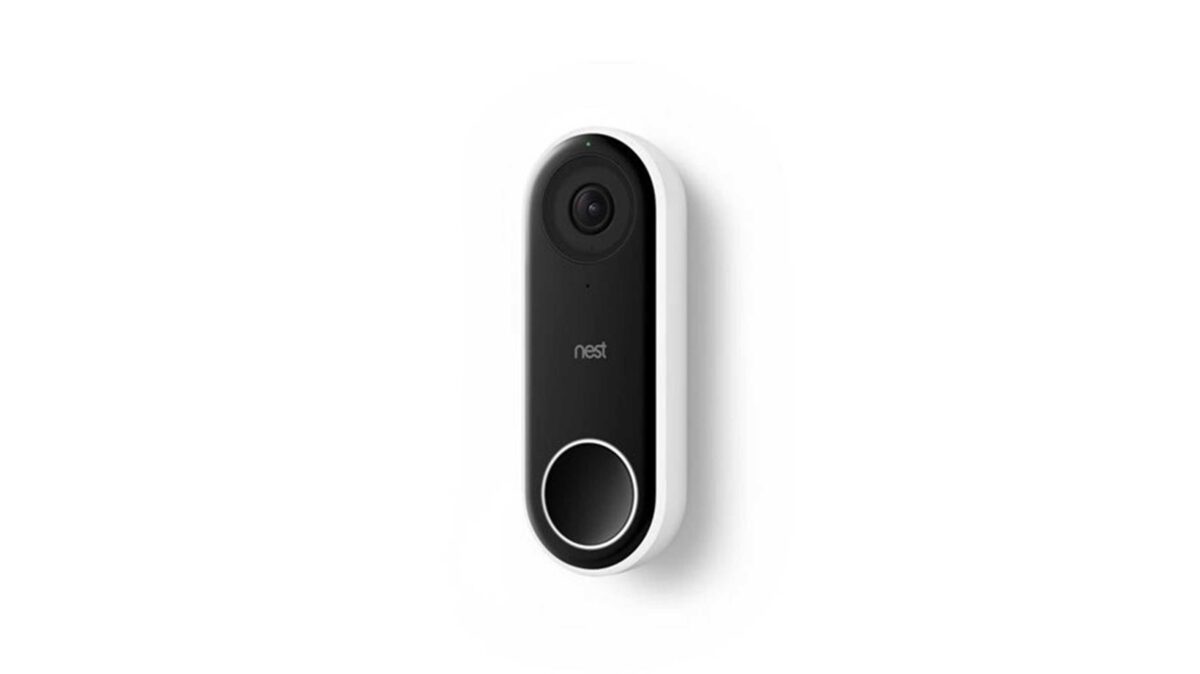
Nest Doorbell won’t charge its battery in cold weather, Google confirms

Following user claims that their Nest Doorbell’s battery life has been limited in the winter, Google has stepped in. The company has offered some insight into the battery drain experienced by its products.

As first reported by 9to5Google, the company has published a new support page, providing context to the issue. Within, Google explains that cold temperatures will likely drain the Nest Doorbell’s battery far quicker than normal. Additionally, the battery will not charge when the temperature drops, as Google confirms.

It appears as though when the Nest Battery is exposed to temperatures between 0°C and -20°C, the battery will still power the device. However, when reaching closer to -20°C, the battery will drain much faster. This issue may also affect the Nest Cameras.

At temperatures between -4°F (-20°C) and 32°F (0°C), the battery can still power your device, but it won’t charge. It may also drain more quickly than usual. At temperatures close to -4°F (-20°C), your battery may have less than half the life that it has in warm weather.

Google then goes on to state that the Nest Doorbell battery will be unable to charge in those temperatures. Users who notice their Nest Doorbell has drained completely must bring the device inside to charge.

Once the battery and device have warmed up again (above 0°C), the device should function once again. The Nest Doorbell will be operational following a charge. However, some users have stated that this process can take days. If the battery’s temperature remains below 0°C, the Google Home app shows ‘Charging paused’ or ‘Charging slowly.’

Google is developing a second-generation Nest Doorbell. It will run exclusively on a wired connection, which should mitigate these issues. For Canadians, the issue does not bode well for the current Nest Doorbell. Aspiring and current users will likely want to adopt a wired device capable of withstanding the winter months.

Source: 9to5Google

Image credit: Google Nest

Categories
Mobile Syrup

Sony partnering with WWF-Canada, donating $1 from each copy of Horizon Forbidden West

To celebrate the launch of Guerilla’s Horizon Forbidden West, Sony Interactive Entertainment (SIE) has announced its partnership with WWF-Canada. Together, the two will be working towards habitat restoration in British Columbia.

SIE has confirmed that $1 CAD from each copy of Horizon Forbidden West sold in Canada will be donated to WWF-Canada. The company is committed to donating a maximum of $100,000, starting today.

WWF-Canada is responsible for helping to rehabilitate the seagrass around the coast of British Columbia. Seagrass is a vital food for the ecosystem and an important shelter resource for aquatic life. WWF-Canada also states that restoring seagrass can aid in absorbing carbon dioxide.

Horizon Forbidden West centres on a post-apocalyptic world. It features themes of restoring the natural environment. Aloy is on a quest to save life on earth from deadly machines. Though, as civilization has fallen, the world of Forbidden West sees nature taking over. Overgrown greenery and clear blue oceans are amongst the rich environments of the game. Although the game features heavy sci-fi aspects, it largely tackles subjects like biodiversity. On top of that, climate change and other parallels draw from today’s world.

In addition to partnering with WWF-Canada, SIE is collaborating with other global partners. This includes the Arbor Day Foundation in the US and The Eden Project in the UK.

SIE has also announced its Road to Zero plan. This outline covers the commitment to achieve a zero environmental footprint by 2050. This will mean altering the life cycle of its products and business activities during this period. Plus, SIE has purchased carbon offsets from and certified by the Gold Standard organization.

Horizon Forbidden West is one of this year’s most anticipated games. As the game is available on both PlayStation 4 and PlayStation 5. Therefore, there’s little reason to doubt SIE will achieve the sales required to donate the full $100,000 to WWF-Canada.

Source: Sony Interactive Entertainment

Image credit: Sony Interactive Entertainment

Categories
Mobile Syrup

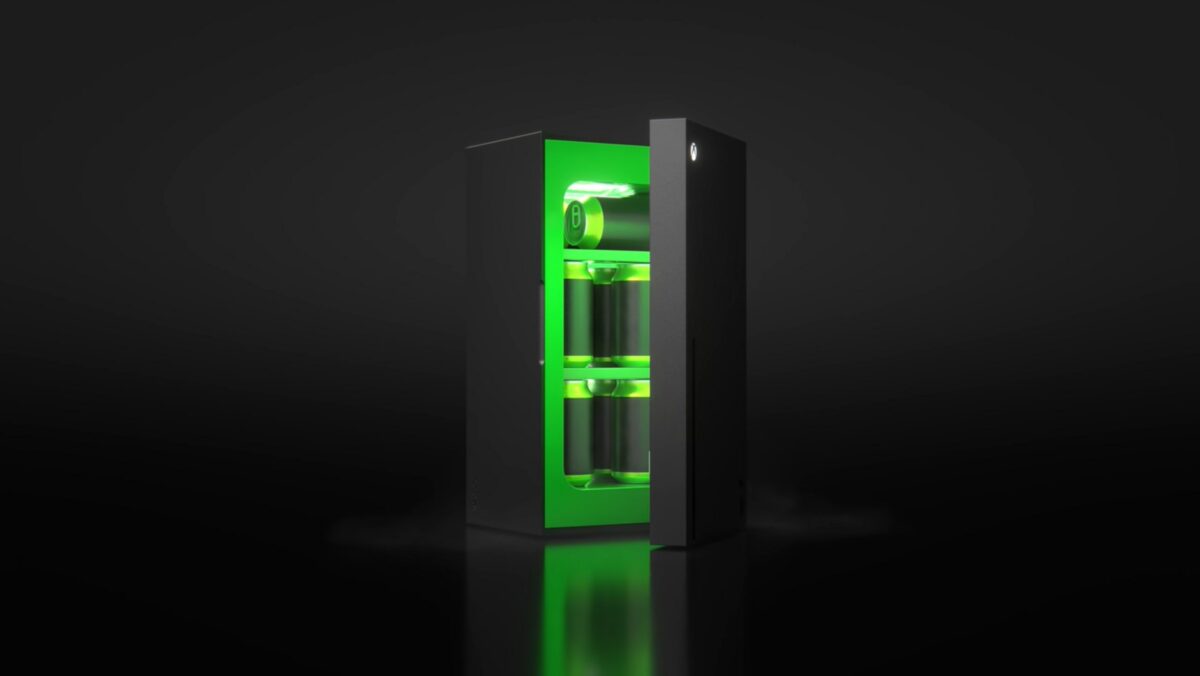
Xbox Series X mini-fridge preorders have begun shipping in Canada

The Xbox Series X mini-fridge has begun shipping in Canada. This follows after a short delay impacted shipments across the Great White North.

Speaking both from personal experience and anecdotally, Microsoft has started to send out shipment confirmation emails to those who preordered the mini-fridge back in December.

The Xbox Series X mini fridge was first revealed in June 2021 during an Xbox Games Showcase. Modelled after the Xbox Series X console, Microsoft leaned into the memes comparing the high-end Xbox to a black kitchen fridge. Taking it all in stride, the company launch the Xbox Series X mini-fridge in the US in October of last year.

Canadian preorders were slightly delayed. Following the US rollout, Canadians were able to preorder the mini-fridge directly from Microsoft for $149.99 CAD in December. Estimated deliveries were expected earlier this month. However, for one reason or another, they were delayed by a couple of weeks. Though, it appears as they have finally begun shipping.

Microsoft claims the Xbox Series X mini-fridge can hold up to 12 cans. The door includes a fully functional USB-A port to charge devices, similar to the Xbox Series X proper. It includes the light-up white Xbox logo and green accents on the top, similar to the design of the console.

In addition to shipping in Canada and the US, Microsoft is committing to shipping across Europe. This includes France, Germany, Italy, Spain, the Netherlands, and Poland.

Canadians will soon be able to have quick access to their favourite Rockstar energy drinks while ranking up in Halo Infinite. Now if only Microsoft will come out with a Bluetooth speaker modelled after the Xbox Series S.

Categories
Mobile Syrup

Lucky Mobile’s Refer-a-Friend promotion returns, offering a $50 credit

Bell-owned Lucky Mobile has started to run its Refer-a-Friend promotion once again. The promotion kicked off on February 17 and offers a $50 credit.

The promotion was first seen by Red Flag Deals. From February 17 to March 31, 2022, if you refer a friend to activate a line with Lucky Mobile, the carrier will hand out a $50 credit to both you and your friend.

The credit in question will be spread out across 10 months. Each month, a $5 credit will be applied to the account, totalling the promised $50 by the end. A single referrer can refer up to three friends.

To take advantage of this promotion, your friend must simply purchase activate a SIM card either at one of Lucky Mobile’s various retail locations or online. Your friend must then submit the referral form within 10 days of activating the line. Two on-time monthly payments must also be made prior to the credits being applied.

This promotion can also be stacked and combined with any other Lucky Mobile promotion. Currently, the carrier is also offering 3GB of bonus data per month for signing up to auto top-up on select plans. This offer expired on February 21, 2022. Customers can also get 50% off a SIM card when purchasing online.

While the carrier has run similar promotions in the past, the $50 credit is amongst the highest seen paid out by the carrier.

More information can be found here on Lucky Mobile’s website.

Source: Lucky Mobile via Red Flag Deals

Categories
Mobile Syrup

Here’s a chance to win a Telus Samsung Galaxy S22 Ultra

Samsung’s Galaxy S22 Ultra is currently available for pre-order at Telus on the carriers’ 5G network; however, if you want the sought-after smartphone for free, MobileSyrup and the Vancouver-based carrier are launching a giveaway for the new flagship.

We’re still reviewing the Galaxy S22 Ultra, but so far Deal Daley says that the phone is a pretty great device with a stellar camera and a beautiful display. It includes a built-in S Pen that offers 2/ms low latency, 8GB of RAM, 128GB of storage, 8GB of RAM, a Qualcomm Snapdragon 8 Gen 1 chip, a quad-camera setup and a 5,000mAh battery. Additionally, the device sports a 6.8-inch WQHD screen that offers a 120Hz variable refresh rate that can drop as low as 1Hz. Further, Telus’ 5G network offers blazing-fast speeds and increased reliability, with 5G-ready devices.

This contest lasts roughly one week and ends on February 25th, the date when the $1,649.99 S22 Ultra launches. The free S22 Ultra is in ‘Phantom Black’ and comes with 128GB of storage and 8GB of RAM.

Sign up for our newsletter below to enter the contest.


Get the most out of the latest iconic devices, including the new Samsung Galaxy S22 Ultra, on Canada’s fastest 5G network by visiting Telus today.

Categories
Mobile Syrup

Snapchat to allow users to share real-time locations with friends

Snapchat is enabling a new feature, allowing users to share their real-time location with friends. The feature is used to monitor the location of friends when taking an Uber or out on a date, etc.

The introduction of the new feature was first reported by The Verge. From the sounds of it, the real-time location feature works very similar to Apple’s Find My app. Users can turn on the setting and share their real-time location with selected friends for 15 minutes. This feature can also be used for up to a few hours at a time.

The main focus of this feature sounds like it weighs on safety. You can imagine the benefits of securely sharing your real-time location with a friend or family member when on a date with someone new. Alternatively, it could be utilized to ensure that a friend successfully gets home from their Uber ride.

The Snapchat Snapchat real-time location feature is only available between mutual friends on the app. Users can pause sharing without sending the friend a notification.

Real-time location-sharing is off by default. In order to turn it on, a user must first select a friend and view their profile. The option to then select the duration of location sharing is found. The friend is then able to see the live location within the chat thread between you and them.

The addition of this feature is the latest major addition to the photo and messaging app. Although Snapchat does enable users to share the location of where the app was last used via the Snap Map, this is far more advanced.

It’s certainly a more useful tool to consider when looking at options outside of the iOS ecosystem. Privacy and safety appear to be in good standing when looking at the feature. Plus, there appears to be very little fuss involved.

Source: The Verge