Los Angeles-based Deviation Games, a new developer founded by Call of Duty: Black Ops veterans, is expanding into Canada.
In a LinkedIn post first spotted by Push Square, Deviation said it has formed “Deviation Games Canada,” although it didn’t mention exactly where it’s located. Those interested in applying are asked to message one of the Deviation team members.
Following its founding in November 2019, Deviation has been working on a yet-to-be-revealed new IP. Last June, the studio confirmed that it had signed a deal to develop this game exclusively for PlayStation. Otherwise, nothing is known about the title.
Deviation isn’t the only Canadian studio with ties to Call of Duty. ApexLegends developer Respawn, the Los Angeles-based developer founded by members of the original Modern Warfare team, opened a Vancouver office in 2020. As well, Activision-owned Beenox, which is based in Quebec City, is a support studio on each annual Call of Duty.
Transferring WhatsApp chats from iOS to an Android device has been possible since last year, but the Meta-owned instant messaging platform is now rolling out expanded chat migration that will allow users to move their chats from an Android device to an iOS one.
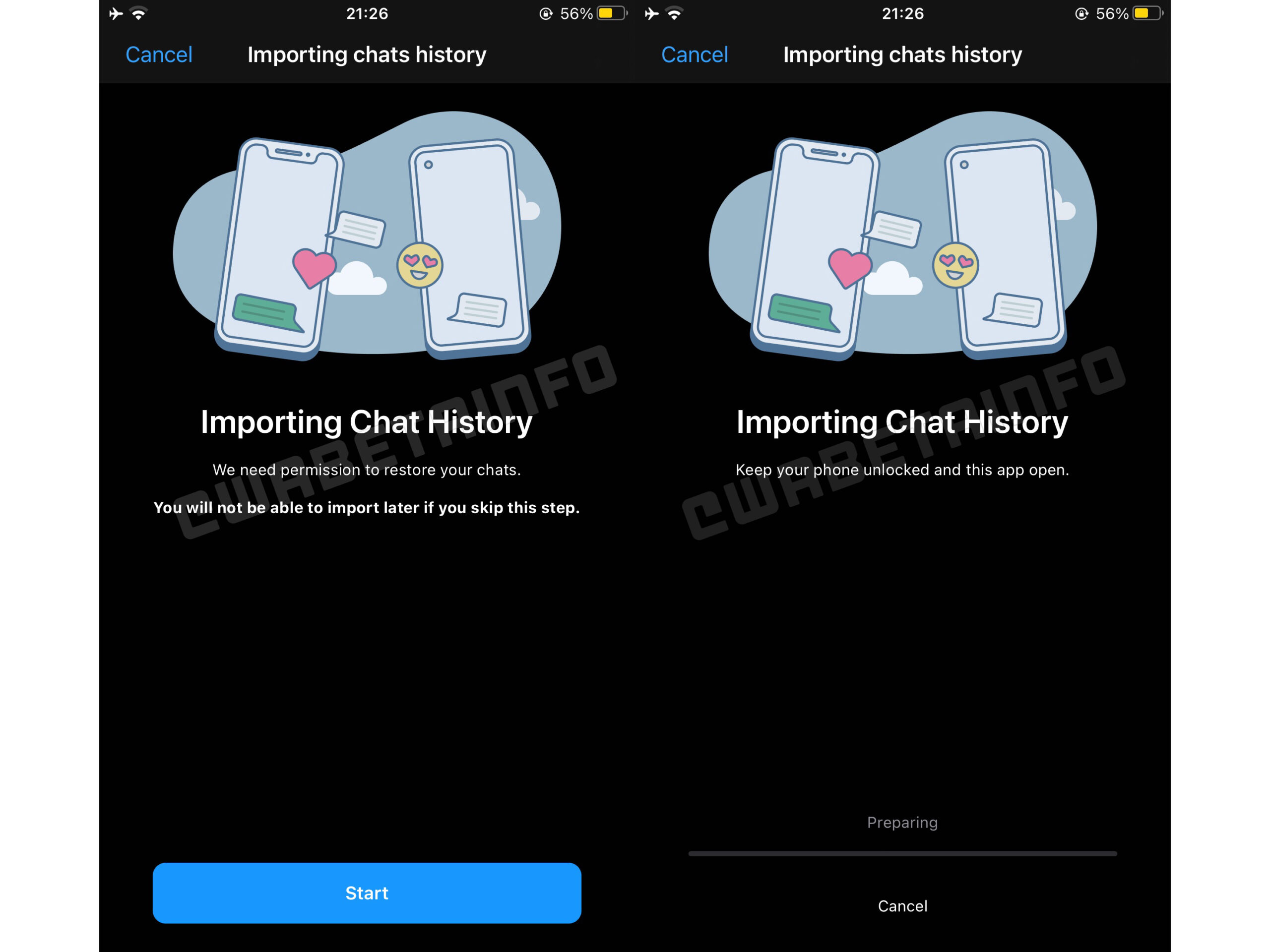
As spotted by WABetaInfo in WhatsApp beta ‘version 22.2.74’ for iOS, expanded chat migration tools will be available soon to Android users running Android 12. Users would also need to Move to iOS app on their Android device.
As seen in the screenshot above (via WABetaInfo), WhatsApp will ask you if you want to import your chat history when you open WhatsApp for the first time on an iOS device. If you skip the step here, you won’t be able to import chats later.
Based on the information available so far, there’s no timeframe as to when the feature will finally make its way to Android devices, but the fact that it showed up in an upcoming update’s beta indicates that WhatsApp is clearly working on it.
It’s been quite awhile since we’ve seen a sale this big on TVs. Whether you’re looking to move to 4K, upgrade to a 75-inch display, or get a sound system to bring the game to life, Best Buy’s latest sale has you covered.
You’ll find massive savings on brands such as Samsung, Sony, and LG. The sale is running for this week only, so be sure to take advantage of these deals before they’re gone.
MobileSyrup utilizes affiliate partnerships. These partnerships do not influence our editorial content, though MobileSyrup may earn a commission on purchases made via these links that help fund the journalism provided free on our website.
The anticipated sequel to Rian Johnson’s excellent Knives Out is expected to start streaming on Netflix this fall.
According to a report from Variety, Knives out 2 will hit theatres and the streaming platform in the last quarter of 2022. The film is expected to make a festival run before release as well, although it’s not clear which festivals it’s expected to debut at.
With that in mind, Variety suggests the film will be a possible awards hopeful for Netflix next year.
Although Knives Out 2 details remain under wraps, we do know some stuff. Production reportedly wrapped in September 2021. Daniel Craig reprised his role as the detective Benoit Blanc and Johnson assembled several A-listers including Kathryn Hahn, Ethan Hawke, Edward Norton, Dave Bautista, Kate Hudson, Janelle Monáe, Leslie Odom Jr, Jessica Henwick and Madelyn Cline.
Moreover, cinematographer Steve Yedlin and editor Bob Ducsay will return for Knives Out 2, while Johnson will write and direct again. Additionally, Johnson will produce alongside Ram Bergman under their ‘T-Street’ banner.
The first Knives Out was distributed by Lionsgate and produced by Media Rights Capital. It was a huge success both at the box office and with critical acclaim, earning $311 million USD on a $40 million budget (about $391 million and $50.3 million CAD respectively).
If you’re not familiar with these devices, we have a longer article that outlines them here.
Instructions
The first thing you’ll need to do is make sure you’ve updated the Google Play Movies and TV app to Google TV. This is basically the same app, but the Google TV update adds more browseable sections, a watchlist, a store, your library and the virtual remote.
I will note that with my OnePlus 9 Pro, the Google TV app still features the Play Movies and TV icon, but besides that glitch, it works well.
If you open the app, you should see a small remote icon floating in the bottom right of the screen. Tapping on that should connect you to any Android/Google TVs that are on the same Wi-Fi network as your phone. After you pair with them, you’re good to go.
If you have the Google TV app, you can even add a shortcut directly to the remote to make it easier to access. Swipe down to open the notification shade, then pull down further to access the quick toggles at the top of the screen. If none of your buttons say ‘TV remote,’ try tapping on the pen icon on the bottom left, and customize these icons to your preference.
If you’ve used an Android/Google TV recently, the virtual buttons should be very familiar to you since they mimic the actual layout of the Chromecast remote. The main control space is a swipe-based touchpad as well. This makes its control kind of similar to an older Apple TV remote. However, you can change this to a classic D-pad by tapping on the three-dot menu in the top right.
If you have more than one Android/Google TV on your network, you can quickly swap between television sets by tapping the name of the TV in the top left corner of the remote interface. If you tap on a search box with the virtual remote open, it will prompt you to fill it in with the on-screen keyboard.
If you’ve updated the Google Play Movies and TV app into the Google TV app, you should be able to add a virtual remote to the Android quick toggles in the notification shade.
How it stacks up to other virtual remotes
I haven’t used LG or Samsung’s virtual remotes in a long time and don’t even know if they’re still competing. However, I use both versions of the Apple virtual remote and the Roku version.
This new Android remote stands up well against the Apple TV remote, but it’s a little barebones for my liking. The Roku remote has cool features like the ability to transmit TV audio through your phone. This is admittedly a niche feature, but one that I find cool nonetheless and would love to see Google adopt.
It’s only been around a year and a half since Google revealed the current Chromecast with Google TV, but a new leak suggests that a newer version is on the horizon.
There’s no telling if this device, codenamed ‘Boreal,’ will replace the Chromecast or if it will be a higher-end model to be sold alongside it. Still, the prospect of new Chromecast hardware is intriguing nonetheless.
The9to5Google APK teardown team is confident that this Boreal device is running the same software as the existing Chromecast with Google TV, and it expects the tech giant to reveal the device at some point in 2022.
The publication speculates that Goole could be working on a higher-end Chromecast to compete with the Nvidia Shield TV.
While they’re likely right, however, I also like the idea of Google possibly revamping the Chromecast with its custom silicon as it did with the new Tensor chip in the Pixel 6.
On top of that, I know that there have been complaints about the storage space on the Chromecast and the overall stability of the platform, so if Google could remedy that moving forward, that would help with the Chromecast’s reputation.
I hope the next version has a drastically improved remote because the current version is tiny, mushy and just all-around, not pleasing to use.
At this point, foldables are an established type of smartphone.
Now that the excitement has settled surrounding these undeniably cool devices, do you still think they’re worthwhile? Are you using your foldable in a unique way?
I use Samsung’s Galaxy Z Fold 3 more than any other of the phones I have at my disposal. Playing games like League of Legends: Wild Rift or reading on a larger screen has been a great experience. In general, I find that I use the larger unfolded display more than the Cover Screen, especially when it comes to writing articles or texting.
However, I still sometimes like to pull out the smaller display when I’m checking my messages, doing a quick Google search or taking selfies.
I absolutely love using my foldable and I can’t wait to see more of them make their way to Canada. This year we’ll probably see foldable devices from Samsung, a Google Pixel Fold and maybe even TCL.
How do you feel about foldable devices? Let us know in the comments below,
Every week, MobileSyrup outlines some of the most notable movies and TV shows that recently hit Canadian streaming platforms.
Our ‘Streaming in Canada’ column typically focuses on new content from Amazon Prime Video, Crave and Netflix, but other services like Apple TV+ and Disney+ will be mentioned when relevant. Premium video on demand (PVOD) platforms are also fair game as movies continue to come to digital early amid the COVID-19 pandemic.
Finally, we’ll highlight shows or movies that are made by Canadian companies, involve notable Canadian cast or crew and/or are filmed in Canada.
Amazon Prime Video
A Hero [Amazon Original]
After being imprisoned for failing to repay a debt, a father is given two days to get his creditor to drop the charges.
A Hero was directed by Asghar Farhadi (The Salesman) and stars Amir Jadidi (Cold Sweat), Sahar Goldoost (debut role) and Mohsen Tanabandeh (Capital).
Amazon Prime Video Canada premiere date: January 21st, 2022 Genre: Drama Runtime: 2 hours, 8 minutes
The full list of movies and shows hitting Amazon Prime Video Canada this month can be found here.
Apple TV+
Servant (Season 3) [Apple Original]
The Turners desperately try to return to a normal life as a new darkness looms.
Servant was created by Tony Basgallop (What Remains) andstars Toby Kebbell (Black Mirror), Lauren Ambrose (Six Feet Under), Nell Tiger Free (Game of Thrones) and Rupert Grint (the Harry Potter franchise).
Apple TV+ Canada premiere date: January 21st, 2022 (first episode, new episodes every Friday) Genre: Psychological horror Runtime: 10 episodes (around 30 minutes each)
With Axe gone, Chuck must develop a more sophisticated strategy than before.
Billions was created by The Illusionist producers Brian Koppelman and David Levien and New York Times journalist Andrew Ross Sorkin and stars Paul Giamatti (Cinderella Man), Corey Stoll (House of Cards) and Maggie Siff (Sons of Anarchy).
Crave premiere date: January 21st, 2022 at 9pm ET (first episode, new episodes every Sunday at 9pm ET) Genre: Drama Runtime: 12 episodes (around one hour each)
Montreal filmmaker Bobbi Jo Hart (Rebels on Pointe) tells the story of two Filipina-American sisters who formed the rock group Fanny, which nearly became the female version of The Beatles.
Crave premiere date: January 17th, 2022 Genre: Music documentary Runtime: 1 hour, 36 minutes
A standard Crave subscription is priced at $19.99/month, with Starz costing an additional $5.99/month. A mobile-only subscription is also available for $9.99/month.
The full list of movies and shows hitting Crave this month can be found here.
Netflix
Ozark (Season 4 — Part 1) [Netflix Original]
As the Byrdes get closer to freedom from the cartel, family tensions threaten to upend everything.
Ozark was created by Bill Debuque and Mark Williams (The Accountant) and stars Jason Bateman (Arrested Development) and Laura Linney (The Savages).
Note: this is the final season of the series, with the second batch of episodes (“Part 2”) set to drop sometime later in 2022.
Netflix Canada release date: January 21st, 2022 Genre: Drama Runtime: Seven episodes (51 to 67 minutes each)
Sparks fly when a New York hairdresser takes a gig at a prince’s wedding.
The Royal Treatment was directed by Rick Jacobson (Ash vs. Evil Dead) and stars Laura Marano (Austin & Ally), Toronto’s own Mena Massoud (Aladdin) and Chelsie Preston Crayford (The Cult).
A small tidbit of information dropped by leaker Max Jambor on Twitter points to the rumoured Pixel 6a arriving in May 2022.
Given Google tends to launch its A-series Pixel phones at its annual I/O developer conference, which usually takes place in May, this rumour makes a fair bit of sense. That said, Google has not stuck to the I/O announcement pattern in recent years. 2020’s Pixel 4a was announced in August (and wasn’t even available in Canada until September), while last year’s Pixel 5a also saw a later-than-expected August reveal and didn’t even come to Canada.
The pandemic, supply chain issues and chip shortages were among the factors that delayed the 4a and 5a (and limited the phones’ availability). However, with the Pixel 6a supposedly running on Google’s custom Tensor processors, there’s hope it won’t experience the same problems.
Beyond the May release date, Jambor didn’t share any other details. That said, there’s not much more to add — we’ve seen from previous leaks that the Pixel 6a will likely be a slightly smaller version of the Pixel 6 with older camera hardware.
Previous leaks suggest the Pixel 6a will have a 6.2-inch OLED display, a centred hole-punch selfie camera, and the same camera bump design on the back as the Pixel 6 and 6 Pro. It will also likely drop the headphone jack, a major bummer for those who’ve stuck with the A-series Pixels so they could keep using their favourite wired headphones.
As for the camera, the 6a is rumoured to sport the old IMX 363 sensor used in the Pixel 5, 5a and prior models. However, it’s also supposed to have the new ultra-wide IMX 386 sensor seen in the Pixel 6.
We’ll likely learn more about the Pixel 6a as we near the phone’s launch — whether that’s in May, or late summer as in previous years.
Before the Surface Duo was an Android device, it was supposed to run Windows. More specifically, a version of Windows called ‘Andromeda OS’ that Microsoft cancelled in 2018.
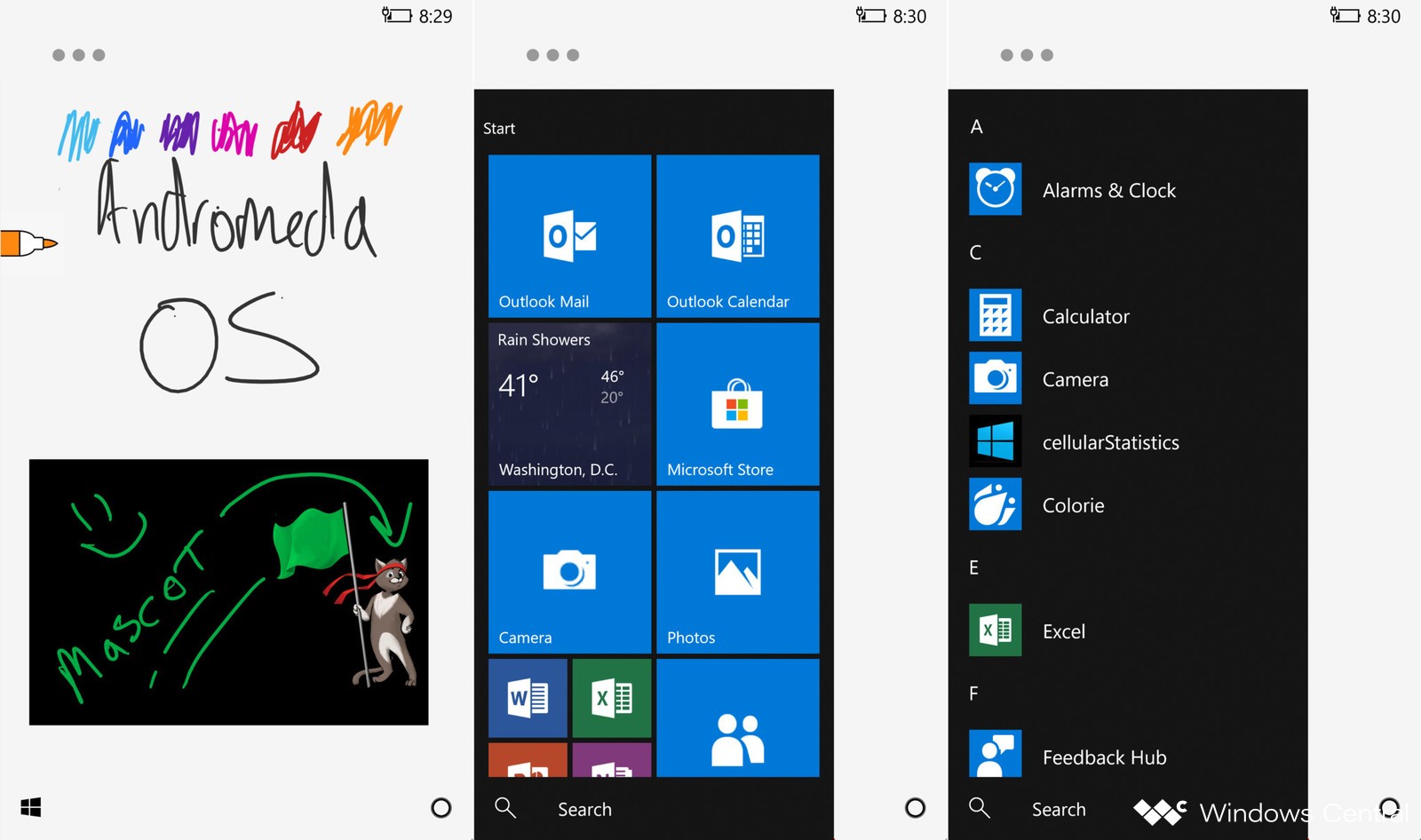
However, thanks to a new video from Windows Central, we’ve finally got a glimpse of what Andromeda OS would have been like. There are a few caveats, as the publication points out — namely, they show off the software running on a Lumia 950 because that’s what Microsoft used internally to develop Andromeda OS. The company never intended for these internal images to ship and, since Microsoft cancelled the project, what we see is unfinished.
The other major caveat is that Andromeda OS was intended for a dual-screen device like the Surface Duo, which makes it difficult to show off some aspects of it on a single-screen device like the Lumia 950. Still, with all this in mind, it’s incredibly interesting to see Andromeda OS in action, particularly the parts that made the jump to Android and ultimately shipped on the Surface Duo. Check out the video below:
And for those of you who hate videos, Windows Central has a great in-depth write-up about Andromeda OS here.
Some of the standouts from the Andromeda OS video include the unique ‘journaling/inking’ focus. Andromeda OS effectively turns the home screen and some of the lock screen into an ‘inking’ space where users can quickly write notes, draw and more. There’s nothing to activate — just take the Surface Pen and start writing.
Of course, there are plenty of inking/writing apps available (including Microsoft’s Whiteboard app, which was born out of the Andromeda OS journal according to Windows Central). What makes the Andromeda OS approach unique is the near-constant availability. The journal is never more than a swipe or two away. I’d be interested to see something like this on the Android-powered Surface Duo, which might give it a more interesting use-case beyond running two apps at once.
Also interesting is the combination of Cortana and notifications. While the implementation shown in the video appears very basic, it’s easy to see how Microsoft could have shaped the combination and used it to make Cortana into a digital assistant capable of helping work through notifications, re-surfacing reminders and more.
There’s a gesture system as well — some of which did make it to Android, particularly the windowing system for managing apps across two displays. Beyond that, Andromeda OS seemed like your standard smartphone OS, with some Windows Phone flair like ‘Live Tiles.’
While part of me is sad that we never got to see a finished Andromeda OS running on the Surface Duo, it’s likely better this way. As Windows Central pointed out, Andromeda OS still would have needed to manage things like a lack of apps compared to Android and iOS. Plus, as interesting as the journal-as-home-screen idea was, I’m not sure if users would have gotten on board with it.