Researchers at the University of Michigan have developed and recharged a Lithium-Sulphur (Li-S) battery that can theoretically fast charge roughly 1,000 times, pushing EV battery tech closer to a revolution.
The current issue with EV batteries is that they take a long time to fill up and they typically only last roughly 600km under peak conditions.
Li-S batteries aim to solve this problem by being able to store up to fives times more energy than regular Lithium-ion batteries that are featured in vehicles now. The issue with these batteries is that they can’t be recharged enough to make them commercially viable. However, this new research may change that.
The team at Michigan University is using nano kevlar fibres from recycled bulletproof vests to help limit the growth of dendrites and other chemical deposits that form in batteries.
Lead researcher Nicholas Kotov says that the battery his team has developed is close to reaching its theoretical limits and can even withstand extreme temperaturesm making it ideal for cars.
Telus is expanding its ‘Internet for Good’ program to seniors in Alberta and B.C.
The program, first launched in 2016, provides low-income families and people with disabilities access to the internet at a reduced rate.
The seniors program gives those receiving the Guaranteed Income Supplement two options for unlimited data: Internet 25 with speeds up to 25Mbps for $10 a month or Internet 50 with speeds up to 50Mbps for $20 a month.
The program focuses on helping seniors access resources, staying connected with loved ones, and other aspects that can assist with their mental health, which has become increasingly difficult throughout the pandemic. Data from Statistics Canada shows 33 percent of seniors reported a decline in their mental health since the pandemic began.
Those eligible can apply for the program on telus.com/InternetForGoodSeniors. A copy of their Old Age Security must be provided to confirm eligibility. Qualifying customers already with Telus can also partake in the program.
The program is only available in Alberta and B.C. at this time. MobileSyrup has asked Telus if it plans to expand the program to more provinces.
“Our country’s seniors have contributed significantly to the fabric of this nation, having built and supported the infrastructure, economy and social services that we enjoy today,” president and CEO, Darren Entwistle, said in a statement.
Customers partaking in this program can also access to the LivingWell Companion Home for $5 a month. This service offers 24/7 support to seniors at the push of a button.
Your PlayStation 5 might soon be able to run PlayStation 3 games; at least, that’s what several new PS3 title listings on the PS5 store could indicate.
PS3 game listings on the PS5 store typically feature a PS Now badge and redirect you to PlayStation Now. However, new PS3 title listings that include Dead Or Alive 5, Bejeweled 3 and Prince of Persia: The Forgotten Sands feature an accompanying price tag, indicating that the games are downloadable and playable directly on the current-gen console.
The listings could also be tied to Sony’s rumoured Xbox Game Pass-like subscription service codenamed ‘Spartacus.’
Spartacus is rumoured to feature three tiers: the first will offer a standard PlayStation Plus subscription, the second reportedly gives access to PlayStation 4 and PlayStation 5 titles and the third features a library of PS1, PS2, PS3 and PSP games, game streaming and demos.
Looks like PS3 games are popping up on the PS5 Store
According to VGC, tries to purchase and download the PS3 games were unsuccessful. Others suggest that the PS3 title listing is just a visual bug that has also occurred in the past, and is pulling the price from when you could rent titles individually from PS Now.
Before this spreads like wild fire, a few things to point out:
– This visual bug has happened many times over the years. – It's pulling the price from when PS Now let you pay to rent games individually. – Prince of Persia games used to be on PS Now, so no – they're not new. https://t.co/z4SMaOQGiE
What’s surprising is these PS3 games can be added directly to your wishlist. With this in mind, if the pricing is just a visual bug, the titles wouldn’t typically save to your wishlist. Further, Dead Or Alive 5, isn’t available on PlayStation Now.
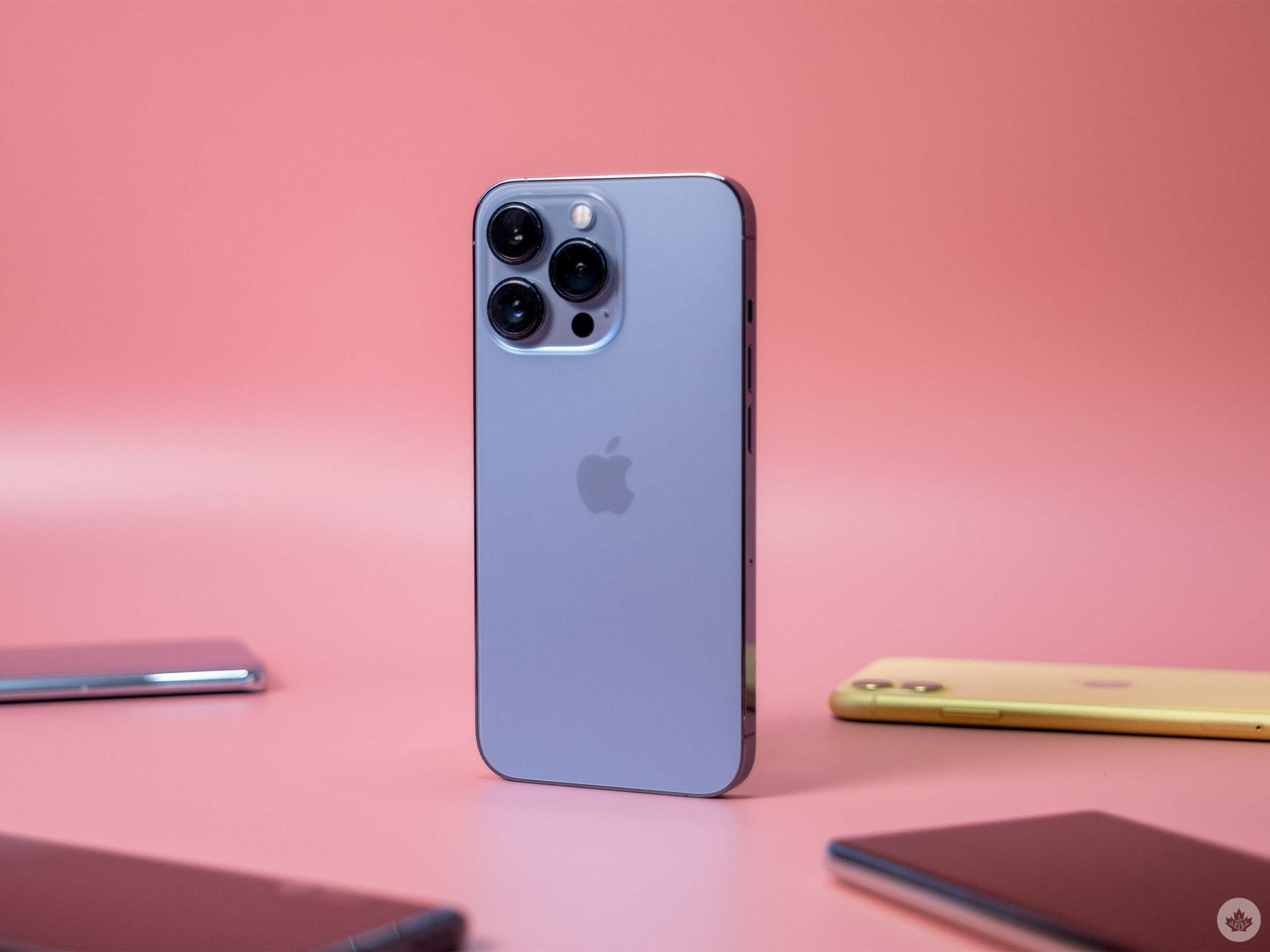
A growing number of iPhone 13 users have complained about the disappearance of the ‘Phone Noise Cancellation’ accessibility feature, which reduced ambient noise on phone calls when users help the receiver to their ear.
9to5Mac reported on the missing feature in December. Up till the iPhone 12, users could find and enable/disable the feature in Settings > Accessibility > Audio/Visual. On the iPhone 13, however, the feature wasn’t listed at all. Initially thought to be a bug, an Apple Support rep has now confirmed that the iPhone 13 models don’t support Phone Noise Cancellation:
“We have an update on this. Phone Noise Cancellation is not available on iPhone 13 models, which is why you do not see this option in Settings.”
The response came from a direct message thread between a 9to5Mac reader and Apple Support on Twitter. The reader told 9to5 that he’d worked with Apple and a senior advisor “for months,” eventually culminating with that message, confirmation that there’s no bug or software issue involved, and directions on how to file feedback about the feature.
It remains unclear why Apple decided to remove the feature. There’s a growing Reddit thread about the problem, but overall I haven’t seen a lot of discussion about it beyond that thread and the 9to5 article. Those who have issued complaints say that the removal of Phone Noise Cancellation has significantly reduced the quality of phone calls.
While I didn’t have an iPhone 13 to check, I do have an iPhone XS running iOS 15.2.1 and it still has Phone Noise Cancellation (as seen in the header photo). For iPhone 13 users, however, the only workaround so far seems to be using Control Center to activate ‘Voice Isolation’ when in a call.
Images, renders and videos of upcoming smartphones continuously leak. These can be challenging to follow, so we’ve compiled a list of the past week’s hottest rumours.
From January 10th to January 16th, we saw several leaks regarding Google’s rumoured Pixel 6 foldable, Samsung’s S22 series and Motorola Edge 30 Ultra.
Below are all the major smartphone leaks from the past week:
Google
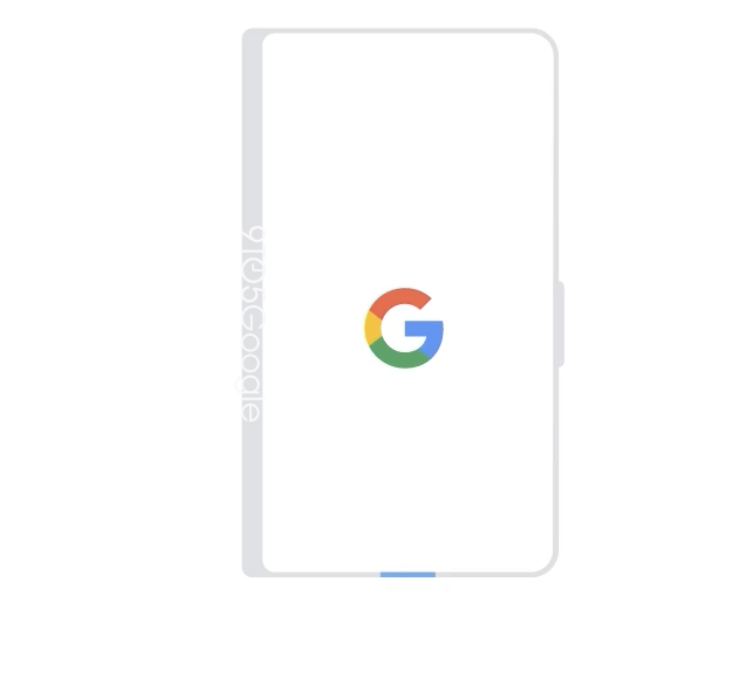
The new Android 12L Beta 2 update showcases animations that indicate Google’s rumoured Pixel foldable smartphone will feature an 8.4:9 aspect ratio that’s more square-like and in line with the Oppo Find N’s design. Previous device leaks made the device look like it featured a 22.5:18 aspect ratio similar to the Z Fold 3.
A Samsung representative reportedly told Digital Daily that Samsung’s Galaxy S22 reveal event will be held on February 8th. In Canada, the S22 series will likely sport the Snapdragon 8 Gen 1 processor, feature up to 12GB of RAM and offer a substantial battery.
Samsung leaker @chunvn8888 claims that the starting price for the S22 series is $899 USD (about $1,123 CAD).
Wrap up the S22 series and Tab S8 series prices S22: $899 S22+: $1099 S22U: $1299 Tab S8: under $850 Tab S8+: $900-1000 Tab S8U: around 1100 and above (above means more storage and cellular connectivity) Will update the exact Tab S8 series prices soon.
Rumours about the Motorola Razr 3 indicate that the phone will offer more processing power than its predecessors. This source suggests that the smartphone will feature Qualcomm’s Snapdragon 8 Gen 1 next-gen processor, an HD AMOLED display, up to 12GB of RAM and 512GB of storage.
The device is also poised to sport ultra-wideband (UWB) technology, allowing the foldable to work with digital car keys and other UWB-compatible accessories and devices.
The Smart Stylus would connect via Bluetooth to the smartphone and supports air gestures/wireless charging. Further, the leaked details indicate that the stylus can be used as an air mouse with an external display and that its buttons can also be utilized to control media.
When the user connects the stylus to the phone, a bubble will show the state of the stylus and indicate whether it’s charging. Tapping the bubble launches the apps that support the stylus. Additionally, the phone will have a Moto Edge 30 Ultra Folio Case that offers additional features when connected to Smart Stylus.
Apple will introduce its 3rd-gen iPhone SE in March or April during a virtual spring presentation, according to new rumours.
As expected, the smartphone will feature an iPhone 8-like design that includes a physical Home Button and sizable bezels, with key upgrades being 5G connectivity and the iPhone 13’s A15 chip.
It doesn’t matter if you shoot photos on iOS or Android, nearly every modern smartphone features a stellar camera packed into its rear, but half of the battle is getting the device out of your pocket and opening the shooter fast enough to catch that special moment.
Both mobile operating systems are rife with quick access toggles and gestures to launch their respective camera apps without tapping on the main camera app. These are some of the more common ways we use to snap pictures in a flash:
Android
On Android, the situation varies depending on what device you own, but there are still a few constants that prevail across nearly all modern Android smartphones.
My favourite way to open the camera on Android is to double-tap the power button. This is easily the fastest way to open a camera and has allowed me to snap pictures and videos that I would have likely missed if I was using an iPhone.
Some Android phones also allow you to add a camera button to your quick toggles in the notifications shade, but this isn’t the case with all devices. Another thing that’s pretty random and misaligned across Android is gestures to open the camera. For instance, OnePlus devices can be set up so if you draw an ‘O’ on your lock screen, the camera opens. However, I’ve never found this feature to be particularly useful.
I’d recommend just using the double tap on the power button for most people since it’s the fastest route.
iPhone
Beyond tapping on the classic camera app, there are a few other ways to launch the mobile camera with an iPhone and iOS 15.
With the first method, you’re greeted with is a small camera icon at the bottom right of your lock screen. If you tap and hold on this icon, it quickly opens up the camera. This is the fastest way to take a picture if your iPhone is off. Opening the camera this way also prevents others from going through your camera roll if you have a password.
The other abstract way to open the camera is from the ‘Control Centre.’ On iPhone X and newer devices that don’t feature a physical Touch ID button, you can access this by swiping down from the top right-hand side of your screen. Then, you should see a camera icon at the bottom of the screen. Tap that, and the app will launch. With older iPhones that still have a Home Button, you’ll need to swipe up from the bottom of the screen to open Control Centre.
If you don’t see the camera icon, you can add it to Control Centre by navigating to your device’s settings app, selecting Control Centre and adding the camera.
Sometimes I’ll also pull down to use the iPhone search function to pull up the camera, but I get by between these two methods and the default app.
I’ll also mention that if you take a ‘Live photo’ with your iPhone (the ones that move a bit like a gif), you can readjust the images in the Apple Photos app to choose a slightly earlier frame as the main photo.
Every week, MobileSyrup outlines some of the most notable movies and TV shows that recently hit Canadian streaming platforms.
Our ‘Streaming in Canada’ column typically focuses on new content from Amazon Prime Video, Crave and Netflix, but other services like Apple TV+ and Disney+ will be mentioned when relevant. Premium video on demand (PVOD) platforms are also fair game as movies continue to come to digital early amid the COVID-19 pandemic.
Finally, we’ll highlight shows or movies that are made by Canadian companies, involve notable Canadian cast or crew and/or are filmed in Canada.
Amazon Prime Video
Hotel Transylvania: Transformania [Amazon Original]
After Van Helsing’s new invention transforms Drac and friends into humans and Johnny into a monster, the gang must find a way to switch back to their regular selves before the changes become permanent.
Hotel Transylvania: Transformania is the feature directorial debut of Jennifer Kluska (Hotel Transylvania series) and Derek Drymon (SpongeBob SquarePants) and features the returning voices of Andy Samberg, Selena Gomez, Kathryn Hahn and Jim Gaffigan.
Amazon Prime Video Canada premiere date: January 14th, 2022 Genre: Animated comedy Runtime: 1 hour, 27 minutes
Hosted by Yvonne Orji (Insecure), a group of single parents moves into a house together for a second chance at love, not knowing that their adult children are watching and manipulating everything just down the street.
Crave/HBO Max premiere date: January 13th, 2022 (all episodes) Genre: Reality Runtime: Eight episodes (29 to 46 minutes each)
After his house gets robbed, a former government assassin hunts down those responsible, making him the target of a deadly drug lord.
Nobody was directed by Ilya Naishuller (Hardcore Henry) and stars Bob Odenkirk (Better Call Saul), Connie Nielsen (Gladiator), rapper RZA (Wu-Tang Clan) and Christopher Lloyd (Back to the Future).
It’s worth noting that the movie was partially shot in Winnipeg.
Original theatrical release date: March 26th, 2021 Crave premiere date: January 14th, 2022 Genre: Action-thriller Runtime: 1 hour, 32 minutes
Following the events of 2021’s The Suicide Squad, Christopher Smith/Peacemaker gets roped into another mission as he begins to question everything he believed in.
Based on the DC Comics character of the same name, Peacemaker was created, written and (mostly) directed by James Gunn (The Suicide Squad) and features John Cena, Jennifer Holland and Steve Agee reprising their roles from the 2021 film, while Danielle Brooks (Orange is the New Black), Chukwudi Iwuji (Designated Survivor), Freddie Stroma (Unreal) and Robert Patrick (Terminator 2: Judgment Day) co-star.
It’s worth noting that the series was filmed in Vancouver.
Crave/HBO Max premiere date: January 13th, 2022 (first three episodes, new episodes every Thursday) Genre: Superhero Runtime: Eight episodes (around 45 minutes each)
Following the series’ cancellation, Ray Donovan series showrunner/director David Hollander and star Liev Schreiber have reunited to co-write and finish the story.
After Mickey escapes, Ray is determined to find and stop him before he can cause any more damage. Alongside Schreiber, Eddie Marsan, Dash Mihok, Kerris Dorsey, Kerry Condon and Jon Voight reprise their roles from the TV series.
Crave premiere date: January 14th, 2022 Genre: Crime drama Runtime: 1 hour, 40 minutes
A standard Crave subscription is priced at $19.99/month, with Starz costing an additional $5.99/month. A mobile-only subscription is also available for $9.99/month.
The full list of movies and shows hitting Crave this month can be found here.
Disney+
Eternals
Following the events of Avengers: Endgame, a group of immortal beings emerge from thousands of years of hiding to protect Earth from another ancient race.
Based on the Marvel Comics characters of the same name, Eternals was co-written and directed by Chloé Zhao (Nomadland) and features an ensemble cast that includes Gemma Chan (Crazy Rich Asians), Richard Madden (Game of Thrones), Kumail Nanjiani (Silicon Valley), Brian Tyree Henry (Atlanta), Salma Hayek (Ugly Betty) and Angelina Jolie (Changeling).
Original theatrical release date: November 5th, 2021 Disney+ Canada premiere date: January 12th, 2022 Genre: Superhero Runtime: 2 hours, 36 minutes
While getting better, Tony still finds himself struggling with his grief over his late wife.
After Life was created, written and directed by Ricky Gervais (The Office) and stars Gervais, Tom Basden (the Cowards sketch group), Tony Way (Game of Thrones) and Diane Morgan (Mandy).
Netflix Canada premiere date: January 14th, 2022 Genre: Black comedy, drama Runtime: Eight episodes (27 to 36 minutes each)
Over different time periods, a poor family, an anxious developer and a tired landlady become tied to the same mysterious house.
The House features an ensemble voice cast that includes Mia Goth (Suspiria), Jarvis Cocker (of the band Pulp), Susan Wokoma (Chewing Gum) and Helena Bonham Carter (The King’s Speech).
Netflix Canada premiere date: January 14th, 2022 Genre: Dark comedy, stop-motion Runtime: 1 hour, 37 minutes
The full list of movies and shows hitting Netflix Canada this month can be found here.
Premium video on demand (PVOD)
The Matrix Resurrections
Decades after the events of The Matrix Revolutions, Neo re-enters The Matrix to help a team of rebels and save Trinity from a new enemy.
The Matrix Resurrections was co-written and directed by Lana Wachowski (The Matrix trilogy) and features Toronto’s own Keanu Reeves and Burbaby, B.C.’s own Carrie-Anne Moss returning as Neo and Trinity, respectively, while series newcomers Yahya Abdul-Mateen II (Watchmen), Jessica Henwick (Game of Thrones), Jonathan Groff (Mindhunter) and Neil Patrick Harris (How I Met Your Mother) join the cast.
Original theatrical release date: December 22nd, 2021
PVOD premiere date: January 14th, 2022 Genre: Sci-fi, action Runtime: 2 hours, 28 minutes
Apple did something unique with iOS last year — it gave users a choice when it came to software updates. Now the company has walked back that choice and it’s not clear why.
According to 9to5Mac, Apple suddenly stopped making security updates available to people using versions of iOS 14. The last security patch made available for devices not on iOS 15 was iOS 14.8.1, released in October. However, it’s no longer available for people using iOS 14.8 — the only upgrade option is the new iOS 15.2.1 update.
Of course, it could just be a bug. But considering Apple hasn’t made any security patches available to iOS 14 since the 14.8.1 update in October, it seems more likely that the change was intentional. Another possibility is that Apple wasn’t able to bring an important security patch to older versions of iOS, and that’s why the company scrapped the option to stay on iOS 14.
For example, iOS 15.2.1 introduced a fix for a HomeKit vulnerability that would repeatedly freeze and crash devices if users had a smart home gadget with a long name. I’m not sure if that flaw would be big enough to warrant this scale of change, but it did impact iOS versions as far back as iOS 14.7 and possibly further.
9to5 also suggested it could be related to the recently released iOS 15 adoption numbers, which are lower than normal. Maybe Apple decided to remove the option to stay on iOS 14 to bolster iOS 15 downloads.
If you pay any attention to Halo Infinite, then you probably know that 343 Industries delayed the launch of the game’s campaign co-op mode. People are understandably upset about it since campaign co-op is considered a staple of the Halo series.
Fast-food restaurant and ruthless Twitter brand account Wendy’s managed to condense that anger into a six-word tweet at the Xbox Twitter account:
While I typically don’t care much for brand-on-brand action on social media, the Wendy’s tweet is actually kind of funny. As for why Xbox and Wendy’s are even interacting on Twitter, the Wendy’s account put out a call for people to get roasted for “#NationalRoastDay” and Xbox decided it was a good idea to participate.
Social media brand account shenanigans aside, Halo Infinite will get campaign co-op at some point, possibly May 2022 at the earliest. That’s a long way off for Halo fans who want to play through the campaign with friends.
One such change involved removing the ability for people to adjust the volume of a group of Google speakers using the physical volume buttons or rocker on their smartphone. An in-depth analysis of the code behind this change from Esper’s Senior Technical Editor Mishaal Rahman showcases how Google made the adjustment and, interestingly, how the impacts will be worse for Pixel users.
The post is well worth the read, but it is also quite technical. I’ll do my best to simplify below, but if you want to full details, check out the blog post here.
Changing the logic behind volume adjustments
To start, Google began changing how the volume rocker on your smartphone interacts with its smart home speakers when developing Android 12 — developers first discovered the change in September with the release of Android 12 Beta 5. Before the change, Android would check whether media playback was local (on-device) or remote (happening on an external device, such as a Cast-enabled speaker). Depending on the result of that check, Android would automatically adjust volume accordingly when users pressed the buttons on their phone.
Android 12 broke that check, effectively disabling the ability to adjust media volume for remote devices. Shortly after the Beta 5 release, a Google developer hinted that the change was related to an unspecified “legal issue.” Although it wasn’t clarified, that likely referred to the Sonos patent dispute.
According to Rahman, Android 12 release 26 (a.k.a. the January 2022 patch that started hitting Pixel devices this month) introduced new logic to handle local/remote volume control. Devices on this version of Android will check three conditions to decide whether to allow volume adjustments for remote settings:
Whether the active media session uses local playback.
If the flag ‘ config_volumeAdjustmentForRemoteGroupSessions’ is set to true.
If the list of routing sessions for the app contains a single route (apart from the system routing session).
The way it’s set up, if the first or second condition is met, then Android doesn’t check condition three. If both of those conditions fail, then Android checks condition three. This is where things get really interesting.
Android can still change group speaker volume — Pixels can’t
Rahman found that the Android Open Source Project (AOSP) defines the second condition as true. (AOSP, for those not familiar, is the open-source foundation of the mobile OS — most Android smartphones use AOSP plus an assortment of other software like Google Play Services and changes from manufacturers to deliver the user experience you’re used to.) That means Android allows users to adjust the volume of remote media session on a group of speakers by default.
However, Pixel phones with the latest Android update still don’t let users adjust the volume of speaker groups using the physical volume keys. Rahman discovered that on Pixel phones, that second condition is set to false, effectively blocking volume control for remote sessions on groups of speakers. Plus, that means other Android phone makers could allow group speaker management if they want to:
“While the first patch appears to have been more of a “band aid,” the second patch seems tailored to allow Google to ship Pixel phones without the ability to control the volume of remote speaker group sessions. But it also leaves an easy way for OEMs to ship their own devices with the feature enabled.”
Finally, Rahman notes that the new volume behaviour is also present in the Android 12L beta. He outlines a way for users to override that setting, manually enabling group speaker volume control on Pixel phones, but it’s a technical process that requires superuser access.
Despite the complexity of the code, it seems like a simple way for Google to side-step legal ramifications by disabling group speaker volume control for Pixel phones while simultaneously keeping the feature available for Android manufacturers. That said, it sucks for Pixel users who, for now, won’t be able to change the volume on groups of speakers using their smartphone’s volume rocker.