If you regularly game so hard on your smartphone that it gets uncomfortably hot, Razer’s new fan is for you.
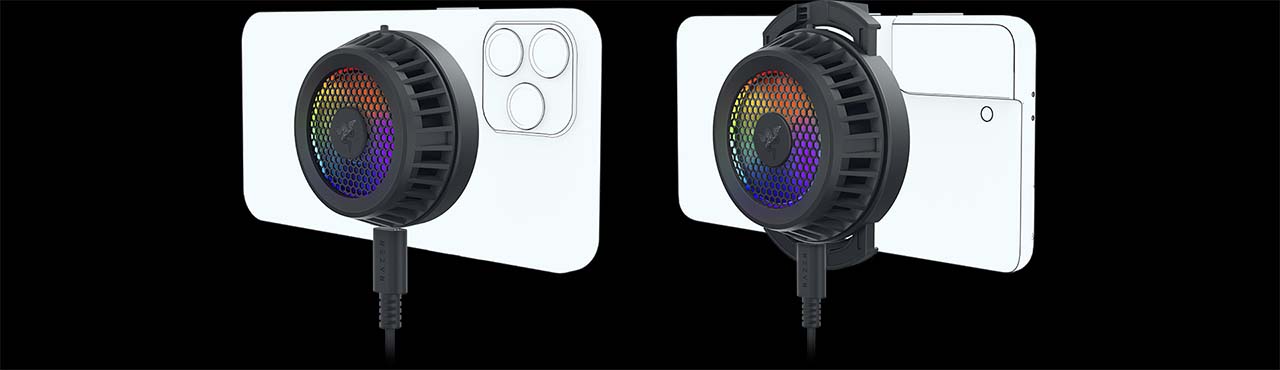
Clocking in at $79.99 in Canada, the Razer Phone Cooler Chroma attaches to the back of your smartphone to help keep it cool during extended gaming sessions. And, naturally, the fan is decked out with RGB lighting — all gamers know RGB means it works better.
Razer’s Phone Cooler Chroma comes in two flavours: MagSafe compatible and ‘Universal Clamp.’ The first one doesn’t require much explanation — if you have a new iPhone with MagSafe, then you can attach the Phone Cooler to your iPhone with magnets. The Universal Clamp option should work for Android devices and iPhones without MagSafe. It uses a clamp mechanism to hold onto users’ phones.
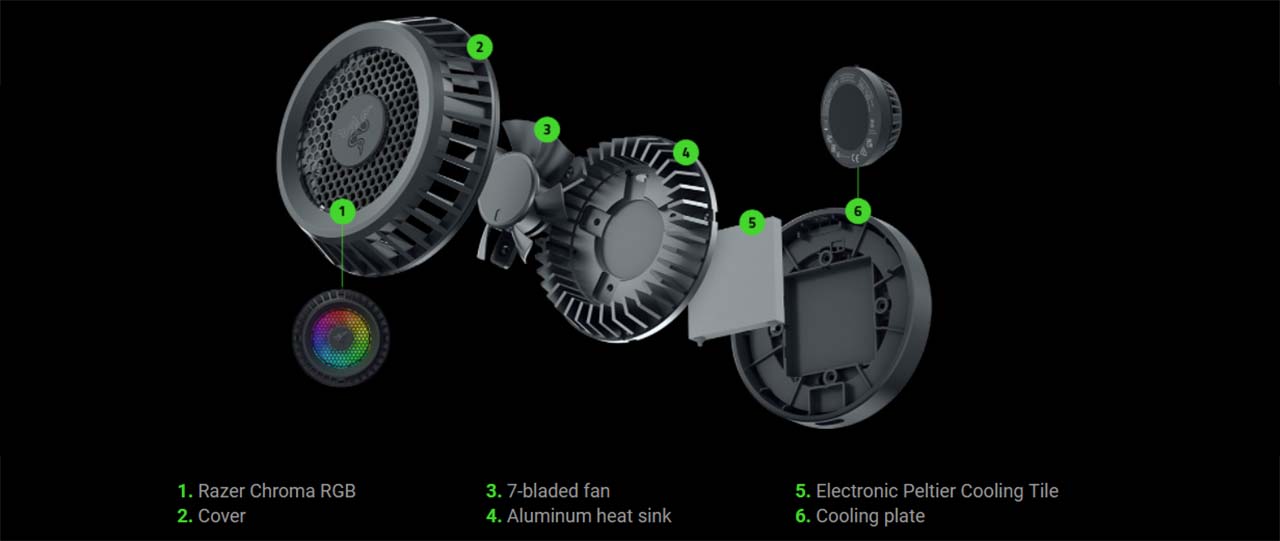
The Phone Cooler works by drawing heat away from the smartphone using an electronic Peltier cooling tile. At a very base level, that means the Phone Cooler relies on the Peltier effect to draw heat from one side of the device (the phone) and transfer it to the other side (the fan). Then, the small seven-bladed fan in the Phone Cooler can dissipate the heat.
While that certainly sounds neat, there are a few drawbacks. For one, you’ll need to stay near a power outlet — the Phone Cooler needs power to work. To me, that seems like it defeats the purpose of gaming on a mobile device, but I suppose if you have a capable power brick you could maybe untether yourself from the nearest power outlet.
I’m also not sure how well the Phone Cooler Chroma would actually work. It’s fairly common for gaming phones to have advanced cooling systems and even fan attachments, but those typically work best when they make contact with the components that create the heat. As an example, when building a desktop computer, it’s important to properly connect your CPU fan to the CPU and use things like thermal paste to help transfer heat from the CPU into the heatsink so that the fan can help dissipate it. Tacking a fan onto the back of your phone might have some benefit, but I’m not sure how effective it’d be without more direct contact with the CPU and other heat-generating components.
Besides, using a fan on your smartphone to get a performance bump in mobile titles seems a bit overkill to me, but maybe that’s just because I’m an old grouch who doesn’t like mobile gaming 🤷🏻♂️.
You can learn more about the Razer Phone Cooler Chrome here.
Most of the deals this year during ‘Black Friday’ and ‘Cyber Monday’ revolved around smart devices and tablets. However, we’ve found a few solid discounts on Anker-related mobile accessories.
MobileSyrup utilizes affiliate partnerships. These partnerships do not influence our editorial content, though MobileSyrup may earn a commission on purchases made via these links that helps fund the journalism provided free on our website.
Now, the Google subsidiary navigation app is adding new Christmas-inspired Moods and vehicles to its navigation app for a limited time.
Santa called. He wants his job back. Select your sleigh, voice, and Mood in the app and let Santa guide you on your next drive for another holiday season. https://t.co/UYEv2IQIKQpic.twitter.com/mSbc3o6z0e
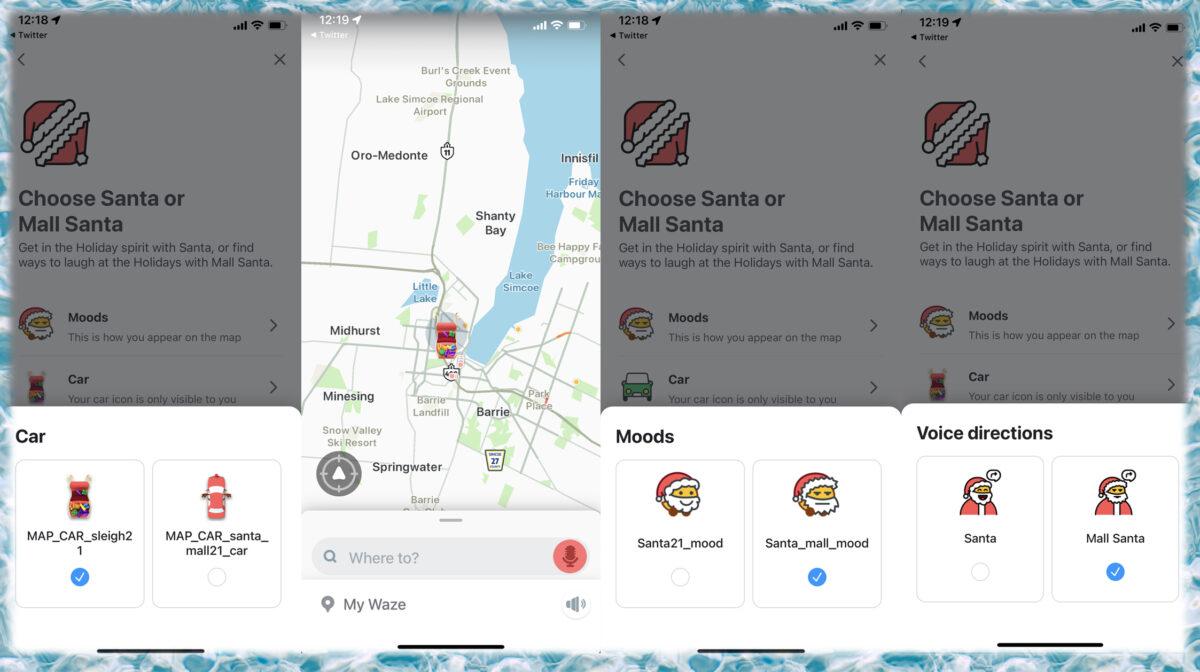
Waze users can choose between Santa or Mall Santa Moods and ride in all-new vehicle icons, including a sleigh or a Santa Mall Car.
It’s unclear how long the feature will be available, likely until the end of the holiday season. You can enable it by navigating to the ‘My Waze’ section of Waze’s settings and selecting “Drive with Santa.” Alternatively, you can enable the setting by opening this link directly from your mobile.
Pokémon Legends: Arceus isn’t completely done yet, but it is playable, according to artist Christina Aguilera.
In an interview with Elle, Aguilera said that during the brief Nintendo Switch advertisement she shot with her family, her daughter fell in love with Pokémon Legends: Arceus.
“It’s so gorgeous, the graphics and the setting that you get to explore in, so she was loving that so much, she wouldn’t give me a turn,” said the singer.
The game isn’t finished (“gone gold”), Aguilera explained, and it was solely available on the Switch that her daughter used during the ad.
Pokémon Legends: Arceus launches on January 28th, so it makes sense that the title hasn’t gone gold yet. The game will launch on the Nintendo Switch and is available for pre-order for $79.99 from Amazon.
MobileSyrup utilizes affiliate partnerships. These partnerships do not influence our editorial content, though MobileSyrup may earn a commission on purchases made via these links that helps fund the journalism provided free on our website.
OnePlus 9 and 9 Pro owners can finally update to OxygenOS 12 this week, but it might not be for everyone just yet.
OnePlus says that the update is rolling out slowly over the next few days and that it includes a few new features. However, this update is a slight departure from the OxygenOS users are comfortable with and is a clone of Oppo’s ColorOS. It’s not terrible, but in my experience so far, a few issues still need to be ironed out.
Some of the hot new features include the Android 12 privacy features, new work/life balance modes and more. Sadly, Google’s Material You colour matching tech is missing from this version of Android 12, so your widgets won’t match your background. If you want to read more of my thoughts on the OS update, you can check out my impressions here. To sum it up, I’m a little annoyed that OnePlus put so much effort into creating a distinct software design and brand identity last year, only to replace most of it with ColorOS now.
I guess it’s futile to resist the update if you’re a OnePlus 9 owner, but hopefully, over the next 12-months the company is able to smooth out this operating system transition. If you have a OnePlus 8 series or older device I wouldn’t hold out a lot of hope for this update coming to your phone any time soon. OnePlus has been very slow to update older phones lately and this Oppo transition won’t help matters.
If you want to read more about OxygenOS 12 or see what bugs users are reporting, OnePlus has also posted an FAQ page on the new update.
The full list of new features from OnePlus is below:
System
Optimized desktop icons with improved textures by using a design inspired by brand-new materials and uniting lights and layers
Dark mode
Dark mode now supports three adjustable levels, bringing a more personalized and comfortable user experience
Shelf
New additional style options for Cards, making data contents more visual and easier to read
Newly added Earphone Control Card with Bluetooth earphone one-click adjustment
Newly added access to OnePlus Scout in Shelf, allowing you to search multiple contents on your phone, including Apps, Settings, Media Data, etc
Newly added OnePlus Watch Card in Shelf, to easily glance at your health stats
Work-Life Balance
Work-Life Balance feature is now available to all users, allowing you to effortlessly switch between Work and Life mode via quick settings
WLB 2.0 now supports automatic Work/Life mode switching, based on specific locations, Wi-Fi network, and time, also bringing customized App notification profiles according to the personalization
Gallery
Gallery now allows you to switch between different layouts with a two-finger pinch gesture, intelligently recognizing the best-quality pictures, and cropping the thumbnail based on the content, making the gallery layout more pleasing
Canvas AOD
Canvas AOD brings you new diverse styles of lines and colors, for a more personalized lock screen experience with inspiring visuals
Newly added multiple brushes and strokes and support for color adjustment
Optimized software algorithm and improved face recognition to better identify the features and skin color of different figures
Moscow, Russia – December, 2020: IBM logo on a storage rack in Datacenter
IBM and Telus are distributing a new 5G edge computing platform across the country to help enterprises deliver innovative solutions.
The platform is a combination of Telus’ 5G edge computing platform and IBM’s Cloud Satellite solutions and will expand open and secure cloud service to the edge of the network. This will allow companies to manage workloads where the need for low latency and high bandwidth 5G are present.
“To unlock the true values and benefits of 5G and develop viable use cases, strategic partnerships must be formed between players in the ecosystem. With IBM, we are combining our award-winning 5G infrastructure with the flexibility of an edge computing platform that will harness the power of transformative technologies across multiple industries,” Ibrahim Gedeon, the chief technology officer at Telus, said in a statement.
IBM Consulting will also work with Telus and use AI and automation to improve business workflows.
I’m someone who absolutely loves wildlife documentaries, and although I’ve never considered filming one myself, apparently I could — at least, according to Samsung.
Samsung has teamed up with Discovery to shoot a wildlife documentary on the Galaxy S21 Ultra.
Wildlife photographer Yashas Narayan and his team used a couple of S21 Ultra handsets to film tigers in the wild.
The documentary was shot exclusively with the S21 Ultra and a camera grip system to get more control of the small device.
Above is a behind-the-scenes clip showing off how the mini-doc was filmed.
Samsung’s Galaxy S21 Ultra features a set of four cameras, including a 108-megapixel shooter with OIS, laser autofocus and phase detection autofocus, a 10-megapixel shooter that’s capable of 10x optical zoom, a lens that offers 3x optical zoom and a final shooter sports a 12-megapixel sensor with an ultra-wide lens.
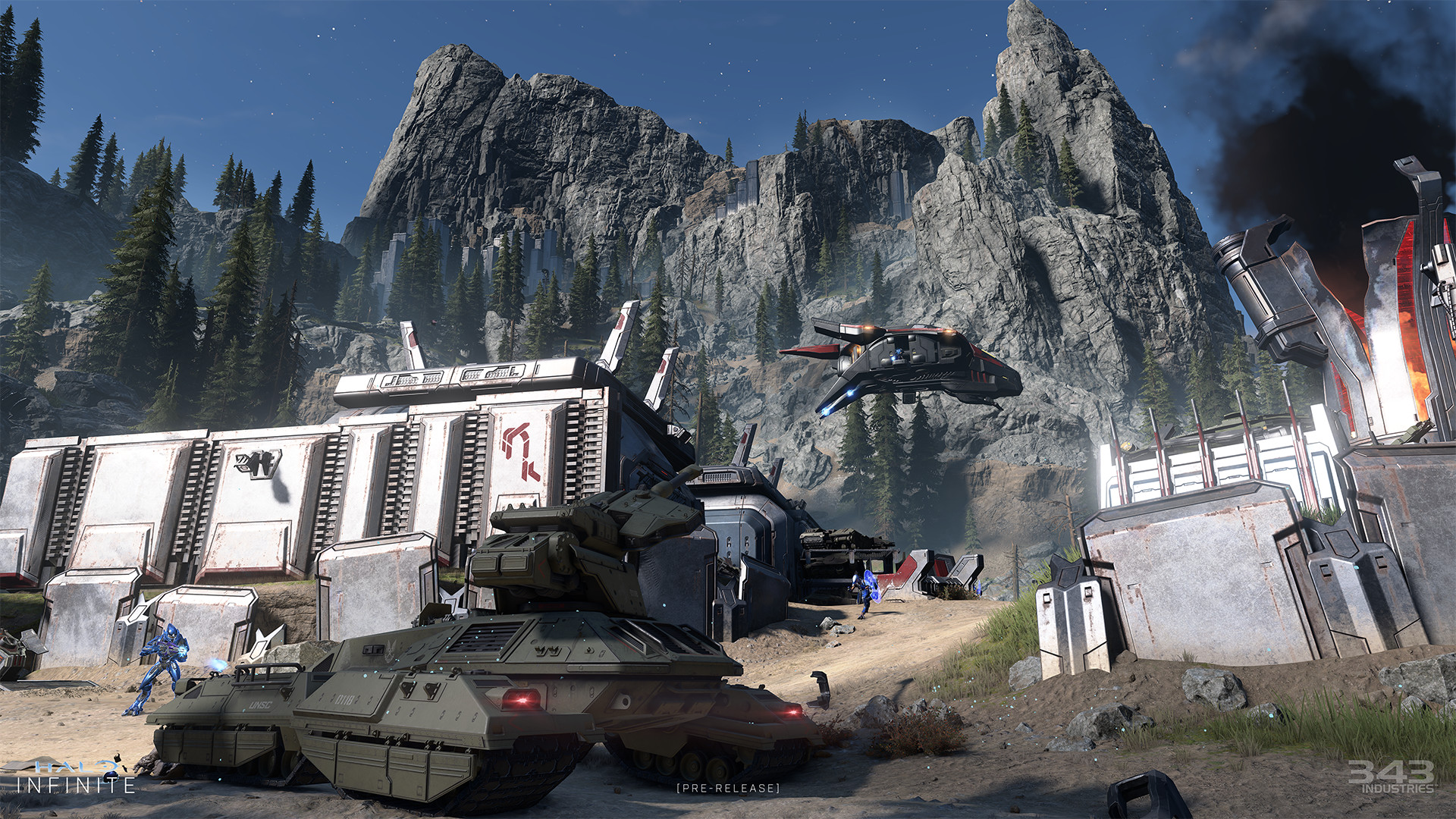
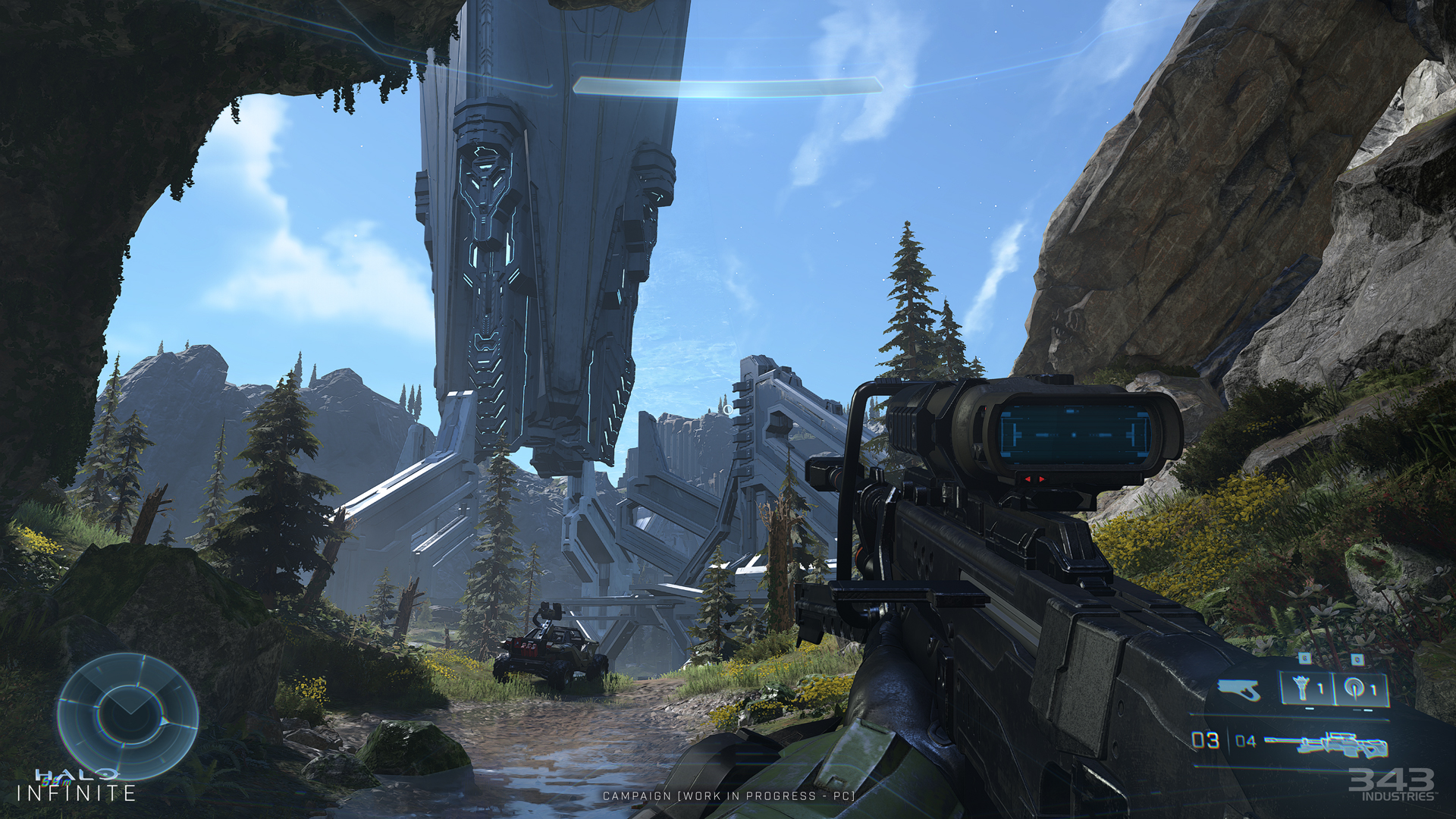
It was a big way to celebrate the iconic sci-fi series’ 20th anniversary, but it also meant that half the game — the campaign — was still to come in December. Picking up 18 months after the events of 2015’s Halo 5: Guardians, Infinite‘s story follows longtime Halo hero Master Chief as he awakens to fight the aliens known as The Banished on the mysterious Zeta Halo ringworld.
Along the way, he’ll uncover what happened to United Nations Space Command (UNSC) and, more importantly to him, his old AI friend, Cortana.
While Infinite takes many visual and thematic inspirations from 2001’s Halo: Combat Evolved, the game also makes significant changes to the tried-but-true Halo formula. In particular, Infinite introduces a semi-open-world setting in which the Chief can take approach main and story missions in many different ways. With that in mind, MobileSyrup sat down with two of the key developers of the campaign, who discussed how Infinite offers player freedom, the design philosophy of the Grappleshot, improving boss fights and more.
MobileSyrup: How did you land on the premise of this big UNSC/Banished battle having happened while Chief was out of commission, and then the player lands on Zeta Halo to figure out what happened with that and Cortana through core story moments and environmental storytelling? Having all of that happen between 5 and Infinite feels like a bold choice.
Paul Crocker, associate creative director: Our goal was always to make this spiritual reboot. And to make the spiritual reboot, we wanted to assume no knowledge, and also, not many people have to jump through a “previously on Halo.” Which I appreciate is an interesting perspective, because, as we’ve seen in some of the reviews, “there should be a ‘previously on…’” But I think there’s a bias towards you think something’s missing that isn’t actually missing. Because the franchise is so big, you assume that you’ve missed something.
Whereas, you know, I’m not trying to compare the two, but the best example I’ve got is one of the more recent Star Wars movies where they didn’t start with saying, ‘well, there was this thing that happened, then this thing happened, this thing happened.” [The movie] just kind of started. The reason that we move time forward [in Infinite] was so that all of our characters, all of our heroes, were experiencing the story in the same order as the player. We wanted a mystery for Chief to be trying to solve, which was what happened to Cortana. And for that to work, we needed to make sure Chief didn’t know the answer to that question. For Chief to not know the answer to that question, we wanted to make sure that there has been a period of time where Chief wasn’t in action, which meant he had to be unconscious.
So basically, it was about stacking the deck so that all the characters started the game in the same perspective as the player, which is a bit of “what’s just happened?’” To me, it was all part of trying to build a mystery story, as opposed to just starting with a list of ‘well, all these things have happened, and here’s the bad guy and everything.’ It’s like, ‘what has actually happened and how are you going to learn about the relationships between Chief and all these other characters? How are you going to learn about what happened to Cortana?’ And these elements all came together through the whole team incorporating ideas into this thing where you start from a defeat, and then work your way back to a victory.
And it’s funny, because [the UNSC] can never really win. Like, if it did, we wouldn’t be on the sixth version of a Halo game. [laughs] But we really wanted to be in a position where we were setting up new things to happen in the future as well. We put characters who don’t know each other in a room together, and push them towards a conclusion that isn’t exactly what you think it’s going to be, with an enemy who’s not exactly doing what you think they’re going to be doing, and just layering everything else around it.
Q: Having beaten the campaign, I was impressed by the level of polish, especially for this being your first (quasi) open-world game. With the game originally set to release last year, what were the areas of focus? Was it mostly just on visuals and bug polishing?
Crocker: Really, it wasn’t a year. It’s easy to assume it was a year, but it was a year in COVID time. [laughs] And it was a year on the last stage of the game. The amazing thing was a) we got feedback and b) Microsoft supported us, so we were able to almost pause and just sit down and play the game a bunch. Because the game was actually nearly finished. It was exactly where it probably should have been. There were some things that we weren’t very happy with, and there were things that just weren’t actually finished when we had to show it to the public.
But really, our goal was to sit back, play it, look at what’s working, look at what’s helping to make that kind of new Halo experience, and then dig into each of those and see what we can do to improve things that were already working. Because I think the kind of knee-jerk reaction is to look at the things that aren’t working and try and level them up. But the truth is we took as much stuff out as we polished, and we really just focused on improving the things that were part of our mission statement and making the best Halo game we could.
Steve Dyck, character director: Thanks for the compliments on the polish level. That is a spot where we did spend a lot of time making it feel more curated. We spent a lot of time working on pacing, from the standpoint of, like, “the Golden Path takes the player through this point, to this point, to this point.” If everything’s dialled to 11 along that path, then it starts feeling pretty flat, even though everything’s pretty intense. So we reassessed a lot of the encounters, a lot of the combat, and just dialled them in.
We touched every single boss fight and made sure some of them got intros offer a little more personality. The bosses, obviously, we kept tuning. We did a lot of tuning, as well, just to account for some of the other difficulties. Typically, Halo has always been developed with Heroic first as a difficulty. With the goal of this game being a spiritual reboot and trying to onboard more players, or new players, we had spent a lot of time focusing on Normal difficulty, and there’s obviously a lot of games for us to look at. So this gave us a little more time to get into Heroic and Legendary and go after creating the experiences that players expect there.
But it’s [also] been great to see people reflect on the level of polish that the team was able to put in a game because they really wanted to. The team felt that too. The year before release, if you rewind a year, we showed the game, but like [Crocker] said, the game was there — it was just lacking some polish in key areas. So certainly there was our art fidelity — we got time to plus up the art and stuff like that as well. It was time well spent. Even though it wasn’t a full year, it was enough time for us to get the game to where we really wanted it to be.
Crocker: I think it also coincided with things like, at the point where we had more time, we could also start sitting in a room together at times and talking about stuff and actually get people playing the game together. We had a bunch of play stations where we actually just had five TVs and five different platforms and were just playing together. Which sounds crazy, but we hadn’t been able to do that. In the development of [Infinite], I would have every Xbox dev kit in a pile on my desk. But it didn’t make any difference — I couldn’t share that part of my screen with somebody else. So we couldn’t talk about it.
And everyone was in the same kind of position. But then one day, it was like, ‘okay, it’s safer now to go in.’ Now, we have our COVID policies and everything else around that, but being able to sit in a big room, separated, and play the game and actually talk about it is a thing that just hadn’t been able to happen for a long time. And it seemed like a small thing at the time, but there was a whole bunch of trepidation and problems and everything else that goes along with that. But then, straightaway, people were like “wow this actually pretty cool, we should be making it better.” And that was probably not such a turning point, but a great moment for the team.
Q: I read a [GamesRadar] interview where you talked about how the Grappleshot was controversial at first within the team. Once you’d finally settled on its inclusion, how challenging was it to implement, especially considering how people can do crazy Breath of the Wild-style navigation tricks with it? How did you design the world around it?
Crocker: The Grappleshot was developed with the sandbox team to support elements in both multiplayer and campaign. That’s how the studio works — the sandbox team developing ideas and trying to see what’s a good fit. The reason it was controversial is when you’ve got a history of building linear levels, you are in control, as a developer, of the experience. And the “band-aid” you have to rip off is, basically, you’re not in control anymore.
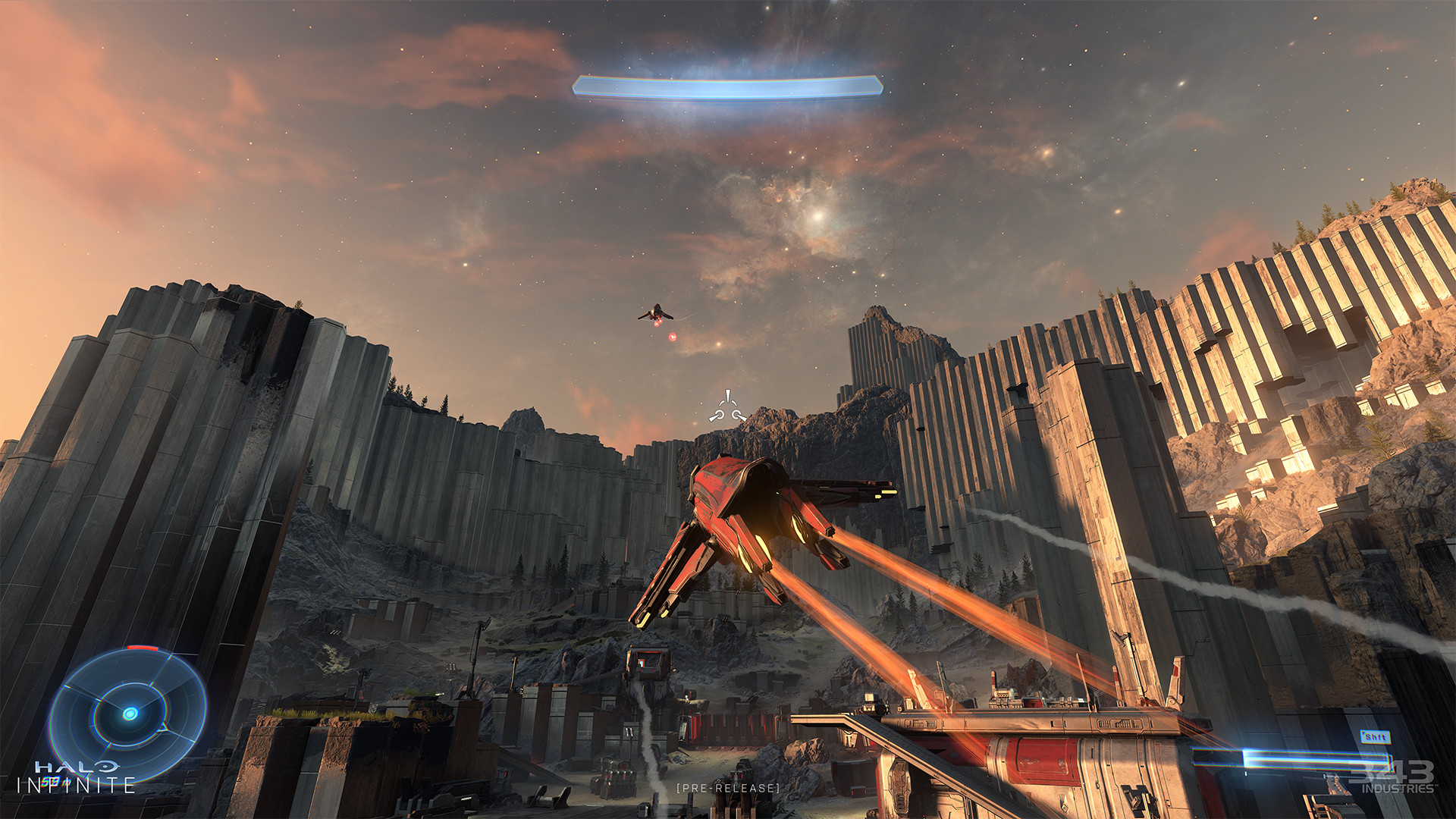
And truthfully, that’s the thing that had to be done anyway for the game, regardless of the Grappleshot. Because it was very much about our ethos of “super-soldier base assault,” and we wanted to make sure that everybody played the way they wanted to play. So really, the only thing that Grappleshot brought to it apart from navigation was it filled in the mid-range. Halo‘s always been on the ground, with vehicles on the ground, and in vehicles in the air. And then the bit where you were in the middle of that was when you jumped out of the vehicle when it was flying. So what we did was we gave you the ability to quickly be in that mid-ground, mid-height, so you can go on top of a building — you can get on top of whatever. And I think the natural inclination, particularly in the early days, is for [us] to try and stop players from being able to do that. Because it’s like “a bug” or it’s not what “I intended.”
And then just bringing everyone on board — getting everyone around the idea of, “No, no, that’s what we want, we want you to feel powerful.” So just because the player does something, the game shouldn’t say “you shouldn’t do that and drop a million enemies on them.” It should say, “Oh cool, you’re doing that, eventually, we’re going to bring up the challenge level.” Because you’re in a position of strength, but for a period of time, you’re going to feel powerful, because you’re in that position — you chose to be there. And the same was true for basically everything we did in the game, because we always just wanted the game to say “yes.” Can I drive a vehicle? Yes. Can I drive it off a cliff? Yes. Can I drive it into the middle of a base and start combat? Yes. And once you have that mentality, everything else evolves from that.
Dyck: To speak to it kind of being controversial. Halo has got a very passionate fanbase, [and] the studio is very passionate about Halo as well. So when you do something like adding a new piece of equipment that’s going to be there 100 percent of the time in campaign, or even the decision to create more open [areas] that are close to like an open-world, those aren’t things that we’re like, “yeah, we’ll just throw it in there, and people will be cool with that.” We’re as critical of ourselves as the fans will be, so we need to make sure that it’s right.
And like [Crocker] was saying — traditionally, every beat of a Halo game has been very curated. It was like, “the player’s going to enter this encounter through this door, and this is probably the first enemy that they’re going to fight, and there’s a turret over there, and they’ll probably go this path to the turret.” We threw that out the window — a grappling hook says, “I can come at that turret from the back or the other side completely, or maybe I just fly right past it.”
And your “Breath of the Wild” example, where people are Gravity Hammer-ing Warthogs and zipping across the map with them — that’s another example of what [Crocker] was talking about with the game saying “yes.” It was a process, but once we got everybody in the studio on board, it took the gloves off.
One of the things that we talked about was, “Is this thing too OP [overpowered]? Are people going to want to use other equipment?” And it’s like, “yeah, they probably will, especially on harder difficulties.” And the fact that it’s OP or not OP — I don’t think it is — but the fact that players want to use it so much that it’s this thing that that’s a natural extension of Master Chief, that’s great. That’s exactly what you want. That’s the whole goal. If it wasn’t that, then it’d be more of a question of “why are we putting this thing into the game?”
Crocker: And the equipment, as an example, really allowed you to just play the way you want to play. So if you need a barrier to protect you, you have the shield. If you want to move quickly, you have your Thrusters. The Threat Sensor does the same thing. And although not every single player wants to use all of the pieces of equipment, we keep finding opportunities to use them in different ways, and it just really adds to it.
There’s a great example where there’s an FOB [forward operating base] that I won’t spoil too much, but there just happens to be some elites around it that you’re not expecting. [laughs] And I take a Ghost and stick Threat Sensors on it and drive around so I can figure out where they are right. It’s just a strategy that you can adopt, but you can also just litter the area with [Sensors] or just wait until they de-cloak. You just have so many choices. That’s really how we approached every single problem — ‘how do we just let the player play it the way they want?’
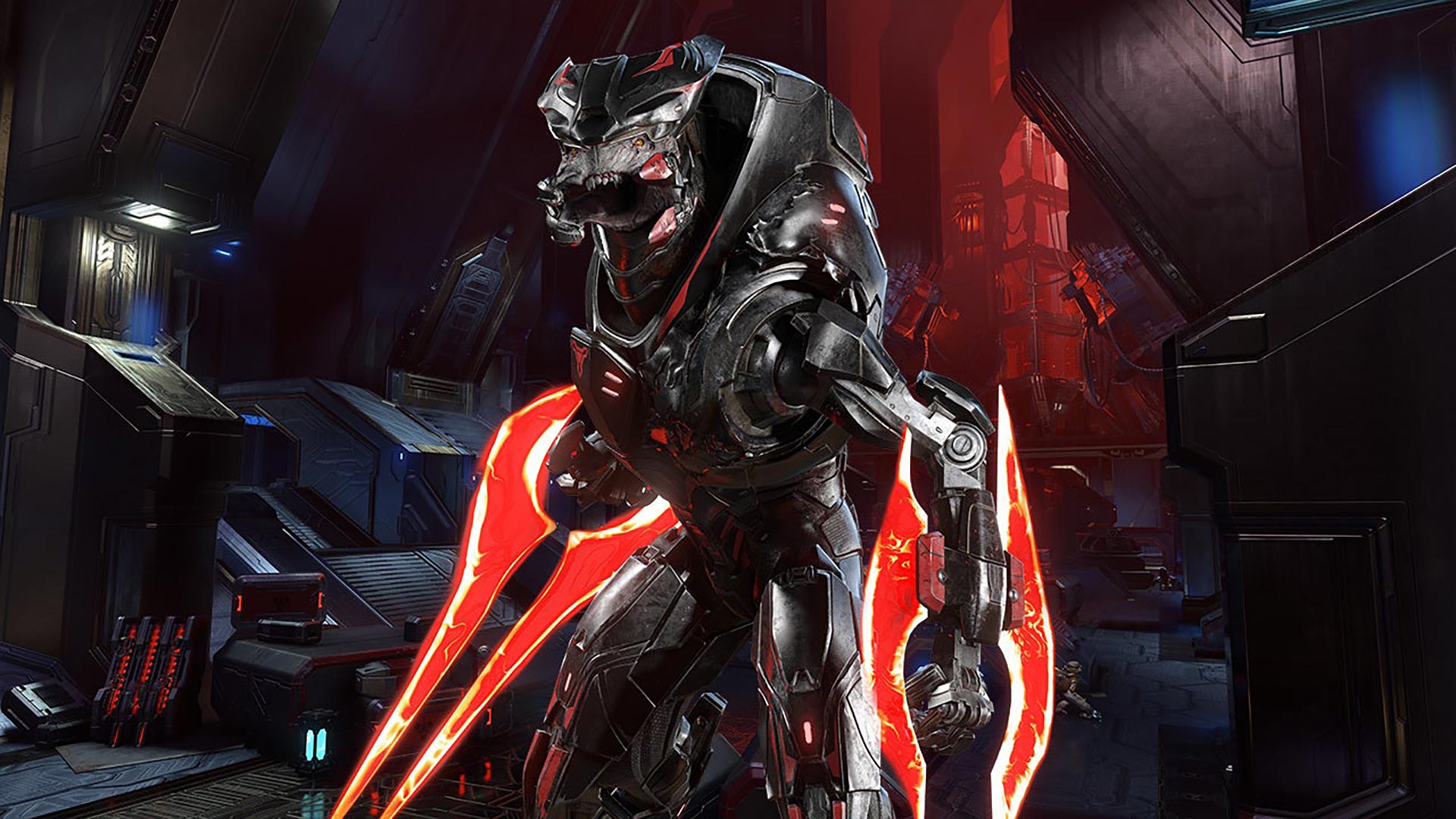
Dyck: That’s one of the areas that absolutely benefited from the extra time. The boss fights were there foundationally, most of the mechanics were there, but in terms of giving them each their theme, like your point around the Jega one where he’s a little bit creepier, [and] the ability to introduce him more as a character throughout the game. Those are opportunities that we really dove into with the extra time.
And from a gameplay standpoint, with the bosses across the board, we certainly were conscious of the feedback and aware — we felt it, too — with the Warden from Halo 5. If we’re adding boss fights, we didn’t want to fall into the trap of “oh, this is just the guy that I fought before, except now he’s got a shield, and he’s a bullet sponge, so I’ll just sit here emptying round after round, clip after clip, into him until he eventually dies.”
We wanted them to have, the way I describe it, a “special sauce.” With Tremonious, it’s his jetpack, so he should have some sort of ground-pound attack. So even though it’s just like maybe one or two things that we added per boss, it helps give them that that separation from the other factional enemies that you fight that are similar. Like Jega, obviously, he’s cloaking. [Elite soldier] Chak’Lok’s got cloaking as well, but he’ll switch it up. Jega does the cloaking but then he’ll just come at you from somewhere else and he shank you. So we tried to mix in a variety of gameplay. There were no hard rules of “if you don’t use this, you can’t beat this boss.”
Q: What was the design philosophy of the side missions, while also accounting for the player, at any given time, maybe having different arsenals available to them? [Side content includes capturing FOBs, taking out High-Value Targets [HVTs] for gear and helping UNSC Marines — all of which reward you with ‘Valor’ to unlock new gear and vehicles.]
Dyck: The goal around the side content is that it’s always supposed to be additive. So if the player doesn’t want to engage at all, they don’t have to — they can just follow the story that’s going to pull them through, all the ‘Golden Path,’ critical beats. The goal with why we wanted players to feel that it was interesting and compelling to go and do those things — obviously, a big part of that is earning Valor points. But also, the notion of taking down the Banished — taking out some of the named characters in the HVTs, freeing Marines. Those are things that have stakes and also help build the world in terms of there being more going on outside of just the Golden Path.
They also give us an opportunity to tell more stories around what happened with the UNSC. Your first question was [about] visual storytelling and stuff in the world — doing those side quests, between the audio logs, saving Marines and all that stuff, starts rounding out the story for what the Banished is doing, what happened with the UNSC. It gives the player a sense of hope as they’re starting to free Marines and they start talking [about] “Yeah, Master Chief is back!” And you get to feel that “hero moment,” which is always been a part of Halo when it’s at its best. So it’s just an opportunity to bring all that stuff in and give the player more goodies while they’re out there exploring.
It also helps us embrace some of the mystery that’s always been in Halo, like right from Halo [CombatEvolved], where you’re dropped on a ring, and you’re like “where should I go? Should I go over there?” [Infinite] is the spiritual reboot of that. “Yeah, you can go over there — you can cruise over there and check it out. Maybe there’s something over there, maybe you’ll get an audio log, maybe you’ll get a weapon, maybe you’ll get a Spartan Core [to upgrade Chief’s equipment], or free some Marines.” It was never intended to be anything that was “fetch quest-y” or anything like that. It was quite intentional — there are meaningful things to do out there, but it’s based off player choice, if they want to go engage with them.
Crocker: To add to that, we didn’t want to make the biggest game we possibly could that just kept you on a kind of hamster wheel. We wanted to make the best Halo experience we could. So even the Valor addition is an additive choice on the player’s part. It’s fun to rescue Marines, and it’s fun to be in that minute-to-minute, second-to-second combat — it’s a little blip of fun in the landscape, and it has a reward. But if you don’t want to play with Marines, you don’t have to — if you just want to continue to shoot things, you can. But if you do want to get Marines, it’s just a way in which you can do it. And then that changes up how you can play the rest of the game. And then the Valor applies to the FOBs and allows you to choose your vehicles and bring more weapons in — again, it’s additive fun.
If you’re only a story player, [you can] go in a straight line — it always tells you where to go next. You have a choice in how you get to that point, but if just want to follow the path, there’s usually a path that will just take you straight to your next story objective. Ideally, it passes something that you want to do, and that will distract you and pull you off the path unless you’re going to some other stuff. Or maybe you’re going to have a challenge — the game probably does ratchet up a bit by the time you get the excavation site. You’re outside, so can go and get some more equipment, or go and get some Marines to come and help. The things you need are around you if you want that kind of help or if you just want to see what else is out there. It’s just about us respecting the player’s time and just trying to give them this freedom to play the game the way they want to and just have fun — [that’s] the way Halo is always supposed to be.
This interview has been edited for style and clarity.
Halo Infinite will release on Xbox One, Xbox Series X/S and PC on December 8th. The game is also a part of Xbox Game Pass, which is available on all of those platforms as well as mobile via streaming.
One of the best-looking Android launchers just got updated to support Android 12 and several of the new features that go along with it.
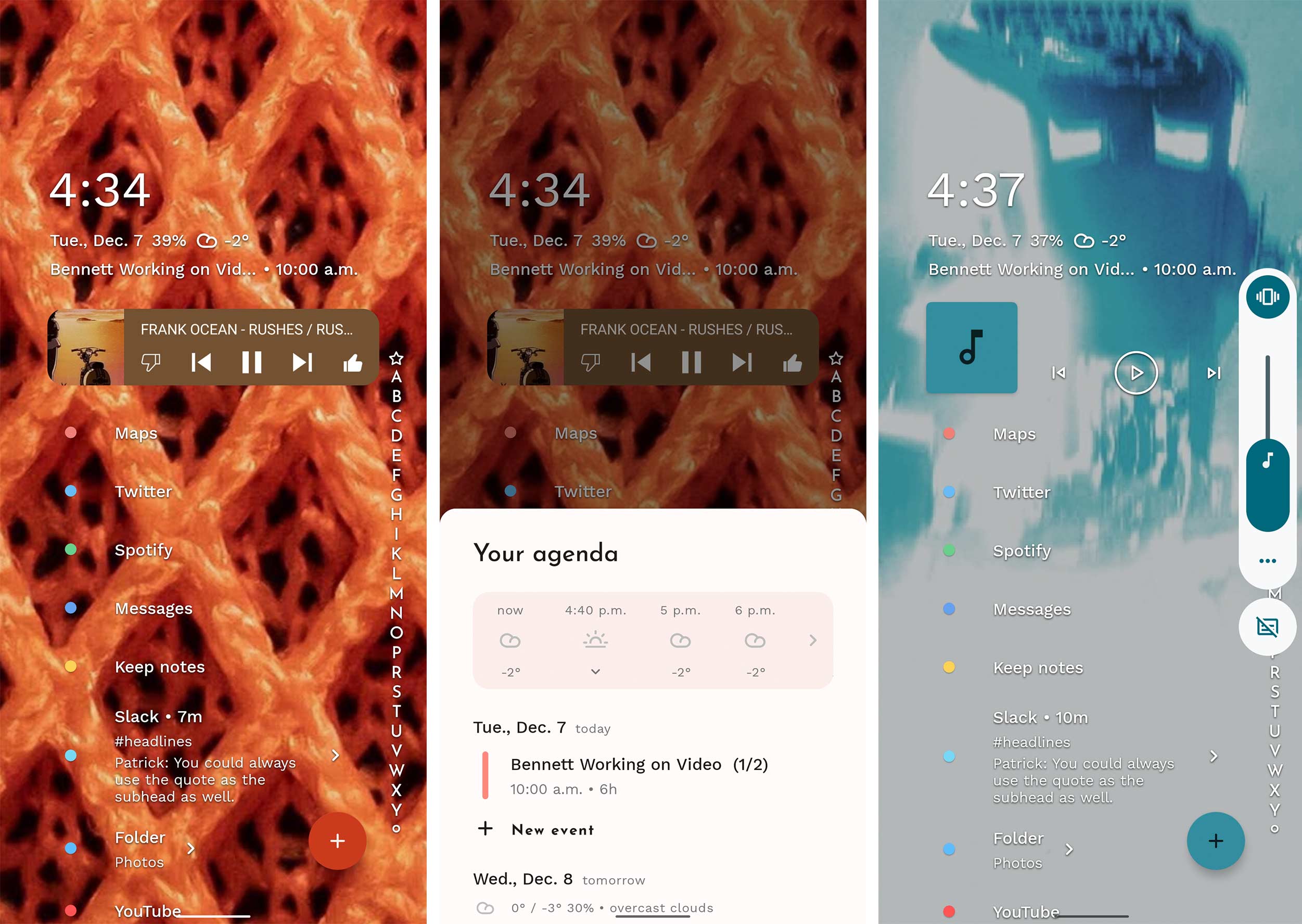
Niagara Launcher has subtly moved to adopt the ‘Material You’ guidelines so it matches Android 12 on Pixel phones. For anyone else, the launcher adapts reasonably well to your wallpaper colour, but the illusion is broken once you enter into an app.
Since Google apps default to blue, with the OnePlus 9 Pro, I’ve found setting a blue background helps tie notifications, settings, Google apps and Niagara Launcher all together on smartphones that don’t officially support Material You.
Material You works out much better on a Pixel 4a (5G) since the wallpaper and the Niagara elements tie together more cleanly. At one point, Niagara and Android 12 on my Pixel both seemed to be drawing different shades of red to match an orange wallpaper I was using. I’m not sure if this is a bug or just something that I might have to get used to as more devs start to take advantage of Material You.
I’ll also mention that to get the weather section of the Agenda Widget to appear, I needed to restart the launcher from within its own settings.
The Niagara team also chose to avoid stylized icons in this build since they’re so inconsistent and only really work with Google’s apps. However, the team did add support for the new Android 12 location access system. This allows users to set an approximate location for the weather widget since the temperature and forecast don’t change much within a 2km radius.
The developer also decided to cut the corners off of all squared widgets to help them fit in with the rounded corners that are prevalent in Android 12. This looks nice when it works but it doesn’t work perfectly across all widgets. For example, the Sonos widget gets compressed down so much that the bottom of the play button gets cut off. I still think this looks a bit nicer than the standard square widgets, but this will be hit and miss until Sonos and other apps update their own widgets to fit better with the new Material You guidelines.
If you want to download the update before it goes live to the Play Store in two weeks, you can do so here. A few weeks ago, I also put together a video explaining Niagara Launcher if you’re unfamiliar with the Android home screen replacement tool.
If you have a Roku streaming device without YouTube’s app on it, you should download it before December 9th. The two giant companies are fighting, and Roku’s deal to host YouTube in its store is set to expire very shortly.
That said, anyone who already has the app downloaded will be fine. However, the app likely won’t get more updates until the two media giants broker a deal.
This wouldn’t be the first time that a corporate fight resulted in YouTube being pulled from a service. Back in 2017, Google removed YouTube from Fire TV as the two companies feuded over Chromecast sales in Amazon’s store.
While the public has been aware of this Roku vs YouTube (Google) feud since April 2021, at least one of the companies is lying about what’s causing it. Roku says that Google is trying to muscle its way to the top of search ranking on the platform and some other perks that other apps aren’t privy to on Roku’s platform. On the other hand, Google says that it’s just trying to renew its existing deal with Roku.