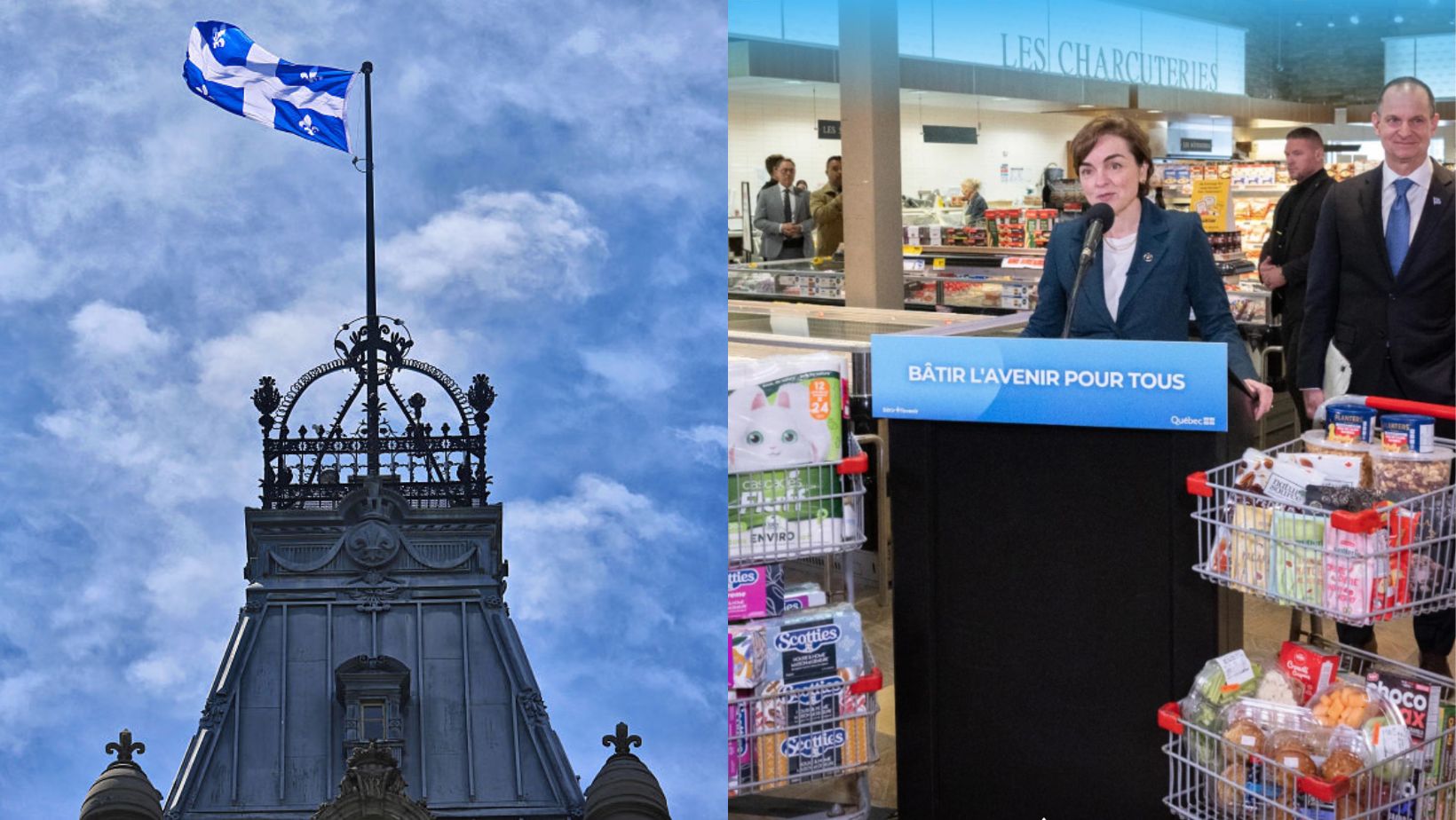
Between the elimination of the QST on certain products, grocery and gas rebates, and a reduction in vehicle registration fees, Premier Christine Fréchette announced on Monday a package of measures totaling $682 million to help offset the rising cost of living.
Finance Minister Eric Girard, who was present at the press conference, indicated that once temporary aid is set aside, the premier’s promises will represent a permanent annual cost of $336 million for the government.
“Inflation affects everyone,” Ms. Fréchette noted. “We need to give Quebecers some breathing room. We need to give Quebecers a financial boost,” Ms. Fréchette declared during a press conference at a supermarket in Sherbrooke on Monday afternoon. The announced measures could amount to a total of $350 in assistance for a family with two children, she summarized.
The elimination of the Quebec sales tax (QST of 9.975%) will take effect on July 15 and will apply to various basic grocery and hygiene products, including fruit salads and pre-cut vegetable platters, individually packaged muffins, granola bars, as well as toilet paper and tissues.
The government estimates that this removal of the QST on certain products could save a family of four (two adults and two children) about $50 per year.
Of the measures announced on Monday, only this tax exemption will remain in effect for more than a year. The cost of this measure is estimated at $102 million per year.
As for vehicle registration fees, these will be reduced by $50 for one year starting September 1. According to La Presse, nearly 4.9 million vehicles registered in Quebec will be eligible for this measure.
This measure, estimated at $245 million, will be funded by the government, not the Société de l’assurance automobile du Québec, said Transport Minister Benoit Charette.
In addition, there will be a “special payment for groceries and energy” for individuals eligible for the Solidarity Tax Credit. The amount offered will be $100 for individuals living alone, $150 for single-parent families, and $200 for households with children. This payment will be made on June 4 and will cost $335 million. It is expected to benefit approximately 3.5 million Quebecers, according to the government.
In its terms, this measure is in addition to the Canada Food and Essential Needs Benefit announced by Ottawa last January.
Opposition parties and some political analysts have criticized these announcements, calling them electioneering.
A $250 million budget overrun
The new measures presented on Monday will bring the total cost of announcements made by Premier Fréchette since she took office in mid-April to $336 million.
The $250 million budget allocated by Finance Minister Éric Girard for the promises made by the Coalition Avenir Québec (CAQ) leadership candidates is therefore no longer sufficient for Christine Fréchette.
Earlier this month, Minister Girard had warned the premier that she was on track to exceed that amount in an email reviewed by Radio-Canada.
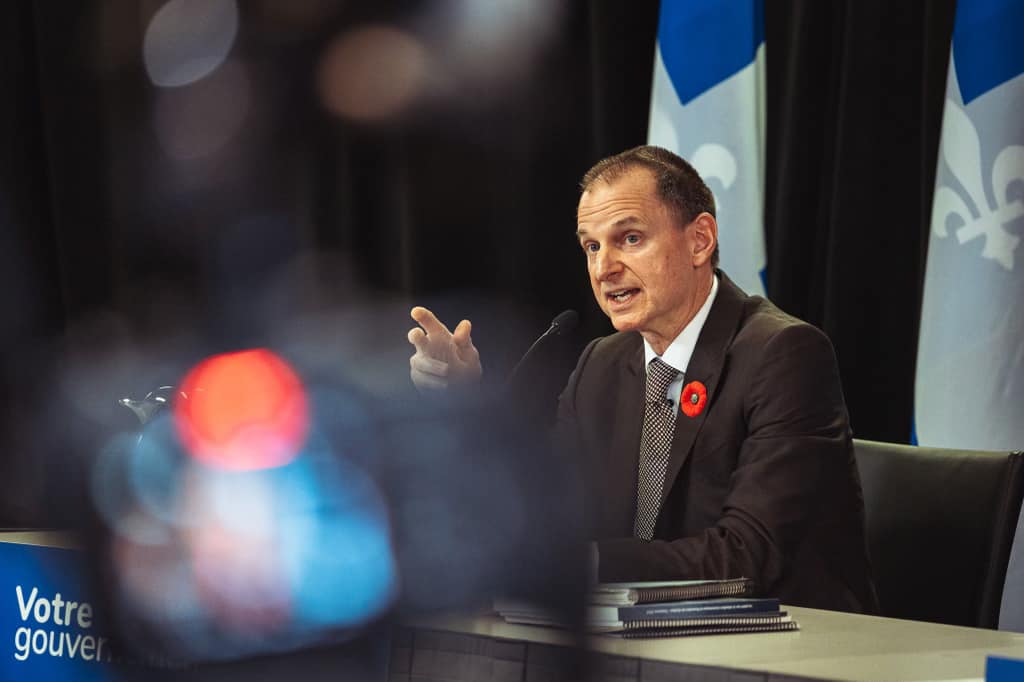
“I must point out that I am concerned about the number of announcements considered by our government since your election,” he wrote. At the CAQ’s general council meeting last weekend, Mr. Girard attempted to downplay the email, saying he had written “thousands” of them over the course of his career.
Minister Fréchette defended this budget discrepancy during Monday’s press conference: “There has been additional revenue, which has given us extra leeway. We’ve had increased revenues and increased needs, so we’re balancing the two.”
According to Minister Girard, the measures are within Quebec’s means: “When you look at all the measures we’ve implemented since the new premier took office, the total comes to 336 million per year, which is 86 million more than what we had budgeted.”
“The Quebec government’s expenditures total 165 billion […], so this is really a small amount that we can easily absorb with additional revenue,” he added.
He also stated that “public finances are in good shape,” despite the 8.6-billion-dollar deficit announced in his budget last March. “We have 4% less debt than when we came to power, as a proportion of the economy. Truly, the debt is well managed. So I can confirm that we have the leeway to take the actions we’re taking today,” stated Mr. Girard.
Inflation has dropped from 8% in 2022 to nearly 3% this year, but that hasn’t brought down grocery prices. Furthermore, the conflict between the United States and Iran has caused gas prices to jump by more than 50% in 13 weeks, Mr. Girard noted.