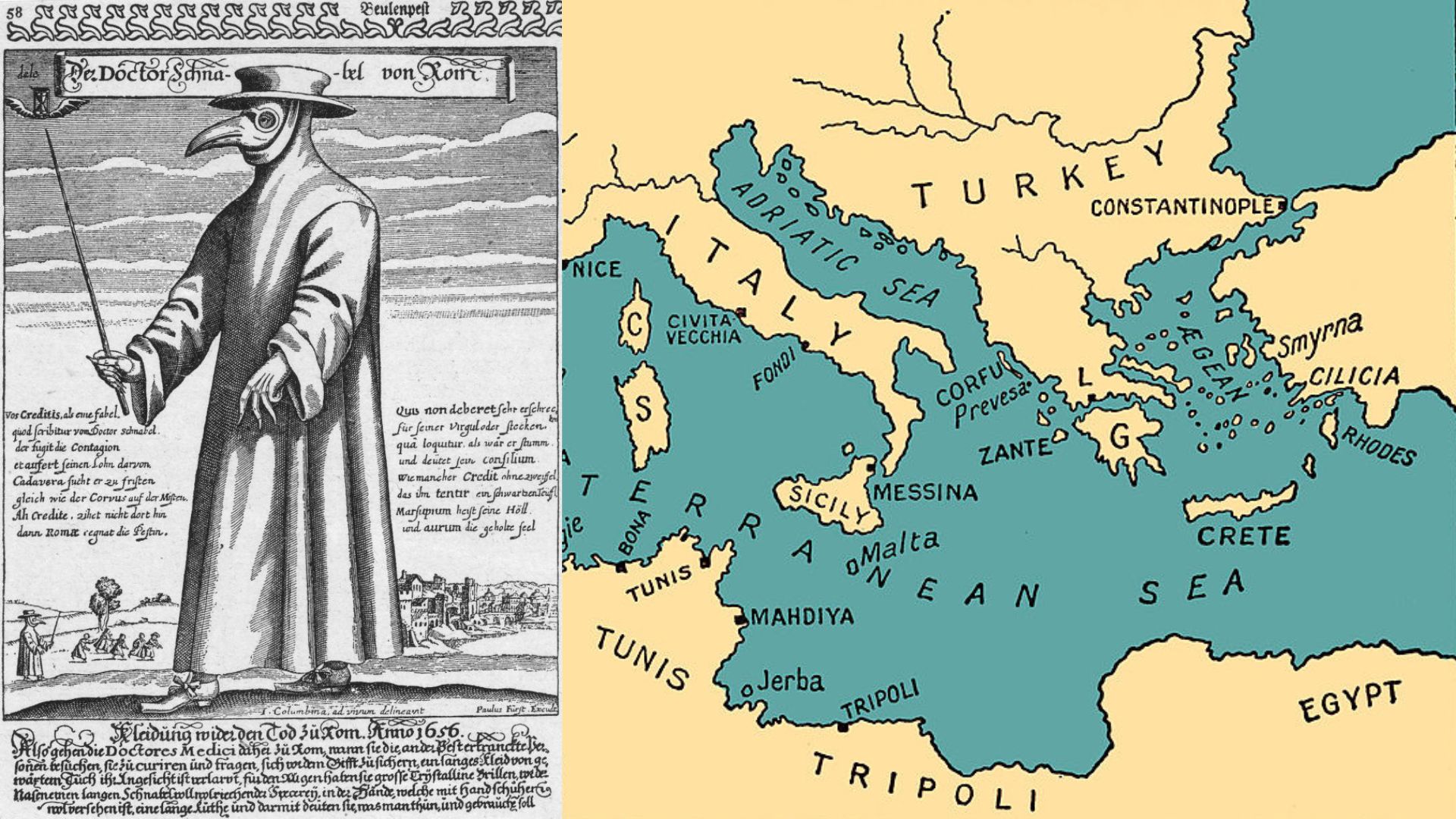
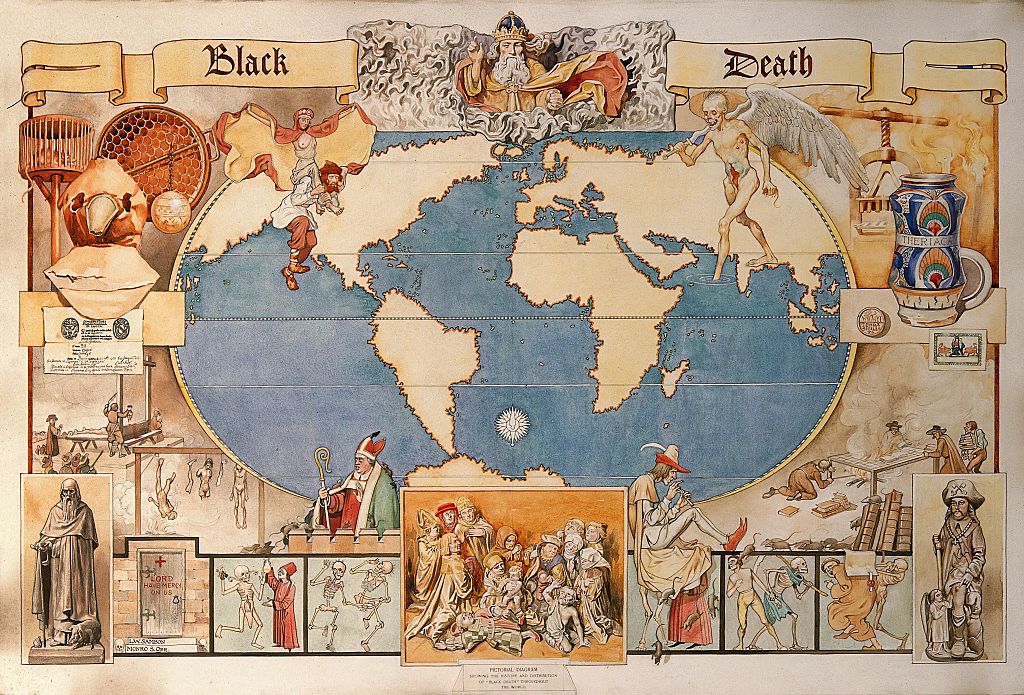
A new study, published in the journal Communications Earth & Environment, reopens the debate on the origin and onset of the Black Death, the deadly disease that decimated half of Europe’s population in the 14th century. While scientists are well acquainted with the mechanisms of the plague, including its pathogen and its transmission by rats and fleas, this recent discovery provides an initial explanation of the timing of its arrival in Europe, comparing it with the devastation it had already caused in Central Asian communities. Research suggests that the emergence of this epidemic may be attributable to a volcanic eruption around 1345, some two years before the start of the pandemic, which cooled the climate, leading to famine and, consequently, grain imports that may have introduced the plague.
The research carried out by Ulf Büntgen and his colleagues was based on clues drawn from tree rings: from these, the team was able to reconstruct the temperature and precipitation history of the last 2000 years in Europe with remarkable accuracy. Ulf Büntgen observed that temperatures throughout the Mediterranean basin were slightly below average between 1345 and 1357. This climatic anomaly immediately caught his attention, prompting him to carry out further research into its origins and mechanisms. The cooling of a climate can be attributed to a number of factors: he hypothesized that a volcanic eruption had caused the release of aerosols, thus cooling the climate. To confirm his point, he then examined ice cores dating back to 1345 in Greenland and Antarctica. The results were unanimous: the cores showed high levels of sulfur, indicative of volcanic eruptions.
At a conference, Martin Bauch, a medieval climate historian involved in research associated with the development of the Black Death, met Ulf Büntgen. Both were interested in the same abnormal climatic years deemed decisive for the emergence of the Black Death. To reconstruct the social context of these key years, Martin Bauch had already analyzed administrative documents, letters, treatises on the plague, poems, and inscriptions. The historian from the Leibniz Institute for East European History and Culture in Leipzig discovered traces of volcanic activity in these archives. He has also uncovered strange accounts, notably from China and Bohemia, of lunar eclipses which, according to orbit calculations, could not have taken place at that time. According to him, it is possible that a particle-laden sky (potentially volcanic) altered the appearance of the Moon as seen from Earth, giving rise to these unusual lunar descriptions.
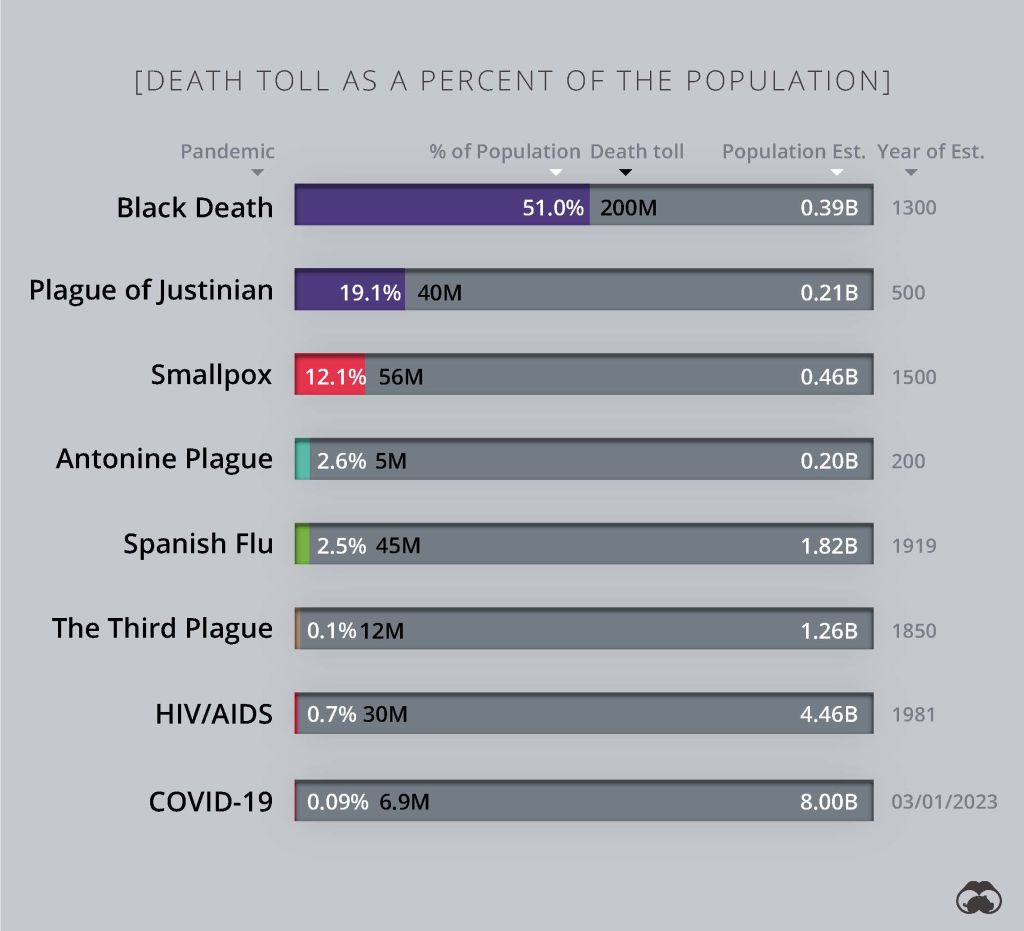
These events combined in a causal chain that ultimately triggered the Black Death pandemic. The volcanic eruption was followed by a multi-year cold snap that had a devastating impact on harvests throughout the Mediterranean basin. This agricultural crisis led to human actions that unintentionally accelerated the spread of the plague. To counter the famine caused by falling yields, major Italian city-states such as Venice and Genoa were forced to urgently import wheat from the Black Sea region. These precious shipments were infested with the deadly plague bacterium Yersinia pestis. Rat fleas, vectors of the disease, are particularly attracted to grain stocks and were able to survive for months on grain dust. This enabled them to endure the long sea voyage from the Black Sea to Italy. Once the grain had reached its destination, storage and redistribution of the merchandise led to the spread of the fleas and, consequently, of the pathogen across the continent. The consequences were catastrophic: before the pandemic, the world population was estimated at less than 450 million. Between 1347 and 1351, the Black Death killed at least 25 million people. The shockwaves of this catastrophe left social, economic, and cultural repercussions that lasted for decades.