Ken Paxton, le procureur général du Texas, a poursuivi en justice l’entreprise Kenvue, fabricant actuel du Tylenol, et son ancienne compagnie mère Johnson & Johnson.



 BIG Admin
Ken Paxton, le procureur général du Texas, a poursuivi en justice l’entreprise Kenvue, fabricant actuel du Tylenol, et son ancienne compagnie mère Johnson & Johnson.
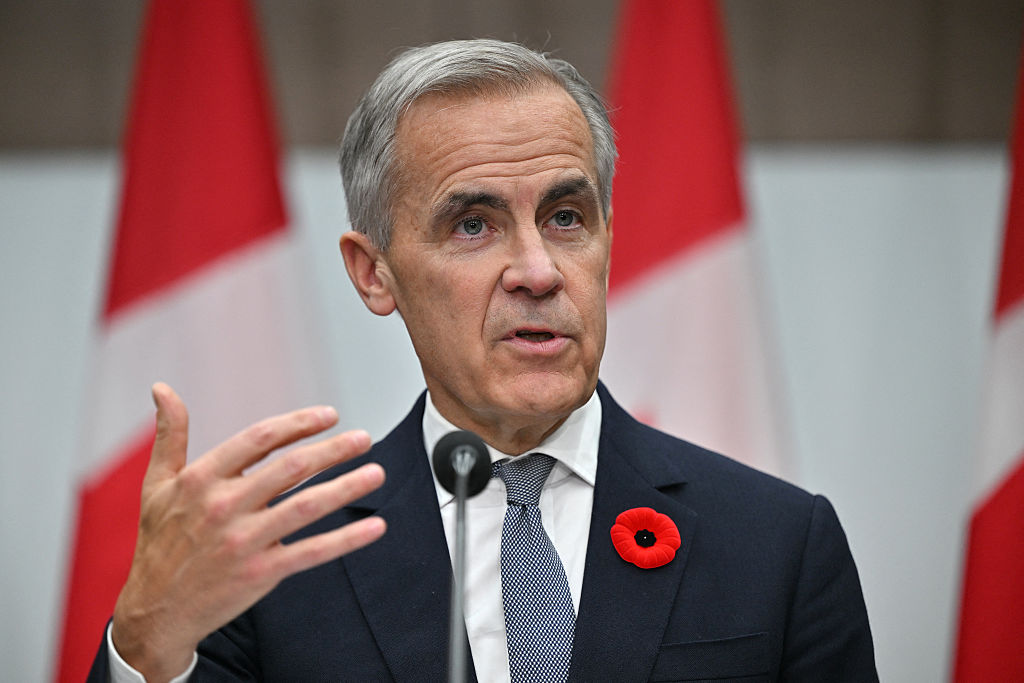
Canadian Prime Minister Mark Carney has finally unveiled his budget for 2025, and it has immigration experts worried.
Carney’s budget plans on slashing Canada’s acceptance of temporary residents, international students, and foreign workers significantly.
Carney’s plan outlined his immigration strategy for the next three years, 2025-2028.
While there are cuts across the board regarding immigration, permanent residents aren’t seeing any. Carney plans on keeping the number of new permanent residents at 380,00 per year until 2028.
Where the cuts really take place are in temporary foreign workers and international students.
Carney plans on scaling back the number of new international students from 305,900 this year to 150,000 a year for the next three years.
Foreign workers are also seeing huge cuts, with the number of temporary foreign workers arriving being slashed from 367,750 to 230,000 in 2026, and 220,000 in 2027 and 2028.
Carney’s new immigration plan will see the annual rate for these privately sponsored refugees drop from 23,000 this year to 16,000 in 2026, while government-assisted refugees are reduced from 15,250 to 13,250.
There are currently more than 90,000 privately sponsored refugees awaiting resettlement in Canada. The lower quota will reportedly increase the wait time to up to 6 years for some of those waiting.
Even with massive cuts to refugee programs and temporary residents, Budget 2025 is still going to increase Canada’s debt deficit.
In last December’s fiscal update, the Carney government projected the federal deficit to be $42.2bn in 2025-26. But the plan released by Carney will run a deficit of $78.3bn in 2025-26. The government says it will aim to reduce the federal deficit to $56.6bn by 2029-30, but the Conservative caucus has its deficit limit at $42bn, almost half of what Carney is proposing.
Carney’s budget will increase defence spending by $84bn over the next five years, to combat what it calls an “increasingly dangerous and divided world”. Canada has already pledged to meet NATO’s goal of spending 3.5% of its GDP on defence.
Although the budget will increase defence spending, it will cut federal jobs significantly.
Carney’s ‘Canada Strong’ budget plans on weakening the federal workforce by 28,000 jobs from the federal public service.
The federal public service currently employs more than 350,000 people, with more than 40 percent of them living in the Ottawa-Gatineau area.
The Canada Strong Budget 2025 will reduce the size of the federal public service by 40,000 jobs through job cuts, attrition, and early retirements. These cuts will take the workforce from 367,772 employees in March 2024 to 330,000 by 2028-29. There were 357,965 federal employees as of March 31, 2025.
Experts claim the cuts will only hurt Canadians.
“This budget really reads like austerity and Canada’s unions refuse to let workers pay the price,” Larry Rousseau, executive vice-president of the Canadian Labour Congress, told reporters Wednesday morning.
“The government wants to cut tens of thousands of public service jobs. This will mean longer EI waits, slower passports, fewer safety inspections and food inspections, delays for seniors and families. You do not modernize services by gutting them. I cannot believe that I heard this morning from the prime minister that same old, same old about doing more with less.”
The president of the Public Service Alliance of Canada, Sharon DeSousa, says, “The services and programs people rely on are going to be slashed.”
The Liberal party will need at least three conservative MPs to cross the floor to vote in the budget. One MP has already sided with Carney’s Liberals, meaning only two more are needed to put “Canada Strong” into effect.
“There were differing degrees of input which we received from the various opposition parties,” Carney said in Ottawa, the day after Finance Minister François-Philippe Champagne presented the first budget.
“I know, in fact, that there’s a lot in this budget that reflects the input from those parties from specific projects to certain programs and reinvestment in them,” he said. “So those parties are aware, and part of this is a process of digesting the budget.”

« Rénové dans les années 1940 dans un style art déco avec des tuiles vertes, ce qui était totalement inapproprié pour l’ère Lincoln. »







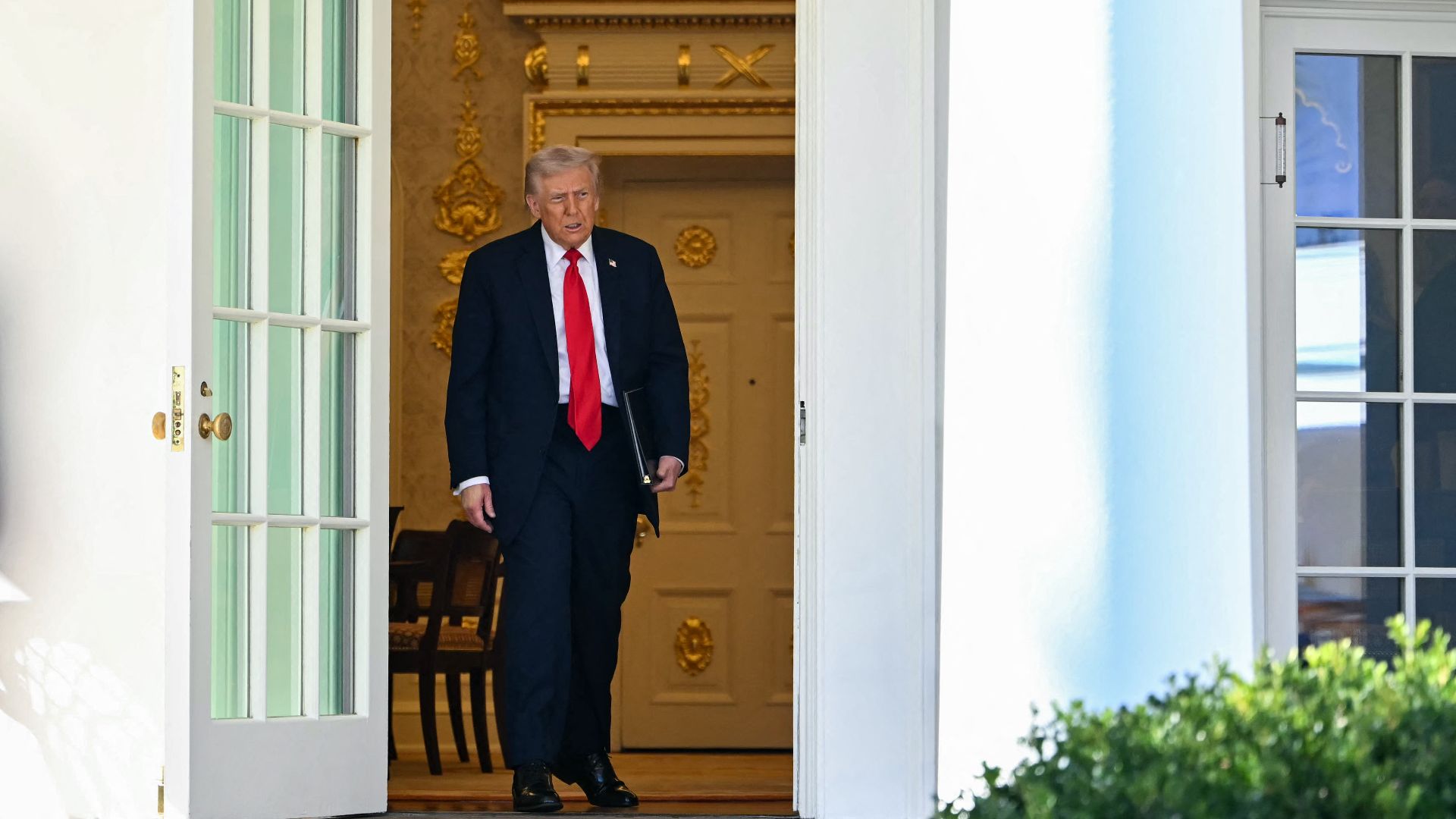










On Friday night, FOX News aired a somewhat inaccurate report.
The report claimed that Islamic hate groups in Nigeria were targeting Christians. In reality, there are Islamic extremist groups killing Christians, but not because they’re Christians.
It just so happens that FOX is the in-flight entertainment on DJT’s Air Force One. Trump caught the segment, and was immediately enraged. Shortly after AF1 landed, the president took to Truth Social as an outlet for his anger.
Where there may be truth to the statement ‘Christians are being killed by Islamic extremists’, its important to note that so are Muslims, and atheists, to an equal quantity.
According to Isa Sunusi, executive director of the group’s Nigeria program, « The jihadist groups kill both Muslims and Christians. They demolish mosques and churches. They don’t differentiate. »
The most prominent jihadist group in Nigeria, Boko Haram, began its ‘insurrection’ into Northern Nigeria in 2009, and has been consistently killing anyone it deems connected to secular religion.
« Boko Haram fighters killed politicians, civil servants, teachers, health workers and traditional leaders because of their relationship with secular authority, »
-Amnesty International
Trump took to Truth Social to let out his anger:
“Christianity is facing an existential threat in Nigeria. Thousands of Christians are being killed. Radical Islamists are responsible for this mass slaughter.”
Trump went on to say that he would make Nigeria a “Country of Particular Concern” under the Religious Freedoms Act.
Trump doubled down on his opinion days later, instructing Pete Hegseth to “prepare for possible action,” and threatening that America would come in “Guns a-blazin.”
Karoline Leavitt made the president’s stance clear to reporters, « If the Nigerian government continues to allow the killing of Christians, the United States will immediately stop all aid and assistance to Nigeria and may take action to wipe out the Islamic terrorists who are committing these horrible atrocities, »
Trump wrapped it all up by submitting an informal threat of war on Truth Social.
“If we attack, it will be fast, vicious, and sweet, just like the terrorist thugs attack our CHERISHED Christians,”
The United States military does not currently have troops in Nigeria. In 2024, the US government completed the withdrawal of 1,000 troops from neighbouring Niger, ending a long-time presence in the area.
From Nigeria’s perspective, Presidential spokesperson Bayo Onanuga said, « We are shocked that President Trump is mulling an invasion of our country. »
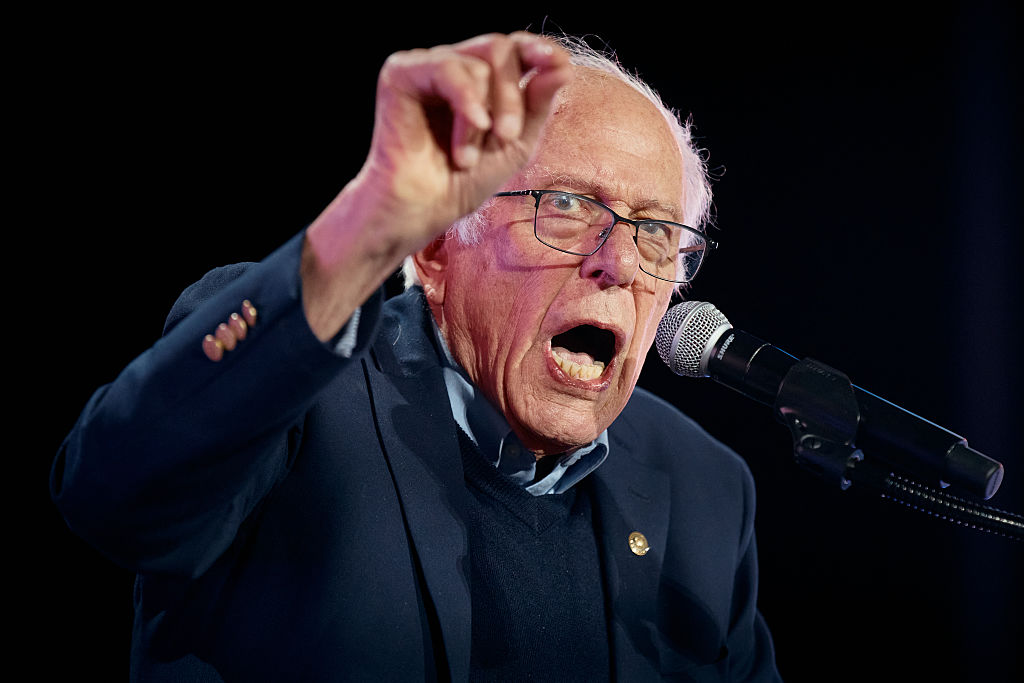
Bernie Sanders published an Op-ed in The Guardian on Saturday, emboldening Democrats not to give in to Trump’s shutdown, calling it:
If the Democrats cave now it would be a betrayal of the millions of Americans who have fought and died for democracy and our constitution. It would be a sellout of a working class that is struggling to survive in very difficult economic times.
The most prominent Democratic voice of the 21st century has spoken again, and he’s begging his colleagues in the Democratic Party to hold steady amidst the longest government shutdown in U.S. history.
As of November 4, the U.S. government will have been shut down for 35 days, tying the record set by Trump’s first administration in 2019.
Donald Trump’s funding bill was turned down by Democrats on September 30, triggering the shutdown. The bill would raise premiums on healthcare for more than 15 million Americans, while funding tax cuts for the 1 percent. In total, there will be almost $170 billion in cuts to life-saving social programs targeting America’s working class.
Since Republicans control the Congress, the Senate, and the White House, traditionally, the onus would be on them to come to the table and negotiate the bill their party created.
The Democratic Party is still waiting for that to happen. Republican lawmakers are refusing to budge on any of the points Democrats are taking issue with – namely, the massive hikes to Medicare, and the cuts being made to SNAP, amongst other programs that directly benefit 60 percent of Americans.
Republicans need 60 votes to pass FY26, or even the temporary funding bill being proposed (HR-5371). With only 53 caucus members, the GOP need at least seven Democrats to cross party lines and vote against working-class Americans.
The Democrats are refusing to back down, instead pleading with Republicans to sit down and negotiate the bill.
Trump stated this weekend there would be no negotiating, and that if Democrats “don’t vote, it’s their problem. »
When the government is shut down, everything pauses. This means federal workers don’t get paid, federal programs stop receiving funding, and communication between branches of government and their constituents can be all but blocked.
What’s more, Republican House Leader Mike Johnson approved a 6-week paid vacation for his party, meaning most Republican Senators are no longer in DC.
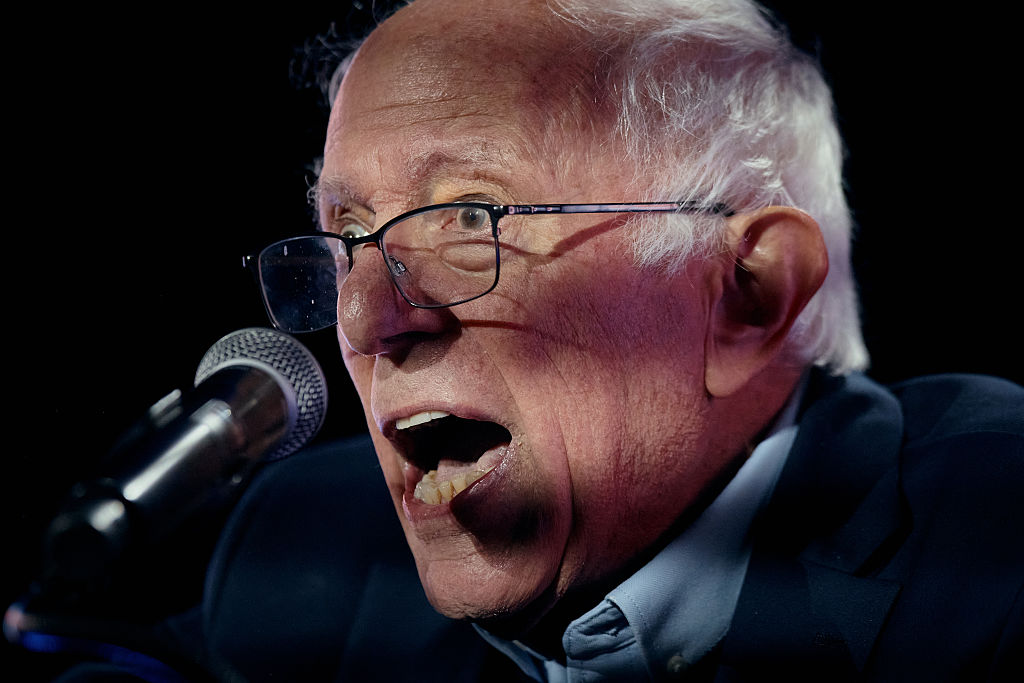
With millions of Americans feeling the effects of this shutdown, Democratic leaders are fielding thousands of calls from struggling constituents. This is who Sander’s piece on Saturday is targeting. The constituents sending the calls, and the Democrats answering them.
Sanders starts by outlining the gravity of the issue, calling it,
“This may be the most consequential moment in American history since the civil war.”
He didn’t mince words while talking about Trump either, calling DJT, “a megalomaniacal president who, consumed by his quest for more and more power, is undermining our constitution and the rule of law.”
Sanders also claimed Trump’s goal is to “utilize his victory to accelerate his movement toward authoritarianism.” A goal which Trump all but confirmed himself over the weekend, quoting, « Republicans have to get tougher; if we end the filibuster, we can do exactly what we want. »
Sanders outlined how Trump’s FY26 budget would “throw 15 million Americans off their healthcare,” and cause more than “50,000 unnecessary deaths each year.”
Clearly targeting voting Americans, Sanders broke down the shutdown, trying to break through a wall of active disinformation pushed by right-wing news sites.
Let’s be clear: this government shutdown did not happen by accident. In the Senate, 60 votes are required to fund the federal government. Today, the Republicans have 53 members while the Democratic caucus has 47. In other words, in order to fund the government, the Republican majority must negotiate with Democrats to move the budget forward. This is what has always happened – until now. Republicans, for the first time, are simply refusing to come to the table and negotiate. They are demanding that it is their way or the highway.
San. Sanders ended the piece on a rousing note, emboldening Democratic Politicians and encouraging voters to stand firm.
If the Democrats cave now it would be a betrayal of the millions of Americans who have fought and died for democracy and our constitution. It would be a sellout of a working class that is struggling to survive in very difficult economic times.

As of November 5, this will be the longest government shutdown in American history, breaking Trump’s previous record of 35 days. The shutdown in 2019 was due to the bill that would have redirected almost $8 billion to build the Mexico-U.S. border wall.
The budget that triggered this shutdown will result in almost $170 billion in cuts to social programs. It is estimated the cuts could cause up to 250,000 deaths by the time Trump leaves office, and could send 20 million Americans into poverty.
Experts claim that 60 percent of Americans cannot afford a $1000 expense, making them highly susceptible to homelessness. The cuts proposed in FY26 could raise a family of four’s food expenses by more than $ 4,000 and Medicare expenses by $ 2,000.
With 60 percent of America less than $5000 away from homelessness, FY26 could push millions of families into homelessness.
Right-wing media outlets like Newsmax and FOX continue to claim that the budget will actually benefit Americans, but numbers are numbers, and we took ours from the White House website. So, unless Trump’s own numbers are wrong, Democrats must stay strong, or else millions of Americans will suffer.

Late on November 4, Ukrainian forces undertook multiple successful UAV operations, severely damaging the Sterlitamak Petrochemical Plant JSC in Bashkortostan and an oil refinery in the Nizhny Novgorod Region.
« On the night of November 4, units of the Ukrainian Defense Forces struck the infrastructure of the Lukoil-Nizhegorodnefteorgsintez plant (Kstovo, Nizhny Novgorod Region, Russia). The Nizhny Novgorod Refinery has a maximum annual refining capacity of 18 million tons. The plant is engaged in supplying the Russian occupation army. A hit on the facility and a fire in the target area were recorded. The extent of the damage is being determined, »
– The General Staff of the Armed Forces of Ukraine

The aftermath of the blast in Sterlitamak was initially reported by Russian citizens living in the city. Their videos were circulated via the watchdog telegram channel, Cheka-OGPU.
The site also shared official communications from Kremlin authorities:
« Today, an explosion occurred in the water treatment plant of JSC SNHZ. Part of the plant collapsed. Five people were working there. According to preliminary reports, no one was injured. All emergency services have arrived at the scene. I am also on my way to the scene. The cause of the explosion is being investigated. I will keep you updated as information becomes available. Do not panic and trust only official sources. »
Radiy Khabirov, the head of Bashkortostan, told a telegram news source that, « Both drones were shot down by the Ministry of Defence and the security service of the enterprises. The debris fell in an industrial area near an auxiliary workshop, »
Contrary to Khabirov’s comments, Kremlin sources, city officials, and the General Staff of the Armed Forces of Ukraine all previously confirmed the explosion was caused by a UAV.
According to Ukrainian defense officials, « nearly twenty flexible tanks (approximately 900 m3 of fuel and lubricants) and two pumping stations were destroyed [in Sterlitamak]. »

The other attack was also successful in destroying at least part of an oil refinery in the Nizhny Novgorod Region.
According to Ukrainian watchdog channels, the operation was jointly carried out by the Main Intelligence Directorate of the Ukrainian Ministry of Defense, Ukrainian Armed Forces drone operators, and Special Operations Forces, using more than 50 Bober and FP-1 UAVs.
The refinery supplied fuel to the Moscow region. Ukrainian officials stress that the facility was for military use, not international distribution.
Citizen reporters filmed a fire breaking out at the plant after the explosion, further damaging the refinery.

This announcement follows the revelation, a few weeks ago, of the company’s strategic plan. This plan unveils a major transformation of its operating mode, with a major reorganization focused on the massive adoption of artificial intelligence to improve its operational efficiency.







Cette annonce fait suite à la révélation, il y a quelques semaines, du plan stratégique de l’entreprise. Ce plan dévoile une transformation importante de son mode de fonctionnement, avec une réorganisation majeure axée sur l’adoption massive de l’intelligence artificielle pour améliorer son efficacité opérationnelle.







A dashboard can upgrade the entire driving experience or bring it crashing down before the car even moves. It’s one of the first things you see and touch, shaping your impression in seconds. That single space can feel like a high-tech lounge—or a cluttered afterthought. Some brands have pushed boundaries with sleek interfaces and smart design choices. Others got lost trying to be different and ended up with layouts that puzzled more than they pleased. The contrast between these approaches says everything about priorities, vision, and how much a brand really understands its drivers. Let’s start with the dashboards that stand out for all the right reasons. They go beyond function and bring a sense of purpose to the cabin.