Canada’s most popular children’s cartoon channel, Teletoon, will be rebranded as Cartoon Network, starting March 27th.
The channel, which is a subsidiary of Corus Entertainment, launched 25 years ago in October 1997. Since then, it has aired original cartoon programs, while also playing TV shows from its sister channel Cartoon Network.
Teletoon is set to be rebranded as Cartoon Network in Canada, while the current Cartoon Network channel is being rebranded as Boomerang to avoid confusion.
“Debuting in the Canadian market for the first time, but bringing with it scores of fans worldwide, the Boomerang brand stands for the best in retro content, classic animation series and foundational kids programming,” writes Corus in a press release.
Teletoon will be rebranded as Cartoon Network in Canada March 27th, while current Cartoon Network Canada will be rebranded as Boomerang. pic.twitter.com/GF29pReRTG
The new Cartoon Network will deliver flagship shows like Total DramaRama and classic Teletoon programming, alongside new series produced by Cartoon Network Studios, Warner Bros. Animation, and Corus’ own Nelvana Studios.
“Staying true to our loyal fans across generations has been our top priority as we reimagine the future of our kids’ networks,” said Jennifer Abrams, SVP programming and multiplatform at Corus Entertainment, in a statement.
According to Corus, the new Boomerang channel will sport a fresh look, and present funny, timeless and uplifting entertainment for kids and their families to enjoy.
A few shows coming to Boomerang Canada include Tom & Jerry in New York, The Powerpuff Girls, Jellystone, Total Drama Island, Scooby Doo and Guess Who, and more.
Check out these Tweets from Canadians bidding farewell to their favourite childhood TV channel:
Teletoon is ending & its important to remind you of the time they aired this bumper pic.twitter.com/bF6T1mrm7R
Teletoon was more than just the Canadian equivalent of CN, however. In addition to having its own lineup of original programming, Teletoon licensed cartoons from around the world—showcasing the diversity of the medium. It sucks to see it end like this, but it won't be forgotten. pic.twitter.com/gCVC63ZEyV
Man this makes me sad, so many good memories of Teletoon when i was growing up. Cybersix, Redwall, Clone High, even the Donkey Kong Country show they made, all good memories. https://t.co/ADFYw8kJx3
The Canadian Radio-television and Telecommunications Commission (CRTC) has launched a consultation focusing on how major telecom outages are reported.
“Canadians are experiencing an increased frequency of outages to crucial telecommunications networks,” the CRTC said in a press release. Recent outages came from Bell Alliant, Telus, and of course, Rogers’ through its July 8th outage. The Commission notes its hiring “an independent firm” to go over Rogers’ plans to prevent future outages.
While the consultations that will contribute to regulatory framework are ongoing, the Commission has directed service providers to inform them of outages within two hours. Providers must also follow up with a report within 14 days of the outage.
Anyone interested in providing comments has until March 24th to do so. You can provide comments online, in writing, or through fax.
The CRTC will introduce more consultations focusing on a number of issues surrounding outages, including accessing emergency services and consumer compensation.
“Canadians need reliable, high-quality telecommunications services,” Vicky Eatrides, the Chair of the CRTC, said. “We are taking action to lessen the disruptive impact of service outages on Canadians, reduce their occurrence and length, and ensure that essential services such as 911 and emergency alerts are always available.”
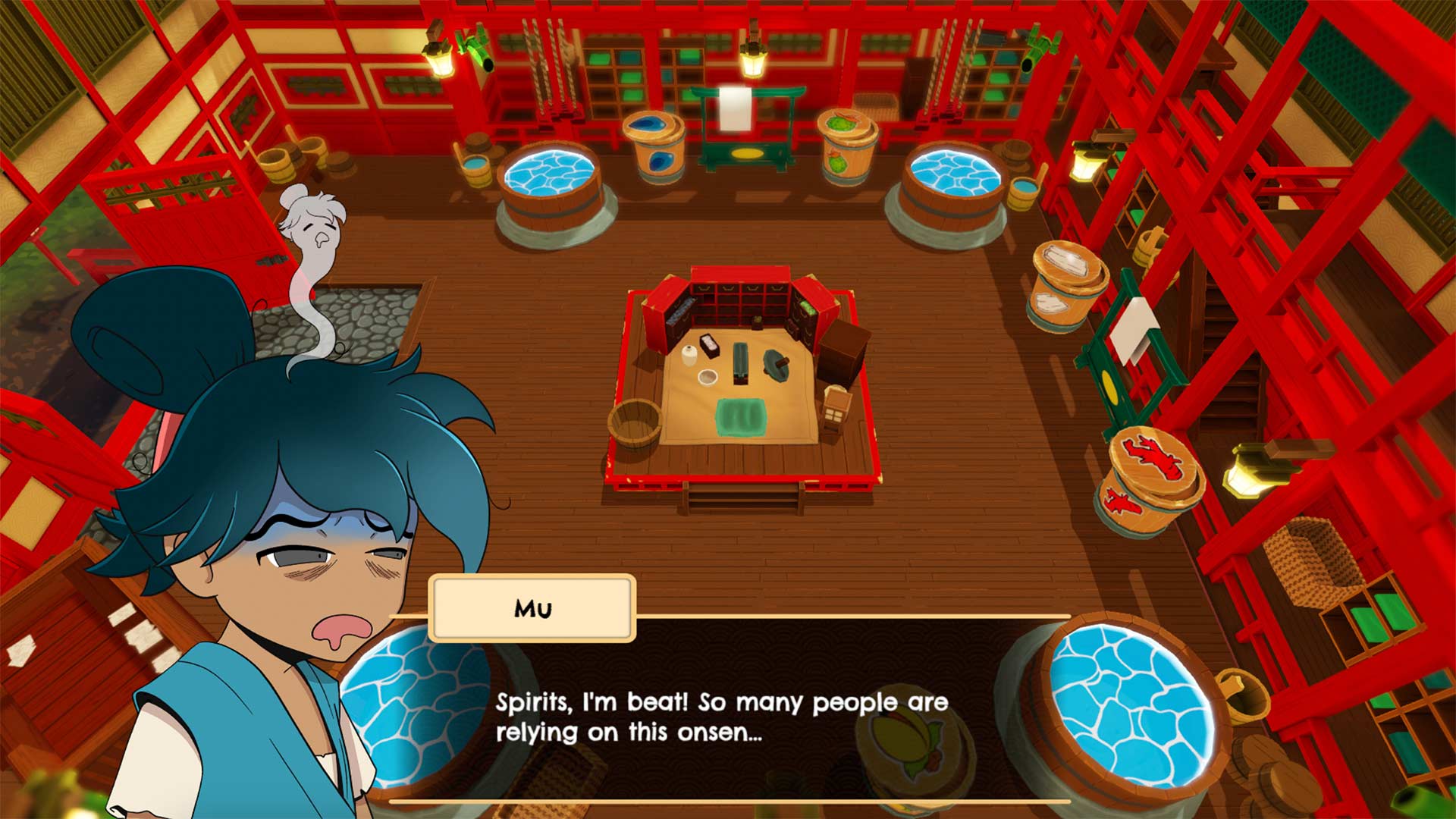
In September, Chicago-based Waking Oni Games released Onsen Master, a hot spring customer management simulator.
While the premise and overall aesthetic draw heavily from Studio Ghibli’s Spirited Away, the game was developed primarily by Black creators. It’s that intersectionality between Black experiences and Japanese media that Waking Oni’s founder, Derrick Fields, finds so interesting. For the game designer and Northwestern University professor, it’s an opportunity to help further representation in the industry for both BIPOC and LGBTQIA+ communities.
MobileSyrup sat down with Fields to learn more about his work on intersectionality, Black representation in gaming and how we can all help bring more Black creators into the industry.
Question: To start, can you tell me a little about your journey into game dev? What are some of your earliest memories playing games and when did you decide that you wanted to pursue this as a career?
Derrick Fields (Image credit: Derrick Fields).
Derrick Fields: My experience in gaming and memories go way back to Sega — like the Sega 16-bit and all of that. But I think where it was really instilled in me was playing the RPGs, mostly from Square Enix, as they arrived on PlayStation. Behind me is a little figure from Final Fantasy IX [a plushie of the Black Mage character, Vivi] and that’s probably the most beloved Square Enix experience that I had growing up and certainly resonated with me. I think it was maybe sometime around then that I continued to be really enamored by JRPGs and understanding that genre, specifically.
But it wasn’t until I was in university that I was pursuing a degree in illustration to go into character design and that sort of thing. But it at one point clicked, and I said, ‘Oh, right, people make video games — all of the stuff that you’ve been enjoying, of course, there’s somebody behind it.’ But I think it really clicked, and I made a decision to pivot into 3D modeling and animation to pursue a creative career in gaming.
Q: You talked about being a fan of JRPGs like Final Fantasy, and I know you’re big into anime, like Spirited Away. And, of course, your game is Onsen Master. What is it about that intersectionality that speaks to you? What is it about the Black experience that meshes with Japanese media and culture?
Fields: I have to announce in this interview that I’m wearing an anime shirt, which was not intended, but it seems to be something splattered across my closet. [laughs]
When it comes to these intersections, this is something that I pursue heavily and a conversation that I pursue heavily. And that realizes itself in a couple of different avenues. I’m a part of the Japanese Arts Foundation here in Chicago, and most recently became the president of that non-profit. And so what we do is create a lot of events based in the community of Chicago that celebrates all the different intersecting cultures that come together to discuss and take joy in participating in Japanese media — games, anime, film. And when it comes to that intersection in Black culture, this is a conversation that I’ve pursued a lot — to the point that we’re at the research paper point in that area of discussion.
Intersections with Black culture and Japanese media have been happening for a while. We see these types of resonance or examples in media such as Cowboy Bebop with the inclusion of jazz [and] more obviously in Samurai Champloo with hip-hop and samurai coming together for its melody. And then, of course, just as prolific with Afro Samurai, really just putting it right in front of you. There’s been a gap since that time and media has still been explored until we came all the way up with Carole & Tuesday, Cannon Busters, and, most recently, Yasuke [a story about a Black samurai], which included LaKeith Stanfield. And so these conversations are happening in media and there’s a clear impact of anime and most likely anime from Toonami era, as most of us grew up with that in high school, and now we’re in the position to be able to create media that is inspired by that.
This doesn’t come without acknowledging the impact of shonen shows like Dragon Ball Z or Naruto on the Black community and how we might code certain characters as Black, even though they might not on the surface represent that. One example is Piccolo [from Dragon Ball Z]. Piccolo is ubiquitous as a Black dad among at least my peers, and certainly those who I interact with online. And then, of course, just the matchup of Naruto and its entire series.
But to get into why that intersection happens and maybe why that has a resonance — I think of it in two different ways. A lot of these shonen shows present a story that characterizes somebody who is coming from nothing but develops their ability or strength or mindset to come up against opposition, and I think that is a goal that is prominent, certainly, within individuals like myself. And then another example that I think maybe helps to characterize this relationship is actually another documentary, Iron Fists and Kung Fu Kicks. [Editor’s note: while it’s on Netflix in the U.S., it’s only available on PVOD platforms like iTunes and Google Play in Canada.] It’s really great. It establishes the relationship between both Japanese and Chinese martial arts films on the Black community in the Bronx, and how that influenced an entire genre of Blaxploitation films, black stunt artists, and even furthering that in its community. So there’s a lot to be observed, and I really enjoy making a concerted effort to identify this conversation.
Q: When you take on something like Onsen Master, there’s an inherent risk in tackling a culture that isn’t your own. When you go about making a game like that, how do you avoid issues of appropriation and handle that subject matter respectfully and earnestly?
Onsen Master (Image credit: Waking Oni Games)
Fields: Certainly. I think in some of the examples that I shared, that is, in my opinion, one of the better routes to pursue. And that is not to be, say, a Black individual that is making intrinsically Japanese content, but find ways to include Black representation in media that is sort of inspired by it. Onsen Master, yes, does include these fantasy towns on a fantasy island that is very much embedded in Japanese lore with the inclusion of Yokai or Japanese spirits. But where the representation occurs is by including characters of different skin tones and genders within the denizens or characters of this game.
It’s not my goal to, say, tell a specific Japanese story. I think that’s where it starts to tread into the territory of being a little more appropriative, or at least needing to be much more conscientious of it. And so I think of Onsen Master as really the start of that conversation, but ultimately wanting to build more games and more media that lean even further to automate inspired content that is ultimately representative of Black individuals and Black stories. And so, you know, Boondocks and some of the other examples also fall within media that is derived from that same conversation,
Q: Your work with intersectionality is one facet of representation. What are some other good examples of Black representation in games in terms of the characters and stories being told?
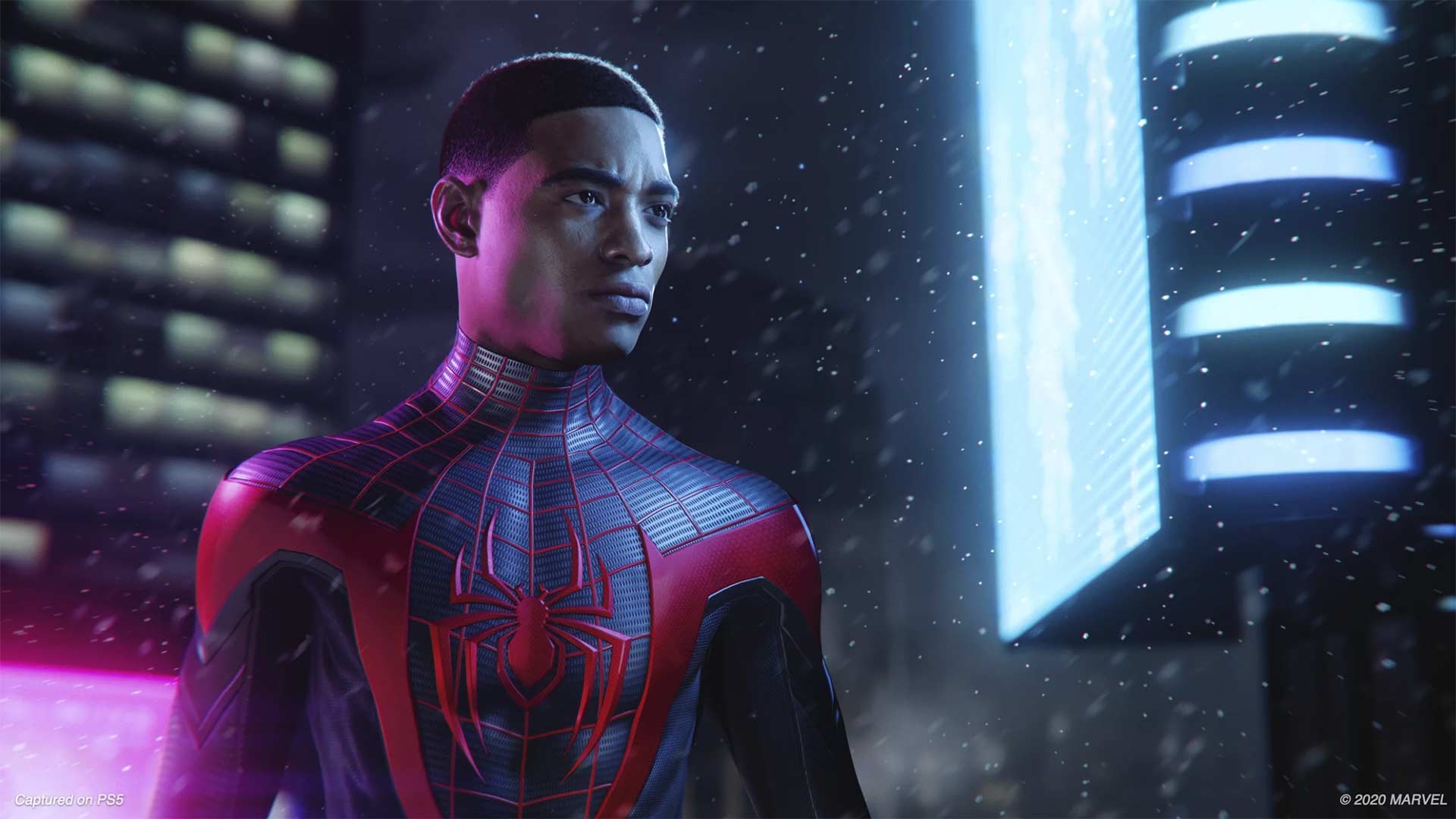
Fields: When it comes to Black stories and Black characters, I think one thing that’s important to acknowledge is Black representation in games doesn’t have to always come with the story being intrinsically Black; the inclusion of Black characters without Black stereotypes is an important thing to acknowledge. And so when I think of stories that are successfully doing it, it’s representing not just Black characters, but Black and Brown characters in a normal environment that is reflective of our own realities, diverse communities and spaces. Marvel’s Spider-Man: Miles Morales, of course, I have to champion that one in its representation, feeling so natural for Miles’ life. When he steps outside of his home and you see his interactions in the city, and that being inclusive of both his Black and Latin backgrounds. I think that game is an incredible example of how things can be done successfully.
Marvel’s Spider-Man: Miles Morales (Image credit: PlayStation)
Taking it in a slightly different direction. I love how Deathloop has included, so naturally, two different characters that are just a part of the story, but neither of which are stereotyped as being caricatures of Black culture. And certainly, there are many others. I’m glad I can say that we’re at a point of being able to represent many others. And there are indie developers that are doing a lot of work to create those representations as well and show the diaspora of how many spaces and environments we can take up.
Fields: I’m glad you bring up character creators because it ends up being a space that, from a Black experience, is kind of that first engagement, that first barrier, of ‘can I be represented in this game?’ Elden Ring is a great example. But when it comes to other games, historically… I did sort of laud Square Enix for being a game company that inspired me to jump into games and show me these magical worlds. But the relationship with one of my favourite game companies is somewhat contentious because it wasn’t until later that I started to acknowledge that it wasn’t representing Black individuals as well as other cultures very well. And so that’s an area — and certainly the area of JRPGs — that could do a little bit better.
But I say this with a bit of trepidation because I don’t necessarily put the onus of a Japanese company, with predominantly Japanese studio members, to represent Black culture well. That’s a systemic result of there being no Black individuals within that space to speak to how they could be represented better. And so I would at least say, or nominate the responsibility — if a studio is endeavouring to represent diverse cultures in a game or include those, then certainly consulting with those same groups could be one starting step to representing those spaces. We might have seen better examples of, say, Sazh in Final Fantasy XIII. And, hopefully, arrive at a milestone that studios that are endeavouring to create diverse short stories also reflect that inside their company — that there are diverse team members contributing to those titles so that they can inform much better things like hair texture and skin tone.
Q: On a larger note, there are obviously many Black people who play games, but we don’t see that reflected on the developer side. What are some of the ways the industry can collectively help bring in more Black creators?
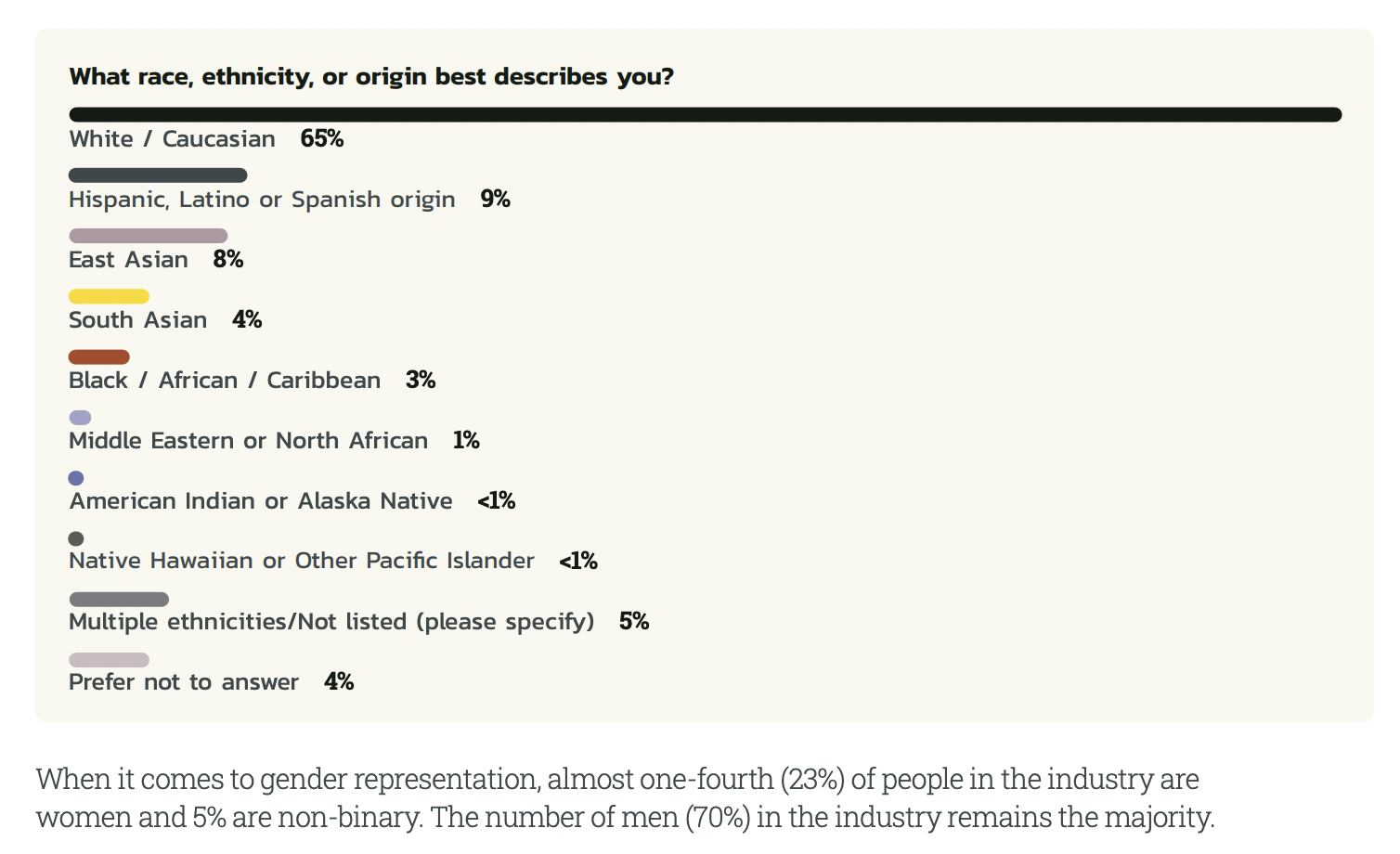
Fields: It’s kind of abysmal. The last International Game Developers Association report said that Black individuals made up about four percent of the industry. And then some other statistics, I’d have to check where it came from, but it was like 0.1 percent or 0.01 percent of the industry is made up of Black executives. And so when it comes to the answer of how can we position more developers in the industry in both of those spaces, studio roles and executive roles? On one end, it certainly comes with funding opportunities. I think publishers, especially in the wake of Black Lives Matter and the murder of George Floyd, came out to say that they wanted to support Black-led teams and studios. I personally am curious — what results of that were rendered, and if there were other developments that come from that? I personally didn’t see a lot of communication then after. And so it does leave me curious. But I think funding is certainly one example.
And then finding ways that we can give more resources into STEM [science, engineering, technology and math], and the accessibility of tech roles on the high school level. Finding ways to include games is a good starting point — to engage students that they can be involved in games as well. For those who are already burgeoning in their careers as developers and indie developers, it goes back to those funding opportunities that I think should be leveraged for smaller teams, and certainly those who are new to the space. As far as executive roles, just flat out hire more Black individuals and put those individuals in leading roles so that they can inform more diverse outcomes.
Q: On a larger level, what are some of the ways that schools and other organizations can help foster an interest in games?
Fields: This is something that my studio and I are trying to tackle, personally. In Chicago, there are not a lot of game studios, but there are a lot of high school programs, especially for students who are coming from underfunded neighborhoods, to be able to engage with the resources that help inform the career opportunities that are available. And so that includes STEM and that includes art. I’m trying to navigate and understand how we can include video games in that conversation, and ultimately develop a studio that can participate with the organizations that are providing those outcomes. And so this is kind of the beginning of that conversation. And I think, in getting an answer, it’s still forming. But for now, I’m very interested in how game studios personally can participate with, say, non-profit organizations that are making that concerted effort to connect with high school students. Because that’s where it begins. Video games are the thing that is most successful [in terms of] being played by students on mobile phones on their consoles all the time. They’re engaging with some sort of content that is derived from that media. And so it would be incredible to be able to see more studios connect with non-profit organizations doing that.
Q: The term “ally” is thrown around a lot. For anyone who isn’t Black and wanted to learn more and show support, what are some suggestions you would give?
Fields: It comes with these types of actions that have been taken, similar to how this conversation came to fruition — being invited to share my experiences to help inform how we can create, other outcomes, other futures. Extending into other spaces… in some ways expressed a little bit of exhaustion at some of the more clear outcomes of, say, just simply inviting those individuals — Black individuals, brown individuals, queer individuals — to the spaces that you’re curious o hearing from them. And so if that’s a game studio who’s saying, ‘how do we become more diverse?’ Well, come on — just hire those individuals or include them in that space. I think it certainly starts there. But again, it doesn’t make true waves, true change, unless some of those individuals are at those executive levels or at those decision-making levels so that they can continue advocating. It doesn’t mean much if, say, you are a publisher or a funding opportunity who wants to support Black-led teams, but there are no Black individuals part of your curatorial team or advisory team to be able to understand and sort of have some of that bias towards the games that you might be curating.
Q: What advice would you give to Black kids who are interested in games and want to break into the industry?
MARK YOUR CALENDARS!!
We are back with another showcase, where we celebrate Black Game Developers and creatives in this space 🤩
Fields: Well, I have to acknowledge a handful of things. This comes down to resources and their accessibility. By asking the question, I wonder if that same high school student would be in a space to bump into this conversation, this interview, or any others that are having those types of outlets that are serving these types of conversations and trying to promote it. But how can we get the information to that student so that maybe, for MobileSyrup, they know that there’s this type of conversation happening. And so it comes down to resources, and kind of that provision of resources, I think of those non-profit organizations that are really active in trying to give access to art and the tools to make art or engage with STEM. But for the student who maybe has bumped into this article, or bumped into this conversation, or similar conversations, because they’re already engaging with game design and media, I would heavily recommend engaging with the free resources that are already available.
And so, if that first hurdle is a laptop, or the hardware to be able to produce games, that means navigating to a library or another environment that hopefully can offer at least the base level to be able to utilize software such as Unity or Blender — both of which being available for free. And then certainly tapping in with a lot of the YouTube tutorials, but also communities that are celebrating these conversations in a very big way. I think of an organization that I’m a part of, Black Voices in Gaming, where we already reach out on social media often to connect with the indie developers who are creating new projects and maybe just breaking out into that social space.
This interview has been edited for language and clarity.
February is Black History Month, an annual observance of the legacies of Black communities in Canada, the U.S., and other countries. More information can be found here. Some relevant initiatives to check out include Mynno, a diversity-focused Canadian gaming organization, Black creators promoted by Xbox and the women-led diversity group, Paidia Gaming.
The 1TB and 2TB versions of the 12.9-inch iPad Pro are listed on the website as well, but they are currently out of stock.
If you want to learn more about the 2021-released iPad Pro, click here for an in-depth review. Alternatively, compare the 2021 iPad Pro with its predecessors here.
MobileSyrup utilizes affiliate partnerships. These partnerships do not influence our editorial content, though we may earn a commission on purchases made via these links that helps fund the journalism provided free on our website.
There’s still some confusion around Netflix’s account-sharing changes in Canada, but generally, Canadian subscribers need to pony up $8 more each month to share Netflix with people outside their households. Except, Canadians who get Netflix through Telus’ Stream+ bundle won’t have that option.
A Telus spokesperson confirmed to MobileSyrup that “At this time, there is no option to add ‘extra members’ to Netflix through your Stream+ account.”
Of course, that leaves some uncertainty. For one, it’s not clear if that means Stream+ customers will be able to continue sharing Netflix with people outside their homes (my guess is this won’t be the case). Moreover, it’s not clear if or when Telus will allow people to add extra members through Stream+, or what impact that will have on billing. Plus, if someone with a Netflix account who added additional members switches to Stream+, it’s not clear what will happen to the additional members.
When pressed for additional information, Telus did not elaborate.
Currently, Stream+ costs $25 per month (or $20 for two years when added alongside an activation or renewal of any Telus 5G+ or CAN-US plan). The Stream+ bundle includes Netflix Premium, Apple TV+, Discovery+ and Telus TV+. Netflix Premium costs $20.99/mo in Canada. Premium also now enables the addition of two extra members at $7.99/mo each — check out how to add members here.
However, the Telus Stream+ website explains in a FAQ section that people with existing Netflix accounts can bring them over to the Stream+ bundle to keep their watch history, preferences and account settings. Importantly, it notes that “billing will also transfer over to Telus.”
Ultimately, several unknowns remain around Netflix and Stream+. My two cents on the issue; Telus will likely adjust Stream+ in the coming weeks to work with extra members. If Telus doesn’t, it sounds like there could maybe be a loophole enabling Stream+ users to keep sharing their accounts, but I really wouldn’t bank on it (and you shouldn’t, either). This story will get updates if Telus provides any more information about Stream+.
A high-speed internet project from the Municipality of Pictou County has received a funding boost from Nova Scotia.
The project, which aims to bring high-speed internet to 4,700 homes and businesses, will receive $10.6 million from the Nova Scotia Internet Funding Trust.
“The Nova Scotia Internet Funding Trust shares our commitment to provide Nova Scotians with high-speed internet access,” Nova Scotia’s Community Services Minister, Karla MacFarlane, said. “The Pictou County Rural Broadband Project is an important part of how we will achieve this, and together with our partners, we are pleased to support this expansion.”
Until the project is complete, residents and businesses can access fixed wireless service. The county started rolling it out in December, and people can switch over when fibre through the project becomes available. Residents and businesses can alternatively access internet through the Satellite Internet Service Rebate Program.
In March 2023, Netflix Canada is set to stream several new TV shows, films and documentaries, including Murder Mystery: Season 2, You: Season 4 Part 2, Shadow and Bone: Season 2 and season 7 of Riverdale.
Coming Soon
Agent Elvis — Netflix Series
Furies — Netflix Film
I Am Georgina: Season 2 — Netflix Series
March 1st
Cheat — Netflix Series
Tonight You’re Sleeping with Me — Netflix Film
Wrong Side of the Tracks: Season 2 — Netflix Series
Baby Mama
Couples Retreat
Fakes: Season 1
Gran Torino
Hunt
The Intern
Léon: The Professional
Little Angel: Volume 2
Men in Black
Men in Black II
Omertà
Promising Young Woman
Sense and Sensibility
Stepmom
The Threesome
When We Were Boys
March 2nd
Framed! A Sicilian Murder Mystery: Season 2 — Netflix Series
Karate Sheep — Netflix Family
Masameer County: Season 2 — Netflix Series
Monique Olivier: Accessory to Evil — Netflix Documentary
Sex/Life: Season 2 —Netflix Series
Space Jam: A New Legacy
March 3rd
Love at First Kiss — Netflix Film
Next in Fashion: Season 2 — Netflix Series
Split the Root
March 4th
Chris Rock: Selective Outrage — Netflix Comedy
Divorce Attorney Shin — Netflix Series
March 6th
Ridley Jones: Season 5 — Netflix Family
March 7th
Good Will Hunting
March 8th
Faraway — Netflix Film
MH370: The Plane That Disappeared — Netflix Documentary
Scream
March 9th
You: Season 4 Part 2 — Netflix Series
March 10th
The Glory Part 2 — Netflix Series
Have a nice day! — Netflix Film
Luther: The Fallen Sun — Netflix Film
Outlast — Netflix Series
Rana Naidu — Netflix
March 14th
17 Again
Ariyoshi Assists — Netflix Series
Bert Kreischer: Razzle Dazlzle — Netflix Comedy
March 15th
Adrift
File 13
I, Tonya
The Law of the Jungle — Netflix Series
Mommy
Money Shot: The Pornhub Story
Splice
March 16th
Interstellar
Shadow and Bone: Season 2 — Netflix Series
Still Time — Netflix Film
March 17th
Dance 100 — Netflix Series
In His Shadow — Netflix Film
Maestro in Blue — Netflix Series
The Magician’s Elephant — Netflix Film
Noise — Netflix Film
Sky High: The Series — Netflix Series
March 20th
Gabby’s Dollhouse: Season 7 — Netflix Family
March 21st
We Lost our Human — Netflix Family
March 22nd
Invisible City: Season 2 — Netflix Series
Jackass Forever
The Kingdom: Season 2 — Netflix Series
Waco: American Apocalypse — Netflix Documentary
March 23rd
Johnny — Netflix Film
The Night Agent — Netflix Series
The Suicide Squad
March 24th
Atomic Blonde
Chor Nikal Ke Bhaga — Netflix Film
Love is Blind: Season 4 — Netflix Series (new episodes)
March 27th
My Little Pony: Tell Your Tale: Season 1
March 28th
InuYasha: Seasons 4-5
Mae Martin: SAP — Netflix Comedy
March 29th
Emergency: NYC — Netflix Documentary
Unseen — Netflix Series
Wellmania — Netflix Series
March 30th
Big Mäck: Gangsters and Gold — Netflix Documentary
Employees who once successfully avoided major layoffs at Twitter were not safe from future cuts, despite promises from company CEO Elon Musk.
After Musk laid off employees across its headquarters in November, those who remained were told there would be no more layoffs, according to The Verge. But recent events show that hasn’t been the case.
The publication reports the company laid off dozens from Twitter’s sales and engineering departments, including one employee who was responsible for engineering the platform’s ad business.
Musk has also reportedly given employees one week to fix ad targeting in Twitter’s main feed. The Verge reports Musk wants Twitter’s ads to work like Google search ads, focusing on keywords instead of user activity.
One of the laid-off employees is Marcin Kadluczka, an engineer manager for monetization. The Verge reports Kadluczka “reported directly to Musk,” and he issued his one-week deadline just prior to laying off employees.
Just a couple weeks after Microsoft unveiled its revamped Bing with a new ‘Chat’ feature powered by an upgraded ChatGPT, the company is continuing its breakneck rollout by launching Bing Chat on mobile.
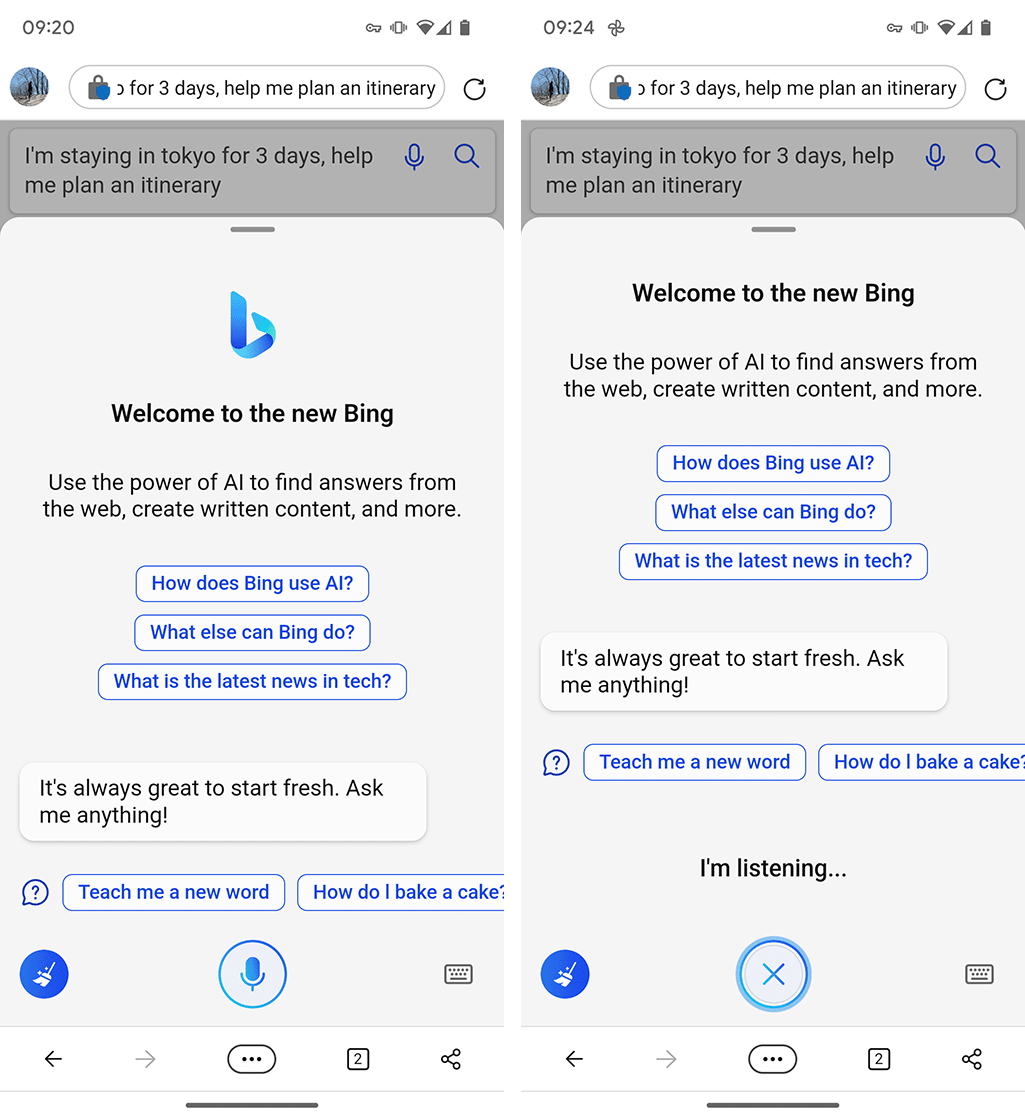
In a new blog post, Microsoft said that Bing Chat is “available on iOS and Android today.” The blog post makes mention of the Bing mobile app and the Edge mobile browser, but in my brief testing, I wasn’t able to easily access it through the Bing app on my Pixel 7. However, Bing Chat was available through Edge when tested on both the Pixel 7 and an iPhone XS as long as I was signed into my corresponding Microsoft account.
That said, accessing Bing Chat wasn’t particularly straightforward. On both devices, I had to search a query through Bing first, and then I could tap the ‘Chat’ option to switch over to Bing Chat.
Along with availability on iOS and Android devices, Bing Chat now supports voice input. In fact, it appears that’s the main way Microsoft wants people to interact with Bing Chat on mobile — when you access the Chat interface, there’s a big, blue microphone button you tap to speak a query. You can still type queries by tapping the grey keyboard icon on the left side of the interface.
Bing Chat in Microsoft Edge for Android.
As with other devices, accessing Bing Chat on mobile requires access to the Bing preview. If you haven’t signed up for it, check out our how-to here. If you already have access to the Bing preview, Chat should be available as long as you’re signed in with the same Microsoft account on your mobile devices.
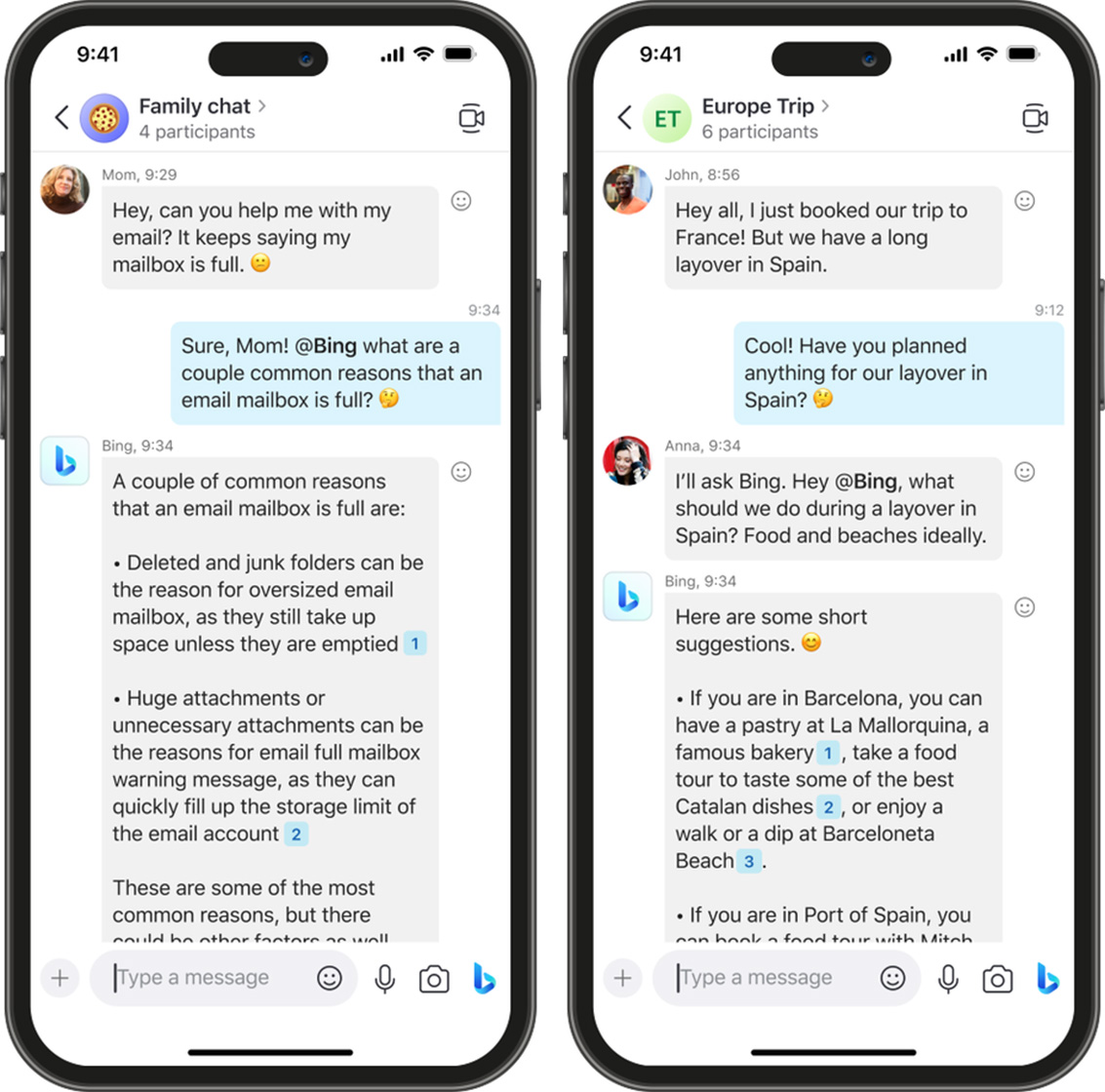
Beyond the Bing app and Edge, Microsoft expanded Chat to Skype. Skype users can add Bing to conversations the same way they would add any other contact and then ask it questions by typing “@Bing” into a message. Moreover, Microsoft says users can pick how they want Bing to respond. For example, Bing can reply with bullet points, text, or a simplified answer.
Microsoft appears to be using Bing in Skype to test out how it’ll work in a messaging environment before a wider expansion. In the blog post, the company specifically outlined plans to bring Bing to “other communications apps, like Teams, in the future.”
Bing in Skype is available worldwide in preview starting February 22nd. For those already part of the Bing preview experience, Microsoft says the Bing in Skype capabilities will show up later today — if you’re not part of the preview experience, you’ll have to sign up and join the waitlist (again, check out our how-to here). Microsoft did warn that it’s aware of “connectivity issues in low-bandwidth situations” when using Bing, and the company says it’s working on a fix.
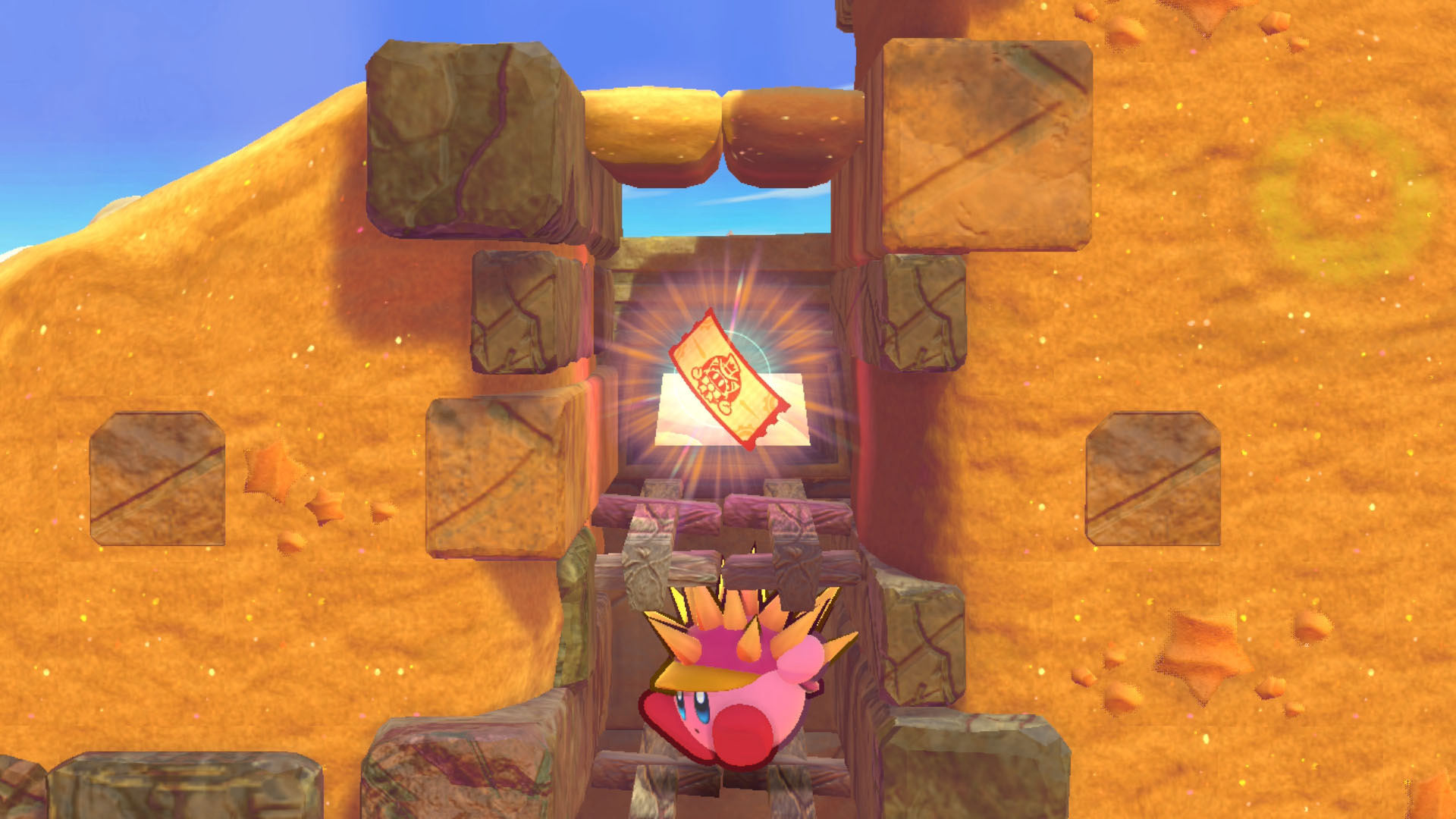
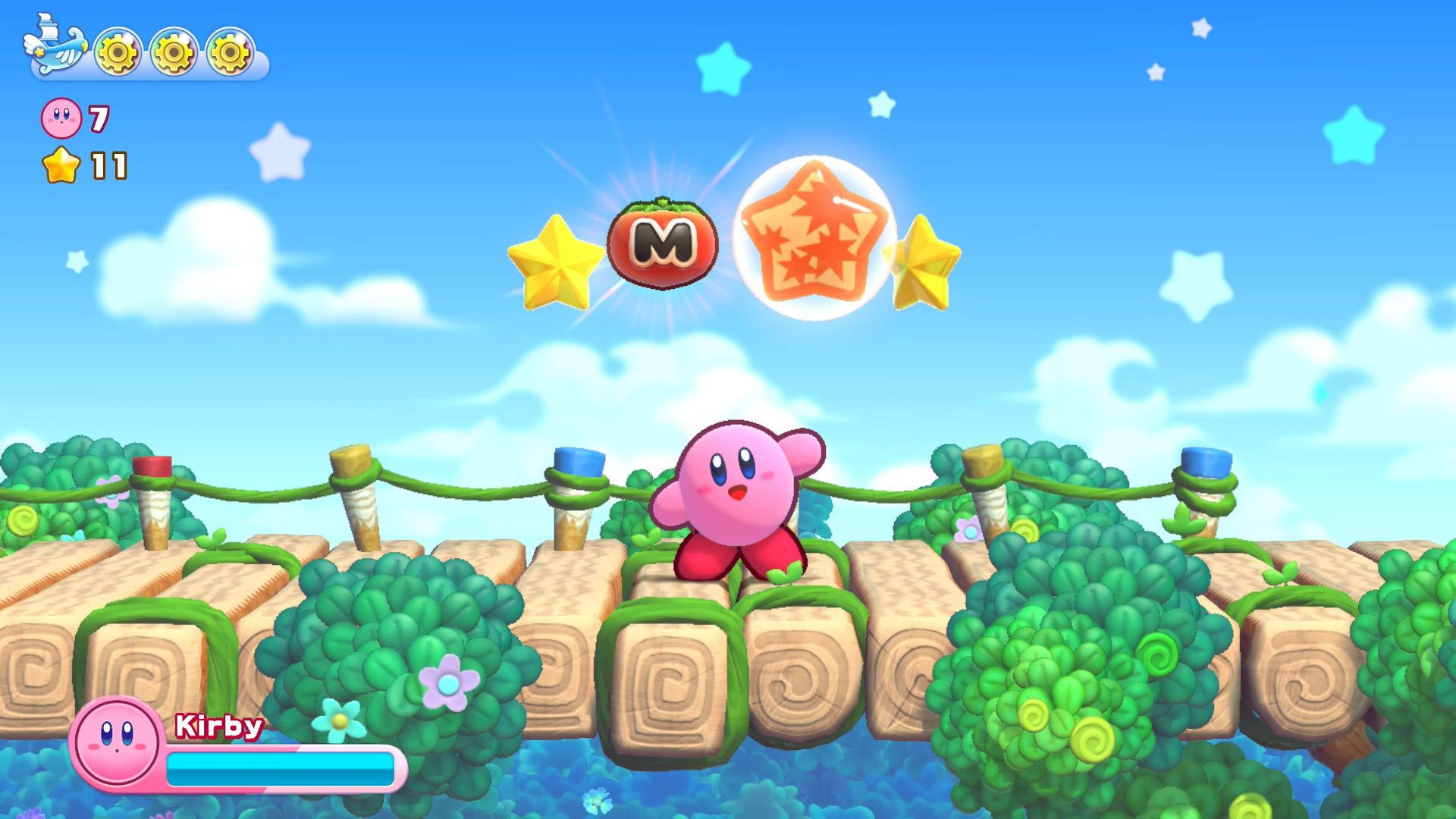
If you’ve played a sidescrolling Kirby title (or the 2011 original for the Wii), you’ll know what to expect here. The pink puffball’s gameplay remains some of the most forgivable platforming out there, thanks to Kirby’s ability to float, suck up his foes and take over their often inventive powers. If you happen to miss that pivotal jump, don’t worry — just suck up some air and float back to safety. This level of forgiveness is why nearly every Kirby title — except, arguably, Kirby and the Forgotten Land, which can get quite difficult –– is so great for inexperienced gamers.
On the other hand, the lack of difficulty is still the Deluxe version’s most significant issue. It remains one of the most accessible games I’ve ever played to a fault, even when you’re hunting down the not-very-difficult-to-find hidden ‘Gears’ featured in every level. But if you plan to play with younger or more inexperienced gamers, this makes Dream Land Deluxe the perfect intro to the wonderful world of gaming.
To be fair, there are new features that make Return to Dream Land Deluxe more difficult. First off, there’s a new ‘Extra Mode’ that features additional enemies, fewer healing items and more difficult bosses. While this is a welcome addition, it would have been better to select this difficult section off the top instead of being required to complete the game to unlock it.
On that note, there’s a new Magolor Epilogue that has you taking on the role of Magolor. This unique take on the standard Kirby formula borrows mechanics from the RPG genre and has players gaining new abilities as they move through the mode’s various levels. With this additional mode, Nintendo has essentially added a game within a game, similar to Super Mario 3D World and the addition of standalone game Bowser’s Fury on the Switch. While the Magolor Epilogue is only 20 levels long, it’s a great addition to Kirby’s Return to Dream Land, and I hope to see more of this type of gameplay in future Kirby titles. It’s also worth noting that the epilogue is playable with four other players, just like the core game.
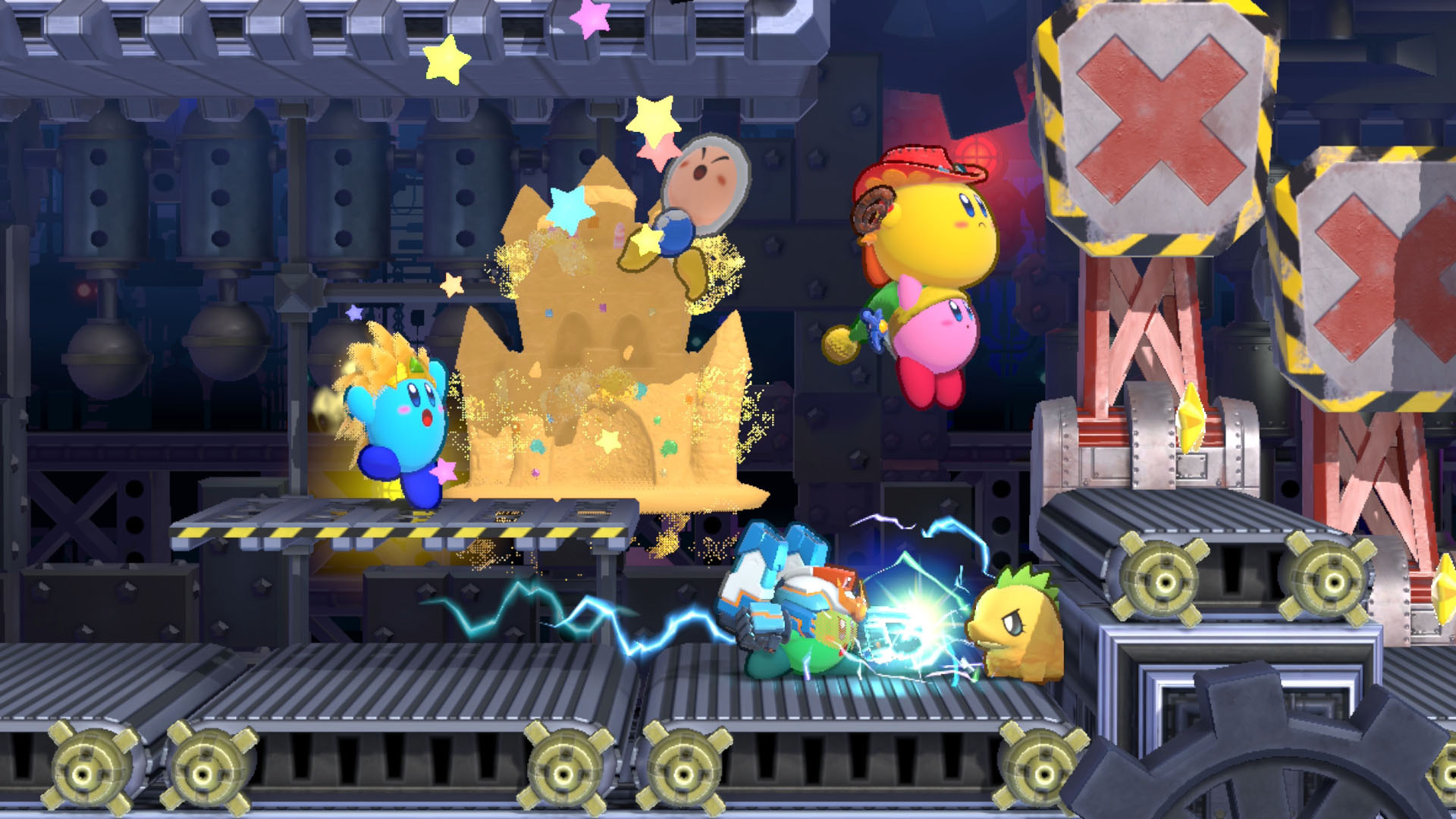
Thankfully, despite the Deluxe version of Kirby’s Return to Dream Land being a remaster of a now 11-year-old game, there are several other notable new features and visual improvements. While the original was released in the pre-HD Wii’s twilight years in standard definition, Kirby’s Return to Dream Land Deluxe features a fresh coat of high-definition visuals.
While Dream Land Deluxe is visually impressive overall in HD, the cel-shaded-style outline around the player and enemies sometimes stands out strangely compared to the rest of the world. The game features two competing art styles that don’t feel very cohesive. On the plus side, this means it’s far easier to see Kirby, Waddle Dee, King Dedede and Meta Knight when you’re playing co-op, which can sometimes get chaotic with four players. Sticking with the visuals, just like with Return to Dream Land‘s original release, it often feels like the camera is too zoomed in, especially if you’re playing co-operatively with other players. It’s difficult to see what’s ahead of or behind you, and it feels more restrictive than other Nintendo 2D platformers like the New Super Mario Bros. U Deluxe, for example.
Kirby also has new Copy Abilities, including turning into sand, which works just as you’d expect, and a far more interesting Mecha ability that turns you into something out of the Mech Warrior franchise. Both abilities don’t necessarily add a lot to the experience, but they’re still fun to play around with and complement powers featured in the original game like the Hammer (hitting enemies with a hammer), Cutter (bladed boomerangs), Leaf (razorsharp leaves), Whippy (whipping your foes), Hi-Jump (bolting through the air) and more.
Finally, there’s now a new home for the title’s several new and returning mini-games called Merry Magoland, allowing you to compete against your friends, Mario Party style, in challenges like the reflex-focused Ninja Dojo, the Bomberman-inspired Booming Blasters and several more that I won’t spoil. In Magoland, you can also unlock amusing Dress-Up masks that can be worn in the game’s story mode. All of this amounts to an entertaining diversion and a few hours of fun, but it isn’t the main draw of Return to Dreamland and doesn’t compare to the bite-sized mini-game action offered by the Mario Party series.
In the end, Kirby’s Return to Dream Land is a solid 2D platformer that’s likely a little too easy for most players (unless you’re willing to play through it twice), especially if you’ve played other Nintendo platformer re-releases like Donkey Kong Country: Tropical Freeze.
Of course, this could be considered a good thing if you plan to play it with younger gamers. After all, Kirby’s Dream Land for the Game Boy was one of the first video games I ever played, and I credit it with helping me better understand the basic mechanics of platformers. There’s a good chance Return to Dream Land could be that same introductory game for children today.
MobileSyrup utilizes affiliate partnerships. These partnerships do not influence our editorial content, though we may earn a commission on purchases made via these links that helps fund the journalism provided free on our website.





 On that note, there’s a new Magolor Epilogue that has you taking on the role of Magolor. This unique take on the standard Kirby formula borrows mechanics from the RPG genre and has players gaining new abilities as they move through the mode’s various levels. With this additional mode, Nintendo has essentially added a game within a game, similar to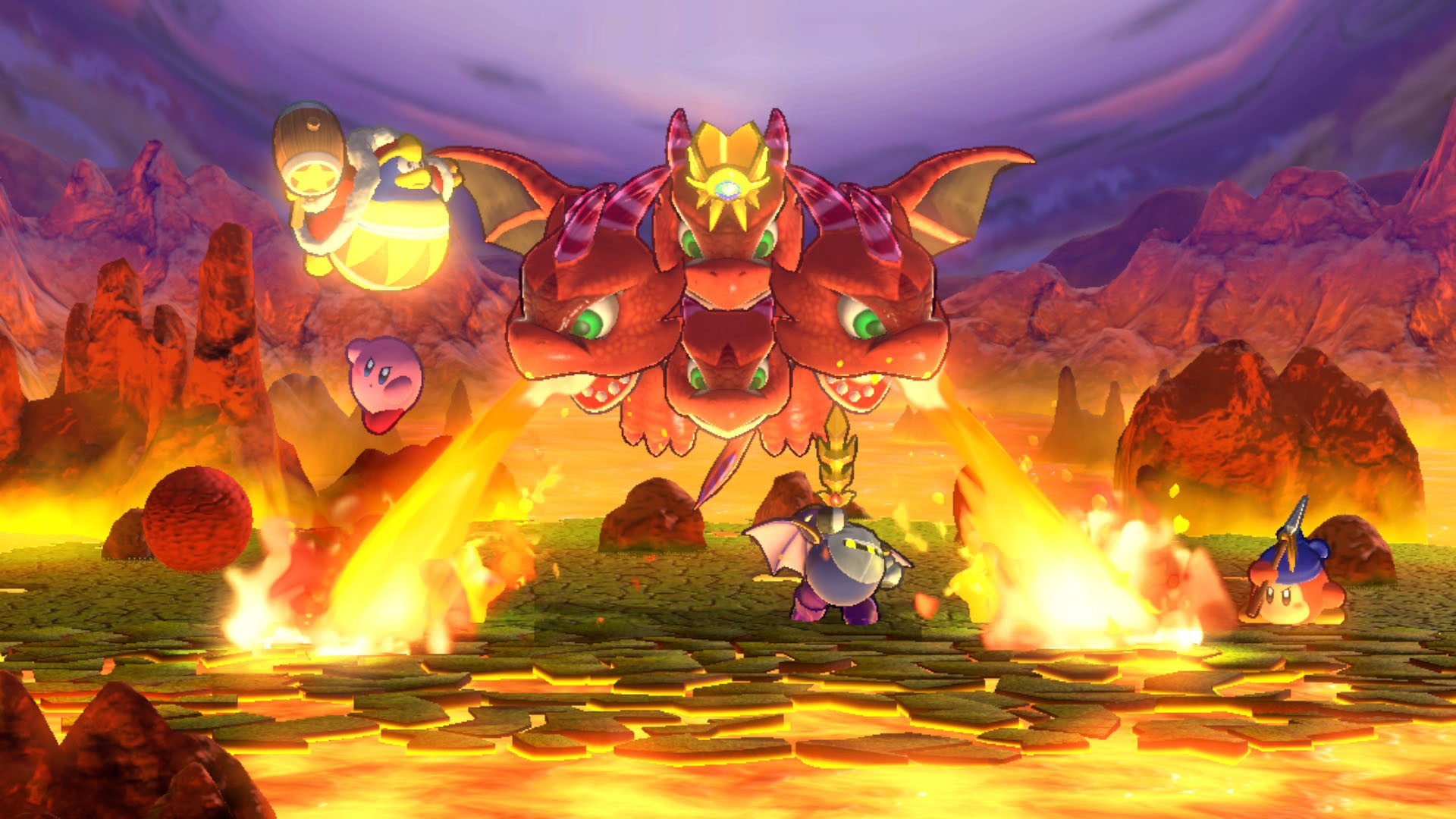
 Finally, there’s now a new home for the title’s several new and returning mini-games called Merry Magoland, allowing you to compete against your friends, Mario Party style, in challenges like the reflex-focused Ninja Dojo, the Bomberman-inspired Booming Blasters and several more that I won’t spoil. In Magoland, you can also unlock amusing Dress-Up masks that can be worn in the game’s story mode. All of this amounts to an entertaining diversion and a few hours of fun, but it isn’t the main draw of Return to Dreamland and doesn’t compare to the bite-sized mini-game action offered by the Mario Party series.