The Competition Bureau will no longer appeal against the Rogers-Shaw merger and Vidéotron’s takeover of Freedom Mobile.
The federal department was seeking to overturn a ruling made by the Competition Tribunal supporting the merger. However, the Federal Court of Appeal was quick to rule against the appeal, ending a months-long push to block the mergers.
More information, and a recap of other telecom news in Canada, are available below.
Business
Globalive is seeking a return to the wireless market by purchasing spectrum from Xplore Mobile. The telecom provider shut down in August. It’s unclear how much Globalive has offered for the spectrum and if Xplore Mobile and ISED will approve.
Vicky Eatrides is the CRTC’s new chair, and she has several priorities to tackle in her new role. This includes providers sharing more information on MVNOs and lowering wholesale internet pricing.
Remember BlackBerry? The device might be dead, but the company’s story lives on thanks to Matt Johnson’s movie named “BlackBerry.” The film follows the work of Research in Motion (RIM), the company behind the smartphone. It will make its world premiere at the Berlin International Film Festival in February.
The Competition Bureau has ended its bid to block Rogers’ takeover of Shaw after the Federal Court of Appeal rejected its bid to overturn the Competition Tribunal’s decision. The anticipated hearing was short, with Justice David Stratas questioning the bureau’s arguments. Rogers, Shaw, and Québecor didn’t present their arguments. The decision left several telecom advocates disappointed.
The House of Common’s industry and technology committee also discussed Rogers’ takeover of Shaw and Vidéotron’s acquisition of Freedom Mobile. Many of the questions revolved around how Rogers selected Vidéotron to take over Shaw’s wireless spectrum licenses.
Bell Aliant charged a Nova Scotia senior long-distance pricing for local calls and didn’t admit its mistake and make a change until the CBC reported on the issue.
Innovation Canada held its first residual spectrum auctions since 2018, selling 600 MHz, 2500 MHz, and 3500 MHz spectrum licenses. Several companies secured licenses, including Bell, Rogers and TBayTel.
SaskTel has started rolling out its 5G network in the Battlefords, providing residents and businesses with speeds up to 1.2Gbps.
Bell held its first Let’s Talk Day after replacing its traditional donation method. The company previously made a five-cent donation per interaction but opted for a capped $10 million donation this year.
The latter part of this weekly update is typically reserved for wireless deals. However, wireless providers didn’t release any deals this week, raising prices instead.
Fido has increased its monthly plans by $5 a month, but customers can cancel the cost if they sign up for Automatic Payments.
Bell and Virgin Plus will increase roaming rates by $1/day on March 9th. The increase applies to both U.S. and international roaming plans.
Google has shared a new AI research project called MusicLM that uses AI to make music, and it’s the latest AI to make artists scared for their jobs.
You can’t use this tool publically like ChatGDP, but Google has shared a ton of samples attached to a research document. These range from small ten-second snippets to full-length five-minute songs.
This tool takes simple text inputs or a person humming and turns that into beautiful music. You can even use a sequence of text prompts to write a song that changes over time. After listening to a couple, the AI doesn’t recreate human music perfectly since it can’t do voices well, but the beats are always interesting and melodic, to say the least. I’d also expect Google to make this much better at human singing soon.
MusicLM really shines by recreating soft beats like melodic techno and relaxing jazz. There are five-minute samples of each genre near the top of the research paper’s sample zone, and they are worth a listen.
There’s no word when or how Google will release this fully, but as we extend further into the AI world, it seems like no creative pursuits are safe.
If you’ve been watching the first collection of Pokémon: Indigo League episodes on Netflix, you’ll be happy to know that the second collection is coming to Crave alongside some classic movies.
On Saturday, February 18th, the following Pokémon content is hitting crave:
Pokémon: The First Movie
Pokémon the Movie: I Choose You!
Pokémon: Adventures in the Orange Islands (season two)
Pokémon the Series: XY
Pokémon the Series: XY Kalos Quest
Pokémon the Series: XYZ
At the bottom of the Bell Media press release, it says that more Pokémon content on crave is slated to come later. My fingers are crossed for Pokémon 2000 and the third season of the show Pokémon: The Johto Journeys.
Google Chrome, one of the most popular web browsers, is set to receive a slight redesign in 2023, and work on it has already begun, as shared by 9to5Google.
As spotted in the developer version of Chrome — Chrome Canary, the changes are disabled by default, and need to be enabled using a flag. If you have Chrome Canary installed on your computer, type in chrome://flags/#chrome-refresh-2023 in the address bar and press enter.
It should directly take you to the ‘Chrome Refresh 2023,’ flag, highlighted in Yellow. Enable the flag and restart Chrome Canary.
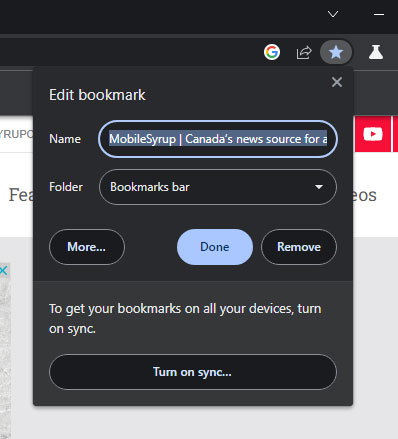
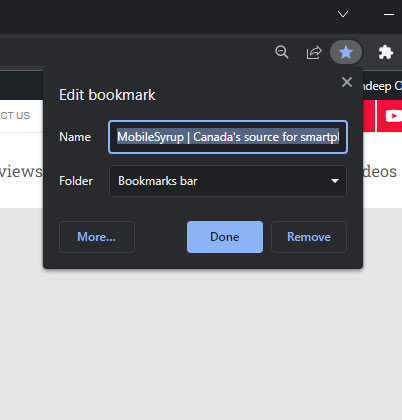
Right off the bat, you’ll notice that the Tab bar looks slightly different than regular Chrome, with the redesign putting more emphasis on separating tabs and the omnibar. Additionally, the bookmarks interface has been redesigned with rounded shapes for text boxes and buttons.
New UI
Old UI
Although the redesign is not a major one, it is a welcome change. The redesign is expected to be released on Windows, macOS, Linux, ChromeOS, Fuchsia, and Lacros. It’s not clear when Google plans to widely roll out the redesign.
If you want to try out the redesign, you can download Chrome Canary here.
Microsoft is reportedly working on a redesign of its Edge browser that would — surprisingly — make it look more like Firefox.
As detailed by leaker WalkingCat on Twitter (via Windows Central), Microsoft’s ‘Project Phoenix,’ or Edge Phoenix, is an internal reimaging of the browser. Microsoft has been working on it since last summer and has been building it in pieces, some of which can already be enabled through experiemental flags in preview versions of Edge.
The most notable change visible in a preview video shared by WalkingCat and in images posted by Windows Central is the tab bar. Unlike the current Edge tab bar, Edge Phoenix features tab indicators that are seperated from the rest of the UI, such as the search bar and webpage (just like the current Firefox design). That tab style is somehwat divisive among Firefox fans, but I like it a lot.
'Phoenix' was an 'imaginary' version of Edge, appeared as an internal concept video from MS User Research team, with new UI/features, it's a project to collect feedbacks internally for Edge development directions/priorities, 'Split-Screen' was the most liked feature of Phoenix🤓 pic.twitter.com/DRrLwN8x01
Beyond the button-style tabs, Edge Phoenix has a more Fluent-style design with several rounded elements. It looks much more at-home as a Windows 11 app then the current Edge browser, which just looks like Google Chrome with some Microsoft stylings.
Comparison of browser tabs, from top to bottom: Firefox, Edge, Edge Phoenix
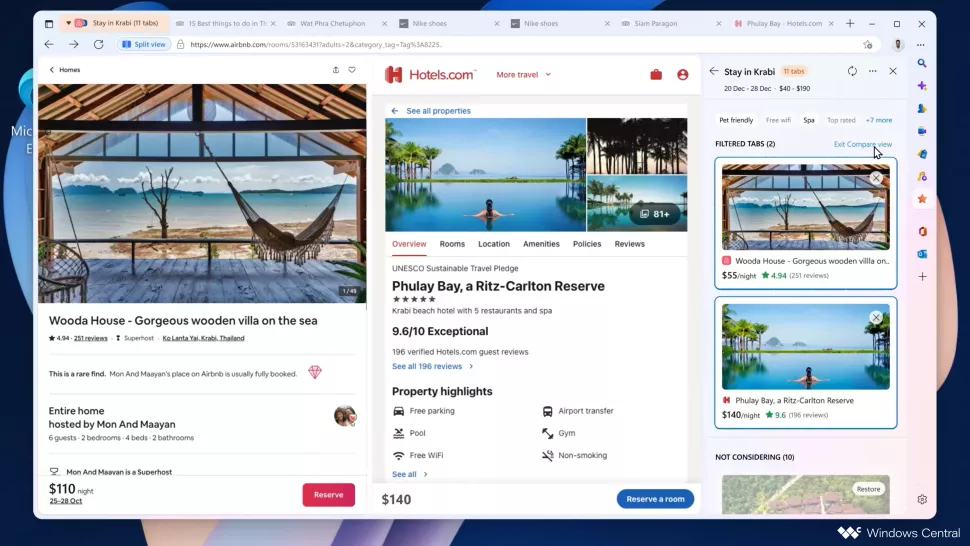
Microsoft’s in-progress ‘split view’ tab feature is also heavily featured in the redesign, with WalkingCat describing it as the “spirit” of Edge Phoenix.
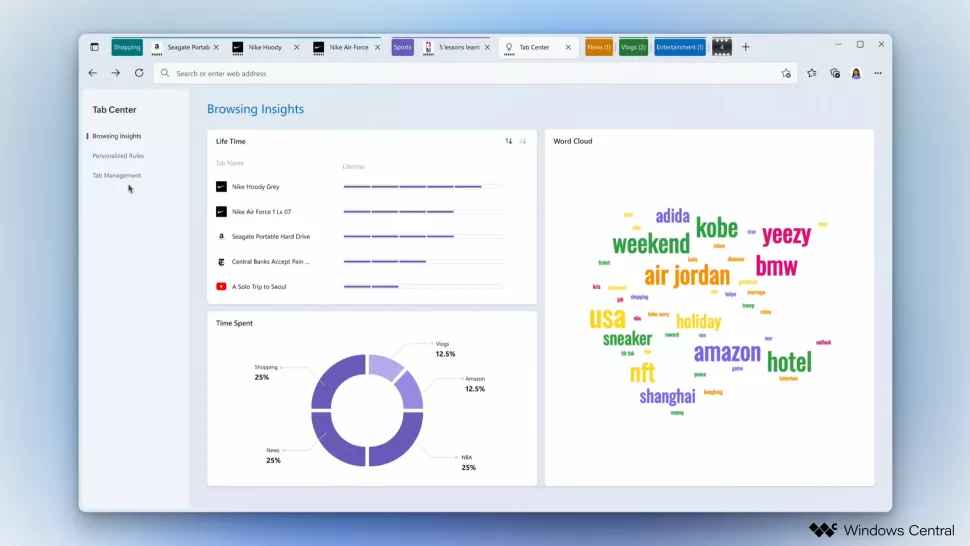
Windows Central also highlights a ‘Tab Activity Center’ with insights about browsing activity and usage stats, similar to the Screen Time or Digital Wellbeing features available on iPhone and Android.
While Edge Phoenix certainly looks nice, and some of the features are interesting, it remains unclear if we’ll ever see it ship. WalkingCat described it as an “imaginary” version of Edge, saying it was an internal concept used for development. Windows Central noted that we could see some of the features rolling out over time.
I’d love to see Microsoft roll out the Edge Phoenix design as it’s a significant departure from most other browsers out there and looks very at home on Windows 11.
Every month, Amazon adds several new series and movies to its streaming service, Prime Video, and February 2023 will be no different.
Below is everything set to hit and leave Prime Video in Canada. Amazon also shared several featured titles coming to Prime Video Channels, which are add-on channels with additional content for extra subscription fees (they’re noted below):
February 1st
Bodies, Bodies, Bodies
The Mummy
Schindler’s List
Before 30
February 2nd
Gary and His Demons: Season 1-2 (Amazon Original)
Mendarat Darurat
Beyond The Light Barrier
February 3rd
Toppen (Amazon Original)
The Estate
Harlem: Season 2 (Amazon Original)
Sing
February 4th
Lyle, Lyle Crocodile
February 10th
Somebody I Used to Know (Amazon Original)
Clarkson’s Farm: Season 2 (Amazon Original)
Farzi (Amazon Original)
Montana Story
For One Night Only (Amazon Original)
Palava
February 11th
Chupke Chupke
February 13th
Jodi
February 14th
Planet Sex (Exclusive Content)
Divorce Mubarak
Wild Wild Punjab
Lights Guns and Actions S2 (Exclusive)
February 15th
The Nanny: Seasons 1-6
Nasha (Exclusive Content)
Manes (Exclusive Content)
February 16th
The Shield: Seasons 1-7
February 17th
Carnival Row: Season 2 (Amazon Original)
A Spy Among Friends (Exclusive Content)
Drinkwater
An Ordinary People
February 18th
Cloverfield
10 Cloverfield Lane
February 20th
Marc Marquez: All In (Exclusive Content)
February 24th
Die Hart (Amazon Original)
The Consultant: Season 1 (Amazon Original)
February 25th
One Fight Night 7: Lineker vs Andrade II (Live Event)
Here’s what’s coming to the Prime Video channels
Paramount+ – South Park: Season 25 (2/2)
BritBox – Death in Paradise Season 12 (2/3)
STARZ – Party Down: Season 3 (2/24)
STACKTV – History’s Greatest Heists with Pierce Brosnan (2/13)
Everything leaving Amazon Prime Video
Eternal Sunshine of the Spotless Mind (February 1st)
And now, it appears the feature has worked in favour of two women in B.C. The feature connects the iPhone 14 and 14 Pro with satellites if the device is outside a cellular network, allowing people to call for help in case of emergencies.
According to the Prince George Citizen, the two women got lost while making their way to Alberta. An accident on their original route caused them to take a detour through the Holmes Forest Service Road, where they got stuck in the snow.
Dwight Yochim, a senior manager with B.C. Search and Rescue, told the publication an Apple call centre center relayed the information to Northen 911. The local call center notified emergency services in the province and shared the subject’s GPS location.
“This technology has the potential of really helping us save lives and reducing the amount of time it takes to do that.”
When Sony’s PlayStation VR launched in 2016, I was really into it. Games like Resident Evil 7and Batman: Arkham VRoffered extremely immersive and unique experiences that quickly got me excited about the tech’s potential. Over time, that feeling only increased as I learned about all of the other applications for VR, like healthcare.
But as I started getting busier, the thought of physically navigating the many cables and wearing a big headset at the end of a long day felt less appealing. The launch model lacked also HDR passthrough, which made it tedious to have to connect and reconnect cables every time I wanted to switch between regular and VR games. As a result, I stopped using my PS VR.
Now, though, I find myself with renewed excitement about the platform thanks to the PlayStation VR2. The prospect of a successor headset for the PS5 was always tantalizing, and after going hands-on with it at PlayStation Canada’s office, I’m especially eager to play more.
The headset itself
When you first put on the PS VR2, there is, of course, a brief calibration process. Most of that is fairly standard for a VR headset, but two features immediately stood out. First, there’s the new See-Through View, which leverages the PS VR2’s new front cameras to let you quickly see get a black-and-white look at the real world. With past VR devices, it felt cumbersome to have to lift the headset just to see my surroundings, especially after you’ve found the right adjustments to fit it on your head. Seriously, it can’t be understated just how handy it is to just press a button to do this now without needing to remove the headset.
In a similar vein, I was taken aback by the new eye-tracking functionality. I’ve never used a VR headset with eye-tracking before, so to see the circles light up as I looked at them was extremely cool, if a little freaky at first. Naturally, there are neat game-specific use cases for this technology (one of which I’ll get into later), but in general, this also helps improve fidelity across the board through a process called foveated rendering. This means that the headset can focus on enhancing the detail of what you’re currently looking at by reducing image quality at everything in your periphery.
Then there are the controllers. Rather than iterate on the original PS VR’s wand-like Move controllers, the PS VR2 has spherical ‘Sense’ controllers. I quickly appreciated this novel futuristic look. On top of that, they have some of the PS5’s DualSense gamepad’s signature features, like adaptive triggers and haptic feedback. Most importantly, though, that round form factor gives them a very natural and comfortable grip.
Horizon Call of the Mountain
After that brief setup process, I was immediately put into Horizon Call of the Mountain, one of the PS VR2’s flagship titles. It’s part of Guerrilla Games’ beloved Horizon series and was developed by the Dutch studio and Liverpool-based Firesprite, the team behind VR titles like The Persistence and The Playroom VR. In other words, there’s some strong pedigree behind this title, and thankfully, it shows.
The demo begins with your character, a prisoner named Ryas, as he’s ferried along in a boat. This slow opening to ease you in felt immediately reminiscent of Skyrim‘s iconic opening in how quickly and effectively it creating intrigue. Who really is your character? Why is he imprisoned? Who are your captors? Where are you? Adding to that appeal is the fact that Ryas is a Shadow Carja, an antagonistic faction from Horizon Zero Dawn. The idea of seeing this fascinating machine-overridden post-apocalyptic world from the perspective of someone completely different from a heroine like Aloy is incredibly promising.
The other benefit to this subdued intro is that it really lets you appreciate just how stunning this world looks in the 4K-capable PS VR2 headset. I marvelled as rays of light poke through the dense, lush vines, reflections shimmer on the water and crisp leaves realistically fall over our heads. Meanwhile, the other people on the boat are rendered through sharp, detailed character models are even react if you look at them for too long — thank you, eye-tracking! You can even see little hair fibres on ropes. Overall, it didn’t just look good for a VR game; it looked good in general.
What’s more, the first-person view of this richly-crafted setting means you get to see Horizon‘s wickedly cool machine designs in a whole new light. As our boat chugged along, we saw everything from the Spindly Watchers to the deer-like Grazers. But it was the Tallnecks that got me. Horizon players will know how much of an ordeal it was to ascend these massive giraffe-like robots, so to see one towering above me in VR was truly jaw-dropping. Honestly, it evoked a similar magical feeling to the one created by the iconic “Welcome to Jurassic Park” scene from Spielberg’s 1993 classic.
Visuals aren’t enough, though; it has to feel good to play. In that regard, Call of the Mountain also impressed. Admittedly, much of the middle stretch of the demo consisted of climbing, but I didn’t mind because it felt so natural. Like Zero Dawn or Uncharted, Call of the Mountain features ledges with a clear colour coating to show you what’s climbable, but unlike other games, you actually have to put in the work. There’s a boring sense of automation in third-person climbing, but in VR, it feels immersive. Moving my arms up and down, left and right, sometimes even going hand-over-hand as I figure out where to go and work my way up feels incredibly cool. It’s the closest I’ll ever get to actually scaling tall structures, and I can do it from the safety of VR. Nathan Drake, eat your heart out.
Then there’s your bow. Requiring you to reach back and unholster the weapon from your back then do the same to pick up an arrow before you nock it only builds on the immersion. Naturally, pulling back gives you a satisfying DualSense-esque vibration that enhances the full degree of motion you have over the actual aiming. All of this works together to truly sell the idea that you’re using a bow and arrow. It also adds a welcome layer of tension to combat, as the pressure’s on you to quickly draw, load, aim and shoot. The only element here that felt a little awkward was dodging, which you do by holding a button and pushing your arm to either side. To be fair, I’m sure this was the best way to mitigate any motion-sickness for more sudden dashing, but it took some getting used to.
Ultimately, I’m excited to play more of Call of the Mountain. All signs point to this being a clever addition to the Horizon universe that is also inviting to newcomers through intuitive, engaging gameplay. Best of all, PlayStation says this is about seven hours long, which makes it a fair bit meatier than other VR launch titles we’ve seen, like Arkham VR.
Final thoughts
Given that this was a relatively brief demo session, there’s still a lot I need to see. For one, the rest of the launch lineup. PlayStation is promising around 30 games will launch within the PS VR2’s first month. While that’s certainly a good number of titles, I’m also a bit disappointed that a lot of them are spins on existing experiences, like Moss, No Man’s Sky, Gran Turismo 7, Resident Evil Village and Star Wars: Tales from the Galaxy’s Edge. Therefore, it remains to be seen how many other truly new, “must-play” titles in the vein of Call of the Mountain that it will actually have. Then there’s the cost. At $750 for the standard model and $819 for a Call of the Mountain bundle, it’s incredibly pricey. That’s more than the PS5 itself!
Evidently, then, it’s too early to tell whether the PS VR2 warrants a day-one purchase. But based on my first hands-on impressions, I can say that I’m really liking what PlayStation is doing with the headset itself. Call of the Mountain is also shaping up to be a killer app. All of this has gotten me excited to get my hands on one myself to fully see what it has to offer, and that’s a great feeling to have for this lapsed VR fan.
The PS VR2 and Horizon Call of the Mountain will both launch in Canada on February 22nd.
HBO has officially confirmed that The Last of Us has been renewed for a second season.
Along with the reveal, the company also announced that the first episode of the critically-acclaimed TV show based on Naughty Dog’s video game series, surpassed 22 million viewers in the U.S., making it the network’s biggest debut next to House of the Dragon. In Canada, The Last of Us is available to stream through Bell’s Crave platform. Bell has yet to release the TV show’s Canadian streaming numbers.
“I’m humbled, honored, and frankly overwhelmed that so many people have tuned in and connected with our retelling of Joel and Ellie’s journey. The collaboration with Craig Mazin, our incredible cast & crew, and HBO exceeded my already high expectations,” said game director and executive producer of the show Neil Druckmann. “Now we have the absolute pleasure of being able to do it again with season two! On behalf of everyone at Naughty Dog & PlayStation, thank you!”
The Last of Us stars Pedro Pascal as Joel and Bella Ramsey as Ellie. Those who are familiar with The Last of Us Part II will know that the sequel introduces several new characters, including Abby. Though many think that Shannon Berry will play Abby in season 2, an official announcement hasn’t been made.
Given I’m a big fan of The Last of Us video games, I went into the HBO adaptation cautiously optimistic. As Brad Shankar outlines in his review of the first few episodes of the TV show, mimicking everything in the TV show would make for uncompelling television, and I had hopes that this wasn’t the direction Druckmann and Mazin would rake the series.
Thankfully, at least so far, that hasn’t been the case, and if rumours are accurate, episode 3 is set to diverge even farther from the video game franchise.
Rogers and Shaw are coming close to their proposed January 31st deadline, but Industry Minister François-Philippe Champagne isn’t rushing to grant his seal of approval.
Champagne has to approve the transfer of Shaw’s wireless licenses to Vidéotron as part of a side deal to create a fourth wireless competitor.
The Rogers and Shaw deal has overcome other sources of required approval.
The Canadian Radio-television and Telecommunications Commission (CRTC) approved the broadcast aspect of the merger in March 2022. The Competition Bureau ended its fight to stop the mergers earlier this week after the Federal Court of Appeal rejected its request to overturn the Competition Tribunal’s ruling backing the telecoms.
Champagne told the Toronto Star he has looked at the Federal Court of Appeal’s decision “but wants to more fully understand” it.
The Minister’s conditions of approval include Vidéotron lowering wireless bills in Ontario and Western Canada and retaining the spectrum licenses it acquires for ten years.
“Discussions about making sure that these conditions are enforceable [have taken place]. And the thing that I can say — I’m a lawyer, so we will make sure that these undertakings are binding,” Champagne told the publication. He confirmed various enforcement options, to occur if requirements aren’t met, are being examined.
“As the regulator, I am not bound by any deadline,” Champagne said.






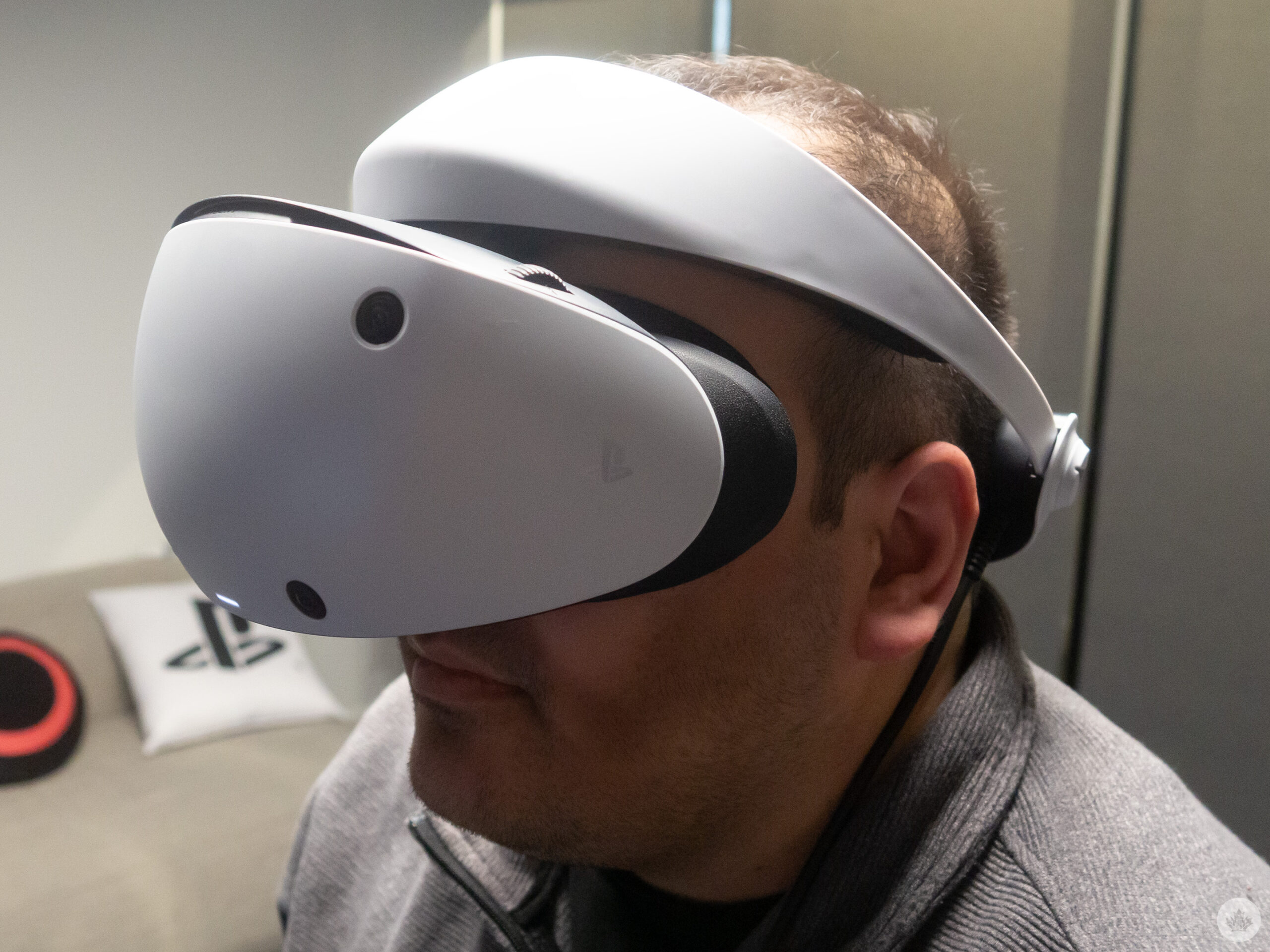 When you first put on the PS VR2, there is, of course, a brief calibration process. Most of that is fairly standard for a VR headset, but two features immediately stood out. First, there’s the new See-Through View, which leverages the PS VR2’s new front cameras to let you quickly see get a black-and-white look at the real world. With past VR devices, it felt cumbersome to have to lift the headset just to see my surroundings, especially after you’ve found the right adjustments to fit it on your head. Seriously, it can’t be understated just how handy it is to just press a button to do this now without needing to remove the headset.
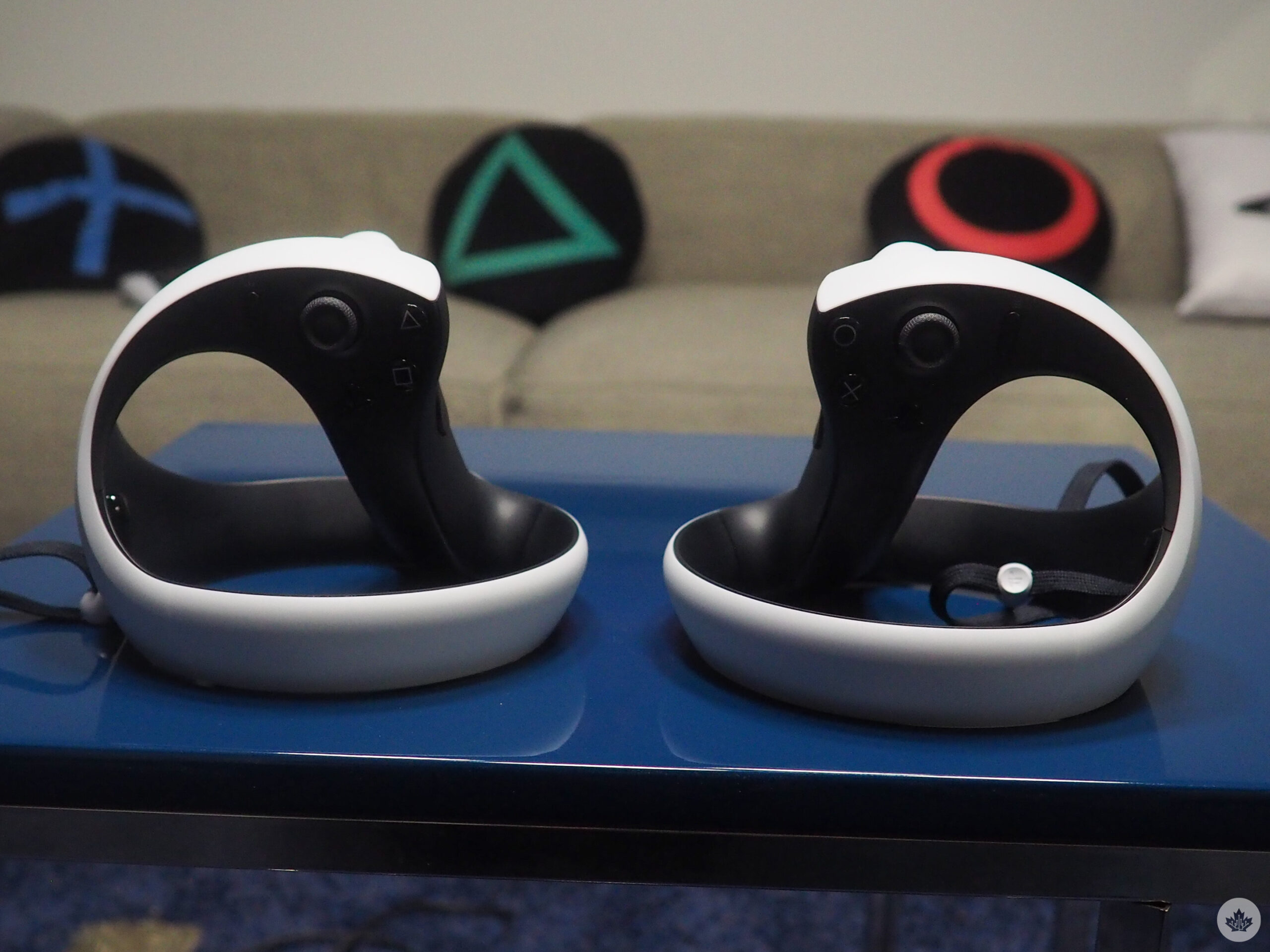 Then there are the controllers. Rather than iterate on the original PS VR’s wand-like Move controllers, the PS VR2 has spherical ‘Sense’ controllers. I quickly appreciated this novel futuristic look. On top of that, they have some of the PS5’s DualSense gamepad’s signature features, like adaptive triggers and haptic feedback. Most importantly, though, that round form factor gives them a very natural and comfortable grip.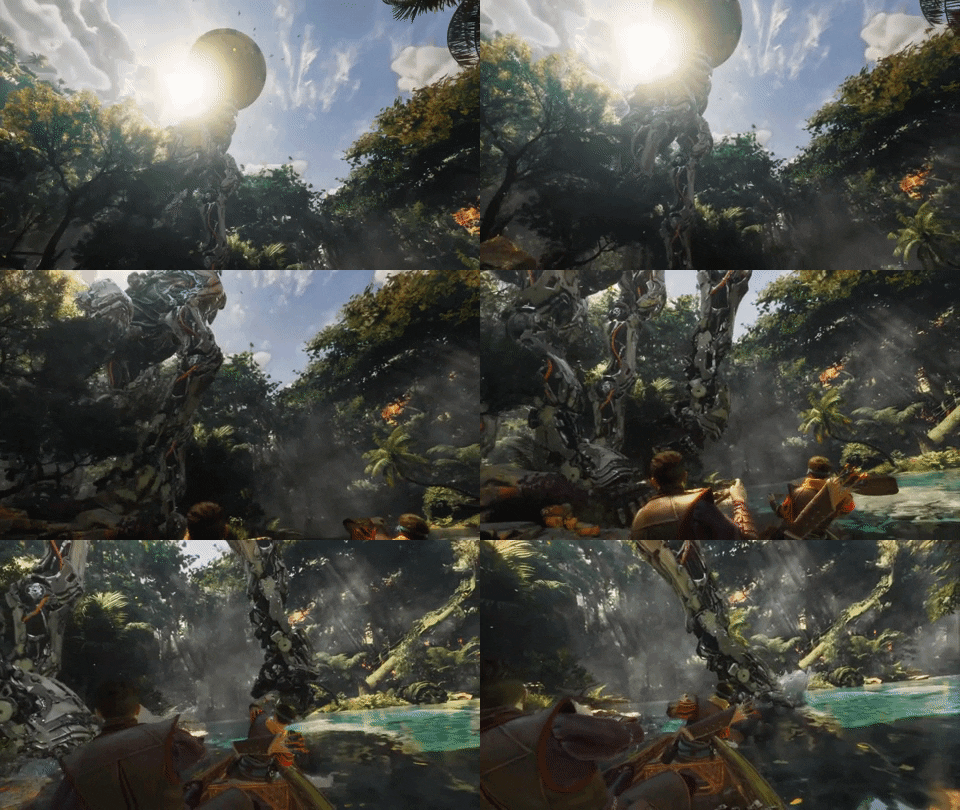
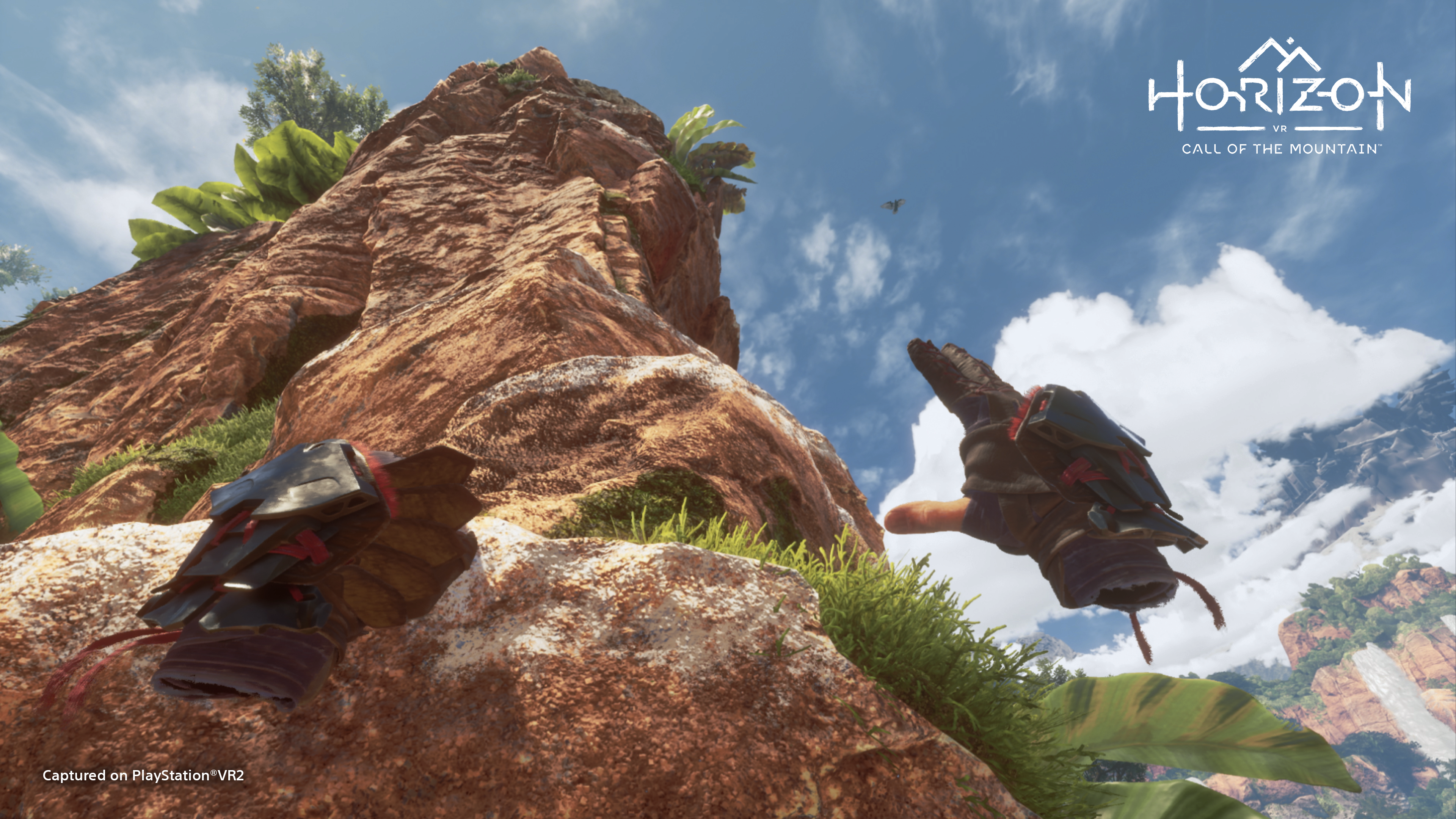 Then there’s your bow. Requiring you to reach back and unholster the weapon from your back then do the same to pick up an arrow before you nock it only builds on the immersion. Naturally, pulling back gives you a satisfying DualSense-esque vibration that enhances the full degree of motion you have over the actual aiming. All of this works together to truly sell the idea that you’re using a bow and arrow. It also adds a welcome layer of tension to combat, as the pressure’s on you to quickly draw, load, aim and shoot. The only element here that felt a little awkward was dodging, which you do by holding a button and pushing your arm to either side. To be fair, I’m sure this was the best way to mitigate any motion-sickness for more sudden dashing, but it took some getting used to.
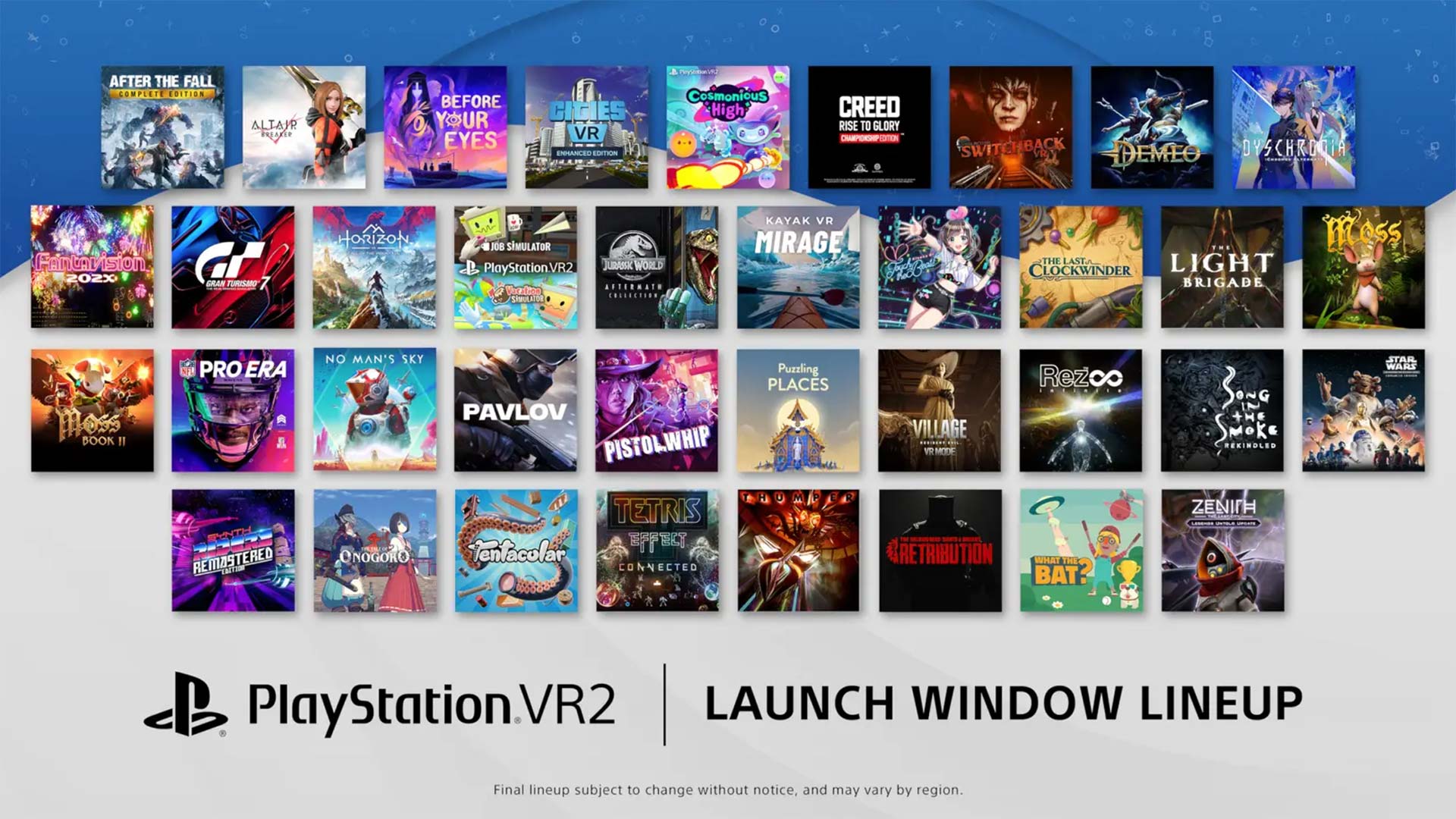 Given that this was a relatively brief demo session, there’s still a lot I need to see. For one, the rest of the launch lineup. PlayStation is promising
