Bethesda has confirmed that Redfall will officially launch on Xbox Series X/S and PC (plus Xbox Game Pass) on May 2nd.
The first-person shooter is being developed by Arkane Austin, the critically-acclaimed team behind Dishonored and Prey. It was previously set to release last year before being delayed to the “first half of 2023” alongside fellow Bethesda title Starfield.
Redfall‘s release date was confirmed during the first-ever Xbox and Bethesda Developer_Direct as part of a larger deep dive into the game. In Redfall, you play as one of four hunters who must utilize weapons and special powers to fight a vampire threat. The game can be played solo or in co-op.
In the new Developer_Direct demo, we get a better look at the game’s expansive open-world, environmental storytelling, side content and player customization options.
Besides hailing from a beloved studio, Redfall is particularly notable since it’s the first major Bethesda game to launch exclusively on Xbox Series X/S and PC following Microsoft’s 2021 acquisition of parent company ZeniMax Media. Therefore, many players have had their eyes on both Redfall and Starfield, which is also set to release exclusively on current-gen Xbox consoles/PC. A release date for Starfield has not yet been confirmed, although Xbox says it will get its own Developer_Direct showcase down the line.
The next game from The Evil Within developer Tango Gameworks has been revealed, and it’s launching today, January 25th.
Following a leak, Tango has officially revealed Hi-Fi Rush, a rhythm-focused action game that has you hacking and slashing enemies to the tune of music. Its colorful and stylish aesthetic is a far cry from the survival horror of The Evil Within and Tango’s most recent work, the supernatural first-person action-adventure title, Ghostwire: Tokyo.
The offbeat game follows Chai, a young man who’s had a music player grafted onto his heart by a diabolical corporation. With his new rhythmic powers, Chai will have to take on the robotic monolith.
Tango formally unveiled the game during the inaugural Xbox & Bethesda Developer_Direct, which was a surprise in and of itself as the Japanese studio wasn’t publicly slated to be a part of the showcase. Even more shocking, then, was the announcement that the game will be launch that same day.
Hi-Fi Rush is available exclusively on Xbox Series X/S and PC, and is a part of the Xbox Game Pass catalogue on day one.
Since Microsoft acquired Minecraft in 2014, the beloved sandbox game has gotten a variety of spin-offs.
This includes the Telltale point-and-click adventure Minecraft: Story Mode, dungeon crawler Minecraft Dungeons and mobile augmented reality game Minecraft Earth.
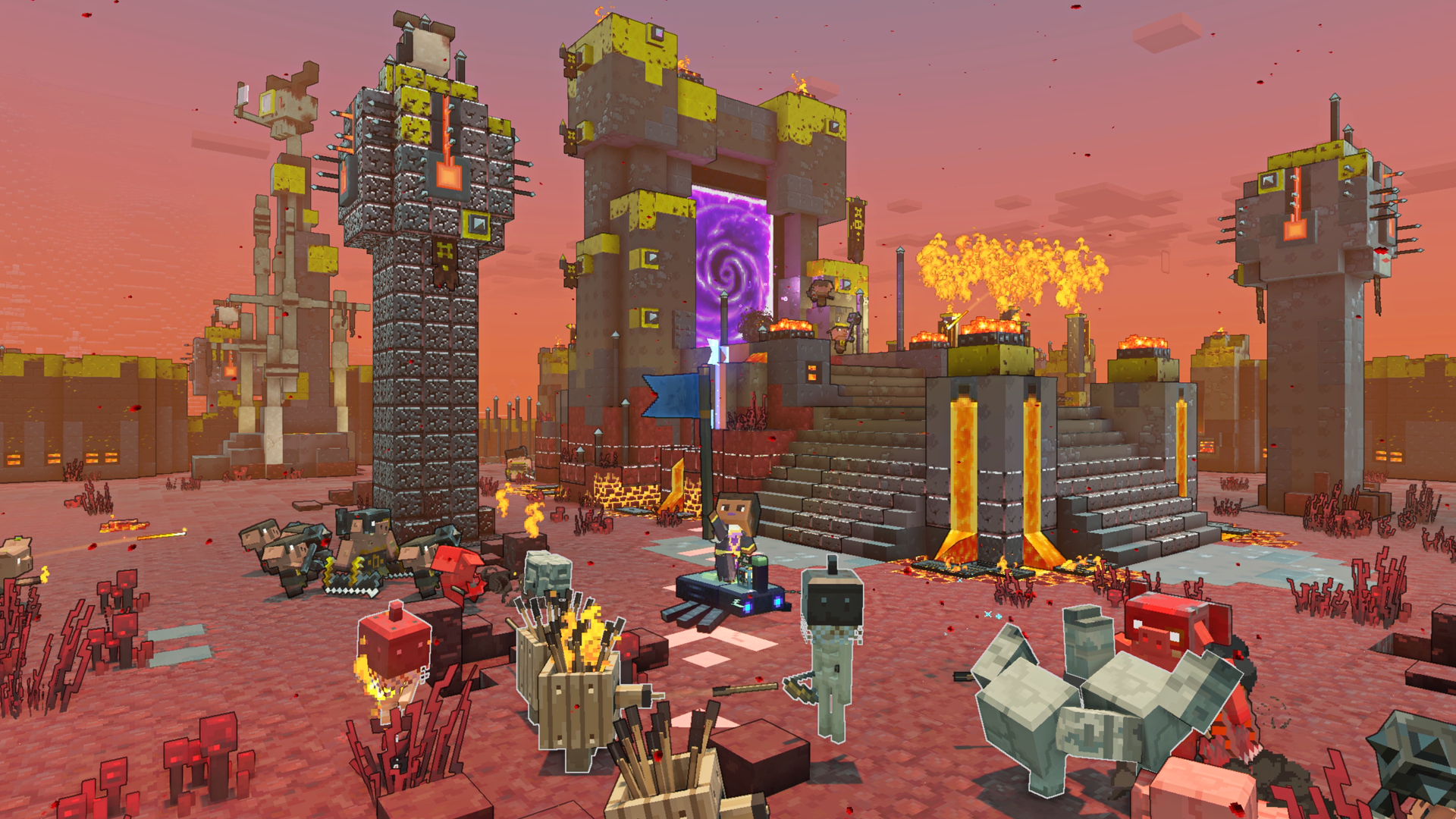
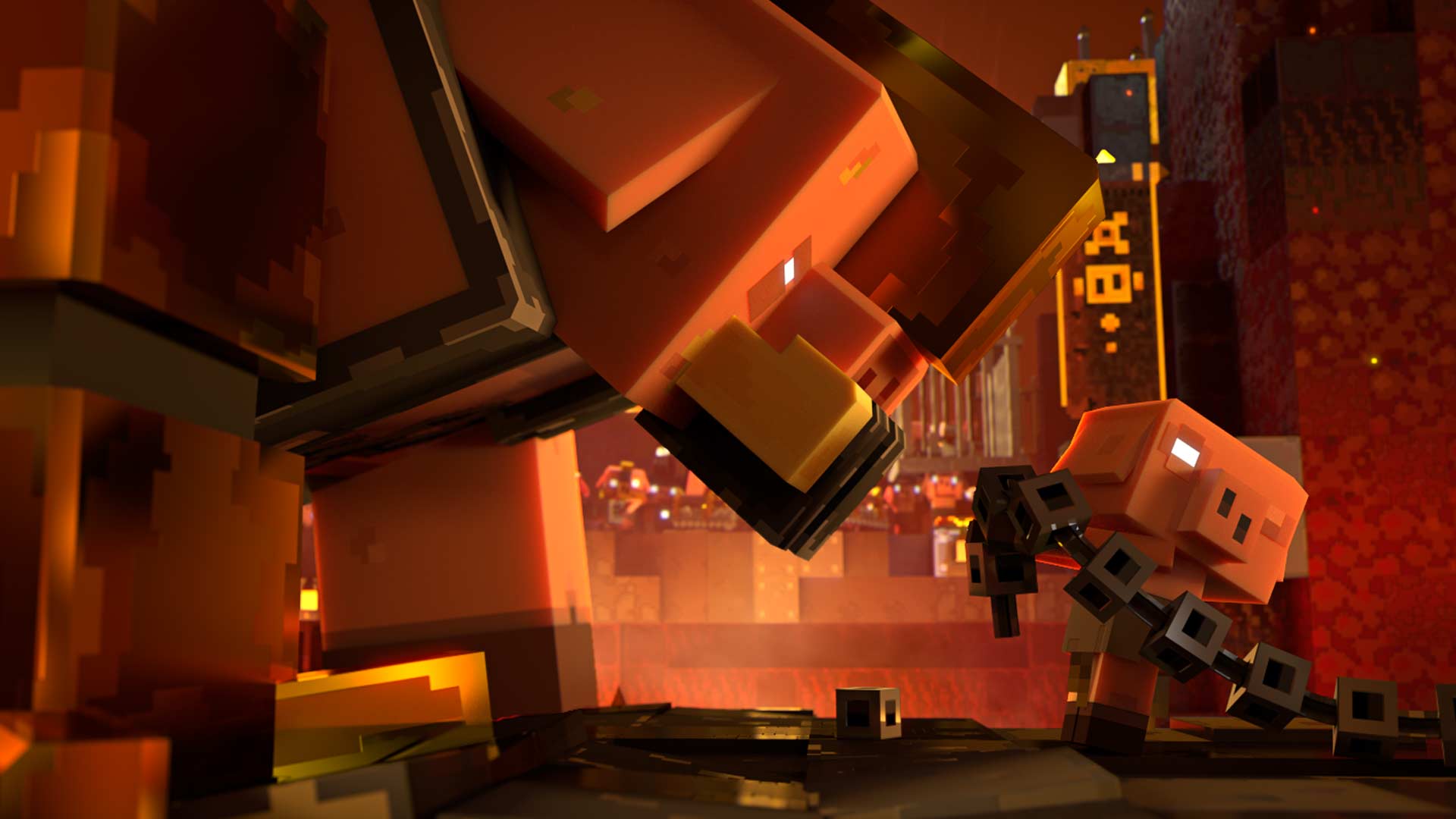
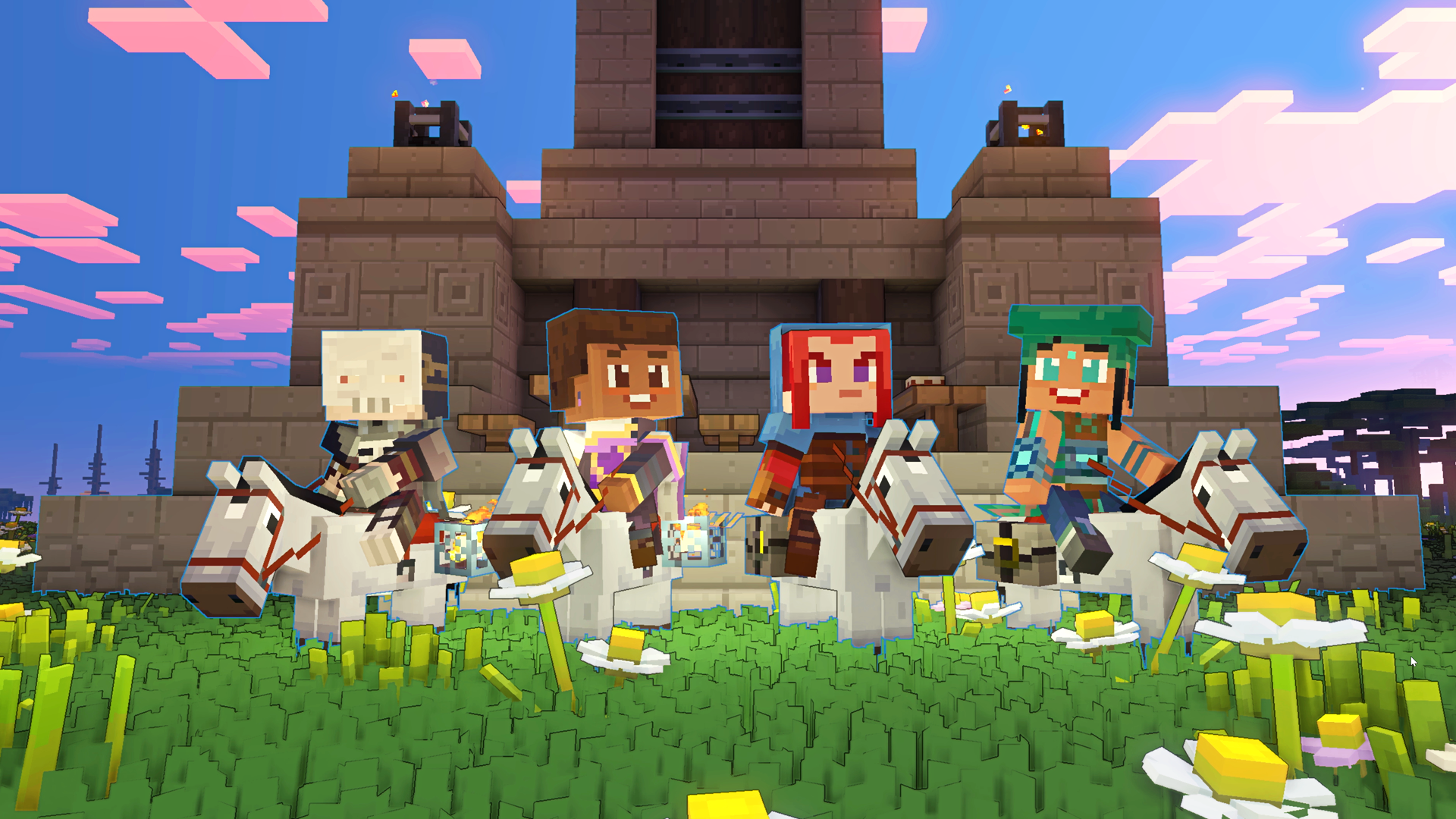
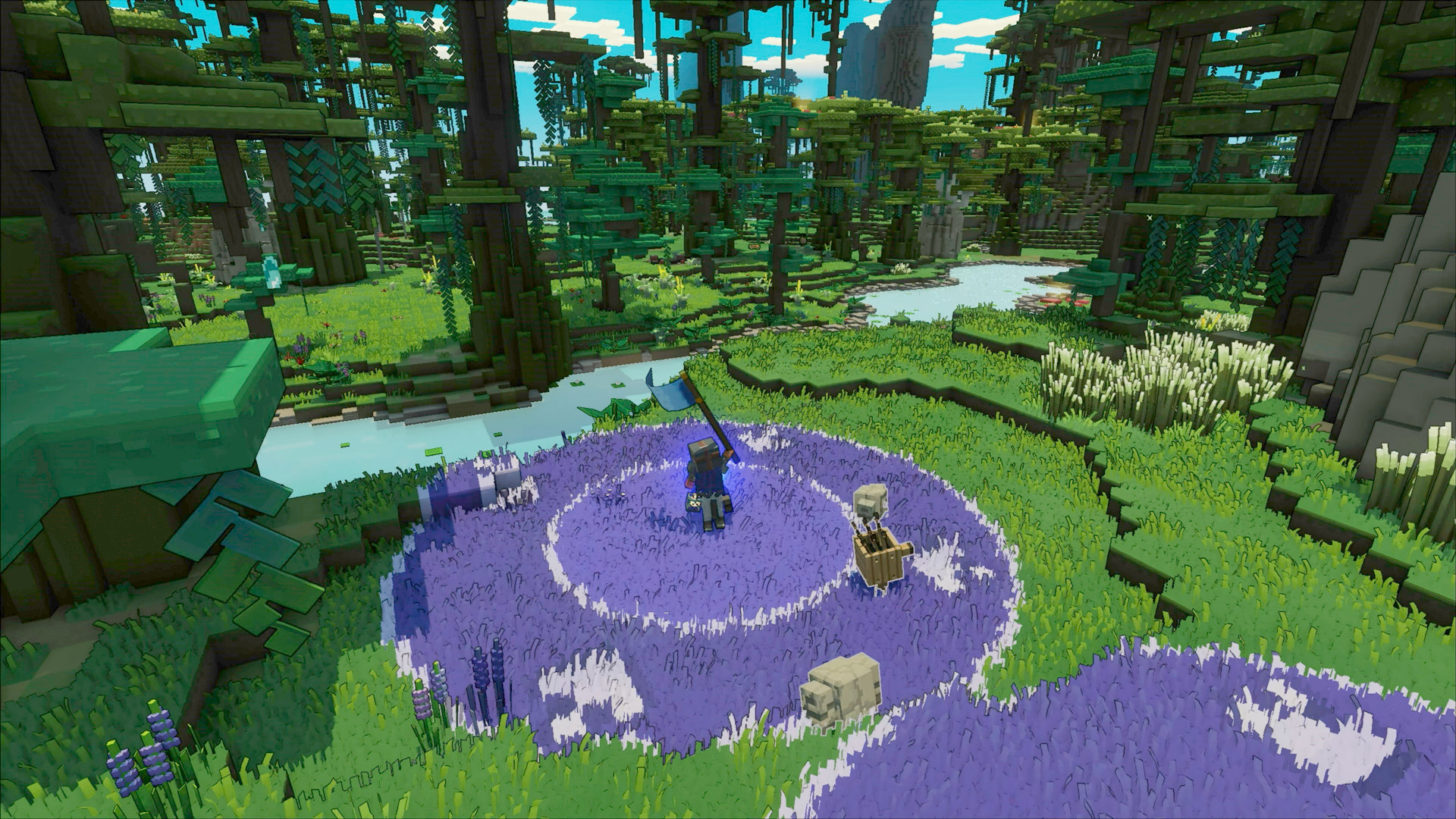
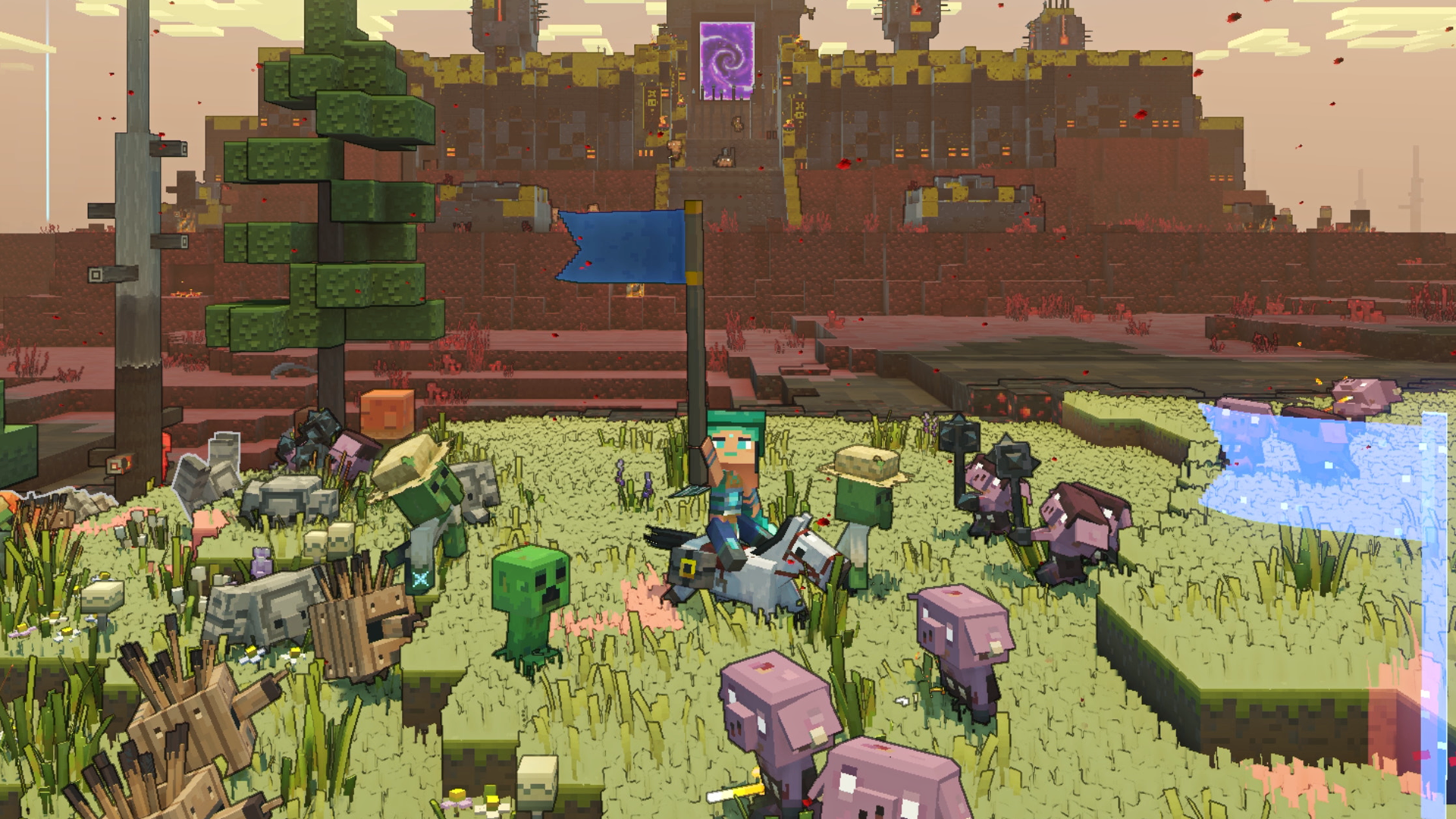
Now, developer Mojang is taking the property even further with Minecraft Legends, an action-strategy experience. To bring the series into this more tactical space, Mojang has teamed up with Vancouver’s Blackbird Interactive, a studio consisting of strategy veterans from Relic Entertainment (Homeworld). In Legends, the player must unite the Overworld’s different factions to stop an invading Piglin threat.
MobileSyrup sat down with Dennis Ries, executive producer of Minecraft Legends at Mojang, and Lee Pederson, executive producer at Blackbird, to learn more about the game. Together, they discussed the collaboration between the two studios, introducing player vs. player (PvP) to Minecraft, offering a different perspective on Minecraft staples like Creepers and more.
Question: There have been a number of Minecraft spin-offs so far. How did you come up with the idea of an action-strategy one?
Dennis Ries: It really started with a small group of employees within Mojang sitting around talking about what type of genre would be really cool with Minecraft, and strategy kind of rose to the top. At that point, a group of us started going out and talking with different strategy developers trying to understand what type of experiences they would like to make for Minecraft. And Blackbird Interactive — that’s where Legends was born. And it was great because they really brought a kind of new, refreshing take on what what could be in Minecraft and it’s been exciting the whole way.
Q: Once you partnered with Blackbird, what did that collaboration look like, especially since you have Mojang teams in Stockholm and Redmond while Blackbird is in Vancouver?
Ries: That’s a great question because it makes me think way back. It started very small as you begin to try to understand what the concept is. And you have to find the timezone that works best. So fortunately, Mojang and Blackbird are in the same timezone, so we just sort of have to work earlier in the day, and then some of those things can continue in the afternoon if we’re just talking with Redmond. But the collaboration really started more on the creative side and as we got a little bit further down the pike, we started to see ‘oh, now we know we understand the technical route that we want to take.’ We are using the Bedrock Engine and that took a lot of collaboration with our Redmond counterparts; a lot development for Bedrock took place there at the time. And that grew bigger. It’s been a great partnership; it’s been fun to work with Blackbird. You might have an answer that’s completely contrary to me, Lee. [laughs]
Lee Pederson: No, not at all! It’s been amazing. Like Dennis said, it was a pretty small team to start. I’ve been on the project for almost five years — it spun off at the beginning of 2018. I started five months, maybe, after that initial group of two or three people. So I’ve been there, as has Dennis, the whole journey, which has been remarkable. So, a small team really collaborating on the creative. We were given a lot of room to collaborate with the Mojang team, both in Stockholm and in Redmond, which was amazing. It wasn’t like, ‘this is this is exactly what you need to make and here’s exactly how you go ahead and do it.’ There was a lot of back and forth. I think that really shows in the art style of Legends — that collaboration and where it led. It’s a really beautiful game that’s really distinct from Minecraft, but you can really get the Minecraft feeling from it. So I think we brought a lot of the team’s passion for strategy, and our background in strategy and our love of Minecraft. Working with our partners and in both in Stockholm and Redmond — I think we really developed a beautiful product.
Q: One of the things that’s interesting about Legends is it’s not really fact or fiction; it’s just these stories that are told within the Minecraft universe. How did you land on this idea and balance creating something that still feels like Minecraft but takes a bit more creative liberty and plays a bit loose with canon?
Ries: What’s great is we have a narrative director within Mojang named Kevin Grace. And when we think about how to tell the story, we understand all players have their own stories, right? And this is just a story in the Minecraft universe. And I think that was an important part. We’re not out to set some sort of official story for what Minecraft should be. It’s more about letting the players have that journey. So that was how we approached it, and I think that was an important perspective that we brought to the game.
Q: How did Blackbird’s previous experiences on strategy games inform your approach to Legends?
Pederson: While we have a background in strategy and a lot of us have a background in hardcore real-time strategy (RTS), I think we approached this with Mojang less with a rigid framework around ‘we want this to be an RTS.’ We were more like, ‘what are the elements of strategy that we can bring to this that also makes sense within the Minecraft universe, makes sense with the genre we’re aiming for with the action-strategy with your hero within it, and how can we layer that in rather than trying to force a more rigid RTS framework from within Minecraft?’
Ries: One element I will say, from a Mojang perspective, that really impressed us with Blackbird was their knowledge of Minecraft. There’s so much to Minecraft. Even working here, I learn new stuff about it every day, and it’s awesome. But that depth of experience really came to fruition as they would start creating these concepts and bringing them out and trying to explain how they take the strategy experience, and make it a Minecraft strategy game and not a strategy game with Minecraft in it. So it was really fun.
Q: On that note — Lee, what was it like for Blackbird to come in with a love of Minecraft and get to work on a new Minecraft game?
Pederson: It was pretty scary, I have to admit. This is such a huge responsibility. It’s such a big game. It’s such a big team. This is the biggest game that [Blackbird] has ever worked on. So just taking on that responsibility is a big mantle and we wanted to make sure that we were bringing our love of Minecraft and our passion and that we were aligning with the creative vision… So certainly, it’s a bit of a scary thing to take on. Because the community is so big, the love of Minecraft is so, so expansive and wide-reaching, that we wanted to make sure that we absolutely brought our A-game all the time. We want this to be a game that the community loves and embraces and builds on and creates legends on top of what we are building.
Q: Legends is the first time PvP has ever been an official mode in a Minecraft game. How did you decide on Legends being the right time and place for it?
Ries: It was actually early in prototype as we started to sort of think about this action-strategy component in a PvP environment. We created a fun experience — it was like this ‘chaotic fun’ and unlike something we’d seen before in the games that we played. And so we were like, ‘well, let’s explore this further. This could be something special.’ And so we kept at it. And we’ve run into some complex situations; balancing can be difficult with a procedurally-generated multiplayer game. And how do we solve problems to make sure players understand what to do? So for us, how did it start? Well, it started because we had this prototype experience that was just a ton of fun. And then we just kept pushing and got to a point where like, ‘Yeah, this is something we really want to support at retail and let players experience.’
Pederson: And I think we’ve also collectively really focused on campaign and PvP as being two distinct modes that have been moving forward — not in lockstep, necessarily, but we’ve been progressing on and tuning and moving forward on them rather than PvP being a sort of secondary game mode. We’ve really pushed on all fronts on those and really focused on both campaign and PvP.
Q: One of the official Legends videos said there’s less on an emphasis on “fair,” per se, and more on the “chaotic fun” you mentioned. You obviously don’t want it to completely unbalanced and broken, but you do want to keep it loose and chaotic. How do you toe that line?
Pederson: When we’re creating the PvP worlds, we’re making the worlds much smaller than we are in campaigns. So, in campaign, it’s really about exploration and uniting the overworld and the Piglin hordes and approaching battle. Whereas in PvP, it’s a much shorter experience — we’re hoping it’s a 20- to 30-minute experience for each team, each game. So we’ve made the world much more compact, so that you are within a distance of your opponent’s HQ; you’re not having to traverse territory for 30 minutes to try to find where the opponents are. So it’s a small world.
We balanced the resources differently. So there’s more stone, there’s more wood, there’s a different distribution of resources, so that you can leverage your strategy, whether you’re going for an iron strategy, or a diamond strategy, whatever it might be. There’s just a different resource allocation within the world. Because it is procedurally generated, it’s not always going to be the same thing every single time — you’re not always going to find the same balance of resources in every biome, whatever it might be. There are elements of chance within that, but we’ve tuned certain elements of it to make the experience where you’re focused on resourcing and building out your base and attacking your opponent’s team rather than having to traipse around because you can’t find any trees to get any wood.
Ries: And while it may not be perfectly ‘fair,’ which is what I think the comment was from the video you may have seen, it’s interesting to see… sometimes a base may be generated in a less advantageous position than another base, but maybe that base has more beneficial resources closer to the base. And so it’s sort of a trade-off scenario. And the real interesting part is, even though it may not be perfectly fair, it doesn’t feel like it’s not perfectly fair. It feels fair every time. So it’s interesting and it’s worked out pretty well.
Pederson: And then it’s interesting how the procedurally-generated world informs your strategy because you have to react to what’s around you, and where you and where your opponents are.
Q: You’ve mentioned how you want this to be your own unique take on PvP. Besides the procedural generation, what are some of the ways that you’ve done that?
Ries: Taking things from the campaign, which is already unique enough, and then transitioning them to PvP. For example, you collect resources quicker. Also, you do share resources with your teammates, so that takes a lot of cooperation and effort to do — that’s definitely a unique element of the game. Then you take this action-strategy component where you can go off, if you wish, and have combat with another person in the map. That’s fun. Or you can take a strategy where you’re taking a Creeper and very pinpointedly directing the Creeper to go and try to blow up a very specific section of the person’s base. So there’s a lot of unique elements to PvP here I think that we tried to introduce but still stay true to a strategy element.
Pederson: There’s some components from the campaign, but they’re unlocked for the player or given to the player in different ways. They’re able to be acquired or battled for in different ways, which again, adds to the kind of layer of strategy. Like, you can create a Redstone Launcher because you’ve gathered enough resources to create that and potentially hide that behind a mountain and then surprise your opponents and destroy their HQ without them even knowing that that’s what you’ve done.
Q: On the flip side, can you talk a bit about how the cooperative multiplayer work?
Pederson: In the campaign, you can have up to four people in co-op. In that scenario, every single person could be attacking the same base, or you could be attacking different bases, or you could be wandering around resourcing. It’s a different experience in that you’re not necessarily having to all work together for a strategy, which is what PvP is about. You can drop-in and drop-out and help or not help. You can just sort of experience the world and explore and unlock mounts or help in that way, but you don’t necessarily all have to be banding together to handle different areas of the resource gathering defence/offence for a single kind of time-sensitive goal.
Q: Another interesting element of Legends is that you have Minecraft staples like Creepers, which used to be hostile, and now you can command them. When you were making Legends, how did you decide which existing parts of Minecraft that players know as one thing to reintroduce in a different way?
Ries: Yeah, that was fun for us because the idea of taking a Creeper and making them your friend was really foreign to us. And the same is true for the other mobs like the skeletons and zombies. So we just wanted to make sure that the behaviours of the Creeper were the same. So we didn’t want to suddenly have a creeper shoot arrows. And so once we got past the thought of, ‘we’re going to go with the strategy experience and we’re going to take something iconic like the Creeper and make it your friend, and that’s going to be the mobs that help defend the Overworld because everyone needs to work together here,’ then it became just making sure that we’re staying true to what Minecraft is. But the exciting part for us was creatively accepting that Creepers are not an enemy and that was definitely a fun thing to do.
Pederson: Yeah, our zombies have to wear hats, right? But they’re your friends. So it’s within the [Minecraft] framework, but also it’s a legend, so this is how we unite to defend the Overworld and push back the Piglins.
Q: That’s definitely part of the appeal for returning players. But part of tackling a new genre like this is you can bring in new players as well. So for those who haven’t played Minecraft, or maybe just haven’t in a long time, how is Legends inviting and approachable?
Ries: I think it’s very approachable. One of the things we really wanted to make sure is that even if you don’t know what Minecraft is, you still enjoy playing this game. So it’s not like you need to know Minecraft. So you can get in, you can explore the world — just the act of exploring is fun. And it feels fun to run through the world, it feels fun to find a mount and fly through the world or a tiger and just jump and go really far. You find these things. That was definitely fun and that helps it be approachable and kind of draws you in. You learn about the world and then you start to understand how the mobs can help you and that these Piglins are horrible things and you need to fight them and send them back. And it’s this element of easing the player into it that I think [Blackbird] actually did a really great job on.
Pederson: Because it has elements of strategy, it’s a little more complicated than just being able to pick up a very easy game and play it, but we do want to make it approachable. It isn’t extremely RTS, UI heavy, tech trees, etc. So while it’s probably a little more complicated than a kids game, we do have a good onboarding tutorial and first-time user experience. In the campaign, you’re not having to go in and immediately engage with a Piglin base. You can spend as much time as you want exploring around the edges of those and unlocking mounts like Dennis was talking about or engaging with the mobs and bringing them over to your side. So there’s things that you can do if you’re not feeling like you’re ready for the battle yet to get yourself more acclimated. But the experience, both PvP and campaign, is meant to be approachable for a broad range of players.
This interview has been edited for language and clarity.
Minecraft Legends will launch on April 18th, 2023 on Xbox consoles (plus Xbox Game Pass), PlayStation 4/5, Nintendo Switch, PlayStation 4 and PC.
The University of Windsor has joined forces with Telus to become a “go-to centre for innovation.”
The two institutions first came together in 2020 to work on new 5G ventures. Today they expand on their work by launching a 5G connected campus and a supporting research lab.
Telus is investing $5 million in the venture. The research will focus on agriculture, advanced manufacturing, and connected and autonomous vehicles (CAVs) sectors.
The two organizations are working on a number of joint projects, including creating cybersecurity applications for CAVs.
“By expanding our partnership with Telus, University of Windsor students and faculty members will have further opportunities to engage in meaningful research and sponsored participation in beneficial, industry-collaborative events and activities,” Chris Houser, the university’s interim vice-president of research and innovation, said.
With over 13 wireless providers in Canada, it can be difficult to keep track of the latest promotions and cell phone rate plan changes.
MobileSyrup will compile the latest weekly rate plan deals every week. You can also check out our guide on plans across Canada to find the right plan for you. You can compare from 47,842 options and 13 providers in Canada to find the best option.
It’s worth noting that rate plans are always subject to change and that we’ll do our best to keep this list updated as accurately as possible.
Bell is the first Canadian carrier to offer prepaid eSIM activations online when you bring your own phone.
Ongoing deals:
Get 10GB of unlimited data for $55/mo in MB, SK & main regions
Save $20/mo for every member you add to your account.
Get an unlimited plan including 25GB of shareable data for $85/mo in main regions, for $75/mo in MB & SK and 10GB for $55/mo in QC
Buy a new phone online and save $50
Get bonus Crave Mobile for 24 months with Unlimited Share Plans Ultimate 20 & 40, and Ultimate 20 & 40 (Canada & U.S.) in QC and with Ultimate 45, Ultimate 60 & 100 (Canada & U.S.) in main regions.
Switch your business to Canada’s best 5G network and get a credit of up to $240 per line.
Save $25/mo for every team member you add on your account
Get 500MB bonus data/mo. with automatic monthly top-up options with the $30, $40, $45 & $55 prepaid plans and 100MB bonus with $25 prepaid plan
Keep your business and all of its devices connected with plans starting at $10/mo.
Get 3 months of Apple TV+ when you buy an iPhone or iPad.
limited time offer – Get 3 months of Apple Fitness+ free when you buy an Apple Watch
Trade in your old device and save. Get a credit up to $700 when you trade in your old phone.
Various phone accessories on sale
Get up to 500 MB bonus data/mo. when you sign up for Automatic Monthly or Automatic Monthly/Low Balance Top-Up option on eligible plans.
Get 100 GB bonus per year with all-Inclusive 20GB, 40GB and 50GB plans, along with $15 monthly savings if you combine it with an Internet service.
100 GB of bonus data per year, Club illico mobile, on the phone of your choice.
Combine your Internet service with several Mobile plans on the same invoice and save up to $100 per month.
Club illico mobile is included with all the All-Inclusive Mobile plans.
Get 10 GB bonus per year in Canada with the 6 GB and 15 GB Canada plans, along with $10 monthly savings if you combine the 15 GB plan with an Internet service.
Sale on phone cables, chargers and audio accessories.
Get up to $500 in credit when you trade in your old phone.
Monthly savings on various smart phones
Take advantage of monthly discount with multiline $5 to $15 per line each month (depends on number of lines)
Save $20/mo for each family member you add. Additional Line Rogers Infinite Plans start at $45/mo for 20GB in QC or $65/mo for 25GB in other regions.
Add a tablet or smartwatch to an eligible Rogers Infinite plan and get a free tablet plan or smartwatch plan for 24 months.
Add family to your Rogers Infinite plan starting as low as $40/mo in QC or $55/mo in other regions, per line with 10 GB of high-speed shareable data.
Ongoing deals:
Stay connected anywhere with the new plan for data-only mobile internet. Get 50 GB/mo for $120/mo plus, for the first 3 months, pay only $10 for every 10 GB of data you use above this plan limit.
Trade in an eligible iPhone and enjoy a one-time trade-in credit of up to $1,000 towards the device of your choice with financing and select plans.
Rogers Infinite Mobile plans start at $60/mo for 24 months when you add it to your home services (ON).
Get the Samsung Galaxy S22 128GB for $5/mo in-store or for $20/mo online, for 24 months on select plans with financing and Upfront Edge. Certain conditions apply.
Save $50 with the Setup Service Fee waived when you buy online.
Get 5 Roam Like Home days at no cost every year (up to $75 value) when you link your Rogers Connections Mastercard account to your Rogers postpaid account and eligible wireless plan.
Refer your friends and save up to $300 per year
Sign up for Disney+ through Rogers and get 6 months on select Rogers Infinite plans
Join the TELUS Privilege rewards program and you could win a VIP hockey night. The prize includes 2 tickets to the game in a super suite, until February 22, 2023. (QC only)
Ongoing deals:
Join the TELUS Exclusive Partner Program and save more. Enjoy 50GB for only $70 per month on a 2-year term with a TELUS Easy Payment plan.
Enjoy Stream+ for as low as $15 per month on any Mobility plan, for 12 months.
Lunar New Year offer: Get $240 off over 2 years on select Unlimited data plans, along with 1,888 long-distance minutes to China/HK, South Korea, Japan, Malaysia and Singapore (in BC/AB/ON only).
Lunar New Year offer: Refer a friend to TELUS and you’ll be entered to win a $ 1,000 Visa gift card until February 5th, for every referral you make (excluding QC).
Share your phone’s unlimited data with your smartwatch or tablet for $10 per month.
Double your data for only $10 extra per month. Enjoy unlimited talk, text and get 40GB of high-speed data for $75 per month in QC or 50GB of high-speed data for $95 per month in other regions.
Lunar New Year deal: Get 3GB bonus data for 8 months on prepaid plans $40 or more with a one-time $10 account credit.
Get a bonus 100 MB of data when you sign-up for Auto Top-up on a $25 prepaid talk & text plan.
Refer a friend to TELUS Mobility and you both get a $50 bill credit.
Save the $50 connection fee when you shop Mobility online.
Save more with the TELUS Family Discount: save from $7.50 to $15 per line per month for every family member on your account who subscribes to an Unlimited Data plan.
Get a bonus 500 MB of data when you sign-up for Auto Top-up on $30, $40, $45 & $55 prepaid talk, text & data plans.
Get 3 months of Apple TV+ free on eligible Apple device activations.
Enjoy your ICI TOU.TV EXTRA subscription included with your TELUS plan (QC).
Bundle a new Apple Watch with TELUS Health Companion from $54/month.
Bundle your services and get up to $40 off each month (QC)
Save big on the flashiest phones with Bring‑It‑Back
Get 6 GB for $39/mo in QC when you bring your own phone.
Get a $50 Visa Prepaid card with $39/mo, $40/mo, $50/mo, $52/mo & $55/mo internet plans in QC.
Get 50% off on select Unlimited Internet plans. Based on a $40/mo credit on a 50 Mbps plan or a $45/mo credit on a 100 Mbps plan, for 12 months (ON).
Lunar New Year offer: Save $10/mo for 12 months on plans $55 or more when you bring your own phone.
Lunar New Year offer: Get 15GB in QC or 8GB in other regions, for $45/mo after a credit of $10/mo for 12 months, when you bring your own phone.
Get a new phone. Plans starting from $27/mo in QC or from $33/mo in other regions.
Value-packed mobile plans and home internet. Now $61/mo when you bring your own phone + a $50 Visa prepaid card (QC).
Buy the Google Pixel 6a and get 3 months of Youtube Premium and Google One.
Combine a mobile plan with home internet, now starting from $73/mo. based on a monthly credit for 12 months (ON).
Crave is available as an add-on for TV for only $20/mo. Hook up today and get 2 months free.
Get 250MB Bonus Data with Unlimited Canada-wide $25 prepaid plan (ON, QC, SK) and with Unlimited Province-wide $22 and $29 prepaid plans (QC), on Auto Payment Options.
Get 500MB Bonus data with Unlimited Province-wide $31, $35, $40, $50 and $55 prepaid plans, on Auto Payment Options (QC).
Add TV to your Unlimited Internet starting from $25/mo in QC and $35/mo in ON.
Get 500MB Bonus data with Unlimited Canada-wide $32, $34, $38, $43, $53 & $58 prepaid plans, on Auto Payment Options (QC).
Get 500MB Bonus data with Unlimited Canada-wide $30, $40, $45, $55 & $75 prepaid plans, on Auto Payment Options (ON, SK).
Purchase the Motorola Edge 2022 on Sweet Pay™ and receive a pair of Motorola Verve Buds 120 True Wireless Headset.
100MB Bonus Data on the $15 prepaid plan with PPU with AutoPay option.
GET AN ANNUAL PLAN. Activate an annual prepaid plan with 400 local minutes and 400 global texts for $100/year when you bring your own phone.
Shop online and get $50 waived of connection service fee.
Hot phones starting from $0 down, 0% APR
Refer a Friend to get $50 in bill credits each when they join the Virgin Plus party.
Get a Google Chromecast when you hook up with TV on a 6-month term
Get up to $700 off a hot new device when you trade in your old one.
Get 7GB of data6 for $30/mo. Includes $5/mo. credit for 24 months
Ongoing deals:
Get an Unlimited plan4 with 20GB of Fast LTE data for $40/mo. Includes $10/mo. credit for 12 months.
For a limited time, get 888 long-distance minutes per month to call China and Hong Kong free for eight months when you activate a new line on select plans.
Get 1.5GB of data for $19/mo. Includes a credit of $5/mo. for 12 months.
Refer a friend and get a $25 service credit for each referral. Save up to $250 a year
Celebrate with 888 minutes to call China and Hong Kong for only $5/mo, plus your first 8 months free when you sign up for an Unlimited plan with 25GB Fast LTE by January 31st.
Save $5/mo when you sign-up for an Unlimited + U.S. & Mexico plan with included roaming data.
Plans from $0/mo. Bring your device & number to Shaw Mobile for brighter savings.
Ongoing deals:
Bill credits: $100 bill credit with Fibre + Internet and TV and Fibre + Internet & Mobile and $50 bill credit with Internet & Streaming (QC, AB & BC)
Bill credits: $100 bill credit with Fibre + Internet and TV and $50 bill credit with Internet & Streaming in (ON, SK & MB)
Get 3 months free when you sign up for Apple TV+ and choose a TV bundle or add Shaw Stream to a Fibre+ Internet plan.
Sign up for Disney+ and get up to 24 months free
Order your plan online and save an extra $50
Upgrade to Fibre+ Gig 1.5 Internet for exclusive savings on Mobile.
If you’re looking for a lower-level TV plan than Total TV, check out the Limited TV plan for $25/mo.
Rollover Data any time for just $10/GB and carry over unused data for up to 90 days
Get an additional 5 percent of the value of every Top-Up in points when you sign up for Auto-Allowance or Allowance with your PC Financial Mastercard or PC Money
20,000 PC Optimum points after two months of service
Get 1GB of bonus data every month when you sign up for an Automatic Top-Up option, eligible on plans that have data.
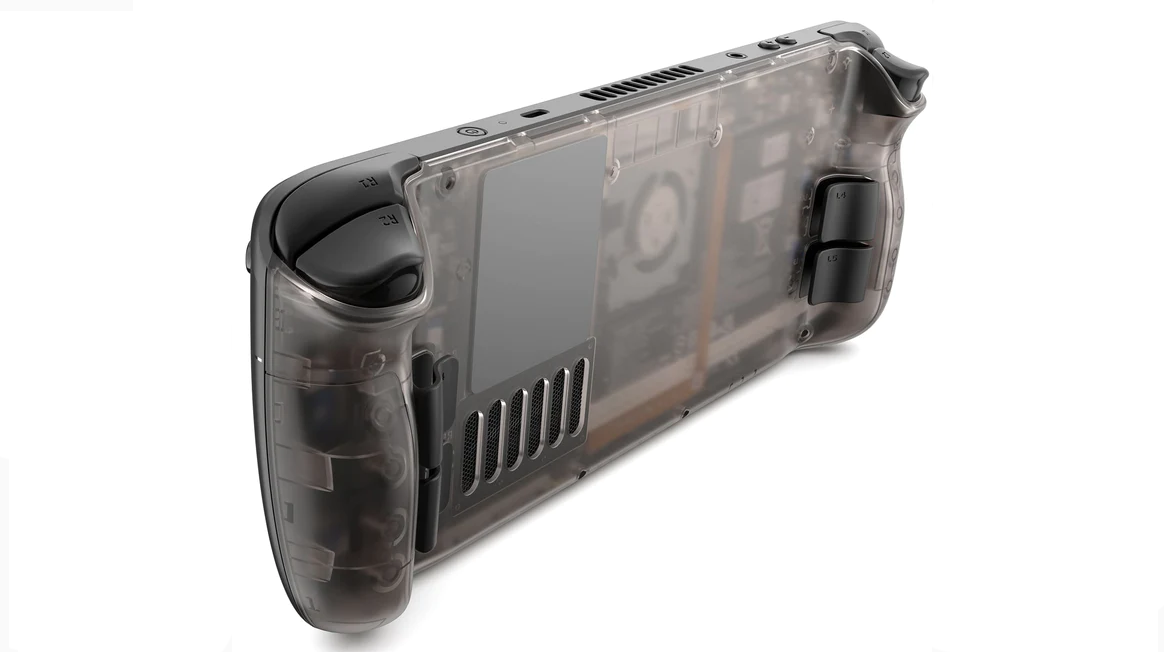
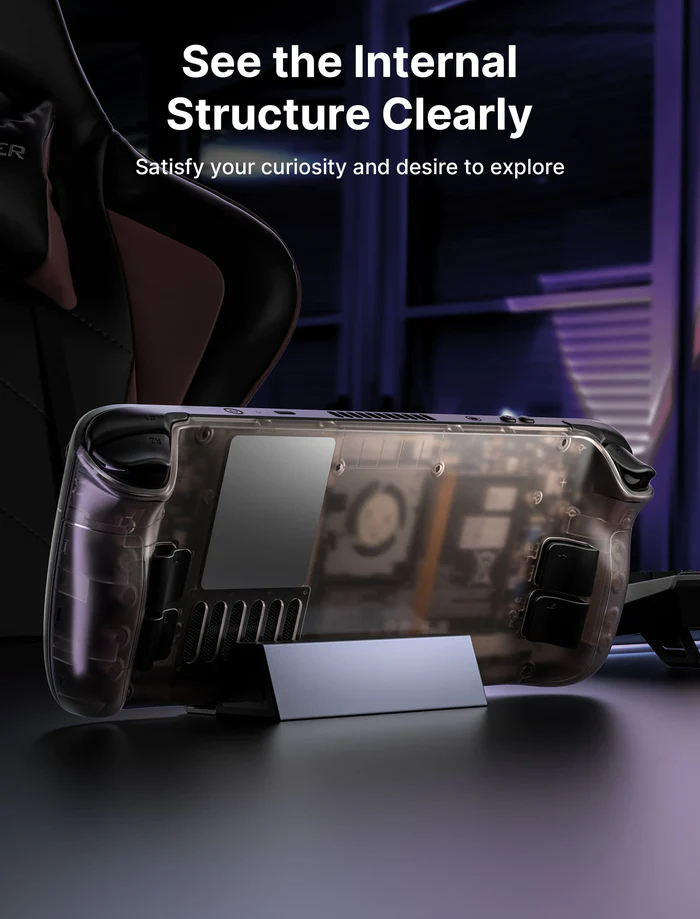
If you’ve got Valve’s SteamDeck and want to give it a Nothing Phone-like facelift, JSAUX’s transparent backplate is a viable option that doesn’t only give your SteamDeck a fresh look, but a slight boost in performance as well.
The backplate was reviewed by Sean Hollister from The Verge, and they are pleased with the accessory. According to Hollister, “Not only does it (the backplate) look great, its built-in aluminum heatsink actually does help manage the $400 handheld gaming PC’s heat.” Reportedly, the heatsink sits atop the Deck’s electromagnetic interference shield, and it makes a real difference in terms of temperature.
In tests playing Shadow of the Tomb Raider, Hollister found that the SteamDeck’s CPU and GPU cores ran up to four degrees Celsius cooler, in comparison to the regular backplate. Not only does the JSAUX backplate keep the Steam Deck cooler, but it also makes for quieter gaming sessions. Because the SteamDeck doesn’t run as hot as it normally does, its fan doesn’t have to spin as much, reducing the noise.
“I saw the fan top out at 5674 rotations per minute with the aluminum cooling plate while downloading a 35GB game to the internal SSD — without it, it topped out at 6475RPM,” wrote Hollister.
It’s worth noting that installing the backplate won’t result in a higher framerate, and that it does get hot while gaming, but not too hot to make your fingers uncomfortable.
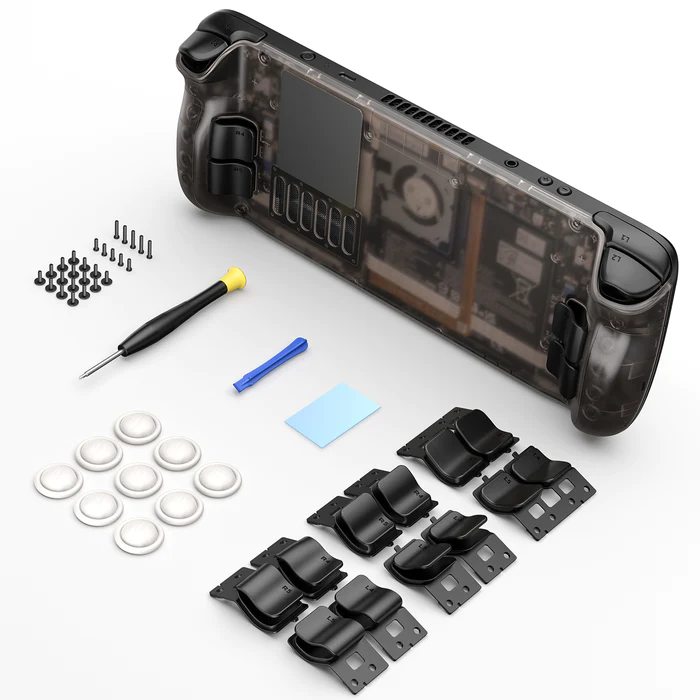
The JSAUX backplate is easy to install, taking only eight Phillips-head screws and a little prying to pop off the original backplate. The package includes a cheap screwdriver, a pry tool, and three sets of back buttons. According to Hollister, if you’re looking for a way to improve the cooling and noise of your Steam Deck, the JSAUX PC0106 Transparent Back Plate is a solid option.
Telus has created a new consumer solutions division to raise customer service and answer demands for innovative and integrated products.
The company is merging its mobility solutions department under one banner with home solutions and customer excellence. Zainul Mawji will serve as president of Telus Consumer Solutions.
Telus has also appointed Jim Senko to the new role of Chief Product Officer.
“At Telus, we consistently seek opportunities to advance our organization and our product offerings strategically in order to exceed the ever-evolving expectations of the market and Canadians,” Darren Entwistle, Telus’ CEO, said.
“[These changes] represent the next chapter of Telus’ exciting growth journey, propelling our efforts to optimize our market performance and capitalize on synergies across our company to fuel our long-term success.”
Tesla has announced plans to invest more than $3.6 billion USD (about $4.8 billion CAD) into its Reno, Nevada Gigafactory, with part of the funds going towards the construction of the company’s “first high-volume Semi factory.”
As shared by the automotive company in a blog post published on Tuesday, January 24th, the Nevada Gigafactory, which opened in 2016, has successfully produced 7.3 billion battery cells, 1.5 million battery packs, 3.6 million drive units and 1 million energy modules (14 GWh+ total).
Now, Tesla is looking to grow the Gigafactory with the inclusion of 3,000 new team members, a $3.6 billion investment and two new factories — a 100 GWh 4680 cell factory (with the capacity to produce enough batteries for 1.5 million light-duty vehicles annually), and the company’s first high-volume Semi factory.
Today, we’re announcing $3.6B of new investment in Giga Nevada.
– 4M sq ft of new manufacturing footprint – 3k additional team members – 2 new manufacturing facilities: a 100 GWh 4680 cell factory & our first high-volume Semi factory
The electric car maker officially delivered the first of its long-awaited Semi trucks to PepsiCo. in December, and now seems to be ready to ramp up production. It’s worth noting that the blog post doesn’t specify how many Semi trucks the factory might be able to produce once it gets off the ground.
Tesla has so far invested $6.2 billion USD (roughly $8.3 billion CAD) in the Nevada Gigafactory and has Gigafactories in New York, China, Germany, and Texas.
The largest telecom merger in Canada is one step closer to gaining approval, and various organizations are voicing their concerns.
The only person to stop this merger now is Innovation Minister François-Philippe Champagne after the Federal Court of Appeal rejected the Competition Bureau’s push to overturn the Competition Tribunal’s decision.
My statement regarding the Federal Court of Appeal’s ruling on the Rogers-Shaw transaction: pic.twitter.com/ujvwznTVrl
— François-Philippe Champagne (FPC) 🇨🇦 (@FP_Champagne) January 24, 2023
Specifically, the bureau argued the tribunal focused on Vidéotron’s acquisition of Freedom Mobile and not Rogers’ takeover of Shaw. However, the court sided with the tribunal’s decision in a quick hearing that only lasted a couple of hours. The bureau says it won’t appeal the decision.
“The public can only be suspicious that the powers that be want this deal to close — even if it means a decade of high wireless and internet prices for Canadians,” John Lawford, PIAC’s executive director, said.
During the tribunal’s hearing, it was revealed that Rogers would lease its wholesale wireline access rates to Vidéotron at lower rates than what the Canadian Radio-television and Telecommunications Commission (CRTC) has mandated.
In its reaction, TekSavvy maintained its position. “The Rogers-Shaw merger is based on an unlawful side deal with Vidéotron that will kill competition and raise consumer prices,” the company tweeted, saying the CRTC has to investigate before Minister Champagne makes a ruling. “[The] court decision doesn’t change that.”
The Rogers-Shaw merger is based on an unlawful side deal with Videotron that will kill competition and raise consumer prices. The @CRTCeng must investigate and make a decision before @FP_Champagne decides whether to approve the merger. Today's court decision doesn't change that.
The company previously called on Minister Champagne not to approve the transfer of spectrum licenses from Shaw to Vidéotron, citing the impact it will have on independent service providers (ISPs).
OpenMedia’s campaigns director Matt Hatfield echoed this statement in reaction to the federal court’s decision. “We’re seeing a collapse of independent ISPs that create positive price pressure on telecom giants, and we’re now on the verge of adding Shaw to that list. In 2022 alone, we lost over a half dozen independent providers to big telecom buyouts.”
This is leading to increased prices and less competition, Hatfield said. The solution lies in “services-based competition,” including fair wholesale internet pricing and opening up MVNOs.
Minister Champagne said he would deliver his decision in “due course.”
The approval clears the way for the Rogers and Shaw merger to a near conclusion, a process that has taken nearly two years. The company hopes to close it by January 31st.
“We welcome this clear, unequivocal, and unanimous decision by the Federal Court of Appeal. We continue to work with Innovation, Science and Economic Development Canada to secure the final approval needed to close the pro-competitive transactions and create a stronger fourth wireless carrier in Canada and a more formidable wireline competitor,” a joint statement from Rogers, Shaw and Québecor states.
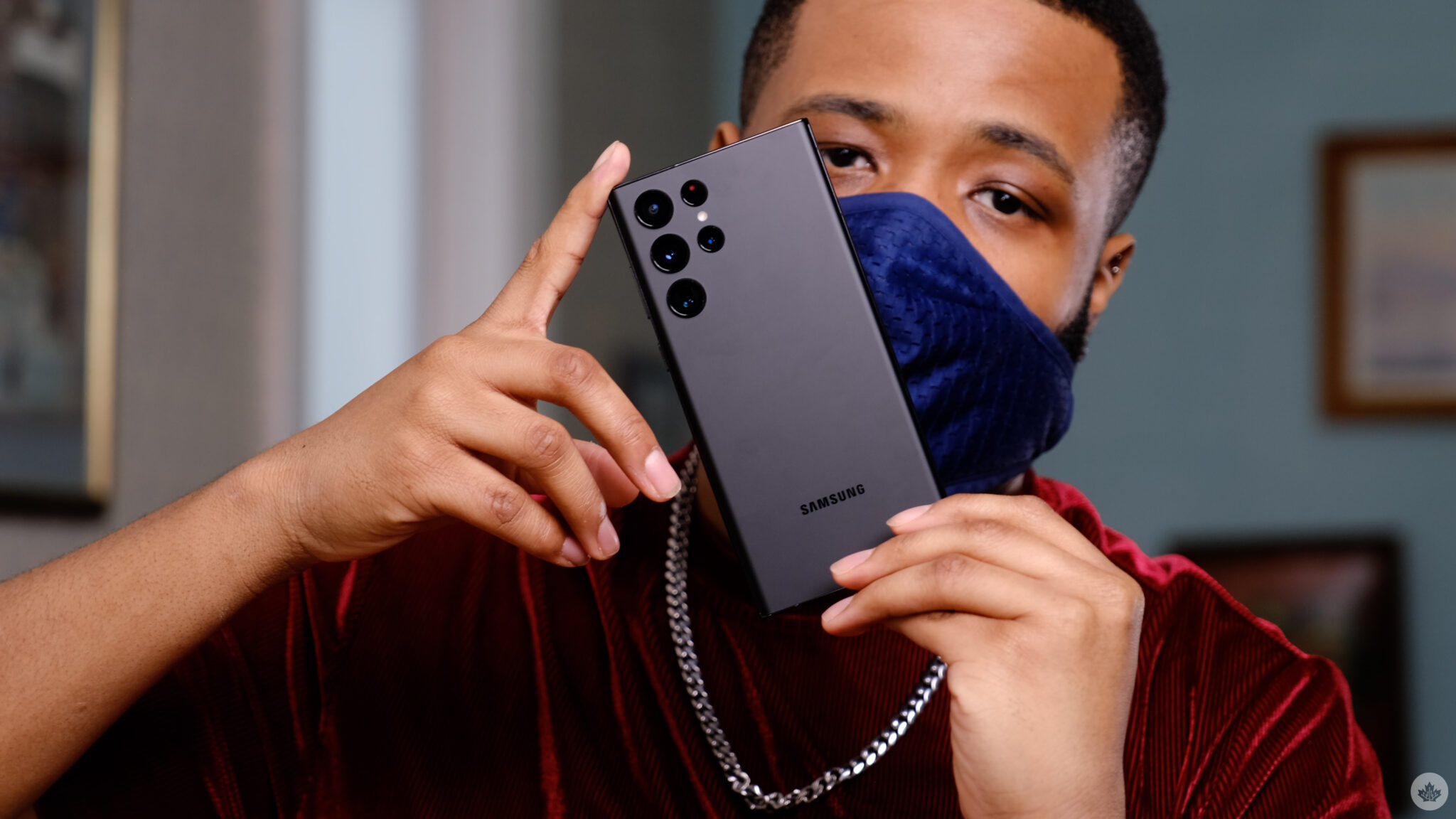
Samsung has announced that Samsung Wallet is coming to eight new markets at the end of January: Canada, Australia, Brazil, Hong Kong, India, Malaysia, Singapore, and Taiwan. The Wallet is a more secure app that can organize all your essentials.
Samsung Wallet includes features like Samsung Pay, Pass, Digital Keys, Health and more all in one spot.
You’ll likely have to update your Samsung Pay app to get Samsung Wallet. Samsung says Wallet “goes above and beyond to better safeguard customer data by storing it in a secure environment to help protect it from malware and other potential threats.”
“When Samsung launched Samsung Wallet last year, we committed to building the experience through open partnerships with our business and service providers and ensuring access to the platform for as many people as possible,” said Jeanie Han, EVP and Head of Digital Wallet Team at Mobile eXperience Business, Samsung Electronics in a press release. “Over the past several months, we’ve worked hard to rapidly expand the availability of Samsung Wallet, bringing the platform to more potential users. We look forward to sharing exciting new developments in the year ahead.”