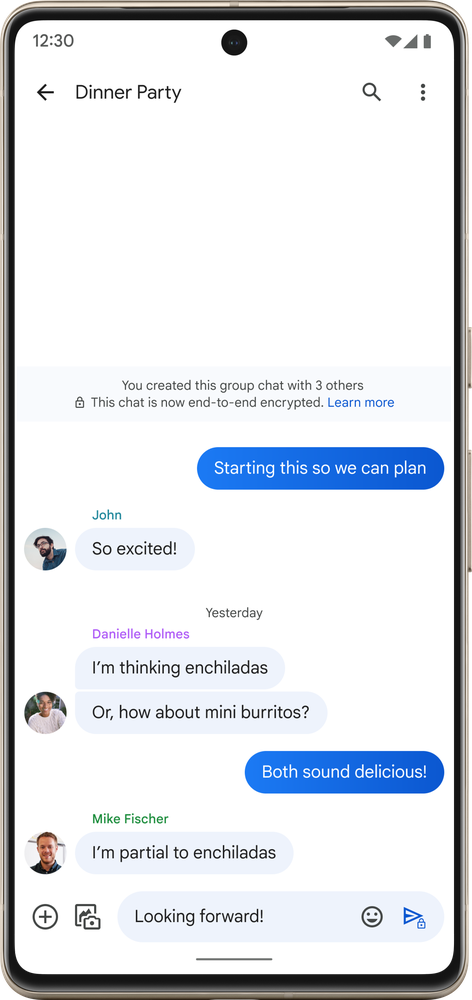
Google Messages’ Beta program users can take advantage of end-to-end encryption (E2EE) in their Messages group chats, starting now.
Google started Beta testing E2EE for regular two-person conversations back in November 2020, while the feature left beta and entered the public build in June 2021. When it comes to E2EE for group chats on the platform, a bunch of Redditors shared what appeared to be Google resting the feature out in group chats. Now, Google has made it official in a blog post that it is testing E2EE for group chats, and the feature is entering beta testing.
Google has been pushing Apple to adopt RCS, in favour of using outdated SMS technology when sending messages between iOS and Android users. Currently, iPhones automatically use iMessage (the blue message bubbles) when messaging another Apple user but revert to SMS/MMS (green bubbles) when messaging people with other smartphones or even iPhones that don’t have internet access.
Photos and videos sent via a message from an iPhone to an Android device are often tiny and blurry because of Apple’s continued use of SMS/MMS and texts, and similarly, texts can’t be sent over Wi-Fi.
While today’s blog post wasn’t meant to persuade Apple to adopt RCS, Google did throw shade at the Cupertino-based company. “Apple refuses to adopt RCS and continues to rely on SMS when people with iPhones message people with Android phones, which means their texting is stuck in the 1990s,” reads the blog post.
End-to-end encryption for group chats in Google Messages is rolling out for some users!
In addition to E2EE support for group chats, the blog post also mentions that soon, Messages will let you react to RCS messages with any emoji of your choice, instead of being limited to a few pre-selected emojis, making the overall experience of using Google Messages more in line with the likes of WhatsApp and Apple Messages.
SpaceX has delayed Starlink’s Fair Use Policy (FUP) rollout.
As reported by Tesla North, the policy will now begin in February 2023. Starlink previously stated the policy would be implemented in December 2022.
“To ensure our customer base is not negatively impacted by a small number of users consuming unusually high amounts of data, the Starlink team is implementing a Fair Use policy for Residential customers in the US and Canada and all Business/Maritime customers beginning February 2023,” Starlink’s FAQ page states.
Starlink’s policy puts a data cap on customers using more than 1TB of Priority Access during peak hours (7am to 11pm). The data category provides faster speeds and improved performance compared to Basic Access.
Customers who go over their eligible amount of Priority Access data will be moved to Basic Access for the remaining billing period. Customers can add more Priority Access to their accounts.
If countless rumours are accurate, Apple’s virtual reality/augmented reality (VR/AR) headset will launch this Spring. Now, for the first time in several months, we’re starting to learn more about the device’s operating system.
According to Bloomberg’s often-reliable Mark Gurman, Apple’s mixed reality headset will run on a new operating system called “xrOS.” In the past, this operating system has been referred to as ‘realityOS,’ but it appears Apple has changed its name. Gurman says that the XR in xrOS stands for “extended reality,” which makes sense given the tech giant’s rumoured productivity goals for the headset.
Gurman goes on to say that Apple’s Pages, Keynote, Numbers, Notes and Apple News teams are involved in the project, hinting that the company has plans to launch its headset with several of its core apps. However, will anyone want to actually create a Keynote presentation inside a virtual reality headset? Probably not.
Bloomberg says that the trademark for xrOS has been filed by a shell company called Deep Dive LLC.
Apple’s mixed reality headset has been in development for years and is rumoured to cost $3,000 USD (roughly $3,736 CAD), putting it in line with Meta’s high-end Quest Pro VR headset, which costs $2,299 in Canada. The headset is rumoured to feature a high-quality design focused on comfort, dual 4K displays and iris scanning technology.
It’s unclear when the headset will finally release, but most rumours point toward early 2023.
At times, it can be pretty isolating; you feel like you don’t really belong to either of the radically different groups that make up your background. For me, that’s being British-Canadian on my mum’s side and Guyanese on my father’s. In social settings with either parent, you become consciously aware that you stick out like a sore thumb. I’m not quite white, I’m not quite brown, so what am I? Making everything murkier for me is the fact that I’ve long had a strained relationship with my emotionally abusive paternal half of the family, and, consequently, my feelings about that part of me are complicated, to say the least. As a result, I’ve often felt like I need to carve my own path — to find my own sense of identity.
*Warning: this story contains full spoilers for God of War Ragnarök*
Much to my surprise, then, when I discovered just how central this conflict was to God of War Ragnarök, the latest big-budget game from PlayStation and developer Santa Monica Studio. In Atreus, protagonist Kratos’ teenaged son, I saw a young man who embarked on a journey much like my own. He, too, has an intricate mixed lineage, and this leads him on a similar search for his own identity. That he also has a difficult relationship with his father only made him more relatable to me. Over the course of Ragnarök‘s 20-plus-hour campaign, I was deeply engrossed in ways I hadn’t been with most games. And when Ragnarök came to an end, I found myself balling. Through Kratos and Atreus’ story, I felt seen, and it created one of the most deeply cathartic experiences I’ve ever had in games.
The wolf that always seeks its own kind
God of War (2018) ended with the shocking reveal that Atreus was actually Loki. His mother, the Jötunn (Giant) known as Laufey, concealed this from both Kratos and Atreus, and it sets up the boy’s arc in Ragnarök. On top of hoping to prevent the prophesied Norse apocalypse, Atreus seeks answers about his past. Who were the Giants? Who was his mother? What’s his role in all of this? Immediately, this connected me to Atreus in a way I hadn’t been in the previous game.
And just a few hours in, Ragnarök further deepens that connection by actually letting you play as Atreus. While many expected this would happen, I certainly didn’t think it would so early in the game. By doing it then, though, Santa Monica Studio was able to achieve wonders. Structurally, it served to shake up the pace of the game by giving us a character who played remarkably different from Kratos. The way Atreus gracefully zips around the battlefield, leaping and twirling and hammering enemies with his bow, makes for a wonderfully refreshing gameplay experience from the slower, heavier Kratos, diversifying the game’s already really damn good combat. It also helps that actor Sunny Suljic, who’s grown so much since the last game, does a great job of bringing Atreus to life.
But narratively, taking control of Atreus only enhances his coming-of-age story. In God of War (2018), he was a support character, effectively teeing up enemies for Kratos to finish them off while relying on his father to literally carry him around everywhere. In Ragnarök, though, we see — or rather, experience — how independent Atreus has become. In the three years since the last game, he’s grown, and it’s led him to become independent. He can think on his own, fight on his own and climb an entire mountain on his own. By embodying Atreus, we can fully appreciate how he’s starting to become his own man. Best of all, he does this, consciously or not, by leveraging both sides of himself — marrying the best of both worlds of his lineage. The survival lessons from his father, coupled with the magic of his mother, have helped shape him into a capable warrior.
This was all rather touching to see. As someone who’s been estranged from his father for several years now, I can fall into the trap of trying to distance myself from that side of me. Brown people and culture can bring up unpleasant memories and push me to withdraw. But in Atreus, I saw someone who was empowered by embracing both halves. I saw someone who often felt lost and desperate like me, but didn’t run away from what made him who he was. If anything, it only helped motivate him in his journey. It reminded me that you don’t have to be defined by family, but what you take from them, on either side, can truly be beneficial.
The bear that keeps to his own line
The other side of the coin, of course, is Kratos. Part of the brilliance of the Norse God of War games is the fact that they don’t shy away from their past; all of the previous Greek mythology-inspired titles actually inform the current story. In this way, Santa Monica Studio contextualizes the central “father-child” dynamic far more deeply for me than the many other games that have tackled similar subject matter, be it The Last of Us, The Witcher 3 or Telltale’s The Walking Dead. We’ve seen the vengeful, loathsome, even evil man Kratos has been, and that adds significant weight to everything he now does.
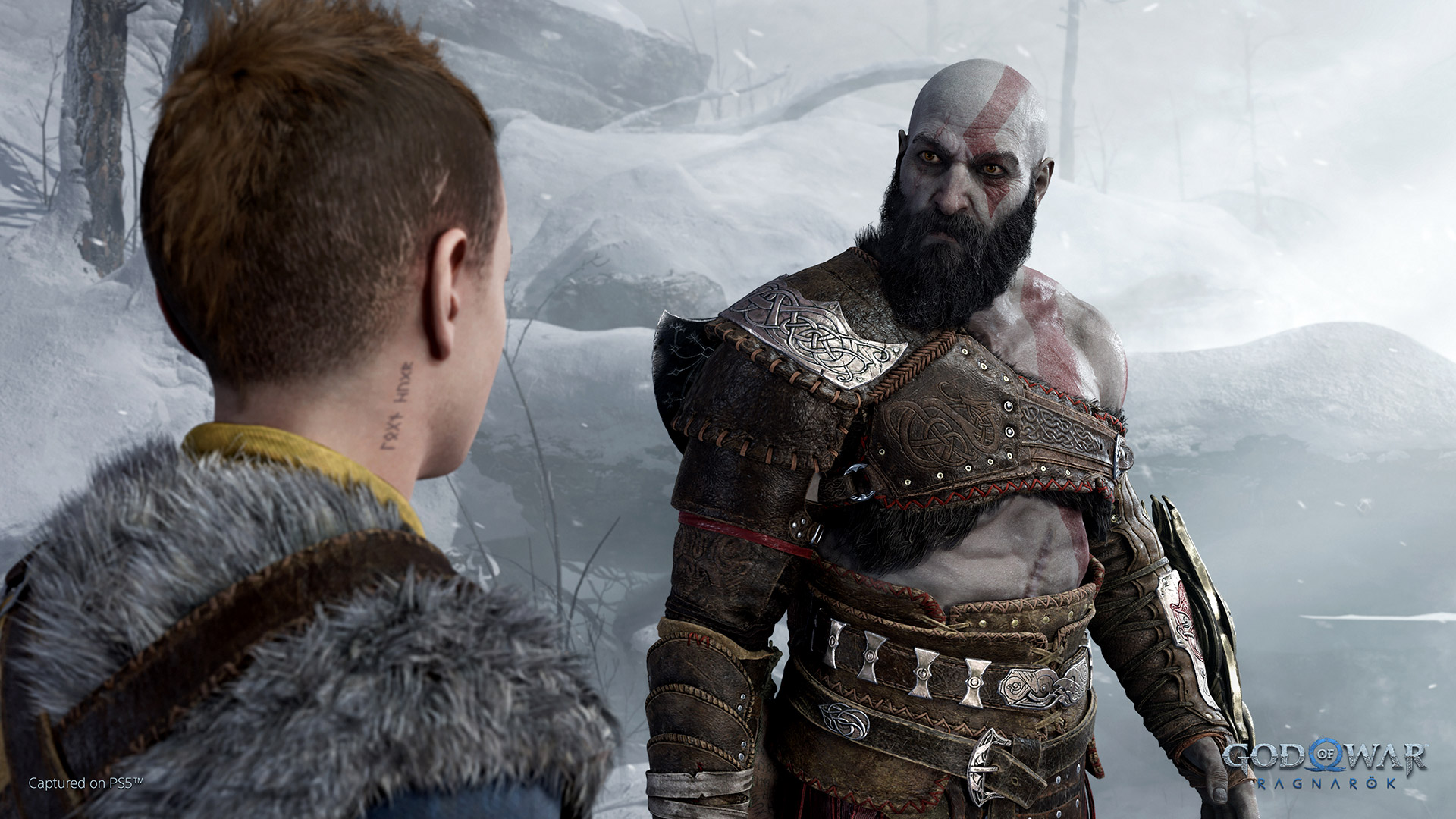
What this means is that Kratos is a deeply flawed character and, as a result, an utterly believable and true-to-life father — one not unlike my own. While we understand Kratos’ efforts to protect his son stem from his guilt over the deaths of his previous family, that doesn’t change the fact that it leads him to exhibit decidedly toxic behaviour. His inability to properly show his love for Atreus, on top of his coldness and emotional unavailability and overbearingness, only serve to push Atreus away. These actions mirrored those of my own father, who often wasn’t around or, when he was, demanded respect and obedience without ever extending any of that to me. Kratos is even advised against this behaviour early on by Mimir, with whom he now shares a surprisingly close bond. “Brother, he’s going to walk his own path,” says Mimir. “If you don’t want him walking away from you, then smarten up and walk with him awhile.”
And sure enough, Atreus does walk away — repeatedly. At first, it’s in small ways, like sneaking out with Sindri behind Kratos’ back, but this later manifests in more dangerous excursions. Take Jötunheim, where Atreus finds himself after Kratos effectively told him to shun his Loki side because “you are Atreus, my son, and nothing more.” Here, Atreus comes across Angrboda, a kind, bubbly young woman for whom he starts to develop feelings. Together, they explore the mythical Ironwood forests in a significant departure from the main Ragnarök quest. For some people, this section was “too long and absolutely boring,” but it’s one of my favourite parts of the entire game.
On the one hand, Ironwood serves as a lovely respite from the harrowing apocalypse that loomed in the background, instead giving us an infectiously sweet back-and-forth between Atreus and Angrboda. In God of War (2018), Atreus really only gets to spend time with adults — chiefly his cold, hardass father. Now, though, we see a new side of him; he gets to just be a kid. The sense of youthful innocence on display between the pair is utterly endearing, reminding me fondly of Ellie and Riley hanging out at the mall in The Last of Us: Left Behind. When Atreus races through the mountains with Angrboda, Bear McCreary’s cheerful and adventurous “A Son’s Path” blasting in the background, I had a massive grin on my face. In many ways, Atreus and Angrboda are the beating heart of Ragnarök, the future that Kratos will inevitably commit to fighting for.
But beyond that, Ironwood made me feel even closer to Atreus. Narratively, this section is as long as it is because the lad wants it to be. He doesn’t want to go back home and deal with all of that drama. After so much conflict with his father, who fails to accept him for who he is, Jötunheim offers an alluring sense of escapism, and he’s fully drawn in by it. For me, this hit close to home. Since my mum worked long, late nurse shifts, I’d have to spend a few days of each week with my father. Needless to say, that was not my preference. So, that sense of dread that Atreus felt in having to go back to his father, and his desire to prolong it as much as possible to be around a much warmer presence? Well, I got that.
Ragnarök also captures the little intricacies of an angsty teen who nonetheless has legitimate grievances with his father. After Ironwood, when Kratos returns from Vanaheim with Freya, he goes to confront Atreus about where he’d been. Mimir had asked him to consider a measured approach, but Kratos, acting out of frustration, rather forcefully declares “He will tell me where he’s been.” Naturally, this quickly leads to a heated fight, with Atreus upset that his father doesn’t trust him, and Kratos thinking that he’s recklessly plotting to seek Odin to prevent Ragnarök. With haste, the rest of their allies take Kratos’ side, essentially ganging up on Atreus by doing so.
Now, is Atreus being foolhardy for considering such things without much in the way of an actual plan? Absolutely! But Kratos and the group’s complete lack of empathy for this clearly scared and conflicted teen just leads him to feel even more alone. Everyone stands around and berates him — of course, he’d lash out, run away and do the exact thing he was told not to do. It brought back vivid memories of all the times I’d spend the summers in Florida to visit family, where everyone would take my dad’s side and make me out to be the villain. Was I perfectly behaved? Probably not (is any child?), but adults not being more understanding when dealing with a teen, especially one who clearly feels lost and scorned and far from the comfort of his home, just leads him to become even more bitter. Even the way Atreus rather astutely points out Kratos’ hypocrisy in lying to him rang true for me. The many times my own father would keep things from me — chief among them, how I found out about his wedding through Facebook, of all things — but then get mad should I also not be so forthcoming. “Wonder where I learned that?” Atreus says sarcastically when Kratos calls him out for lying. Every resentful remark, every anguished plea for his father to just listen to him, felt all too familiar.
Finally being better
This isn’t to say that Kratos is a terrible father — far from it. It’s evident that he does care, and the ways in which Ragnarök uses not only main story missions but an ample amount of sidequests to illustrate this are absolutely masterful. Nowhere is this more apparent than in the heartwarming Hafgufa “Jellyfish” quests in Alfheim. After Atreus asks to track down and free a wounded creature, the boy is surprised when his father is willing to traverse eerie, barren deserts and Elven warrior-infested caves to do so. Eventually, Atreus’ curiosity gets the better of him — he just has to ask why his father has even bothered to go on all of these excursions.
“Have you ever considered..? He just wants to spend time with you lad, while he still can,” asks Mimir.
“We do not know what lies ahead, but if Ragnarök approaches…” Kratos adds sternly before his voice softens, “I wish to enjoy the time we have left.”
This little exchange encapsulates so much of what I love about Kratos and Atreus’ relationship. No father is perfect, and it’s certainly not uncommon for one to be guarded with his emotions. But it’s the effort that counts. Kratos going on these grand adventures with his son is, in his own way, the ultimate expression of love. For someone like me, with a father who lived just 10 minutes away yet barely ever made the time to see me, Kratos was exhibiting everything I ever really wanted. The beautiful subtleties in Christopher Judge’s performance — which he’s candidly admitted serves as both a “love letter” and “apology” to his own children — only adds to the sincerity and emotional weight of such scenes.
We also see Kratos grow more empathetic. When Atreus returns to Brok and Sindri’s, ashamed of having let the deadly Garm free, the others start to admonish him. Kratos, though, acts a bit differently — he actually stands up for his son. Instead of making him feel even worse, he puts a hand on his shoulder and reassures him that together, they will fix this mess. Atreus even asks if he’s going to be reprimanded, and Kratos simply says, “No. I am… relieved you are safe.” What’s more, this entire experience brings Kratos to a major epiphany. After they stop Garm and prepare to return home, Kratos has a heart-to-heart with Atreus, candidly acknowledging how he’s wronged Atreus. “I have been… falling back into my own ways. Angry. Distrustful. With you, now… and before. I… I chased you away.” What’s more, he actually says, “I’m sorry,” with Judge expertly capturing all of the guilt and self-loathing in his tone. It’s a far cry from the Kratos in God of War (2018) or even Ragnarök up until this point. All of this, in turn, helps Atreus see the good influence his father’s watchful eye has had, and the two come to an understanding.
It’s a moving exchange and one I’d have killed to have with my own dad, even once. Never did he accept responsibility for anything; it was always me, the petulant child, to blame. When I had to call my mum at 3am on Father’s Day to pick me up from a party he dragged me to, my 13-year-old self fearful of how intoxicated all of the adults were, I was at fault. When I saw him weeks later, he complained about how embarrassing that was, how I was the only child to do that and cause a scene. If I told him I didn’t want to go to Waterloo, Ontario with him so he could see his fellow beer-loving cousin, I was being disrespectful and disobedient — who cares if I just wanted to spend the day just the two of us? In that moment, I saw something I always dreamed about — my father recognizing his harmful traits and genuinely apologizing for them. Throughout his entire journey in the first game, Kratos told Atreus about the need for them to be better — now, he’s actually doing that, and my heart was full.
From here, everything we see between Kratos and Atreus is just icing on the proverbial father-son cake. When Atreus feels immense guilt over the murder of Brok, Kratos tries to comfort him by accompanying him on a deer hunting trip and, later, tries to apologize to Sindri. The night before they make the climactic charge on Asgard, Kratos lets Atreus sleep in his tent and tells him a story to help him go to sleep, all while trying to keep his weariness and reservations about the coming battle in check. Ragnarök takes its time to get to these tender, oh-so-human moments so that they feel earned when we get them. But Santa Monica Studio saved the best of them for last.
Letting go
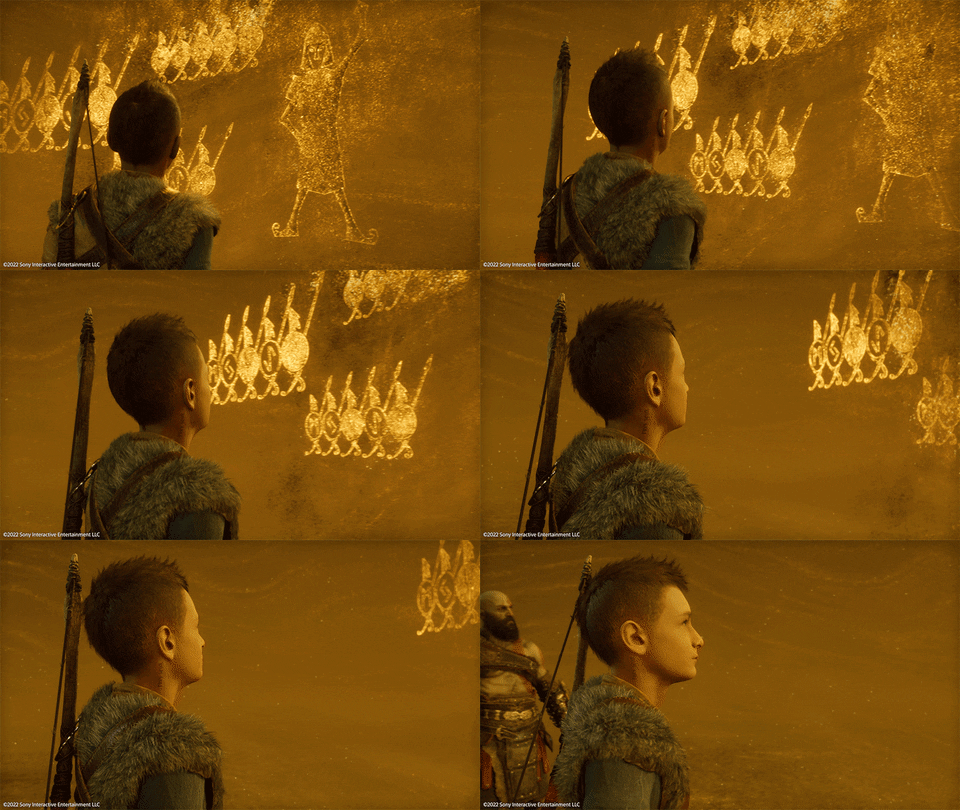
Much praise has been heaped upon the ending of God of War Ragnarök, in which Kratos weeps as he discovers a prophecy depicting him as a peaceful and beloved god, and, finally, having hope for his own future. I certainly adore this, as it’s a magnificent and beautifully poetic cap to his arc; somehow, the thinly written, one-note rage monster of the old God of War games was given some of the most profound character development I’d ever seen in a game. Not forgiving him for his actions, but making sure he puts in the work — going around the Nine Realms with Freya to clean up Odin’s mess — to earn his new lease on life.
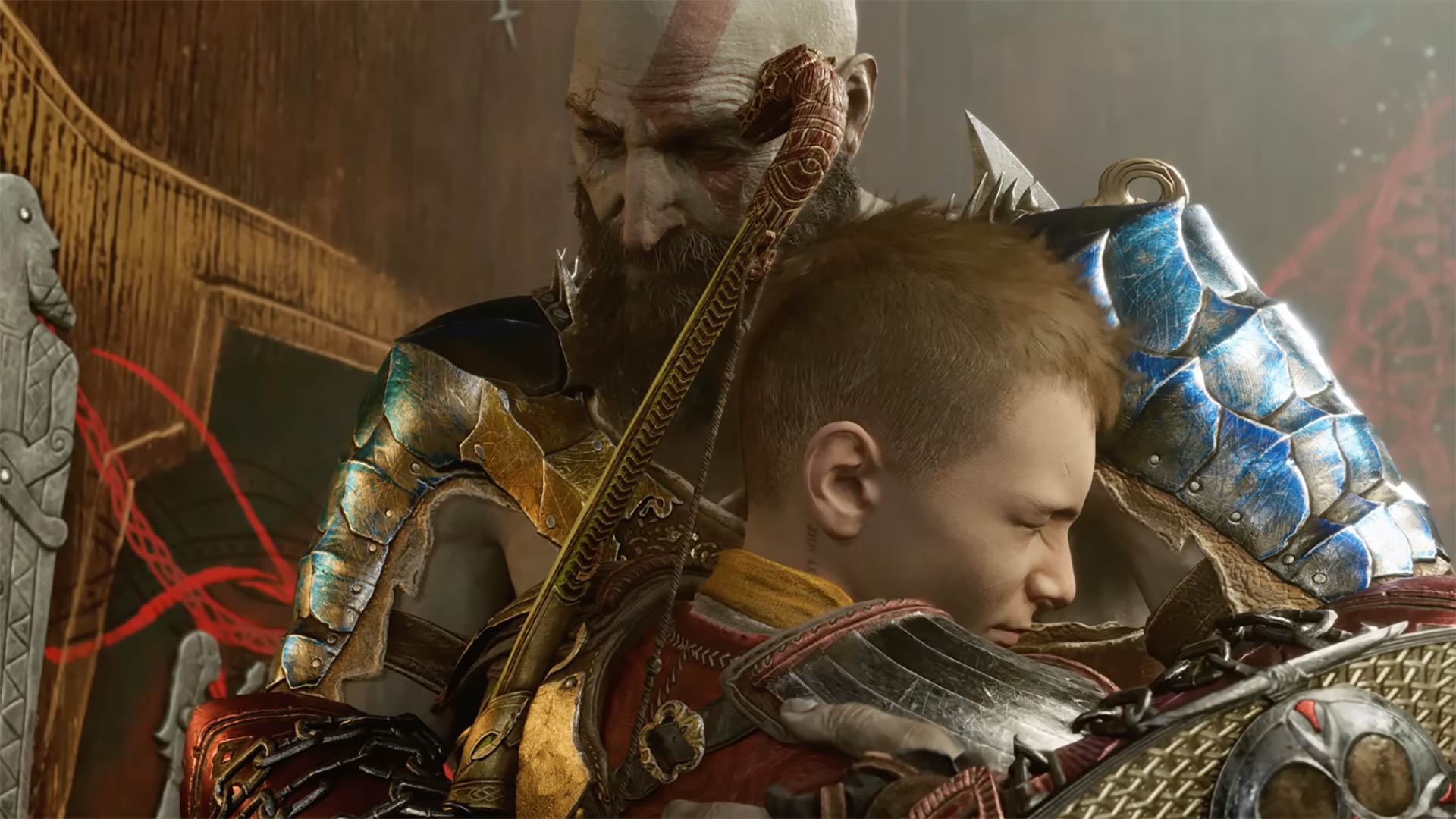
But it’s the other half of that ending that resonates even more for me. After the war with Asgard, Atreus takes the opportunity to tell Kratos that he’s decided to find the remaining Giants. After everything he’s been through, all of the soul-searching to forge his own identity, he’s now certain of who he wants to be — a hero to his people. As he attempts to explain his reasoning, Kratos quickly tells him he understands why — to truly become his own man, he has to take a risk and venture out, even if it frightens him. What’s more, he tells Atreus that the reason they overcame Odin is because his kindness — his innate ability to believe in good — led him to entrust the allies who ultimately saved them. Ultimately, Kratos says, “you are ready,” a wonderful full-circle moment for the man who has been saying the opposite for nearly two full games. “Loki will go… Atreus remains,” says Kratos, choking up as he utters those last two words, embraces his son and a solemn version of the God of War theme swells.
This final interaction moved me to tears. For so much of my life, this is something I’ve longed to have gotten from my own father. No, Kratos wasn’t the kindest, most forthcoming or even thoughtful of dads. But at this crucial juncture in his son’s life, as he’s about to become a man, he’s there for his son — to put a hand on his shoulder, tell him he was proud and give him his blessing to go forward. Atreus, the conflicted mixed youth who I saw a lot of myself in, got what he needed from his father. As someone who went through university, graduation and real-world employment without any fatherly support or encouragement, this hit hard. Sure, the circumstances were a bit different between Atreus and me. He parted with his father on the best of terms, lovingly and with the knowledge that someday, they will surely reunite. Meanwhile, I don’t know if I’ll ever be ready — or even willing — to reconnect with my own father. Still, seeing Atreus step out from Kratos’ shadow and successfully carve his own path was nonetheless so meaningful to me. Me even writing this about this publicly for the first time is, in many ways, doing something that scares me, just as Kratos mentioned. And in a way, hearing Kratos say, “you are ready” also felt like a direct address to me — a reminder that whatever happens, I can also move forward without my father.
As Kratos descends the mountain with Mimir and Freya in tow to start a new heroic journey, McCreary’s commanding and stirring score hitting a stupendous crescendo, I felt a surprising sense of resolve. Kratos and Atreus will be okay. And you know what? I will be, too.
God of War Ragnarök is now available exclusively on PlayStation 4 and 5.
Qualcomm’s Snapdragon 8 Gen 2 was recently revealed, and now Motorola’s next flagship, poised to launch in December, will reportedly feature Qualcomm’s new chipset.
However, before the launch, @OnLeaks and MySmartPrice have shared renders of the upcoming smartphone. The Moto X40 Pro is estimated to measure 161.3 x 73.9 x 8.6mm. The antenna lines are at the top and bottom of the device, which hints that the smartphone sports a metal chassis.
Further, leaks point to the handset sporting a 144Hz refresh rate, 6.67-inch FHD+ AMOLED display, up to 18GB of RAM and 512GB of storage, as well as an IP68 water and dustproof display. It also reportedly features a 5,000mAh battery and can support 68W wired fast charging.
Huawei has built a reputation over the past few years for releasing pretty out-there devices, though many don’t make their way to Canada.
And once again, that’s likely the case for the China-based company’s new Huawei Watch Buds. In a recent teaser videoon Weibo, Huawei showed off the wacky-looking smartwatch that features wireless earbuds inside of it. Yes, you read that correctly.
There’s no word on battery life or the performance of this odd device, but we do know that the smartwatch runs HarmonyOS. The earbuds themselves feature a pretty standard silver design, while the smartwatch looks like a bulky Huawei Watch Classic 3.
A December 2nd release date appeared is mentioned in the teaser video. However, Huawei has postponed the launch of the Watch Buds and its other Winter 2022 consumer devices. The Vergesuggests that this is out of respect for the passing of former China CCP General Secretary Jiang Zemin on November 30th, which has affected the release of other Chinese OEMs devices.
It’s worth noting that it’s possible that the Watch Buds do release in Canada, given Huawei’s smartwatches and wireless earbuds typically release here.
A snowmobiler in Alaska is believed to be the first person to use Apple’s Emergency SOS via Satellite.
As reported by 9to5Mac, Alaska State Troopers were notified of an alert in the early morning hours of December 1st. It came through the Apple Emergency Response Center, notifying them of an adult male activating the feature on their iPhone after being stranded.
Volunteer searchers were sent “to the Nimiuk Point area directly to the GPS coordinates provided by the Apple Emergency Response Center,” a report from Alaska’s Department of Public Safety states.
Searchers successfully located the male.
Apple launched the feature a matter of weeks ago. It’s available on the iPhone 14 and 14 Pro models in Canada and the U.S. and connects the devices with satellites when out of reach of cellular networks.
Google publicly disclosed a major security leak impacting devices from Samsung, LG, Xiaomi and more. The leak enabled the creation of ‘trusted’ malware apps that can gain access to the entire Android operating system.
Shared by Googler Łukasz Siewierski (via 9to5Google), Google’s Android Partner Vulnerability Initiative (APVI) revealed the details, which you can view here. The main issue is that multiple Android manufacturers had their platform signing keys leaked. Those keys ensure that the version of Android running on your device is legitimate and created by the manufacturer. However, those keys can also be used to sign individual apps, which Android trusts by design.
However, a malicious actor with those signing keys could abuse that trust to give malware full, system-level permissions on an affected device since that device would see the official, signed key and, by default, trust the app. Since some manufacturers use these keys to sign relatively common apps — for example, 9to5 points to Samsung’s Bixby, which is signed with the company’s key on at least some phones — attackers could add malware to a trusted app, sign it with the same key, and then Android would trust it. Worse, this malicious version of the app could come from various sources — the Play Store, Samsung’s Galaxy Store, or be sideloaded.
Google didn’t say which devices or manufacturers were affected in its disclosure. However, the company did include hashes of example malware files, which were uploaded to VirusTotal. 9to5 notes that VirusTotal reveals the names of some of the affected companies, which include Samsung, LG, MediaTek, Szroco (which makes ‘Onn’ tablets for Walmart), and Revoview. There are more keys as well, but they have not been identified.
In the disclosure, Google recommends that manufacturers change their platform signing keys from the ones that leaked. It also urged all manufacturers to reduce how often they use those keys to avoid potential security issues. Moreover, Google said that Samsung and other affected companies took “remediation measures to minimize the user impact” of the security leaks after the issue was first reported in May 2022.
However, 9to5Google notes that Samsung used its vulnerable platform signing key in several Android app updates within just the last few days, based on details from APKMirror. It also remains unclear which Android devices, if any, are still vulnerable.
Moreover, while Google notes the exploit was first reported in May 2022, VirusTotal first scanned some of the malware examples as early as 2016. It remains unclear whether the leak and associated exploits were actively used against anyone in that time.
Google said in a statement to 9to5 that there are several systems in place to protect people from these kinds of security vulnerabilities, such as Play Protect. The company also said that “there is no indication that this malware is or was on the Google Play Store.”
To protect themselves, Android users should make sure their devices are up-to-date and avoid sideloading apps.
Google is set to shut down Stadia on January 18th, 2023, but tinybuild’s ‘machinery-construction’ title, Hello Engineer, isn’t ready to die with the platform.
The title, which is a part of the Hello Neighbour series, was originally released exclusively on Stadia in June 2021. That is, until now. The construction puzzle title is now headed to PC via Steam.
The game will arrive on PC in 2023, and is currently available to wishlist on Steam. There is no specific release date for Hello Neighbour yet.
“Hello Engineer is a multiplayer machinary-construction game set in the Hello Neighbor universe for up to 4 players! Scavenge, craft and overcome challenges in the bizarre world of a mysterious amusement park. Put together incredible machines built of scrap, and challenge your creepy Neighbor and his evil bots. Roll, fly or bounce your way to victory; any machine that gets the job done is a successful design!” reads the game description on Steam.
The game has a story mode and a sandbox mode, wherein the former allows you to work alone or with friends to navigate challenges and puzzles, while the latter allows you to explore and build in a restriction-less free world.
Learn more about the title’s PC port or wishlist it here.
During the flagship launch event, Google also touted the arrival of ‘Speaker Detection’ and ‘Speaker Labels’ to the Google Recorder app. That feature also seems to be rolling out now.
After updating to ‘version 4.2,’ the Google Recorder app displays a prompt that asks users to enable the “Detect and label speaker” functionality. Tapping on ‘Continue’ to enable the feature further explains how it works, as seen in the screenshots below:
According to Google, the Recorder app analyzes your audio recordings to detect and label distinct speakers within your transcripts. To do this, the Recorder app does the following:
Computes models of the voices detected in the recording,
Gives each voice detected a generic text label (such as Speaker1, Speaker2), and
Compares the voices throughout the recording so the transcript can reflect what each voice said and when.
Users can edit recording transcriptions and assign custom names to identified speakers, while there is also an option to create and add new speakers when editing the transcript.
Google also makes it clear that to process the identification of different speakers, the voice recordings and models are temporarily stored on the device until the speaker labelling is complete. Once done, the voice models are deleted, and no voice data is sent to Google’s servers.
Although Google has started rolling out Google Recorder version 4.2 via the PlayStore, it hasn’t been widely released yet, as no one at MobileSyrup currently has the update.




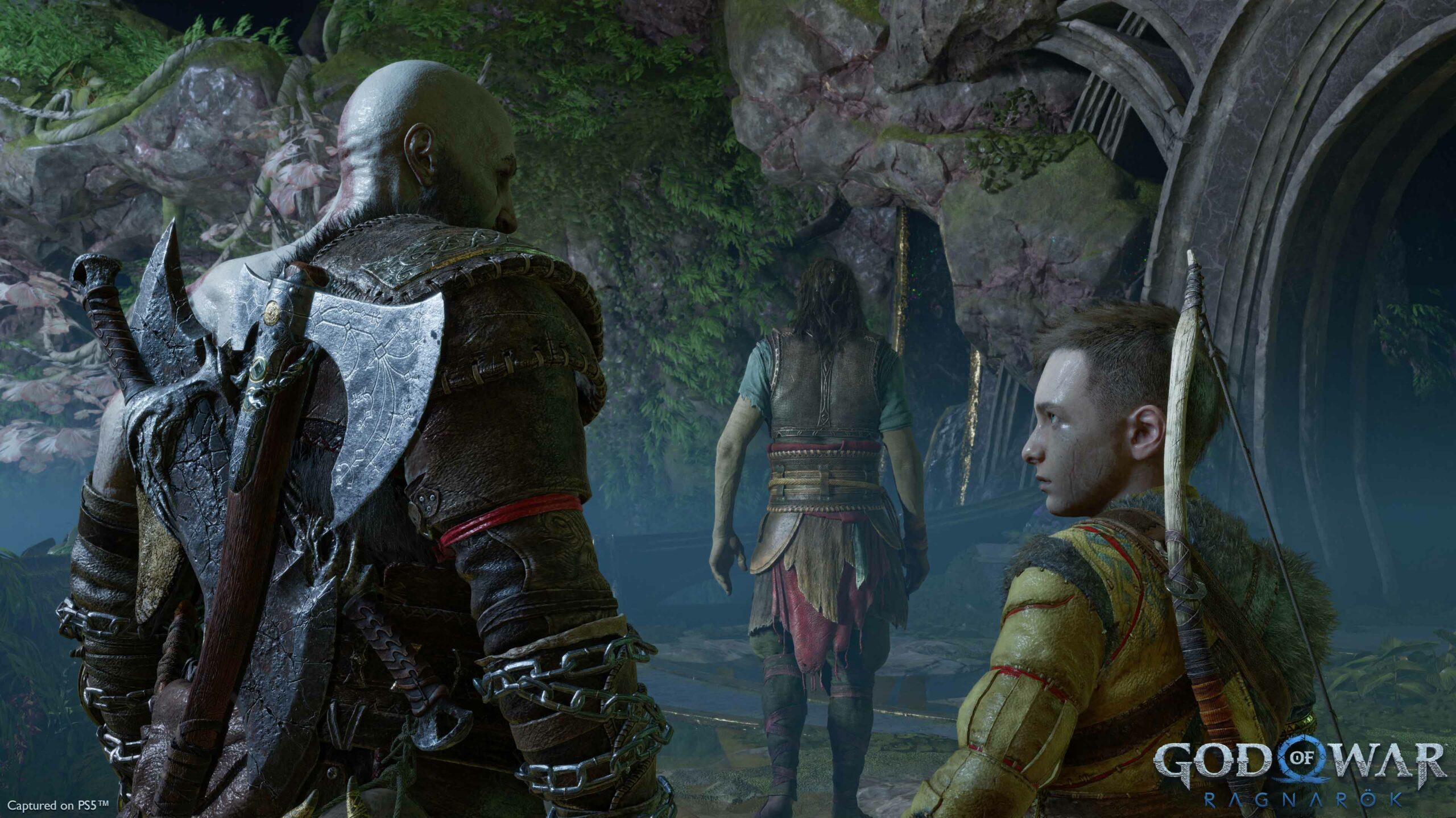 And sure enough, Atreus does walk away — repeatedly. At first, it’s in small ways, like sneaking out with Sindri behind Kratos’ back, but this later manifests in more dangerous excursions. Take Jötunheim, where Atreus finds himself after Kratos effectively told him to shun his Loki side because “you are Atreus, my son, and nothing more.” Here, Atreus comes across Angrboda, a kind, bubbly young woman for whom he starts to develop feelings. Together, they explore the mythical Ironwood forests in a significant departure from the main Ragnarök quest. For some people,
  This little exchange encapsulates so much of what I love about Kratos and Atreus’ relationship. No father is perfect, and it’s certainly not uncommon for one to be guarded with his emotions. But it’s the effort that counts. Kratos going on these grand adventures with his son is, in his own way, the ultimate expression of love. For someone like me, with a father who lived just 10 minutes away yet barely ever made the time to see me, Kratos was exhibiting everything I ever really wanted. The beautiful subtleties in Christopher Judge’s performance —
 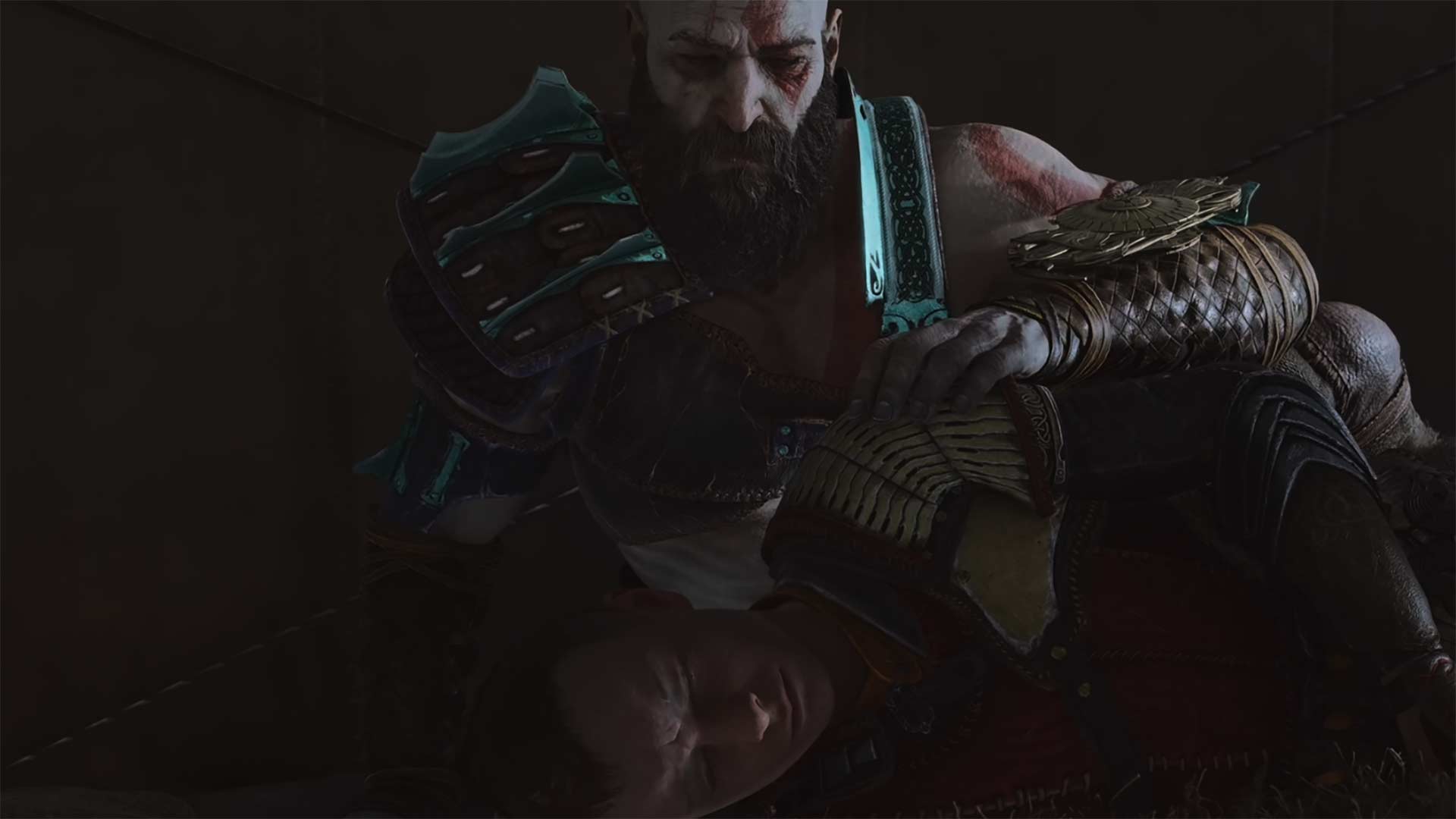 From here, everything we see between Kratos and Atreus is just icing on the proverbial father-son cake. When Atreus feels immense guilt over the murder of Brok, Kratos tries to comfort him by accompanying him on a deer hunting trip and, later, tries to apologize to Sindri. The night before they make the climactic charge on Asgard, Kratos lets Atreus sleep in his tent and tells him a story to help him go to sleep, all while trying to keep his weariness and reservations about the coming battle in check. Ragnarök takes its time to get to these tender, oh-so-human moments so that they feel earned when we get them. But Santa Monica Studio saved the best of them for last.