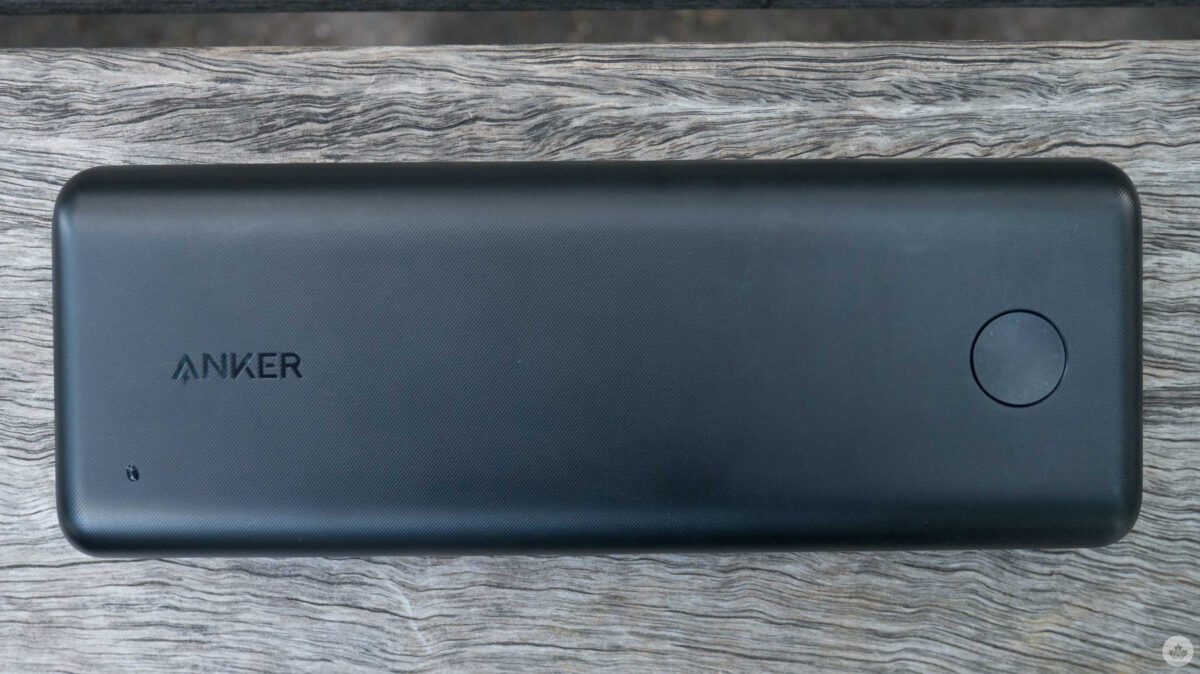
Anker is starting the week off on a solid step by discounting charging accessories by up to 44 percent. It seems like these deals are a 1-day event, so if you’re in need of power on the go then check out the deals below.
MobileSyrup utilizes affiliate partnerships. These partnerships do not influence our editorial content, though we may earn a commission on purchases made via these links that helps fund the journalism provided free on our website.
I’m not big on smartphone cases, but Spigen’s ‘Thin Fit’ case for the Pixel 7 has warmed me up to cases a little.
If you follow along with my reviews on MobileSyrup or my occasional SyrupCast appearance, you may already know this. Mostly, it comes down to a simple preference for thin, svelte devices. Frankly, cases add too much extra bulk for my liking. Frustratingly, most ‘thin’ cases aren’t really that thin, or are cheap, low-quality, and break quickly.
Unfortunately, as someone who typically daily drives a Pixel, Google has opted for glossy glass back panels on its latest models. That decision means otherwise excellent devices like the Pixel 6, 6a, and 7 are slippery and less pleasant to use without a case than previous Pixels with grippy matte textures.
This came to a head with the Pixel 7 when it slid (without any provocation) off my counter and took a tumble while I was testing it for my review. Thankfully, it didn’t break, but the fall left a few unsightly scuffs on the metal edge. Instead of my typical pattern of buying a “thin” case that I’d eventually come to hate, I decided to try Spigen’s Thin Fit case for the Pixel 7.
I’d avoided Thin Fit cases for other phones under the suspicion that I’d find it too bulky. On the one hand, I was right about it being bulky for a “thin” case. On the other, I’ve liked it more than I thought I would.
Thinck Fit
The Thin Fit case for Pixel 7 sports a bit of a two-tone look. I went with the ‘Metal Slate’ colour, which is quite nice, but there’s a plain ‘Black’ version too (also with a two-tone look). Around the edge is a softer, grippier material around the edge, then a slightly harder section across the back that sports a metal-like sheen (although it’s worth noting it’s not metal, and the case is a single piece).
The softer edge material has some flex, which makes it easy to slip the case on and off. It also comes up around the edge of the screen to offer some protection there — I personally hate this “feature” of phone cases, and it’d be one of the few things I’d change about the Thin Fit, but I understand why people like it.
Moreover, the softer edge features what Spigen calls a “sound tunnel” along the top edge. It’s basically a small lip around the earpiece that I guess is supposed to avoid muffling the sound, but it’s totally clear what it does.
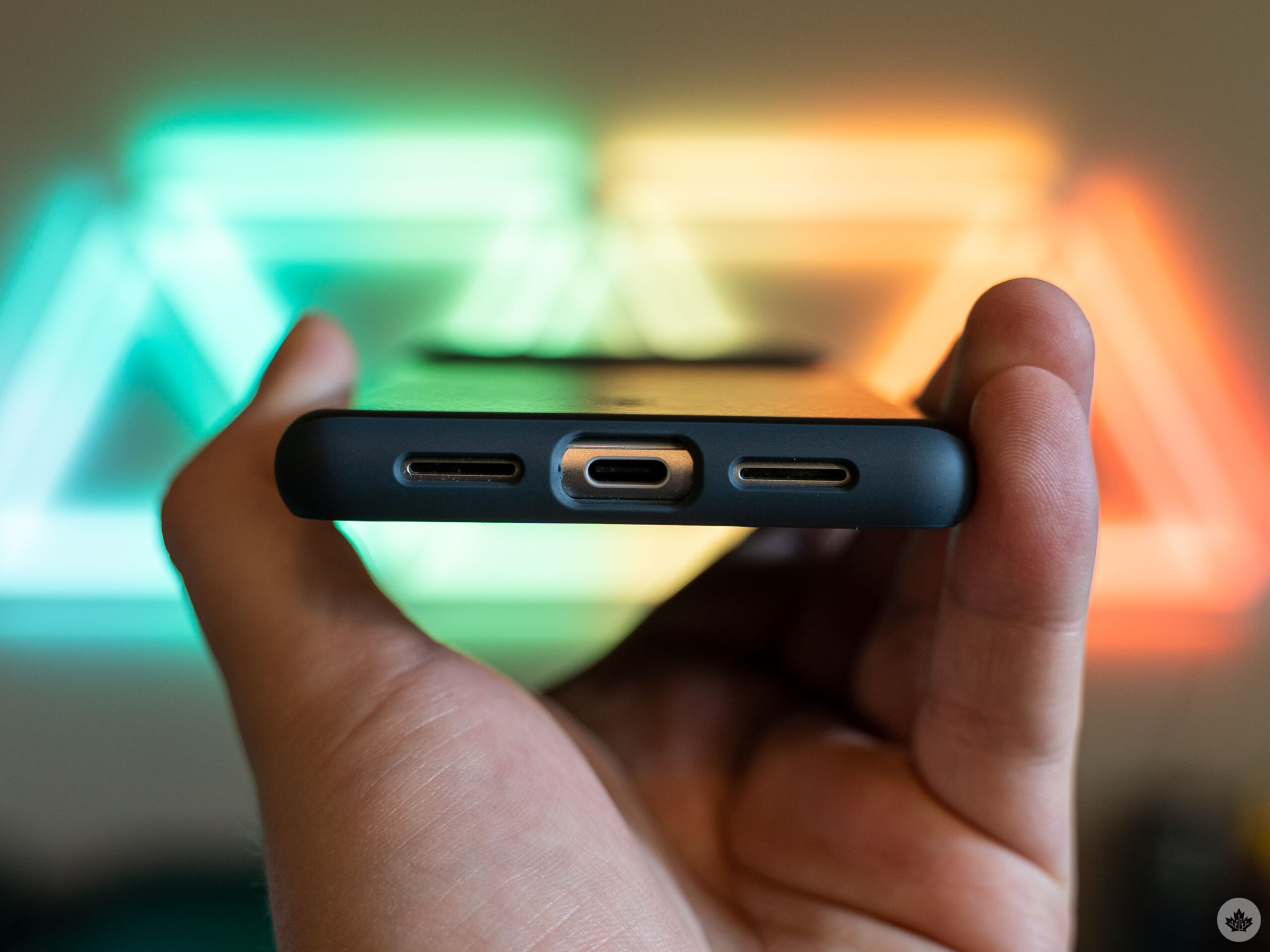
Beyond that, the buttons are tactile, the charger, speaker and other cut-outs are precise, and the fit is excellent, especially around the camera bar on the back of the phone. I especially appreciate that it’s open to show off the bar (I really like how the ‘Snow’ colour of my Pixel 7 looks with the ‘Metal Slate’ colourway).
My only other complaint about the Thin Fit was it had a bit of a funky smell when I first took it out of the package. After a few days, the smell went away, but I didn’t appreciate the pungent odour. If you do opt for the Thin Fit, you may want to give it a few days to air out before you put it on the phone.
A good option for the Pixel 7
Overall, I’d say the Thin Fit is a decent option for the Pixel 7. It doesn’t quite scratch the ultra-thin, low-bulk itch for me, but it’s not super bulky either. The material is grippy without getting stuck coming out of my pocket, and it should stand up well to drops and tumbles.
If you want to buy the case, it’s available on Spigen’s website for $29.99. However, I’d recommend going to Amazon instead, because it’s $16.99 there ($17.99 for the Metal Slate colour).
MobileSyrup utilizes affiliate partnerships. These partnerships do not influence our editorial content, though MobileSyrup may earn a commission on purchases made via these links.
Netflix is tired of offering free password sharing and will start charging a monthly fee on accounts that share passwords in early 2023.
The company recently launched a program for the feature in some regions that charges an additional fee to subaccounts listed in the ‘Who’s Watching section.’ It’s currently unclear how much Netflix will charge per additional user in Canada, but it’ll likely be in the range of $4 to $5.
This is on top of the already costly base price for the streaming service.
Netflix Basic — $9.99/month, up to 720p (this is now the standard quality for Basic, up from 480p), can only stream on one screen at the same time
Netflix Standard — $16.49/month, up to 1080p, can stream on up to two screens at the same time
Netflix Premium — $20.99/month, up to Ultra HD (4K HDR), can stream on up to four screens at the same time
If you follow me on Twitter, you know that I like to purchase over-priced Apple accessories, with Apple’s $25 Polishing Cloth being the most notable example (it’s pricey but still really great — in a sense, you get what you pay for).
The part of the lanyard that attaches to the AirPods Pro (2nd-Gen) charging case’s built-in loop is braided, and so is its wrist strap. It feels sturdy and not as if it could break at any moment, which should be expected from a lanyard that costs nearly $20.
Other notable features include a small plastic clip right before the wrist strap. Though I didn’t realize it at first, this clip lets you create a wrist strap or loop, making the Lanyard easier to attach and remove from a purse or bag. I found myself using this feature quite frequently to attach the AirPods Pro (2nd-Gen) to the inside of the backpack I use for work or my fanny pack I wear like a satchel. I found that this helped me grab the wireless earbuds more quickly and be aware of exactly where they are in my bag at all times.
Of course, you could use pretty much any lanyard with Apple’s new wireless earbuds, including this one that looks nearly as good as Incase’s offering for just $6.75 on Amazon or even buy this lanyard that looks mysteriously identical to Incase’s that costs $1.58 on AliExpress.
And that’s it. Incase’s AirPods Pro (2nd-Gen) Lanyard is high-quality, and you’ll likely be happy with it if you have $20 to spend on it. Everyone else should just head to their local Dollarama and buy the cheapest lanyard they can find.
Here’s a roundup of some of the most essential telecom news over the past week.
Government
Telecom company Nokia announced plans to build a 26-acre 5G research and development centre in Ottawa. The company is partnering with three levels of government (federal, provincial, and municipal) to supply $72 million for the project. Nokia is investing $340 million.
The Canadian Radio-television and Telecommunications Commission (CRTC) says it might be December before it delivers a decision on Telus’ application to charge a credit card fee. The telecom company filed the application months ago, stating it would pass on credit card fees to customers who choose to pay their bills with credit. The CRTC says it needs more time to process the comments it received on the matter.
The CRTC says it’s getting closer to allowing the deployment of mobile virtual network operators (MVNOs), which operate on top of existing networks. In a recent decision, the commission says regional providers must have invested in network infrastructure and spectrum to gain access to MVNOs. You can read more about it here.
Rounding out the CRTC-related news, TekSavvy published documents revealing more mystery meetings between CRTC chair Ian Scott and telecom execs. Read about that here.
Network performance
Ookla’s Q3 2022 market report once again crowns Telus as providing the fastest mobile service. The report found Telus offered a median download speed of 76.03Mbps and an upload speed of 9.19Mbps. In comparison, Bell provided download speeds of 73.30Mbps and Rogers 59.86Mbps.
Meanwhile, an Opensignal report highlighted that Canadian 5G is narrowing the urban-rural gap in network performance. Learn more here.
More news on Telus, a network outage in the west disrupted mobile and home services earlier this week. Impacted residents resided in B.C and Alberta. The outage was caused by a cable damaged in a motor vehicle accident.
Rogers has entered a new partnership focusing on the progression of smart mining. The telecom company has established the Rogers Technology Centre of Excellence at NORCAT’s Sudbury, Ontario, training facility. Rogers’ 5G network will help NORCAT develop and test various technologies.
Telus is the exclusive 5G provider for Project Arrow. The Automotive Parts Manufacturers’ Association of Canada (APMA) project focuses on a concept vehicle that’s the first electric, zero-emission vehicle designed, engineered and built in Canada. Telus’s 5G access will help with infotainment and driver assistance services.
Deals
Koodo, Fido, and Virgin have all released another $65/20GB promo plan, two weeks after removing a similar plan. More details are available here.
Although I overall liked the Warner Bros. Games Montreal-developed Batman game, many of the criticisms I’ve seen are completely legitimate. In particular, it can often feel like a chore, filled with tedious stretches of grinding and frequently bland mission design. As a result, I can totally see why people might pass on it, especially since it’s an $89.99 title.
While playing Gotham Knights and reflecting on the response, I’ve started to think about what I want from the next Batman game. After all, Gotham Knights is the first AAA title focused on the Caped Crusader’s world since Rocksteady’s Batman: Arkham Knight in 2015, outside of the underrated choose-your-own adventure Telltale games. What do we even hope to get out of a Batman game? Of course, the answer will vary depending on the fan, but as I’ve been mulling this over, there’s one particular take on The Dark Knight that I’ve always loved and think could be a big hit in game form. Yes, I’m talking about Batman Beyond.
When the animated seriespremiered on TV in 1999, it was — and still remains — unlike anything else from Batman’s universe. Bruce Wayne was Batman no more — instead, he’s become a bitter, frail old man who’s isolated himself from everyone else. In his place comes a new, rougher-around-the-edges Dark Knight — a troubled teen named Terry McGinnis. Lacking Bruce’s years-long ninja training, Terry dons a high-tech Batsuit to take on crime in the futuristic Neo-Gotham. This story — a continuation of the legacy of the brilliant Batman: The Animated Series that sees Kevin Conroy’s Bruce become a mentor to Will Friedle’s Terry — resonated with many and has since become a fan-favourite part of the Batman mythos. Indeed, it’s an outstanding show in its own right, filled with sharp writing, excellent animation, top-notch performances and one of the Batman movies ever in Return of the Joker. It’s also just perfect for a game.
A different kind of Batman story
Certainly, one of the most appealing aspects of Gotham Knights was that WB Montreal legitimately tried to do something different from Arkham — or, really, any previous Batman game — by focusing on Nightwing, Robin, Batgirl and Red Hood. It was a smart way to give us a unique story that didn’t rely on Bruce Wayne and instead fleshed out his supporting cast, often referred to as the “Bat Family.” With a Batman Beyond game, though, that could be explored in even greater depth.
Taking cues from Spider-Man, Terry is a teenaged hero who has to juggle school with crimefighting duties. For him, donning the suit offers a way to atone for his rough childhood, and it’s a responsibility he doesn’t take lightly. While the tragedy of Bruce Wayne undoubtedly connects with people, Terry’s struggles as an angsty teen definitely made him more universally relatable. This type of coming-of-age tale, coupled with a grittier tone than teenage-focused works like Spider-Man or Ms. Marvel, would be a kind of story we’ve never gotten in any superhero game, Batman or otherwise. Another highlight of the show was delving deeper into the psychology of Bruce Wayne, particularly through the regrets and lessons he’s come to in his old age, and that would make for an added hook to the game. It’s especially easy to see how the compelling Terry-Bruce dynamic could really thrive over the course of a 10- to 20-hour game.
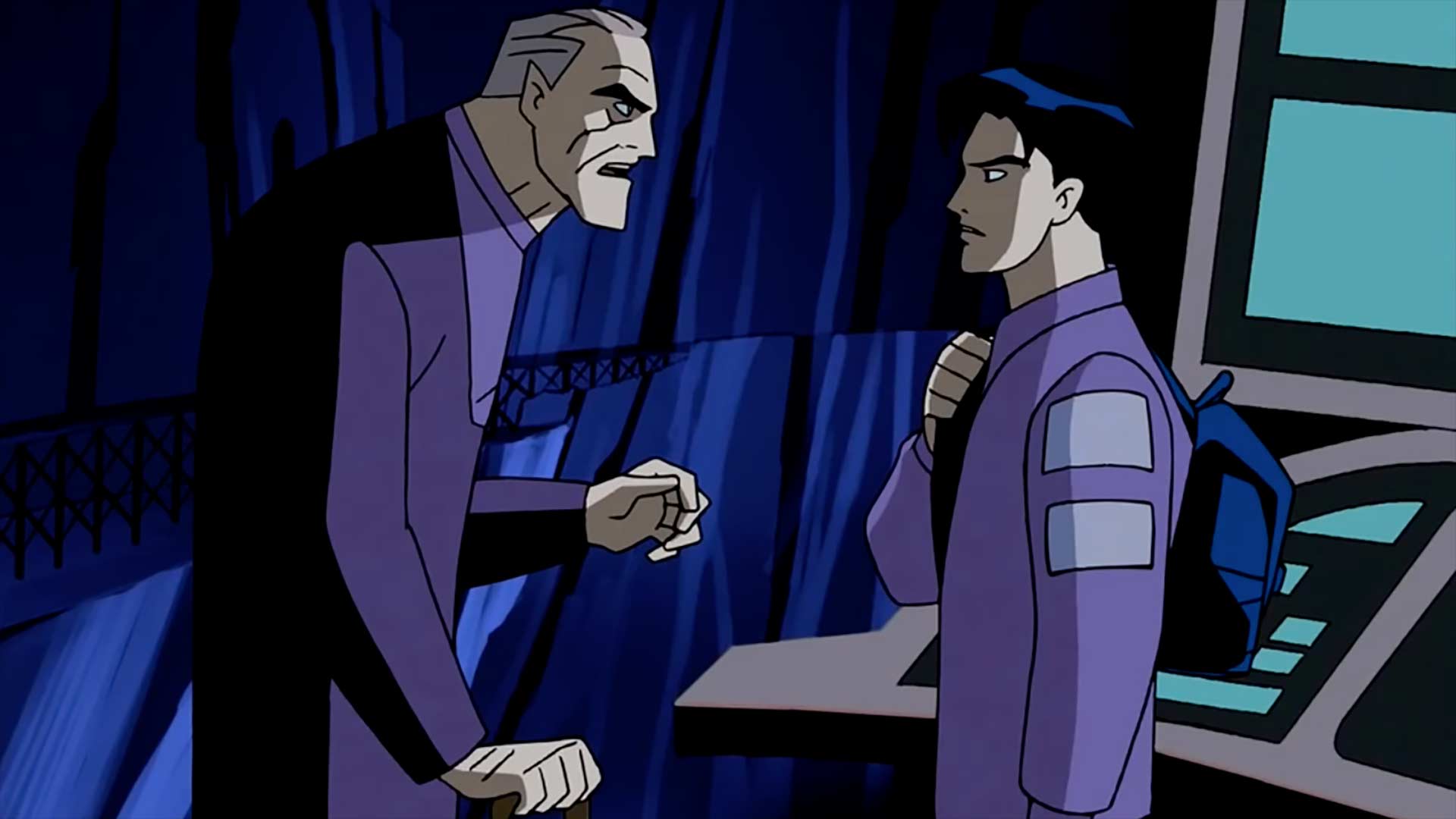
A pivotal scene between Bruce and Terry in Batman Beyond: Return of the Joker.
Batman Beyond could also take the Bat Family even further than Gotham Knights. In that game, we see the team struggling to come into their own following the death of Bruce Wayne, but what about many years down the line, when they’ve long been removed from Bruce’s life? The Batman Beyond series gave us some tantalizing looks at this, like Barbara Gordon (Batgirl) becoming Commissioner and a begrudging ally to Terry, or Tim Drake (Robin) struggling to escape the lingering hold of Joker-induced trauma. But of course, Batman Beyond could only cover so much ground, and a game could give us what we never saw on the small screen, such as an older Dick Grayson/Nightwing, Jason Todd/Red Hood or even Bruce’s son, Damian, who was introduced years after the show ended. (And before other nerds mention it — I know there were Batman Beyond comics that have since covered such material, but I’d still like to see it adapted.)
And considering the Arkham series proved to be a spiritual successor of sorts to Batman: The Animated Series thanks to returning voice talent like Conroy and Mark Hamill (Joker) and writer Paul Dini, a Batman Beyond game would benefit from doing something similar. Bring back Conroy as Bruce and Friedle as Terry, plus Dini — one of the all-time great Batman writers — in any creative capacity would significantly elevate a potential Batman Beyond game. Kristopher Carter returning for another incredibly badass rock-inspired score would also be wonderful and help give a Batman Beyond game its own feel.
A night in Neo-Gotham
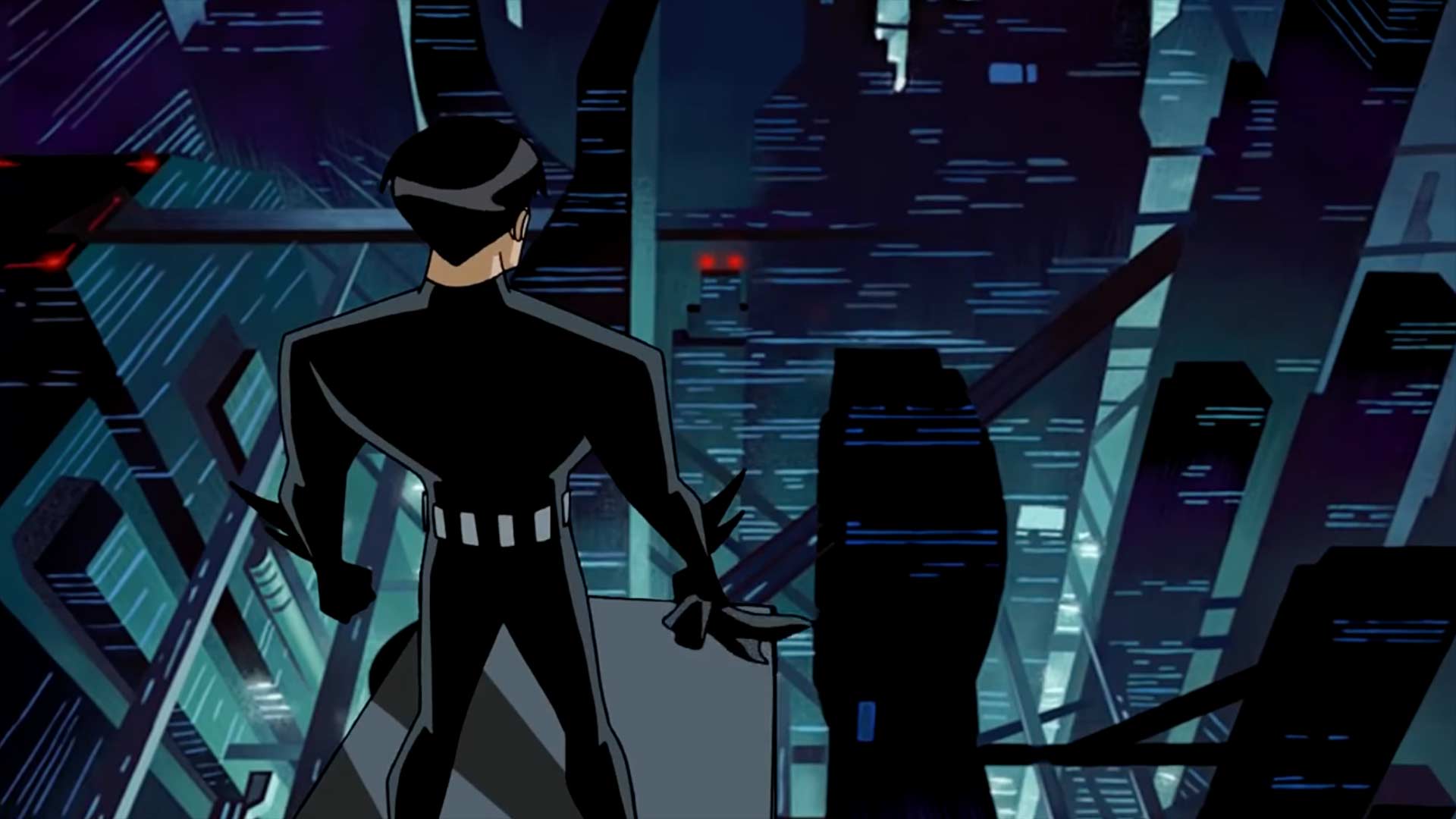
Neo-Gotham fully realized on current-gen hardware could be a true marvel.
On top of Terry and Bruce’s story, Batman Beyond‘s setting is just ripe with potential. As well-crafted as Rocksteady and WB Montreal’s Gothams are, they don’t feel drastically different from one another, or, for that matter, those we’ve seen from the likes of Christopher Nolan’s The Dark Knight trilogy or Matt Reeves’ The Batman. But Neo-Gotham, a sweeping metropolis filled with towering techno skyscrapers, flying cars and cybernetically enhanced people? Well, that would be something new.
Neo-Gotham also gives Batman Beyond a wickedly cool cyberpunk vibe, something that’s proved popular in recent years thanks to the likes of Blade Runner 2049, Cyberpunk 2077 and Cyberpunk Edgerunners. In fact, the Edgerunners anime was such a hit that it gave Cyberpunk 2077, a game once plagued by controversy, a record number of new players. Clearly, there’s an audience for more cyberpunk, and Batman Beyond would be exactly what the doctor ordered.
Free from the limitations of a 22-minute children’s cartoon, a Batman Beyond game could also explore the subgenre in ways the show never could. Take the “splicers,” people who genetically altered their DNA to gain characteristics of animals — the show didn’t really present them as anything other than perverse freaks of nature. While you can’t really fault a Kids WB show for that simplicity, a more mature game in that universe could take the time to explore transhumanism with more nuance. The highly advanced drugs and dangerous technologies like mechs could also be expanded upon, such as trippy sequences in the vein of Cyberpunk 2077‘s braindances.
Flying high and fighting dirty
Terry’s relative inexperience provides ample room for gameplay opportunities. Chief among them, it solves the classic Metroid problem of Samus losing all her gear at the start so she can gradually get more powerful again as she retrieves it. Naturally, Terry would only get stronger as he gets trained by Bruce and maybe even other allies like Barbara or Dick. His less refined form of brawling — which the Joker once said was “dirty” — should also help differentiate his playstyle from anything we’ve seen in Arkham or Gotham Knights.
It would also allow you to focus more on the unique aspects of Terry’s suit. No need for gliding anymore — we could actually fly around an open-world with the Batsuit’s retractible wings and thrusters. If we even wanted, we could have the Beyond version of the Batmobile, which can also fly, although fans may still be burned after Arkham Knight‘s controversial take on the vehicle.
Meanwhile, since Terry’s not as capable of a fighter as Bruce, stealth could be a more viable option, especially with his suit’s camouflage, presumably with a cooldown like the similar power featured in Miles Morales. That would be especially important considering all of the deadly and unprecedented enemy types we could get from splicing, cybernetics and the like. That’s to say nothing of the fun futuristic spins we could get on bigger villains, whether that’s original series creations like the Venom-esque Inque and radioactive Blight or classics like Harley Quinn, Scarecrow or the Penguin. Just look at how masterfully Batman Beyond brought Mr. Freeze’s tragic story into the future as an example of the promise here.
Sidequests-wise, the game could lean into Terry being in high school to give us missions related to the kinds of everyday problems we saw in the show, like bullying and child abuse. It wouldn’t have made much sense to see Bruce Wayne dealing with that sort of thing in the Arkham games, but it would feel right at home for Terry. The final episode of the show, for example, involves Terry sharing a sweet anecdote about the he revealed his identity to a kid to help gain his trust and save him. Another episode showed Terry and his friends trying to help out a nerdy guy who was perpetually picked on. The possibilities for charming and emotionally-charged slice-of-life stories here are endless.
Who’s to say what we’ll next get in terms of Batman games? Gotham Knights definitely didn’t pan out exactly as anyone had hoped, and it’s unclear how that might have changed plans. I also wouldn’t even know which developer would take on the next title. But it’s always nice to dream, and after seeing Gotham Knights‘ admirable-but-ultimately-disappointing efforts, I’d like to see something different. A Batman Beyond game would be just that, and hopefully, someone takes that on.
However, this higher premium tier might cost $20 per month, offering similar pricing to Tidal. On the other hand, Apple Music includes HiFi streaming at a much lower price. With this in mind, I decided to try Apple’s streaming music service but found that I’m not a fan of its user interface or playlists.
Last year, MobileSyrup’s Brad Bennett created a video focused on the different music streaming platforms available in Canada and outlined the pros and cons of each service (see above).
Personally, I still find Spotify’s design great, I trust its recommendations algorithm and its pre-made playlists are usually spot-on.
With all of this in mind, we’d like to know what music streaming platform you prefer. Do you subscribe to Apple Music or Spotify? Maybe you love Tidal or Deezer? Let us know in the comments below.
Similar to Game of Thrones, House of the Dragon‘s season finale has leaked ahead of its release and can easily be found on the darker corners of the Internet.
In a statement sent to multiple publications, including Variety, HBO says it’s “disappointed that this unlawful action has disrupted the viewing experience for loyal fans of the show.” The network states that it’s “aggressively monitoring and pulling these copies from the internet” and that HBO and HBO Max subscribers will stream a “pristine version” of the finally available “exclusively in 4K’ on Sunday.
Of course, this means that fans of the show should be wary of spoilers appearing on social media, though George R. R. Martin’s Fire and Blood book follows House of the Dragon‘s first season pretty closely already. This means if you really wanted to see how the first season ends, that information is just a quick Google search away.
House of the Dragon‘s final episode is set to air this coming Sunday, October 23rd at 9pm ET/6pm PT on Crave. Crave subscriptions start at $9.99/month for a Mobile plan, which includes access to HBO content. A $19.99/month Crave Total subscription is required to stream content on other supported devices, like Android, iOS, Apple TV, PlayStation, etc.
Every week, MobileSyrup outlines some of the most notable movies and TV shows that recently hit Canadian streaming platforms.
Our ‘Streaming in Canada’ column typically focuses on new content from Amazon Prime Video, Crave and Netflix, but other services like Apple TV+ and Disney+ are mentioned when relevant. Premium video on demand (PVOD) platforms are also fair game as movies continue to come to digital early amid the COVID-19 pandemic.
Finally, we’ll highlight shows or movies that are made by Canadian companies, involve notable Canadian cast or crew and/or are filmed in Canada.
Amazon Prime Video
Men
After her husband commits suicide, Harper retreats to the English countryside, only to soon discover that a strange man is stalking her.
Men was written and directed by Alex Garland (Ex Machina) and stars Jessie Buckley (The Lost Daughter) and Rory Kinnear (James Bond series).
Original theatrical release date: May 20th, 2022 Prime Video Canada release date: October 20th, 2022 Genre: Horror-drama Runtime: 1 hour, 40 minutes
The full list of what’s coming to Apple TV+ Canada this month can be found here.
Crave
Buffy Saint-Marie: Carry It On [Crave Original]
Winnipeg’s Madison Thomas (Ruthless Souls) directs this documentary about the life and career of Indigenous-Canadian singer-songwriter and activist Buffy Sainte-Marie (the Oscar-winning song “Up Where We Belong”).
On a Halloween party train, college senior Alana must stop an unknown assailant from killing all of the passengers off one by one.
A remake of the Jamie Lee Curtis-led 1980 cult classic of the same name (also on Crave), Terror Train was directed by Quebec City’s Phillipe Gagnon (Moi) and stars Robyn Alomar (Utopia Falls), Montreal’s Tim Rozon (Schitt’s Creek) and Toronto’s Corteon Moore (Slasher). It’s also worth noting that the movie was filmed in Montreal.
Down on his luck, famed actor Nick Cage (Leaving Las Vegas) takes a job at a wealthy fan’s birthday party, only to get caught up in a CIA mission.
The Unbearable Weight of Massive Talent was directed by Tom Gormican (That Awkward Moment) and stars Cage as a fictionalized version of himself, Pedro Pascal (The Mandalorian), Sharon Horgan (Divorce) and Ike Barinholtz (The Mindy Project).
Original theatrical release date: April 22nd, 2022
Crave release date: October 21st, 2022 Genre: Comedy Runtime: 1 hour, 47 minutes
Stream The Unbearable Weight of Massive Talenthere.
A standard Crave subscription is priced at $19.99/month, with Starz costing an additional $5.99/month. A mobile-only subscription is also available for $9.99/month.
The full list of movies and shows hitting Crave this month can be found here.
Netflix
From Scratch [Netflix Original]
An American woman fall in love with a chef in Italy, but his health issues threaten their future together.
Based on Tembi Locke’s memoir of the same name, From Scratch was created by Tembi and Attica Locke and stars Zoe Saldaña (Avatar), Eugenio Mastrandrea (A.C.A.B. — All Cops Are Bastards), Danielle Deadwyler (The Harder They Fall) and Keith David (Greenleaf).
Netflix Canada release date: October 21st, 2022 Genre: Romantic drama Runtime: Eight episodes (50 to 58 minutes each)
Two best friends are whisked away to a magical school for future heroes and villains.
Based on Somain Chainani’s book of the same name, The School for Good and Evil was co-written and directed by Paul Feig (Bridesmaids) and stars Sophia Anne Caruso (Lazarus), Sofia Wylie (High School Musical: The Musical — The Series), Charlize Theron (Mad Max: Fury Road), Kerry Washington (Scandal), Laurence Fishburne (The Matrix trilogy) and Michelle Yeoh (Star Trek: Discovery).
Netflix Canada release date: October 19th, 2022 Genre: Fantasy Runtime: 2 hours, 28 minutes
An undercover cop forms a close connection with a murder suspect while trying to get him to confess.
The Stranger was directed by Thomas M. Wright and stars Joel Edgerton (Boy Erased), Sean Harris (Mission Impossible series) and Steve Mouzakis (Where The Wild Things Are).
This new batch of perplexing cases includes a young athlete who was hit by a train, a beloved father who was brutally murdered and over 300 reports of a possible UFO sighting.
It’s worth noting that Montreal’s Shawn Levy (Free Guy) serves as an executive producer on the series. Additionally, if you have a tip on an unsolved mystery or a story you want submitted, you can do so here.
Netflix Canada release date: October 18th, 2022 (first three episodes, three new episodes every Tuesday) Genre: True crime documentary Runtime: Nine episodes (around 50 minutes each)


 The Thin Fit case for Pixel 7 sports a bit of a two-tone look. I went with the ‘Metal Slate’ colour, which is quite nice, but there’s a plain ‘Black’ version too (also with a two-tone look). Around the edge is a softer, grippier material around the edge, then a slightly harder section across the back that sports a metal-like sheen (although it’s worth noting it’s not metal, and the case is a single piece).
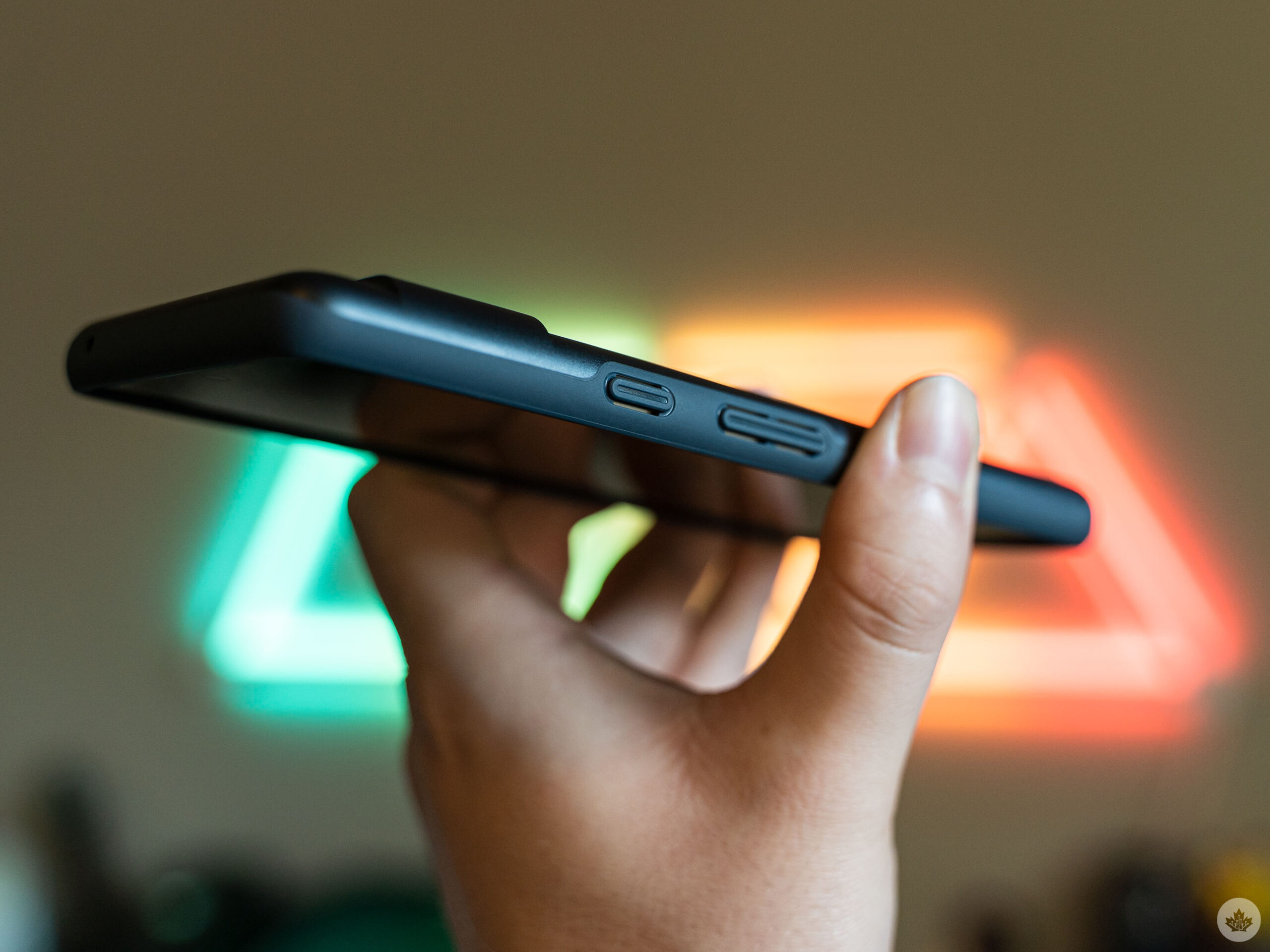 Beyond that, the buttons are tactile, the charger, speaker and other cut-outs are precise, and the fit is excellent, especially around the camera bar on the back of the phone. I especially appreciate that it’s open to show off the bar (I really like how the ‘Snow’ colour of my Pixel 7 looks with the ‘Metal Slate’ colourway).