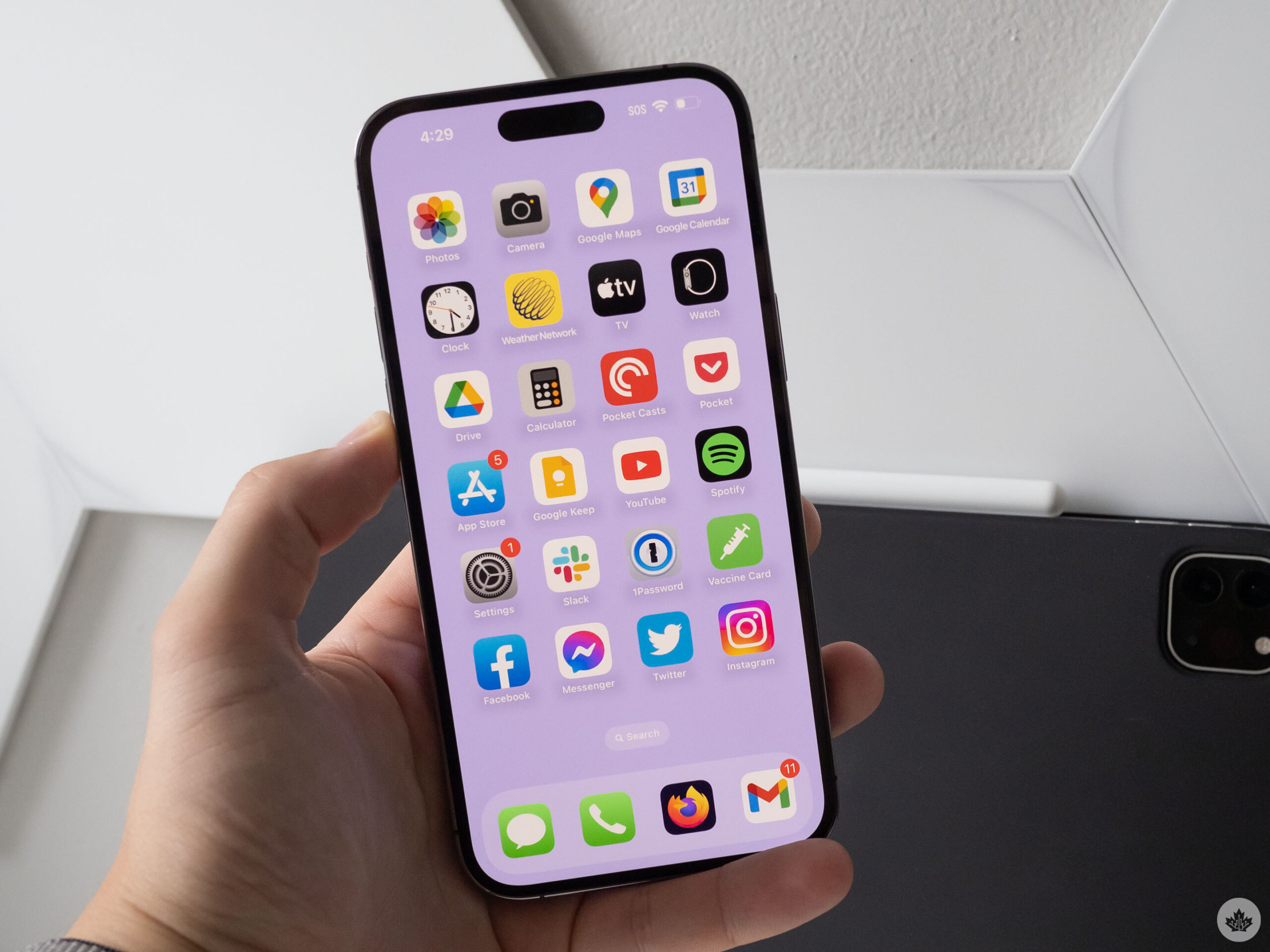
Dell Canada has a bunch of Google Nest Wi-FI systems, including routers and range extenders, on sale, as shared by RedFlagDeals user ‘Gunz13.’
The Wi-Fi systems boost coverage to up to 3,800 square feet and feature Google Assistant voice control, alongside a microphone, and a capacitive touch screen
MobileSyrup utilizes affiliate partnerships. These partnerships do not influence our editorial content, though we may earn a commission on purchases made via these links that helps fund the journalism provided free on our website.
If you’ve pre-ordered an iPhone 14 lineup device, you’ll have to update your device to the official build of iOS 16 on day one.
According to AppleSWUpdates, via9to5Mac, new iPhone 14 lineup devices are shipping with an older build of iOS 16, and not the one that was released to the public on Monday, September 12th. Upon setting up your new device, you’ll be prompted to install the latest build.
The new iPhones ship with an earlier version of iOS 16, so you’ll get a day one update to the final release build (20A362), which will show up with the following as release notes: pic.twitter.com/UnryNYzCXw
This is likely because the devices need to have the new operating system installed before they’re shipped out of the factory, and iOS 16’s official build didn’t release until earlier this week. According to 9to5Mac, the majority of the final iOS 16 release’s components were compiled between August 6th and August 9th, whereas the firmware for the iPhone 14 models was compiled later on August 18th.
Similarly, AppleSWUpdates suggests that the new Apple Watch Series 8 would also have a day one update to WatchOS 9.
The iPhone 14 lineup devices (except the iPhone 14 Plus), alongside the Apple Watch Series 8, are slated to be available starting September 16th.
Check out how you can update your devices after receiving them via the link below:
After announcing iOS 16 and WatchOS 9 back in June during its Worldwide Developer Conference (WWDC), Apple has finally released iOS 16 and WatchOS 9 for the public to download.
Google Meet is making it easier for meeting co-hosts to automatically stay in the loop with post-call statistics and artifacts.
Artifacts include the recorded meeting and stats like meeting headcount, poll results and Q&As. Normally, the meeting host is tasked with sending such post-meet artifacts to the co-hosts, but now Google is automating the process.
The only pre-requisite to the automation is that the co-hosts need to be added when the Google Calendar event for the meeting is being created. Upon adding meeting co-hosts, hosts will now see a checkbox that reads, “Call artifacts are shared with the host and co-hosts you add here.” The checkbox must be checked.
It’s worth noting that if you promote a regular participant to a co-host during the meeting, they will not receive the post-meeting artifacts, and only those co-hosts who were added during the setting up of the event in Google Calendar would receive the artifacts.
Google also notes that if a co-host’s status is removed during the meeting, they will still receive the post-meeting artifacts, while co-hosts added to a series of ongoing meetings get Artifacts for future meetings that use the same code. Furthermore, Google Classroom automatically recognizes co-teachers as co-hosts, and their co-host status can not be removed from within Google Classroom.
The feature started rolling out yesterday, Tuesday, September 13th for both Rapid Release and Schedule Release users, and can potentially take over 15 days for the feature to be widely available. Also worth noting is that the new feature isn’t available to Google Workspace Business Starter, Frontline, and Nonprofits, as well as legacy G Suite Basic and Business customers.
It looks like Carl Pei’s Nothing Company’s first phone is selling pretty well in India, one of the few places it’s available.
Reportedly the Nothing Phone has sold more than 100,000 units in 20 days. Further, more than 10 million have signed up to know when the phone will be available. Manu Sharma, Nothing’s vice president and general manager for India, told GSMArena that the device was the bestselling handset on Flipkart in the ₹30,000-plus (around $500) price category.
While this is impressive, The Verge points out that 35 million devices were shipped between April and June (Q2) this year, which is roughly 11.7 million per month. If July and August had similar figures, then the Nothing phone’s market share is less than one percent.
The Nothing Phone isn’t available in Canada, but if the handset continues to do well, hopefully, the company will decide to bring its successor to North America.
Still, the idea of a Pixel 7 Mini — or something like that — is certainly intriguing. Digital Chat Station says (via machine translation) that the “small-screen flagship” sports codename ‘Neila.’ Moreover, it features a centred hole-punch “straight screen,” which likely means it doesn’t have rounded or curved edges like the Pixel 6 Pro.
That’s about it in terms of information about the phone, but Digital Chat Station goes on to note that “small screen phones feel popular overseas, domestic sales are not as good as expected, [and] including super large screen product lines are quite dangerous.”
When I first read the leaked information, I thought the mini phone could be the ceramic Pixel previously detailed by Digital Chat Station, but that phone’s camera details line up with another rumoured Pixel device with the codename ‘Lynx.’ Some think Lynx could be a high-end Pixel (perhaps a Pixel Ultra?), while others believe it to be a prototype for testing new hardware.
Moreover, we already know that Google plans to launch a Pixel 7 and 7 Pro this year. While it’s possible Google might have plans for a third mystery device, I’m skeptical the company could have kept that under wraps this long. I suspect Neila (and perhaps Lynx too) could be early prototypes of the Pixel 8, but frankly, I have nothing more than speculation to go on.
The tiny Pixel of my dreams?
Whatever Neila ends up being (if it ends up as anything at all), the prospect of a mini Pixel is very exciting to me. I quite liked the Pixel 6, but found it to be uncomfortably large. Google’s Pixel 6a is nearly perfect in terms of size (I still think it’s a tad too big, but it’s far better than the 6 and 6 Pro in that regard). If Neila ends up being a flagship Pixel about the same size as the Pixel 6a, that would be the phone for me.
Of course, to get a smaller size, there will need to be concessions. Battery capacity will definitely shrink, and Google may be limited in terms of what camera hardware it can include in a smaller form factor. Moreover, other manufacturers who’ve tried a small form factor (like Apple, which recently killed its iPhone mini line) haven’t had much success. Large phones are clearly more popular, even if there’s a vocal minority of people like me clamouring for a smaller phone.
But again, there’s not much to go on with this leak and it seems a dubious claim given what we know about Google’s upcoming Pixel 7 line. So, I will not get hyped about the rumoured small Pixel. I will not.
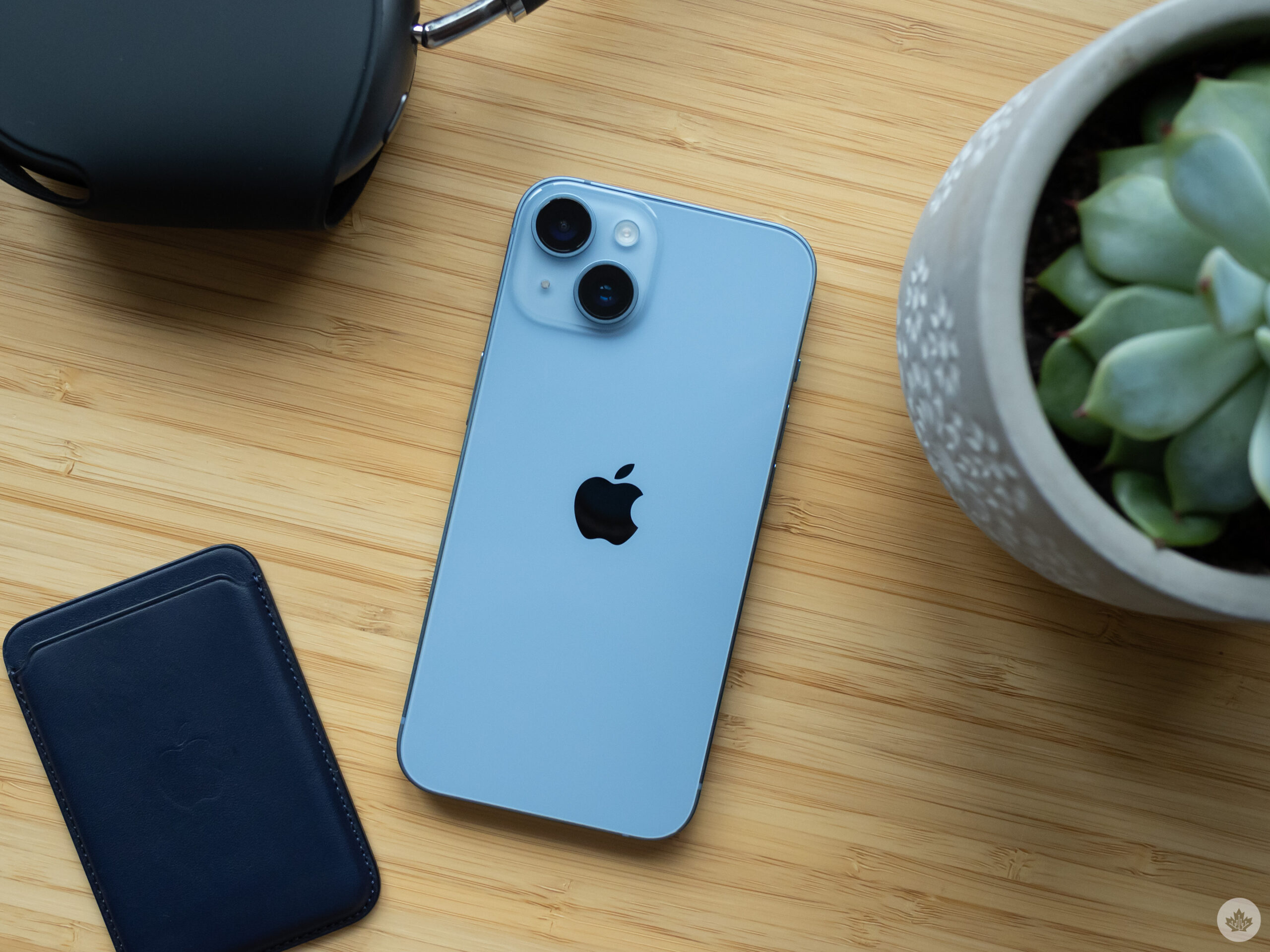
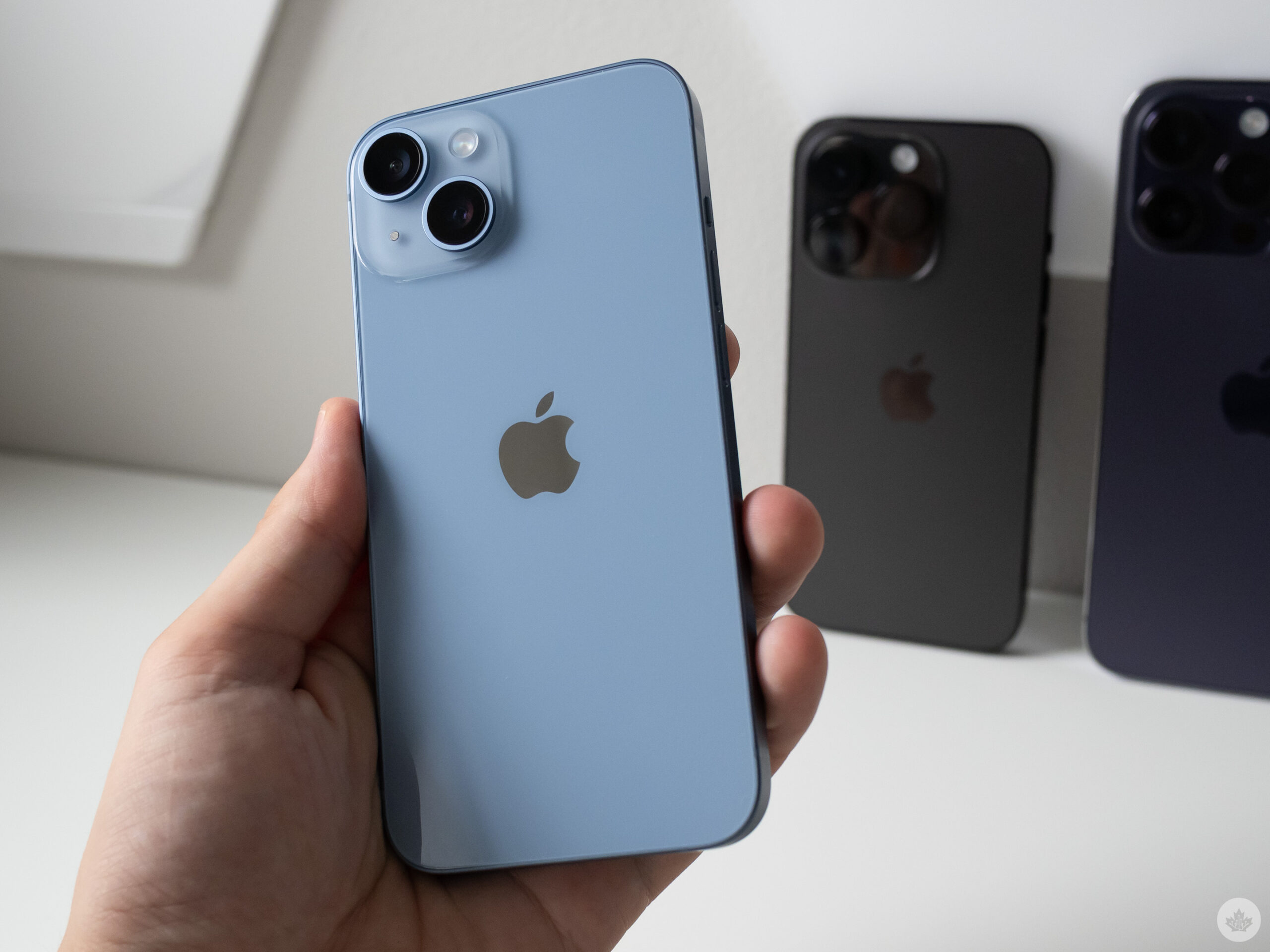
Apple’s new iPhone 14 is a lot like the iPhone 13.
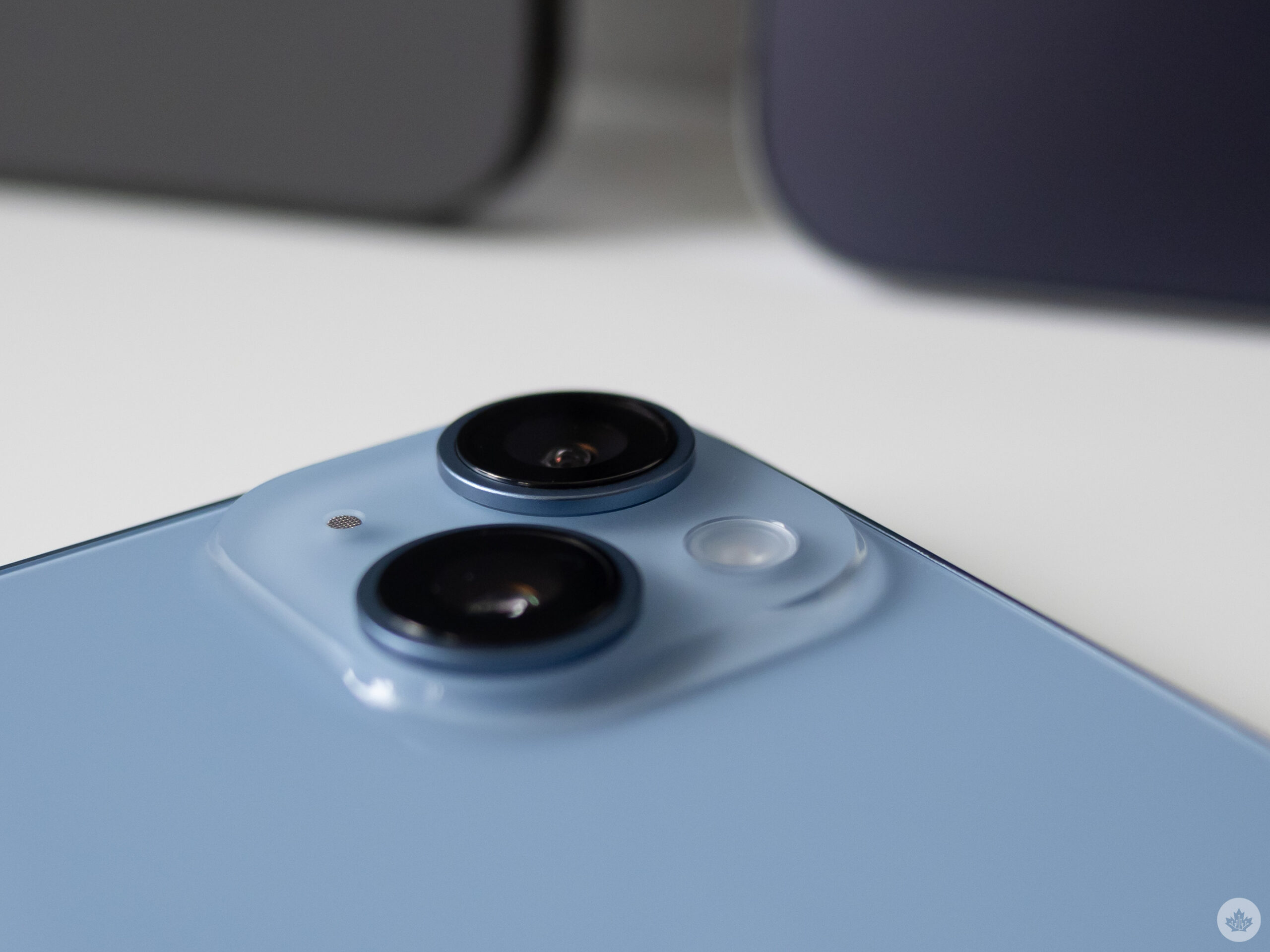
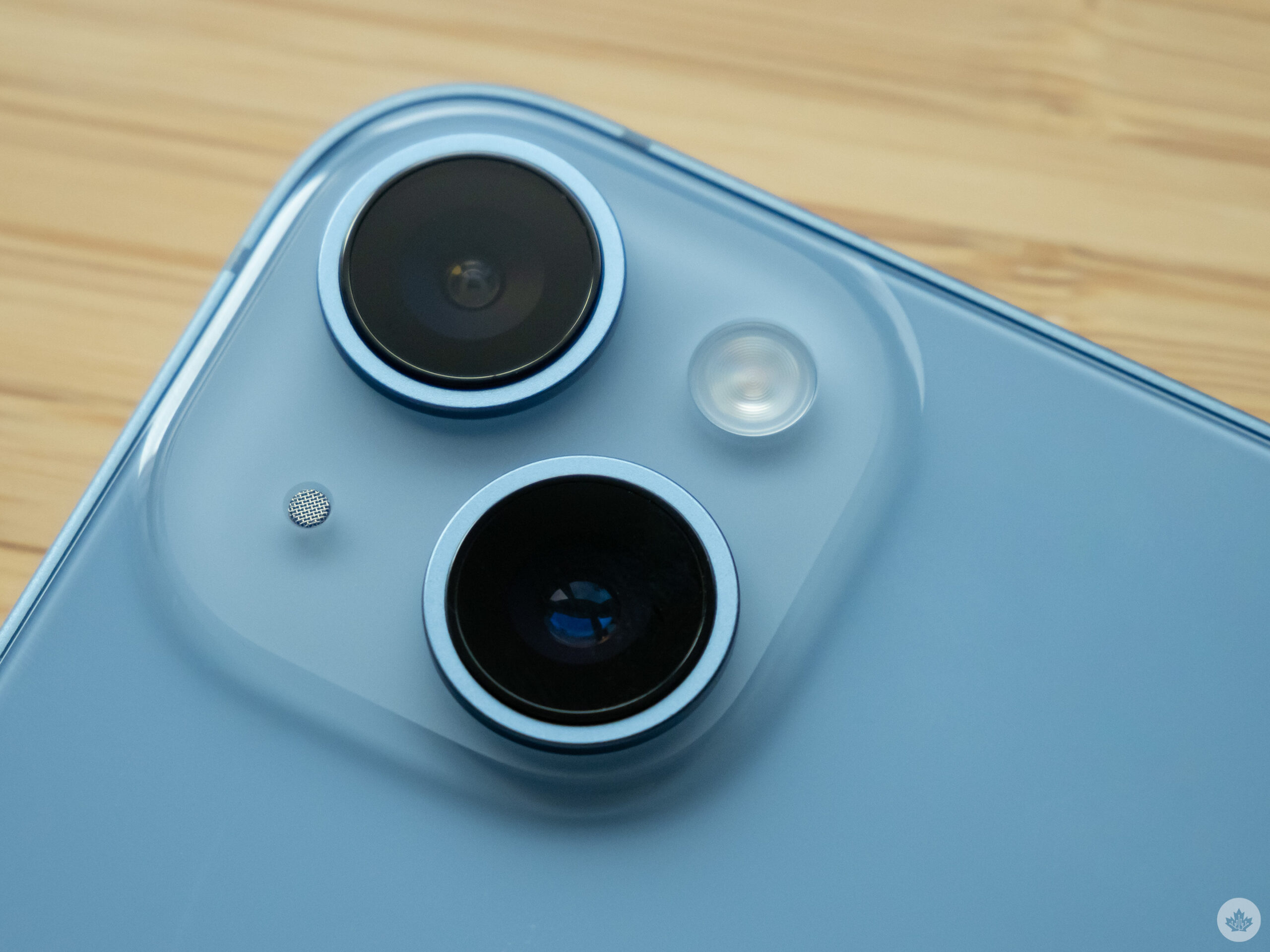
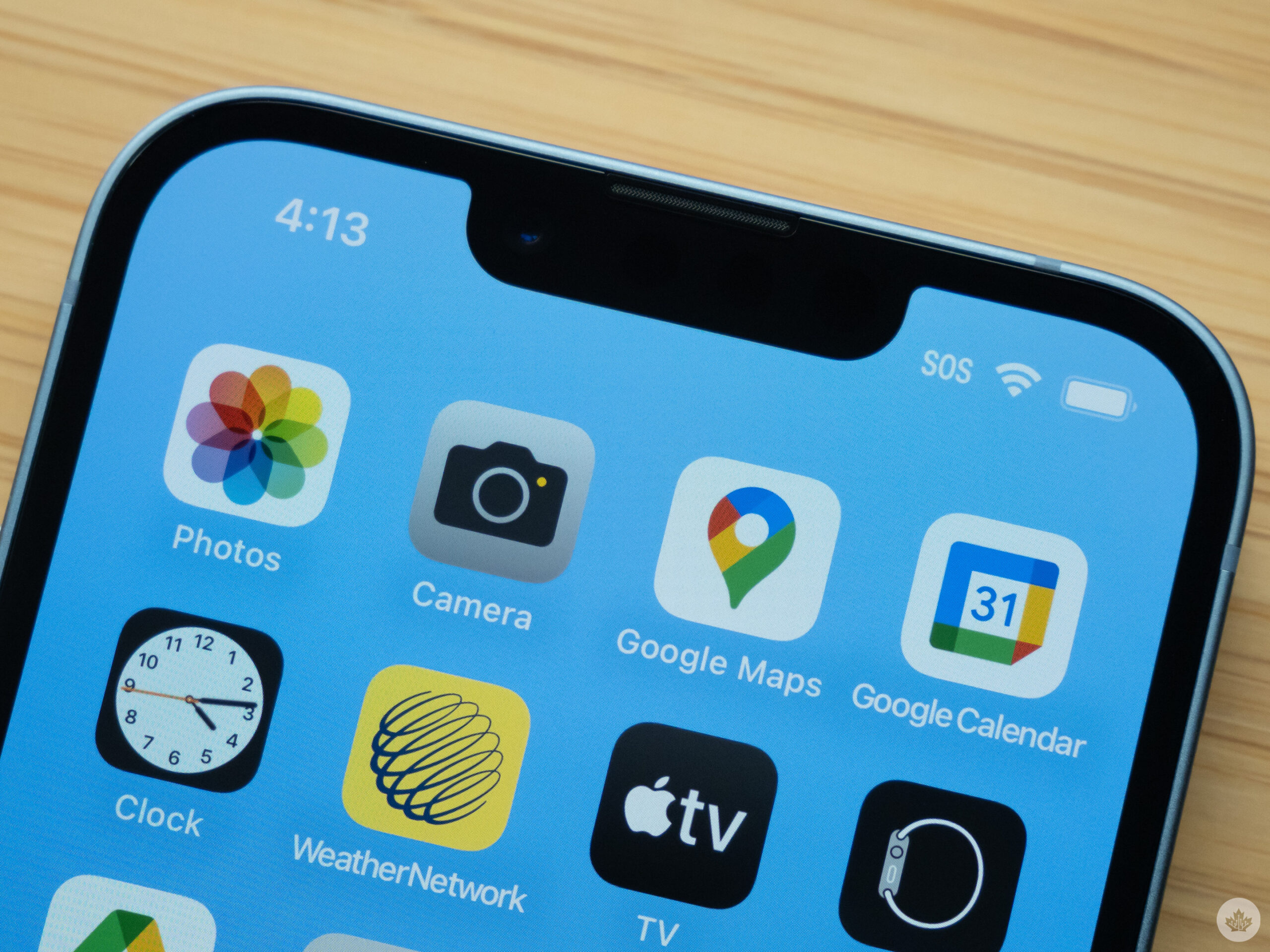
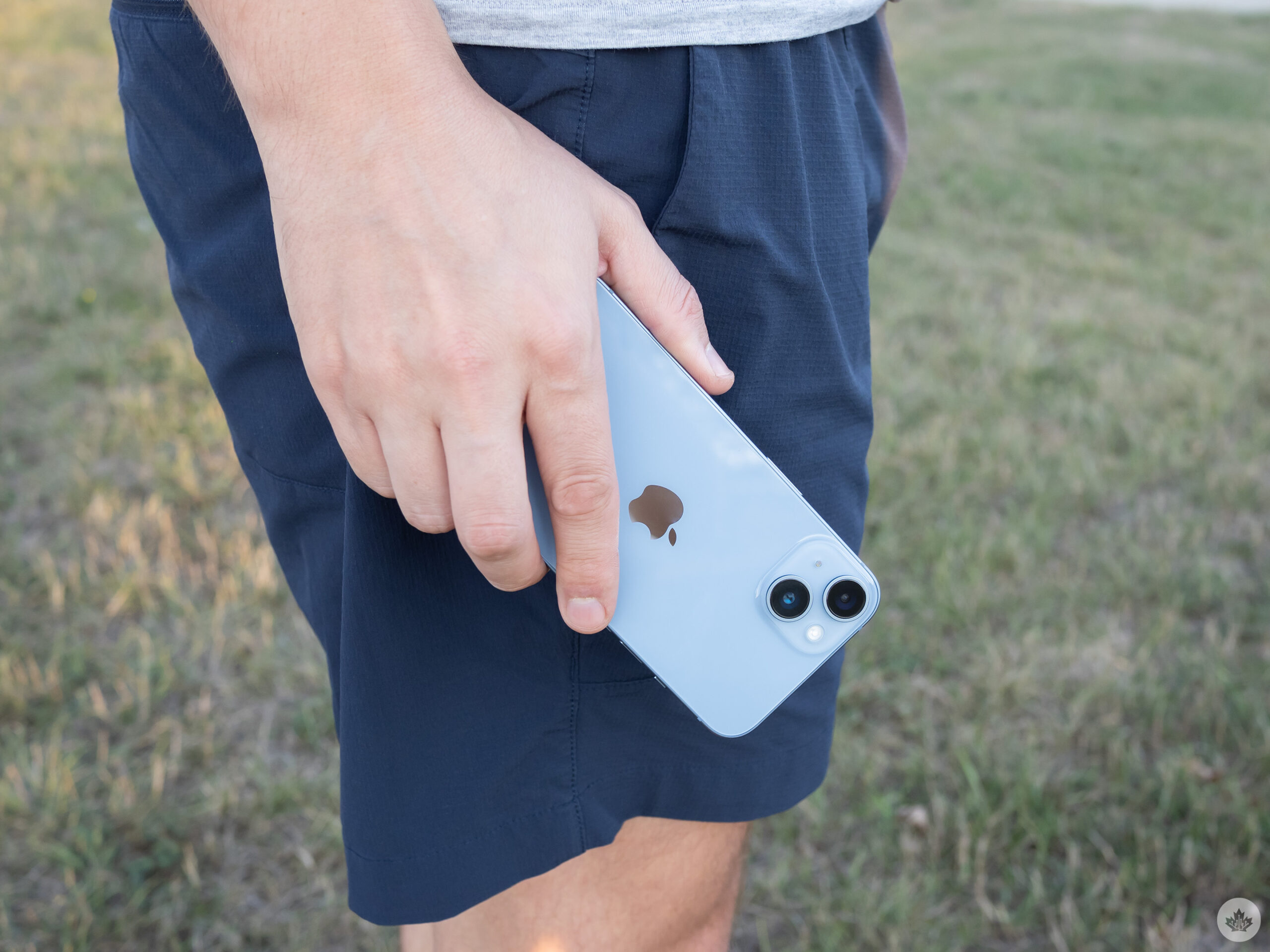
It features the same overall design with squared-off corners, a dual rear-facing camera with a sizable bump and the now very familiar display notch, with most of the changes to the device occurring under the hood. The main wide shooter has been upgraded with a larger sensor, improving the base-level iPhone 14’s low-light performance by a slim margin.
The iPhone 14 also marks the first time Apple has released its entry-level smartphone with a lesser chip when compared to the iPhone 14 Pro. This year’s base-level iPhone includes last year’s A15 chip (with an extra GPU core) vs. the new A16 in the higher-end iPhone 14 Pro.
The main question surrounding the iPhone 14 is if it’s the iPhone the average Apple user should buy like has been in the past. To some extent, this is still true.
“Apple likely could have got the Dynamic Island working with the notch, but it also seems intent on separating both devices..”
It features an excellent camera, solid battery life and a great-looking OLED display. Still, even more so than the iPhone 14 Pro, it’s a marginal upgrade over the iPhone 13 that will likely only be worthwhile if you’re using an iPhone 11 or older that doesn’t feature an OLED display.
For an in-depth look at the iPhone 14 Pro, check out my review.
iPhone 14
iPhone 14 Plus
Display
6.1-inch, Super Retina XDR, OLED True Tone display, 2532 x 1170 pixels, HDR 10, Dolby Vision
6.7-inch, Super Retina XDR, OLED True Tone display, 2278 x 1284 pixels, HDR 10, Dolby Vision
The short answer to the above question is not a lot. The iPhone 14 Pro’s overall design and its 6.1-inch 1170 x 2532 pixel resolution display match its predecessor, including the now familiar notch. Only the iPhone 14 Pro and iPhone 14 Pro Max offer the potential-filled ‘Dynamic Island’ front-facing display cutout this year.
Apple likely could have found a way to make the Dynamic Island work with the notch, but it also seems intent on separating both smartphones to an extent, offering those considering buying the Pro a reason to opt for the more expensive device.
Nearly all of the iPhone 14’s upgrades are tied to the smartphone’s cameras, which Apple says features 49 percent better low-light performance thanks to its new main sensor and its ‘Photonic Engine,’ the new version of its ‘Deep Fusion’ tech (also known as Sweater Mode) that now occurs earlier in the photo process. For those unaware, the Photonic Engine is Apple’s branding for the tech giant’s computational photography, which combines machine learning and hardware to boost photo quality.
Other iPhone 14 upgrades include Face ID working in landscape orientation, and ‘Cinematic Mode’ supporting up to a 4K resolution at 30fps alongside Dolby Vision HDR. The new ‘Action mode,’ available on the iPhone 14 Pro (check out a test clip here), is also featured in the iPhone 14 and seems to perform similarly to the iPhone 14 Pro. It smooths out movement in video, but features a significant amount of contrast and doesn’t work well under low-light
Even the iPhone 14's chip is the same as last year's, with the iPhone 14 still featuring the A15 bionic, though it does include an additional GPU core. Does this mean much in daily use? Not really. Still, the A15 is powerful enough to run iOS apps, and I didn't experience any slowdown during my time with the smartphone.
Camera upgrades
The iPhone 14's 12-megapixel main shooter features larger 1.9μm pixels and a wider f/1.5 aperture, which is a minor step from its previous 12-megapixel f/1.6 1.7μm shooter last year. Further, the ultra-wide remains identical at 12-megapixels f/2.2, though the camera's quality is marginally improved thanks to the Photonic Engine.
I've often argued that offering iPhone 14 users some level of optical zoom would be far more helpful than an ultra-wide lens. Unfortunately, Apple seems to have no interest in ditching the wide-angle shooter from the base-level iPhone camera array.
Flipping the iPhone 14 around to the front, the new TrueDepth camera system still housed in the notch now offers a wider f/1.9 aperture, which is a step above last year's f/2.2 aperture, allowing more light into the sensor. More importantly, the camera now supports autofocus, making it easier to snap crisp selfies quickly.
So what do all these new specs mean when actually taking photos with Apple's new iPhone 14?
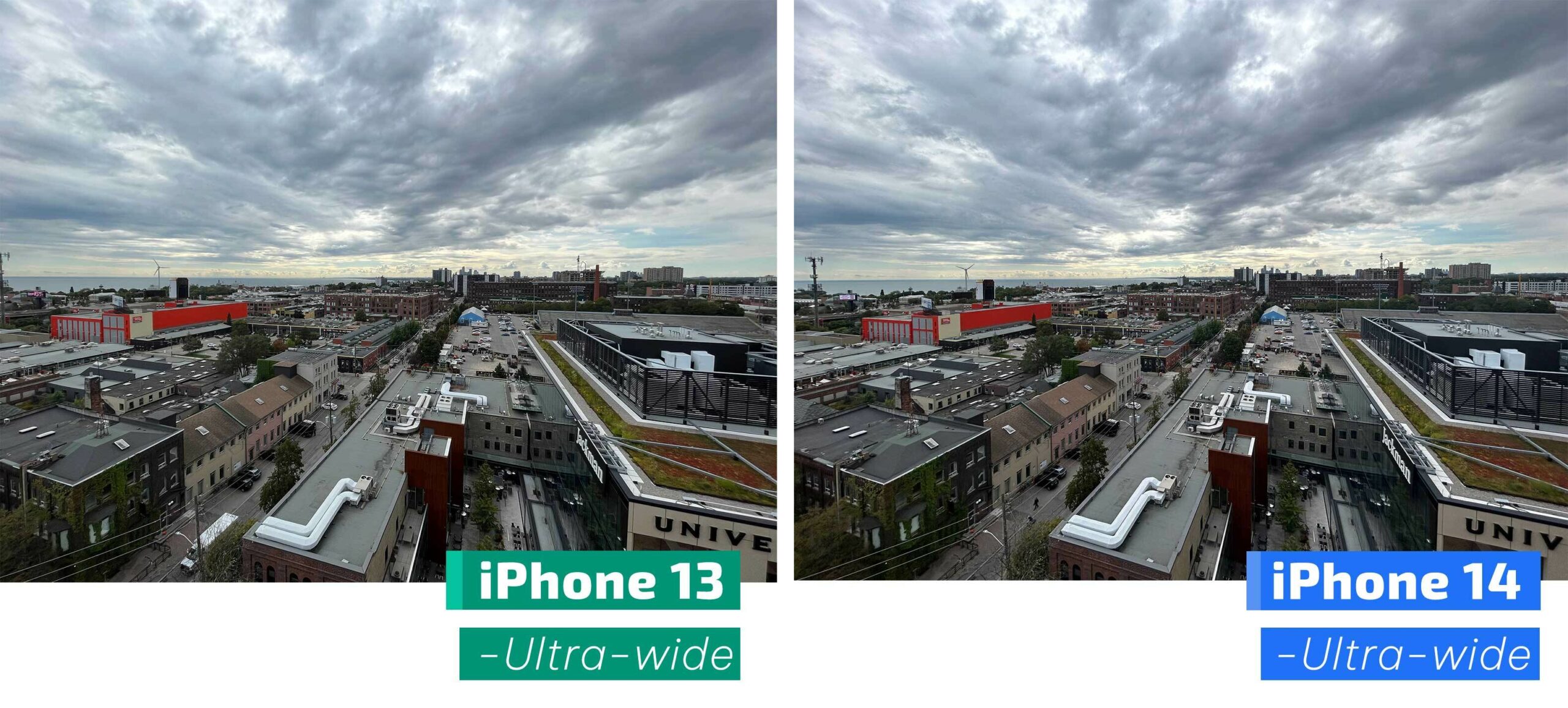
First, the ultra-wide lens in the iPhone 14 snaps images nearly identical to the iPhone 13's. As you can see in the photo above, both photographs look almost identical. You could argue that the iPhone 14's ultra-wide shooter is slightly sharper, but the difference is barely noticeable.
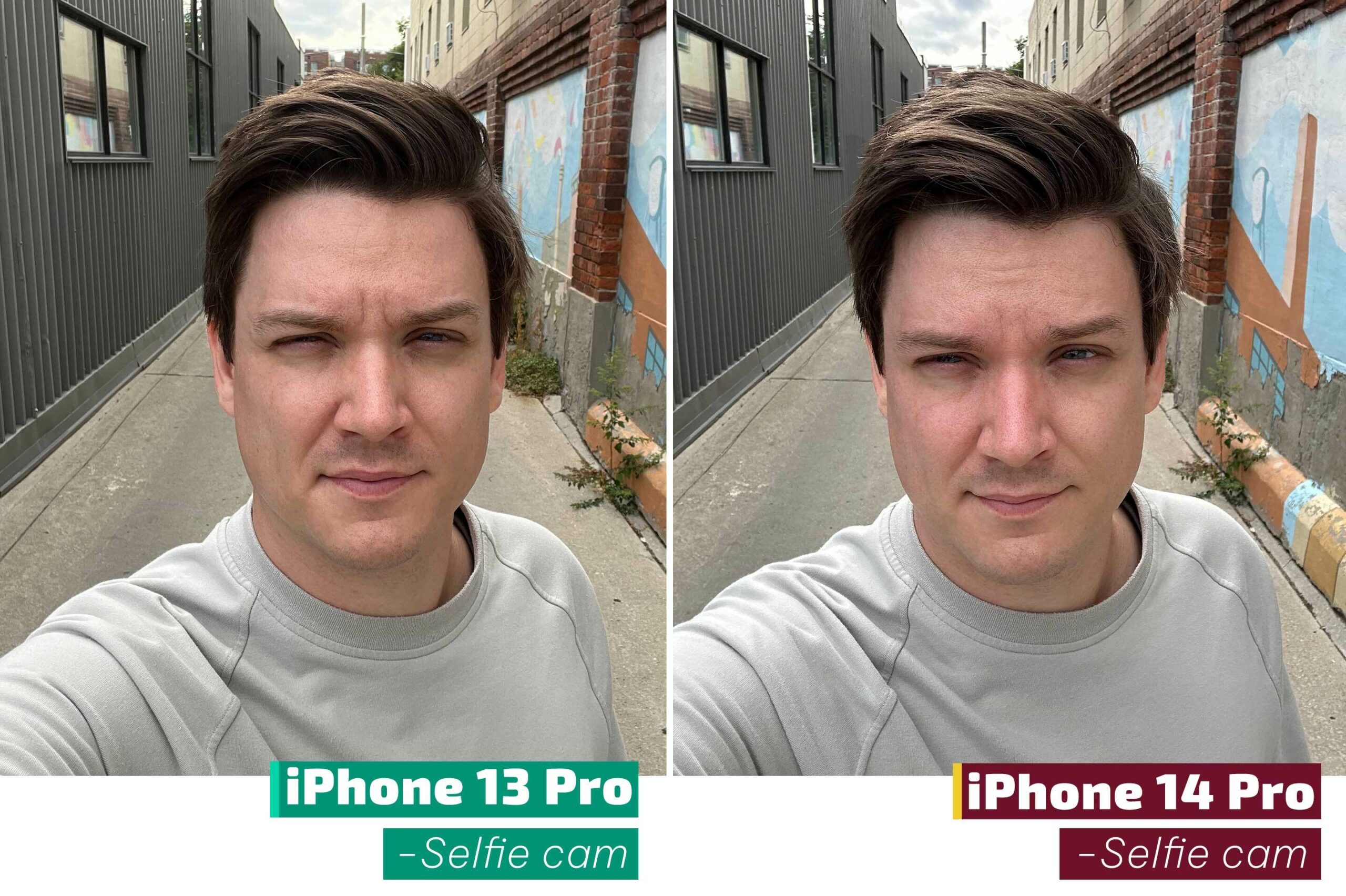
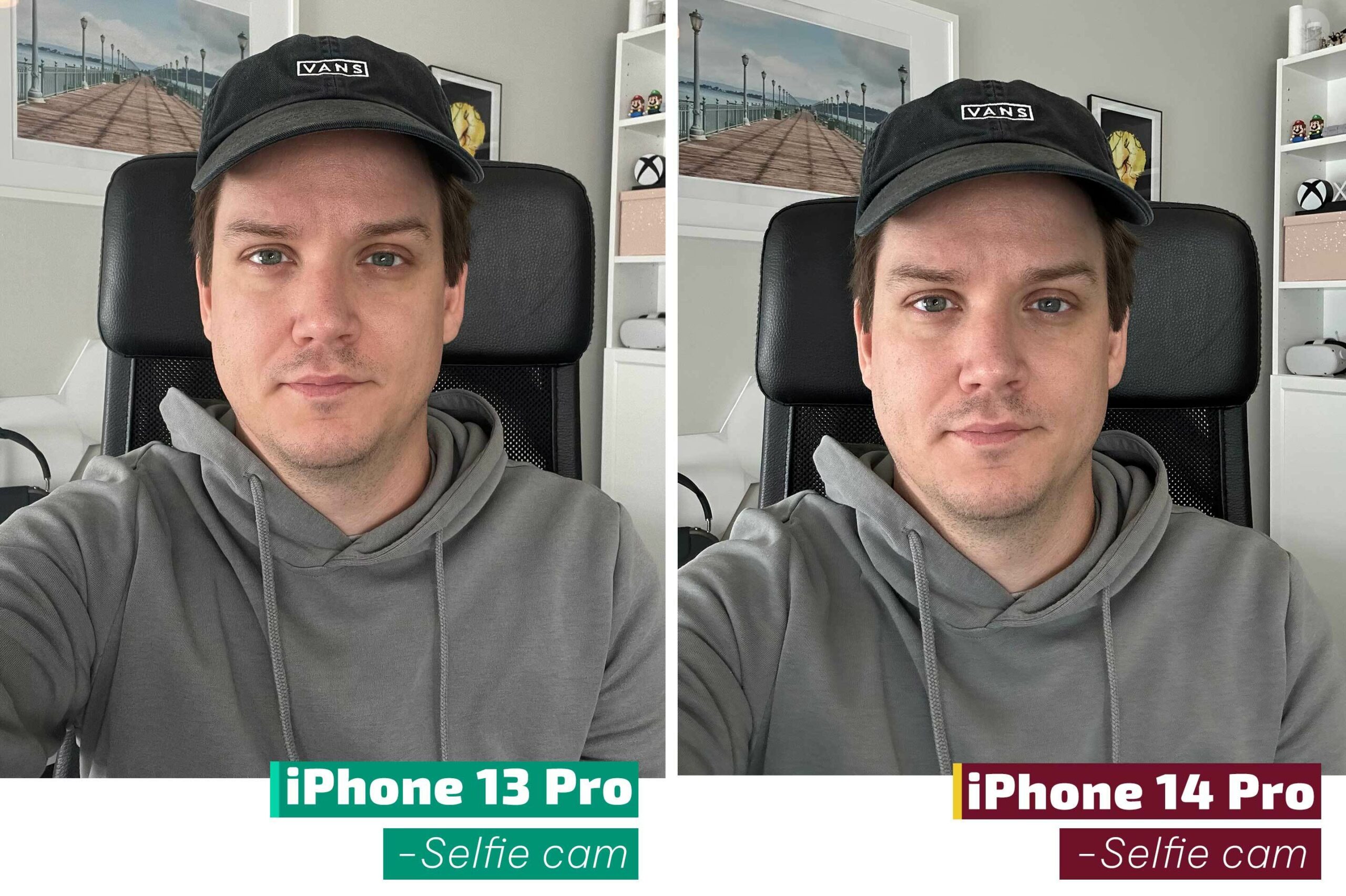
On the other hand, the iPhone 14's upgraded selfie shooter offers noticeable white balance and detail improvements. You can see more detail in my face and the focus is slightly sharper. Still, as you may have already noticed, there's a theme here, and the difference isn't substantial.
It's really under low-light where the power of Apple's Photonic Engine and upgraded iPhone 14 shooter come into play, but even then, the images look very similar.
In this low-light shot of a very dirty BMW, the colours pop slightly more and the focus is crisper in the iPhone 14 image, but again, both photographs are strikingly similar.
All three of the above smartphone's main cameras, including the iPhone 13, iPhone 14 and iPhone 14 Pro, perform remarkably similarly under ideal lighting conditions, as you can see above, with the iPhone 14 Pro offering slightly more colour vibrancy and definition in the mural's bricks. That said, the iPhone 13 and iPhone 14 main camera shots look pretty much identical to my eye.
While Apple's claims regarding the iPhone 14's cameras are likely mostly accurate, just like the iPhone 14 Pro vs the iPhone 13 Pro, the law of diminishing returns comes into play here. The images indeed do generally look better, but there's not that much of an improvement.
Everything else
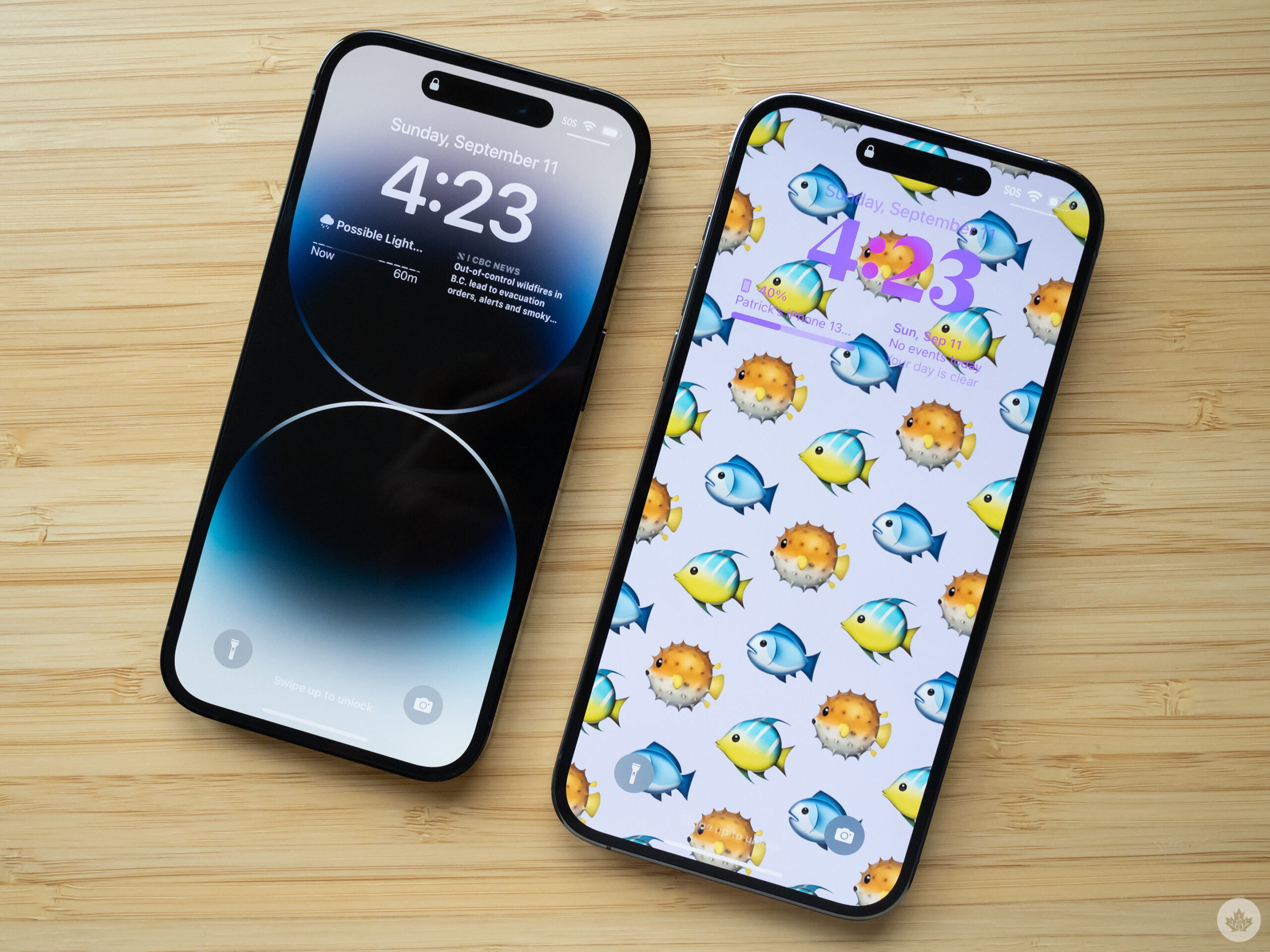
Other new features worth noting include Emergency SOS via Satellite and Crash Detection, which you can read more about in my iPhone 14 Pro review. Of course, the iPhone 14 Pro also supports iOS 16, which adds features like the new customizable Lock Screen, the ability to pull back messages, an expanded Maps app and more. Lock Screen customization is already a hit and one of my favourite iPhone features to release in the last few years.
The iPhone 14's battery life is impressive, measuring in at well beyond a day and even into the following day with moderate use, backing up Apple's claim that the iPhone 14 offers great battery life (the tech giant says the iPhone 14 Plus features the best battery life ever offered in an iPhone).
Finally, there are also new colours this year, including a variant of ‘Product Red,’ ‘Purple,’ and ‘Blue.’ While the new hues look fine, I prefer the more pastel colours Apple has featured in past versions of the base-level iPhone.
Note: This review will be updated with impressions of the iPhone 14 Plus when I'm able to get my hands on the smartphone. Beyond its larger 6.7-inch size, the device is identical to the iPhone 14. The smaller 5.42-inch iPhone mini is now dead, though Apple is still selling the iPhone 13 mini.
Every year a new iPhone drops like clockwork, and here we are in early September with the iPhone 14 Pro and iPhone 14 Pro Max.
Similar to last year’s move from the iPhone 12 Pro to the iPhone 13 Pro, the new iPhone 14 Pro and iPhone 14 Pro Max are yet another marginal step forward, albeit they offer a killer new feature that could eventually change the way you interact with your iPhone: the ‘Dynamic Island’ front camera display cutout.
While I’ll delve into the Dynamic Island in detail later, I will say that the feature’s subtle animations and quick access to widgets combine to create one of the most exciting smartphone user interface features I’ve encountered in years.
Other additions this year include Apple’s new A16 Bionic chip, an always-on display, a revamped TrueDepth camera system housed in the Dynamic Island cutout, and, finally, a revamped 48-megapixel main shooter offering improved low-light performance. But are the improvements to the iPhone 14 Pro’s camera system substantial? No, not really, but they’re still noticeable, and the type of upgrade long-time iPhone users will appreciate.
However, the overall design of the iPhone 14 Pro and iPhone 14 Pro Max remains the same as last year’s devices, including the bezels that are starting to look rather large compared to the high-end Android smartphone competition. With that in mind, if you were hoping this would be a redesign year for Apple, you’ll be disappointed with the tech giant’s latest iPhones.
iPhone 14 Pro
iPhone 14 Pro Max
Display
6.1-inch, Super Retina XDR, OLED True Tone display, 2556 x 1179 pixels, HDR 10, Dolby Vision, 120Hz refresh rate
6.7-inch, Super Retina XDR, OLED True Tone display, 2779 x 1290 pixels, HDR 10, Dolby Vision, 120Hz refresh rate
Face ID, Three axis gyro, Accelerometer, Ambient light sensor, Barometer
iPhone 14 Pro Max
Face ID, Three axis gyro, Accelerometer, Ambient light sensor, Barometer
SIM Type
iPhone 14 Pro
Nano SIM, eSIM
iPhone 14 Pro Max
Nano SIM, eSIM
Launch Date
iPhone 14 Pro
September 16, 2022
iPhone 14 Pro Max
September 16, 2022
Misc
iPhone 14 Pro
Colours: Space Black, Silver, Gold, Deep Purple
iPhone 14 Pro Max
Colours: Space Black, Silver, Gold, Deep Purple
For an in-depth look at the iPhone 14, check out my review.
Welcome to the Dynamic Island
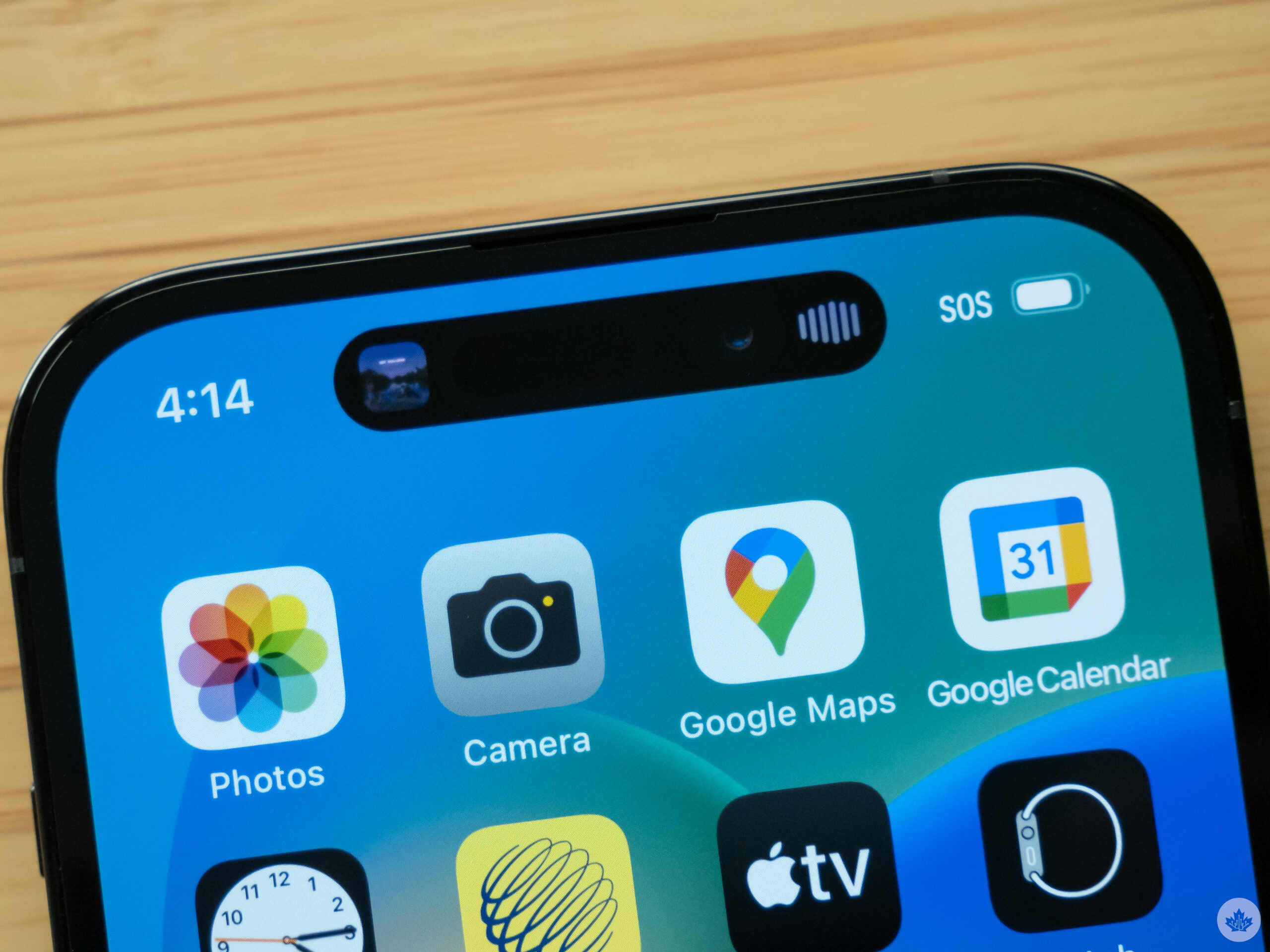
The most exciting thing about the iPhone 14 Pro and iPhone 14 Pro Max is the new ‘Dynamic Island’ — and for the record, I think Dynamic Island is a great name. The new camera cutout that houses alerts and specific notifications in one interactive location is a fascinating UI shift on Apple’s part.
“The Dynamic Island’s subtle animations feature a fluidity that makes the cutout feel alive…”
If you’re listening to music, a small waveform appears in the Dynamic Island, and when you briefly tap on it, you’re able to jump directly into the track. Connecting AirPods creates a quick-access tab, FaceTime is easily accessible, and multiple apps can even appear at once. For example, if you’re listening to music and set a timer, the cutout splits into two bubbles, and a little green circle appears when you’re snapping photos or shooting video.
The Dynamic Island’s subtle animations feature a fluidity that makes the cutout feel alive, and I found myself repeatedly tapping it just to watch it in action. It’s yet another example of Apple taking well-established tech and improving it. Huawei launched the first device with a hole-punch display cut out several years ago, and Apple has now built on it in a meaningful way. Of course, on the other hand, this is also the company playing catch-up with its competitors several years later, most notably Samsung’s flagship S series line, which has offered its ‘Infinity-O’ display since the release of the Galaxy S10 in 2019.
But Dynamic Island isn’t perfect. Third-party app support is currently lacklustre, with only apps (like Spotify) that include Apple’s ‘Now Playing’ and ‘CallKit’ development APIs working as a quick-access widget. This will likely change shortly after the iPhone 14 Pro’s release, given the control Apple maintains over its mobile app development ecosystem and the upcoming release of its ‘Live Activities’ development API. It’s also strange that a long press opens a widget while a short press launches the full version of an app. To me, it would be more intuitive if this action were reversed.
You could also make the argument that Dynamic Island is more obtrusive than even the notch. But just like the notch, for me, it quickly faded into the background of my experience with the iPhone 14 Pro and iPhone 14 Pro Max.
I clearly see the DNA of the MacBook Pro’s beleaguered Touch Bar in Dynamic Island, and we know how that worked out. Still, the potential is there, and it’s undeniably original and cool. I’m confident if any company can pull something like an interactive display cutout off, it’s Apple.
What else is new?
The other marquee new feature this year is the always-on display, another example of functionality several Android devices have offered for years. So, does Apple build on the established concept in a meaningful way? In this case, the answer to this question is a little mixed.
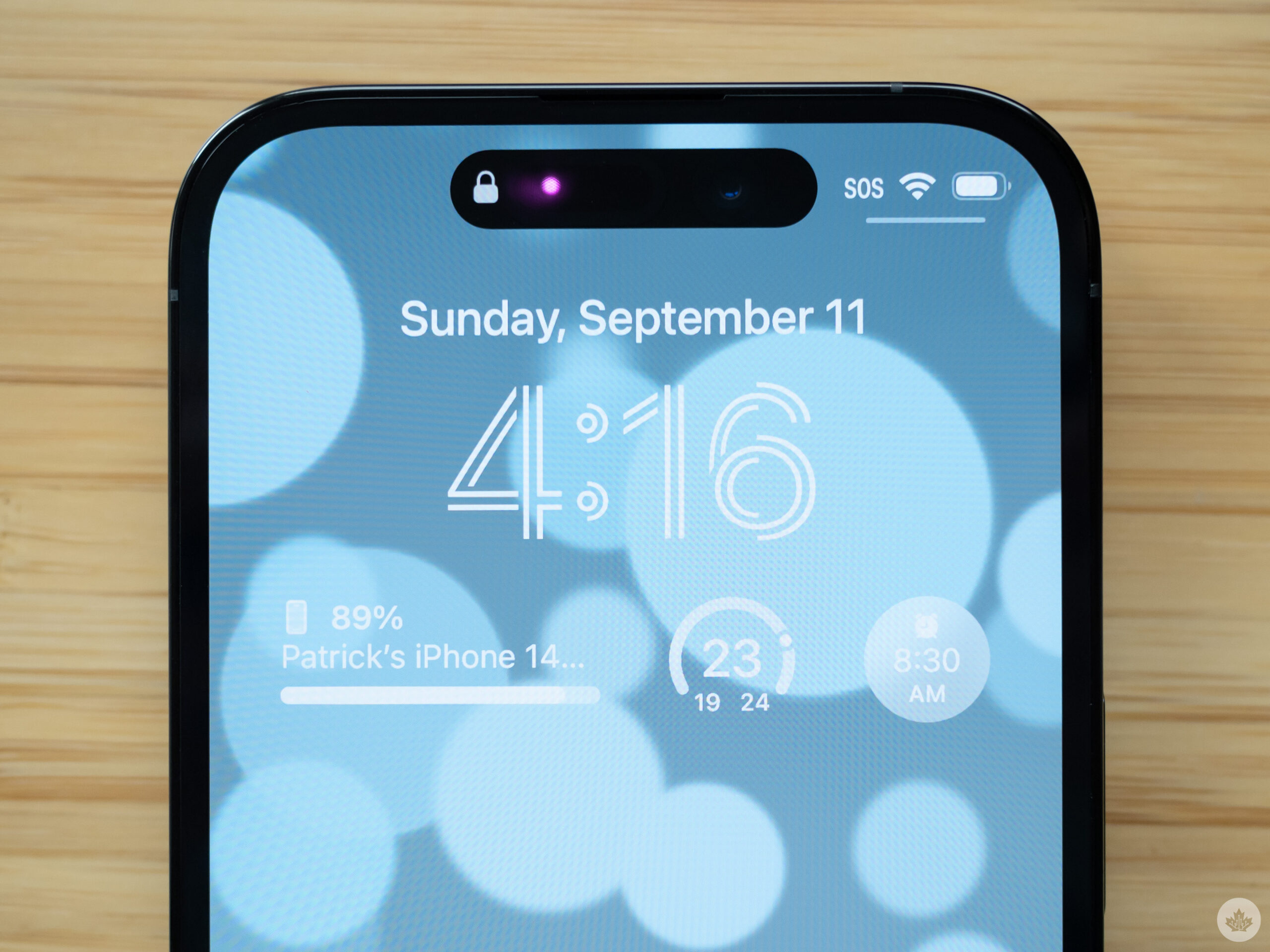
Both the iPhone 14 Pro and iPhone 14 Pro Max support Apple’s new always-on display with their respective Super Retina XDR 6.1-inch 2556 x 1779 (460ppi) pixel resolution and 6.7-inch 2796 x 1290 (460ppi) displays. The tech giant’s take on always-on display runs at a low 1Hz refresh rate to save battery. When using the phone, the display can ratchet up to 120Hz ProMotion for animations and then down to 10Hz to conserve battery life. The always-on display will also shut off when in your pocket or if you flip the smartphone over.
The iPhone 14 Pro’s always-on display stands out from other smartphone manufacturers because it features a dash of faded colour behind its customizable widgets for features like Battery Life, Calendar, Weather and more. However, like the Dynamic Island, third-party app support for lockscreen widgets remains limited at launch. This will likely change quickly, with Google already jumping onboard, but at the outset, it’s still disappointing.
I continue to question how helpful always-on displays are and whether anyone needs to be that connected to their smartphone’s notifications. Still, Apple’s always-on implementation is the best I’ve seen so far, and surprisingly, it doesn’t seem to impact the smartphone’s all-day battery life significantly (I plan to test the iPhone 14 Pro’s battery life more in the coming weeks).
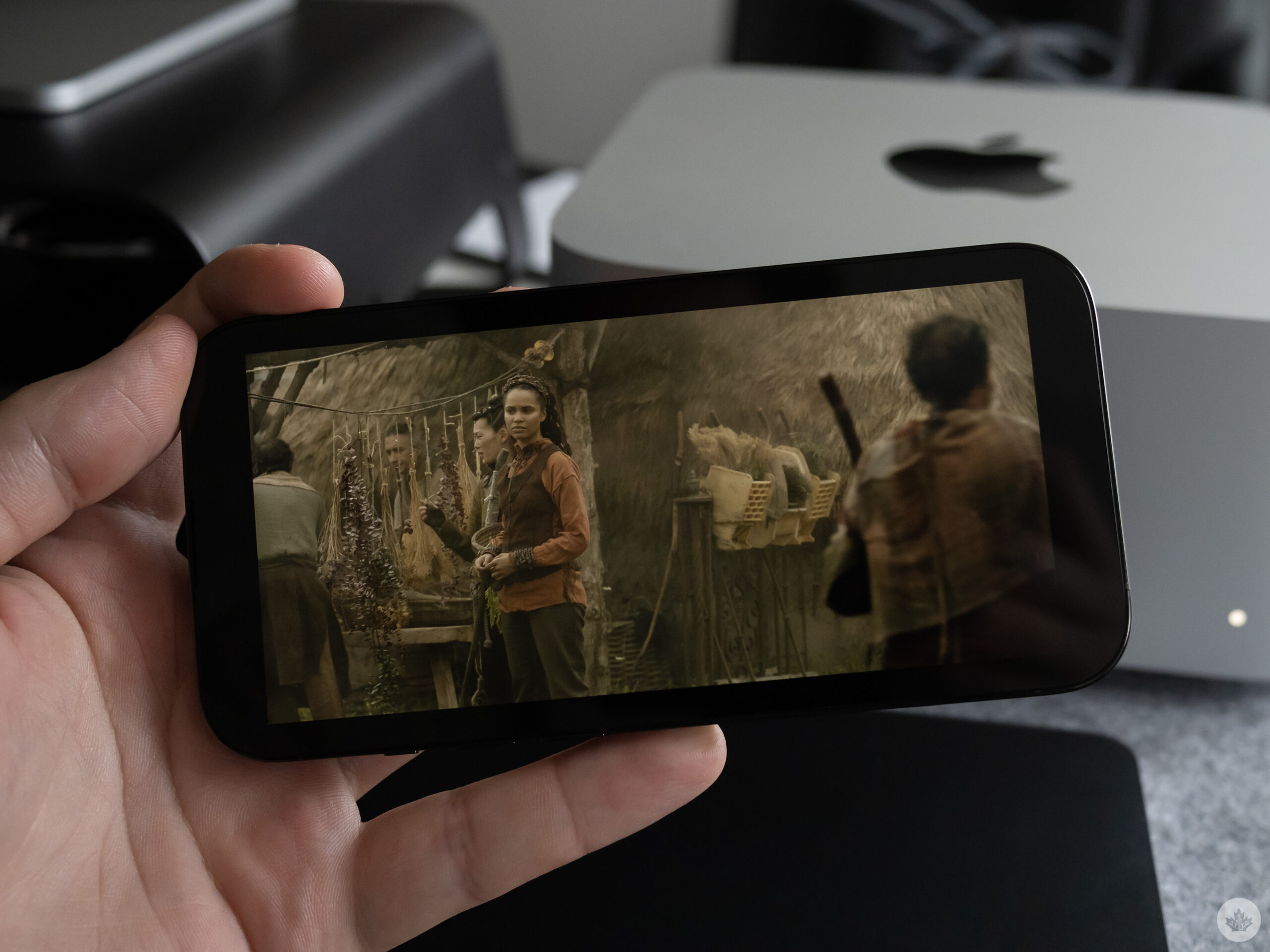
Speaking of the iPhone 14 Pro’s display, the new screen can hit 2,000 nits of brightness in direct sunlight, with HDR achieving 1,600 nits. The additional brightness is barely noticeable in everyday use, but while watching See on Apple TV+, I noted that certain portions of the TV show did indeed look noticeably brighter.
Then there's the new A16 chip, which benchmarks impressively above the A15 thanks to its 6-core CPU built on a 4-nanometer process and 50 percent increased memory bandwidth.
Though it's already been the case for the past several years, I didn't experience any slowdown or lag during my time with the iPhone 14 Pro or iPhone 14 Pro Max, regardless if I was editing photos, playing games, watching YouTube videos or just browsing the internet.
Emergency SOS via Satellite and Crash Detection
While 'Emergency SOS via Satellite' doesn't officially release in Canada until November, I briefly watched a demo of the feature in action at Apple Park in Cupertino, California. Emergency SOS launches if you don't have cellular or Wi-Fi connectivity, allowing you to orient the iPhone 14 Pro to connect to a nearby satellite.
You can then select from several pre-created messages that are sent to an Apple relay centre and forwarded to emergency services. Emergency SOS takes a few seconds to connect, but the process seems relatively smooth. It's worth noting that while the feature is free for the next two years, it will cost a subscription fee in the future.
Emergency SOS via Satellite is something no other smartphone manufacturer currently does and offers additional peace of mind. However, it's still the type of functionality the average iPhone user will likely never use.
On the other hand, 'Crash Detection' utilizes the iPhone 14's dual accelerometer to detect the high g-force commonly associated with crashes and automatically calls emergency services to provide a voice memo and your location. The feature can also notify your emergency contacts via a text message that includes your location.
It's impossible to verify the accuracy of Apple's claims regarding Crash Detection because you'd actually need to be in a car accident, so I have to take the tech giant's word on how well it works. Similar to Emergency SOS, this is the type of feature that very few iPhone users will ever take advantage of, but it's a welcome addition to the iPhone 14 Pro's arsenal.
Subtle camera improvements
For the first time in years, Apple has ditched its main 12-megapixel sensor in favour of a new 48-megapixel f/1.8 24mm sensor that uses "quad pixel" pixel binning to scale down to 12-megapixels. This allows for improved low-light performance and the ability to capture greater detail thanks to the iPhone 14 Pro's new version of computational photography 'Deep Fusion' called the 'Photonic Engine' that takes place earlier in the photo process.
The iPhone 14 Pro also now offers 2x telephoto zoom (48mm focal length) alongside 0.5x ultra-wide (13mm), wide 1x (24mm) and telephoto 3x (77mm). With that said, despite Apple's claims, most wouldn't consider the new 2x focal length truly optical zoom.
To achieve the 2x zoom, Apple is using the 12-megapixel centre of the 48-megapixel sensor, which isn't technically optical zoom since it's not a physical zoom lens on the rear of the smartphone. Still, it results in higher-quality telephoto images than purely digital zoom. It's worth noting that sensor cropping is something we've seen Samsung and Huawei offer in their devices for the past several years, and this isn't an entirely original feature from Apple.
Regarding the iPhone 14 Pro's other shooters, the telephoto lens remains the same as last year, while the ultra-wide features a new sensor that's larger than the iPhone 13 Pro's.
It performs better under low light but unfortunately still features the strange warping that often appears with ultra-wide lenses. It would be great to see Apple move towards removing this effect via software, similar to OnePlus.
Flipping the iPhone 14 Pro to the front, the selfie shooter now resides inside Dynamic Island. It features a wider f/1.9 aperture, which improves its low-light performance by a very slim margin, offering more detail and better white balance when snapping selfies.
So what do all these technical camera upgrades mean in practice? The iPhone 14 Pro's camera is slightly better than the iPhone 13 Pro's, and the law of diminishing returns is definitely at play here.
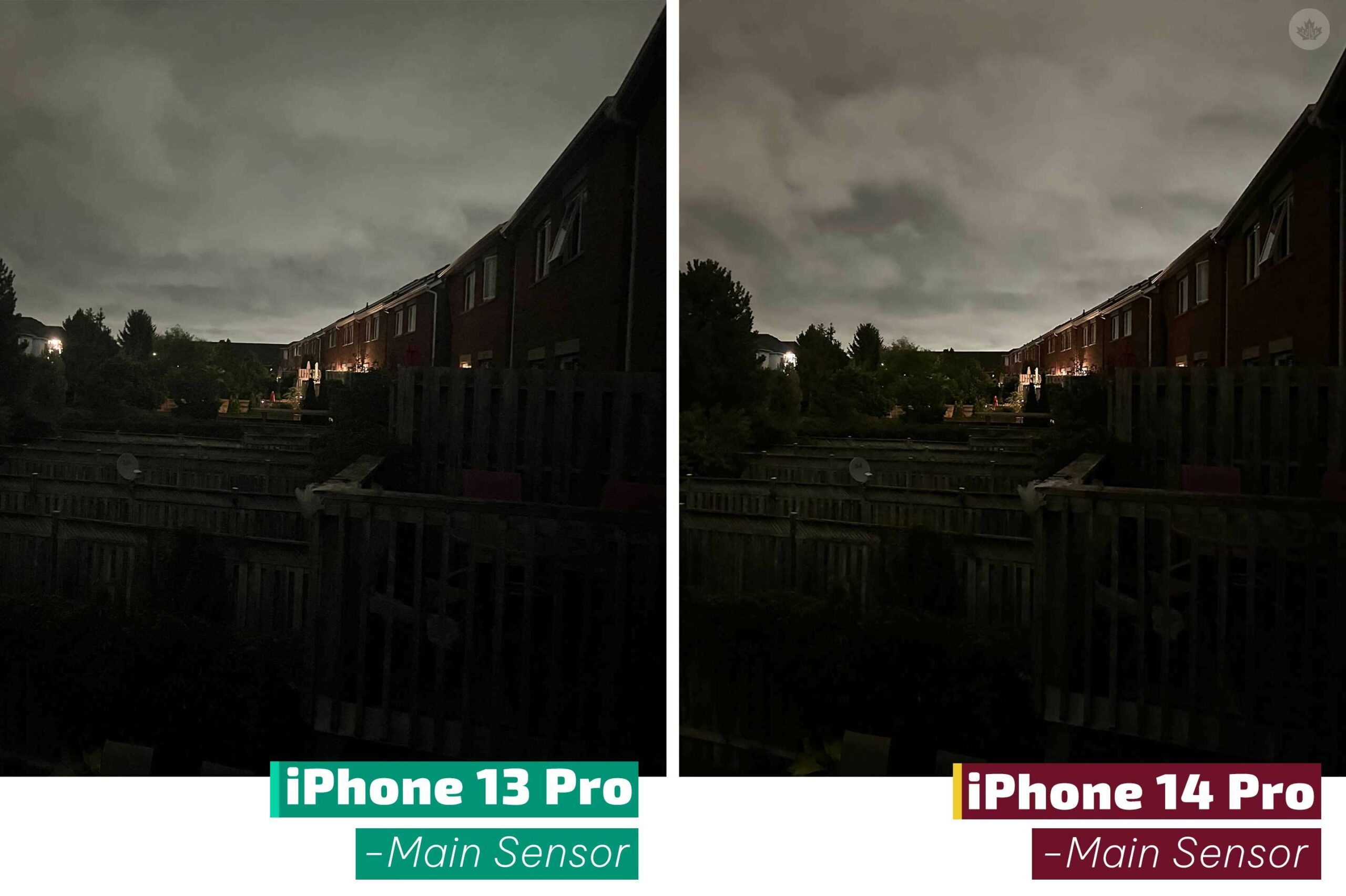
In this relatively uninspired picture of my neighbours' backyards, you can see the improvements in low-light performance with night mode entirely off. The entire image looks sharper, but more importantly, the lights on the right side are far clear with the iPhone 14 Pro than they are with the iPhone 13 Pro.
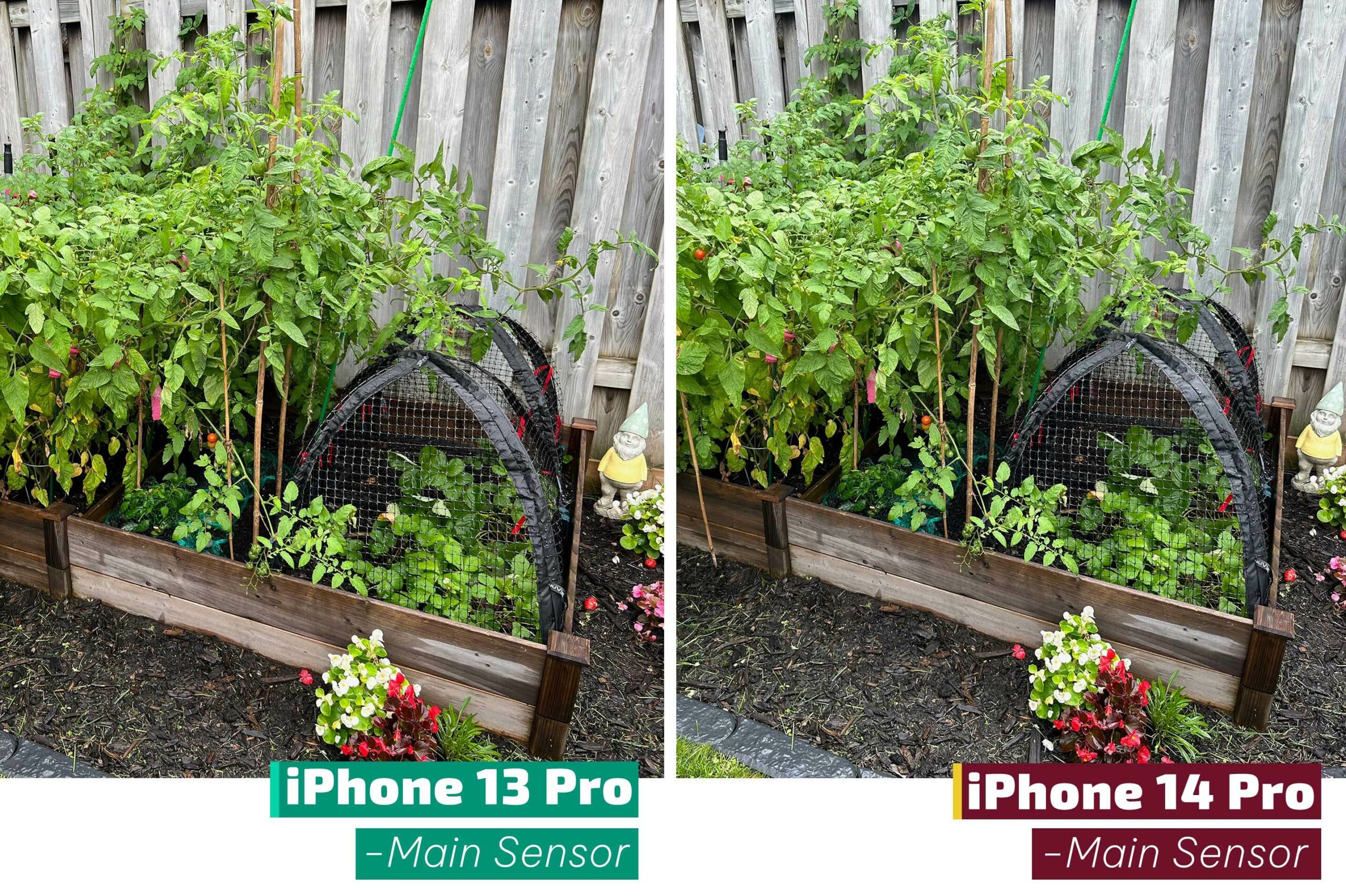
This image taken on an overcast day is the best example of the sometimes imperceptible differences between the iPhone 14 Pro's and iPhone 13 Pro's shooters under good lighting conditions. You could make the argument that the foliage in my overgrown tomato plants is sharper in the iPhone 14 Pro photo, but you really need to pixel peep, and even then, the difference is negligible. That said, the wide camera's 24mm focal length allows for more of the subject to be photographed compared to the iPhone 13 Pro's 26mm lens.
On the selfie-shooter side, the situation is very similar. My face is slightly sharper, the white balance is more true-to-life, and there's additional detail present in the iPhone 14 photo. The background is notably more in focus in the iPhone 14 shot. Overall, the difference is minute.
The Phone 14 Pro's main shooter also manages to surpass Google's Pixel 6 Pro in terms of colour vibrancy and saturation. On the white balance side, the iPhone 14 Pro also surpasses the iPhone 13 Pro in the above test. Still, as I've mentioned before, the improvements are barely noticeable, even when adding Google's flagship smartphone to the mix.
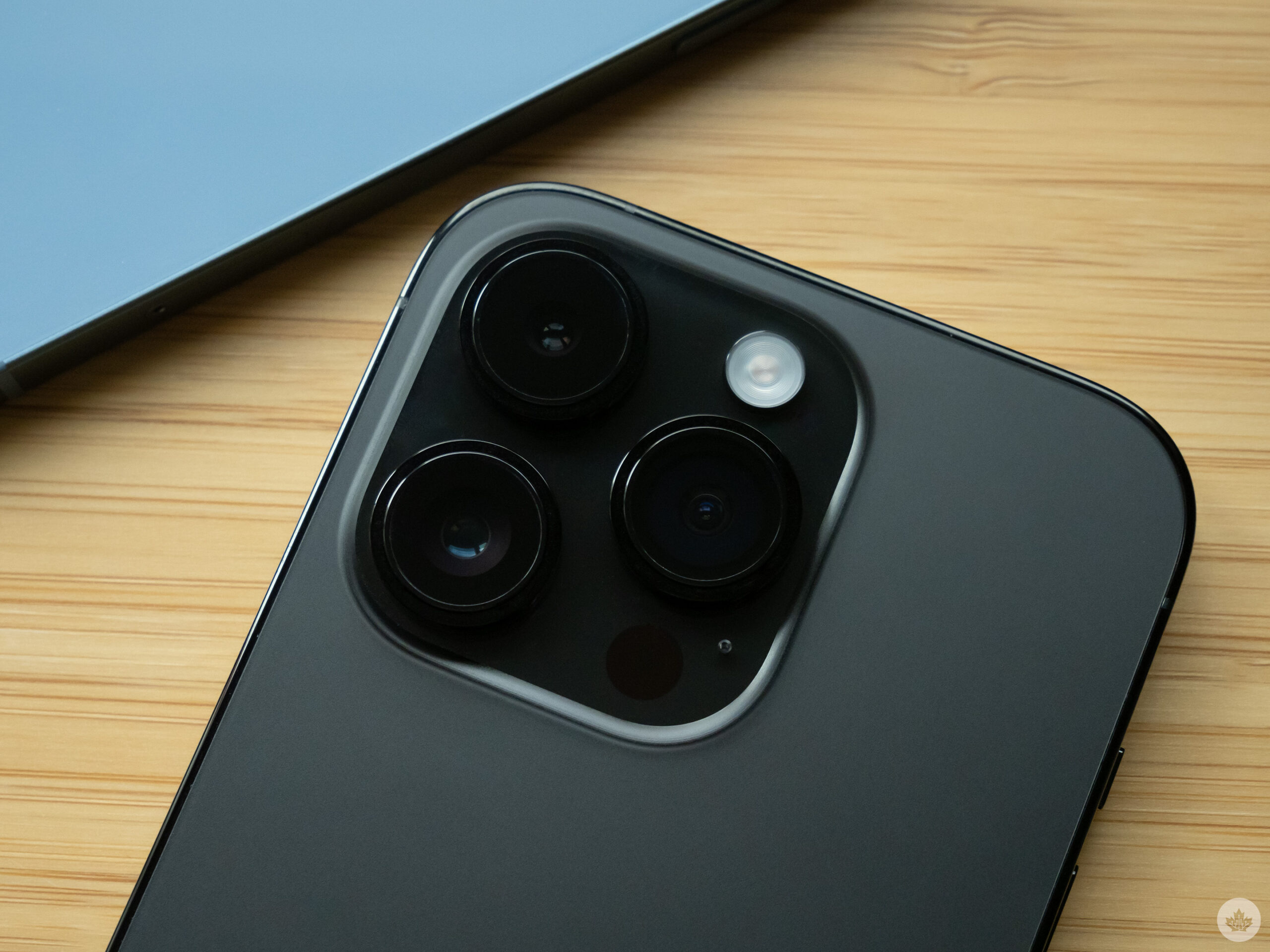
It's worth noting the iPhone 14 Pro's flash has been redesigned with an array of nine LEDs, though in my experience, I didn't notice a substantial difference in quality beyond the flash illuminating the subject more. You can also shoot full 48-megapixel images with ProRes RAW mode enabled, though it's unlikely anyone will ever need an image of this size shot with their smartphone.
Then there's 'Action Mode,' Apple's new video stabilization feature. Under good lighting conditions, it produces pretty great-looking footage that features a touch too much contrast for my liking. I can see it being useful in certain situations -- for example, if you're trying to capture video while riding a bike or running. Action Mode supports up to a 2.8k resolution and 60fps.
Enjoy as I ride Xiaomi's Mi Electric Pro 2 scooter around my neighbourhood while testing out Action Mode.
Apple has also updated 'Cinematic Mode,' last year's video addition with the iPhone 13 Pro, to work in 4K resolution at 24fps.
Everything else
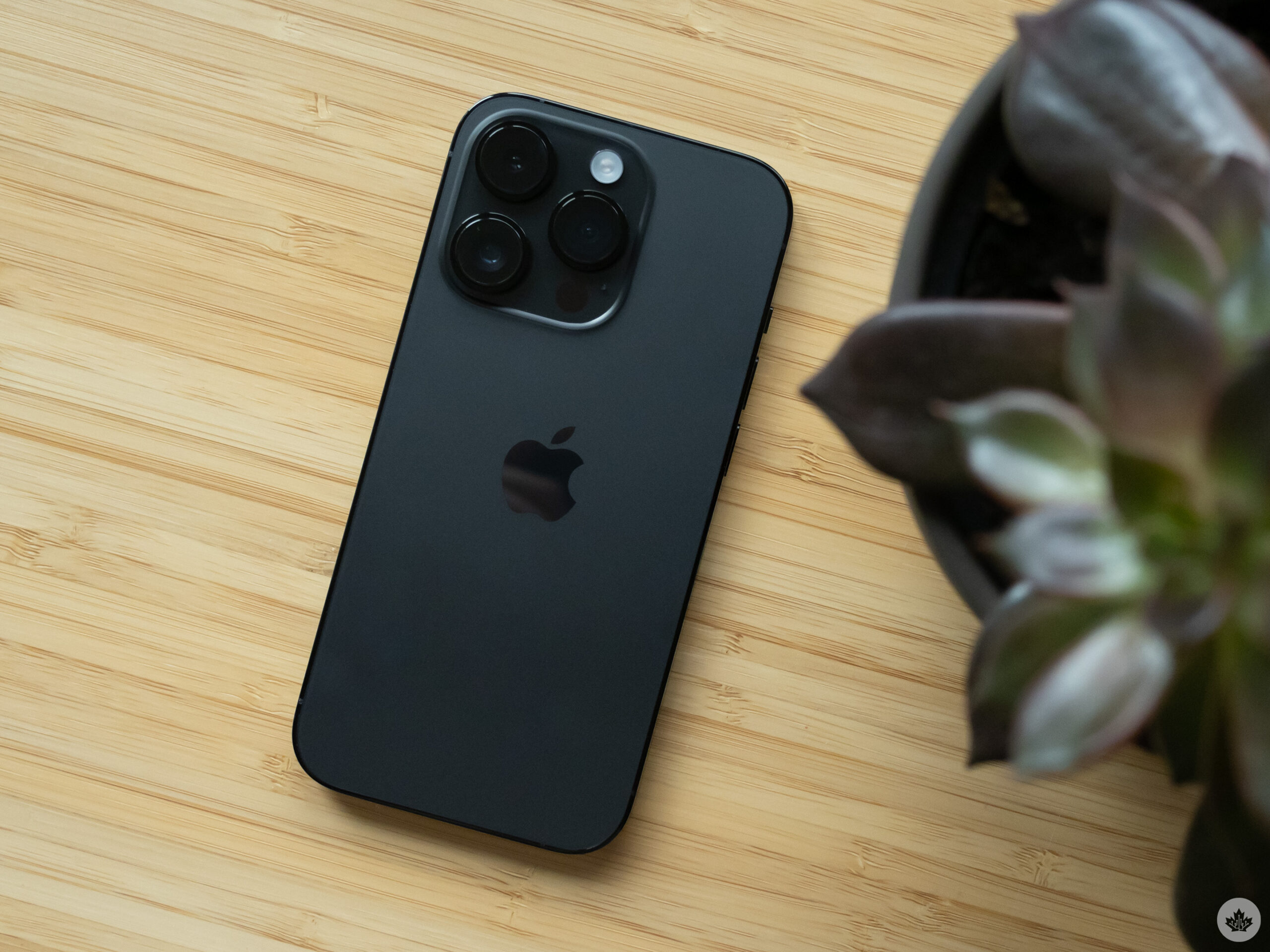
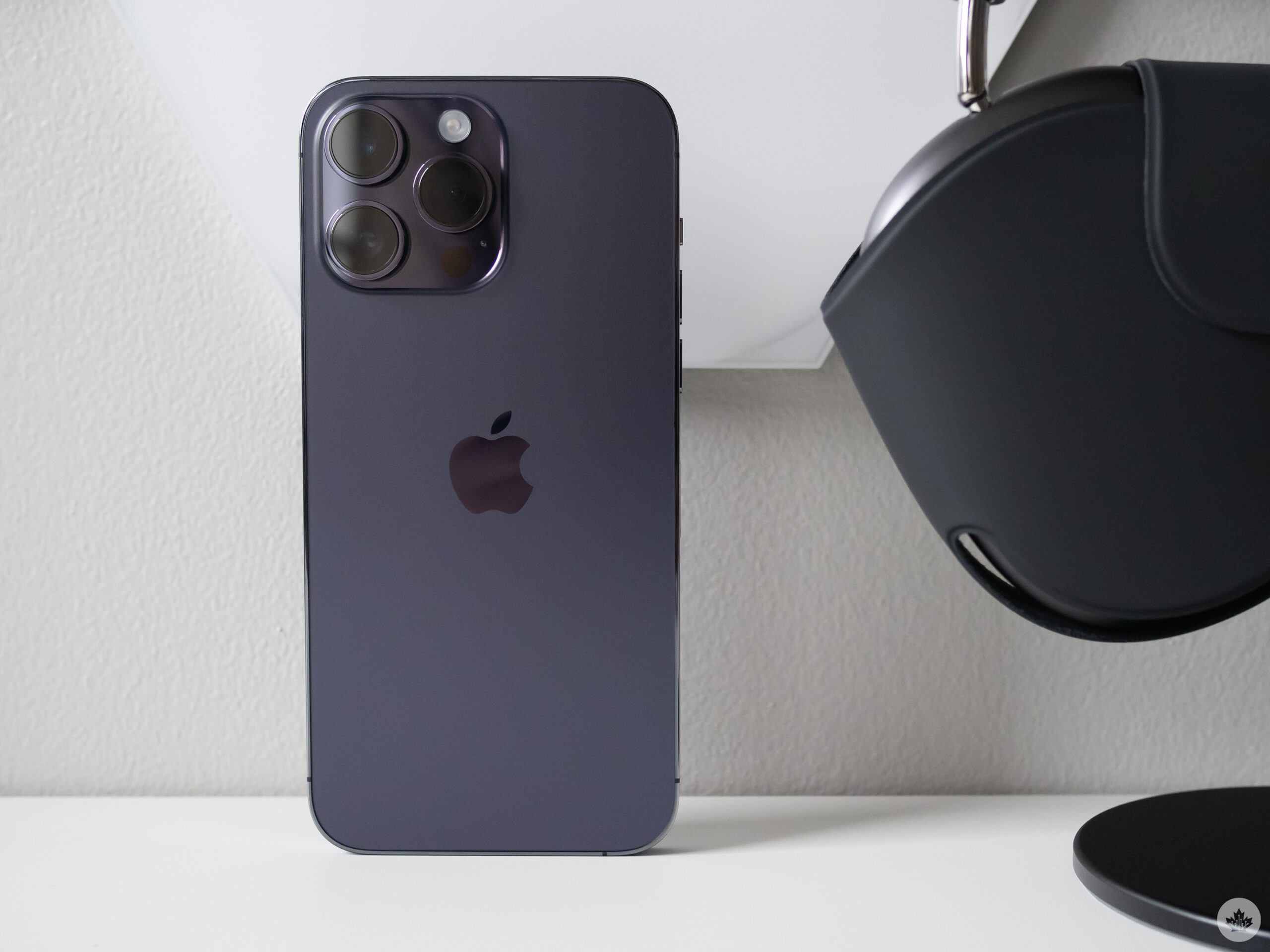
As always, there are new colours this year, including my personal favourite, 'Deep Purple,' along with 'Space Black.' Next to the iPhone 13's 'Alpine Green,' Deep Purple is my favourite iPhone colour yet. It's a subtle yet vibrant hue that fits well with my understated preference for smartphone colours. The new Space Black is... well, black, and is relatively bland. Other colours, including 'Gold' and 'Silver' (which is really just white) return this year.
Though not directly tied to the iPhone 14 Pro, iOS 16 brings an array of new features to Apple's iPhone line, including sharing iCloud Photo Libraries, the ability to unsend messages via iMessage and my personal favourite, the customizable lock screen.
I'm well aware that Android has offered similar functionality for several years. Still, the subtle intuitiveness of shifting the clock's colours or creating the nightmare eggplant emoji wallpaper of your dreams can't be understated. The feature will undoubtedly be a hit with most iPhone users, and I'm excited to see the inventive lockscreens and wallpapers people create.
MobileSyrup utilizes affiliate partnerships. These partnerships do not influence our editorial content, though we may earn a commission on purchases made via these links that helps fund the journalism provided free on our website.
Vancouver-based The Coalition has pledged to donate one percent of net revenue from all Gears of War games and merchandise to suicide prevention.
To coincide with World Suicide Prevention Day on September 10th, the Xbox-owned developer says it’s launching this multi-year ‘Never Fight Alone’ initiative, starting with Crisis Text Line. The New York-based global non-profit provides free, 24/7 text-based mental health support and crisis intervention in Canada, the U.S., U.K. and Ireland using trained volunteers.
The Coalition says it aims to partner with additional mental health advocacy groups in the future. In the meantime, the studio is also inviting people to share their stories and words of support via the official Gears of War Twitter channel and/or using the hashtag #NeverFightAlone. You can also purchase a special ‘Never Fight Alone’ t-shirt from the Xbox Gear Store, and 100 percent of the proceeds will go directly to Crisis Text Line.
The project had plans to provide internet access through a series of balloons. Now, Aalyria is using most of the pieces and combining them with lasers and the cloud to provide remote locations with internet access.
According to The Verge, Aalyria focuses on two things. The first is ‘tightbeam,’ a system that utilizes beams of light to communicate data between stations. The second is ‘spacetime,’ software previously utilized through Loon. The platform will use the cloud to examine when a tightbeam station sends a connection to a moving object.
CNBC reports that while Alphabet holds a small stake in the company, it won’t be under Google’s umbrella of companies.
“We are able to orchestrate cross-constellation inter-satellite links that enable the internetworking of government and commercial constellation providers,” Chris Taylor, Aalyria’s CEO, said in a press release.
“We can orchestrate high-speed urban meshes and global unified network operations, and we can help connect the next three billion people.”




 The main question surrounding the iPhone 14 is if it’s the iPhone the average Apple user should buy like has been in the past. To some extent, this is still true.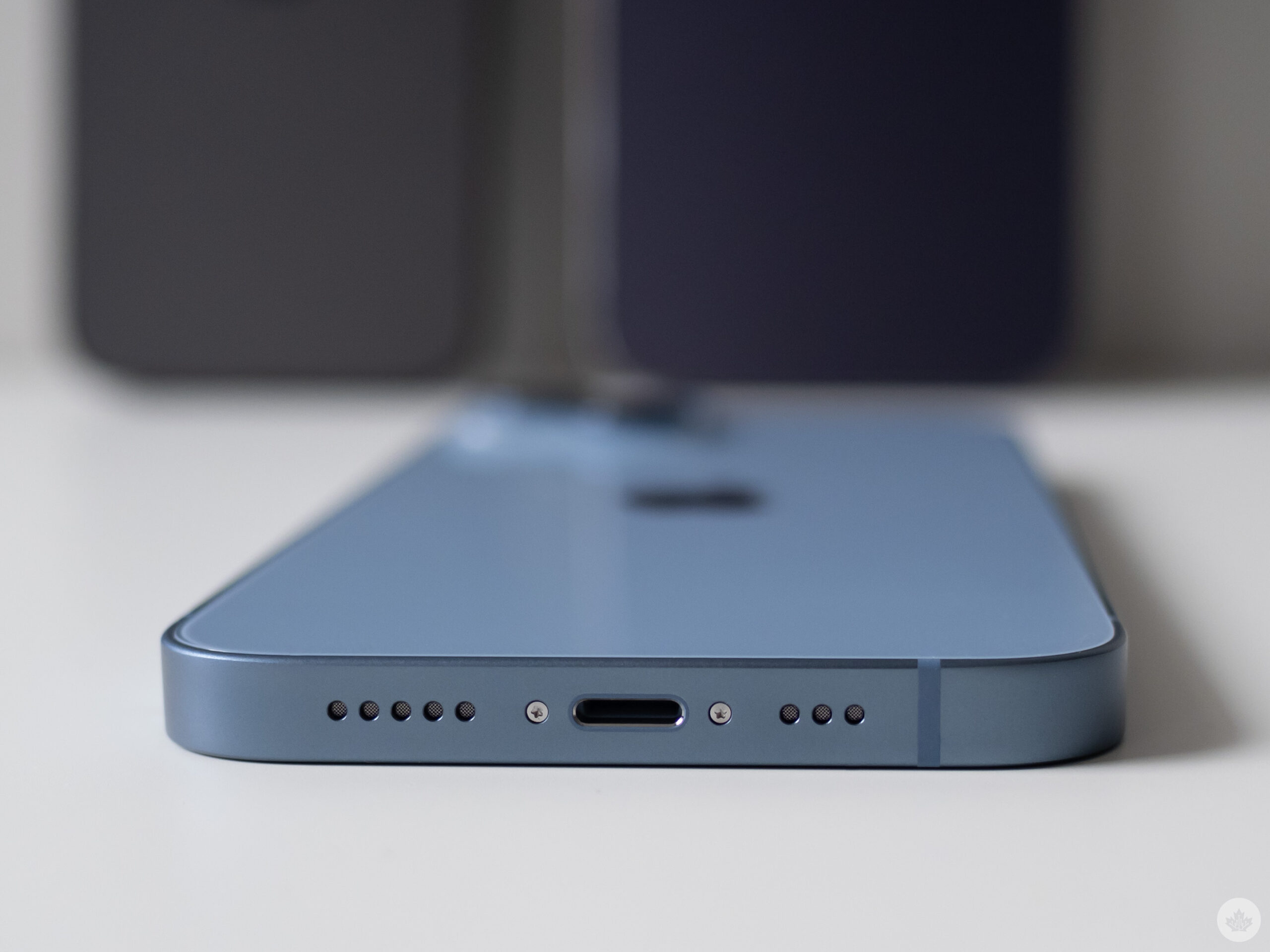










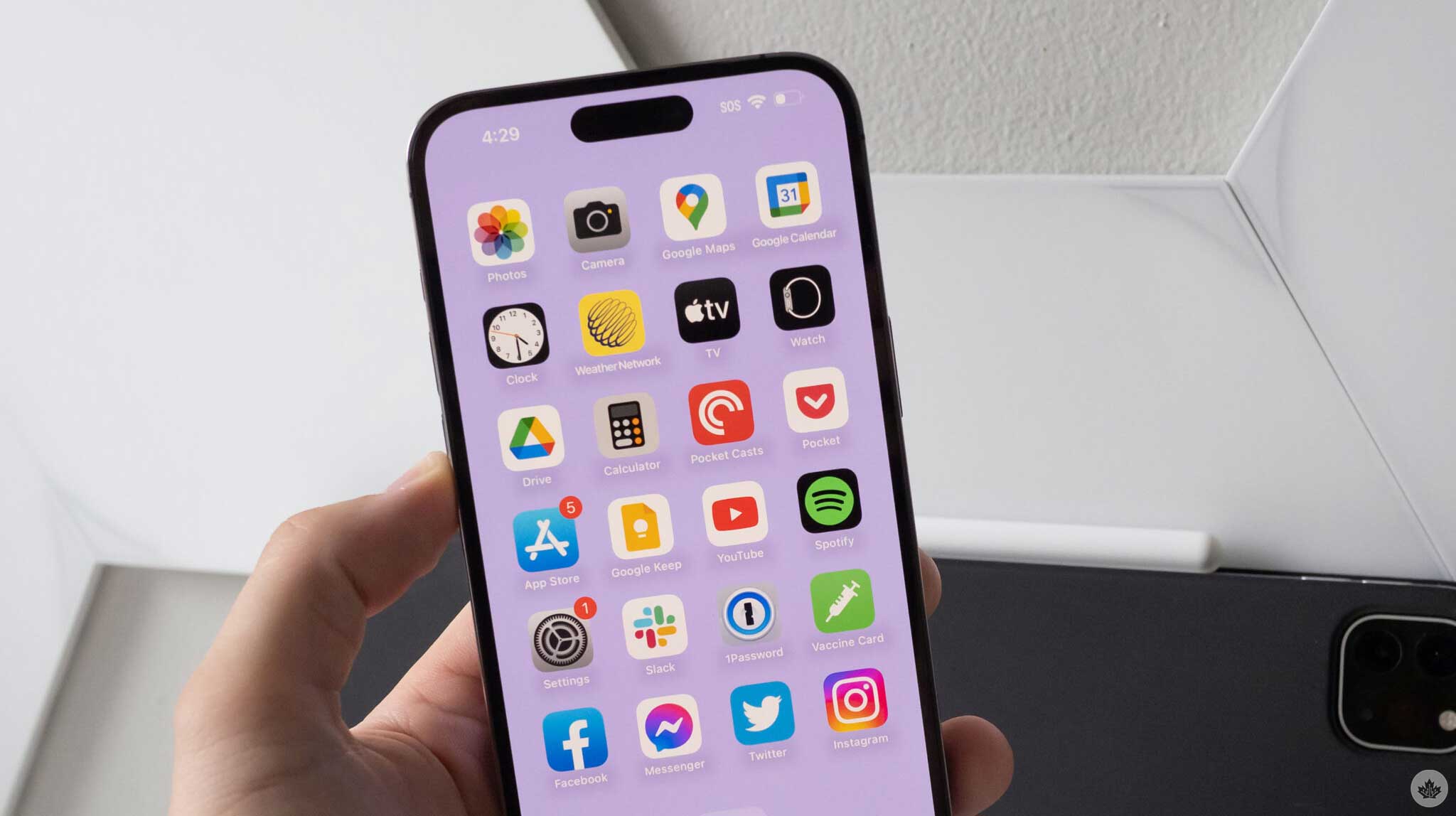
 While I’ll delve into the Dynamic Island in detail later, I will say that the feature’s subtle animations and quick access to widgets combine to create one of the most exciting smartphone user interface features I’ve encountered in years.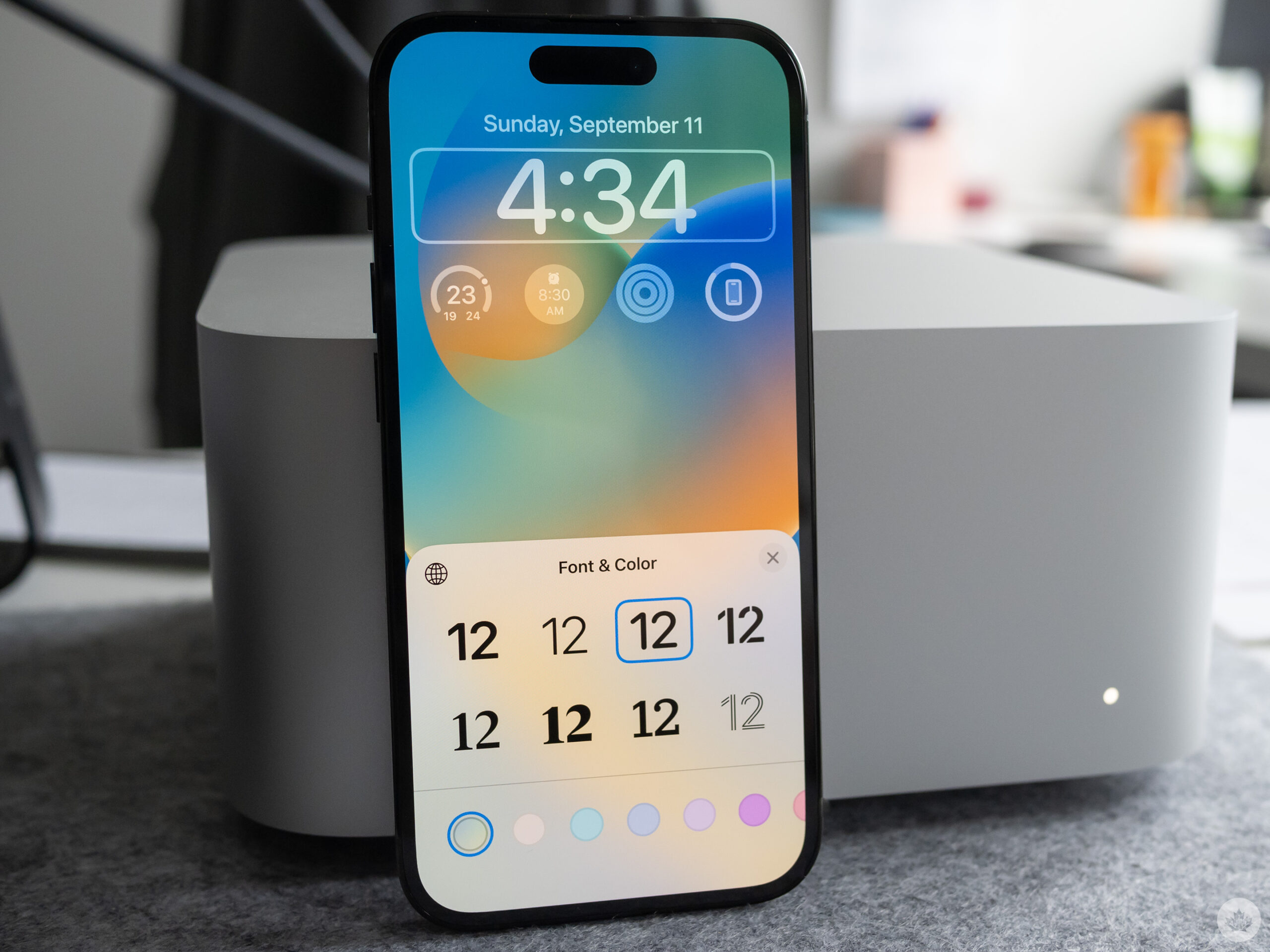
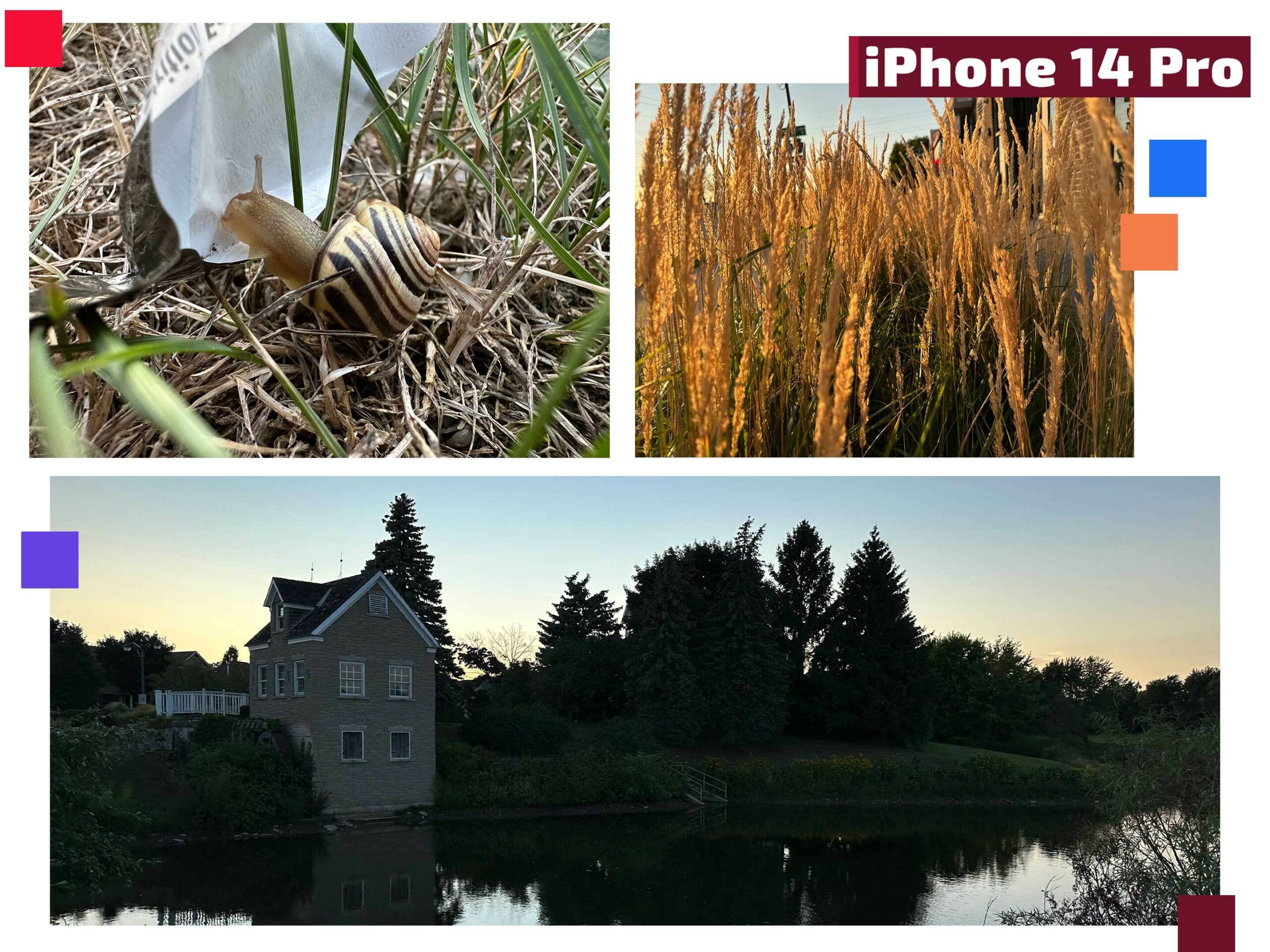














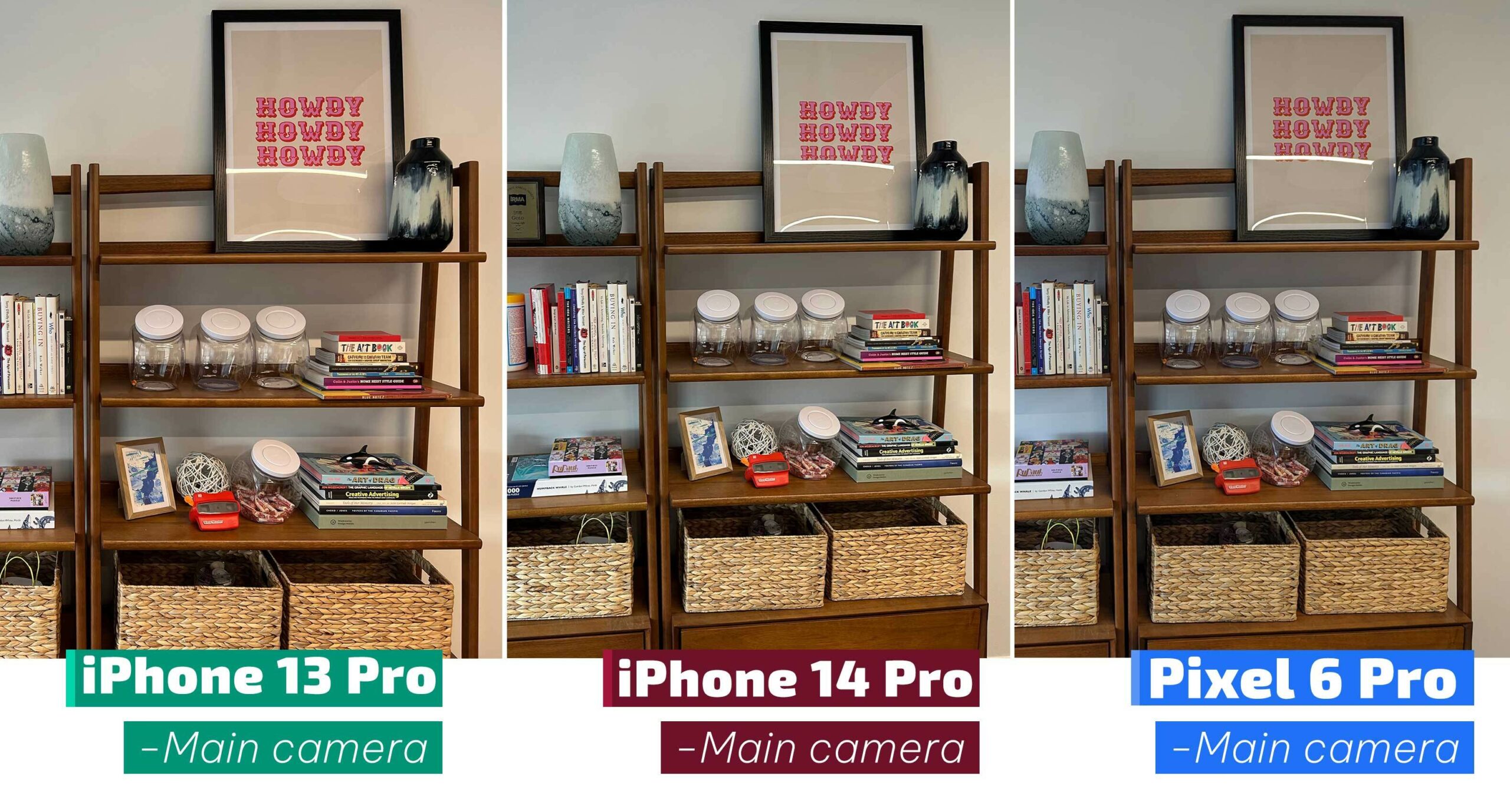 The Phone 14 Pro's main shooter also manages to surpass Google's Pixel 6 Pro in terms of colour vibrancy and saturation. On the white balance side, the iPhone 14 Pro also surpasses the iPhone 13 Pro in the above test. Still, as I've mentioned before, the improvements are barely noticeable, even when adding Google's flagship smartphone to the mix.
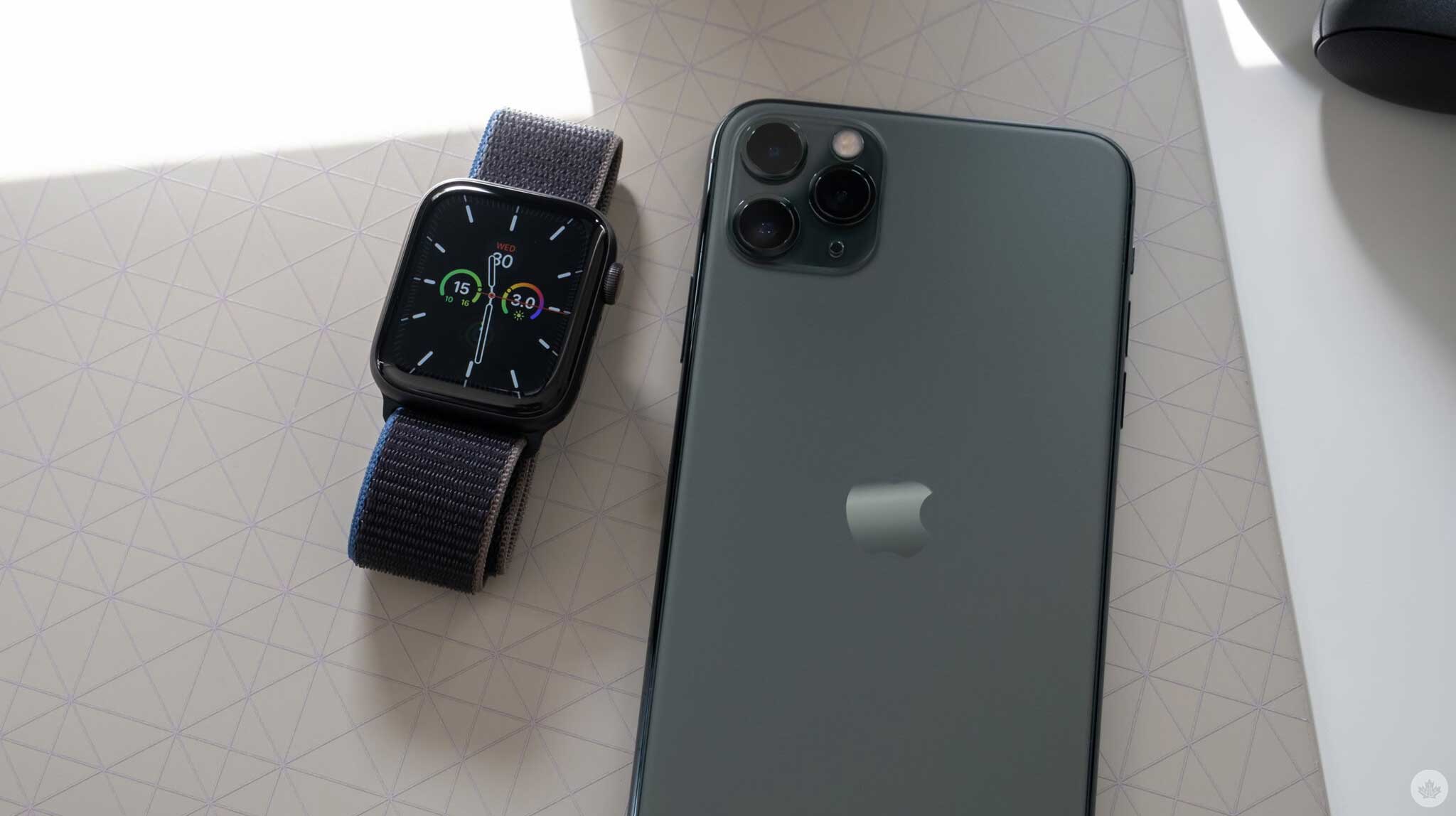
 Though not directly tied to the iPhone 14 Pro, iOS 16 brings an array of new features to Apple's iPhone line, including sharing iCloud Photo Libraries, the ability to unsend messages via iMessage and my personal favourite, the customizable lock screen.