Categories
Mobile Syrup

E-Ink’s new Kaleido 3 can be used as ‘outdoor advertising signage’

E-Ink’s latest Kaleido 3 is a big step in innovation for the company’s range of coloured e-paper used in e-readers across the industry in products like the PocketBook Colour and the Hisense A5C smartphone.

According to E-Ink, its new Kaleido 3 display increases colour saturation by 30 percent, when compared to its predecessor — the Kaleido Plus, along with offering 16 levels of grayscale and 4,096 colours.

“The color eReader with E Ink Kaleido technology has received wide support and recognition from many customers since its release,” said Johnson Lee, CEO of E Ink in a recent press release. “E Ink continues to innovate color ePaper, and with E Ink Kaleido 3, we’ve enhanced the vividness of the colors, improved the module design and created a healthier visual reading experience. We are excited to see this new technology roll out in customer products.”

The company says it will release the new e-display in three sizes — 7.8-inch, 10.3-inch and 13.3-inch — allowing it to be deployed in large form factor smartphones to tablets and e-readers. For reference, the largest size Kaleido Plus is available in is 10.3-inches.

The Kaleido 3 also incorporates the company’s ComfortGaze technology. ComfortGaze reduces the blue light reflected off the display by lowering the blue light ratio by 60 percent and the blue light toxicity factor by 24 percent, allowing users to view content on the screen for longer durations without eye discomfort.

Kaleido 3 has a 300ppi (Pixels per inch) black and white resolution and a 150ppi colour resolution, which is an upgrade above Kaleido Plus’s 100ppi colour resolution. Lastly, and most importantly, the company claims that it has improved the display’s responsiveness, allowing it to play animations and videos seamlessly and be deployed as “outdoor advertising signage.”

E-Ink will have the new Kaleido 3 on display at the Taipei Nangang Exhibition Center, at Touch Taiwan from April 27th to 29th.

Image credit: E-Ink

Source: E-Ink

Categories
Mobile Syrup

Tesla officially opens Austin, Texas-based Gigafactory

Tesla officially opened its Austin, Texas-based Gigafactory, where the company will likely begin production of its long-delayed Cybertruck.

CEO Elon Musk celebrated the opening with a ‘Cyber Rodeo’ event, in which Musk pranced around in a cowboy hat. Tesla invited some 15,000 people to listen to live music, eat food, and as The Verge describes it, “pay homage” to Musk and Tesla.

Musk described the opening of the factory as “entering a new phase of Tesla’s future.”

At the event, Musk showed off a new version of the Cybertruck that will go into production at the Gigafactory, as well as a new Roadster vehicle slated to start production next year. Moreover, Musk teased a “futuristic” robotaxi but didn’t share any other details.

The Gigafactory is Tesla’s fourth in the U.S., joining the vehicle factory in Fremont, California, a battery factory in Sparks, Nevada, and a solar factory in Buffalo, New York. Tesla also has a vehicle factory outside Shanghai, China, and recently opened a factory near Berlin, Germany.

Last year, Tesla Canada revealed it would locate a manufacturing facility in Markham, Ontario, to produce manufacturing equipment for use at the company’s Gigafactories.

Tesla’s Texas factory opened less than two years after Musk decided Austin would be the home of the company’s Gigafactory. Tesla plans to hire up to 5,000 workers at an average salary of $47,147 USD (roughly $59,378 CAD), with entry-level positions starting at $35,000 (about $44,080 CAD).

The Gigafactory is expected to help Tesla meet its goals of building 1.5 million vehicles in 2022, and will likely be the site where the company builds its Cybertruck starting in 2023.

It’s also worth noting the company secured millions in tax breaks from local governments, with Travis County approving a deal worth at least $14.7 million USD (about $18.51 million CAD).

Tesla’s Austin Gigafactory has also faced resistance. Last week, local conservationists tried to block Tesla’s Cyber Rodeo celebration. The company has also faced broad criticism over labour practices and workplace safety, much of it focused on the Fremont factory. California’s civil rights agency sued Tesla, saying the company’s Fremont plant was “segregated to the lowest levels.

Header image credit: Tesla Cyber Rodeo video screenshot

Via: The Verge

Categories
Mobile Syrup

2022 budget gives CRTC $8.5 million for Bill C-18

The 2022 federal budget allocates millions to helping the Canadian Radio-television and Telecommunications Commission (CRTC) establish a framework for Bill C-18.

Minister of Canadian Heritage, Pablo Rodriguez, introduced the bill earlier this week. It’s aimed at having digital platforms, like Google and Meta, pay Canadian news outlets for using their content. The CRTC will serve as the regulator.

The budget will provide the agency with $8.5 million over two years. The funding will “establish a new legislative and regulatory regime to require digital platforms that generate revenues from the publication of news content to share a portion of their revenues with Canadian news outlets,” Cartt.ca reports.

2020 saw $9.7 billion in online ad revenues, and Google and Meta shared 80 percent of the profits.

“The news sector in Canada is in crisis, and this contributes to the heightened public mistrust and the rise of harmful disinformation in our society,” Rodriguez said Tuesday.

The bill is also known as the Online News Act. If passed, it will focus on deals between online platforms and news publications. The CRTC is responsible for tracking all details associated with the arrangements.

“This is fundamentally fairer for Canadian news media, which will be able to negotiate on more equal terms with the tech giants,” a press release by Canadian Heritage states.

This is the second bill Rodriguez introduced dealing with online content. The first is Bill C-11. It focuses on promoting Canadian content and governing streaming services. The CRTC will also serve as the regulator if the bill passes.

As Cartt.ca points out, Rodriguez previously stated the government would give the CRTC all the tools it needs to handle this bill. However, the 2022 budget doesn’t include any specific funding.

Source: Cartt.ca

Categories
Mobile Syrup

Samsung Galaxy Flip 4 and Fold 4 to sport physical fingerprint scanner, again

Later this year Samsung will unveil the Galaxy Flip 4 and Fold 4 the successors of 2021’s foldable flagships. New rumours regarding Samsung’s 2022 foldable are now surfacing.

According to BusinessKorea, the Galaxy Fold 4 and Flip 4 will not feature an in-display fingerprint sensor but instead will sport a side-mounted scanner.

Reportedly, Samsung didn’t use the fingerprint scanner not because it doesn’t have the technology to do so, but because it believes the side-mounted scanner is more advantageous for the user experience.

Previous rumours indicate that the Flip 4 and Fold 4 would include an in-display, but that was based on a patent filed with the World Intellectual Property Organization.

It’s unclear when Samsung will unveil the Galaxy Fold 4 or Flip 4; however, we’re expecting the phone to launch in either August or September.

Source: BusinessKorea, Via: SamMobile

Categories
Mobile Syrup

Apple chipmaker TSMC reports record Q1 results

Lockdowns and supply chain issues didn’t stop TSMC, the company that makes chips for Apple and other tech companies, from having a record first quarter.

The Taiwanese manufacturer released a one-page report showing a 35 percent increase in Q1 revenue year-over-year, as reported by 9to5Mac.

The company reported revenue of just over $491 billion between January and March 2022, up from the $362.4 billion reported at the same time last year.

According to Bloomberg, the company was able to workaround lockdowns in the country and change production schedules to address ongoing supply issues.

TSMC will release a detailed report later this month.

Source: 9to5Mac and Bloomberg

Categories
Mobile Syrup

Amazon Prime just got more expensive for Canadians

After hiking the price of its Prime service in the U.S., Amazon’s upping Prime prices for Canadians.

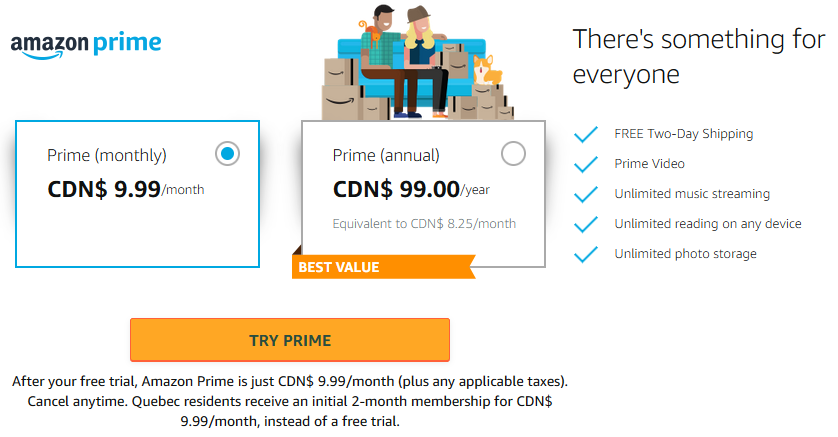
According to a Canadian Press report published in the Toronto Star, Amazon’s Prime price will go up $2 to $9.99/mo. Customers who pay annually will see the price increase by $20 to $99/year.

Existing Prime users will see the price go up starting May 13th, while annual customers will see the increase on their next renewal. New customers looking to subscribe will already have to pay the higher costs.

Amazon Prime gives subscribers free shipping on several items, as well as access to things like the Amazon Prime Video streaming platform, and more. It’s worth noting Amazon also just raised the price of its music streaming service in Canada.

The Star notes that this is the first price increase for Prime since Amazon launched its membership in Canada in 2013.

MobileSyrup has reached out to Amazon Canada for more details about the impending increase.

Source: Toronto Star

Categories
Mobile Syrup

OnePlus reportedly working on a foldable, could be the same as Oppo’s Find N

OnePlus might be working on a foldable, and according to a new rumour, the foldable might be based on Oppo’s Find N hardware.

The news shouldn’t come as much of a surprise. OnePlus and Oppo are both owned by BBK Electronics, which encourages sharing of hardware designs between the companies. Oppo released the Find N foldable in China back in December.

The report comes from Pricebaba and leaker Yogesh Brar (via Android Police), and says that OnePlus plans to base its foldable on the Find N. Moreover, the OnePlus foldable may even be a rebranded copy of the Find N.

Android Police notes that another BBK brand, Vivo, is set to launch its first foldable in China on April 11th. Like OnePlus, Vivo’s foldable could be similar to the Find N.

Considering Oppo and Vivo don’t typically come to Canada, the OnePlus foldable will be an interesting device to watch. Depending on how similar it is to the Find N, it could be our first chance in a while to check out a new foldable not made by Samsung.

Unfortunately, the Pricebaba leak didn’t include any details about OnePlus’ timeline, so we have no idea when to expect the phone. Still, if the company really is working on a foldable, we should learn more soon.

Header image credit: Oppo

Source: Pricebaba Via: Android Police

Categories
Mobile Syrup

Looking back at some of our favourite phones and smartphones [SyrupCast 257]

On this week’s SyrupCast, the team unpacks what their favourite feature phone and smartphones ever are.

This week’s pod squad, Patrick O’Rourke, Brad Bennett and Jon Lamont, all bring unique devices to the table, including long-forgotten feature phones like the Sony Ericsson W810, the LG Rumor 2, the Samsung Vice and more. On the smartphone side, the team talks about Samsung’s ill-fated Galaxy Note 7, the iPhone 4 and, of course, the ‘Jet Black’ iPhone 7 Plus.

As always, you can listen to the show on your favourite podcast platform or watch the video version on our YouTube channel.

Subscribe on Apple Podcasts

Direct download link

Image credit: Sony 

Categories
Mobile Syrup

Razer’s Kaira Pro headphones finally got me to go wireless

After testing Razer’s new Kaira Pro wireless headset for the past few weeks, I think I’ve finally found a pair of wireless headphones I really, really like.

I’ve almost exclusively used wired headphones with my PC for as long as I’ve had it. Mostly that was for gaming, although I did occasionally use wireless headphones when listening to music while working.

That choice typically came down to latency and sound quality — Bluetooth was fine for listening to music, but I always found the quality collapsed when gaming. Moreover, in my tests using Bluetooth headsets while gaming, it always seemed like the audio was ever so slightly off. It was hard to put a finger on exactly what was going on, but wired headsets didn’t have the same problem.
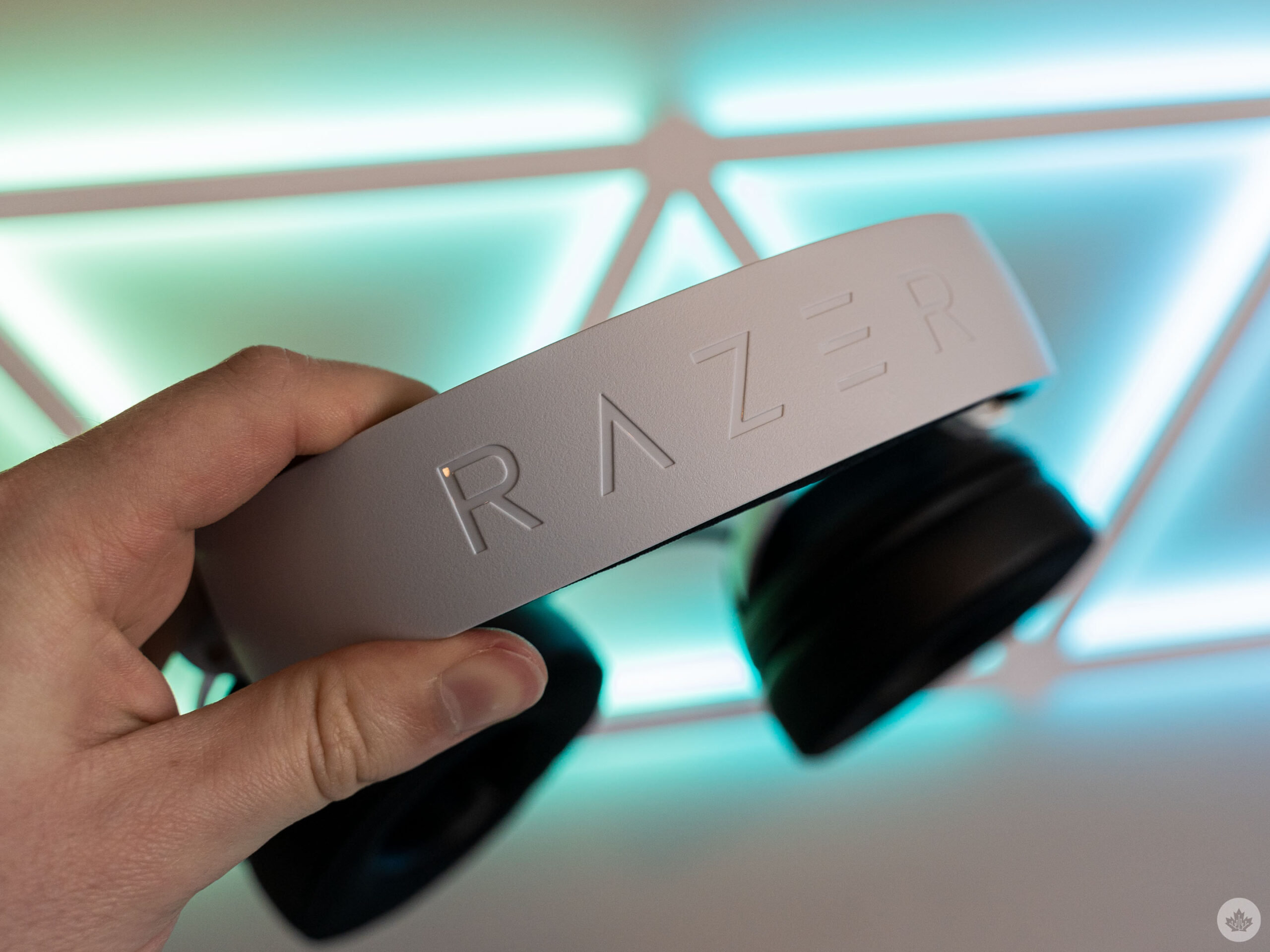
I have now tried several wireless Razer headphones, including the wireless Opus X headphones. Most Razer headphones I’ve tried offer sufficient wireless connections over Bluetooth, or even better, wireless connections to a USB dongle.

What they didn’t offer? Comfort.

Comfort has now taken priority for me, and it’s one of the most important things I look for in headphones, especially if I plan to wear them while working or gaming. Razer’s Blackshark V2 X wired headphones were the king in that regard, and have been my go-to since I tested them about a year ago. No other headphones I’ve tried have come close to matching that comfort. At least, until the Kaira Pro.

Wireless comfort
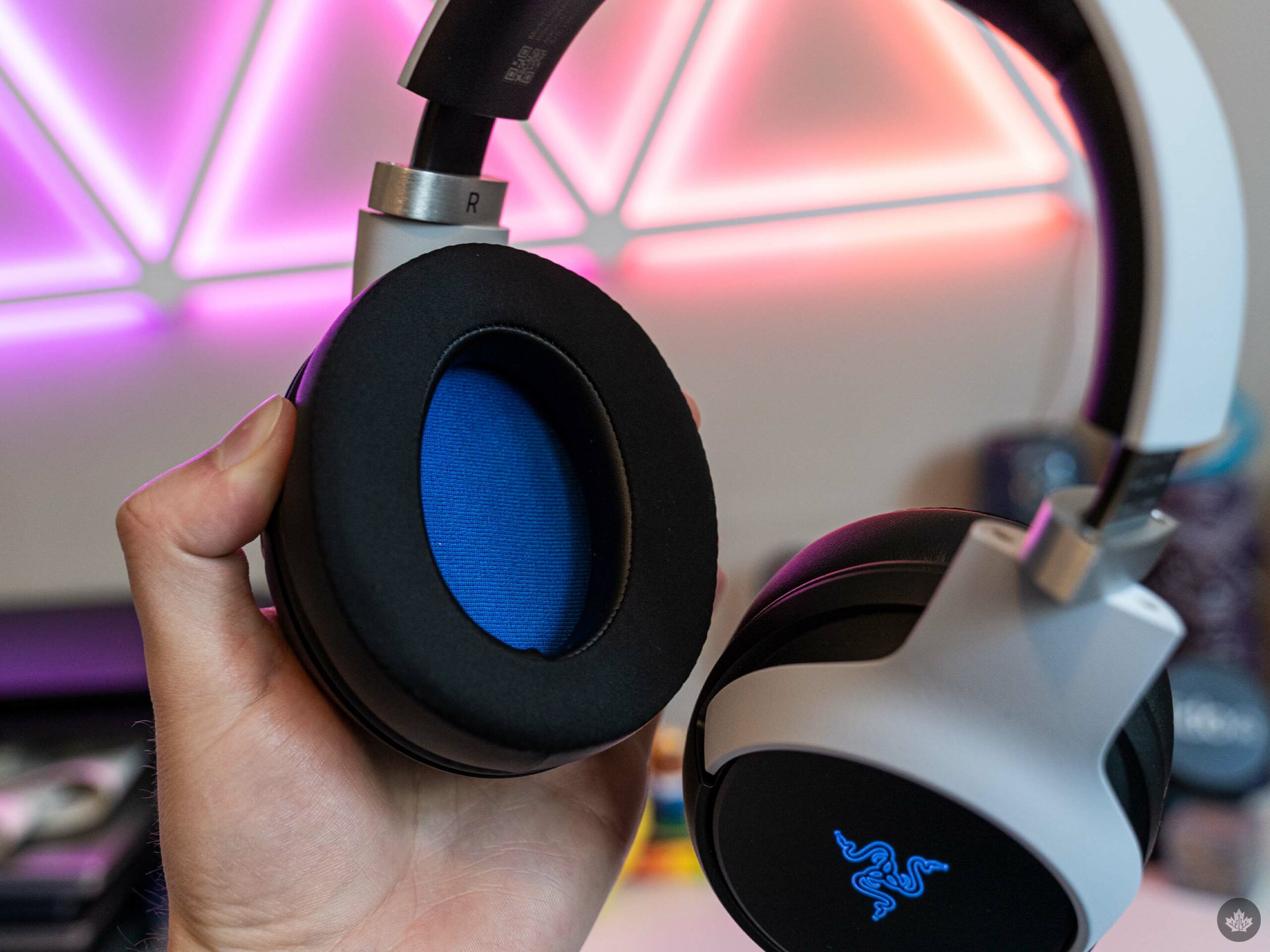
The biggest difference between the Blackshark V2 X and Kaira Pro headphones, at least in terms of comfort, is weight. Naturally, the wired Blackshark headphones are lighter, since there’s no need for a built-in battery.

Beyond that, the Kaira Pro headphones come dangerously close to surpassing the comfort of the Blackshark’s thanks to excellent, plush earcups (which also happen to be the perfect size for my ears), a comfortable headband, and a snug but not-too-tight fit.

Moreover, the Kaira Pro headphones offer a removable microphone, one of my few issues with the Blackshark V2 X headphones. It’s now much easier to get the mic out of my way when I don’t need it since I can just remove it from the Kaira Pro.
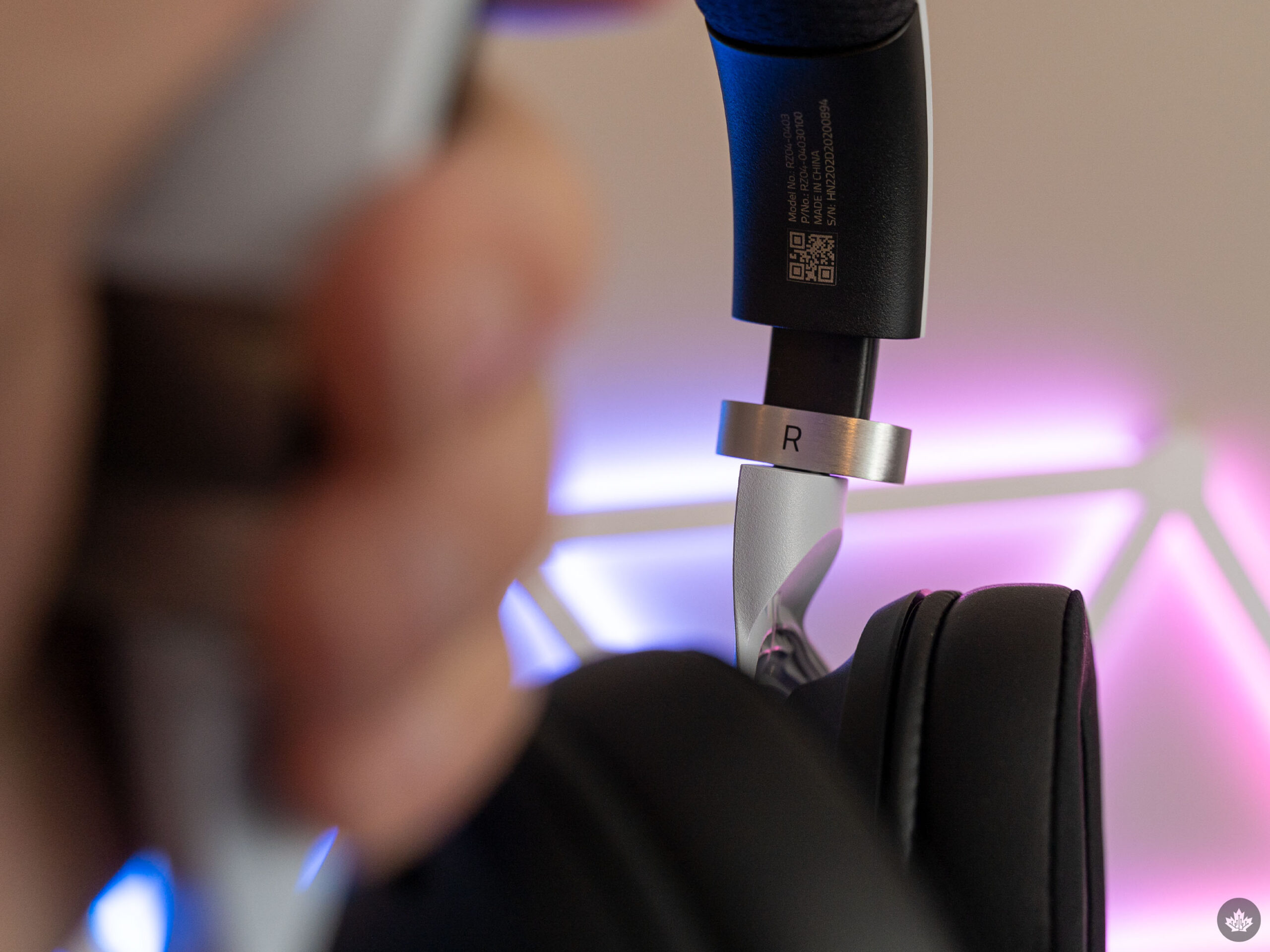
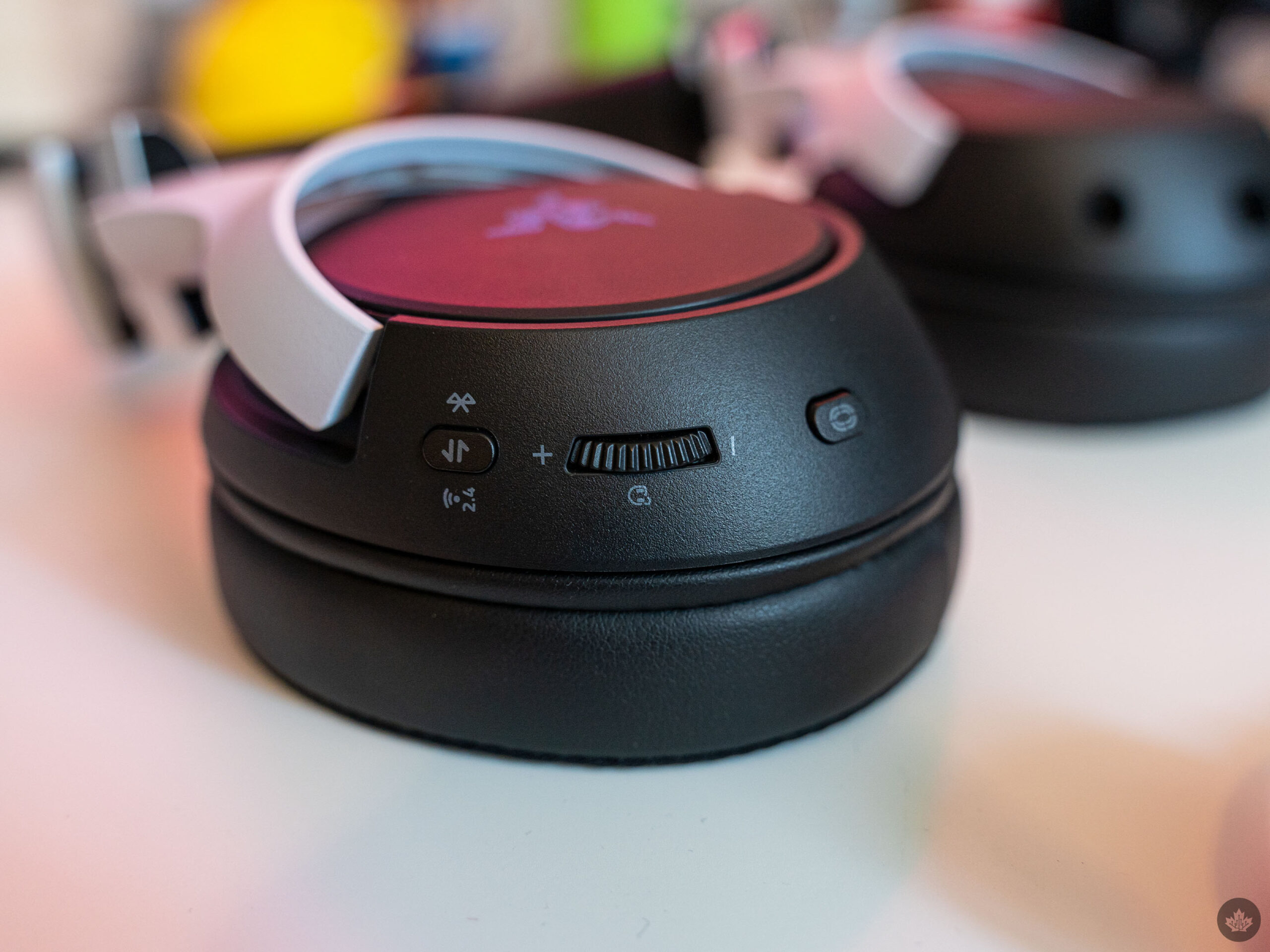
Although comfort is integral — and the Kaira Pro headphones excel there — it’s one of just a few standout features of the headset. The Kaira Pro supports wireless connectivity over Bluetooth and through a USB-C dongle. I prefer using the dongle with my desktop (in part because Windows 11 still struggles with Bluetooth), but having both makes it easy to swap between my desktop and a Bluetooth connection with my smartphone by pressing a button.

Sound so good, you can feel it
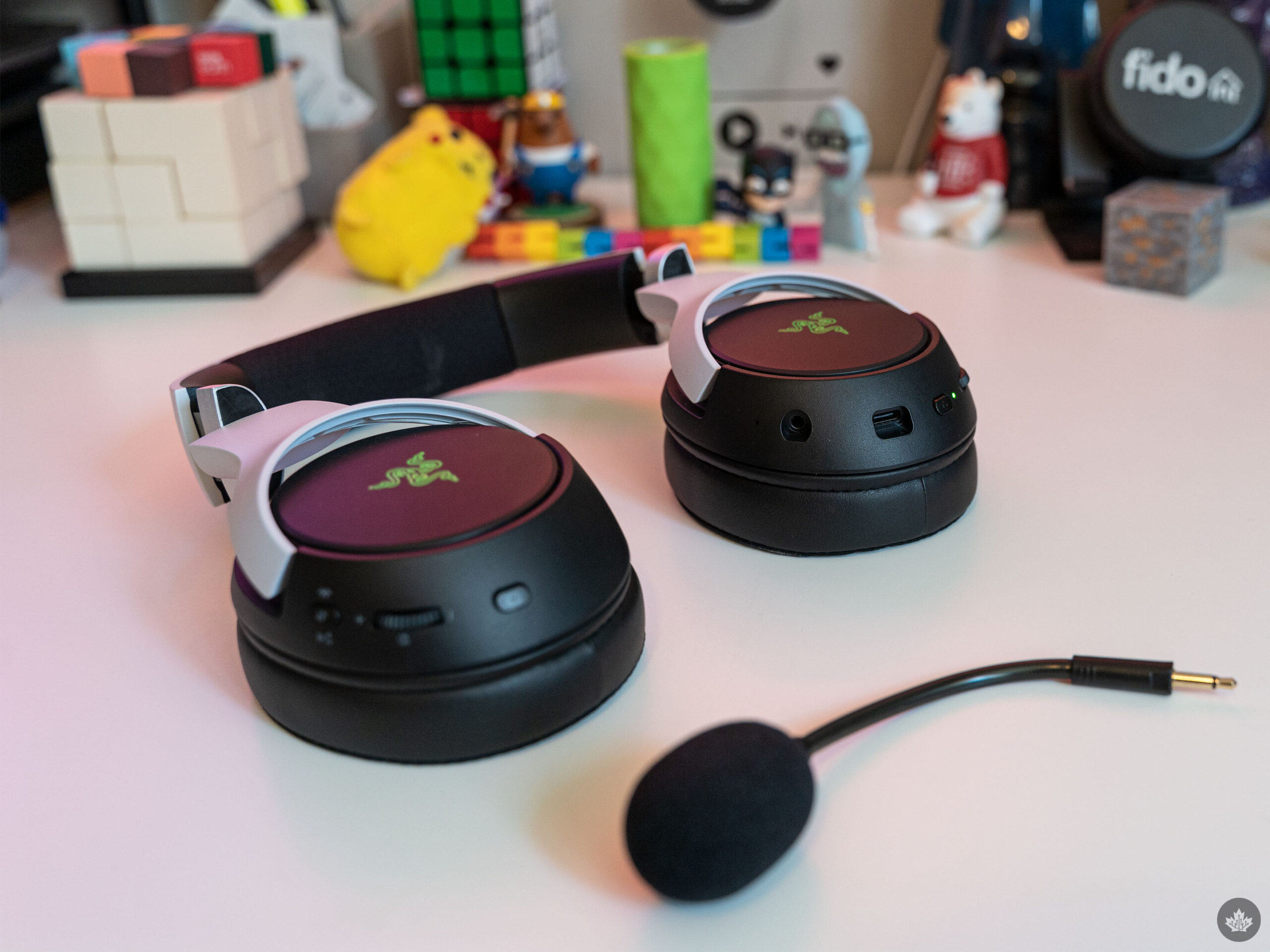
The Kaira Pro headphones also sound excellent. I’d rank the quality on par with, or maybe even slightly better than, the Blackshark V2 X headphones. Are these the best sounding headphones ever? No, but unless you’re a dedicated audiophile who pores over every bit of sound coming from your headphones, you’ll probably like the Kaira Pro just fine.

That said, I found Razer’s ‘HyperSense’ feature interesting. In short, it’s a haptic system that vibrates the earcups based on real-time sound processing. Razer says HyperSense works across devices and content, including games, music, and movies.

Kaira Pro users can enable HyperSense by pressing a button on the headphones and cycle through low, medium, or high intensity. In my testing, I could only feel the HyperSense haptics on high intensity when listening to music (I have to test this while gaming, as I think I only ran it on medium).

When listening to music, the HyperSense added a satisfying rumble to go along with the rolling bass of whatever I was listening to. While nice, I wouldn’t consider this a must-have feature.

Another sound feature offered on the Kaira Pro headphones is a relay that plays your voice through the headset. Dubbed ‘Sidetone,’ users can spin a dial on the right earcup to adjust how loud their voice sounds in their ears. I really didn’t enjoy this feature and ultimately found it distracting. You can turn it off, but annoyingly the headphones don’t seem to remember if you turn it off and constantly turn the feature back on.

Light ’em up!
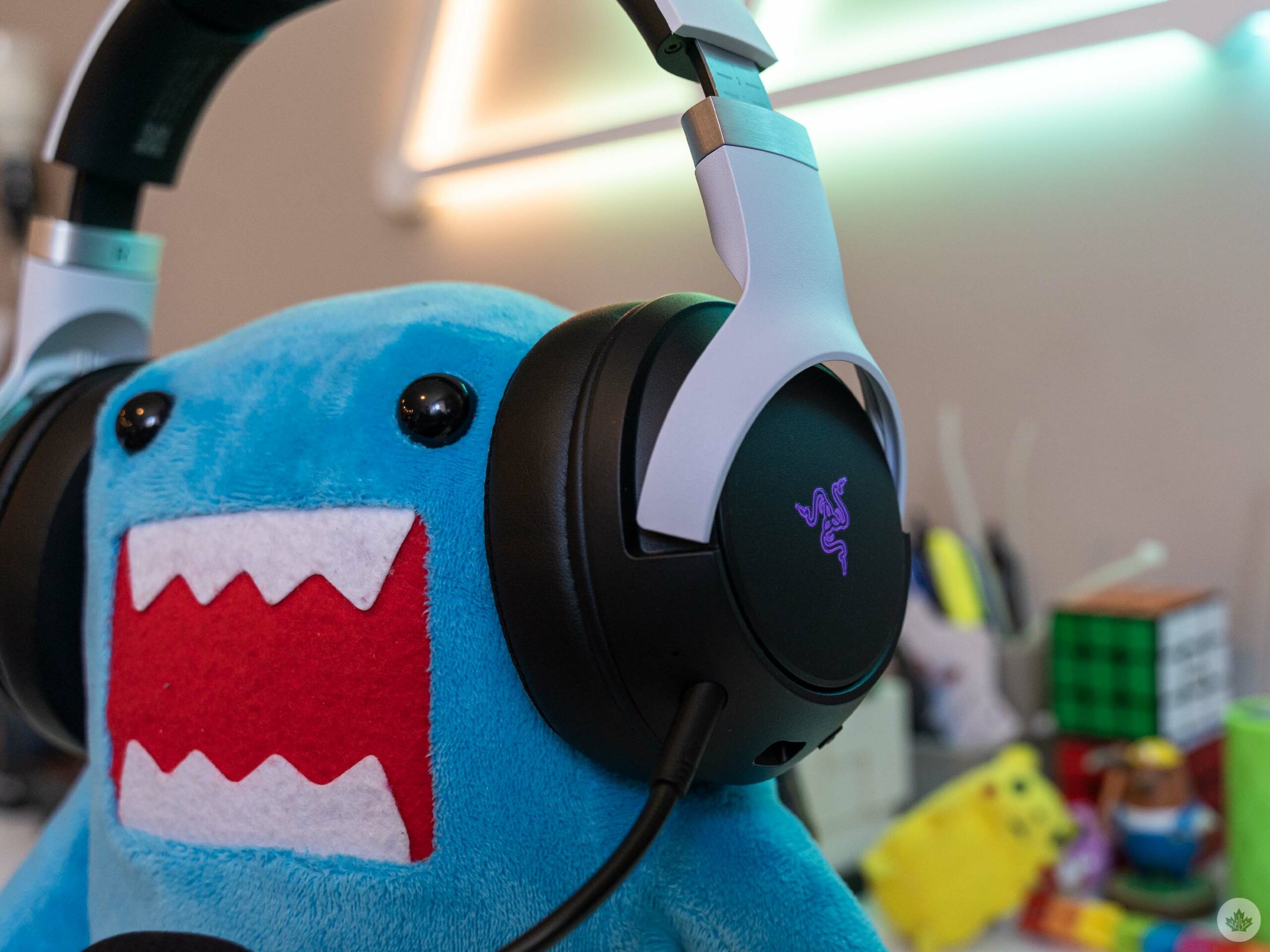
There are a few other Kaira Pro features that are worth mentioning, but honestly don’t mean much to me. First, the headphones support Razer Chroma to customize the colour of the RGB-lit Razer logos on each earcup.

The glowing earcups look cool, but I can’t see them when I’m wearing the headphones and I turn off the Kaira Pro when I’m not using it, so I hardly ever see the RGB lighting. Coupled with the hit to battery life, I’d probably just turn off the lightning, although annoyingly, you need to download Razer’s software to do it. (As an aside, I used the headphones throughout the entire review without downloading Razer’s software and they worked fine, except for a small number of things like this that require the software).

Moreover, Razer notes the battery lasts up to 11 hours with HyperSense and lighting enabled, or up to 50 with both disabled. Heavy users may want to disable HyperSense and the lighting to really extend the life of these headphones.

No noise cancellation, if that matters to you
While we’ve covered several Kaira Pro features, there is one big missing item: noise cancellation. As someone who doesn’t typically use headphones with noise cancellation, I didn’t feel the Kaira Pro was lacking in this regard. Besides, my home office (where I use the headphones) is usually quite quiet anyway. However, anyone who cares about noise cancellation may want to avoid these headphones.

That just about sums up everything there is to say about the Kaira Pro headphones. The ones I tested were designed to work both with Sony’s PlayStation 4 and 5 consoles as well as PC and mobile. Razer offers a different version of the Kaira Pro headset specifically for Xbox consoles, which are $50 cheaper. You can read more about it here.

I didn’t test the Kaira Pro with any PlayStation consoles — the only PlayStation I have is a PS2 — but they were fantastic with PC and I imagine they’d be as good with a PS4 or PS5.

The Kaira Pro headphones cost $249.99 in Canada and are available on Razer’s website.

Categories
Mobile Syrup

Epic Games and Lego join forces to develop a kid-friendly metaverse

Epic Games and the Lego Group are joining forces to make the metaverse a safe place for kids.

As announced in a news release, the two companies are entering a “long-term partnership” that will oversee the development of a family-friendly, immersive and engaging digital experience.

While the two companies did not talk about specifics about the games/experiences they plan to develop, they did state that there are three principles that both the companies have agreed upon to ensure an engaging and safe digital haven:

  • Protect children’s right to play by making safety and wellbeing a priority
  • Safeguard children’s privacy by putting their best interests first
  • Empower children and adults with tools that give them control over their digital experience

Epic already has a kid-friendly virtual world in Fortnite where people come together to hang out, attend concerts, and enjoy crossovers with different brands like Marvel and DC. Combining the game development prowess of Epic Games with Lego, a brand that has long been associated with kid-friendly toys and games, is likely going to be a win-win for both the companies and its patrons alike.

This sentiment was echoed by Tim Sweeney, Epic Games co-founder and CEO. “The Lego Group has captivated the imagination of children and adults through creative play for nearly a century, and we are excited to come together to build a space in the metaverse that’s fun, entertaining, and made for kids and families,” Sweeney said in a statement.

As of right now, there is no tentative time frame for when the partnership materializes into something concrete.

Image credit: Epic Games

Source: Epic Games