Every week, we bring you the top deals from Canada’s biggest tech retailer, and the latest deals are now live at Best Buy. This week’s top deal is a pair of JBL Free II wireless earbuds, which are currently just $79.99 (they’re regularly $219.99).
MobileSyrup utilizes affiliate partnerships and publishes sponsored posts. These partnerships do not influence our editorial content, though MobileSyrup may earn a commission on purchases made via these links.
Researchers uncovered a previously unknown, Russian-linked Android malware that masquerades as a system app called ‘Process Manager’ while collecting a wealth of user data.
According to Lab52 (via Bleeping Computer), the malware is linked to Turla, a Russian state-sponsored hacking group. Turla is known for using custom malware to target European and American systems, typically for espionage. Moreover, Turla was recently linked to the ‘Sunburst‘ backdoor used in the 2020 SolarWinds attack.
Lab52 identified a malicious APK — the file type used for Android applications — called ‘Process Manager.’ It’s not clear how threat actors distribute the APK to users. Based on the connection to Turla, it’s possible threat actors use phishing schemes or social engineering to get the app installed on devices.
Once installed, however, the app disguises itself with a gear-shaped icon to look like a system component. Coupled with the ‘Process Manager’ name, it could be easily mistaken for part of the Android system.
On first launch, Lab52 says the app prompts the user to grant it 18 permissions, including access to location, camera, call logs, SMS, the ability to read and write to storage, and more. With these permissions, Process Manager can effectively gather a huge amount of data about the device’s owner.
Lab52 noted it’s not clear if the app uses the Android Accessibility service to grant itself permissions, or if it tricks users into granting permission.
Further, once the malware gets the permissions, it removes its icon and runs in the background. Interestingly, the app shows a notification saying that it’s running, which seems counterintuitive for a spyware app that would want to remain hidden.
Lab52 also found that the malware installed additional apps on victims’ devices, including one called ‘Roz Dhan: Earn Wallet cash,’ a popular money earning app. The malware appears to install the app using its referral system, likely earning a commission for the creators.
All this seems relatively strange for spyware — Bleeping Computer suggests the unsophisticated nature may indicate the spyware is part of a larger system.
The publication also suggests some ways Android users can protect themselves. For one, check the ‘Permission manager’ feature in the Settings app (on my phone, it’s available in the ‘Privacy’ menu). It’s a good idea to revoke permissions for any apps you don’t trust, or that appear risky. Users should also pay attention to the new camera and microphone use indicators that appear on devices running Android 12. If these indicators show up when you’re not using the camera or microphone, it could indicate the presence of spyware on your device.
Android 13 may add a new feature to embeddable SIM (eSIM) cards that would add another reason to use them over regular physical SIM cards: multiple profiles.
The new feature was uncovered by Esper’s Mishaal Rahman (via Android Police) and would effectively allow users to have multiple active SIM profiles on one eSIM. Called ‘Multiple Enabled Profiles’ (MEP), it’d fix one of the few remaining issues with eSIMs.
eSIM, for those unfamiliar with the tech, is a tiny SIM card built directly into a smartphone. Most modern smartphones have one (it’s very common now for smartphones to offer an eSIM and a physical SIM slot), although carrier support is often a mixed bag.
People with eSIM smartphones can usually activate and de-activate right from an app on their phone and through scanning QR codes, no need to contact carriers or fiddle with removing a SIM tray and adding a physical SIM card.
Currently, however, eSIMs only support one active carrier at a time. Customers can connect multiple profiles to an eSIM, but need to swap between them to switch which is active. Because of this, people who rely on dual SIM cards haven’t really adopted eSIM outside of using in along with a physical SIM card.
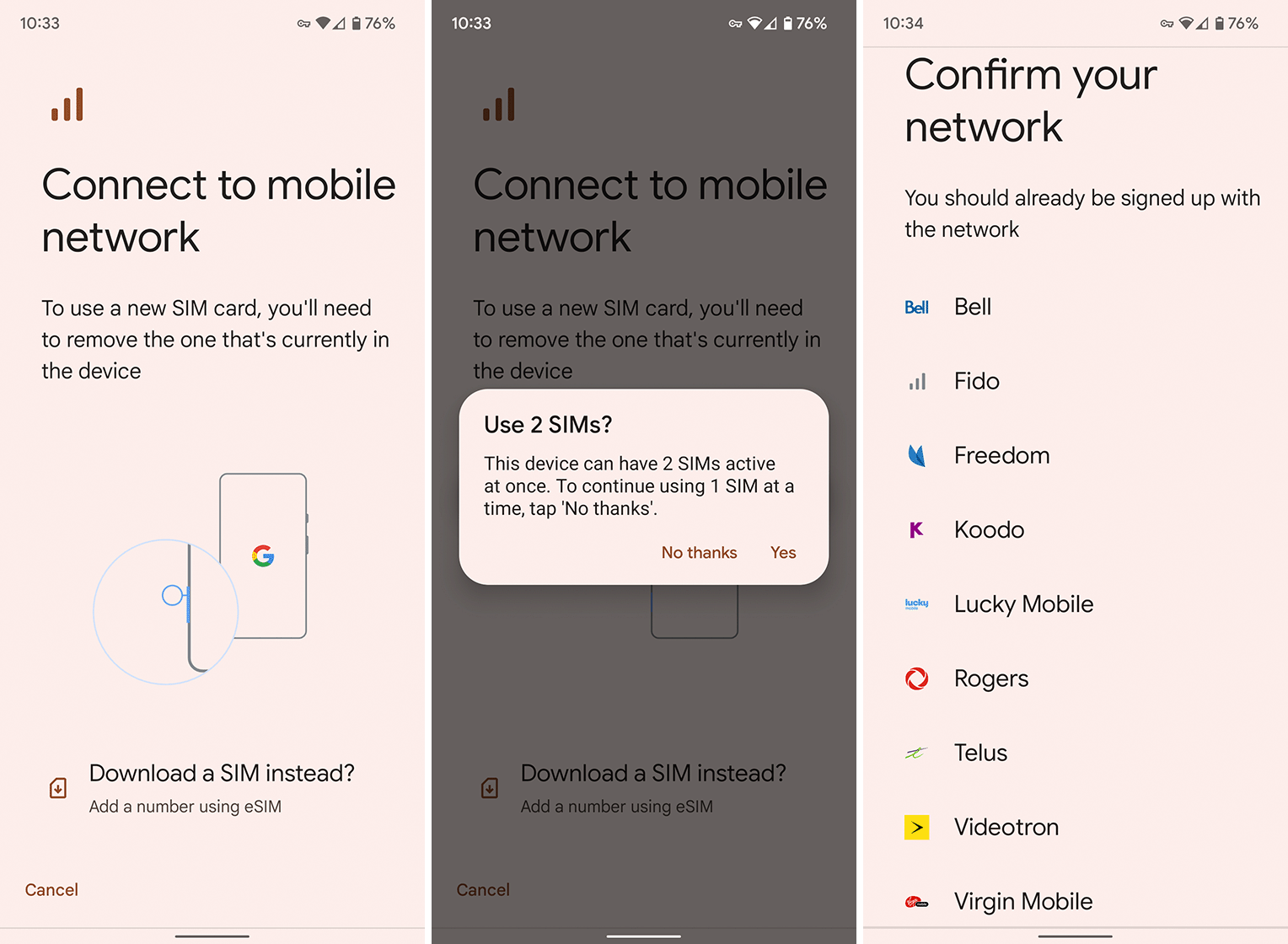
Using one physical SIM and one eSIM in Android 12
It’s worth noting that many phones that offer eSIM and physical SIM slots can operate two profiles at once, similar to phones with dual physical SIM slots. However, Android 13’s MEP feature uses software to run multiple simultaneous SIMs on one eSIM module, removing the need for physical SIM cards or dual-SIM set-ups.
Rahman also noted that some Android 13 APIs for MEP are present in the current developer preview, and it’s likely that Android 13 will launch with support for MEP.
Overall, it’s great news and should be another step forward in ending physical SIMs. Unfortunately, as long as carriers continue to resist the transition, eSIM likely won’t see wide adoption. Several Canadian carriers technically support eSIM, but I have yet to see any actively promote the use of eSIM over a physical SIM, or even give me the choice to use eSIM when signing up for a plan. To be fair, my current carrier (Bell) does give me the option to switch from my physical SIM to eSIM in the self-serve portal, and it appears other carriers do as well, but I had to do a bit of searching to even find the option.
Still, with eSIM being a great way for customers to quickly and easily switch providers and opening up easy access to running dual SIMs (particularly helpful for grabbing temporary plans instead of paying exorbitant roaming fees when travelling), I can see why there’s carrier hesitancy.
The visuals looked awful, the dialogue seemed like it was written by an über-edgy teenager and the characters’ Hot Topic-esque designs were ridiculous, to name but a few common talking points. The memes, largely focused on protagonist Jack’s obsession with killing the demon known as Chaos, were also plentiful.
All of that, coupled with a final trailer that bafflingly featured Frank Sinatra’s “My Way,” led gamers to assume this had to be a “so-good-it’s-bad” sort of experience. As for me? Well, as someone whose all-time favourite gaming series is Final Fantasy, I really didn’t know what to think outside of awkwardly laughing at the trailers.
Having finally beaten the game, though, I’ve come away downright obsessed with it. To be clear: all of the aforementioned issues, plus several more that I’ll get into, are heavily prevalent in the final product. I wouldn’t ever say that Strange of Paradise is by any means a great game. However, it is, undoubtedly, a fascinating one.
I’m only good at being bad, bad
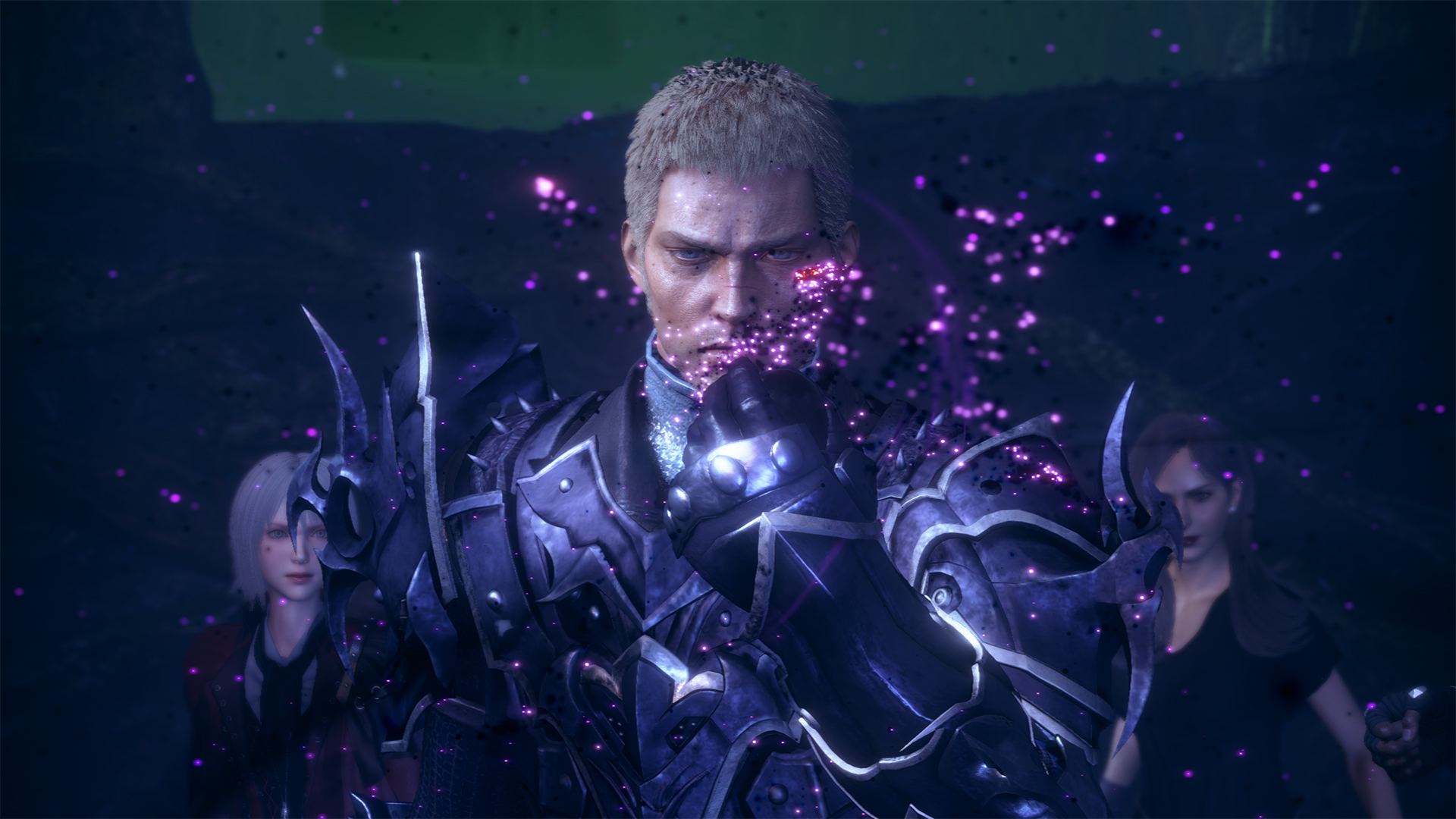
In case you’re unfamiliar, Stranger of Paradise is an action-RPG by Team Ninja, the developer of Ninja Gaiden and Nioh. Notably, it’s actually set in the world of the original Final Fantasy from 1987 follows a group of warriors who set out to stop the villainous Chaos. On top of that, Square Enix has been very clear going into the game about who Jack, surname Garland, really is: the villain of the original Final Fantasy.
That’s the most interesting thing about Stranger of Paradise, and it’s something that differentiates it from a lot of games. Stranger of Paradise, as conceived by Kingdom Hearts and Final Fantasy veteran Tetsuya Nomura and written by Final Fantasy VII scribe Kazushige Nojima, is a villain’s origin story. But not just any bad guy. While we’ve had prequels like Metal Gear Solid 3: Snake Eater and Square Enix’s own Crisis Core: Final Fantasy VII that flesh out villains, I can’t think of a game that does this to such a degree as Stranger of Paradise.
After all, Garland was a villain who maybe had five lines in the original Final Fantasy, which, as a whole, had a rather barebones narrative. To take that same generic antagonist and lean into the wild time travel plot elements to give him a full-blown, complex backstory for him 35 years later? It’s nuts, and I love the game for that. Yes, there are still unintentionally hilarious moments like Jack listening to Limp Bizkit or interrupting a long-winded monologue to shout “I don’t give a f*** who you are!” Without question, there’s some hard tonal whiplash in this game, brought on in no small part due to a fair share of clunky dialogue. The pacing also feels off, with large stretches focused more on monster-slaying than story development.
But looking past all that, Stranger of Paradise has also got a surprising amount of heart. There’s an undeniable layer of tragedy to Jack once you learn more about him, and it proves to be genuinely compelling. The relationships between his comrades, particularly the Dark Elf Astos (another minor character from the original FF), also unravel in some shockingly emotional ways. And the final few hours, in particular, somehow bring everything together in a largely cohesive and satisfying way. So many stories — in gaming or otherwise — are about the hero, so I adore getting a thorough, albeit uneven, exploration of a villain’s journey.
A love letter to the past
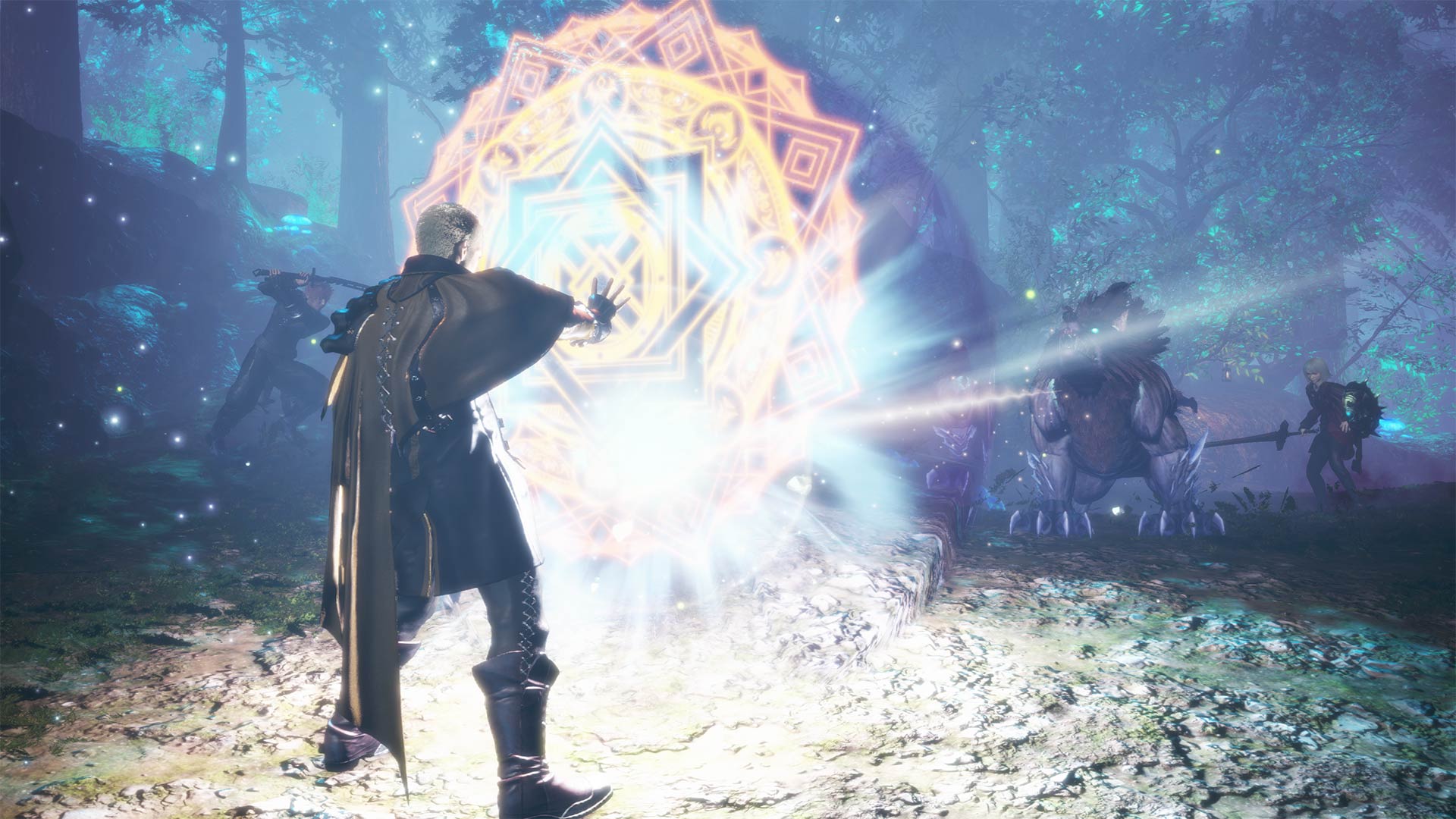
On top of recontextualizing one of the most important games in history, Stranger of Paradise pays tribute to the long-running series that sprung out from it. The coolest way it does this is through 27 different playable jobs pulled from several Final Fantasy games, as well as a few new ones. This means that on top of classics like the sword-based Warrior, restorative magic-focused White Mage or offensive spells-centric Black Mage, you can assume the role of a Samurai, Dragoon and Paladin.
On a visual level, it’s neat to have such stylistically different classes available, but Team Ninja has also done a stellar job in fleshing out their respective abilities to keep gameplay fresh. While there’s some overlap between jobs and their more advanced counterparts (like “Sage” being an amalgamation of White Mage and Black Mage), the majority each have their own satisfying feel. As a Dragoon, my melee attacks become slower in exchange for more range, including the ever-slick ‘Jump’ ability to launch myself towards an enemy. The Samurai, meanwhile, is all about up-close-and-personal sword combos. There are even some tantalizing “gimmick” jobs, like the new Breaker (uses the “Zantestsuken” move from classic FF summon Odin to potentially one-shot enemies) or Dark Knight (deals significantly more damage when HP is low). You can only ever have two jobs equipped at a given point, which constantly encourages you to experiment for delightfully fun combinations.
“Terra Tortura,” a stage inspired by Final Fantasy VI’s Floating Continent.
As a nice touch, Team Ninja also draws from all 15 mainline Final Fantasy games for Stranger of Paradise‘s stages. This includes a floating landmass inspired by Final Fantasy VI‘s Floating Continent, a factory akin to Final Fantasy VII‘s Mako Reactors and a jungle based on Final Fantasy IX‘s Evil Forest. What’s more, remixes of FF tunes from previous games — many originally composed by the legendary Nobuo Uematsu — can be heard throughout. Admittedly, this is all hindered somewhat by Team Ninja’s notoriously bad level design, with Stranger of Paradise featuring remarkably bland and uninspired areas that feel ripped from a PS2 game. Still, I dig the fan service, especially when it’s done in such a neat way; running through some of the “greatest hits” of a series I hold dear offered a lovely dose of nostalgia.
A breath of fresh air
Stranger of Paradise is quite the beguiling game.
On the one hand, all of the internet chatter was completely justified — the game is an occasionally cringe-worthy and often ugly affair. But it’s also got a deceptive amount of heart — both in the tragic story it ultimately tells, and the reverence it shows for what came before it. In an industry that often doesn’t meaningfully honour its own history, I can’t help but appreciate something like Stranger of Paradise. It’s an experiment that’s equal parts bizarre, hilarious, frustrating and bold, but it’s rarely dull, and I wish more companies would take such wild swings with their own iconic properties.
For context, a big reason I gravitated towards RPGs like Final Fantasy as I got older is that the ones I grew up with, Pokémon, remained frustratingly stuck in the past. It was only this year that we got an actually meaningful spin on that formula with Pokémon Legends: Arceus. Final Fantasy, by contrast, has constantly evolved with its mainline entries, and expanded into new genres with spin-offs like Stranger of Paradise. Hell, in the last six months alone, we’ve gotten that (an action-RPG), Chocobo GP (a racing game) and Final Fantasy VII: The First Soldier (a mobile battle royale). While all have their own respective flaws, their variety at least keeps things interesting as we wait for Final Fantasy XVI.
Now, I’m not saying that every franchise should follow Stranger of Paradise to a tee, but that broader willingness to take a chance on a crazy concept is undeniably appealing. While I liked Far Cry 6 a fair bit, the game’s small-scale, roguelike-inspired DLC was arguably more interesting for its departure from series conventions. Respawn had the brilliant idea of taking the Dark Souls and Metroidvania frameworks to create Star Wars Jedi: FallenOrder, something we’d never seen from Star Wars. Omega Force made arguably its best non-Dynasty Warriors game ever when it made the action spin-off Persona 5: Strikers. Hell, Square Enix’s own mega-popular Kingdom Hearts came about because of an outlandish Final Fantasy crossover with Disney.
Admittedly, Stranger of Paradise is seemingly not selling well at the moment, so who knows what the future will bring. I sure hope it doesn’t dissuade Square or other companies from making similar sorts of crazy ventures. Because after all, who doesn’t love a little Chaos?
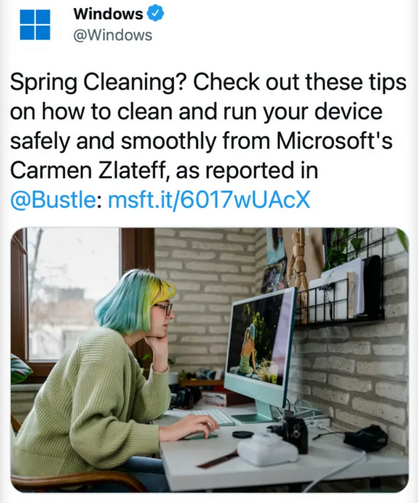
Naturally, not long after the tweet went live, eagle-eyed Twitter users spotted the iMac and started making fun of Microsoft. The tweet reportedly remained up until April 1st, according to 9to5.
You can still view the tweet here on the Wayback Machine.
Doubly funny is that the iMac shown in the picture can’t even natively run Windows. Instead, Apple computers powered by the company’s M1 silicon need to use virtualization software like Parallels to run Windows.
It’s not clear how this all came to be, especially considering Microsoft has its own line of Windows PCs — Surface — it easily could have used to snag a picture for this tweet.
This week, Sony finally unveiled its often-rumoured Xbox Game Pass competitor, called the “all-new PlayStationPlus.” The three-tier subscription platform, which merges PS Plus with PS Now, includes up to 700 games and access to select retro titles when you subscribe to specific tiers. The all-new PlayStation Plus launches in some countries in June, and is coming worldwide at a later date.
We don’t have Canadian pricing yet, but we know how much the service costs in the United States.
U.S. pricing for PlayStation Plus Extra is $14.99 USD (about $18 CAD) monthly/$39.99 USD (roughly $50 CAD) quarterly/$99.99 USD (about $125 CAD) yearly. Plus Extra offers around 400 PS4 and PS5 games with “some blockbuster hits.”
U.S. pricing for Plus Premium is $17.99 USD monthly (about $22 CAD)/$49.99 quarterly (roughly $62 CAD)/ $119.99 yearly (about $148 CAD). This tier includes 340 more games with PS3 titles available via cloud streaming, and some classic titles from the PlayStation, PS2 and PSP era.
Plus Premium will also offer time-limited game trials, allowing you to try out select games before buying them, sort of like the good old days when you could rent titles.
There’s also PlayStation Plus Essential, but this tier is identical to the original PlayStation Plus.
Are you planning to buy PlayStation Plus Extra or Premium? And if you are getting Premium, what retro games are you most excited to see return? Personally, I want to see Tenchu, but let us know your choices in the comments below.
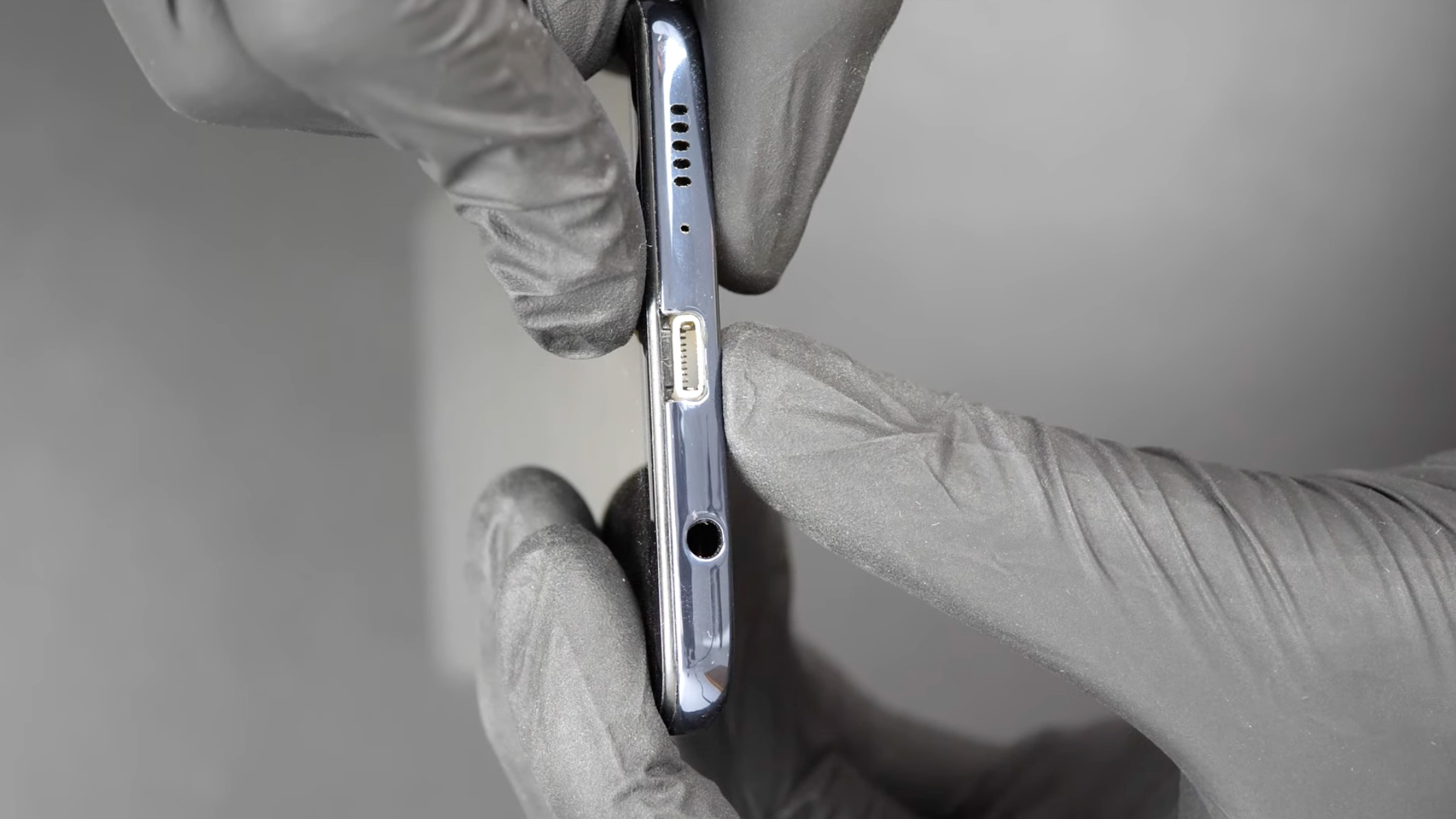
Now, Pillonel has brought Apple’s Lightning port to Samsung’s mid-range Galaxy A51 smartphone. Why? I’m not entirely sure. As first reported by Engadget, Pillonel recently published a short video showing off his project.
In the video, he unplugs a Lightning cable from an iPhone and plugs it directly into his modded Galaxy A51. Miraculously, the device is even capable of a data connection.
Though an obvious effort to sell yet another smartphone for a ton of money, this is still a feat of engineering. It’s unclear exactly how Pillonel made this happen, but it’s also worth noting that the video was published on April 1st, April Fools Day.
That said, Pillonel’s Galaxy A52 Lightning port project seems very real and there are plans to release a “full-length video” regarding the project soon.
SOCAN, the not-for-profit body representing Canadian songwriters and composers, expects to surpass a record-breaking $416 million in annual collections for licensed music in 2021.
At the same time, SOCAN says that writer members who earned royalties last year earned an average of $67.14 from domestic digital sources for the entire year.
New information comes from a SOCAN blog post detailing the unofficial financial highlights for 2021. SOCAN cited expected total collections of $416 million, a six percent increase over 2020. For domestic collections, SOCAN expects $310 million, also up six percent over the previous year. $135 million in collections came from internet use of music.
Moreover, SOCAN notes that it welcome 6,743 new members in 2021 and a total of 273,646 songs and compositions were registered with the organization in 2021.
“Given the challenges of the pandemic, at the end of 2020 we prepared for a financially austere 2021,” said SOCAN CEO Jennifer Brown in the blog post.
“Thanks to a combination of more music being consumed in Canada and worldwide, and the diligence and commitment of our nearly 280 employees – working tirelessly to uncover and collect domestic and international music licenses – we were able to bring in more than ever for our nearly 180,000 members, for their incredible and invaluable work.”
Finally, SOCAN says it’s “cautiously optimistic” for 2022, hoping for the return of in-person events and concerts as countries emerge from the pandemic.
It’s April 1st, the dreaded day when you can’t take anything for its face value, though you can take @LinusTech‘s face and adorn your smartphone with it. What first seemed like a joke is an actual new product from dbrand that you can order right now.
The Canadian phone skin company has released a DIY kit, which essentially, is just the company’s vinyl phone skins, but instead of being pre-cut, dbrand will ship you the whole sheet, and you get to do the hard work of cutting it according to the device you want to stick it on.
The Classic Kit comes with a 1x1ft. vinyl sheet of your choice along with ‘plain packaging’ for $24.95
The Deluxe Kit comes with a 2x3ft. vinyl sheet of your choice along with ‘fancy packaging,’ a Tajima Ruler and a Olfa Knife for $99.95
The latter of the two kits is currently sold out, though the Classic Kit is still available on dbrand’s website. The skins available include ‘Teardown,’ ‘F*** Off,’ ‘Sticker Bomb,’ ‘Linus Face Tips,’ and a range of gloss and carbon colourways. It’s worth noting that there are no leather skin variants, something that recently became a permanent part of dbrand’s online store.
— M. Brandon Lee | THIS IS TECH TODAY (@thisistechtoday) April 1, 2022
If you’re going to order the kit, make sure you watch some videos about how to cut the vinyl sheets properly, otherwise you’ll end up with phone that looks like Brandon Lee‘s in the the Tweet above.
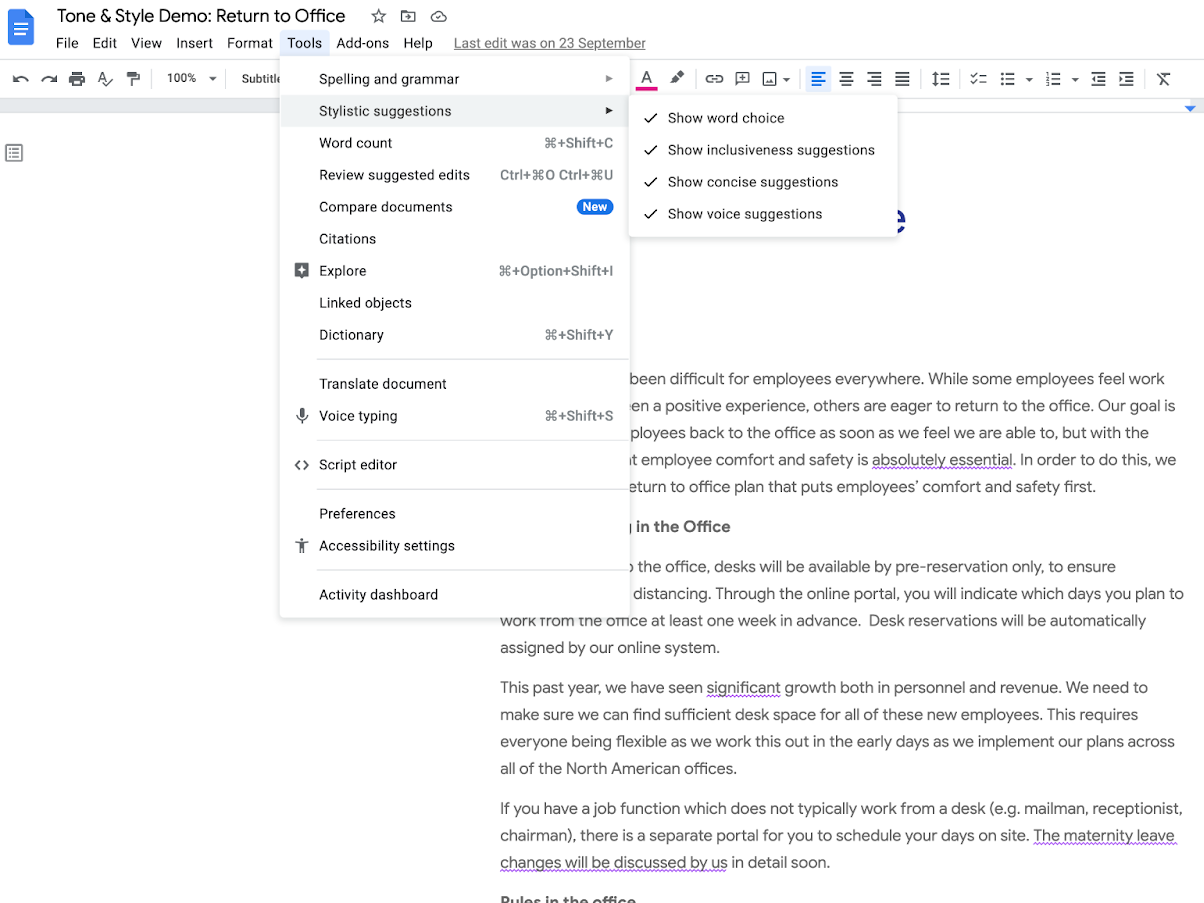
Google Docs users are long familiar with the red and blue squiggly underlines that pop up on their text from time to time. But some users will soon see a third colour added to the mix; purple.
The new feature will highlight tone and style and go along with spelling (red) and grammar (blue) suggestions.
“Suggestions will appear as you type and help guide you when there are opportunities to avoid repeated or unnecessary words, helping diversify your writing and ensuring you’re using the most effective word for the situation,” the company states in a blog post.
Image credit: Google
But the feature won’t be available to all users. Only those subscribed to Business Standard, Business Plus, Enterprise Standard, Enterprise Plus, and Education Plus plans will have access.
This is the latest feature Google has added to the popular application.