Categories
Mobile Syrup

Trade-in your old PS4 and reserve a PS5 bundle at GameStop

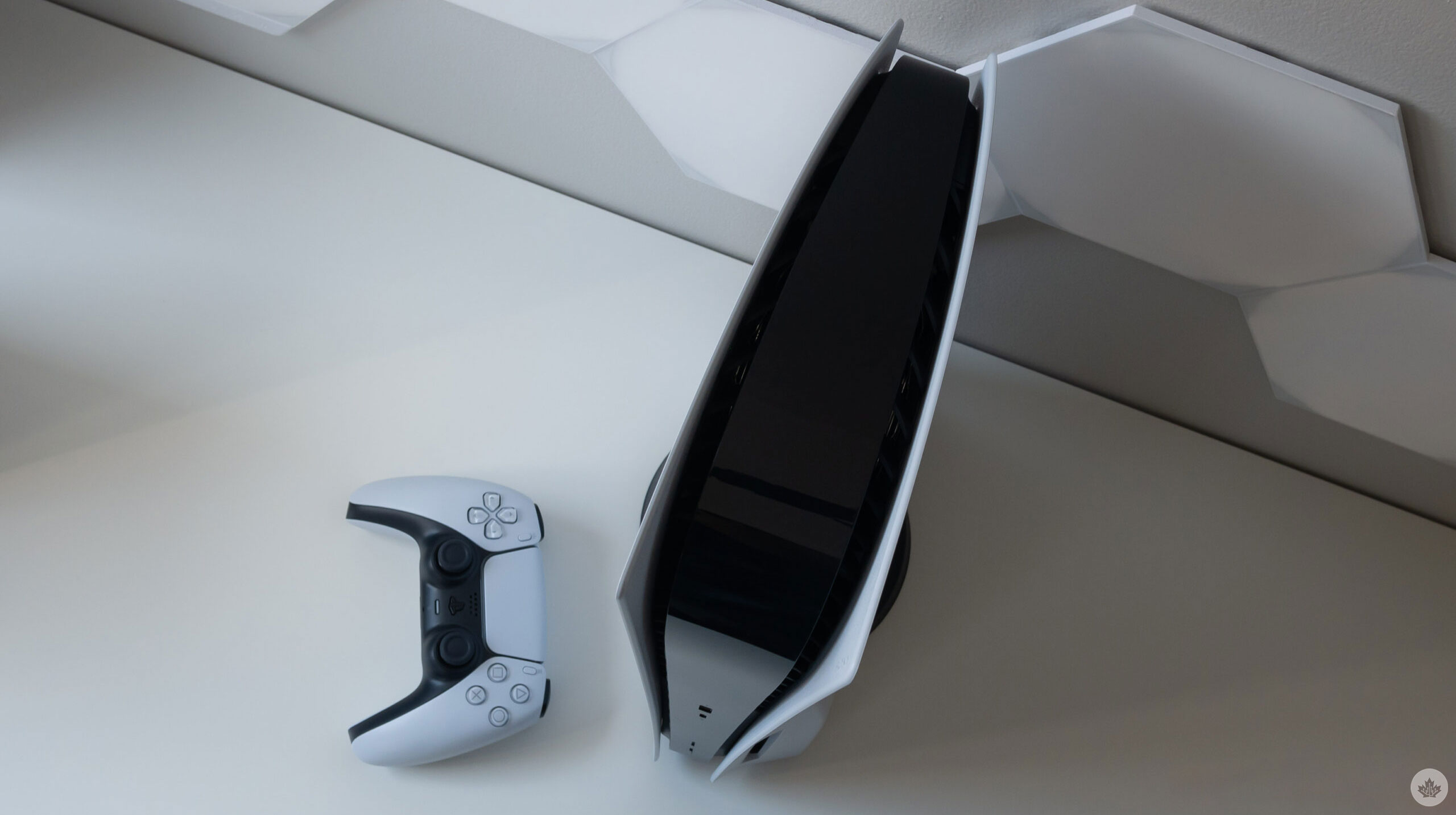
Its been almost one-and-a-half years since Sony released the PlayStation 5, and yet, gamers are struggling to get their hands on the current-gen console. Retail restocks usually sell out in a matter of minutes and scalpers have the consoles listed for exorbitant amounts on websites like eBay.

EBGames GameStop is currently offering a promotion where you can trade in your old PlayStation 4 towards a PlayStation 5 bundle, and get on the waitlist/line to secure it.

Available only in-store, exchanging your used PlayStation 4 can net trade-in credit towards purchasing the PS5 console bundle.

GameStop’s website doesn’t mention the trade-in value of the last-gen console. Last time the store had a similar promotion, it was offering $299.99 for a PlayStation 4 500GB, $329.99 for a PlayStation 4 Slim 500GB, $349.99 for a PlayStation 4 Slim 1TB and $449.99 for a PlayStation 4 Pro 1TB.

According to Twitter user @NoDunksJD, GameStop is currently offering $225 for the PlayStation Pro 1TB and $175 for the PlayStation 4 500GB Slim. While trading in your old console wouldn’t net you much in value, it is sure to reserve your spot to secure the PS5 bundle.

It goes without saying that you’ll get the trade-in value only if the console is in full working condition with no alterations. Further, according to GameStop, the console’s hardware shouldn’t have been tampered with.

It’s worth noting that you can use the credit only towards buying a new PlayStation 5 bundle. If GameStop doesn’t have the current-gen console in stock, then you’ll have to wait until the bundles are available. The promotion starts on March 28th and is expected to end on April 3rd. Find the promotion on GameStop’s website here.

Categories
Mobile Syrup

Sony WH-1000XM3 headphones on sale for $199.97 at select Costco locations

If you’re in the market for a nice set of new Sony noise-cancelling wireless headphones, you might be able to pick some up for about 50 percent off at Costco.

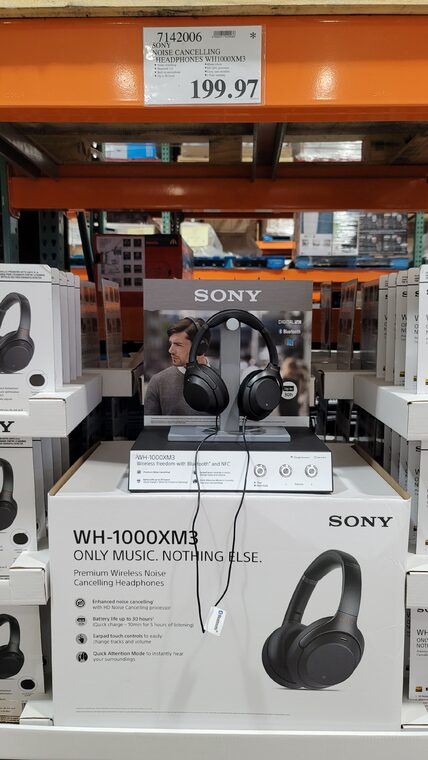
Spotted by RedFlagDeals user ‘tonershop‘ (via iPhone in Canada), the Barrie Costco location has Sony’s WH-1000XM3 headphones on sale for $199.97. That’s nearly half as much as they usually cost.

Of course, the offer has strong ‘your mileage may vary’ energy. I did a quick search on Costco’s website and couldn’t even find the XM3s listed at all (I did find the newer XM4s for $348, itself a decent deal, but not quite as good as half off).

Image credit: RedFlagDeals user ‘tonershop

You can typically find the XM3 headphones for around $450, but Amazon Canada has them for $348 right now. Still, Costco’s deal is the best if you can find them in a location near you.

The WH-1000XM3s are widely considered among the best wireless headphones available, offering excellent sound quality, touch controls, up to 30 hours of battery life and, of course, noise-cancelling.

You can check out the deal here.

MobileSyrup utilizes affiliate partnerships. These partnerships do not influence our editorial content, though MobileSyrup may earn a commission on purchases made via these links.

Source: RedFlagDeals Via: iPhone in Canada

Categories
Mobile Syrup

Google will let you opt-out of beta program without wiping your Pixel

Google is changing its Android Beta Program to allow you to opt out of the program before an update is rolled out. This issue comes from the Android 12 QPR3, where beta users initially in the Android 12 beta were forced into the Android 12 QPR3 without offering them a chance to head to the stable release.

Out of nowhere, Google released a new Quarterly Platform Release beta, which allowed users to try out upcoming Pixel feature drops ahead of time. Unfortunately, if you were part of the Android 12L beta, you’d be forced into the Android 12 QPR3 without ever getting the chance to try the Android 12L stable build.

Going to the stable version requires a complete wipe of your device, and the only way around is if you had a version of QPR1. Google told 9to5Google that from now on, it would give beta devices a way to opt-out without a data wipe for a limited time before they apply the next update.

Google’s next beta program update and feature drop aren’t until June, so you’ll have to wait until then before you can opt out from QPR3.

The Android Beta Program allows Pixel users to access an unreleased version of upcoming OS releases. They can try out new features and report bugs so they don’t make it to the public version. When the official OS is released, Google pushes out an update that unregisters the user from the program that forces them into the stable version of the OS.

Source: 9to5Google

Categories
Mobile Syrup

PlayStation could reveal its game subscription service next week

A new report indicates that Sony could reveal its Xbox Game Pass-like PlayStation subscription service as early as next week.

According to Bloomberg, PlayStation’s Xbox Game Pass competitor will receive an official reveal soon. The publication was also the first to report that Sony is working on the service under the codename ‘Spartacus.”

Bloomberg’s report says that PlayStation’s game subscription platform will offer a “splashy lineup of hit games” and that it will merge PlayStation Plus (Sony’s online/game subscription platform) and PlayStation Now (game streaming) under one umbrella.

The report indicates that Sony plans to offer multiple subscription tiers. For example, the first tier will include online multiplayer and free monthly games, making it seem nearly identical to the current version of PlayStation Plus. However, more expensive tiers will offer a wider library of games, with the most expensive option featuring a collection of PS1, Ps2, PS3 and PSP titles, and the ability to stream games and play demos.

It’s important to note that unlike Xbox Game Pass, Sony reportedly has no plans to release first-party games on its subscription service on day one. For example, it’s unlikely that Sony Santa Monica’s upcoming God of War Ragnarok won’t be available on the subscription service when it releases.

Source: Bloomberg

Categories
Mobile Syrup

Sweeping EU tech legislation could force messaging apps to work together

The big news in tech today is that the European Union (EU) reached an agreement on its ‘Digital Markets Act’ (DMA) that aims to “make the digital sector fairer and more competitive.”

Like the EU’s GDPR, the DMA will have wide-reaching impacts, specifically on the world’s biggest tech companies: Google, Apple, Amazon, Meta (Facebook), etc. At least, it will in the EU — Canadians likely won’t be directly impacted, although some of the new regulations in the DMA may have knock-on effects outside Europe (more on this at the end).

To start, let’s dig into some of the biggest changes the DMA brings to tech in Europe.

EU comes for Big Tech

The DMA is set up to target what the EU calls “gatekeepers,” defined as companies controlling one or more core platform services in at least three EU members states. Google’s and Apple’s smartphone app stores are great examples of this since they’re core services available in multiple European countries. However, services like search engines, social networks, cloud services, advertising, voice assistants, web browsers, and more also fall under this umbrella.

Along with the gatekeeper focus, DMA has certain revenue, valuation, and active user thresholds companies need to meet before the regulations take effect. These requirements mean the DMA almost exclusively applies to big tech companies like those mentioned above.

The DMA also outlines punishments for companies that don’t play by the rules. The legislation spells out fines of up to 10 percent of a company’s global turnover, and up to 20 percent for repeat offenders. Companies that fail to comply at least three times in eight years can be subject to a European Commission market investigation and, “if necessary,” the commission could break up those companies or prevent them from making new acquisitions.

Rules target data sharing and default apps

Some of the new rules in the DMA are fairly straightforward. For example, the DMA now requires that companies allow users to use only specific parts of their services with the ability to unsubscribe from other parts. Android Police suggest using YouTube but not Gmail or Android as an example of this.

Moreover, under the DMA, companies must explicitly ask users for permission to use their data across different services.

Perhaps one of the more significant requirements of the DMA is that core software can no longer be the default upon installation of an operating system. For example, that would mean no more default web browsers — a blow to both Google’s Chrome and Microsoft’s Edge.

That said, it’s worth noting the EU has already forced Google to unbundle Chrome and Search on Android devices sold in the EU. Instead, users get to choose their preferred browser and search engine during set-up. I’m interested to see how this particular rule will apply to things like Chrome OS, where the operating system and browser are effectively the same thing.

However, this rule applies to hardware too. For example, the DMA requires that developers be able to access supplementary smartphone functions like NFC chips. That’s a blow to Apple, which only allows its payment services to work with the iPhone’s NFC chip. Under the DMA, the chip would become accessible to third-party payment services.

Message interoperability is an interesting, but troublesome addition

One of the most significant additions in the DMA is a requirement for companies to “ensure the interoperability of their instant messaging services’ basic functionalities.”

In other words, messaging services would need to open up their platforms to allow cross-service messaging. On the one hand, this seems like it’d potentially solve the frustrating problem of trying to get all your friends using the same messaging service. On the other, it would likely be a total nightmare to implement.

Just off the top of my head, that’d mean opening up iMessage, WhatsApp (and Meta’s various other chat apps), Telegram, Signal, Google’s RCS system and Hangouts, and many more, to somehow work with each other (although some of the smaller services may be exempt from the DMA). It’s not impossible — WhatsApp and Signal, for example, rely on the same method for encrypting messages and so theoretically could be interoperable. Meta is also working to tie all of its chat apps together so WhatsApp, Instagram, and Facebook users can all get messages in one place.

Aside from the technical complexity of making interoperable messaging, there’s the question of whether developers would even want this. For example, Signal prides itself on its encryption and security — the app is often used as a messaging tool for journalists to securely contact sources. But if it were to become interoperable as per the DMA, it could pose a risk to the encryption and trust Signal has built up over years if suddenly those messages are tied into a system also used by Meta and Google.

Assuming message interoperability is implemented well with strong encryptions and protections for consumers, I could see a unified system generally being a net positive. But, I have my doubts that’s what we’ll get.

Will the DMA impact Canadians?

The short answer is probably not, although as with anything, it’s complicated. My best guess is that the DMA will not directly impact Canadians, although some of the broader requirements of the new regulations may have ripple effects.

I think it really depends on how deep changes will need to go. Things like the new default apps requirements will likely not reach beyond Europe, judging by how Google handled its previous unbundling of Chrome and Android in the EU.

At the same time, I think requirements like messaging interoperability could extend beyond the EU considering the technical complexity of implementing such a solution. If companies have to go through all the work of making messaging platforms work together in the EU, why not expand that capability to other countries too?

Finally, as noted by The Verge, the DMA hasn’t passed yet. The EU still needs to finalize the language of the legislation before it’s approved by Parliament and Council. However, the DMA could come into force sometime in October, so it’s not that far out. If and when the DMA does pass, I expect some companies will challenge it. Plus, the EU will likely grant companies time to meet the obligations of the legislation.

It’ll be interesting to see how this all plays out and, if the DMA is successful, it may pave the way for restrictions on big tech in other countries too.

Header image credit: Shutterstock

Source: Android Police, The Verge

Categories
Mobile Syrup

OG Google Pixel gets new lease on life with Android 11 via LineageOS

If you’re still clinging desperately to the original (and in many ways, best) Google Pixel, you may be able to give it a new lease on life.

That is, if you’re willing to dabble with custom Android ROMs.

Google stopped officially supporting the original Pixel and Pixel XL back in 2019 after rolling out the Android 10 update. However, the team behind LineageOS — a free, open-source, Android-based mobile operating system — has brought Android 11 to the OG Pixel with LineageOS version 18.1.

Spotted by XDA Developers (via Android Police), official LineageOS builds are now available for the Pixel and Pixel XL, bringing both phones into the long list of devices supported by LineageOS. Those who want to extend the longevity of their Pixel or Pixel XL can use Lineage to get on a more up-to-date version of Android with new security fixes.

Of course, with custom Android ROMs, nothing is ever that simple. To install LineageOS, you’ll need to unlock your devices’ bootloader, install a custom recovery, and load the custom ROM file. Plus, LineageOS doesn’t ship with Google apps like the Play Store, so you’ll need to install a ‘GApps’ package if you want Google services.

I haven’t done anything like that for years, so I feel a bit out of my element writing about it. That said, there are plenty of guides and how-tos available online (XDA links to a couple if you want to try). As always, make sure you back up your data first so you don’t lose anything, and be aware there are risks with installing custom software like this.

Ultimately, it’s neat to see the OG Pixel live on with custom software. While not a perfect phone, I really appreciated the look and feel of it back when I used one as my daily driver. Plus, I still think the slight wedge shape that allowed the Pixel to not have a camera bump was a great design choice (one I would love to see return to Google’s Pixel line, although I doubt it ever will).

For those who don’t use an OG Pixel, LineageOS does support a wide range of devices from manufacturers including OnePlus, Razer, Sony, Asus, Xiaomi, Lenovo, and more. It remains a solid choice for people with older phones no longer receiving official support.

The LineageOS team is working on version 19 based on Android 12, although Android Police notes it won’t arrive anytime soon.

You can learn more about LineageOS here.

Source: XDA Developers Via: Android Police

Categories
Mobile Syrup

Spotify says it paid out $7 billion in royalties to artists in 2021

Streaming music platform Spotify says it paid $7 billion USD (roughly $8.7 billion CAD) in royalties to rights holders last year, according to the company’s latest transparency report on its ‘Loud & Clear‘ website.

This follows several reports that the music streaming giant continues to pay artists minuscule royalty amounts.

Here are a few notable facts from the report:

Spotify’s royalty payments went up $2 billion USD (about $2.5 billion CAD). This is an increase from $5 billion (about $6.2 billion CAD) last year.

The streaming service says that it pays rights holders like record labels and distributors, who then in turn, pay artists.

Spotify says that over 1,000 artists made more than $1 million USD (roughly $1.2 million CAD) through royalties on its platform

The streaming platform says that 28 percent (52,600) of artists that self-distribute on its platform and that do not have a record deal, earned over $10,000 (approximately $12,500 CAD). Further, 16,500 artists earned $50,000 (about $62,000 CAD) in royalties in 2021.

Like last year’s report, Spotify has also released a calculator where artists and fans can input a monthly listener count to compare their song streams to the rest of the platform.

Unsurprisingly, the entire report is extremely positive and neglects to mention the thousands of artists that aren’t pulling in a ton of cash every month. It’s also worth mentioning that these figures don’t include the final amount of money an artist receives after labels and publishers take their cuts.

Source: Spotify 

Categories
Mobile Syrup

Users notice vibration intensity issue after Pixel 6’s March update

In December, the Mountain View, California-based company released an update that severely impacted the calling experience for Pixel 6 series devices. Now it looks like the March update has also come with its own little bug. According to Droid-Life, the March Pixel 6 update has caused the haptic and vibration intensity in the Pixel 6 to diminish.

Droid-Life says that a reader was the first to point it out, but since then, they’ve started hearing it from multiple readers and seeing the issue appear in a handful of threads. Some users are reporting that vibrations are getting so weak that they are missing notifications or calls, even when the intensity is turned up to its highest setting. Others have said that the vibration intensity depends on the app as well.

However, Droid-Life has suggested that this might be a new feature and not a bug. Some users have noticed that the vibration seems to have a soft build-up and then peak to a higher intensity, and say they like this new pattern. While other users have said, this issue initially appeared in the Android 12L beta and has made it to the 12L stable version, which was packed with the March update.

And weird enough, Google’s community post now says that it fixed an issue causing weaker haptic feedback, which was not there initially. The new line, according to Droid-Life, was added on March 8th.

At MobileSyrup, our Pixel 6 users have not noticed any differences with their handsets, so perhaps this issue isn’t hitting everyone.

Let us know in the comments below if you’ve noticed any problems with your Pixel 6’s vibration intensity.

Source: Droid-Life 

Categories
Mobile Syrup

Chatr flash sale offers 3GB of bonus data per month for six months

Rogers’ flanker brand Chatr is back with another flash sale until March 31st. This time around, customers can get 3GB of bonus data per month for six months on a new activation.

According to the Chatr website’s fine print, “new activations on Talk, Text & Data plans priced $35 and above” are eligible for the data bonus. However, the bonus will expire if customers’ accounts become inactive or if customers change their plan before the end of the six-month period.

You can check out Chatr’s plan options below:

  • $70/mo 20GB + 3GB bonus, Unlimited Canada/U.S. Talk
  • $60/mo 15GB + 3GB bonus, Unlimited Canada/U.S. Talk
  • $50/mo 10GB + 3GB bonus, Unlimited Canada/U.S. Talk
  • $40/mo 4.5GB + 3GB bonus, Unlimited Canada-wide Talk
  • $35/mo 2.5GB + 3GB bonus, Unlimited Canada-wide Talk

It’s worth noting that all of Chatr’s plans include unlimited text to Canada, U.S., and International numbers, call display, call forwarding, and group calling. Plus, for customers who need just a little more data, subscribing to Chatr’s auto-pay service will give you an extra 500MB per month.

Moreover, Chatr had a flash sale last weekend as well where it offered 4GB of bonus data per month for four months. However, this deal is slightly better — you get 1GB less per month, but thanks to the extra two months the offer lasts, you end up with 4GB more data total.

You can check out the deal here.

Categories
Mobile Syrup

Where to watch the 2022 Oscars in Canada

Following last year’s scaled-back ceremony, the Academy Awards are coming back in full force in 2022.

Taking place on March 27th at 8pm ET at the Dolby Theatre in Los Angeles, the 94th Academy Awards will, for the first time since 2018, feature a host. Three, in fact — Amy Schumer, Regina Hall and Wanda Sykes.

How to watch

In Canada, Bell once again holds the exclusive rights to the Oscars, so the show will air on the media giant’s CTV network. This includes CTV’s channel on TV for cable subscribers, and streaming online for free on CTV.ca and the CTV app on Android and iOS.

Leading up to the main event at 8pm ET, Bell’s eTalk entertainment show will also have special Oscars coverage on TV, CTV.ca and in the CTV app. This includes “eTalk Previews the Oscars 2022” at 5:30pm ET (featuring interviews with Canadian director Denis Villeneuve, Andrew Garfield and more) and red carpet coverage from 6:30pm until the show begins.

What’s nominated

For context, here are the 10 films up for Best Picture:

  • Belfast — Laura Berwick, Kenneth Branagh, Becca Kovacik and Tamar Thomas
  • CODA — Philippe Rousselet, Fabrice Gianfermi and Patrick Wachsberger
  • Don’t Look Up — Adam McKay and Kevin Messick
  • Drive My Car — Teruhisa Yamamoto
  • Dune — Mary Parent, Denis Villeneuve and Cale Boyter
  • King Richard — Tim White, Trevor White and Will Smith
  • Licorice Pizza — Sara Murphy, Adam Somner and Paul Thomas Anderson
  • Nightmare Alley — Guillermo del Toro, J. Miles Dale and Bradley Cooper
  • The Power of the Dog — Jane Campion, Tanya Seghatchian, Emile Sherman, Iain Canning and Roger Frappier
  • West Side Story — Steven Spielberg and Kristie Macosko Krieger

It’s worth noting that of those films, Don’t Look Up and The Power of the Dog come from Netflix, while CODA is an Apple TV+ title. On top of that, many industry experts are predicting that the Best Picture race is down to CODA and The Power of the Dog. Assuming that pans out, this would mean that, for the first time ever, a streaming film would take home the Oscars’ top prize. Many are giving the edge to CODA for its emotional story about a young girl and her deaf family, which would mean that Apple — a company best known for making technology like the iPhone — could add “Best Picture Winner” to its legacy.

Outside of that, special mention should go to some of the Canadian nominees, which include:

  • Denis Villeneuve — the Quebec-born director and producer of Dune
  • J. Miles Dale — Toronto-born producer of Nightmare Alley (which was also filmed in Ontario)
  • Ben Proudfoot — Halifax-born filmmaker of The Queen of Basketball (nominated for Best Documentary Short)

A more in-depth breakdown of the Canadian nominees can be found over on The Hollywood Reporter.

The full list of 2022 Oscar nominees can be found here.

Who’s presenting

Of course, Oscar viewers like to see big-name stars during the show, even those who aren’t nominated. With that in mind, some of the confirmed presenters are Mississauga’s Simu Liu, Pickering, Ontario’s Shawn Mendes, Halifax’s Elliot Page, Bill Murray, Rami Malek, D.J. Khaled, Tony Hawk, Venus and Serena Williams and, after a brief fan outcry, Rachel Zegler.

Confirmed performances, meanwhile, include Beyoncé (the Oscar-nominated “Be Alive,” which she co-wrote with Dixson) and Billie Eilish and brother Finneas (their Oscar-nominated “No Time to Die”).

The full list of those taking the stage can be found here.

Anything else

It’s worth noting that the Academy has made the highly controversial decision to present eight awards — documentary short, film editing, makeup/hairstyling, original score, production design, animated short, live-action short and sound — prior to the live telecast and then edit them into the main show. Naturally, many noted that this was disrespectful to these nominees, as it implicitly suggests their work is “inferior” to those who made it into the actual telecast. Facing pressure from Disney-owned ABC to improve ever-dwindling ratings, the Academy says it made this decision to “allow more time for comedy, film clips and musical numbers.”


That covers pretty much everything. Ahead of the show, you can check out our roundup of where to stream many of the nominees in Canada, including all of the Best Picture nominees.

Which movies and creators do you hope will take home awards on March 27th? Let us know in the comments.

Image credit: Apple