Netflix and UCP, the division of Universal Studio Group behind The Umbrella Academy, are reportedly developing a new anime adaptation of Scott Pilgrim.
According to the Hollywood Reporter, the new adaptation doesn’t have a series order yet, but Pilgrim’s Canadian artist-creator Bryan Lee O’Malley is writing and executive producing with BenDavid Grabinski. Should the series move forward, Hollywood Reporter says the duo will showrun it. Further, anime house ‘Science SARU; is on tap to handle the animation work.
For fans of 2010’s Scott Pilgrim vs. the World, the band members from the movie are on hand for the anime.
Scott Pilgrim is part action fantasy, part rom-com. It’s a six-volume graphic novel series published by Oni Press between 2004 and 2010. The story follows the titular character, Scott Pilgrim, a part-time musician and slacker living in Toronto. Pilgrim’s life is turned upside down when he meets American delivery girl Ramona Flowers. Pilgrim must defeat Flowers’ seven previous relationships in order to date her.
Last year, a variety of smartphones were released in Canada, including several flagships, mid-rangers, budget devices and even foldables.
For this week’s MobileSyrup ‘Community Question,’ we want to know what your favourite smartphone from last year is?
I’d say my favourite smartphone from last year was the Galaxy Z Fold 3. It’s worth noting that I didn’t purchase the device myself and instead reviewed a unit Samsung sent to me, so to be fair, I didn’t have to spend $1,999.99 to get my hands on one. However, if I were looking for a new smartphone this year, I can definitively say that I’d purchase the Z Fold 3.
This year’s Z Fold 3 is well-built and waterproof this time around. I also like that it features two 120Hz refresh rate displays and on the main screen, it sports a cool under-display camera. Playing games like League of Legends: Wild Rift or reading on a larger screen, has also been great.
The Z Fold 3 has some downsides though, including making my skin tone brighter in pictures, the fact that it’s costly, and a little bulky. However, I’d argue that it’s worth its expensive price tag even with these shortcomings. That said, I’m also a big fan of the Pixel 6 Pro and the iPhone 13 Pro Max.
With all of this in mind, what’s your favourite smartphone from 2021? Let us know in the comments below.
Every week, MobileSyrup outlines some of the most notable movies and TV shows that recently hit Canadian streaming platforms.
Our ‘Streaming in Canada’ column typically focuses on new content from Amazon Prime Video, Crave and Netflix, but other services like Apple TV+ and Disney+ will be mentioned when relevant. Premium video on demand (PVOD) platforms are also fair game as movies continue to come to digital early amid the COVID-19 pandemic.
Finally, we’ll highlight shows or movies that are made by Canadian companies, involve notable Canadian cast or crew and/or are filmed in Canada.
Amazon Prime Video
The Tender Bar [Amazon Original]
Seeking a replacement for his father, a boy bonds with his uncle and patrons at a bar.
Based on J. R. Moehringer’s 2005 memoir of the same name, The Tender Bar was directed by George Clooney (Michael Clayton) and stars Ben Affleck (Argo), Tye Sheridan (The Stanford Prison Experiment), Ron Livingston (Band of Brothers) and newcomer Daniel Ranieri.
Amazon Prime Video Canada premiere date: January 7th, 2022 Genre: Documentary Runtime: 1 hour, 46 minutes
The full list of movies and shows hitting Amazon Prime Video Canada this month can be found here.
Apple TV+
El Deafo [Apple Original]
After losing her hearing, a young schoolgirl becomes a superhero.
El Deafo based on Cece Bell’s 2014 graphic memoir of the same name, the voices of newcomer Lexi Finigan, Pamela Adlon (Bob’s Burgers), Jane Lynch (Glee), Chuck Nice (Star Talk) and Bell.
Apple TV+ Canada premiere date: January 7th, 2022 Genre: Animated, family Runtime: Three episodes (24 to 27 minutes each)
Following the December 2020 and January 2021 one-hour specials, find out what happens with Rue, Jules and friends.
Euphoria was created by Sam Levinson (Assassination Nation) and features an ensemble cast that includes Zendaya (Spider-Man: No Way Home), model Hunter Schafer, Maude Apatow (Hollywood), Jacob Elordi (The Kissing Booth) and Storm Reid (A Wrinkle in Time).
Crave premiere date: January 9th, 2022 at 9pm ET (first episode, new episodes every Sunday) Genre: Animated, family Runtime: Three episodes (24 to 27 minutes each)
The Many Saints of Newark
This prequel to The Sopranos follows a violent gang war in the ’60s from the perspectives of mobster Dickie Moltisanti and his teenage nephew, Tony Soprano.
The Many Saints of Newark was directed by Alan Taylor (Game of Thrones) and features an ensemble cast that includes Alessandro Nivola (The Elephant Man), Leslie Odom, Jr. (Hamilton), Jon Bernthal (The Punisher), Corey Stoll (House of Cards) and Michael Gandolfini (The Deuce), the son of original Tony Soprano actor James Gandolfini.
Original theatrical release date: October 1st, 2021
Crave premiere date: January 7th, 2022 Genre: Crime drama Runtime: 2 hours
Stream The Many Saints of Newark here.
The Righteous Gemstones (Season 2)
The blessed Gemstone family is threatened by past and present outsiders looking to destroy their empire.
The Righteous Gemstones was created by Danny McBride (Pineapple Express) and co-stars McBride, John Goodman (The Big Lebowski), Edi Patterson (Black-ish) and Adam DeVine (Workaholics).
Crave premiere date: January 9th, 2022 at 10pm ET (first two episodes, new episodes every Sunday) Genre: Black comedy Runtime: Nine episodes (around 30-60 minutes each)
In the series’ fifth and final season, Dory enters a public business partnership with a tech billionaire and folds Portia, Elliott and Drew into the mix.
Search Party was created by Sarah-Violet Bliss (Fort Tilden), Charles Rogers (Fort Tilden) and Michael Showalter (The Big Sick) and stars Alia Shawkat (Arrested Development), John Reynolds (Stranger Things), John Early (Late Night), Meredith Hagner (Younger) and Jeff Goldblum (Jurassic Park series).
A standard Crave subscription is priced at $19.99/month, with Starz costing an additional $5.99/month. A mobile-only subscription is also available for $9.99/month.
The full list of movies and shows hitting Crave this month can be found here.
Netflix
Hype House [Netflix Original]
This new Netflix reality series follows a group of fame-seeking TikTok stars.
Netflix Canada premiere date: January 7th, 2022 Genre: Reality Runtime: Eight episodes (around 27 to 36 minutes each)
Johnny and Dukey get up to new (mis)adventures, including VR wizardry and real-world monster slaying.
The series was created by Scott Fellows (Ned’s Declassified School Survival Guide) and features James Arnold Taylor reprising his role of Johnny from the original Johnny Test series.
It’s worth noting that the series was produced by Vancouver-based WildBrain (The Snoopy Show).
The full list of movies and shows hitting Netflix Canada this month can be found here.
Premium video on demand (PVOD)
Ghostbusters: Afterlife
After moving to small-town Oklahoma, a single mother and her two children discover their connection to the Ghostbusters and their grandfather’s secret legacy.
Ghostbusters: Afterlife was co-written and directed by Montreal’s Jason Reitman (Up in the Air) and stars Carrie Coon (The Leftovers), Vancouver’s Finn Wolfhard (Stranger Things), McKenna Grace (I, Tonya) and Paul Rudd (Living With Yourself). Bill Murray, Ottawa’s own Dan Aykroyd, Ernie Hudson, Annie Potts and Sigourney Weaver all reprise their respective roles from the original Ghostbusters films.
It’s worth noting that in addition to the Canadian director and co-stars, Afterlife was filmed in Calgary.
Original theatrical release date: November 19th, 2021 PVOD release date: January 4th, 2022 Genre: Comedy Runtime: 2 hours, 4 minutes
You can buy Ghostbusters: Afterlife for $24.99 on a number of platforms, including iTunes, Google Play, the Cineplex Store ($26.99) and Amazon Prime Video. (The option to rent the movie will become available on January 31st.)
King Richard
King Richard tells the story of Richard Williams, the father and coach of world-renowned tennis players Venus and Serena Williams.
King Richard was directed by Reinaldo Marcus Green (Joe Bell) and stars Will Smith (Ali), Aunjanue Ellis (The Book of Negroes), Saniyya Sidney (Fences) and Demi Singleton (The Godfather of Harlem).
Original theatrical release date: November 19th, 2021 PVOD release date: January 4th, 2022 Genre: Biographical drama Runtime: 2 hours, 25 minutes
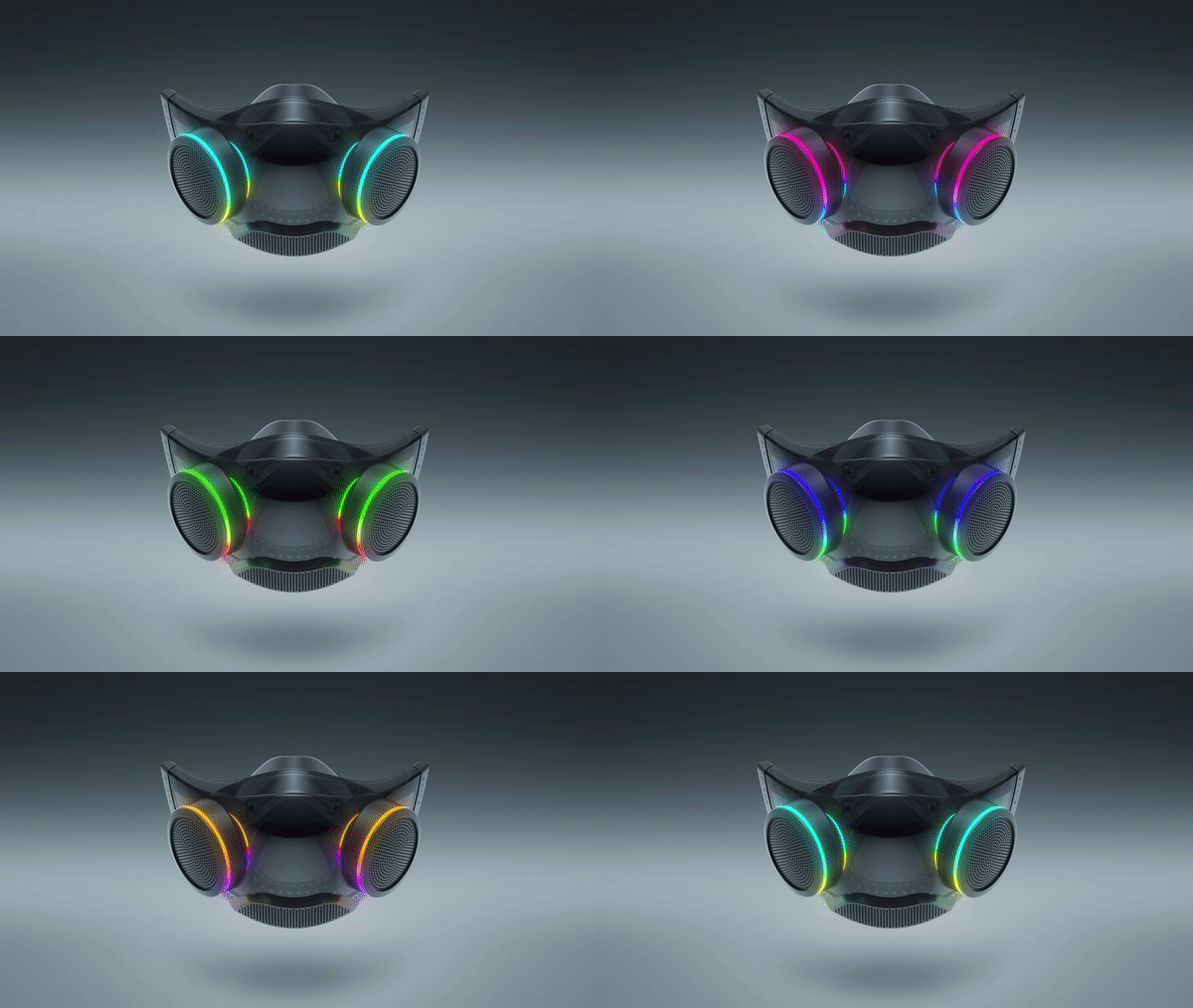
Renamed to Razer Zephyr, the $149.99 smart mask boasts fan-powered N95 filters, transparent plastic, a face light to illuminate your mouth and, naturally, RGB. Despite looking like an unlockable cosmetic for your Cyberpunk 2077character, the Zephyr mask sold out quickly.
At CES 2022, Razer unveiled an updated version of the Zephyr mask called the Zephyr Pro. It’s more or less identical to the original Zephyr, save that the Pro version has a built-in voice amplification tool.
If you’re thinking “didn’t the Zephyr mask already have that?” you’re not alone. I thought so too, but as Gizmodo notes, only the conceptual Project Hazel mask had the voice amplifier and Razer cut it from the Zephyr mask to hit a more accessible price point. The new Zephyr Pro costs $150 USD (about $50 USD more than than the original Zephyr mask) just for that added feature. It’s not clear how much the Zephyr Pro will cost in Canada, but I could see it getting a similar $50 price bump to a flat $200 (well, $199, but you get the point).
The Zephyr Pro also features an external button to turn voice amplification on and off, which Razer says can help save battery life.
That’s cool and all, but I still have the same concerns I did with the original Zephyr about how effective the mask actually is. Razer’s website says the Zephyr mask’s filter is “FDA-registered” — whatever that means — and Gizmodo points out Zephyr is not FDA-approved. I couldn’t find any information about Canadian Zephyr approval. The N95 filters should make the Zephyr and Zephyr Pro okay, but I’d say the jury is still out on this one.
You can learn more about the Zephyr Pro on Razer’s website and sign up for notifications when the mask becomes available. If you actually want to buy one of these, you’ll probably want to sign up since the original Zephyr sold out quickly.
A ‘Y2K22’ bug is reportedly hitting various Honda and Acura vehicles released from 2006 to 2014 in the U.S, Canada, and U.K.
First reported by Jalopnik (via The Verge), people report that the clocks in some of these vehicles jumped back in time some 20 years on New Years Day. Reports have cropped up on Honda and Acura forums, Twitter, and other social media.
My @Honda 2007 CR-V clock now useless in 2022; resets to 2:00 MST on 1/1/2002 after every startup. 32-bit signed integer overflow of yymmddHHMM? Would unsigned int fix it? This is time-critical. 😉 Thousands of us need a software update! pic.twitter.com/BSGCaxnMmx
Vehicles hit by the problem show the wrong date on the navigation system (typically the year 2002) and a time that’s several hours off. Some vehicles with a separate radio clock also show an incorrect time there as well. Attempts to manually tweak the time and date don’t seem to work as the next time owners start their cars, it’s back to 2002.
While many vehicles are impacted, not all are — I drive a 2006 Honda vehicle but haven’t experienced a clock issue, likely because my vehicle doesn’t have a built-in GPS system (more on how the GPS system might be causing the problem below).
“We have escalated the NAVI Clock Issue to our Engineering Team and they have informed us that you will experience issue from Jan 2022 thru August 2022 and then it will auto-correct. Please be assured that we will continue to monitor this and will advise you if a fix is available before that time.”
Honda UK:
“We have just received some more information regarding this and were advised that the Honda technical department are currently working on this.
Once there is a fix for this issue Honda authorized dealers will be made aware of it and will be able to assist with this at that point.
A service bulletin will be issued to our dealers from Honda UK on how to fix this.
As such it would be best to check with your local Honda authorized dealer for any updates as they would have the latest information for this and will be able to assist once the fix is released.
They can also contact the Honda technical department for additional assistance with this if necessary.
You can see the nearest Honda authorized dealers and their contact details by using the link below.”
The statements are somewhat contradictory, with Honda USA saying there isn’t a fix but that the issue should “auto-correct” in August. Honda UK, on the other hand, indicated the company was working on a fix but didn’t have a timeline for its availability.
Jalopnik notes that a coding issue could be behind the problem. The explanation is somewhat lengthy, but the condensed version is that GPS systems use a starting point (sometimes called an epoch) to determine the date and time. The start point uses a string of 10 binary digits that represent the current week, starting at zero and ending at 1,023. At 1,024, the system should reset to zero — there’s a widescale GPS week number rollover every 19.7 years, the most recent of which happened on April 6th, 2019. It’s possible that Honda’s navigation system didn’t account for a rollover that happened on New Year’s Day, leading systems to return to the beginning of the calendar.
The Verge notes that this isn’t the first time that Honda and Acura vehicles have had strangle clock issues. On August 16th, 2017, navigations systems on older Honda and Acura models failed and were mysteriously stuck on ‘0:00.’
Tesla CEO Elon Musk is back on Twitter again, this time to announce that the company will raise the price of its ‘Full Self-Driving’ (FSD) software to $12,000 on January 17th.
Thankfully, the price hike will not impact Canadians — Musk followed up his original tweet noting the change was “Just in the US.” It’s somewhat surprising, given the similarity in the package’s pricing between the countries — U.S. customers currently pay $10,000 USD for FSD while Canadians pay $10,600 CAD ($10,000 USD is worth about $12,645 CAD).
Regardless, it’s good news for any prospective Tesla customers in Canada (and bad news for any U.S.-based Tesla customers). Still, Musk does have a tendency to change pricing on a whim. In October, Tesla hiked the price of its supposedly more affordable Model 3 by almost $3,400 over two weeks, bringing that car to just $10 shy of the federal EV rebate limit of $55,000 (once you factor out fees for delivery, air conditioning and other items).
Musk followed up his FSD price increase tweet by noting that the FSD price would continue to rise as the company gets closer to the “production code release.” That likely means Canadians will see the FSD price increase in the future, even if the price isn’t changing at the moment.
It’s worth noting that the FSD software is still in beta despite Musk’s various promises over the years that it would be available by now (The Vergenotes that Musk said FSD would exit beta in 2018 and in 2019 said it’d be on “over a million cars” in 2020).
We’re in 2022 now and over the last few months, the FSD beta has drawn increased scrutiny and criticism from regulators and reporters. Concerns stem from the decision to let regular people beta-test the FSD software — reasonable, considering people keep posting videos of them misusing the software. There are also concerns with how Tesla represents FSD, with some calling the full self-driving name misleading.
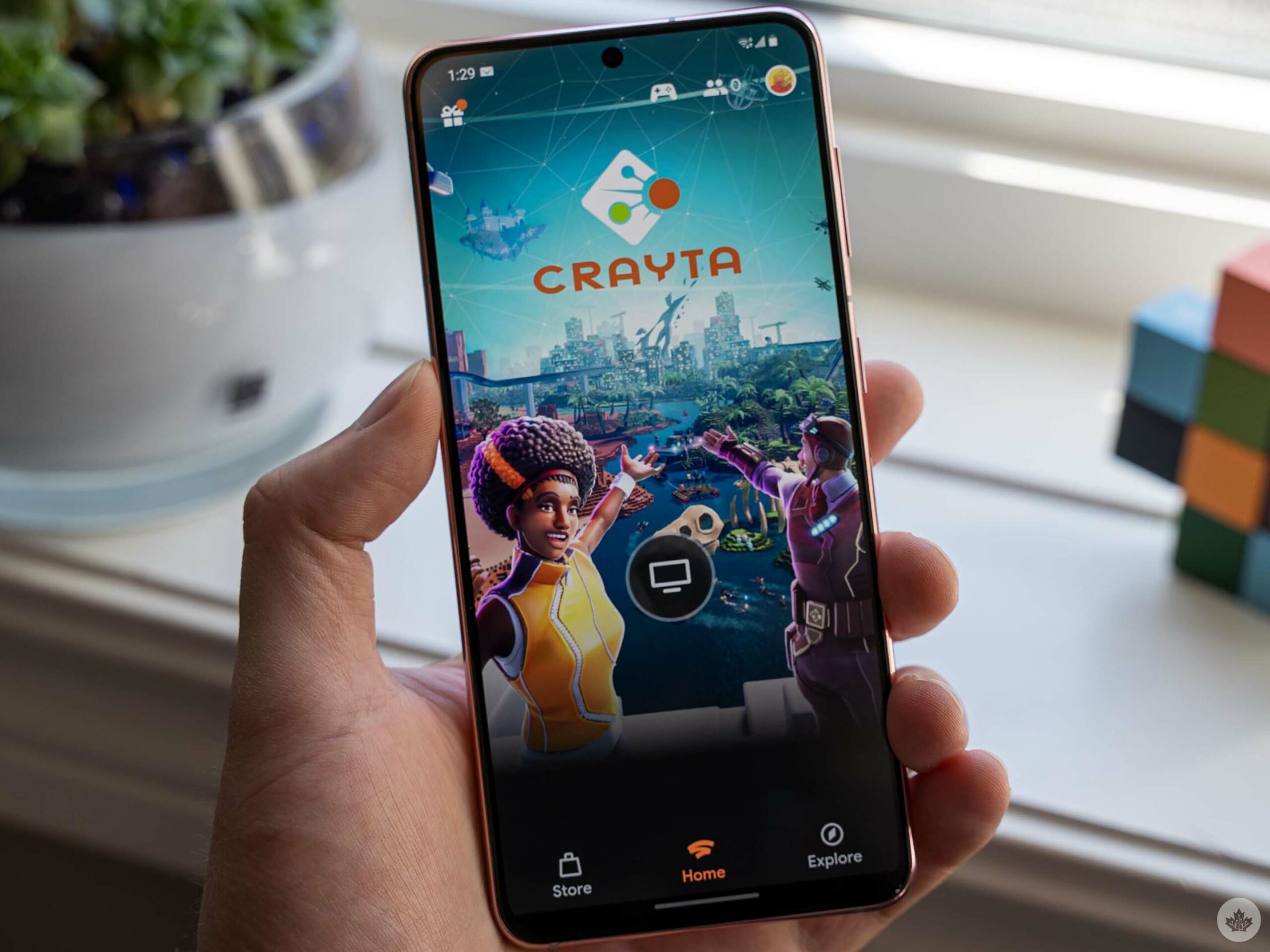
Earlier this week, Samsung revealed at the Consumer Electronics Show that the game streaming services Google Stadia and Nvidia GeForce Now are coming to its 2022 smart TVs.
It’s a pretty cool announcement, as it points to the slow advancement towards high-quality gaming experiences that don’t require expensive hardware to access. Being able to play games directly from your TV, no console or PC required? That’s neat!
But on the other hand, it raises the question: what even is the deal with Google Stadia right now? For some people, seeing Stadia in that announcement was likely akin to Obi-Wan Kenobi hearing his name for the first time in a while.
Naturally, then, MobileSyrup‘s Patrick O’Rourke made an offhand comment about Stadia’s relevancy when the CES news dropped. But immediately, multiple Stadia fans jumped on him. Now, fanboys are nothing new, and every platform has them. But I can at least understand (to a degree, of course — not condoning toxicity) one’s fanboyism for any of the other platforms. PlayStation, Xbox, Nintendo and PC, with their own respective strengths, are all in a pretty good place right now. Hardware and software sales back that up.
However, I truly don’t understand how these Stadia fans continuously attempt to argue that their platform of choice is doing so well. One commenter said Patrick was “ignoring the other developments for Stadia over the last year,” which multiple people liked. Yet, the only “evidence” of that from any of these people is that Google is hiring a few people in Stadia-related positions (as if the fact that Google looking to fill a few roles is at all equivalent to the long-term healthy future of a platform). So then, Stadia fans, I ask you sincerely: why are you so continuously bullish on the future of a platform that has really given you no reason to be so?
“If Stadia was truly “alive and well,” wouldn’t Google say anything about it?”
First and foremost: what data do you have? Google itself has declined to provide any actual info on how Stadia is performing, so we don’t know how many people are subscribed to the $11.99/month Pro membership or even using the free tier that only requires you to buy games à la carte. Generally, a company is loud when its products and services are doing well, and completely silent when it’s not. Remember how Sony pretended the Vita didn’t exist amid its failure, but wouldn’t stop boasting about the PS4’s massive successes? If Stadia was truly “alive and well,” wouldn’t Google say anything about it? Hell, the company didn’t even acknowledge the service during a two-hour keynote.
Stadia’s third-party partners don’t say how well their games do on the platform, either. Take Cyberpunk 2077, which got an unexpected player bump on Stadia when it launched in December 2020 because it was the least buggy version — CD Projekt just lumped Stadia sales in with “PC.” Per CD Projekt, 56 percent of sales within the first five months came from PC. The company’s CEO even laughed nervously when asked how much of the overall PC sales were accounted for by Stadia. Fans of Stadia can point to there now being 250-plus games on the platform as evidence that it’s receiving steady support, and sure, that’s a big step up from the lacklustre catalogue in the first several months. But getting notable 2021 games like Hitman 3, Resident Evil Village, Far Cry 6 and more means little if we don’t even know how many people are buying them.
At the end of the day, knowing how third-party games fare on Stadia is essential if you’re trying to argue the platform is doing well. After all, that’s is the only support it’s going to get. Because Google closed its first-party development division last February before it even put out a single game, it relies entirely on third parties now.
“I’ve seen some Stadia fans try to argue that there’s a media bias against the platform, which is silly since sites will always gravitate towards stories that garner the most readers.”
Not like the company has even been securing much in the way of exclusive third-party titles, though. In 2021, Stadia only received two exclusive titles, Hello Engineer and Pixeljunk Raiders, as well as two timed exclusives in Young Souls and Wavetale. No disrespect to the developers of these games, of course, but they aren’t the types of exclusive experiences that draw in swaths of people.
Without real sales data of any kind, we have to turn outside of Google. What we really only have to go off are February 2021 reports from Wired and Bloomberg, which expounded on the challenges the company faced in making games. The latter outlet even said Google “missed its targets for sales of controllers and monthly active users by hundreds of thousands,” despite paying “tens of millions” to secure games like Red Dead Redemption 2. Of course, the aforementioned Stadia fans will try to paint those reports as “outdated,” but if we haven’t heard any update since, how can you say things have improved?
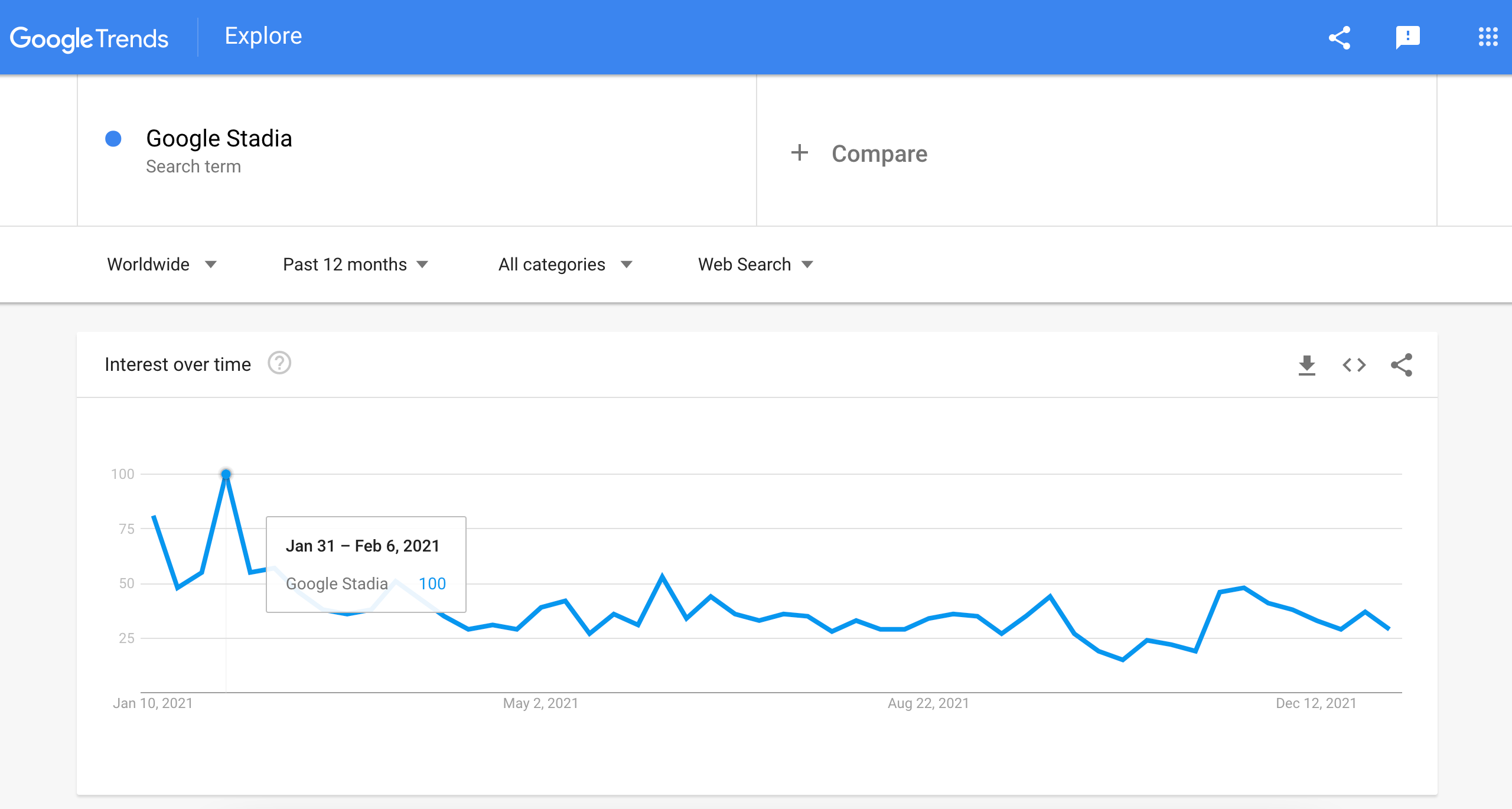
There’s also the apparent relative lack of buzz among consumers. Of course, this sort of metric will always be anecdotal to a degree, but trying to look at it empirically, here’s what Google Trends says about searches for “Google Stadia” for 2021:
Per Google, a value of 100 means “peak popularity” for the search term, a value of 50 means “half as popular” and 0 means “not enough data.” Based on this chart, we saw interest rise in January, likely coming off of the platform’s deserved praise for being a top-tier Cyberpunk 2077 platform, and peak in the first week of February, right when the news of Stadia’s first-party closures dropped. From there, search interest has pretty much hovered around/below 50. Even search interest for the PlayStation 4 and Xbox One remained consistently higher in 2021 despite them being old hardware with hot new successors on the market.
Media coverage of Stadia has also been minimal since February 2021, especially amid the early months of the PlayStation 5 and Xbox Series X/S and the continued success of the Nintendo Switch. I’ve seen some Stadia fans try to argue that there’s a media bias against the platform, which is silly since sites will always gravitate towards stories that garner the most readers. That’s just common sense.
“Google is one of the largest companies in the world — it isn’t your friend…”
Now, some Stadia defenders might rule me off as “a hater,” but I’m not. I, too, was excited about Stadia in the months leading up to release. I still think the core technology is impressive, and the potential innovations cloud gaming can bring remain tantalizing. I always go back to examples floated around by Canadian games producer and former Stadia exec Jade Raymond, which include Stadia-powered interactive YouTube documentaries or Duplex-boosted NPC dialogue.
I don’t actively want Stadia to fail. I also know that for some, especially fathers, who like the relatively hardware-free convenience that Stadia affords. Hell, I’m bullish on cloud services in general in part for that reason, and I’ve praised both Xbox and PlayStation for taking more measured, complementary approaches to the technology that can be expanded upon over time.
But at the same time, some people need to stop being so forgiving about Stadia. There’s this “woe, poor Stadia” mentality that these people seem to have, which is incredibly misguided. Google is one of the largest companies in the world — it isn’t your friend, and it isn’t some scrappy little indie startup.
Given its stature, it should be held to a higher standard than most. (The overall company, to be clear, not individual workers who are undoubtedly doing their best.) A major platform lacking something as basic as a search bar for a year-and-a-half (that’s owned and operated by the search engine company, no less) is, frankly, embarrassing. Potential only means something if you actually put in a marked effort to realize it, and it seems like Google’s been doing anything but.
Ultimately, if you’re someone who enjoys using Stadia, I don’t want to take that away from you. I really have no idea how many of you are out there since Google won’t say, but regardless, more power to you. As someone who owns all of the main three consoles and occasionally games on Mac as a substitute for PC, I truly have no allegiance to any particular brand. Play on whatever platform you like! And hey, I’d love to see Stadia somehow do a massive 180 this year. But I’m really not optimistic on the platform’s long-term future, and I’m still waiting to be given a real reason to be.
The Sonos + Ikea Symfonisk bookshelf speaker got a small second-generation update with faster processing, reduced standby power draw and more.
As reported by The Verge, tech website Tweakers spotted the refreshed speaker on sale in the Netherlands. The new speaker will presumably become available in other markets as well, although at the time of writing Ikea still had the first-gen Symfonisk on its website.
As for what’s actually different? Well, not a lot.
The second-gen Symfonisk sports a nearly identical design, compatibility with Sonos’ speaker network, and support for Apple AirPlay 2. Most of what’s new is internal: a faster processor, more memory and as mentioned up top, reduced power consumption when in standby mode.
As an aside, Sonos recently detailed plans to make future products more efficient and repairable, part of a larger effort to make itself more sustainable. One of the company’s goals was to reduce the power consumed by its speakers in standby mode. It’s not clear if the change to the Symfonisk speaker is part of that goal — regardless, reducing energy consumption is always welcome.
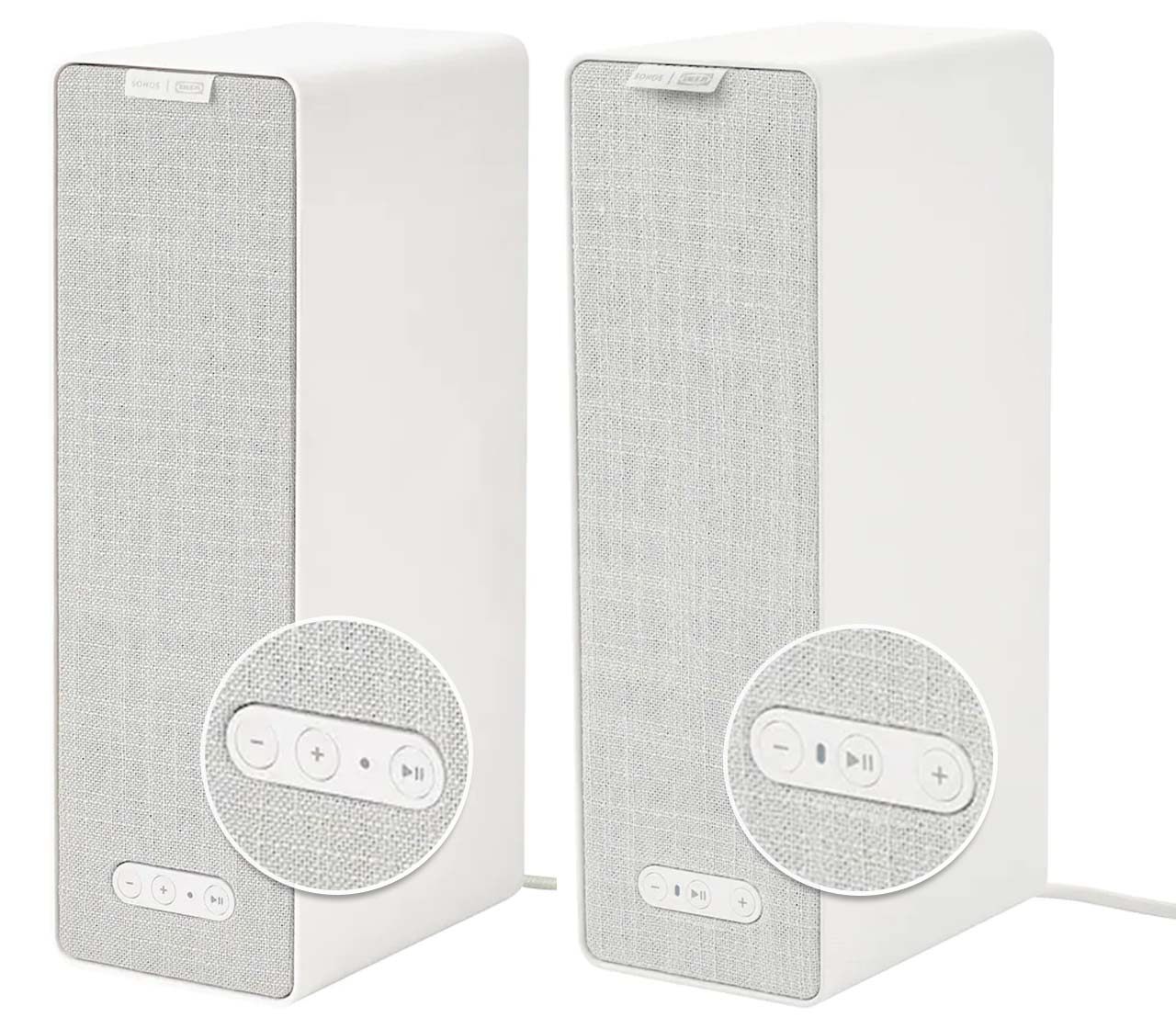
Left: Second-gen Symfonisk buttons | Right: original Symfonisk buttons
Externally, Ikea made a few changes too. There’s a longer power cord now, which should help people who want to use the speaker in a place that’s far from an outlet. The speaker also has slightly different button placement on the front, going from ‘volume down/play/volume up’ on the first-gen to ‘volume down / volume up / play’ on the second-gen.
Beyond that, there don’t appear to be any other differences. It makes sense that Ikea and Sonos aren’t messing with the formula — the original Symfonisk speaker was a fairly great option with decent value. The second-gen speaker on the Dutch Ikea website still comes in black or white and is priced at €99.95 (about $143.60 CAD), so it should cost about the same as the current Symfonisk (which goes for $139.99 in Canada right now).
Those interested can learn more about the original Symfonisk speaker here.
HP’s gaming sub-brand, HyperX, a company primarily known for its PC peripherals, accessories and components, has unveiled its first-ever multi-platform controller called the HyperX Clutch at CES.
The controller, which is designed to keep the mobile gamer in mind uses a clamp-like phone grip to hold your smartphone in landscape mode. The phone grip is extendable, so it can hold phones as wide as 86mm, though the clamp-like grip can also be removed when not in use.
The HyperX Clutch uses an Xbox-style button layout and connects to your phone with Bluetooth 4.2. It also supports 2.4GHz wireless connection via a receiver that can be plugged into your PC, making the controller a versatile option for gamers on different platforms.
Additionally, the controller can also directly be plugged into your PC with a wire, allowing for a latency-free connection and simultaneous charging of the built-in battery.
The Clutch is planned to be released in March 2022 and will cost roughly $49.99 (about $63.52 CAD)
If you’re sitting on a stack of gift cards after the holiday season, now’s the time to use them before they take up permanent residence in your junk drawer. And if you’re in the market for anything from a new laptop to a 4K smart TV, now’s your chance to score a great deal at Best Buy.
Check out the retailer’s top deals of the week below:
MobileSyrup utilizes affiliate partnerships and publishes sponsored posts. These partnerships do not influence our editorial content, though MobileSyrup may earn a commission on purchases made via these links.