Categories
Mobile Syrup

Canadians sure do love Nintendo, especially Fire Emblem

Historically, news of the best-selling video games each year has been focused on the U.S. and you’d be hard-pressed to find any Canadian-specific data. Even when brands like PlayStation release sales breakdowns, Canada is lumped in with the U.S.

Now, however, that’s finally changing. The Entertainment Software Association of Canada (ESAC), the lobbying group on behalf of Canada’s booming video game industry, has partnered with NPD Group to reveal Canadian-specific figures each month. Until now, the market research firm has only publicly divulged U.S. data.
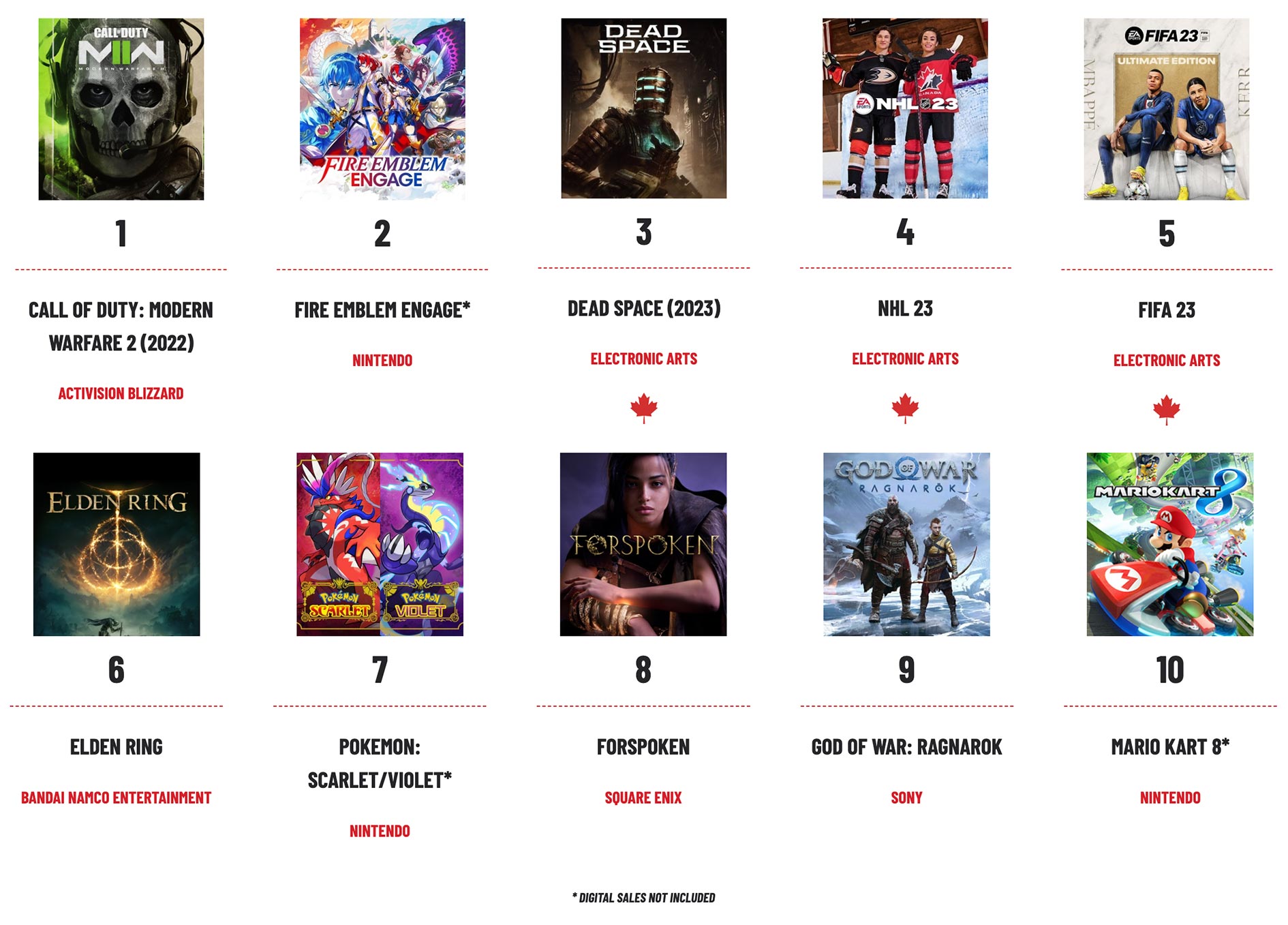
Canada's best selling games of January 2023

Canada’s 10 best-selling games in January 2023. Image credit: ESAC/NPD

It’s an initiative that Jayson Hilchie, ESAC president and CEO, says is particularly “exciting” to get out there.

“This idea of Canadian sales really spun out of an idea that we were going to write an op-ed about how important Canadian games were on a global stage,” Hilchie told MobileSyrup. “We were going around the world getting German sales, we were getting Pan-European sales, Australian sales, British sales, Türkiye, and NPD sales in the U.S. And the whole point was to show how many Canadian games were in the top 10, top 20, best-selling over the holidays, all around the world.”
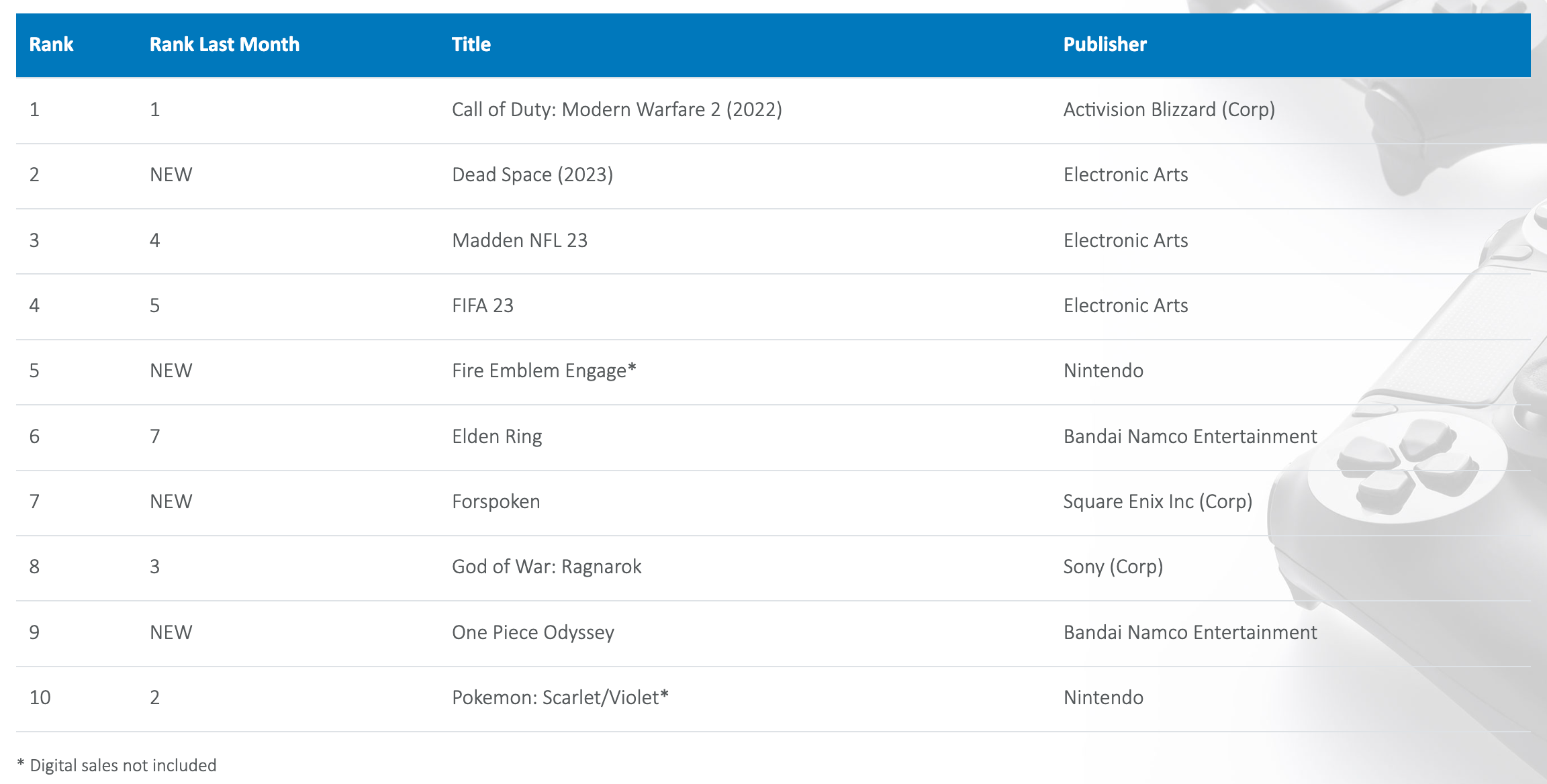
NPD U.S. Jan 2023

The 10 best-selling games in the U.S. in January 2023. Image credit: NPD

While he says those plans ultimately fell through, he says his organization’s long-running relationship with NPD Group paved the way to a different initiative: publishing Canada’s top 10 best-selling games directly through the ESAC. So far, he’s happy with the results.

“Obviously, I was happy to see the three Canadian games in the top 10,” he says of Canada’s inaugural January 2023 list. Indeed, the third, fourth and fifth spots are held by Dead Space (Montreal’s EA Motive), NHL 23 and FIFA 23 (both developed by EA Vancouver), respectively. Notably, while FIFA appeared on both the Canadian and U.S. lists, Madden NFL 23 was the only other sports game on the American list — a testament to how much Canadians love their hockey.

Hilchie also notes that this list is lacking Ubisoft, the French publishing giant with several studios across Canada, including in Quebec and Ontario. “Normally, I think we would see some Ubisoft games in there, but I don’t think they had a release calendar that matched that particular month.” Indeed, the company confirmed in January that sales were down in part due to a comparatively lighter 2022 lineup; major franchises Assassin’s Creed and Far Cry didn’t see new releases last year, while Just Dance 2023 underperformed.

It’s worth noting that January’s best-selling game in Canada, Call of Duty: Modern Warfare II, also has a Canadian connection. While the game was primarily developed by California’s Infinity Ward, Quebec City-based Beenox handled the PC port.

Even a juggernaut like Call of Duty has ties to Canada. Image credit: Activision

“I think as time goes on throughout the year, we’re always going to see at least a couple of Canadian games,” says Hilchie. “And in that top 10, I think is really good considering we’re a big industry, but we’re a small country relative to some of these other places.”

One area in which the Canadian list stood out from its American counterpart was the prevalence of Nintendo. On the U.S. list, the Japanese gaming giant’s Fire Emblem Engage and Pokémon Scarlet and Violet placed fifth and tenth, respectively. In Canada, Fire Emblem Engage was second and Scarlet and Violet placed seventh, while a third Nintendo title that didn’t chart on the U.S. list, Mario Kart 8 Deluxe, came in at 10th. This also follows Nintendo’s recent confirmation that the Switch has been Canada’s best-selling console for five consecutive years.

While Hilchie says this likely speaks to Nintendo’s long, storied history in the industry, he says he’s more surprised by how much the company’s fans responded to the results of this data.

“I can tell you that the Nintendo fans, based on our social media site, are not only surprised but excited about the number two game on the list, [Fire Emblem Engage], especially because it doesn’t even include digital sales,” he says. “So it’s done quite well. Obviously, there are some major fans of that franchise that were happy to see that the game is doing quite well. To me, that was one of the more fun things that came out of it.”

Fire Emblem Engage characters

Fire Emblem Engage seems to have resonated with Canadians, in particular. Image credit: Nintendo

He says this speaks to the surprisingly substantial public interest in this data, especially since it was dropped without any prior tease.

“One thing that was really exciting for us was that I don’t think we expected to see as much enthusiasm as there was for the sales data. We got something like 30,000 impressions on that original tweet, non-boosted impressions, which is a considerably high social media post for us,” he says, noting that ESAC’s social media posts are usually more policy, government, or initiative-related. “I’d be lying if I told you I thought that it was going to get as much excitement as what actually came out of it. So we’re really thrilled to move forward with this every month because it looks like we’ve got a really great base audience and we can just build from that.”

Hilchie also says there’s other Canadian-specific data that can be revealed as the reports evolve over time. While he notes that they’ll never divulge how many copies each game has sold as that’s each publisher’s proprietary information, they do have data for up to 50 games that could be shared in the future.

“I think that there’s a lot of opportunity for us, and I think NPD wanted to see how this worked out. But they’ve definitely said that they’ve got other data that they can share with us, and so time will tell what we put out. So we’re starting with this and now that we know there’s an appetite for this type of information, we’ll go from there.”

Dead Space

Motive’s Dead Space remake received universal praise when it was released in January. Image credit: EA

Ultimately, he says this is “another vertical” through which the ESAC can elevate its platform, especially as its found “a whole new kind of audience.”

Naturally, data like this helps the ESAC in its larger push to get government support for the national games sector. Coincidentally, our discussion came mere days after the reveal of Alberta’s latest budget, in which video games were not given an expected tax credit. The fact that this also happened while the province is getting significant publicity from HBO’s The Last of Us, a series based on a video game, makes the lack of a gaming tax credit all the more standout.

“The ironic thing about The Last of Us is that because it’s a published and distributed television show that it’s eligible for the film and television tax incentive that Alberta offers,” says Hilchie. “Yet if The Last of Us video game was shot and designed and developed there, it would get absolutely zero government support.”

Per the ESAC’s Canadian Video Game Industry: 2021 report, there are nearly 100 development studios in Alberta, including, arguably, Canada’s most famous: BioWare Edmonton, the creator of beloved RPGs like Star Wars: Knights of the Old RepublicMass Effect and Dragon Age.

“The seriousness of the matter is that the Alberta video game industry is a nice upstart industry,” says Hilchie. “They’ve got some serious capacity going there. There were investments in studios that set up there when the first iteration of the tax incentive came out, and you started to see a lot of interest in Calgary and Edmonton, and then the tax incentive was canceled.”
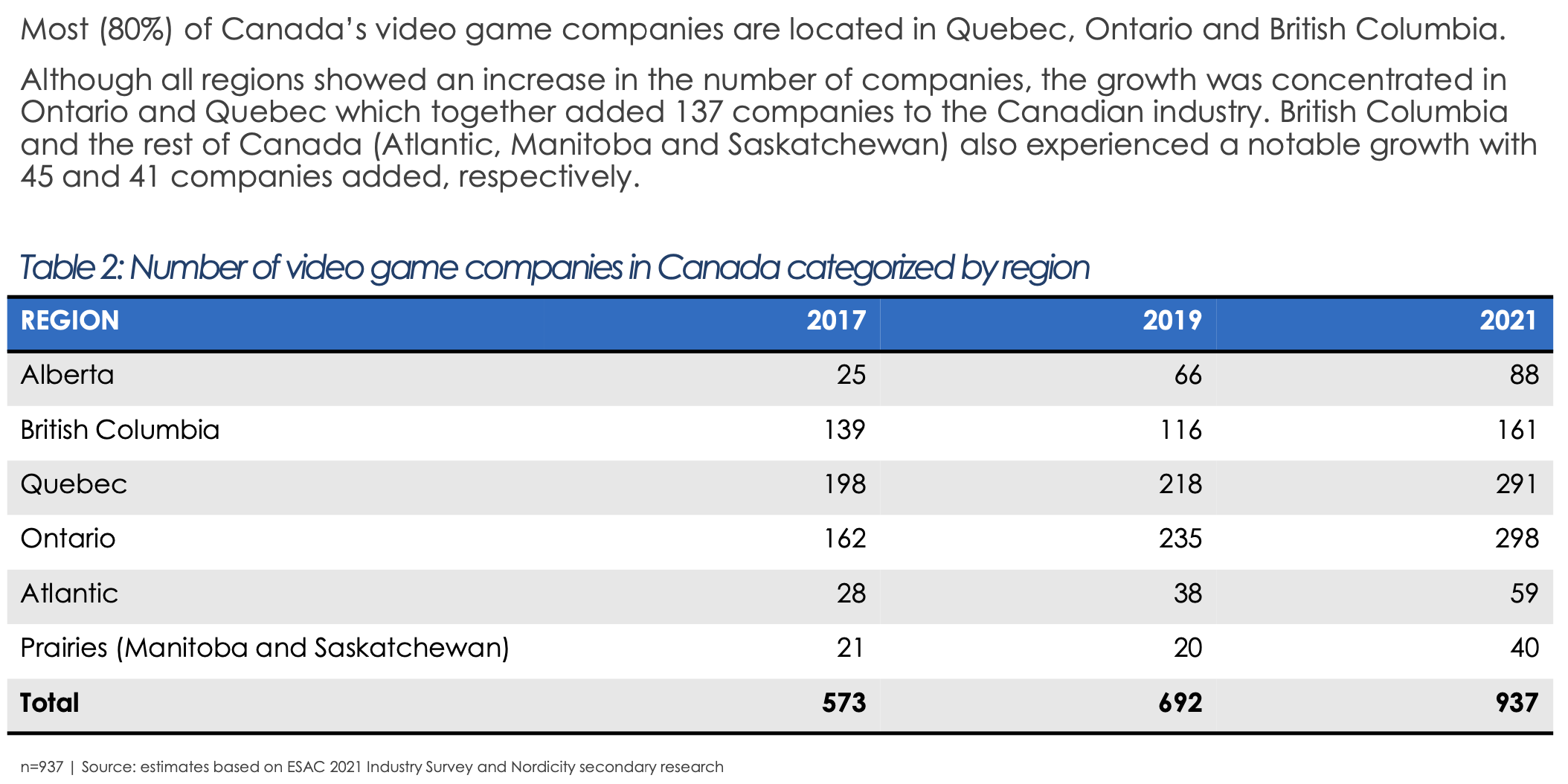
A provincial breakdown of the number of gaming studios in Canada, per ESAC’s 2021 report. (Image credit: ESAC)

He hopes that the spring election will offer an opportunity for ESAC, Digital Alberta and other groups to “put the issue back on the table” for all political parties.

“The fact of the matter is that the video game industry proves across Canada that when you put targeted government support toward it, it blows up. It grows. You can look anywhere, whether it’s the original Quebec tax incentive to Nova Scotia to Ontario,” he says.

He points to how such support has helped his native Nova Scotia grow immensely in 10 years, adding the likes of Ubisoft and Bethesda’s Alpha Dog Games (both in Halifax) and 2K Sports (Lunenberg) during this time.

“Now, there are not only those three big publishers but another 30 independent mobile game developers and PC game developers. It can show you what you can do in a place with a million people like Nova Scotia. Just think about what Alberta could pull off with two major cities and a larger population. So I’m disappointed but I’m not defeated.”

Image credit: Nintendo

Categories
Mobile Syrup

‘The Language of Fraud’ is contributing to scams in Canada

Digital scams are more common than ever, and language has played an important role in popularizing them.

According to a recent analysis by Visa, fraudsters create messages that take advantage of people trusting “too-good-to-be-true texts and emails.”

Visa surveyed 6,000 adults from various countries, including Canada, Germany, and France.

The analysis found Canadians are more confident than those surveyed globally about recognizing scams; 58 percent of Canadians believe they know about fraudulent behaviours and can spot a scam, compared to 48 percent globally. But that doesn’t mean they aren’t vulnerable, and “The Language of Fraud,” as Visa calls it, plays a big role.

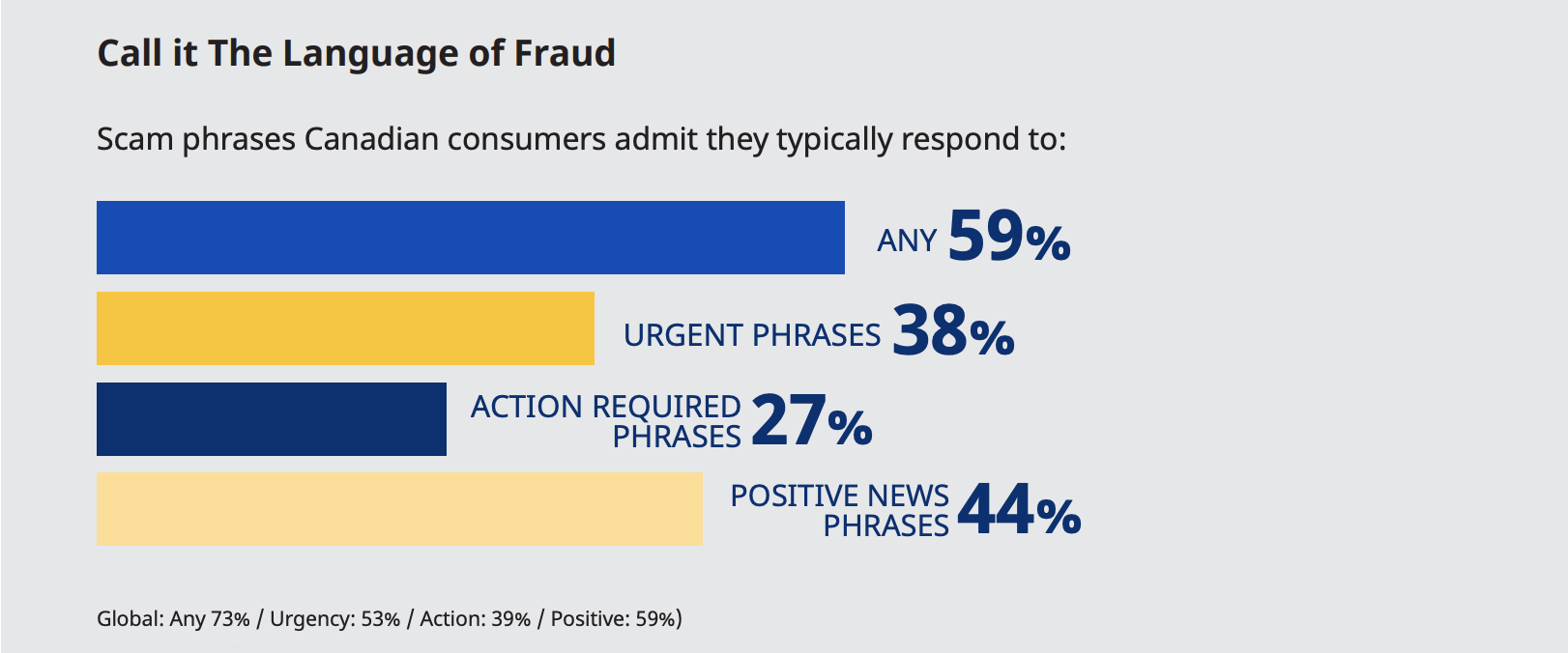
The analysis found 59 percent of Canadians respond to common phrases scammers use. For example, texts or emails containing “urgent,” “action required,” or “positive news” phrases typically receive a response. A further 35 percent of surveyed Canadians said they’ve fallen for a scam on more than one occasion.

“A turn of phrase can turn a simple click into a breach of personal information,” Visa said.

Image credit: Visa

But digital scams aren’t the only thing people need to be wary of.

Businesses also need to be aware of fraudulent activity. According to Moneris, a Canadian finance tech company, fraud cases have increased by nearly 30 percent since businesses have resumed regular activity following pandemic restrictions. Figures are based on fraud cases Moneris has investigated.

Nearly half of these incidents come from the card-not-present category. These transactions relate to remote orders that don’t involve payment cards being used through payment terminals.

Chargeback fraud is another important category. In this instance, a fraudulent transaction leads the scammer to get their money back after they dispute a charge on their payment card.

There are various actions Canadians can take to keep themselves and their businesses safe. Visa recommends Canadians update their password regularly and avoid clicking on links in unsolicited messages. Moneris warns businesses to protect their payment terminals and to review their transactions for suspicious activity regularly.

Image credit: Shutterstock 

Source: Visa, Moneris

Categories
Mobile Syrup

New Apple M-series stickers are now available to show off on your MacBook

Local Toronto company, InsideSticker, has started selling unofficial Apple M1 holographic stickers. Yes, you read that correctly.

The series includes the standard “M1 Inside” design. However, you can also find M1 Pro, M1 Max, and M1 Ultra variants alongside M2 options as well.

Each sticker costs $7.99 and offers a colour pallet unique to each variant. InsideSticker also provides a $13.99 Sticker Pack, where you can choose any three stickers for a discounted rate.

Each sticker is 25.4 x 32.7mm and includes Apple’s logo alongside an original design, highlighting the M-series chip. According to InsideSticker, every sticker is made with a “premium vinyl material” and a glossy finish. Each sticker is also made with eco-friendly inks.

Running along the bottom is the word “Inside” written on a holographic material. This will surely help it stand out if you want to brag and boast about your pricey new M2-powered MacBook Air. It’s worth noting that the vinyl stickers are listed as not being 100 percent waterproof. Instead, “they will resist limited amounts of water.”

Naturally, these stickers are designed to be used on Mac products. With one of these flashy stickers, you can ensure everyone knows you’re no longer in the Intel era. Moreso, these stickers are reminiscent of the Intel/Nvidia/AMD stickers commonly featured on PCs and laptops.

InsideSticker states shipments in Canada are estimated at roughly two weeks.

Image credit: InsideSticker

Source: @helvetiica

Categories
Mobile Syrup

Here’s why Apple’s App Store is better than Google’s Play Store

For most of us, the App Store on iOS or the Play Store on Android is where we download our apps.

Even though Android supports side-loading, unlike iOS, most users still download their apps directly from Google’s marketplace. Recently, there has been a lot of conversation around the potential of the European Union requiring Apple to allow third-party app stores on iOS, similar to Android and macOS. 

Admittedly, I have my frustrations with Apple’s App Store, primarily with the company’s decision to include ads within the store. Yet, for many reasons, I prefer the idea of Apple’s managed marketplace over the concept of side-loading.

This prompted a thought, how does an app store on a platform without side-loading compare to a platform with side-loading? 

App Store Overviews

Here are some facts you likely already know. The App Store is Apple’s app marketplace available on all of the company’s operating systems, including iOS, iPadOS, macOS, tvOS and watchOS. Mind you, there are not the same app offerings between all platforms. For this piece, I’m focusing on the App Store available on iOS and iPadOS, specifically.

Meanwhile, the “Play Store” is the app marketplace managed by Google and comes available by default on all Android devices. The main difference between iOS and Android is that Android allows a process called “side-loading.” This is where a user can download an app from a source outside the Play Store, such as from the internet or another app store. You’re likely familiar with the concept of a third-party app store if you use Setapp on your Mac or Steam on your Windows PC. 
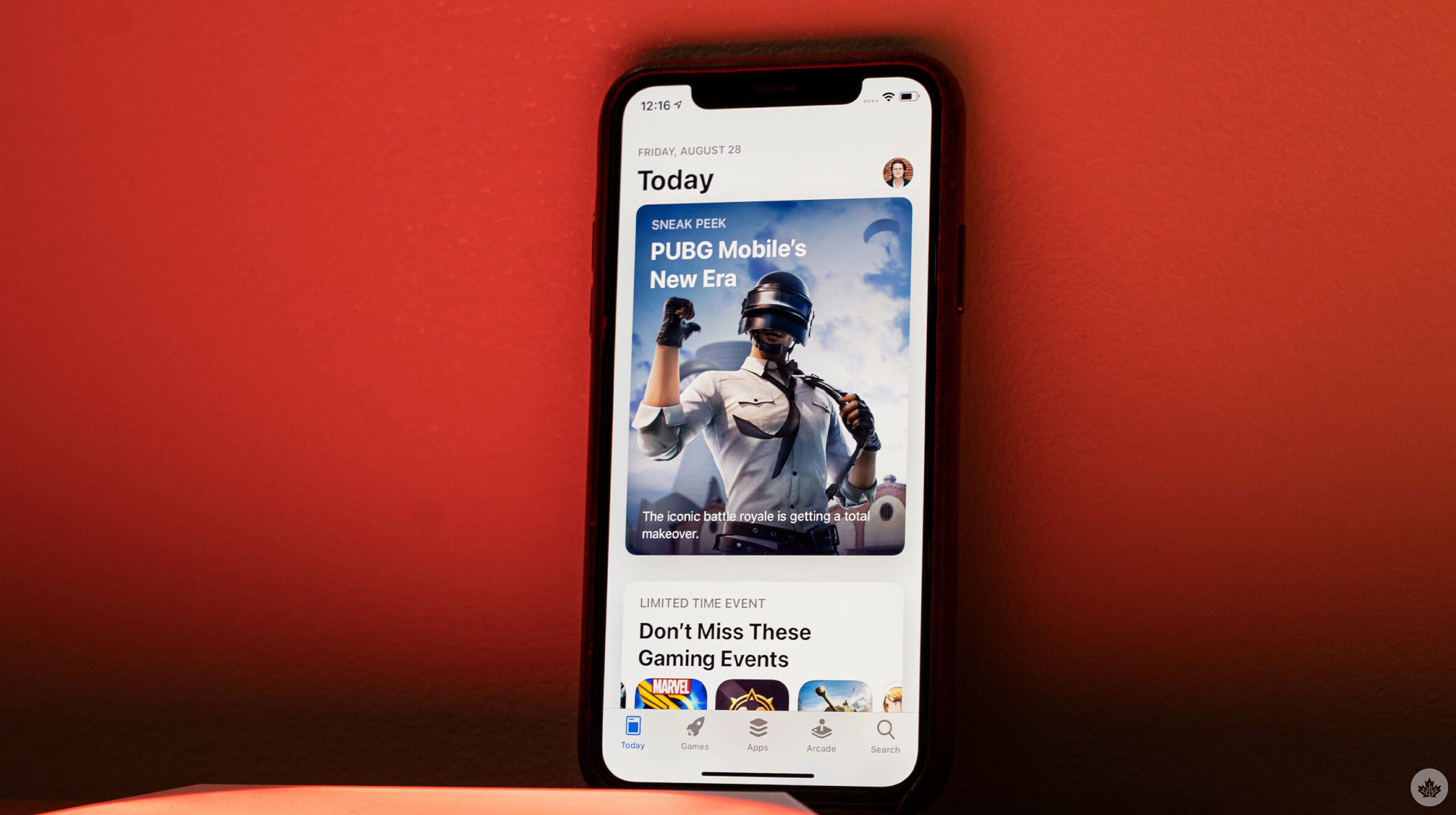
App Store Benefits

Both the App Store and Play Store provide numerous user benefits over side-loading.

1. Automatic Updates. True, most side-loaded apps have an automatic update process, but that likely requires some background item, and frankly, I rarely find they work well. Instead, apps downloaded from the App Store or Play Store get controlled updates to minimize disruption to your day and protect system resources.

2. Saved Payment Information. No one enjoys typing in their payment information over and over again. A unified marketplace has the benefit of remembering your payment information for any app purchase instead of typing it in on every vendor’s website.

3. Simple Refund Processes. Both Apple and Google act as middlemen in the app purchasing process. A developer may be incentivized to not refund you if you are dissatisfied with your purchase or, even worse, if a malicious app doesn’t provide the functionality you paid for. Apple and Google have simple (albeit hard-to-find) processes for refund requests. In my personal experience, Apple is pretty generous with providing refunds, providing you delete the app before requesting the refund.

4. Unified Marketplace. Search for any app in the App Store or Play Store, and you’ll likely find it. On iOS, this isn’t surprising, being that it’s the only app store allowed on the platform. Yet, on Android, apps still opt to be in the Play Store to ensure users can easily find them, as directing users elsewhere is often too inconvenient.

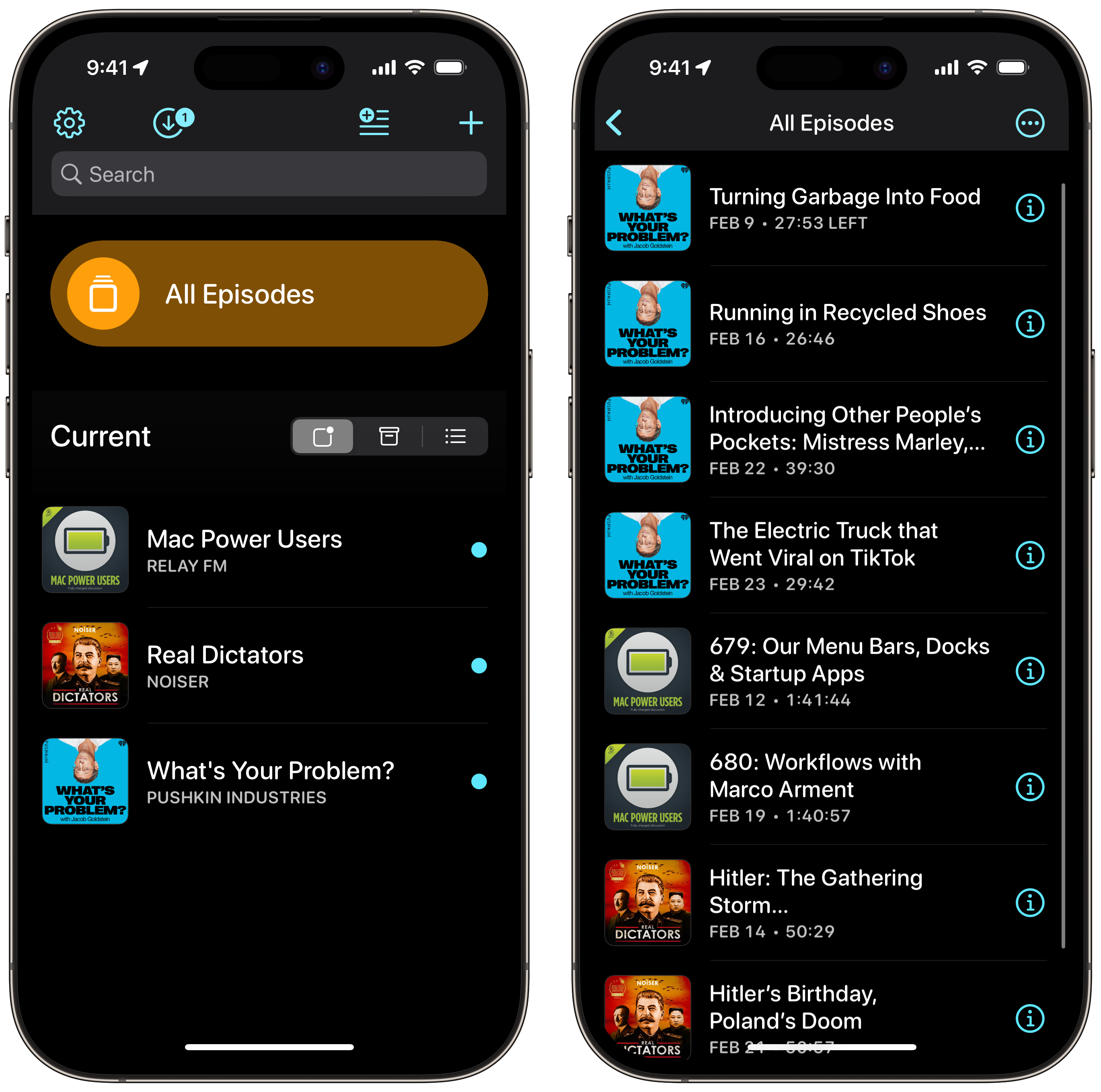

5. Clean Removal. When deleting an app on iOS, you can be assured that no “cruft” will be left on your device. This is in contrast to where apps on macOS and Android, even when deleted, can still leave bits and pieces on your device. Sometimes these bits only take up storage, while other times, they impact the device’s performance.

6. App Reviews. Most consumers read reviews before making a purchase. This is often true for new apps too. Both the App Store and Play Store have product reviews written by real users. Compared to visiting a developer’s website, where they will likely only show you positive reviews about their product.

8. Gift Cards. Don’t want to use your credit card? Both Apple and Google have gift cards that can be purchased from your local retailer. Gift cards are a low-risk and secure way of buying apps for yourself or younger children.

9. App Privacy Information. Both app stores provide privacy information on the apps within their marketplace. This is nice for users like myself that consider if an app is worth downloading based on the data it collects and uses to track.

Platform Unification

Having the largest platform isn’t necessarily a great thing if there is no uniformity. One reason Android appeals to so many device manufacturers is that you can basically throw it on any device with any sized screen. The challenge here comes to app developers when they have to adjust their app’s layout and design to accommodate nearly endless displays and form factors. This is especially apparent with foldables, where most apps aren’t optimized for the larger-size displays.

On the other hand, many developers find efficiency in developing for the Apple platform because of its reasonably limited number of displays and pretty consistent aspect ratios. On top of having fewer device formats, Apple developers have to use more concise developing languages, including Objective-C, Swift, and SwiftUI.

Meanwhile, Android developers can use Java, C, C++, and Kotlin. While I am not a developer, I recently read a developer claim that a feature took less than forty lines of code to implement on iOS, whereas it took 500+ to implement on Android. Considering both display sizing variables and overall lines of code, you can see how a developer could save a lot of time working on a project for iOS over Android.

Monetization

Say a developer thought, “well, even if an app takes longer to develop for Android than iOS, surely I’ll make that money back because Android is a massively larger platform, right?” Sadly or not, the answer is no. While Android takes a whopping 70 percent of the international smartphone market share compared to iOS’s 28 percent, iOS users spend twice as much as Android users on apps, in-app purchases, and subscriptions. 

One report found that Android users value free apps much more than iOS users. Android users tend to skew older and in a lower income bracket. Where iOS users tend to be more affluent, skew younger, and have more disposable income. This translates into Apple making nearly twice as much as Google from app store revenues despite having almost a third of its market share.

App Availability

It’s hard to blame a developer for being attracted to Apple’s platforms over Android if it means they can access a market more willing to spend money and a platform requiring less overall development time. As a result, many of the best third-party apps are iOS only. Even if they do come to Android, it’s after they’ve had a successful run on iOS first. We saw this scenario play out with Super Mario Run several years ago. 

In fact, the most popular third-party podcasting app (after Apple Podcasts, Google, and Spotify), Overcast, is iOS only. Recently, the developer of Overcast said that despite the odd person asking for an Android app, there isn’t nearly enough incentive to develop an Android version. 

As a one-man development team, Overcast on iOS provides a good living for him. Working on an Android app would require him to take away time from iOS to learn Android development or hire an Android developer. It simply isn’t worth it. 

App Quality

Another tricky part about the Google Play Store is that it has over 3.5 million apps. This is compared to Apple’s App Store on iOS, with around 1.6 million apps. In most cases, you’d assume quantity is better. After all, more choices. However, once again, this isn’t the case. 

It’s widely known in the developer community that Apple has some pretty strict guidelines for user interface, app usefulness, and uniqueness. Around 40 percent of all app rejections are due to apps not being completed enough to Apple’s standards. Additionally, Apple has content moderation guidelines and other rules that developers must follow to publish to the App Store. 

Compare this to Google: other than not being allowed to have illegal, nudity, or malware, you’re pretty much free to publish anything. As a result, the Play Store is full of similarly looking, similarly functioning, or half-finished apps. It’s not hard to argue that apps on iOS are typically better designed, more performant, and sometimes even more functional than their Android counterparts. 

Security

Credit where credit is due, neither Apple nor Google does a perfect job moderating their app stores. Security controls are an area I hope to see both platforms improve upon to help keep users secure. Both marketplaces push submitted apps through automated scans that check for malware, copyrighted material, nudity, and general guideline compliance. 

However, Google typically has a lower bar for security and privacy than Apple. After all, Apple is far better respected for its stance on platform security and privacy. For starters, app reviews conducted by Google are typically faster than Apple, which often takes around 48 hours and seems to have a much higher rejection rate. 

Next, Apple requires apps to respect a feature called “Sandboxing.” Even on macOS, where apps can run outside of being Sandboxed, the app must be sandboxed to be listed on the App Store. 

Sandboxing is where an app must work within the confines of its own dedicated space. It cannot access or control another app or piece of data on the device. This is great for security but can lead to some limited feature sets. On iOS, Sandboxing is what allows the platform to maintain being so secure. In contrast, both macOS and Android have much higher levels of malware. 

While both platforms require developers to submit privacy information for their apps to inform users what data is being collected and used to track them, Apple is better known for implementing privacy-focused features. Some of these features inform users about app network traffic, accessing the device’s clipboard, using the microphone, and activating the camera. In situations where Apple does collect data, it is all anonymized and as much processing as possible is done on-device instead of being sent to a cloud. 

Even Apple’s developer fee acts as a small barrier to protecting quality. Google’s developer fee is only $25 compared to Apple’s $100. Many might say that Google is more accessible because of its price. This is true. However, spending that $100 on Apple compared to one-fourth of the cost on Google makes a person feel more invested in the platform, making them want to make sure they get the most out of their investment. 

Cross Platform Availability

With the release of Windows 11, Android apps can run on Windows at least in some capacity. And, of course, there are Android tablets and Android wear devices. However, bang for your buck is another area I’d say Apple wins here. A single purchase or subscription can unlock a single app for iOS, iPadOS, watchOS, tvOS, and macOS.

Although, not every app developer allows for a single purchase for all platforms. For example, Reeder, an RSS reader, has one purchase for iOS and iPadOS, whereas macOS is a separate buy. But it’s the fact that a developer can bundle multiple app versions into one or two purchase prices that make for a pleasant user experience. Apple Silicon Mac users can sometimes benefit from downloading an app’s iOS version and running it natively. 

Plus, there’s no app license limit if you own multiple Apple devices. You can continue to download the app across all of your devices. Even family members can benefit from your purchase. Family sharing allows family members to download a paid app at no additional cost once bought by another member through a feature called Purchase Sharing. Developers have to opt into Purchase Sharing. However, the majority do. 

Support

Finally, I want to address support for each platform. Have you ever tried contacting Google support? Don’t bother. It basically does not exist. This lack of customer support has frustrated Android users who need refunds or Play Store-related support. 

Meanwhile, Apple has a phone number, 1-800-MY-APPLE, where support agents can transfer you to the iTunes support team to assist with refund or support requests. Being able to talk to a human can go a long way in having happier customers. 

The fact is, if you have a free app that you want on as many devices as possible, Android is likely the platform for you to develop. However, if you want to prioritize development time and revenue, iOS is likely the platform for you.

As a user, both platforms have their merits, but I’ll be sticking with the App Store and Apple ecosystem, at least for a while longer. 

Categories
Mobile Syrup

Redfall is getting full cross-play on Xbox, Steam and Epic

Redfall is getting full cross-play on Xbox, Steam and the Epic Games Store.

Arkane Studios’ upcoming open-world co-op shooter, Redfall, will have full cross-play across all the available platforms. Arkane announced this via the Redfall Twitter account.

Unfortunately, you won’t be part of the fun if you’re a Switch or PlayStation player. However, for everywhere the game is available, you can all play together.

Redfall releases on May 2nd on Xbox Series X/S and Windows PC. The title costs $89.99 CAD, but you can also get it on Game Pass on both Xbox and PC.

Source: Redfall

Categories
Mobile Syrup

Samsung Electronics reported to create in-house CPUs for future phones

Apple and Pixel smartphones both use in-house chipsets, but Samsung still relies on Qualcomm for its chips with most of its devices, and its in-house Exynos chips have always performed worse and are less efficient in most cases.

With that in mind, Samsung could be looking to build its own custom CPU, according to a Business Korea report. Samsung’s electronics division has even gone so far as to create a new internal team to spearhead its custom CPU design efforts.

The new in-house CPU could appear in 2027 alongside the Galaxy S27 series, considering that Samsung continues to name the S series numerically.

Samsung’s previous in-house designed Mongoose CPU cores in Exynos SoCs (System-on-Chip) were powerful but too power-hungry and inefficient compared to what Qualcomm had to offer, resulting in the company killing off its CPU design team and laying off over 300 developers from its R&D facility in Austin, Texas.

Now, Samsung has beefed up efforts to develop its next-generation system-on-chips (SoCs), likely called the Galaxy chip. With an in-house CPU, Samsung aims to optimize the SoCs for its devices, leading to superior performance and battery life.

Despite the renewed interest in custom CPU development, Samsung has gone all in on Qualcomm’s Snapdragon 8 Gen 2 chip across all markets for its Samsung Galaxy S23 series. The Samsung S23 series preorders have already squashed S22 sales in multiple markets.

The chip used in the S23 series delivers exceptional performance and efficiency compared to last year’s Snapdragon 8 Gen 1. Samsung will likely continue using Qualcomm’s chips until its in-house custom CPUs are ready for primetime.

Source: Business Korea Via: Android Police

Categories
Mobile Syrup

This Samsung 24-inch 165Hz gaming monitor is on sale at Best Buy

If you’re looking for a high refresh rate PC gaming monitor that doesn’t break the bank, Samsung’s 24-inch Odyssey G3 is a solid option, especially since it’s on sale.

Normally available for $379.99, the monitor is currently listed on BestBuy for $189.99, marking a $190 or 50 percent discount.

The 24-inch Odyssey G3 features a 165Hz refresh rate, alongside a 1ms response time, allowing for a delay-free gaming experience. The display is limited to FHD, though it does feature AMD FreeSync Premium to avoid tearing and provide a smooth gaming experience.

It features a height-adjustable stand and a three-sided borderless view with modes like ‘Eye Saver’ and ‘Flicker Free.’

The monitor features a single 1.2 Display Port alongside a 1.4 HDMI port and a headphone port.

To learn more about Samsung’s 24-inch Odyssey G3 monitor or to purchase it, click here. Find other gaming monitors on sale at Best Buy here.

MobileSyrup utilizes affiliate partnerships. These partnerships do not influence our editorial content, though we may earn a commission on purchases made via these links that helps fund the journalism provided free on our website.

Image credit: Best Buy

Source: Best Buy

Categories
Mobile Syrup

Apple believed to launch M3 iMac sometime in the second half of the year

Apple’s 2023 product catalogue might include a new 24-inch iMac, featuring a next-gen M3 chip. A refresh of the iMac is said to be in “a late stage” of development and will arrive sometime during the second half of 2023.

In the latest edition of his Power On newsletter, Bloomberg’s Mark Gurman claims Apple has begun manufacturing tests for the M3 iMac. Supposedly, volume production for the device won’t start until June at the earliest. Thus, a release is unlikely to land before the summer months.

As for what this year’s iMac will bring, Gurman states that it will utilize the next-gen M-series chipset. Much like the generational leap between the M1 to the M2, Apple’s M3 chip is likely to boast significant performance improvements. Plus, power efficiency will also likely follow. Taiwan Semiconductor Manufacturing Company (TSMC) is in charge of developing the M3 chip for the iMac. The company is reportedly using a 3nm chip development process. This can improve speeds by up to 15 percent and reduce power by 30 percent when compared to 5nm silicon.

Gurman also states that the 2023 iMac features redesigned internal components. The extent of which is still unknown. From an external standpoint, the device may offer a “different” manufacturing process for its stand. Plus, this year’s iMac is said to offer a variety of colour options, maintaining the aesthetic of the 2021 series.

On top of powering this year’s iMac, the M3 chip may be powering a new MacBook Air. However, Gurman isn’t confident about whether all models of the MacBook Air will launch with the M3. Perhaps it’ll be exclusive to the 13-inch option. 2022’s model was the first to offer the M2 chip prior to the M2 Pro and M2 Max options launching for the 2023 MacBook Pro.

Source: Power On Via: Engadget

Categories
Mobile Syrup

The Last of Us’ Troy Baker praises Calgary for its ‘beautiful landscape’ during production

This weekend, HBO’s The Last of Us delivered a gripping adaptation of one of the most important chapters from Naughty Dog’s game. It also introduced us to the haunting antagonist David alongside James, played by Troy Baker.

Baker is intrinsically tied to The Last of Us. He’s provided the masterful voice of Joel in the game alongside motion capture. Pedro Pascal now helms the role of Joel in the series adaption. However, Baker was cast as David’s secondhand man in the episode dubbed “When We Are in Need.”

Baker recently sat down with Daily Hive for a roundtable interview where he recounted his time spent in Calgary, Alberta. “They were very prepared and to be able to find the sound stages that they shot at and be able to literally take that over like they did… all of the locations that we found within Calgary to be able to shoot… it was surprising how much they could be completely transformed.”

Over the season, Alberta has been shown to be transformed to create many backdrops for this post-apocalyptic tale. For instance, the small town of Canmore was turned into the blooming community of Jackson. Last week’s mall set piece used a real abandoned mall in Calgary.

Throughout the interview, Baker states what many Canadians already know, Calgary is a marvel to look at. Now, it’s put in the spotlight on one of HBO’s most popular series to date. “Calgary provided this beautiful landscape — inside the city and far outside of it,” Baker said to Daily Hive.

This week’s episode used Alberta’s Waterton Park for David’s community in this week’s episode. The extent of the area isn’t shown in full. However, there are many exterior shots showing the snowy streets. It was then up to production to make the area feel like a world living in the age of the Cordyceps virus. “Waterton is the town where we shot a lot of our episodes. It’s a far cry away from Calgary but the landscape that it provided really set the stage and you could believe that this was what the world could look like absent of civilization.”

HBO’s The Last of Us is barrelling toward its season finale on March 12th. Canadian viewers can catch up on the season, and see Alberta’s beauty captured on screen, via Crave.

Image credit: HBO

Source: Daily Hive

Categories
Mobile Syrup

Chatr offering 5GB bonus data for six months

Rogers flanker brand Chatr is offering bonus data on various 3G and 4G plans.

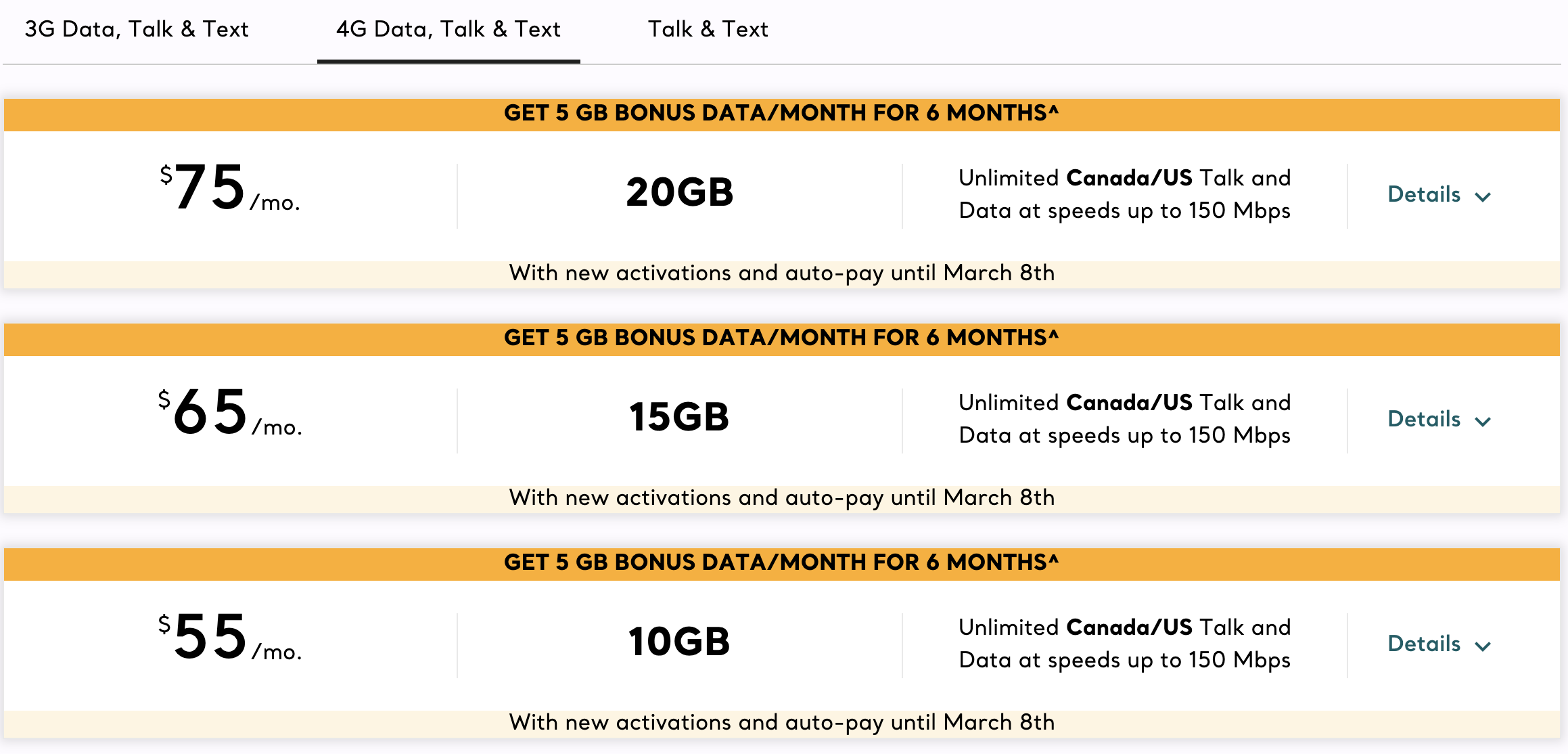
With the bonus data, 3G plans will offer the following:

  • $70/month for 25GB data
  • $60/month for 20GB
  • $50/month for 15GB
  • $40/month for 10GB
  • $35/month for 7.5GB

4G plans with bonus data:

  • $75/ month for 25GB
  • $65/month 20GB
  • $55/month for 15GB
  • $45/month for 10GB
  • $40/month 7.5GB

However, the offer only applies on new activations and if customers sign up for auto-pay.

Users have until March 8th to activate the deal.

More details are available on Chatr’s website.