Categories
Mobile Syrup

Canadian institutions aren’t ready to ban ChatGPT and other chatbots in schools

The New York City Department of Education kicked off 2023 by banning access to ChatGPT on its network and devices, stating the artificial intelligence chatbot is negatively impacting student learning.

It was a quick response to a tool that gained immense popularity in December 2022. The platform answers complex questions and can write emails, essays, and even news articles (not this one, though).

It’s clear this can impact students across the board, so what does it mean for those studying in Canada?

Well, the answer varies.

Robert Clapperton, an assistant professor at Toronto Metropolitan University’s Communications department, told MobileSyrup ChatGPT, and other tools like it, will be “disruptive” for the teaching process in Canadian institutions.

“Integrating new technology in education settings is a familiar concept.”

He explained that instructors grade students on their ability to express knowledge and skills. But how educators teach and assess will soon change. “The whole idea of expression as assessment is going to be challenged because the expression is being automated.”

What do teachers think?

Clapperton says ChatGPT is something the educational community he’s a part of is discussing. Some believe chatbots aren’t going away, and banning them isn’t the perfect solution.

One of the prominent ideas so far is teaching students how to use chatbots effectively, understanding the AI tool might not produce content that answers specific needs. Relying on it alone will likely not bode well for an essay with a particular thesis, for example, as it’s challenging for chatbots to produce coherent answers, Clapperton said.

Integrating new technology in education settings is a familiar concept. Calculators, for example, faced similar conversations when they became easily accessible to students. “We just have to figure out how to work the technology into the pedagogy.” With the hectic life many students lead, Clapperton believes students will use chatbots to help them with assignments in a myriad of ways. “Hopefully, this is a situation where they have to do a priority research in order to get the chatbot to produce a coherent essay, but it won’t be long before they don’t have to.”

Embracing new tech

But everyone has a different way of approaching it, and some educators he’s spoken to would like to ban its use. One of the biggest concerns is plagiarism, usually considered an academic offence that can lead schools to kick students out of their programs.

This is a concern for various academic institutions in Canada. A representative from McGill University told MobileSyrup students could face disciplinary action when it comes to plagiarism and cheating.

However, that doesn’t mean the university has banned chatbots. “With the emergence of the use of artificial intelligence chatbots in an academic context, McGill is actively looking to further strengthen the protection of its academic integrity, while considering ways to integrate new technologies.”

“There’s no shortage of bizarre answers from Bing Chat since Microsoft rolled out the feature.”

Dalhousie University is taking a similar approach. “The university wants to ensure that students are fairly and genuinely evaluated on meaningful exercises aimed at maximizing learning. The appropriateness of text generators or any other software available to students will be assessed at all times with this concern in mind,” a spokesperson said.

The University of Toronto’s website explicitly states it also expects students to complete assignments without the assistance of external sources, such as ChatGPT. The rules are a little different in classrooms. While instructors could choose to “demonstrate how it can be used productively, or what its limitations are,” educators shouldn’t use it for “instruction.”

However, pending ChatGPT’s integration with Microsoft, it could be a tool that students and instructors can access under the Office 365 suite, a platform U of T utilizes.

Microsoft’s role

Microsoft has introduced a new version of Bing that’s powered by a newer version of OpenAI’s language model. The company says it makes it “more powerful” than ChatGPT. Further inclusions in Microsoft Word, PowerPoint, and Outlook are also expected.

But it might be a while until that becomes the case. There’s no shortage of bizarre answers from Bing Chat since Microsoft rolled out the feature. In one prompt, the tool told a user to say, “Heil Hitler.” Clapperton said the company would have to figure out ways to control the knowledge base answers are established on.

“When you try to have such a broad range of training data, you’re gonna get all of the biases and all of the bad things that are floating around the internet right now.”

But post-secondary students aren’t the only ones who can use this technology. The Calgary Board of Education is taking a similar approach to the universities by understanding the challenges associated with the technology. In an emailed response to MobileSyrup, the school board didn’t specify that they would ban the use of the tool but said learning “can involve understanding the use of AI into the future.”

Image credit: Shutterstock 

Categories
Mobile Syrup

Nothing to detail the Nothing Ear (2) on March 22

We already know that Carl Pei’s Nothing is already working on a Nothing Ear (2) wireless earbuds, thanks to leaked press renders shared by reliable industry leaker @OnLeaks (via SmartPrix)What we didn’t know when the renders were leaked was when the earbuds would finally be released.

Now, Nothing has officially announced the existence of Nothing Ear (2), and the company will deliver more details about them and a potential release date on March 22nd at 10am ET/7am PT.

Nothing’s official website features a teaser image of the Nothing Ear (2) with “Better sound. Better clarity. Just better. A mighty refinement. Learn everything on 22 March, 10:00 EST,” written beside it.

The company, however, hasn’t revealed any other information about the upcoming earbuds, including specs and pricing. In a press statement, the company hinted at the Ear 2’s design, stating that it “celebrates Nothing’s iconic design with elite engineering and next-level personalisation for the ultimate sound experience.”

Previous rumours about the earbuds have suggested that the Nothing Ear (2) will look very similar to their predecessor, with the primary external visual difference between the Ear (1) and the Ear (2) being the change in position of the noise-canceling microphone.

The microphone was located at the top of the earbud in the Ear (1) but it seems to have been moved to the side of the earbud, as seen in the image below. Minor internal changes also result in a slightly different look on the stem of the earbud.
Further, the new earbuds are reported to feature personalized ANC, allowing the user to set the intensity of noise cancellation according to their preference, alongside support for dual connectivity, allowing the device to be paired two devices at once for ease of switching.
Apart from the Nothing Ear (2), we know the company is also working on its first speaker.

Image credit: Nothing

Via: Android Police

Categories
Mobile Syrup

API change causes Twitter functions to go down

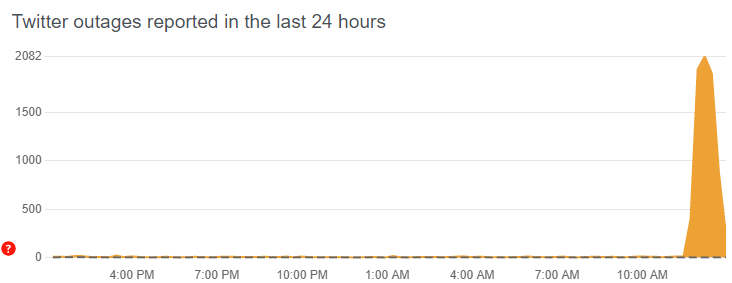
Twitter suffered a major outage on the morning of Monday, March 6th. During the outage, links and images stopped working across the social media platform on mobile apps and the Twitter website.

Clicking on Twitter links resulted in an error page that read, “Your current API plan does not include access to this endpoint, please see https://developer.twitter.com/en/docs/twitter-api for more information.”

According to DownDetector, the outage began roughly at 11:27am ET/8:27pm PT, and peaked at roughly 12:12pm ET/9:12pm ET.

Around 12:40 is when service seemed to have resumed, with links and images working as intended.

This comes soon after Twitter went down earlier this month, where users could not publish new Tweets and send or receive direct messages (DMs).

Twitter has confirmed that it made an internal change that had “some unintended consequences,” which caused the outage on the platform. However, the company is currently working on fixing the problem and has promised to provide updates when the issue is resolved. In a follow up tweet, the company said that “things should now be working as normal.”

In a Tweet reply, Twitter CEO Elon Musk chimed in too, saying that “A small API change had massive ramifications. The code stack is extremely brittle for no good reason.” He added, “Will ultimately need a complete rewrite,” referring to the code.

Is Twitter still wonky for you? Let us know in the comments below.

Source: @TwitterSupport

Categories
Mobile Syrup

This beautiful Alberta park was home to The Last of Us’ latest villains

After the seventh episode of The Last of Us was filmed almost entirely in an abandoned Calgary mall, the eighth episode is all about the outdoors.

Specifically, the series’ latest (and penultimate) episode, “When We Are In Need,” takes place in the snowy wilds of Colorado and was actually shot at Alberta’s Waterton Park. Bella Ramsey, who plays Ellie in the series, had namedropped the hamlet in an interview with MobileSyrup, but we now get to see it in action.

One establishing shot, in particular, spotlights Waterton Lakes National Park, per the screen industry advocacy group Keep Alberta Rolling.

In the latest episode, Ellie’s hunt for food for her and an injured Joel (Pedro Pascal) leads her to encounter two strangers, David (Scott Shepherd) and James (Troy Baker, who played Joel in The Last of Us video games). Without spoiling anything, let’s just say they don’t become friends.

Interestingly, though, David and James belong to a larger community of survivors who live in an abandoned resort. In a later scene between Ellie and David, the two can be spotted in a place called Todd’s Steakhouse. Notably, the exterior of this set is Lakeside Chophouse, the only Waterton restaurant by the lake.

Other real-life places Albertans spotted include the Thirsty Bear socialhouse and Trappers Mountain Grill.

Over the course of the last several weeks, one of the highlights of The Last of Us for Canadians has been to see where all of the episodes have been filmed in Alberta. It remains to be seen where, exactly, the March 12th finale was filmed, so we’ll have to keep an eye out.

It should be noted that The Last of Us has been renewed for a second season, although there hasn’t been any official word about the production returning to Alberta. For now, though, we can admire the beautiful landscapes and production designer John Paino’s sets.

The Last of Us is now streaming exclusively on Crave in Canada.


Image credit: HBO

Categories
Mobile Syrup

Tesla Model X receives further price cuts in Canada

Tesla is on a price-cutting spree. The company slashed prices for vehicles across all categories back in January, with some models receiving an up to 20 percent price cut.

In January, due to the price cut, the Tesla Model 3 RWD finally qualified for the $5,000 CAD federal iZEV rebate, since the vehicle’s price had dropped below the $55,000 CAD limit.

Now, the Austin, Texas-based company is delivering another range of price cuts, most of which are applicable in the United States, with only the Model X receiving a reduction in Canada.

As shared by TeslaNorth, the Model S received a $5,000 USD price cut in the U.S. on both, the Long Range and Plaid models, while the Model X saw a $10,000 USD drop on its Long Range and Plaid models. Before the price cut, the Long Range Model S was $94,990 USD (now $89,990 USD), and the Plaid Model S was $114,990 USD (now $109,990 USD). Similarly, before the price cut, the Long Range Model X was $109,990 USD (now $99,990 USD), and the Plaid Model X was $119,990 USD (now $109,990 USD).

As mentioned above, only the Model X saw a price drop in Canada. The Model X Long Range saw a $7,000 CAD price drop to $135,990 CAD from $142,990 CAD. Similarly, the Model X Plaid got a $7,000 CAD cut, going from $156,990 CAD to $149,990 CAD.

For reference, at the beginning of the year, the Model X Long Range was $157,990, while the Model X Plaid was $156,990.

Check out the previous round of price cuts here.

Source: TeslaNorth

Categories
Mobile Syrup

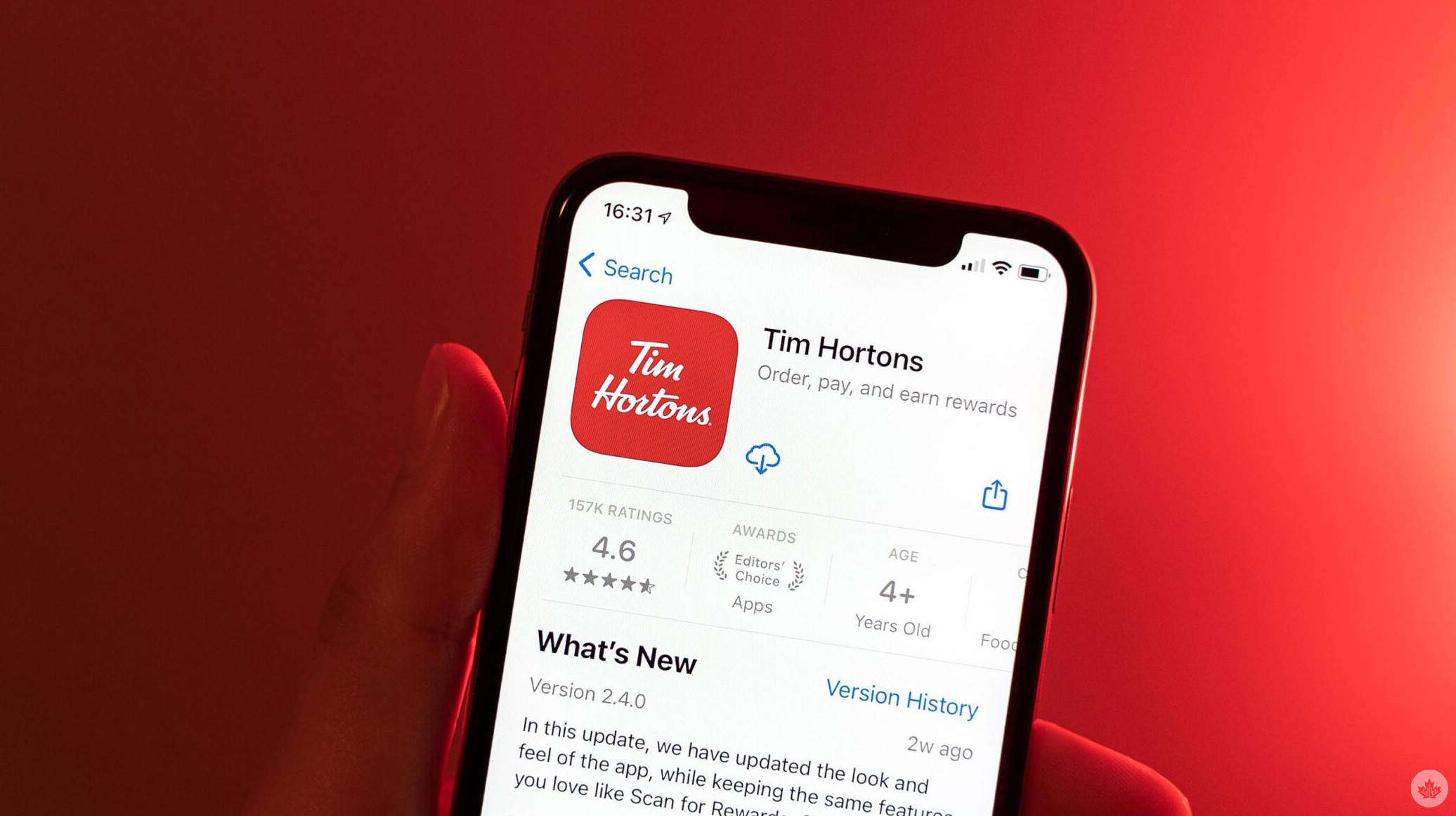
Tim Hortons Roll Up to Win begins, requires Tim Hortons app

The Tim Hortons Roll Up to Win season is a Canadian staple. However, in recent years, the coffee house has adopted a digital approach to its promo, and this year is no different.

Roll Up to Win returns but requires participants to use the Tim Hortons app or their Tims Rewards card when scanning for Tims Rewards.

Roll Up to Win kicks off today and runs through April 2. This year, Tim Hortons states participants have the chance to win “cars, getaways, gift cards, millions of coffee and food prizes.” On top of this array of prizes, Tim Hortons is also putting a daily jackpot of $10,000 on the line.

In order to participate, Canadians must purchase an eligible item at Tim Hortons. This includes select hot and cold beverages, as is tradition. However, Tim Hortons also includes select breakfast items as part of this promo. On top of that, lunch and dinner options are new additions this year; items like Loaded Wraps and Loaded Bowls are now eligible for one Roll each.

Participants must have an active account on the Tim Hortons mobile app on iOS and Android. Additionally, an extra bonus roll is available when placing a mobile order. However, one eligible Roll Up to Win item must be in their cart.

Prizes available to win this year include:

  • $10,000 in American Express® prepaid cards – 35 daily jackpot prizes to be won
  • 2023 Volkswagen Taos Highline – 15 to be won
  • Universal Parks & Resorts 4-Day/3-Night Vacation for four at your choice of either Universal Studios
  • Hollywood or Universal Orlando Resort – 5 to be won
  • 6 Night Vacation at any Hilton hotel – 10 to be won
  • JOURNIE $1,000 Gas Gift Card – 10 to be won
  • Xbox Series S Console – 40 to be won
  • The Bay $100 e-Gift Card – 50 to be won
  • Free Movies for a Year with Cineplex® – 150 to be won
  • 2 Night Weekend Getaway at any Hilton hotel – 150 to be won
  • Benchmark 20V Max Lithium-ion Cordless Combo Kit – 250 to be won
  • Samsung Galaxy Tab A8 – 250 to be won
  • Samsung Galaxy A53 5G Smartphone – 250 to be won
  • Chilly Moose 25L Ice Box Cooler – 300 to be won
  • $300 PKG Carry Goods Sitewide Gift Card – 300 to be won
  • Skullcandy SLYR® Multi-Platform Wired Gaming Headset – 500 to be won
  • Skullcandy Dime® 2 True Wireless Earbuds – 500 to be won
  • Home Hardware $100 eGift Card – 750 to be won
  • Parks Canada Family/Group Discovery Pass – 750 to be won
  • $100 Rakuten Cash Back – 1,000 to be won
  • 1-Year Subscription to The Athletic – 1,000 to be won
  • $100 off your Voilà Grocery Order Digital Code – 1,000 to be won
  • 6 Months of $0 Voilà Delivery or Pickup Fee Digital Code – 1,000 to be won
  • $10 Off a Tim Hortons Product at Voila.ca Digital Code – 1,000 to be won
  • $10 Off at M&M Food Market Voucher – 2,500 to be won
  • $50 Rakuten Cash Back – 4,000 to be won
  • $5 Uber Eats Digital Gift Card – 4,000 to be won
  • $40 Uber Eats Digital Gift Card – 4,500 to be won
  • 3-Month Spotify Premium Subscription –6,673 to be won
  • $20 Uber Eats Digital Gift Card – 10,000 to be won
  • $25 Rakuten Cash Back – 20,000 to be won
  • $25 Tim Card – 45,000 to be won
  • 4-Month Subscription to the SXM App – 50,000 to be won
  • The Bay $10 Promotional e-Gift Card – 100,000 to be won
  • $50 Off at ChillyMoose.ca – 100,000 to be won
  • $5 Off on the Cineplex Store® – 100,000 to be won
  • $10 Rakuten Cash Back – 100,000 to be won
  • SN Now 6-month Standard Subscription – 100,000 to be won
  • SN Now 6-month Premium Subscription – 100,000 to be won
  • 6-Month Subscription to the SXM App – 200,000 to be won
  • 14-Day Xbox Game Pass Ultimate – 250,000 to be won
  • 50% off Tim Hortons Collection on PKGShop.com – 300,000 to be won
  • 3-Month Subscription to The Athletic – 300,000 to be won
  • $15 off your Voilà Grocery Order Digital Code – 300,000 to be won
  • 5¢/L discount on your next 100L of gas with Journie Rewards – 500,000 to be won
  • $10 off your Voilà Grocery Order Digital Code – 500,000 to be won
  • Tims Donut prizes – more than 1.7 million to be won
  • Tims Rewards points prizes – over 4 million prizes to be won
  • Tims Coffee prizes – more than 11 million to be won

On top of announcing the new season of Roll Up to Win, Tim Hortons announces the ‘Roll Up Capitals of Canada’. Nine “capitals” have been revealed. The company claims that each one has shown to have won the most prizes per capita.

The list includes Gander, Newfoundland., Summerside, P.E.I., Sydney, Nova Scotia., Gatineau, Quebec, Woodstock, Ontario, Selkirk, Manitoba, Moose Jaw, Saskatchewan, Lloydminster, Alberta., and Langley, B.C. However, it’s Miramichi, New Brunswick that has top honours. With a population of 18,000, there have been two winners who have won an SUV in the past.

The Tim Hortons app has faced scrutiny recently as it was discovered that it collected the data of users without their consent. A class-action lawsuit was filed and the company ultimately offered customers a free beverage and baked good as compensation.

Source: Tim Hortons

Categories
Mobile Syrup

Get $50 off on Crave’s annual plan until March 15

Crave is giving Canadians a great deal on its annual plan, just in time for the fourth season of Succession, the second seasons of Perry Mason and Yellowjackets, and the weekly releases of The Last of Us.

The Canadian-based streaming service’s annual plan regularly costs $199.90. For now, customers can get $50 off on the annual plan, and pay only $149.90 for it in total.

The promotion is available to new, upgrading and reactivating customers who subscribe directly through Crave. $149.99 will be charged to you as a one-time fee, and will automatically renew at $199.90/yr + tax when the subscription ends, until and unless you cancel it.

The $50 off promotion expires on March 15th at 11:59pm ET/8:59pm PT.

Find the promotion here.

Image credit: Crave

Source: Crave

Categories
Mobile Syrup

Counter Strike: GO 2 may be in development, release as soon as this month

Publishing behemoth Valve is said to be developing a sequel to Counter-Strike: Global Offensive (CS:GO). It’s reported that the follow-up to the widely successful esports title could launch a beta as early as this month.

Richard Lewis, a reputable esports journalist, has reported that CS:GO 2 is “very real” and is “about ready to go.” Apparently, Valve has already been hosting secret playtests of the new competitive first-person shooter. The publisher is said to have flown a group of players to its HQ in Seattle to play the game.

The report goes on to state that CS:GO 2 may be ready for a beta testing program by April 1st at the latest. Lewis continues by saying sources state, “The big priority is getting this out and then polishing it, fixing any bugs and bringing it up to the level people expect from CS.”

Thanks to data mined info, the Counter-Strike sequel appears to be developed on Source 2. The in-house engine from Valve may enable the game to offer improved graphics, frame rates, and more. Furthermore, the game appears to support 128-tick servers. If true, latency could be reduced to that of Valorant. Plus, improvements to matchmaking are also on the table.

News of a reported sequel comes after a successful decade for CS:GO. The game is a blockbuster title within esports. Although Counter-Strike has built a sizeable community, it was the advent of CS:GO that propelled its popularity worldwide and built the franchise a name in esports.

What remains to be seen is how Valve aims to treat the current version of CS:GO. There’s a chance that the publisher may offer players the choice of which version to play. For a brief moment in time, Valve enabled players to access the original version of Dota 2 after it introduced Dota 2 Reborn. However, a merger eventually happened and Reborn became the main title.

However, CS:GO 2 may follow in the footsteps of Overwatch 2. Following the launch of Blizzard’s sequel, the studio shut down the servers for the original game. Rather than separate the player base, Valve may opt to transition all players over to the new version.

Image credit: Valve

Source: Richard Lewis Via: Engadget

Categories
Mobile Syrup

Rogers, Fido, offer customers one free day of roaming

Rogers and its flanker brand Fido are offering customers enrolled in their roaming plans one free day of service.

The deal for each carrier starts on March 6th and expires on March 31st, coinciding with March Break. Customers will receive a one-day credit on their bill.

Rogers’ Roam Like Home offers roaming in the U.S. for $12/day and international roaming for $15/day. The same prices apply to Fido Roam customers.

The fine print shows the deal is available on monthly postpaid plans that include roaming services. Prepaid plans aren’t included.

A spokesperson confirmed to MobileSyrup that new customers can use the offer if they activate an eligible roaming plan by March 31st.

Rogers’ “special thank you” comes when its competitors are increasing the cost of their roaming plans. Telus and its flanker brand Koodo are increasing the cost of Easy Roam services come March 8th. Bell and Virgin Plus will increase their prices on March 9th.

The Rogers spokesperson further confirmed to MobileSyrup that the company has no plans to raise the cost of its roaming services at this time.

It’s important to point out the big three have a history of offering similarly priced roaming plans. In the past, when one carrier raised its roaming costs, others followed suit soon after.

Categories
Mobile Syrup

Sustainable networks: Saving energy while maintaining customer experience

Reducing energy consumption while maintaining network performance is vital. That’s where optimized user experience and careful management of network performance comes into play. As part of our data-driven operations blog series, Gökce Alacadagli, portfolio director at Ericsson, talks to Annie Turner about innovative ways to cut power consumption in active and passive network elements.

In 2022, Ericsson published an industry white paper, ‘On the Road to Breaking the Energy Curve.‘ Its findings suggested that collectively operators were spending some $25 billion annually on energy. It became clear to Ericsson that the ever-rising curve of power consumption was not sustainable, economically or ecologically. Since then, Ericsson estimates that spending on energy could have risen above $30 billion due to soaring energy prices.

Gökce Alacadagli explains the curve in question is due to mobile networks being deployed to meet peak capacity demands, and with 2G, 3G, 4G and now 5G, the number of elements in the network is increasing. He says this means, “We need a more holistic approach. Sometimes, we focus too much on network KPIs and CapEx investments to expand the network and potentially increase overall energy consumption. This is even though most operators have communicated their group-level targets to become carbon neutral then net zero. This stimulates a mindset shift to transform from peak performance service provider to energy efficient – sustainable service provider.”

With all this in mind, the company developed a three-pronged plan to break the energy curve. The first is about evolving networks sustainably by “planning and investing in the right way, using spectrum most effectively; for example through powering Massive MIMO,” Alacadagli says.

The second concerns expanding and modernizing networks, such as replacing radio units with newer ones that consume up to 40 percent less energy. He explains, “This presents an opportunity to reduce energy consumption even though traffic is increasing due to more network capabilities.”

Alacadagli’s particular focus is on the third part: “How to operate today’s networks more intelligently, using AI and machine learning to reduce energy consumption now.” However, Ericsson has observed some hesitation to operating the radio access network (RAN) in a more power-efficient way in case the measures impact network KPIs which operators tend to assume will automatically damage customers’ experience.

Flawed perceptions

In fact, the reducing energy does not necessarily affect experience, or not perceptibly so – and Ericsson and others have transparent, empirical data to prove it. “If someone is watching a HD video on a mobile running at 28Mbps and the speed drops by 3Mbps, there is no impact on the performance of the video or the WhatsApp calls,” he states. “In fact, research shows most such consumer services can run well at an average speed of 10Mbps, which was also mentioned on our article Who cares about peak download speeds in 5G? Earlier this year. So, if there’s controlled change in throughput due to energy optimization measures there will be no perceptible impact on customers’ experience.”

“We get very good data from the network and can help operators find the right balance between energy saving and optimizing throughput. Some parts of the network we don’t touch because customers don’t want to make any changes there, but in other parts a tweak of say 3 percent can result in a 10 percent saving,” says Alacadagli.

“Previously our customers did not have the tools or solutions to safely explore different scenarios. Now we have a holistic solution for each part of the journey that we can show our customers and they choose their own scenarios.”

A blunt instrument

The simplest form of energy efficiency in any industry is putting energy-consuming devices in a low-energy or standby mode, “which we can do for radio nodes in multiple ways,” Alacadagli notes. “Multiple features do different things in the RAN and most vendors have software functionalities which turn the power amplifier on and off in microseconds.

“Low-energy-schedulers (LESS) schedule the data transfer to optimize energy savings, so that other hardware near algorithms such as Micro Sleep TX can become more efficient. MIMO sleep mode de-activates some of the branches and fast-sleep mode turns off the entire cell, especially on the capacity layer when traffic falls below a threshold. So, there is a foundation for energy saving in the RAN but due to operators’ anxieties about impacting network KPIs, they are generally only enabled at night. Here we propose solutions to manage them more intelligently, where we can implement different thresholds for day and night.”

Ericsson thinks there are huge improvements to be gained by exploiting accurate data to optimize energy usage without any noticeable changes to experience. Its ambition is to understand how energy can be used better as each network, cluster and region has different traffic volumes and varied user experiences.

“We must work with different protocols down to site or even cell level to maximize energy saving. Different sites have different traffic profiles, and we need to create an energy-saving pattern for them all,” Alacadagli says. “We propose cognitive solutions to watch traffic trends at sites or even individual cells and create policies and actions that can be applied individually. That’s the name of the game for energy efficiency across the entire infrastructure for telecoms networks.”

The power of passive infrastructure

He’s not just talking about active parts of the infrastructure, the radio units, either. As Alacadagli points out, telecom sites need ‘passive infrastructure’ for the radio networks to operate 24/7. Passive infrastructure represents the support ecosystem to keep radio sites up and running, which constitutes batteries, power supply units and climate units to cool down the critical equipment. Alacadagli says, “Ericsson’s ambition is to empower cognitive energy management or holistic energy management solutions, using AI and machine learning, that can be applied to all technologies and all infrastructure, taking into consideration the traffic paradigms and user experience.”

In Ericsson’s view there are three main pillars that support this ambition: leveraging data to boost automation by pulling it from across the entire network; applying machine learning; then using the output to control of the network, end-to-end.
“We have element management systems and OSS pulling data that measures energy consumption and performance, so we know how each site is acting and the kind of customer experience they are providing, what kind of traffic they have and so on,” Alacadagli says.

“Also, we need to check and understand the data coming from the RAN to see consumption patterns and profile them. As a result of profiling – and not many operators do energy profiling for sites depending on the traffic they generate – we can benchmark sites for energy efficient from the gigabytes of data they provide to users.”

However, managing passive infrastructure generally involves truck roll to the site because, for instance, once the air-con unit is set to 21 degrees, it stays there. “If the passive infrastructure doesn’t generate data, we cannot control it; to control everything in this ecosystem, we need to invest in controllers, sensors and IoT devices to digitalize them. That’s what we mean by maximizing the power of data to build automation.”

The gains are potentially huge, but so is the challenge of bringing passive infrastructure “into the fold” as originally no thought was given to including data from passive infrastructure in the mix, either by network equipment providers or passive infrastructure suppliers. Hence data from passive elements tends to be segregated. Customers need convincing of the return in the required investment, but Alacadagli is optimistic.

AI-based and data-driven

To achieve these ends, Ericsson’s launched its AI-based, data-driven approach to managed services, in 2020 as part of the Ericsson Operations Engine. The Energy Infrastructure Operations focuses on four areas Alacadagli explains.

Predictive Cell Energy Management application predicts traffic volumes and usage patterns, potentially down to each cell on a site to put them into optimal energy saving modes, like standby or sleep. Alacadagli enthuses, “We can use historic data to set parameters, or we can make real-time decisions and set new parameters, say every six hours. This is where things get interesting because generally, the parameters of these solutions are set, deployed and stay as-is, regardless of changing conditions. Alternatively, we can configure a node with different thresholds for different times of the day or put it to sleep mode immediately through closed loop automation.”

Energy profiling of sites and cells use algorithms to highlight, for instance, cells at some sites consuming more than comparable ones.

Anomaly detection and predictive infrastructure operations algorithms can be used to monitor the consumption of passive infrastructure – as well as radio elements — such as diesel generators, rectifiers and air conditioning units. If consumption is higher than expected, it can suggest a remedy. For example, it can ‘deduce’ that probably the air conditioning filter needs replacing, or it can remotely adjust the temperature settings for cooling optimization. This means the whole site — active and passive components — can consume less energy.

It is key that proactive management is in place at each site for the best results with power source optimization and to ensure, for instance, that there is enough battery capacity to come off the grid at peak times. Again, some operators are nervous of this routine shift to battery power (rather than seeing batteries as emergency back-up), but as AI and machine learning can review the best power source option every 15 minutes, attitudes are changing.

Transparency and proof

Alacadagli says, “If your solution and machine learning are transparent enough to show operators the kind of actions taken and the outcomes on a dashboard, it’s no longer about us selling them a solution. Being able to provide proof points is why have a lot of customer engagements right now.”

“The whole idea behind those four pillars is to use machine learning with different implementation methodologies, to take decisions at site or even cell level based on data from the sites. AI and machine learning become the primary tool to operate each side infrastructure independently at any given time and transform our industry regarding energy efficiency” Alacadagli concludes.

Learn more.

This story is sponsored by Ericsson. MobileSyrup publishes sponsored posts. These partnerships do not influence our editorial content.