This article will be a detailed analysis of the MV Hondius’ storied voyage and Canada’s involvement in the incident. It is extremely important to note that the World Health Organization (WHO) has clarified that hantaviruses are not comparable to COVID-19. The WHO has announced that there is almost no risk of a global outbreak.
While the Andes strain of Hantavirus can be deadly to humans, transmission remains extremely unlikely and only possible given the perfect conditions for the virus to spread.
A cruise ship is an example of an environment conducive to the spread of Hantavirus.
Where are the Canadians who were aboard?
In total, there were six Canadians aboard the MV Hondius when it departed from a port in Ushuaia, Argentina, on April 1, 2026. Two Canadians were evacuated on April 24, when the Dutch-flagged cruise ship stopped at a port in Saint Helena. Both Canadians were from Ontario, and reports suggest that they are partners. A third Canadian was also brought from Saint Helena back to Canada, though they were not on the cruise ship. The WHO claimed that the third Canadian came into brief contact with infected individuals and was brought back to Quebec, where they live, in order to isolate.
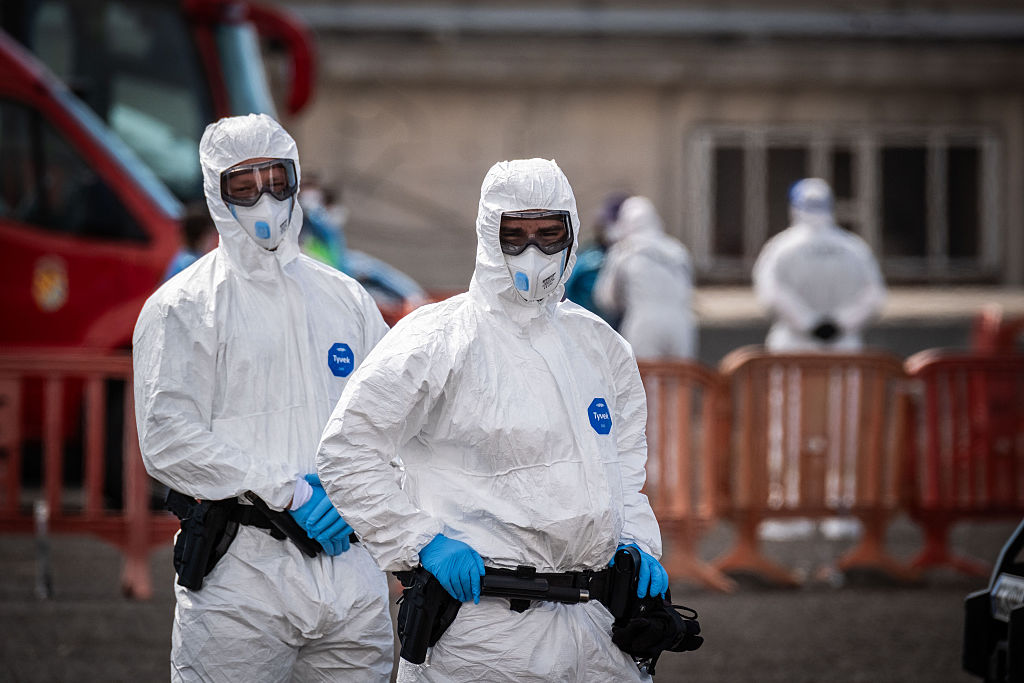
The remaining four Canadians aboard were evacuated on May 10. The MV Hondius arrived at the Port of Granadilla in Tenerife, Canary Islands, Spain, early in the morning, and the four remaining Canadians disembarked after being screened by a team of WHO and Spanish doctors. The Canadians could be seen wearing protective equipment while leaving the ship. The passengers were transported under controlled conditions from the port to Tenerife South Airport, avoiding contact with the public before boarding a privately chartered plane bound for Canada. The flight was organized by the Public Health Agency of Canada (PHAC), Global Affairs Canada, and the Canadian armed forces. A PHAC was reportedly onboard the aircraft, enforcing social distancing, masking, and other infection-prevention procedures.
The aircraft first landed at Saguenay–Bagotville Airport, a military base in Quebec. The media were prevented from accessing the base during the transfer. From Bagotville, the passengers boarded another flight to Victoria International Airport, British Columbia. The four individuals are currently isolating somewhere in British Columbia. All four are under the active supervision of doctors, and all are isolating in individual lodgings, not public hospitals. The individuals are expected to stay isolated until at least May 27, assuming all remain asymptomatic. The quarantine could possibly last 42 days if an individual begins to display symptoms, but as of now, all four have tested negative for Hantavirus. Four additional Canadians in Quebec, Alberta, and Ontario are isolating after possible exposure during air travel; all are asymptomatic and have tested negative for the virus.
Timeline of MV Hondius
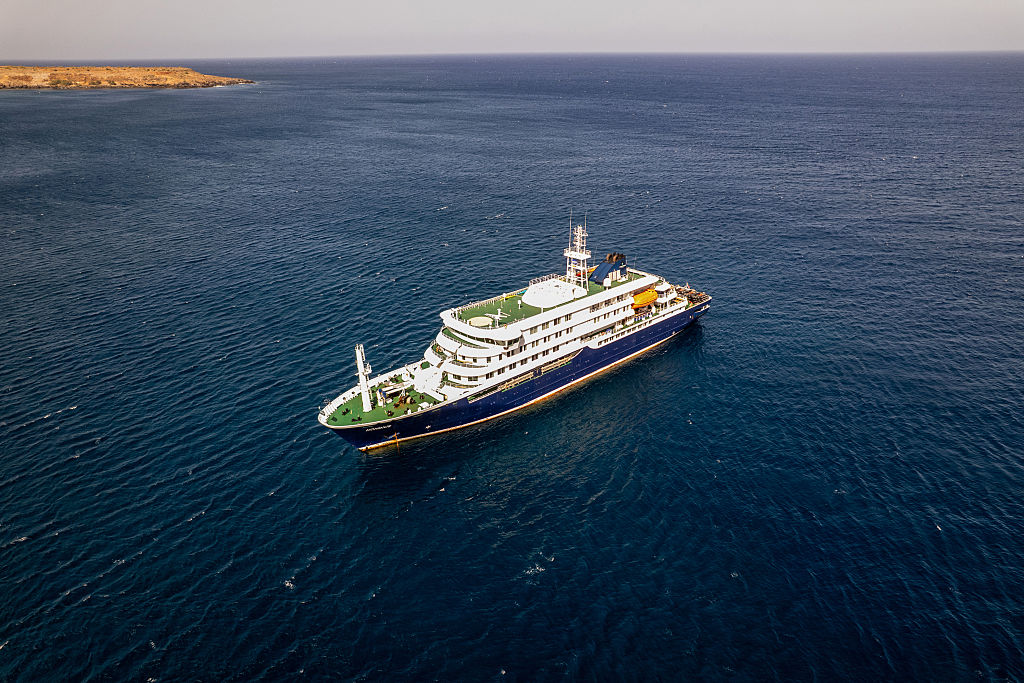
The outbreak occurred on the MV Hondius, travelling from Ushuaia in Argentina to Cape Verde. The patient being treated in Johannesburg tested positive for a hantavirus, a family of viruses that can cause hemorrhagic fever, South African spokesperson Foster Mohale said. (Photo by AFP via Getty Images)
On April 1, the MV Hondius, a Dutch cruise ship operated by Oceanwide Expeditions, departed a port in Ushuaia, Argentina. The ship planned on stopping in Antarctica, South Georgia, Tristan da Cunha, Saint Helena, Ascension Island, Cabo Verde, and the Canary Islands. The ship departed port with 88 passengers and 59 crew members. The expedition was planned to last until at least May 12. Instead, the ship became the biggest story in the world, with a deadly Hantavirus detected on board. On April 6, a man began displaying symptoms, including a headache, nausea, and mild diarrhea. The World Health Organization would later confirm that this was the first positive case of Hantavirus on the ship. The WHO announced that the passenger was likely infected before boarding the ship.
On April 2, the ship stopped in Antarctica for three days, with passengers undergoing an Antarctic expedition segment with zodiac landings and wildlife excursions. While crossing the South Atlantic, Case 1 begins displaying symptoms. While the infected individual was ill, the ship stopped in South Georgia for three days, leaving port on April 10. On April 11, Case 1 turned for the worse. Case 1 died on April 11 between South Georgia and Tristan da Cunha. On April 13, the ship stopped in Tristan da Cunha, with passengers visiting the city. On approximately April 20, the wife of Case 1 began showing symptoms of Hantavirus, beginning with nausea and quickly experiencing respiratory decline.
The next stop came on April 24, with the ship stopping in Saint Helena. In Saint Helena, the body of Case 1 was removed from the ship, and Case 2 was transported to a medical centre. More than 25 passengers permanently disembarked out of fear of illness. The WHO has cited this mass disembarkment as a potential global exposure event. Shortly after the ship left port in Saint Helens, Case 3 was discovered as a British man began experiencing Hantavirus symptoms. Outside of the ship, Case 2 deteriorates on a flight from Saint Helena to Johannesburg. Case 2 later dies in South Africa. Testing in South Africa confirms Hantavirus as the source of the illness and subsequent death. This is the first lab-confirmed case.
On April 27, the first medical evacuation happens, with Case 3 airlifted from the ship to Johannesburg. Medical staff quickly confirm that Case 3 is suffering from Hantavirus, most likely the Andes strain. In the following days, the ship announces that multiple serious illnesses were on board, with two crew members and multiple passengers showing symptoms. On May 2, Case 4, a German woman dies aboard the MV Hondius. This is when international investigations began. On May 5, the cruise ship stops in Cape Verde, with multiple evacuations occurring. It is announced that the ship’s doctor is showing symptoms, raising concerns about the risk to doctors treating patients. The ship departed Cape Verde and docked in Tenerife, Canary Islands, early morning on May 10. All remaining passengers were evacuated, including 22 British passengers, 17 Americans, 14 Spanish passengers, and other passengers hailing from the Netherlands, France, Germany, Australia, New Zealand, Ireland, and Belgium.
What is Hantavirus?
Hantaviruses are zoonotic viruses that naturally infect rodents and are occasionally transmitted to humans. Infection in people can result in severe illness and often death, although the diseases vary by type of virus and geographical location. To date, human-to-human transmission has been documented only for the Andes virus in the Americas and remains uncommon. This is the strain of the virus present on MV Hondius. Symptoms begin between one and eight weeks after exposure, depending on the type of virus, and typically include fever, headache, muscle aches and gastrointestinal symptoms (pain, nausea, vomiting).
There is no licensed specific antiviral treatment or vaccine for hantavirus infection, but the WHO stresses that there is little to no risk of further infection after the MV Hondius incident.