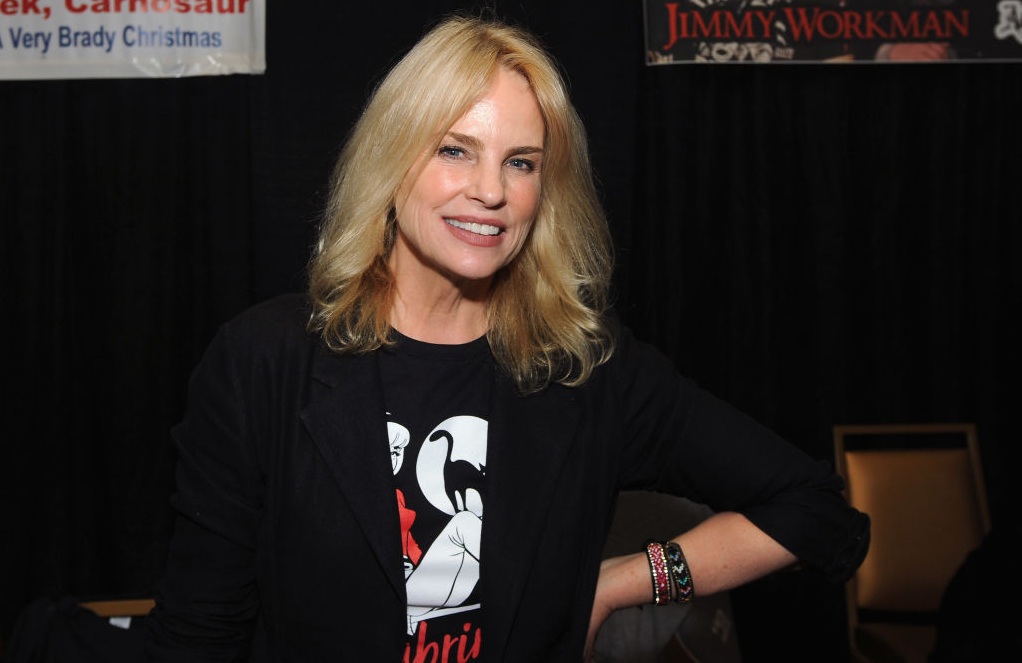
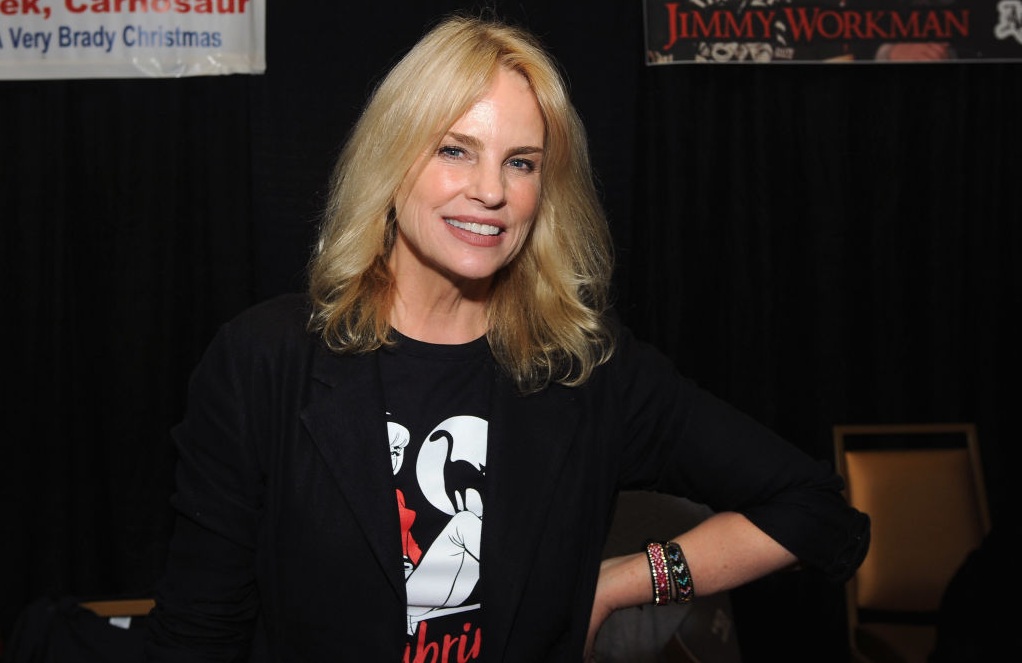
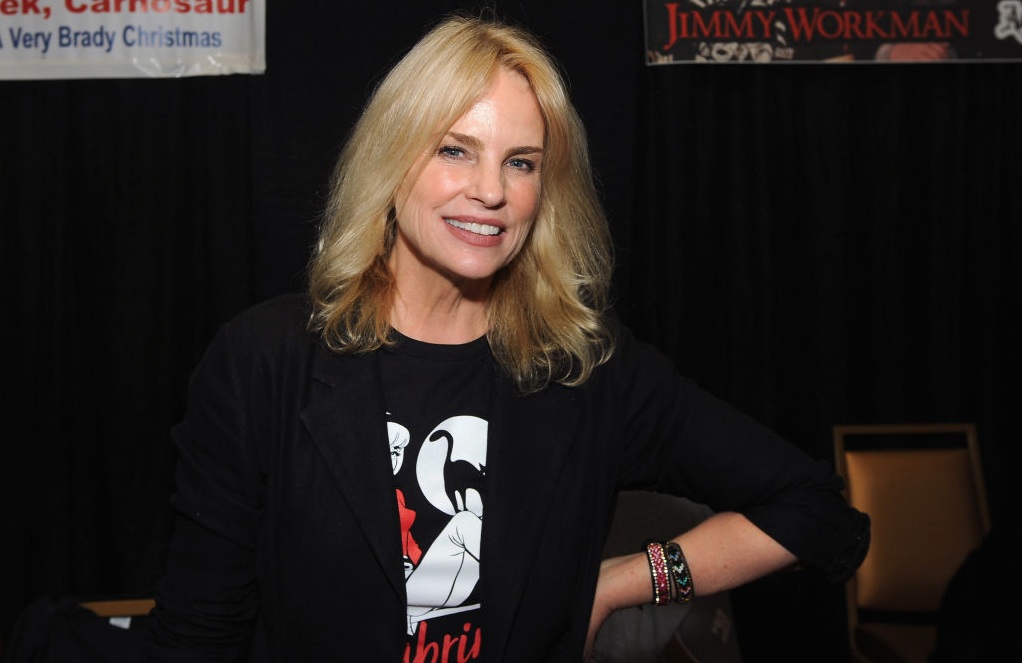
ATLANTIC CITY, NJ - MARCH 30: Jennifer Runyon attends the 2019 New Jersey Horror Con And Film Festival at Showboat Atlantic City on March 30, 2019 in Atlantic City, New Jersey. (Photo by Bobby Bank/Getty Images)
The year 2026 was marked by the passing of many personalities who left a lasting mark on our society. Artists, creators, public figures, thinkers, and athletes—each and every one contributed in their own way to shaping our era and our collective imagination. This In Memoriam project pays tribute to those who left us during the year. Through these memories, we take a moment to remember their influence, celebrate their contributions, and honor lives that will continue to resonate long after their passing.
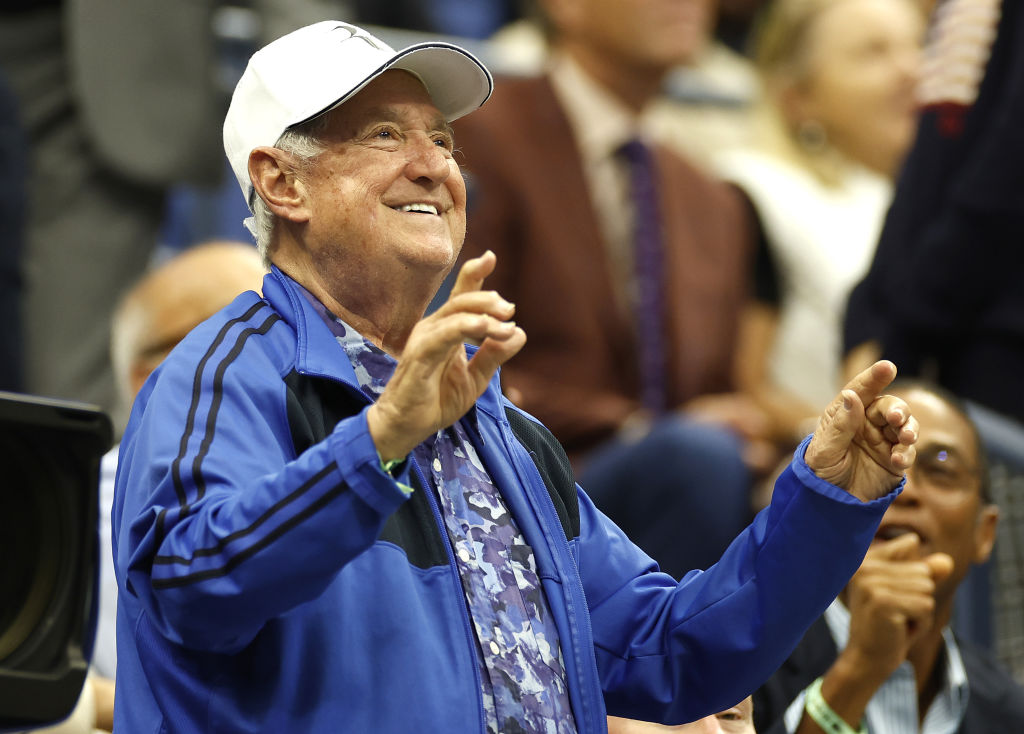
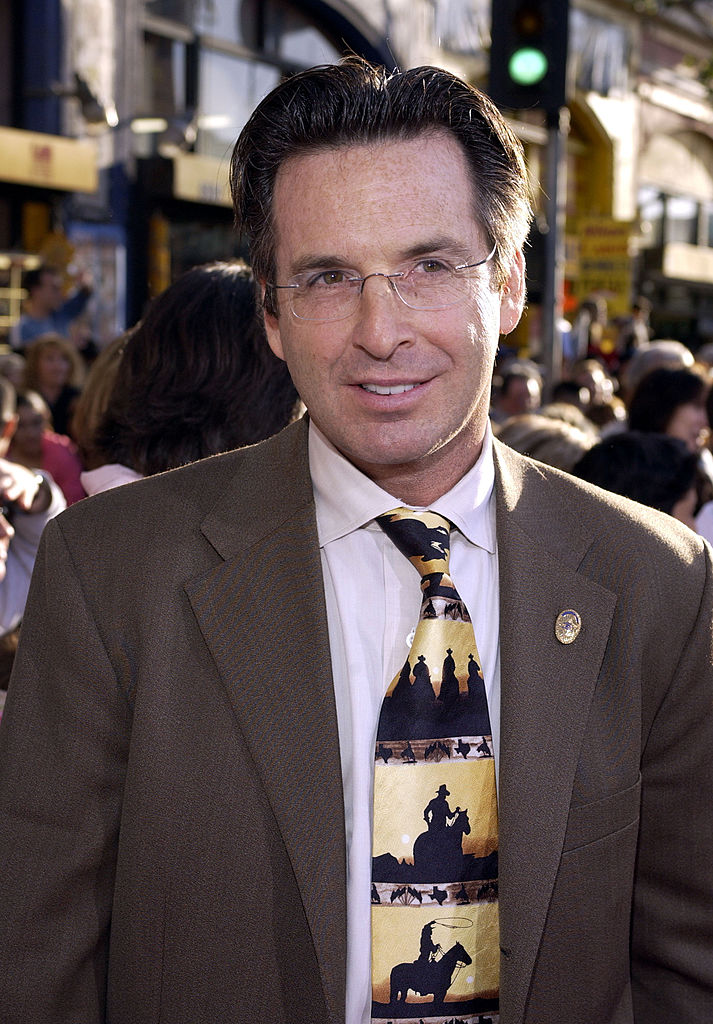
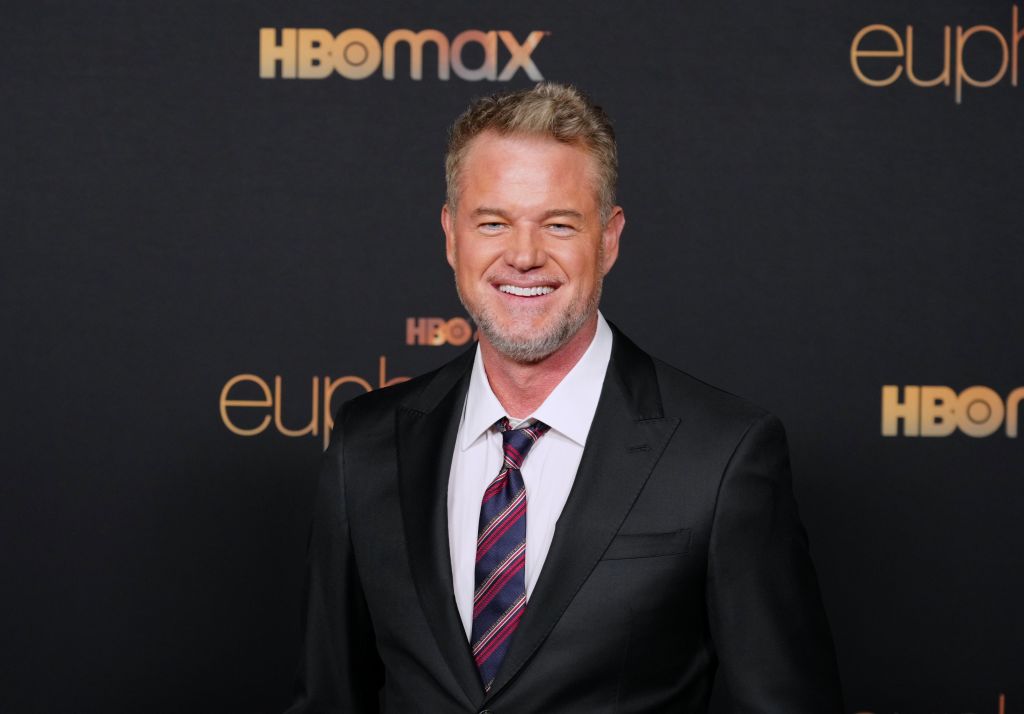
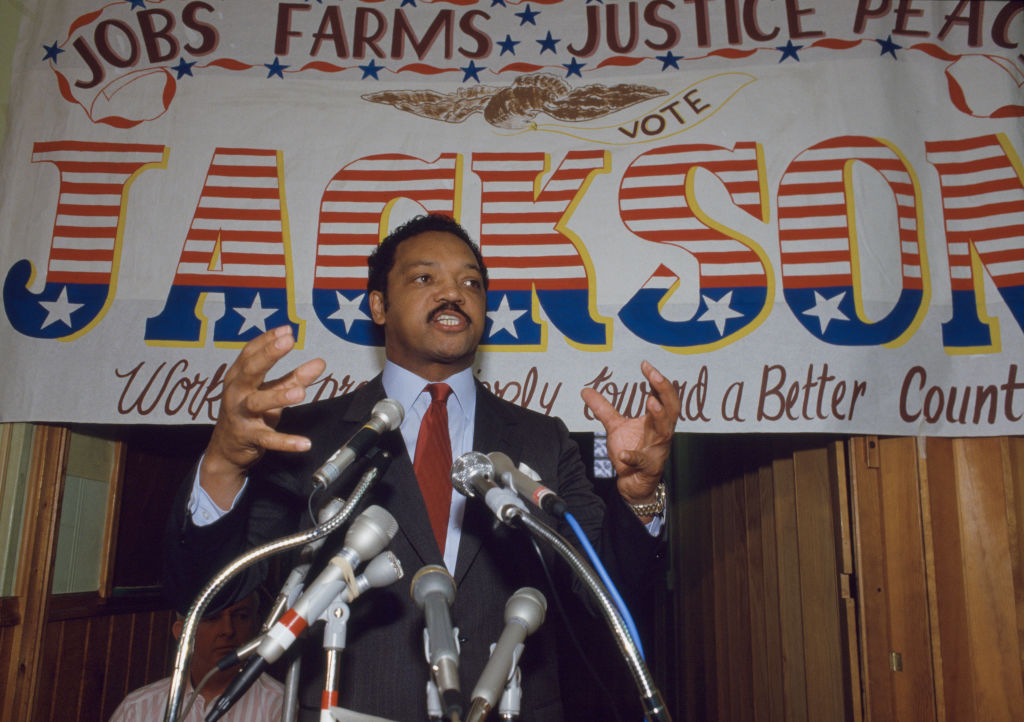
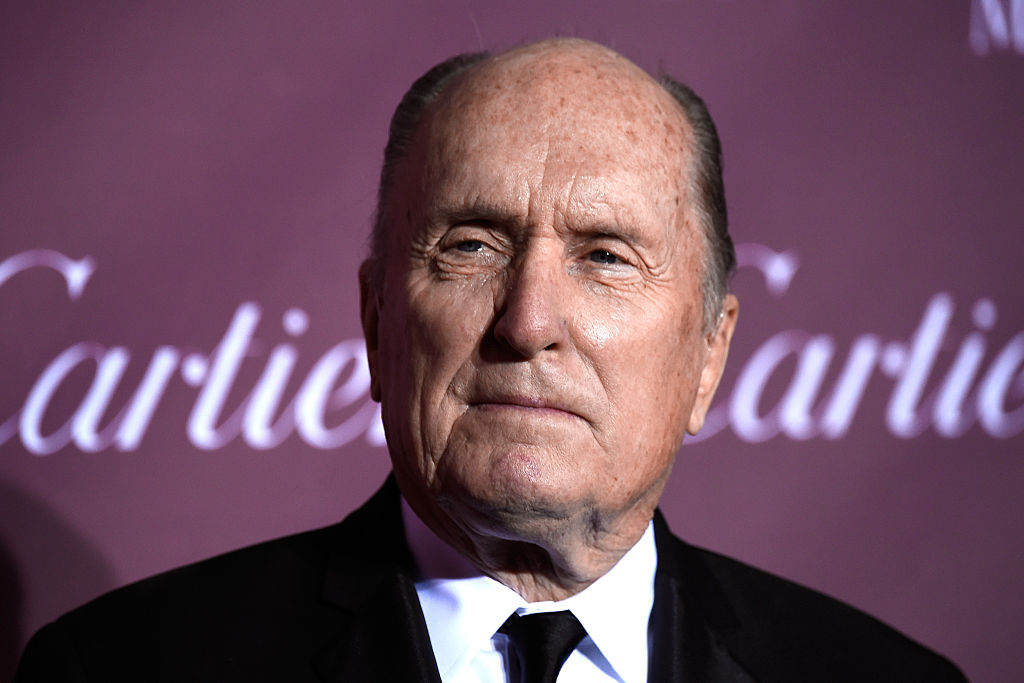
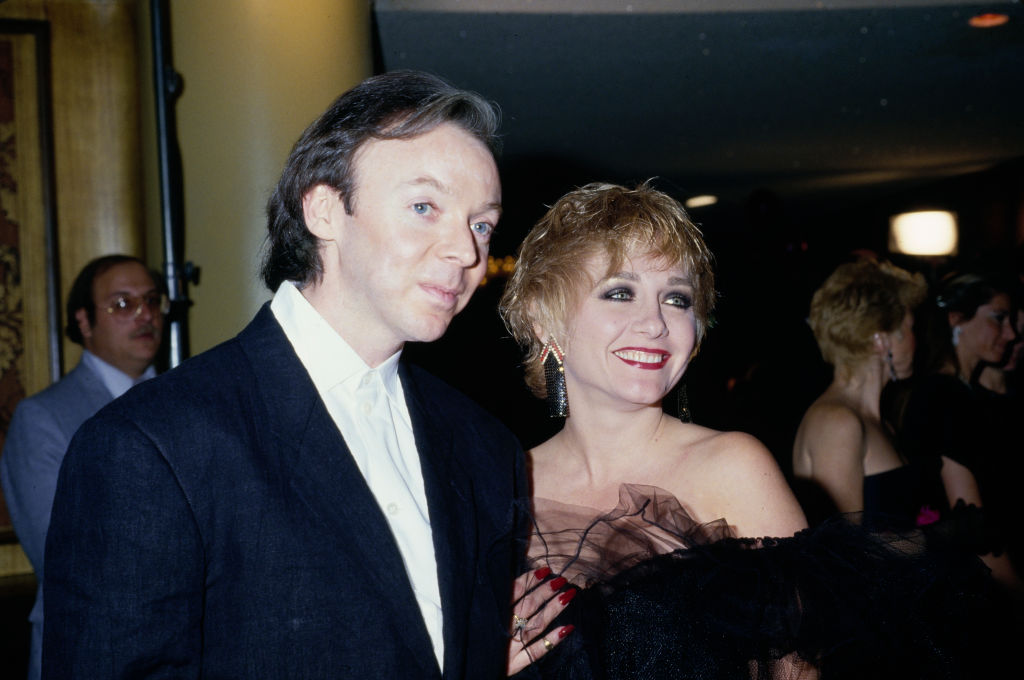
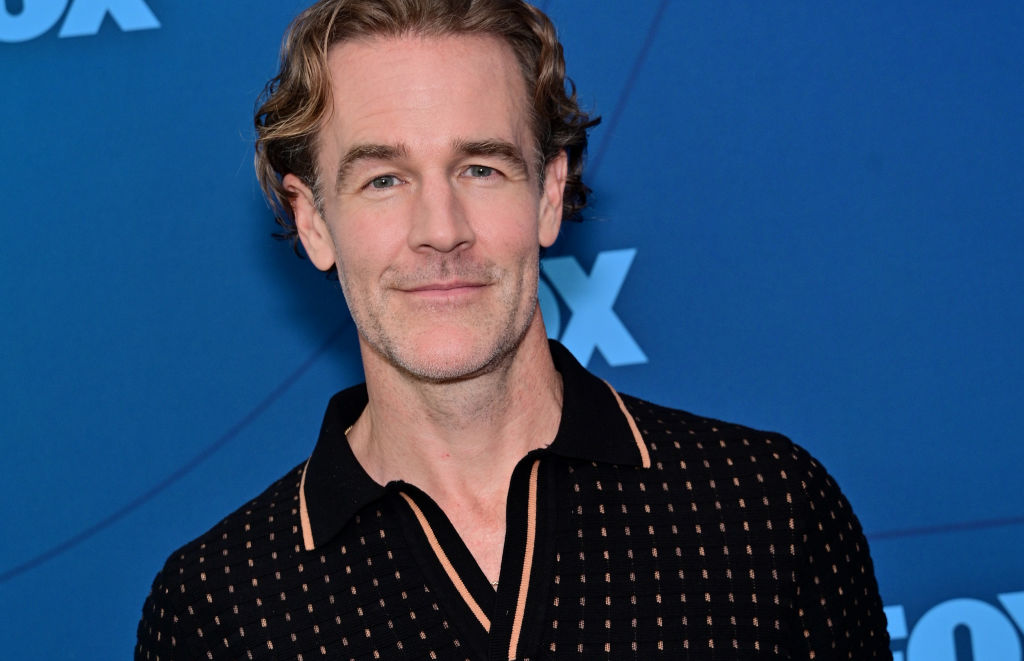
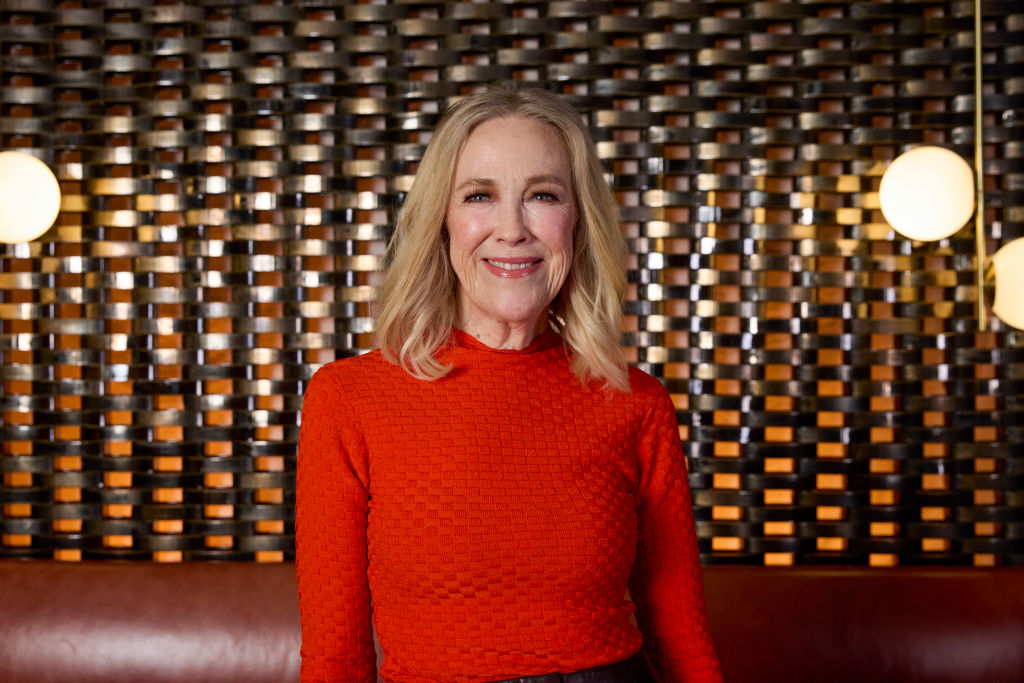
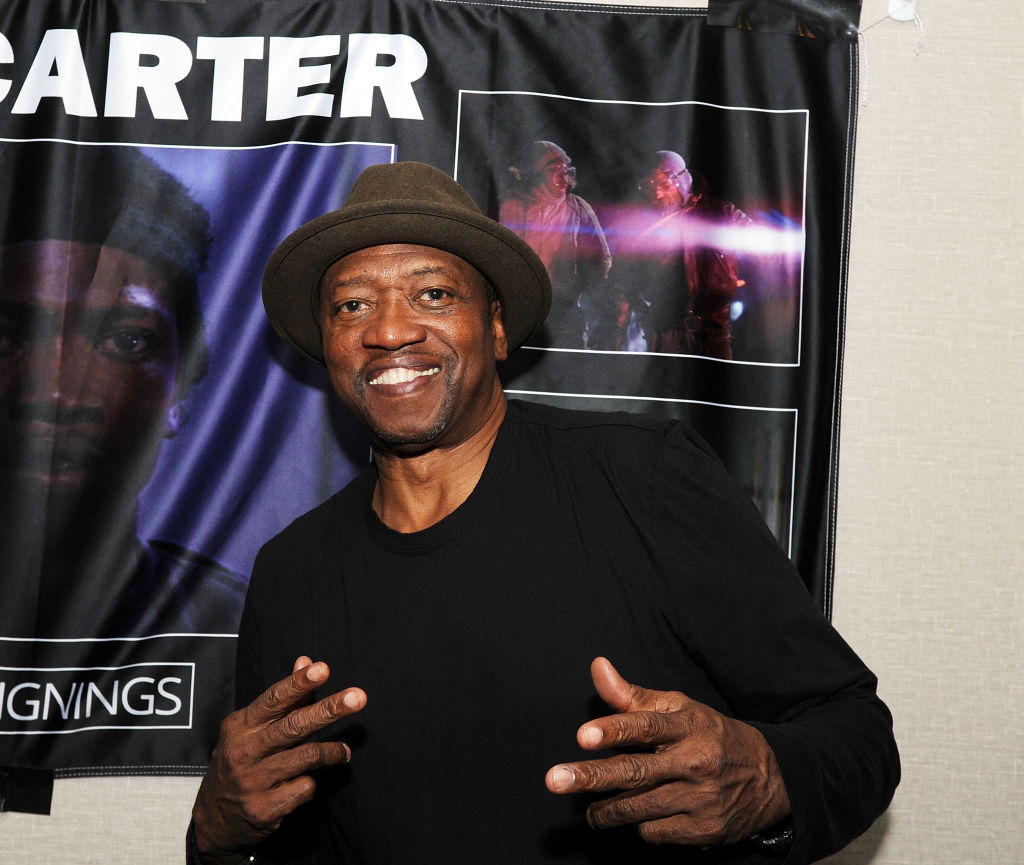
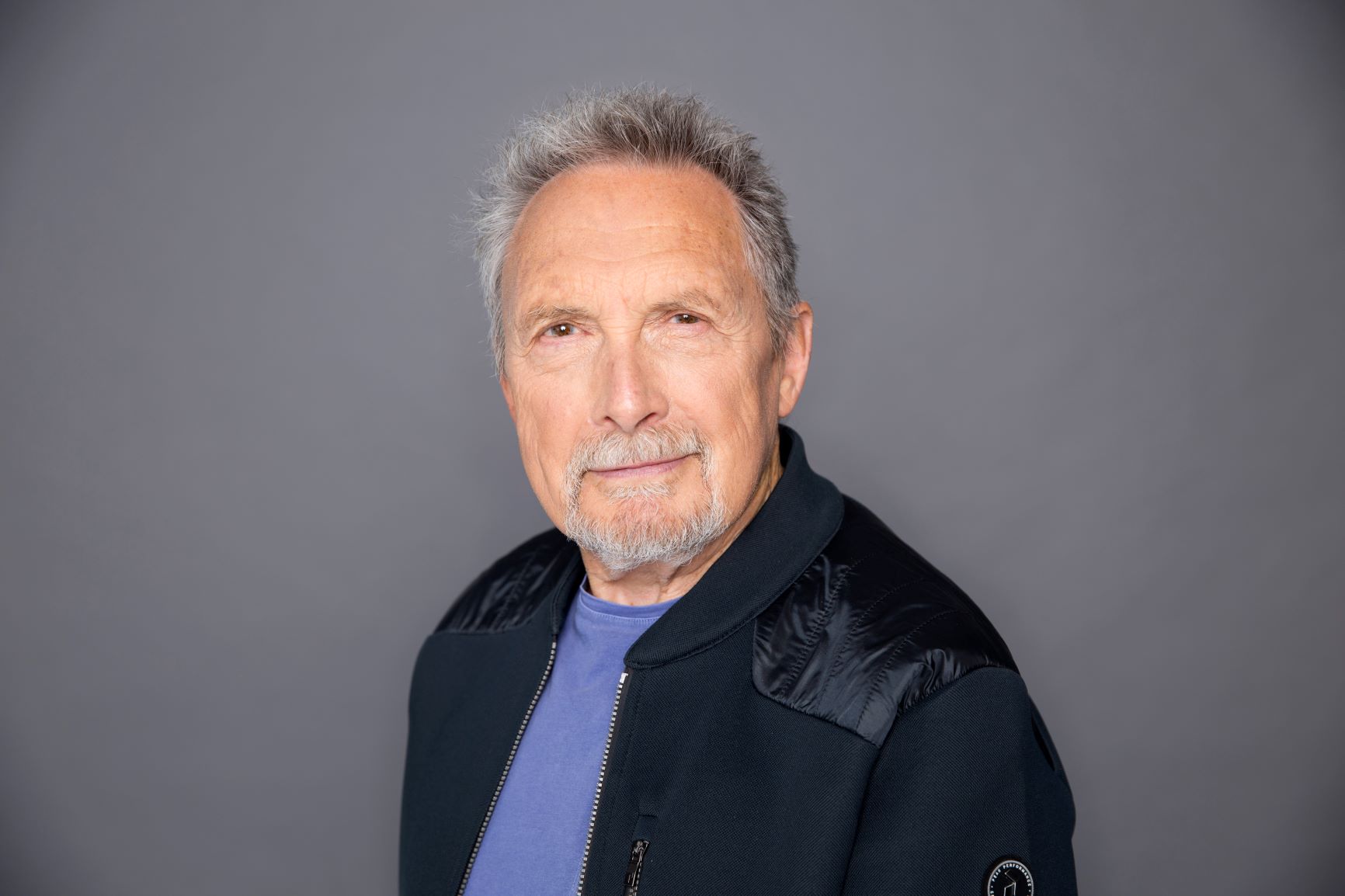
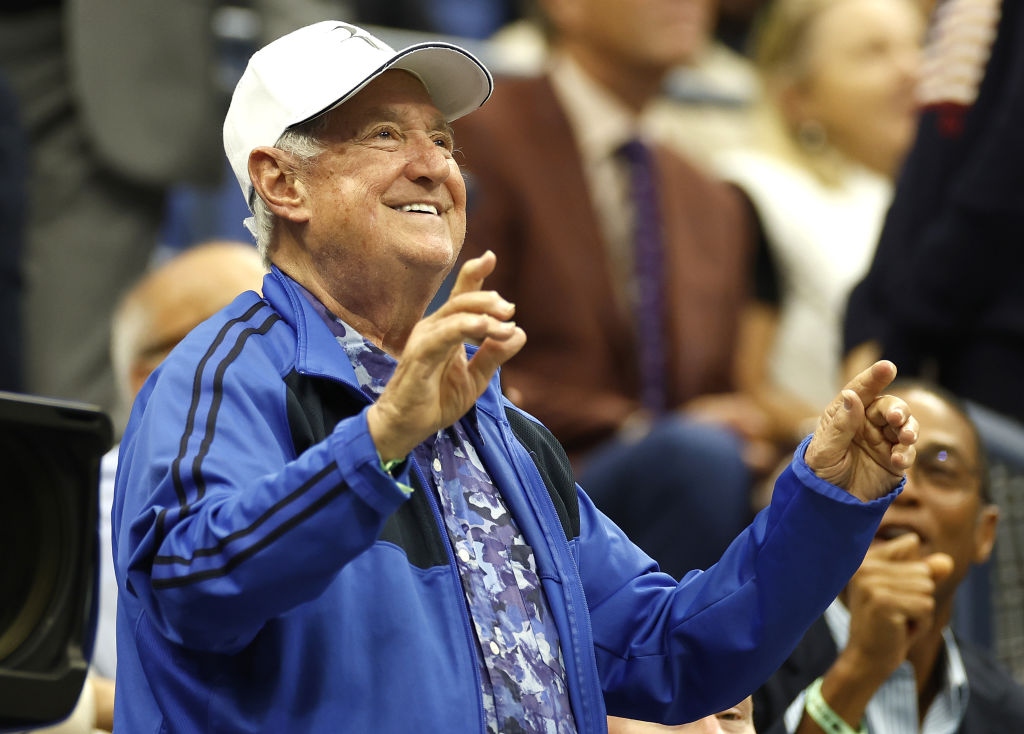
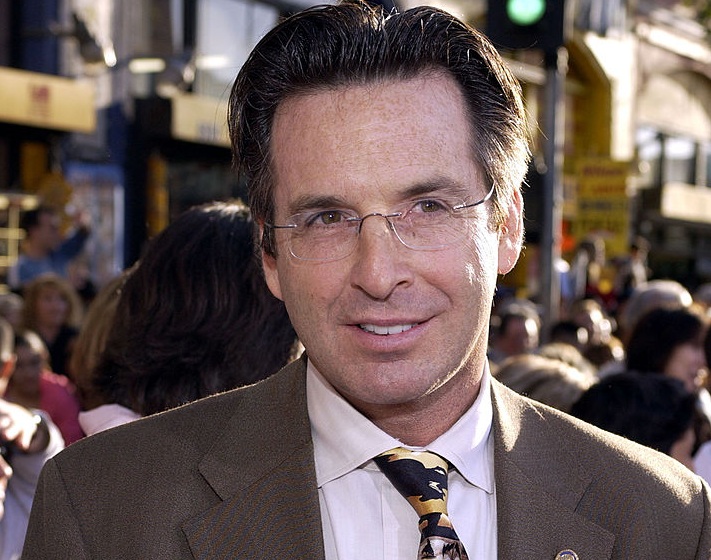
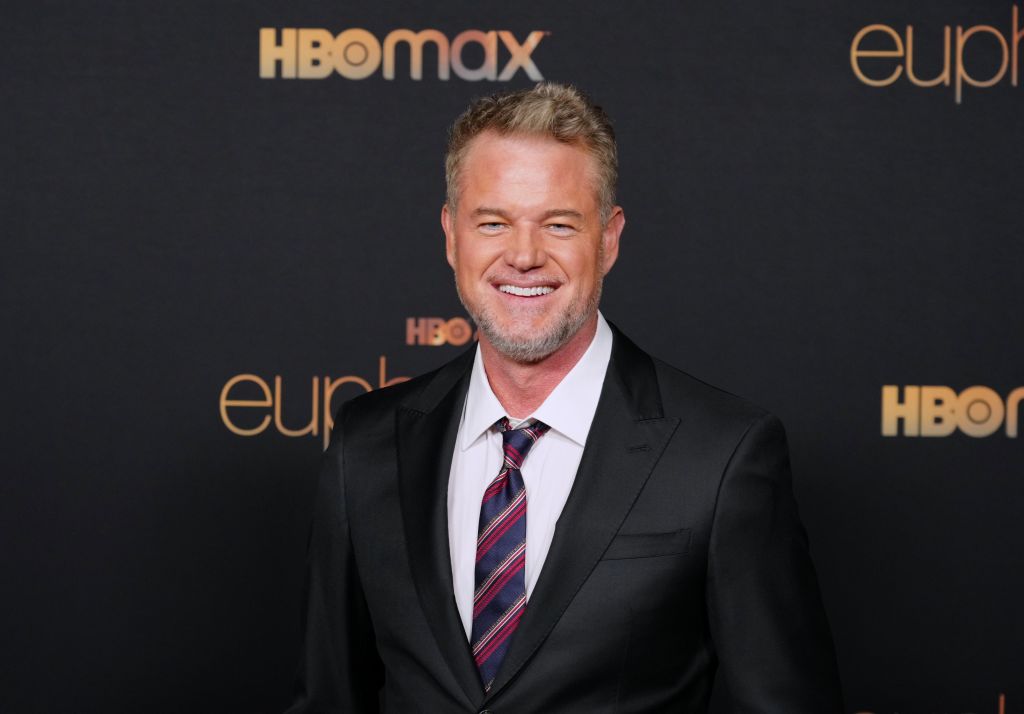
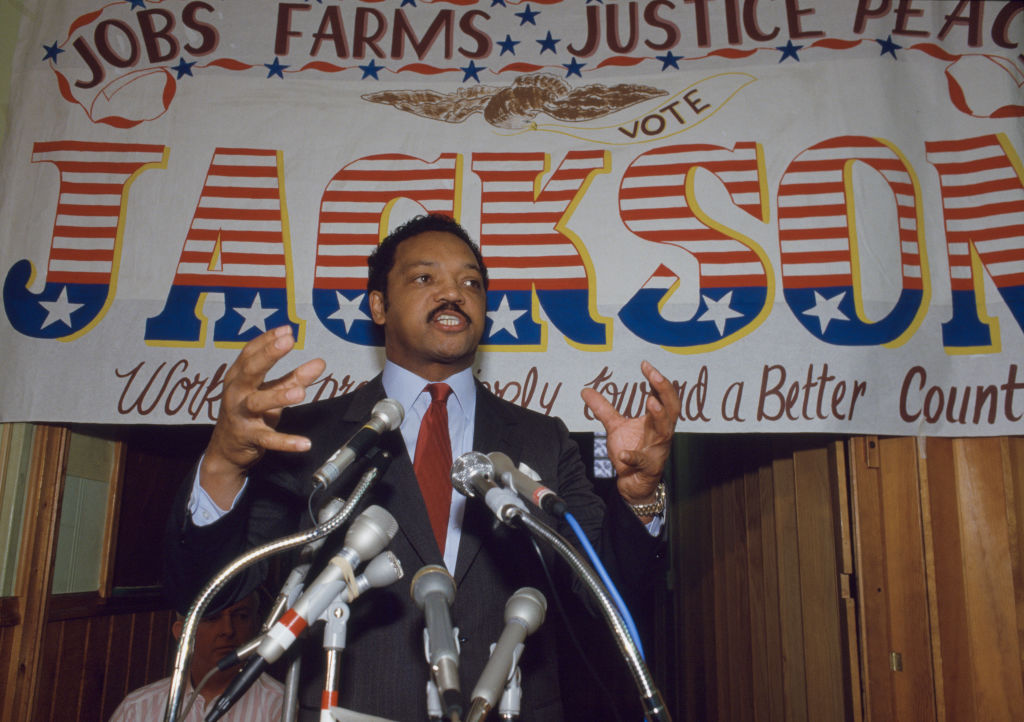
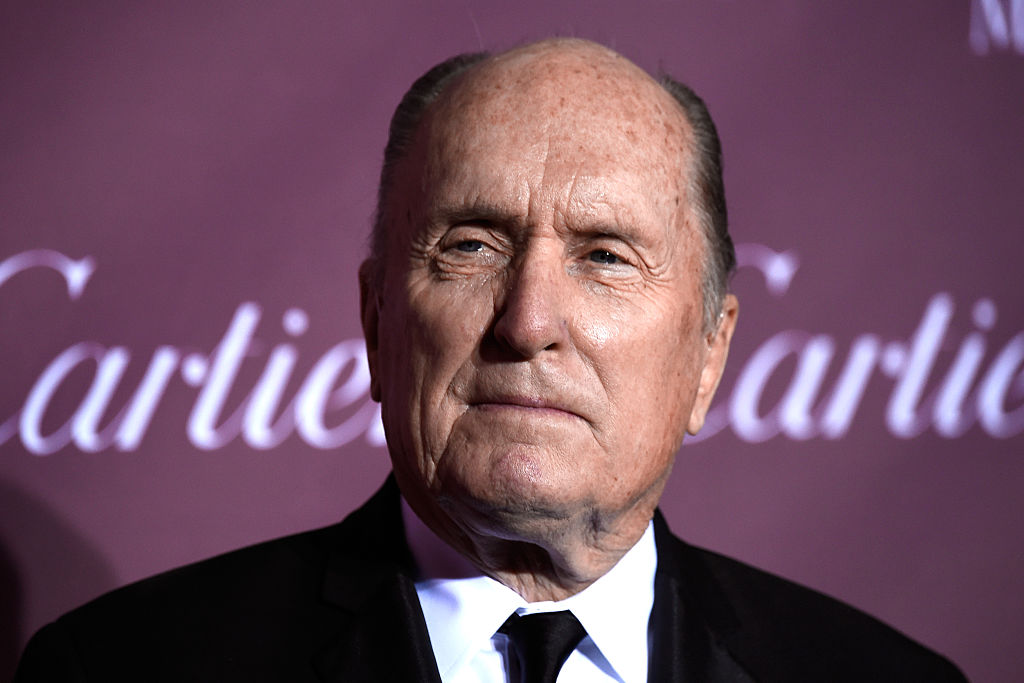
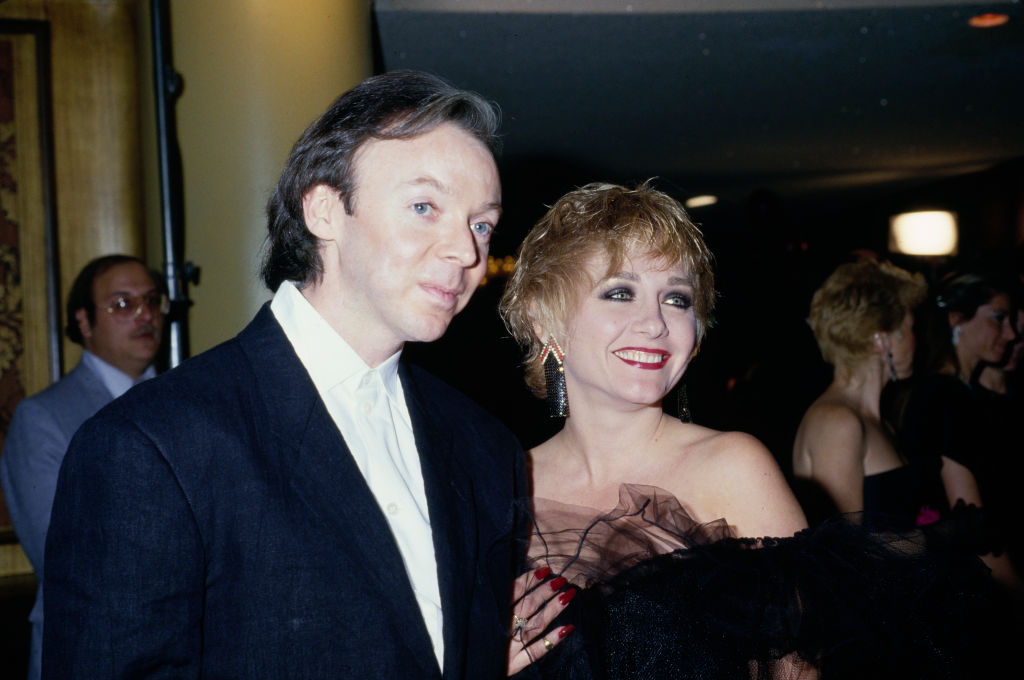
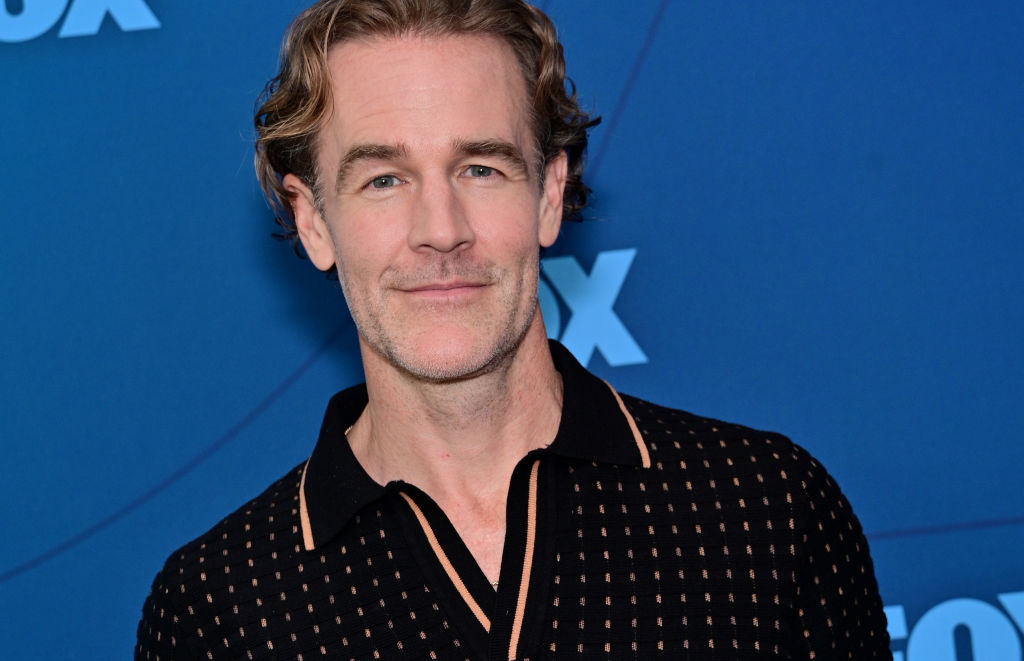
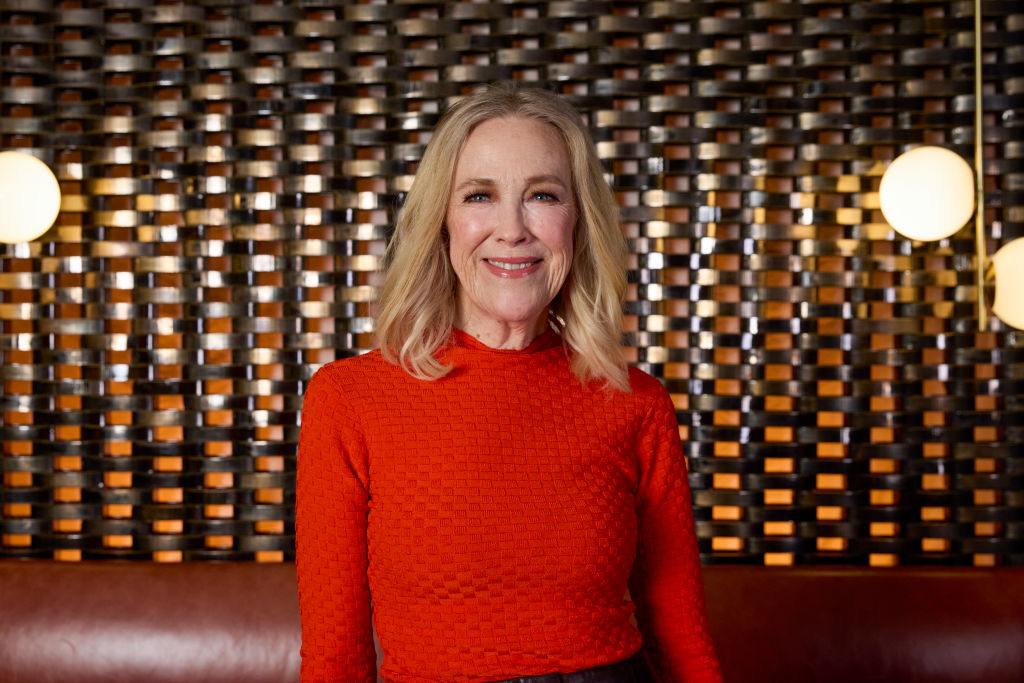
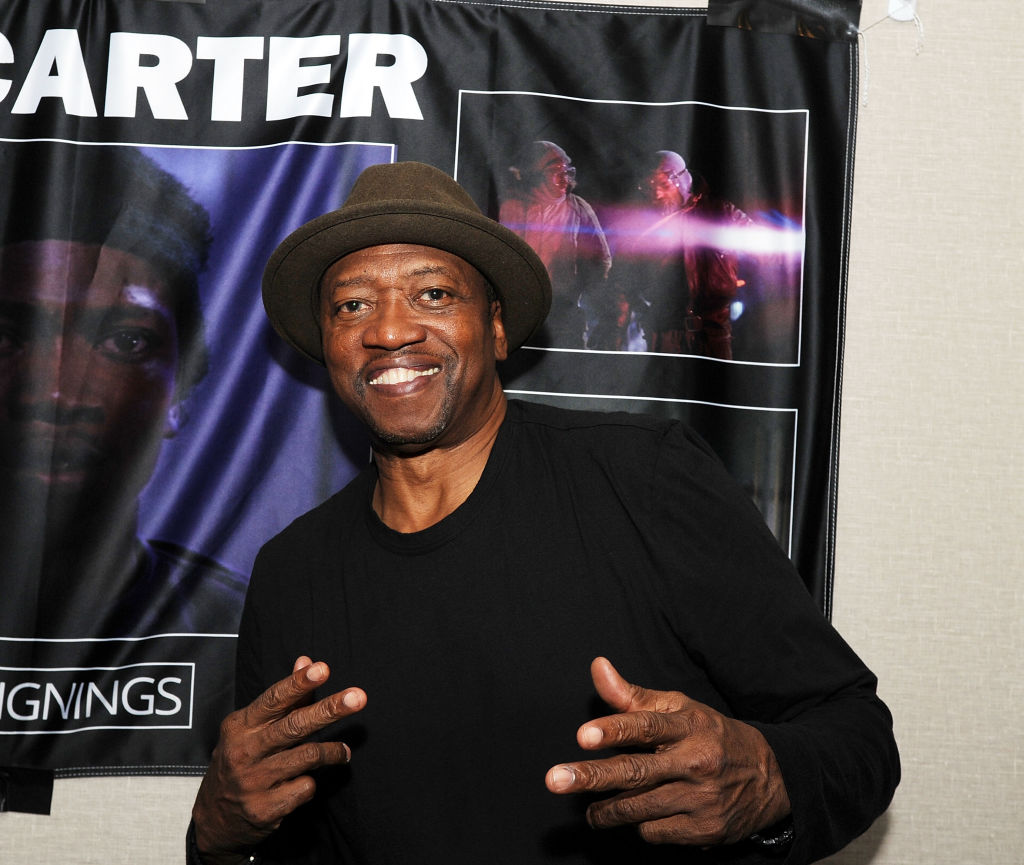
ATLANTIC CITY, NJ – MARCH 30: Jennifer Runyon attends the 2019 New Jersey Horror Con And Film Festival at Showboat Atlantic City on March 30, 2019 in Atlantic City, New Jersey. (Photo by Bobby Bank/Getty Images)NEW YORK, NEW YORK – SEPTEMBER 07: Neil Sedaka waves to the crowd during the Men’s Singles Quarterfinal match between Andrey Rublev and Frances Tiafoe of the United States on Day Ten of the 2022 US Open at USTA Billie Jean King National Tennis Center on September 07, 2022 in the Flushing neighborhood of the Queens borough of New York City. (Photo by Sarah Stier/Getty Images)NEW YORK, NY – NOVEMBER 9: Oliver « Power » Grant and Marcus Callender attend The RZA Presents The 36 Chambers 30th Anniversary Celebration After Party at Mr. Purple on November 9, 2023 in New York. (Photo by Paul Bruinooge/Patrick McMullan via Getty Images)LAS VEGAS – FEBRUARY 18: Detroit Shock team member Kara Braxton attends the 2007 NBA All-Star Game « Diddy » After Party at the Rain Nightclub in the Palms Hotel and Casino on February 18, 2007 in Las Vegas, Nevada. (Photo by Ray Tamarra/Getty Images)Robert Carradine (Photo by L. Cohen/WireImage) *** Local Caption ***GLENDALE, AZ – OCTOBER 09: Rondale Moore #4 of the Arizona Cardinals runs out during introductions against the Philadelphia Eagles at State Farm Stadium on October 9, 2022 in Glendale, Arizona. (Photo by Cooper Neill/Getty Images)LOS ANGELES, CALIFORNIA – JANUARY 05: Eric Dane attends HBO’s « Euphoria » Season 2 Photo Call at Goya Studios on January 05, 2022 in Los Angeles, California. (Photo by Jeff Kravitz/FilmMagic for HBO)ATLANTA, GEORGIA – DECEMBER 5: Rapper Lil Poppa performs during Rod Wave – Last Lap Tour at State Farm Arena on December 5, 2024 in Atlanta, Georgia. (Photo by Prince Williams/WireImage)Le révérend Jesse Jackson en campagne électorale à Winterset dans l’Iowa, le 3 février 1988.(Photo by jean-Louis Atlan/Sygma via Getty Images)PALM SPRINGS, CA – JANUARY 03: Actor Robert Duvall attends the 26th Annual Palm Springs International Film Festival Awards Gala at Parker Palm Springs on January 3, 2015 in Palm Springs, California. (Photo by Frazer Harrison/Getty Images)American actor Bud Cort, wearing a black suit with a white shirt, and American actress Patti D’Arbanville, who wears a black off-shoulder outfit, attend the 2nd Annual American Cinematheque Award Salute, held at the Hollywood Palladium in the Hollywood neighbourhood of Los Angeles, California, 21st February 1987. The ceremony honoured American actress and singer Bette Midler. (Photo by Vinnie Zuffante/Getty Images)LOS ANGELES, CALIFORNIA – NOVEMBER 18: James Van Der Beek attends 2024 FOX Winter Press Day at Fox Studio Lot on November 18, 2024 in Los Angeles, California. (Photo by Andrew Toth/Getty Images)NEW YORK, NEW YORK – MAY 26: Singer Brad Arnold of 3 Doors Down performs at 2023 FOX & Friends’ Summer Concert Series on May 26, 2023 in New York City. (Photo by Slaven Vlasic/Getty Images)BEVERLY HILLS, CA – JULY 14: Musician Chuck Negron, former singer of the classic rock band Three Dog Night, performs onstage during the Happy Together tour at Saban Theatre on July 14, 2018 in Beverly Hills, California. (Photo by Scott Dudelson/Getty Images)Catherine O’Hara of « The Wild Robot » at the Deadline Studio held at the Bisha Hotel during the Toronto International Film Festival 2024 on September 9, 2024 in Toronto, Canada. (Photo by KC Armstrong/Deadline via Getty Images)
ATLANTIC CITY, NJ - MARCH 30: Jennifer Runyon attends the 2019 New Jersey Horror Con And Film Festival at Showboat Atlantic City on March 30, 2019 in Atlantic City, New Jersey. (Photo by Bobby Bank/Getty Images)
L’année 2026 a été marquée par la disparition de nombreuses personnalités qui ont laissé une empreinte durable sur notre société. Artistes, créateurs, figures publiques, penseurs ou athlètes, chacun et chacune a contribué, à sa manière, à façonner notre époque et notre imaginaire collectif. Ce projet In memoriam rend hommage à celles et ceux qui nous ont quittés au cours de l’année. À travers ces souvenirs, nous prenons un moment pour nous rappeler leur influence, célébrer leur apport et honorer des vies qui continueront de résonner bien au-delà de leur absence.
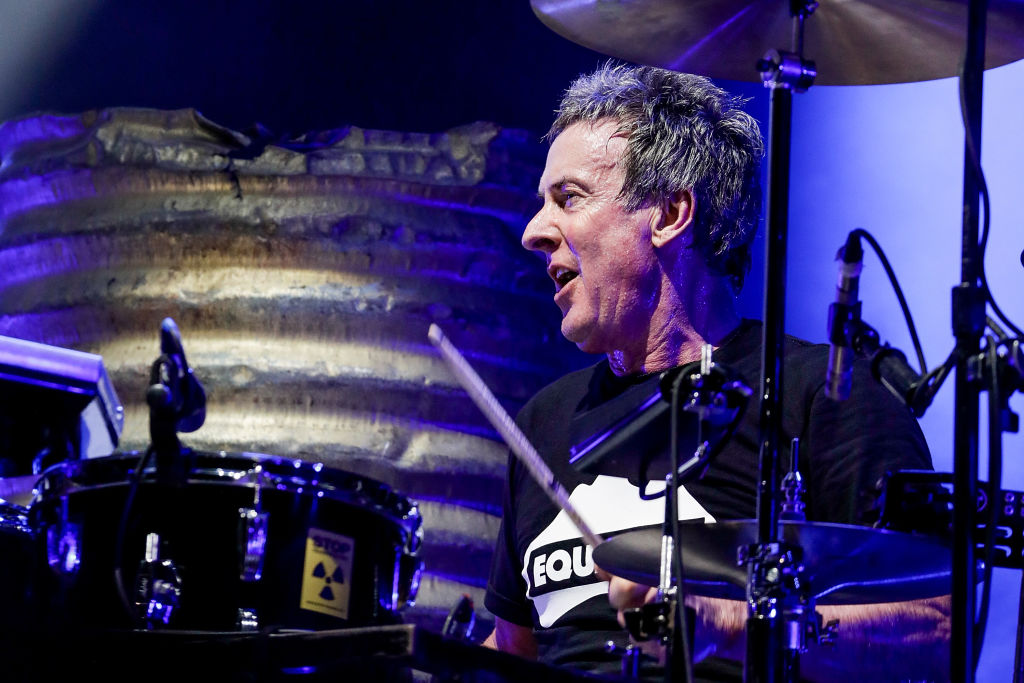
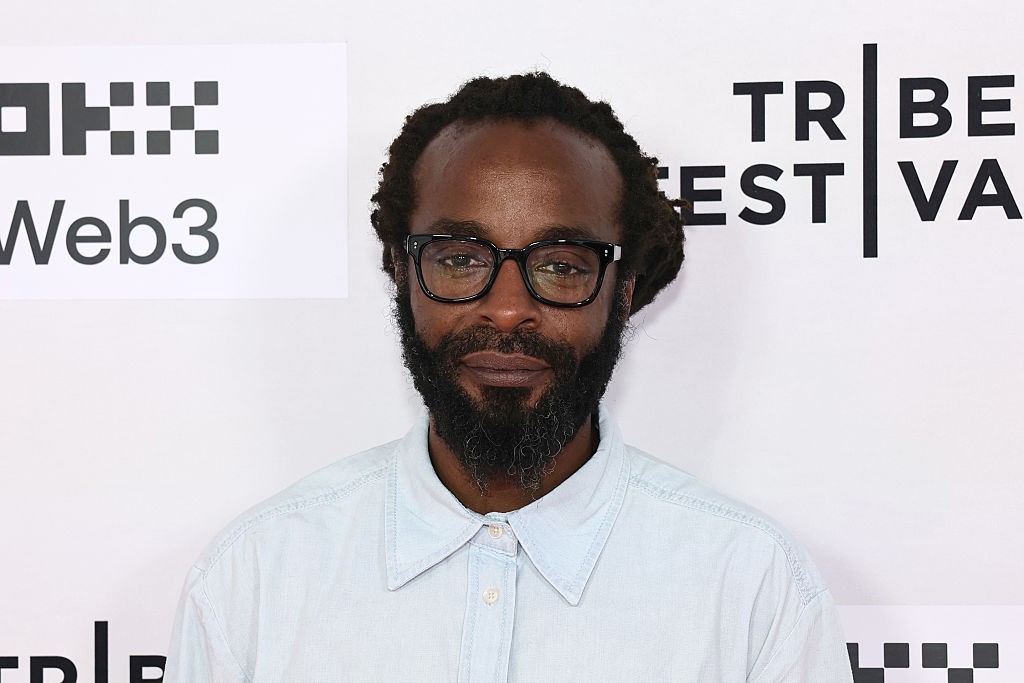
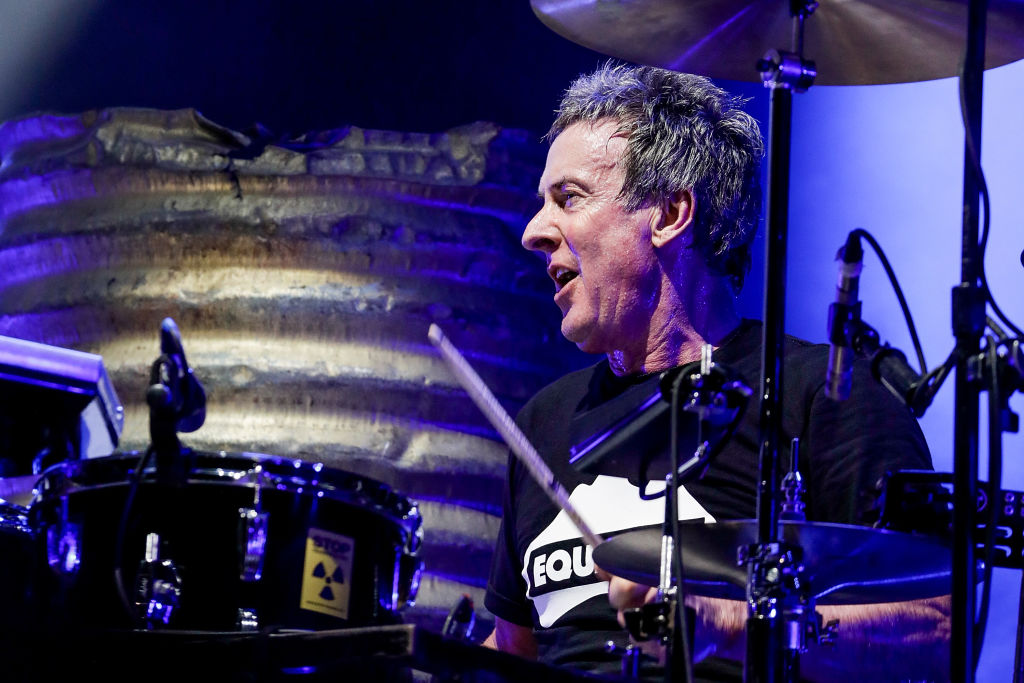
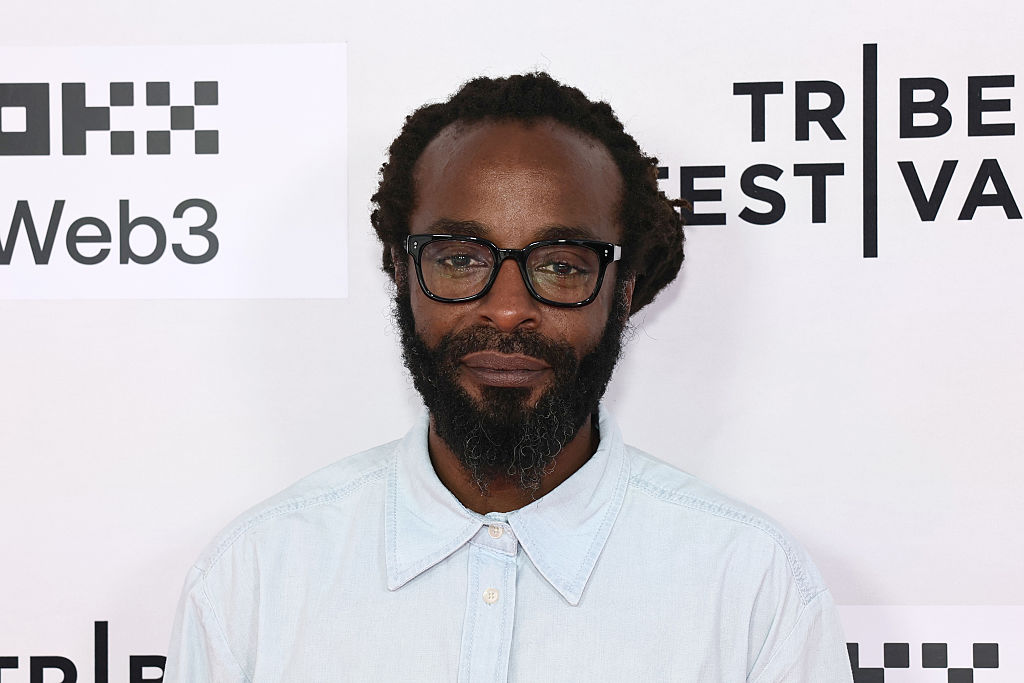
ATLANTIC CITY, NJ – MARCH 30: Jennifer Runyon attends the 2019 New Jersey Horror Con And Film Festival at Showboat Atlantic City on March 30, 2019 in Atlantic City, New Jersey. (Photo by Bobby Bank/Getty Images)NEW YORK, NEW YORK – SEPTEMBER 07: Neil Sedaka waves to the crowd during the Men’s Singles Quarterfinal match between Andrey Rublev and Frances Tiafoe of the United States on Day Ten of the 2022 US Open at USTA Billie Jean King National Tennis Center on September 07, 2022 in the Flushing neighborhood of the Queens borough of New York City. (Photo by Sarah Stier/Getty Images)NEW YORK, NY – NOVEMBER 9: Oliver « Power » Grant and Marcus Callender attend The RZA Presents The 36 Chambers 30th Anniversary Celebration After Party at Mr. Purple on November 9, 2023 in New York. (Photo by Paul Bruinooge/Patrick McMullan via Getty Images)LAS VEGAS – FEBRUARY 18: Detroit Shock team member Kara Braxton attends the 2007 NBA All-Star Game « Diddy » After Party at the Rain Nightclub in the Palms Hotel and Casino on February 18, 2007 in Las Vegas, Nevada. (Photo by Ray Tamarra/Getty Images)Robert Carradine (Photo by L. Cohen/WireImage) *** Local Caption ***LOS ANGELES, CALIFORNIA – JANUARY 05: Eric Dane attends HBO’s « Euphoria » Season 2 Photo Call at Goya Studios on January 05, 2022 in Los Angeles, California. (Photo by Jeff Kravitz/FilmMagic for HBO)ATLANTA, GEORGIA – DECEMBER 5: Rapper Lil Poppa performs during Rod Wave – Last Lap Tour at State Farm Arena on December 5, 2024 in Atlanta, Georgia. (Photo by Prince Williams/WireImage)Le révérend Jesse Jackson en campagne électorale à Winterset dans l’Iowa, le 3 février 1988.(Photo by jean-Louis Atlan/Sygma via Getty Images)PALM SPRINGS, CA – JANUARY 03: Actor Robert Duvall attends the 26th Annual Palm Springs International Film Festival Awards Gala at Parker Palm Springs on January 3, 2015 in Palm Springs, California. (Photo by Frazer Harrison/Getty Images)American actor Bud Cort, wearing a black suit with a white shirt, and American actress Patti D’Arbanville, who wears a black off-shoulder outfit, attend the 2nd Annual American Cinematheque Award Salute, held at the Hollywood Palladium in the Hollywood neighbourhood of Los Angeles, California, 21st February 1987. The ceremony honoured American actress and singer Bette Midler. (Photo by Vinnie Zuffante/Getty Images)LOS ANGELES, CALIFORNIA – NOVEMBER 18: James Van Der Beek attends 2024 FOX Winter Press Day at Fox Studio Lot on November 18, 2024 in Los Angeles, California. (Photo by Andrew Toth/Getty Images)NEW YORK, NEW YORK – MAY 26: Singer Brad Arnold of 3 Doors Down performs at 2023 FOX & Friends’ Summer Concert Series on May 26, 2023 in New York City. (Photo by Slaven Vlasic/Getty Images)BEVERLY HILLS, CA – JULY 14: Musician Chuck Negron, former singer of the classic rock band Three Dog Night, performs onstage during the Happy Together tour at Saban Theatre on July 14, 2018 in Beverly Hills, California. (Photo by Scott Dudelson/Getty Images)Catherine O’Hara of « The Wild Robot » at the Deadline Studio held at the Bisha Hotel during the Toronto International Film Festival 2024 on September 9, 2024 in Toronto, Canada. (Photo by KC Armstrong/Deadline via Getty Images)NEW YORK, NEW YORK – NOVEMBER 11: Bob Weir performs onstage at 2023 A Funny Thing Happened On The Way To Cure Parkinson’s at Casa Cipriani on November 11, 2023 in New York City. (Photo by Bryan Bedder/Getty Images for The Michael J. Fox Foundation)NEW YORK, NY – JUNE 03: Valentino Garavani attends the 2019 CFDA Fashion Awards at The Brooklyn Museum on June 3, 2019 in New York City. (Photo by Taylor Hill/FilmMagic)Kianna Underwood and Jennifer Tilly during Hairspray Opening Night Los Angeles – After Party at Henry Fonda Theatre in Hollywood, California, United States. (Photo by Bruce Glikas/FilmMagic)PARSIPPANY, NJ – OCTOBER 27: TK Carter attends the Chiller Theatre Expo Fall 2018 at Hilton Parsippany on October 27, 2018 in Parsippany, New Jersey. (Photo by Bobby Bank/Getty Images)HANGING ROCK, AUSTRALIA – NOVEMBER 04: Rob Hirst from Midnight Oil perform on November 4, 2017 in Hanging Rock, Australia. (Photo by Sam Tabone/Getty Images)Yeison Jimenez during Billboard Latin Music Week at the Fillmore Miami Beach on October 15, 2024 in Miami Beach, Florida. (Photo by Christopher Polk/Billboard via Getty Images)NEW YORK, NEW YORK – JUNE 05: John Forté attends « Kerouac’s Road: The Beat Of A Nation » Premiere – 2025 Tribeca Festival at SVA Theater on June 05, 2025 in New York City. (Photo by Theo Wargo/Getty Images for Tribeca Festival)LAS VEGAS – MARCH 07: Paris Hilton (L) and hair colorist Kim Vo arrive at the grand opening of the Kim Vo Salon at The Mirage Hotel & Casino March 7, 2008 in Las Vegas, Nevada. (Photo by Ethan Miller/Getty Images for MGM/Mirage)
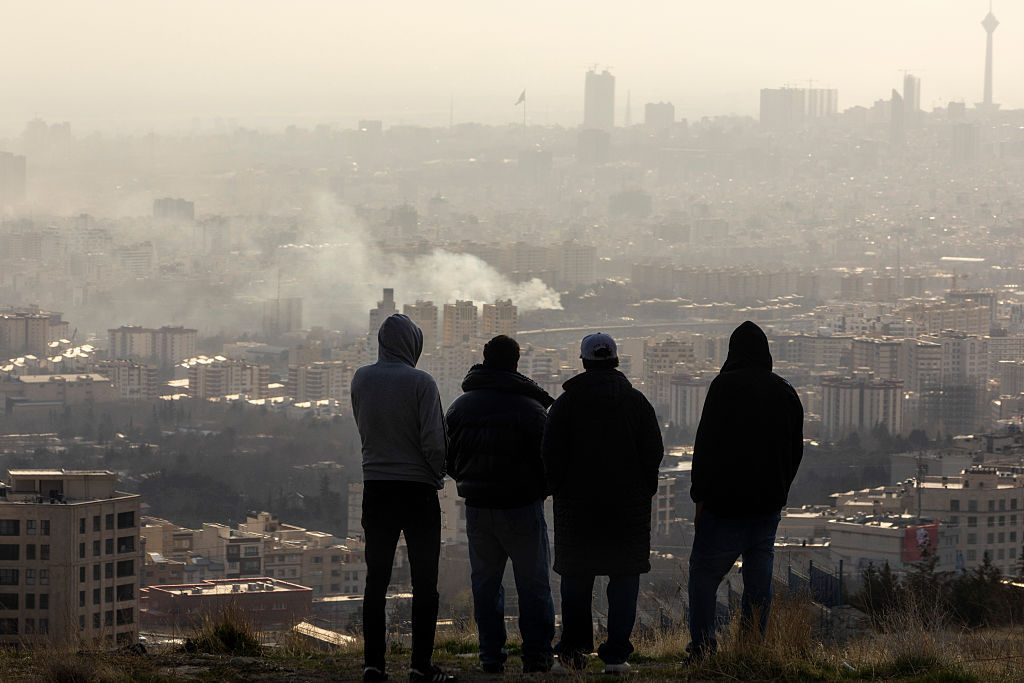
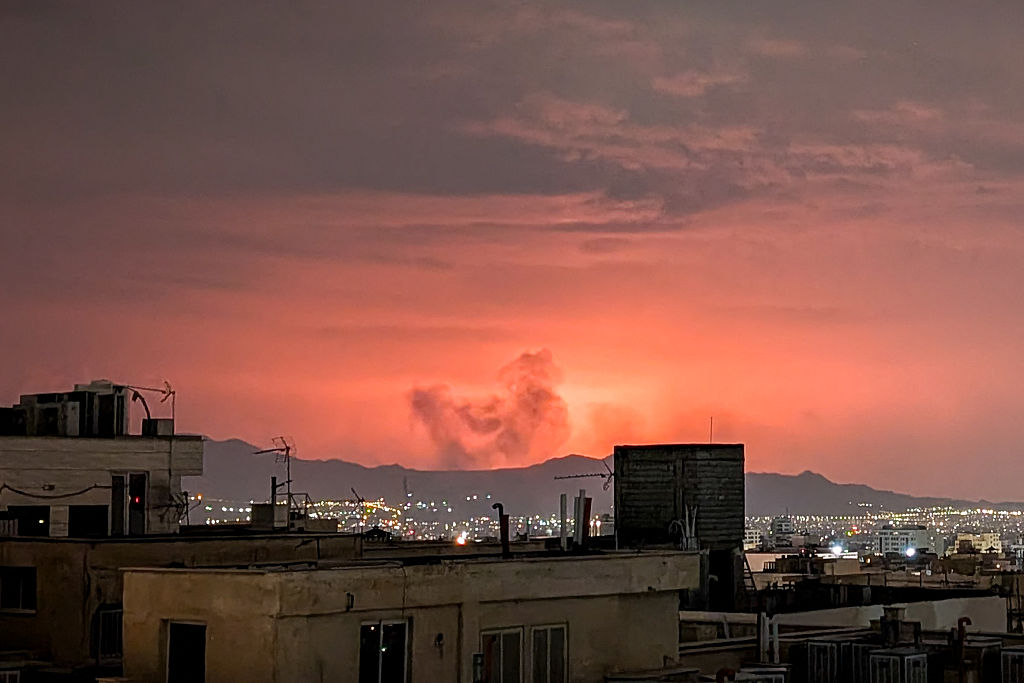
TEHRAN, IRAN - MARCH 2: Men watch from a hillside as a plume of smoke rises after an explosion on March 2, 2026 in Tehran, Iran. The United States and Israel continued their joint attacks that erupted on February 28. Iran retaliated by firing waves of missiles and drones at Israel, and targeting U.S. allies in the region. (Photo by Majid Saeedi/Getty Images)
On February 28, 2026, the US government and Israel undertook a joint operation in Iran, with the US subsequently declaring it was at war with the country. The attacks triggered retaliatory strikes from Iran, targeting US and Israeli military bases across the Middle East. According to Donald Trump, there is no timeline for this war, and the US will continue its operations in the country until it sees a significant regime change, as well as an end to Iran’s supposed nuclear program. After killing Iran’s Supreme Leader Ali Khamenei on Day One of the war, Trump changed his tune, then claiming that he was forced to attack Iran because the country was ‘certainly going’ to attack Israel.
Now Lebanon and the rest of the Gulf countries have been sucked into the conflict. Iran has struck US infrastructure in nine different nations, and the Lebanese-based, Iranian-funded group Hezbollah has announced it’s ready for open war with Israel. Iran has sent thousands of drones and missiles to nine different Gulf countries, targeting US military installations. Some civilian infrastructure has also been destroyed, specifically airports and runways. Between February 28 and March 2, 2026, Iran attacked nine different countries and 27 different military installations across the Gulf coast.
(Photo by IBRAHIM AMRO / AFP via Getty Images)
Strikes on March 3
Neither the United States nor Israel have ceased their constant attacks on Iran, and in return, Iran has been conducting nearly continuous attacks on America’s allies in the Gulf states. On March 3, Iran escalated the scope of its strikes, targeting US diplomatic missions instead of military infrastructure. In Saudi Arabia, two Iranian drones successfully targeted the United States embassy in Riyadh. The strikes caused structural damage to the embassy, and photos showed smoke billowing from within the embassy’s fence. Saudi officials also confirmed that eight Iranian drones were intercepted over Riyadh and Al Kharj. According to Saudi sources, some of the strikes were targeting Prince Sultan Air Base. The United States issued a security alert warning Americans to avoid the US Consulate in Dhahran.
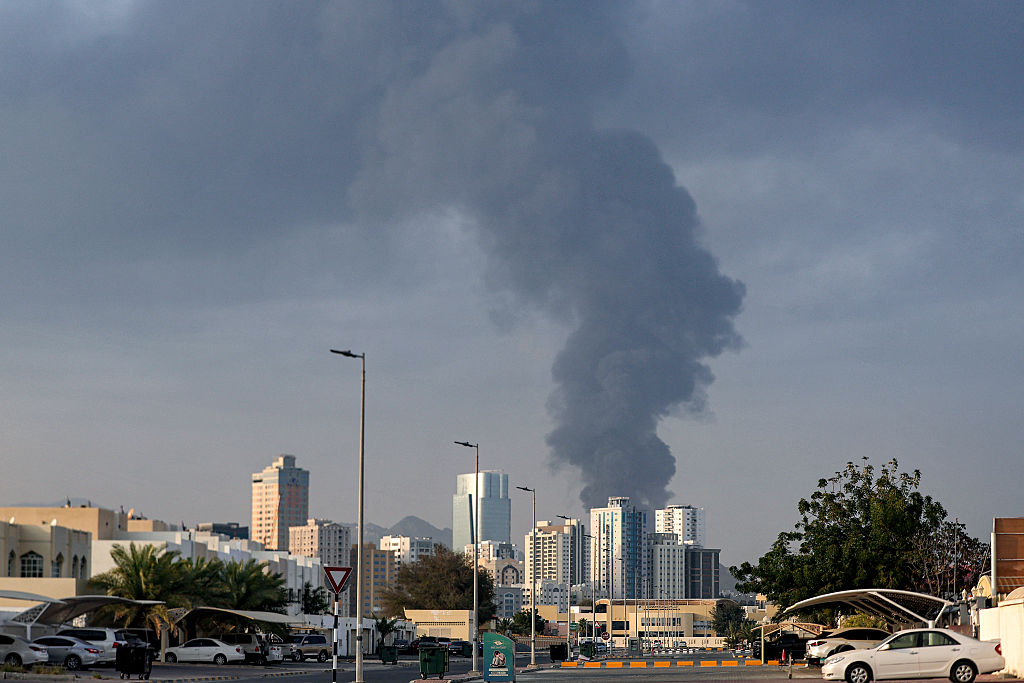
Iranian drones also struck the US Consulate in Dubai, United Arab Emirates. Video showed drone strikes starting a small fire in the compound, but the consulate received limited damage. At Fujairah Port, debris from an intercepted missile fell in the area and ignited a fire. Iran struck Oman on March 3 as well, targeting key maritime infrastructure. Multiple Iranian drones were intercepted by defence forces, but at least one drone struck fuel tanks in Duqm Port. Jordan, Bahrain, and Qatar all reported intercepting Iranian missiles on March 3.
(Photo by Fadel SENNA / AFP via Getty Images)
Strikes on March 4
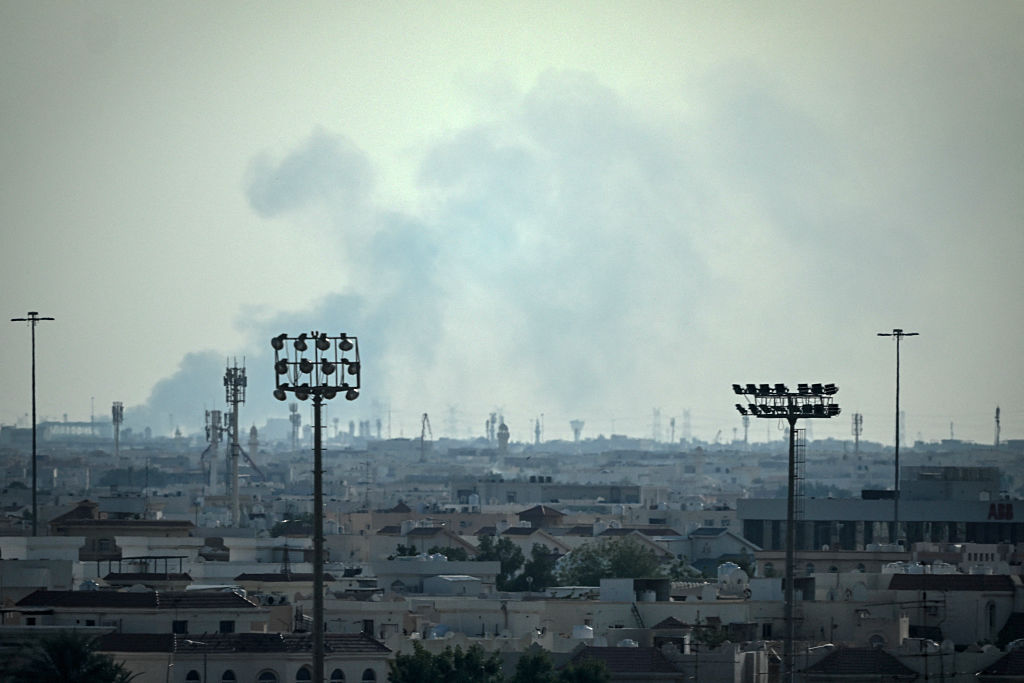
On March 4, Iran continued its campaign in the Gulf after a full night of strikes by Israel and the US, striking the capital, Tehran. Iran targeted Saudi Arabia, Bahrain, Qatar, Kuwait, and the United Arab Emirates on March 4, launching a barrage of missiles and drones. Iran targeted Aramco Oil’s refinery in Ras Tanura, Saudi Arabia. Officials reported the drones had successfully reached the facility but had not caused any damage. Saudi officials stated the country’s defence systems had intercepted nine drones attempting to enter the country’s airspace.
Iran also targeted Al Udeid Air Base near Doha, Qatar, firing two ballistic missiles. One was intercepted by defence forces, but one struck the air base. In a separate statement, Qatar’s official confirmed that the country had intercepted six drones and two cruise missiles attempting to enter the airspace. Kuwait also intercepted missiles and drones, but one Iranian kamikaze drone struck a residential area, killing a young girl. The UAE Ministry of Defence reported that Iranian forces launched 129 drones and three ballistic missiles towards Emirati territory. UAE defences intercepted 121 drones and reported that the other eight failed to strike targets.
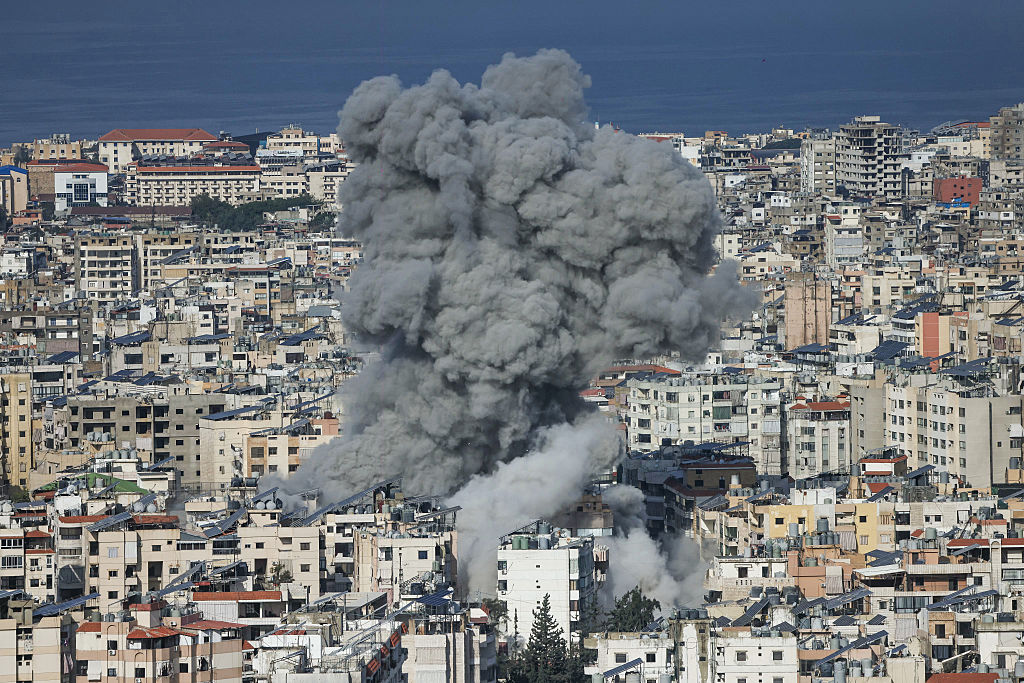
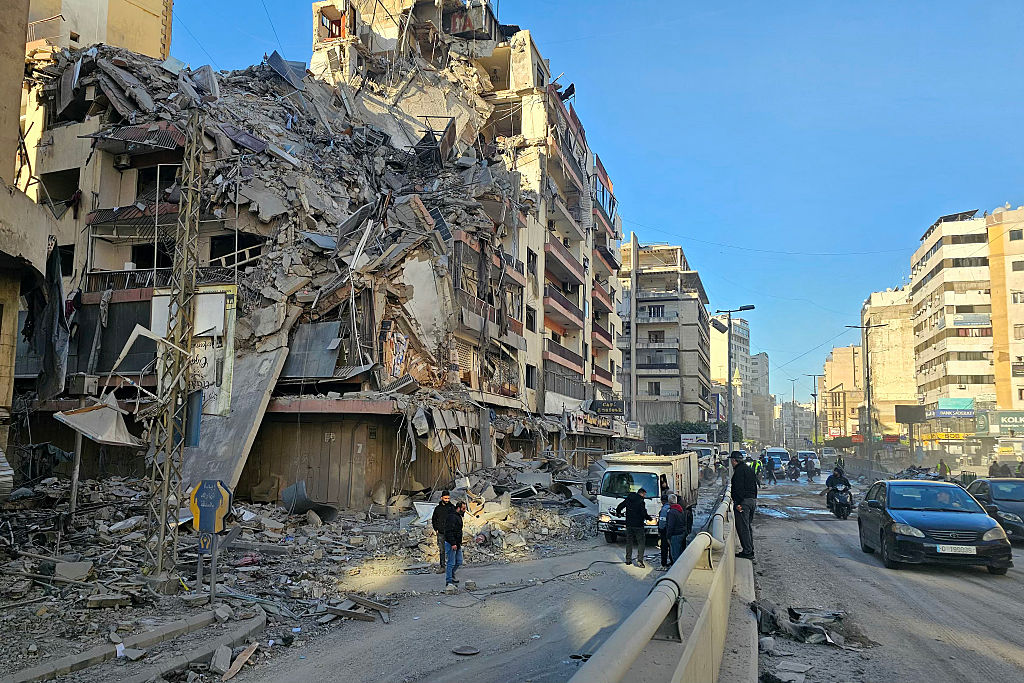
People gather amid the debris of a destroyed building following airstrikes in Beirut’s southern suburbs of Ghobeiry neighborhood, on March 5, 2026. Israel said it carried out strikes on Beirut targeting Iran-backed militant group Hezbollah on March 5, while Lebanese state media reported an Israeli drone strike killed a Hamas official. (Photo by AFP via Getty Images)
Strikes on March 5
On March 5, Iran continued its missile and drone campaign against Gulf states, launching attacks across Bahrain, Qatar, Saudi Arabia, Kuwait, and the United Arab Emirates. Iran targeted a Bapco oil refinery in Bahrain, sparking a fire at the facility. Bahrain’s defence forces intercepted two additional cruise missiles. Qatar announced that it had intercepted 13 missiles – the largest salvo sent by Iran to Qatar so far. Saudi Arabia and the UAE also announced they had intercepted missiles. Saudi air defences downed three drones east of Al Kharj and one drone east of Al Jawf. In the UAE, an attack on Al Dafrah Air Base caused debris to fall in the adjacent ICAD II industrial zone, injuring six foreign workers.
In total, as of March 5, the United Arab Emirates reported that 1,072 drones and 204 missiles had targeted its territory. Bahrain reported approximately 70 missiles and 59 drones targeting the kingdom. Kuwait announced that 178 missiles and 384 drones targeted the country, most of which were intercepted by air defences. Qatar reported that 120 missiles and 53 drones were launched toward the country, with Qatari air defences intercepting the majority of incoming projectiles.
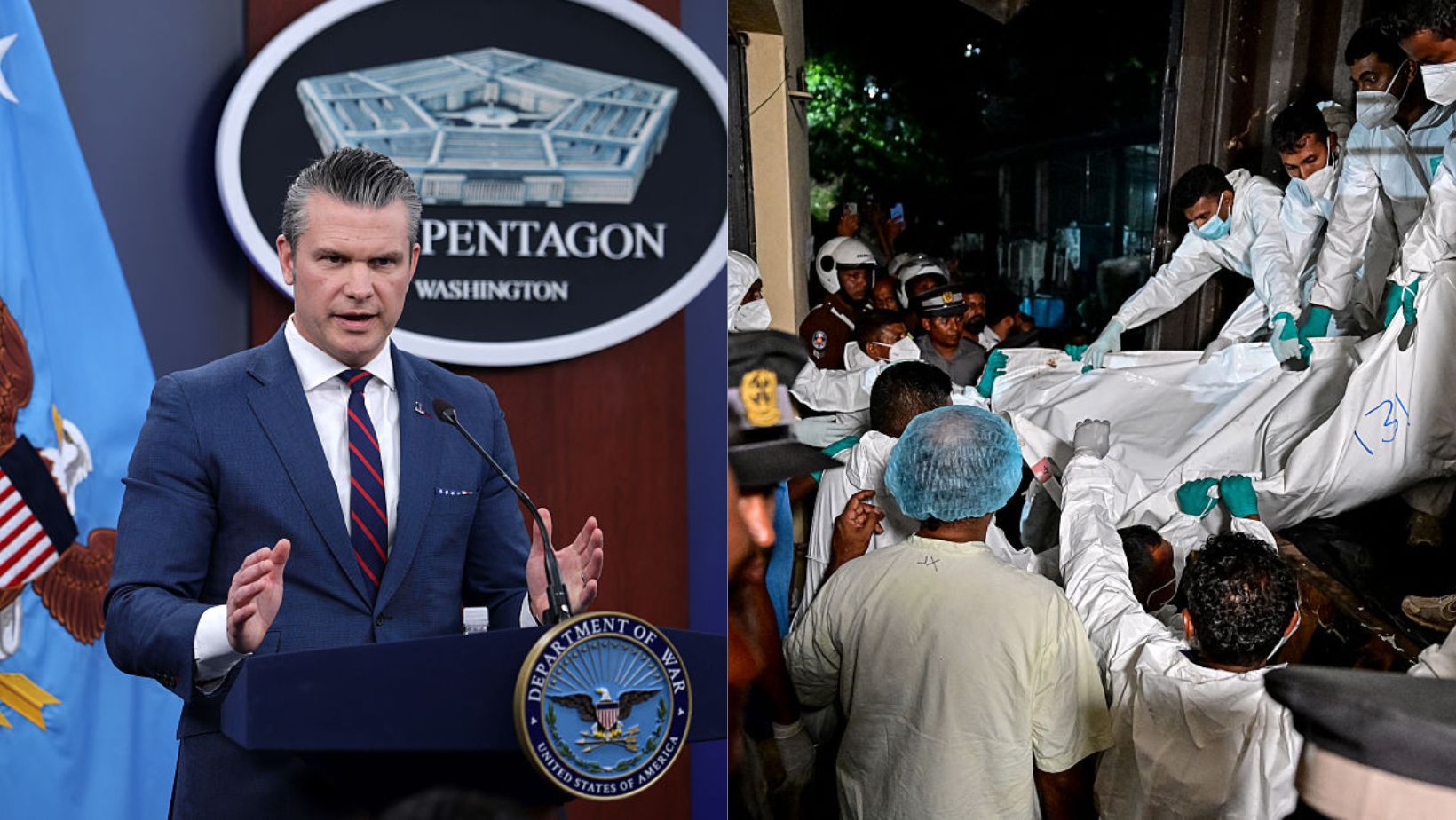
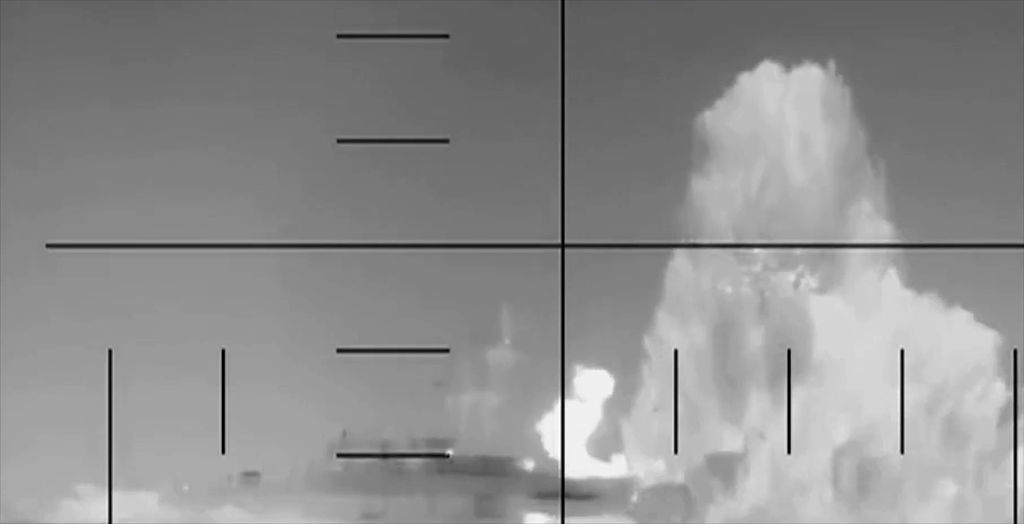
C’est une première depuis la Seconde Guerre mondiale: mardi, un sous-marin américain a torpillé un navire de guerre iranien au large du Sri Lanka.
«Dans l’océan Indien, […] un sous-marin américain a coulé un navire de guerre iranien qui pensait être en sécurité dans les eaux internationales.
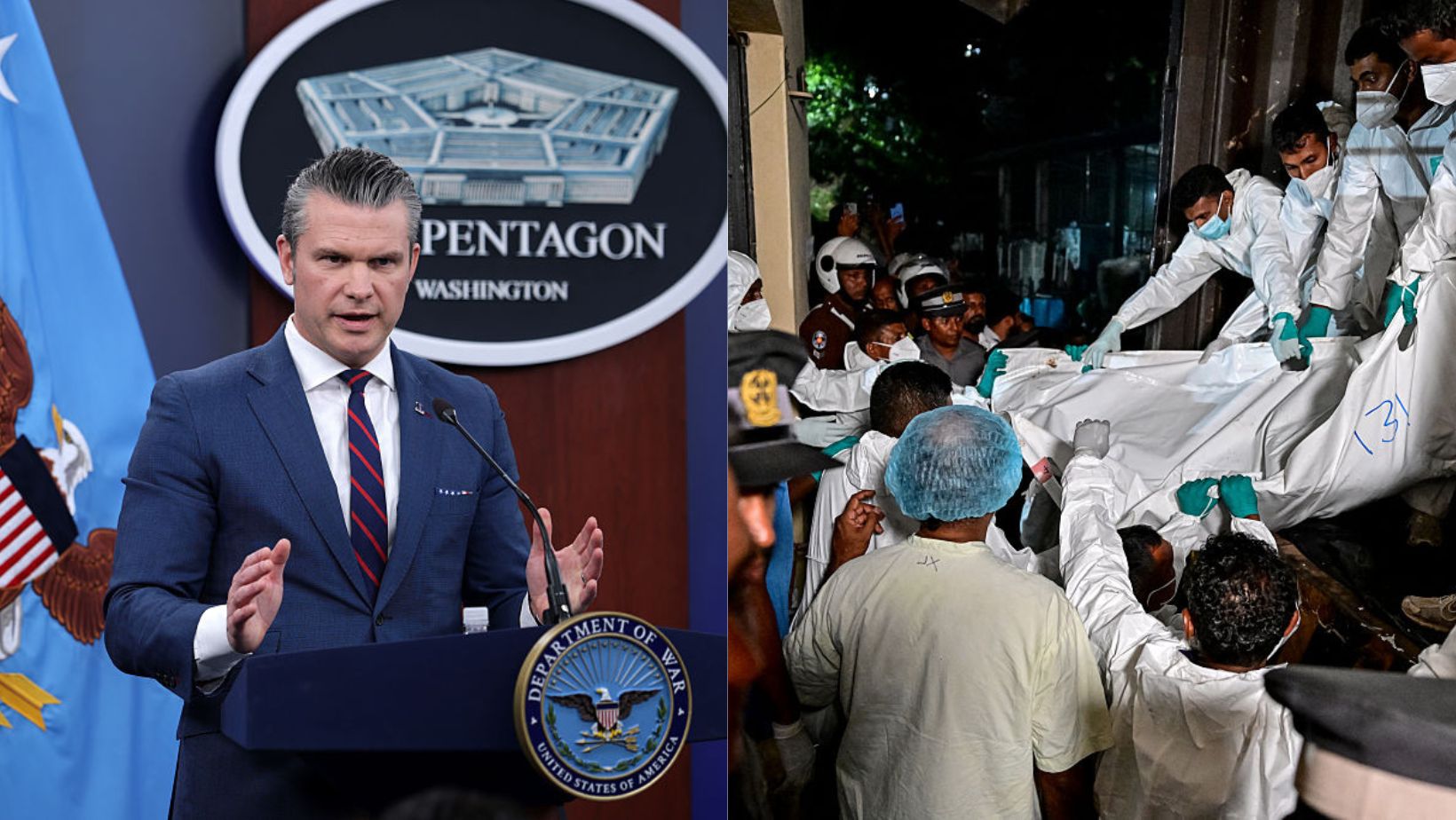
Au lieu de quoi, il a été coulé par une torpille », a annoncé ce mercredi Pete Hegseth, le secrétaire à la Défense des États-Unis, lors d’une conférence de presse au Pentagone.
Présent aux côtés de Hegseth, le chef d’état-major, le général Dan Caine, a précisé que «pour la première fois depuis 1945, un sous-marin d’attaque rapide de la marine des Etats-Unis a coulé un navire combattant ennemi en utilisant une seule torpille Mark 48, à effet immédiat, envoyant le navire de guerre au fond de l’océan.»
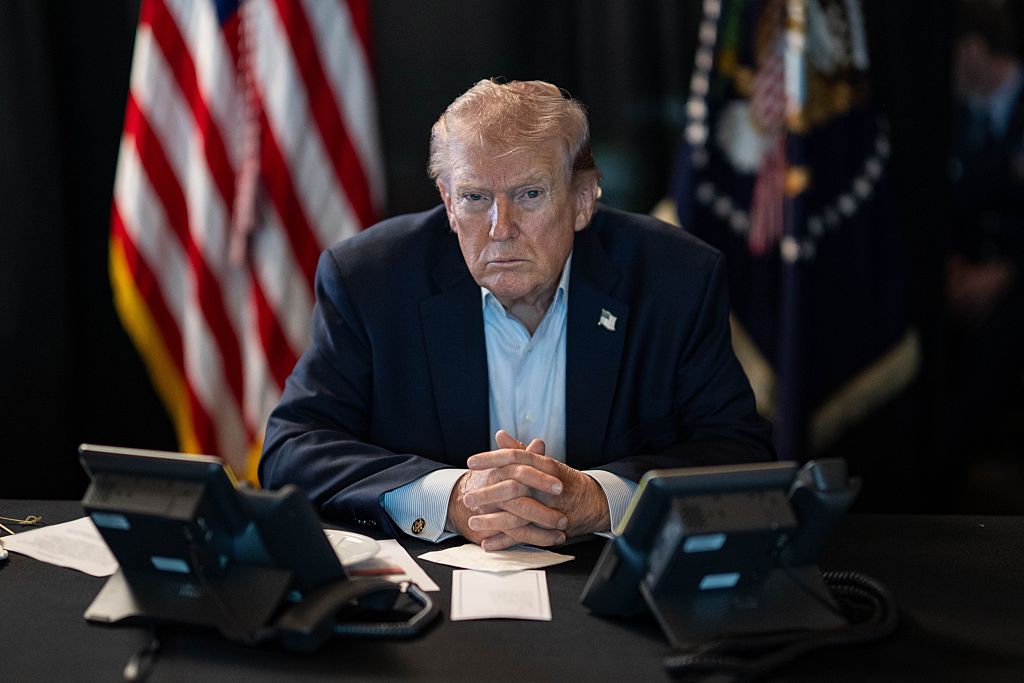
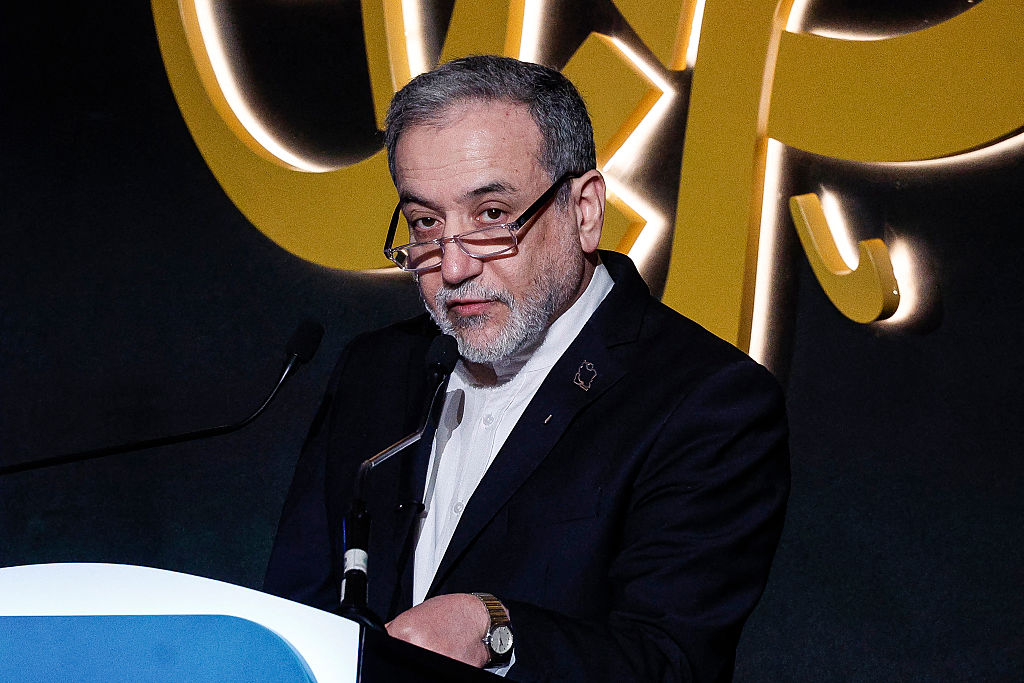
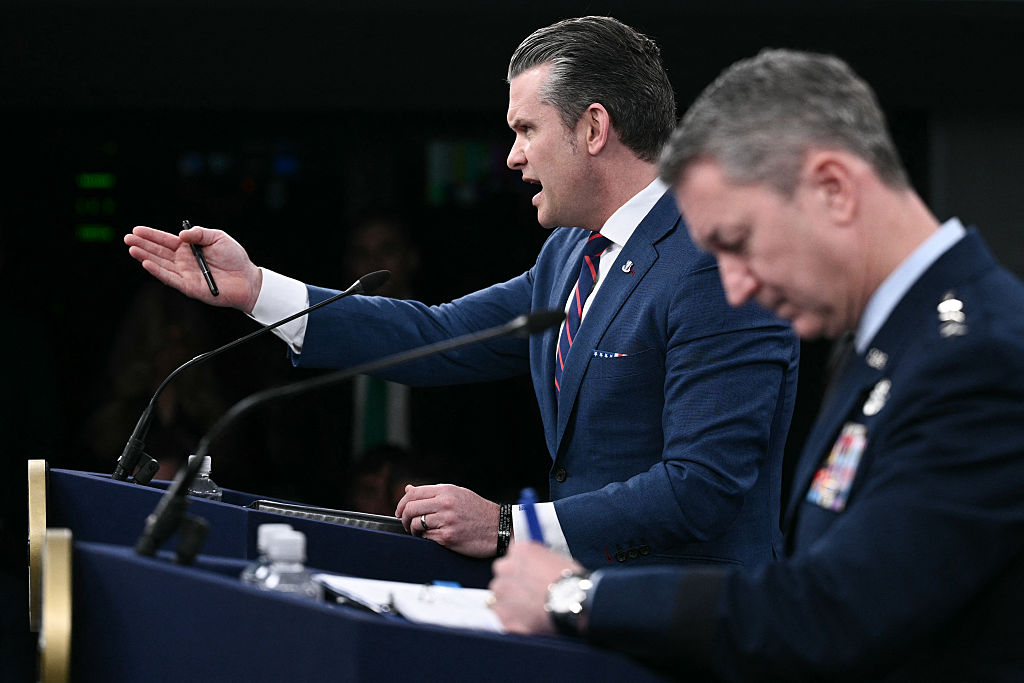
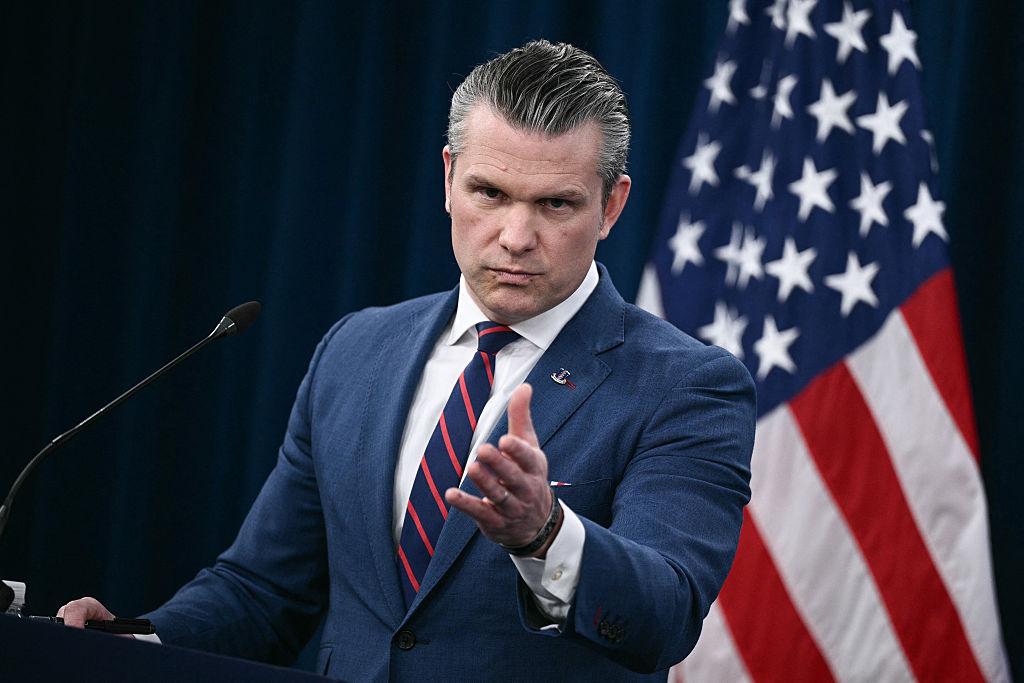
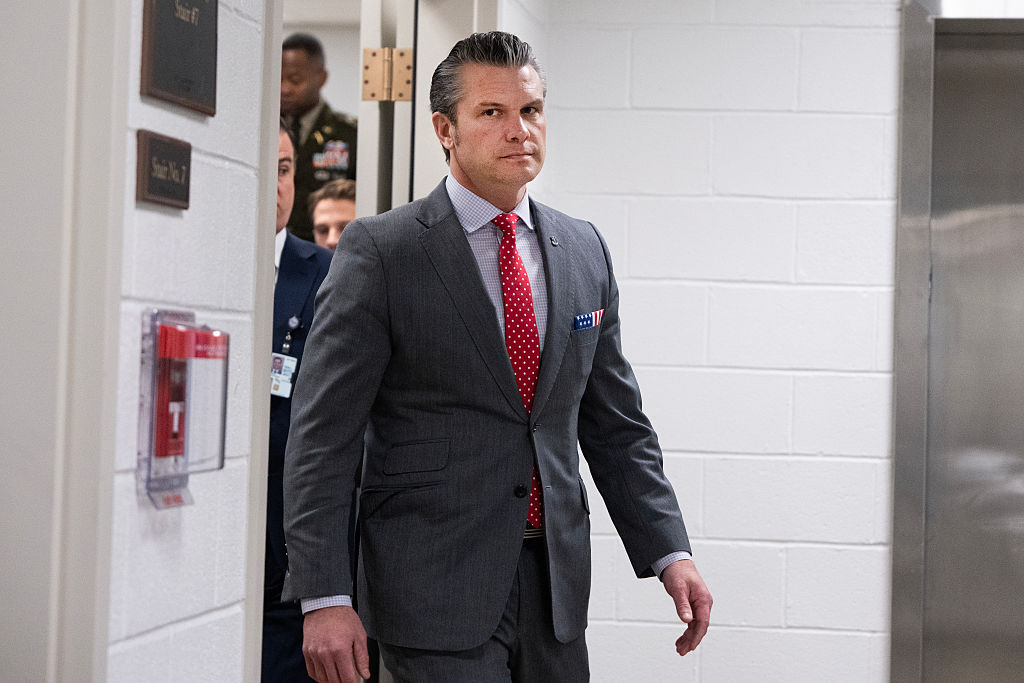
WASHINGTON DC, USA – MARCH 02: (—-EDITORIAL USE ONLY â » MANDATORY CREDIT – ‘THE WHITE HOUSE’S X ACCOUNT / HANDOUT’ – NO MARKETING NO ADVERTISING CAMPAIGNS – DISTRIBUTED AS A SERVICE TO CLIENTS—-) U.S. President Donald J. Trump sits at a table monitoring military operations during Operation Epic Fury against Iran, with U.S. flags visible behind him, in Washington, United States, on March 02, 2026. (Photo by The White House via X Account/Anadolu via Getty Images)TOPSHOT – Iran’s Foreign Minister Abbas Araghchi looks on as he speaks during the 17th edition of the Al-Jazeera Forum in Doha on February 7, 2026. Araghchi on February 7 criticised what he said was a « doctrine of domination » that allows Israel to expand its military arsenal while pressuring other countries in the region to disarm. His remarks came a day after renewed nuclear talks with Washington, with previous talks collapsing when Israel launched an unprecedented bombing campaign against Iran last June that triggered a 12-day war. (Photo by Karim JAAFAR / AFP via Getty Images)AT SEA, INDIAN OCEAN – MARCH 4: (EDITOR’S NOTE: This Handout image was provided by a third-party organization and may not adhere to Getty Images’ editorial policy.) In this screenshot of video provided by the U.S. Department of Defense, a U.S. submarine sinks Iranian frigate IRIS Dena in support of Operation Epic Fury off Sri Lanka’s coast on March 4, 2026 at Sea in the Indian Ocean. Iran’s Supreme Leader, Ayatollah Ali Khamenei, was confirmed killed after the United States and Israel launched a joint attack on Iran on February 28. Iran retaliated by firing waves of missiles and drones at Israel, and targeting U.S. allies in the region. (Photo by U.S. Department of Defense via Getty Images)(L/R) US Defense Secretary Pete Hegseth and the Chairman of the Joint Chiefs of Staff General Dan Caine speak during a press conference on US military action in Iran, at the Pentagon in Washington, DC, on March 2, 2026. The United States hit hundreds of targets across Iran, and Israel expanded its bombing to Lebanon on Monday as President Donald Trump vowed to avenge the first US deaths in the war he launched to topple Tehran’s ruling clerics. Iranian forces fired missiles and drones across the Middle East, killing people in Israel and the United Arab Emirates, in retaliation for the conflict that began February 28 with the death of Iran’s supreme leader, Ayatollah Ali Khamenei. (Photo by Brendan SMIALOWSKI / AFP via Getty Images)US Defense Secretary Pete Hegseth speaks during a press conference on US military action in Iran, at the Pentagon in Washington, DC, on March 2, 2026. The United States hit hundreds of targets across Iran, and Israel expanded its bombing to Lebanon on Monday as President Donald Trump vowed to avenge the first US deaths in the war he launched to topple Tehran’s ruling clerics. Iranian forces fired missiles and drones across the Middle East, killing people in Israel and the United Arab Emirates, in retaliation for the conflict that began February 28 with the death of Iran’s supreme leader, Ayatollah Ali Khamenei. (Photo by Brendan SMIALOWSKI / AFP via Getty Images)UNITED STATES – DECEMBER 16: Defense Secretary Pete Hegseth arrives to the U.S. Capitol for briefings about military strikes on alleged drug-smuggling boats in the Caribbean Sea, with members of the House and Senate on Tuesday, December 16, 2025. Chairman of the Joint Chiefs of Staff Gen. Dan Caine and Secretary of State Marco Rubio, also attended. (Tom Williams/CQ-Roll Call, Inc via Getty Images)
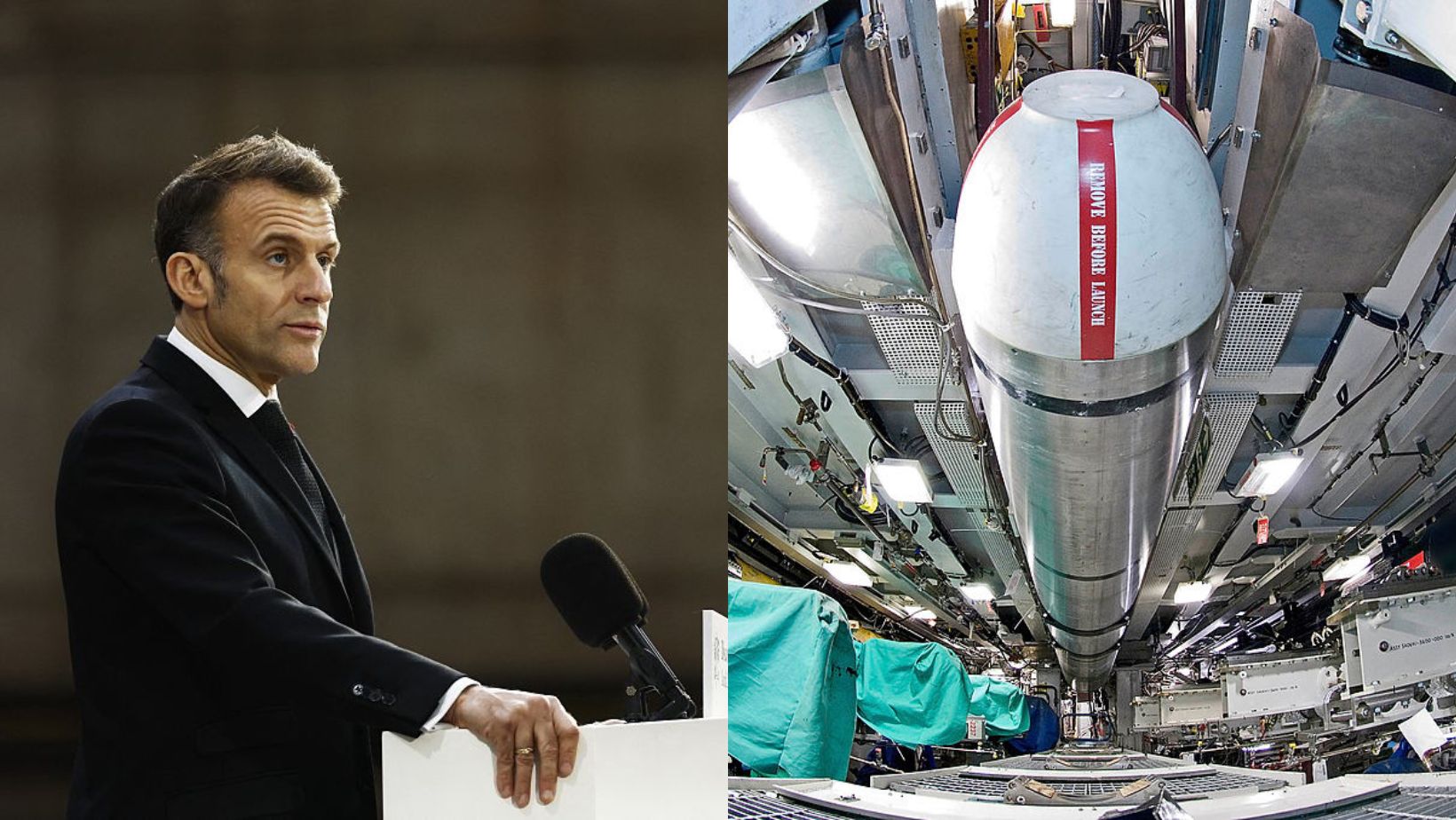
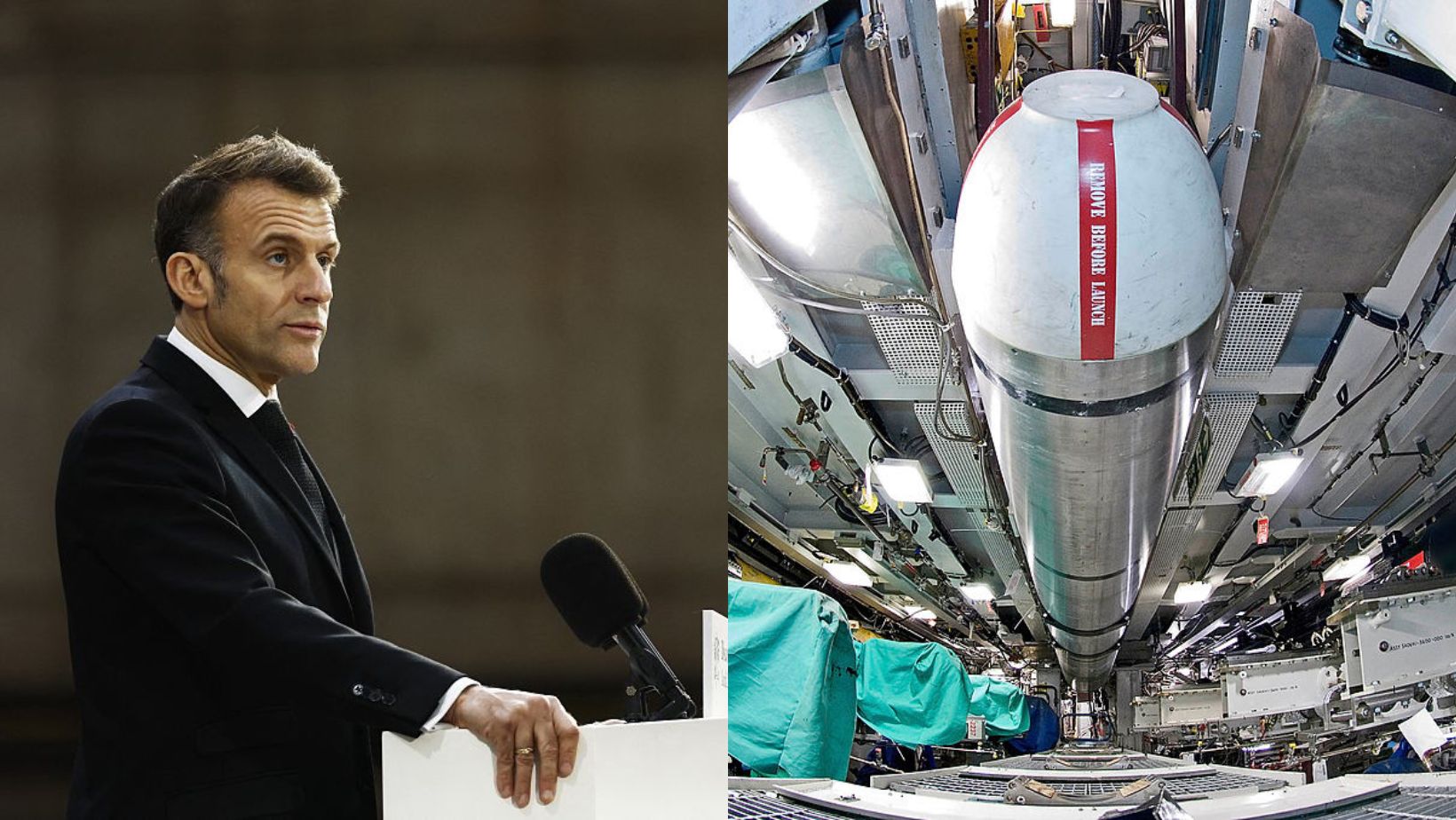
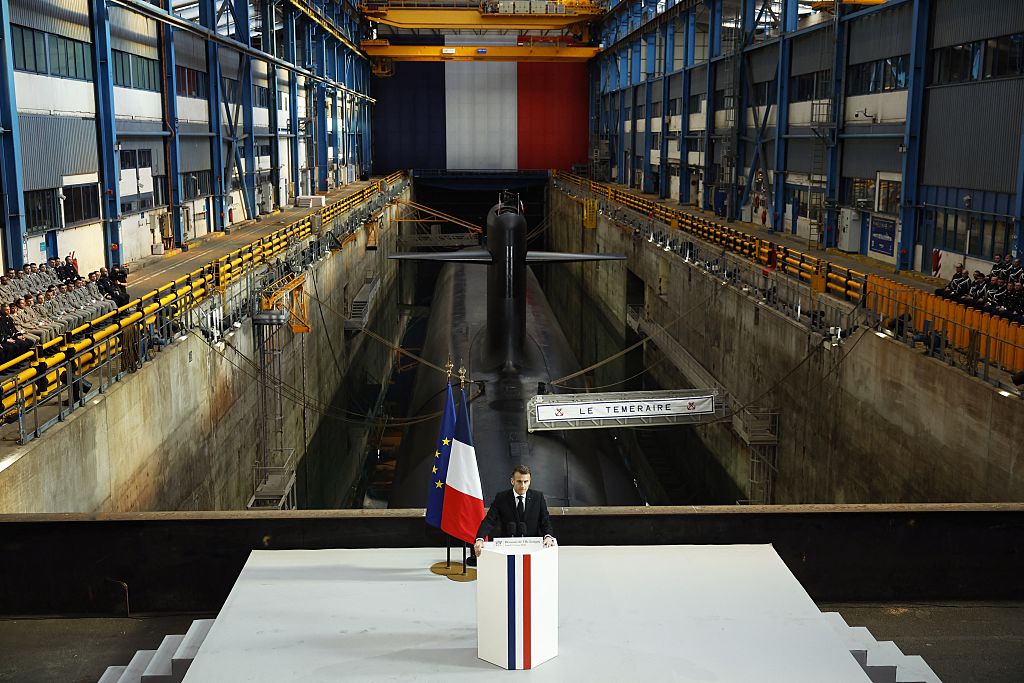
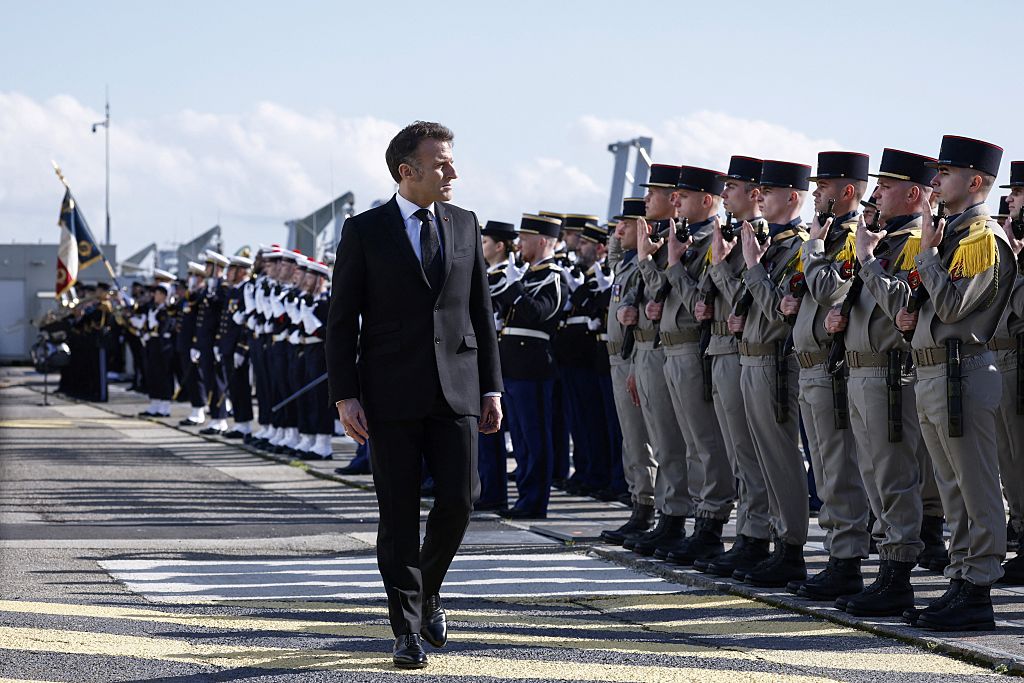
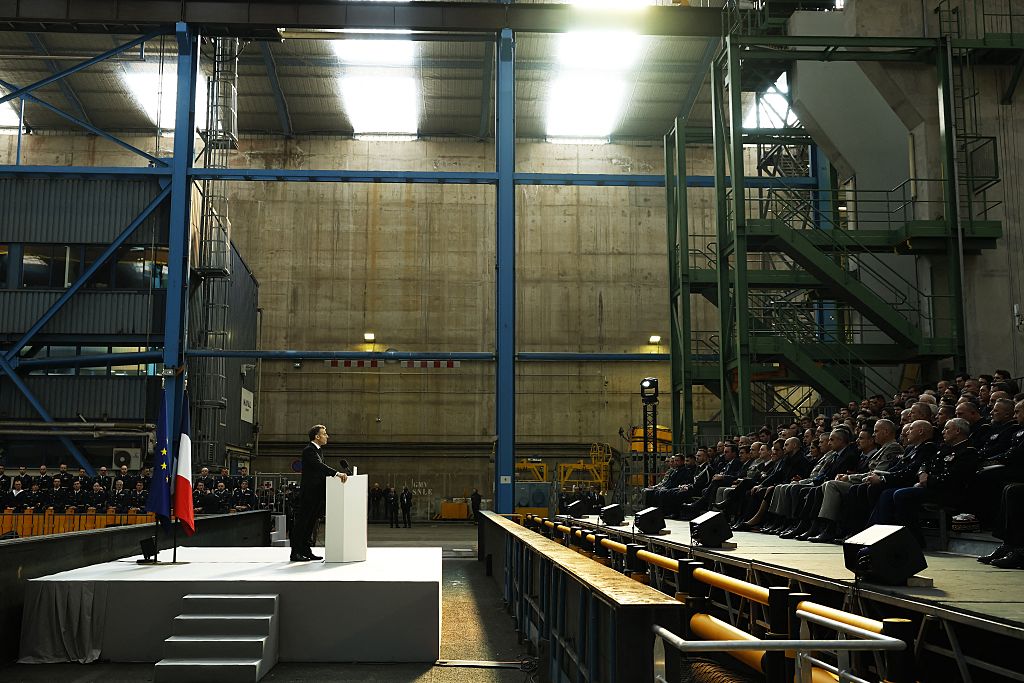
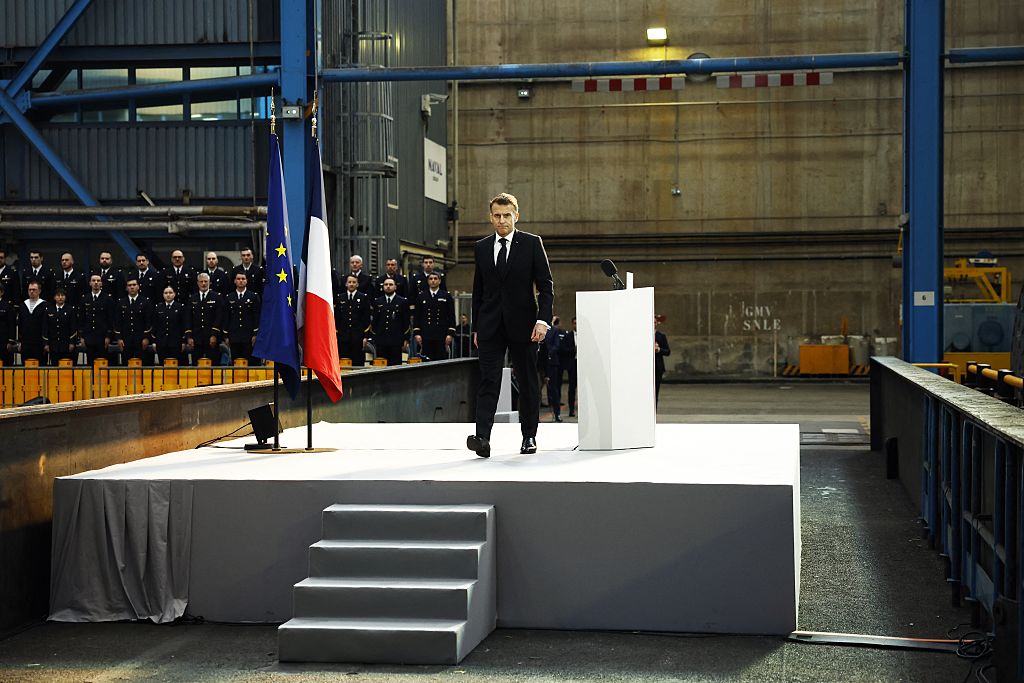
Le président français Emmanuel Macron a annoncé que la France augmentera son arsenal de têtes nucléaires et que les alliés européens pourront «participer aux exercices» de dissuasion française. «J’ai ordonné d’augmenter le nombre de têtes nucléaires de notre arsenal», a déclaré le chef d’État, à la base stratégique de l’Île Longue (Finistère), où sont stationnés les sous-marins nucléaires lanceurs d’engins. Selon les données de la Federation of American Scientists, la France possèderait actuellement 290 ogives nucléaires.
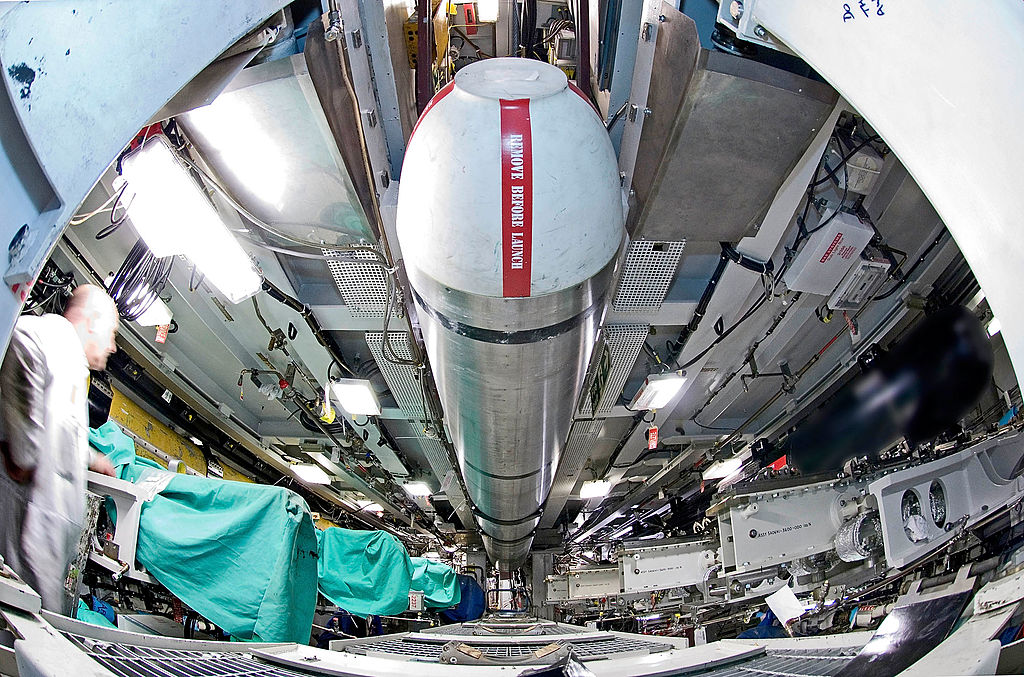
France’s President Emmanuel Macron delivers a speech next to nuclear-powered ballistic missile submarine (SSBN) submarine « Le Temeraire » – S617 during his visit to the Nuclear Submarine Navy Base of Ile Longue in Crozon, north-western France on March 2, 2026. High expectations, few certainties: on March 2, 2026, Emmanuel Macron is set to outline how France’s nuclear deterrent can help strengthen security in Europe in the face of a increasingly brutal world and an increasingly uncertain US ally. This issue has been brought sharply into focus by the Israeli-US offensive in Iran this weekend, against the backdrop of the Iranian nuclear crisis, which is shaking the entire Middle East and, by extension, the international community. (Photo by Yoan VALAT / POOL / AFP via Getty Images)Plumes of smoke rise following reported explosions in Tehran on March 2, 2026, after U.S. and Israeli strikes on Iran on February 28 killed Iran’s Supreme Leader Ayatollah Ali Khamenei and other top military leaders, prompting a new wave of Iranian retaliatory missile attacks across the region. (Photo by Sohrab / Middle East Images / AFP via Getty Images)TOPSHOT – France’s President Emmanuel Macron reviews the troops during his visit to the Nuclear Submarine Navy Base of Ile Longue in Crozon, north-western France on March 2, 2026. High expectations, few certainties: on March 2, 2026, Emmanuel Macron is set to outline how France’s nuclear deterrent can help strengthen security in Europe in the face of a increasingly brutal world and an increasingly uncertain US ally. This issue has been brought sharply into focus by the Israeli-US offensive in Iran this weekend, against the backdrop of the Iranian nuclear crisis, which is shaking the entire Middle East and, by extension, the international community. (Photo by Yoan VALAT / POOL / AFP via Getty Images)TOPSHOT – France’s President Emmanuel Macron delivers a speech next to nuclear-powered ballistic missile submarine (SSBN) submarine « Le Temeraire » – S617 during his visit to the Nuclear Submarine Navy Base of Ile Longue in Crozon, north-western France on March 2, 2026. High expectations, few certainties: on March 2, 2026, Emmanuel Macron is set to outline how France’s nuclear deterrent can help strengthen security in Europe in the face of a increasingly brutal world and an increasingly uncertain US ally. This issue has been brought sharply into focus by the Israeli-US offensive in Iran this weekend, against the backdrop of the Iranian nuclear crisis, which is shaking the entire Middle East and, by extension, the international community. (Photo by Yoan VALAT / POOL / AFP via Getty Images)10 May 2021, Schleswig-Holstein, Nordstrand: A German flag waves in the wind on a ferry. Photo: Marcus Brandt/dpa (Photo by Marcus Brandt/picture alliance via Getty Images)France’s President Emmanuel Macron leaves the stage after delivering a speech before French Navy members next to nuclear-powered ballistic missile submarine (SSBN) submarine « Le Temeraire » – S617 during his visit to the Nuclear Submarine Navy Base of Ile Longue in Crozon, north-western France on March 2, 2026. High expectations, few certainties: on March 2, 2026, Emmanuel Macron is set to outline how France’s nuclear deterrent can help strengthen security in Europe in the face of a increasingly brutal world and an increasingly uncertain US ally. This issue has been brought sharply into focus by the Israeli-US offensive in Iran this weekend, against the backdrop of the Iranian nuclear crisis, which is shaking the entire Middle East and, by extension, the international community. (Photo by Yoan VALAT / POOL / AFP via Getty Images)BARROW-IN-FURNESS, UNITED KINGDOM: (EDITORIAL USE ONLY) In this undated handout photograph released by BAE Systems, the new Royal Navy submarine ‘Astute’ under construction with a dummy conventional (non nuclear) Cruise missile inside the vessel at the BAES shipyard in Barrow-in-Furness, England. Astute is the first nuclear submarine to be launched in the UK for almost a decade. The submarine will be equipped with advanced cruise missiles and torpedoes, giving it more firepower than any previous British attack submarine. The advanced on board life support systems enables the submarine, which has an advanced life support sytem, to circumnavigate the globe without needing to surface. The vessel will start service with the Royal Navy in 2009. (Photo by BAE Systems via Getty Images)
A room can be full of beautiful things and still feel off, and most of the time, it’s the lighting. Too cold, and the walls feel distant. Too harsh, and every surface looks on edge. When lighting works, you don’t even notice it. It settles into the background, shaping how people feel, move, and talk in a space. Bad lighting, though, calls attention to itself in the worst ways. There’s a quiet skill to creating the right atmosphere using nothing but a few bulbs and switches. This article first explores the kinds of lighting that make spaces feel good and then the ones that throw everything off.
There’s something about Formula 1 races that makes you drop everything and pay attention. Could it be the speed or the constant drama? Whatever it is, F1 delivers some of the most jaw-dropping moments in sports history. Imagine a race where the world’s best drivers are all neck-and-neck, fighting for the finish line. Now, throw in fierce rivalries, ever-shifting track conditions, and strategies that flip instantly, and you’ve got a recipe for unforgettable racing. Like a high-speed chase down the final lap or a comeback that nobody sees coming, there are moments that stay with you long after the race is over. That’s the magic of F1. It’s not just about speed; it’s about the story unfolding in real-time, sometimes with twists so wild they make your heart race just thinking about them. And, while you watch, you find yourself rooting for drivers, questioning their next move, and hoping for the underdog to pull off something unexpected. These are the races you’ll talk about for years, recounting every detail with kin or fellow fans. These moments are first about winning; then, they’re about creating a legacy in the sport. At its best, Formula 1 delivers pure emotion and the kind of raw excitement that lives on long after the checkered flag falls. Folks, it’s lights out and away we go!
Selon l’Ukrainien Volodymyr Zelensky, le président américain Donald Trump a demandé à l’Ukraine d’aider les États-Unis à lutter contre les drones kamikazes iraniens. Les États-Unis ont demandé de l’aide pour défendre leurs alliés du Golfe contre les frappes iraniennes qui ont considérablement aggravé le conflit. Zelensky a déclaré dans des commentaires le 5 mars que les responsables américains lui avaient demandé de fournir des spécialistes ukrainiens capables de garantir la sécurité des alliés américains.
De son côté, Trump a déclaré qu’il accepterait « toute aide » que l’Ukraine pourrait lui apporter.
Un changement de ton
Après avoir insulté pendant des années Volodymyr Zelensky et l’Ukraine en tant que puissance, Donald Trump change de ton et demande l’aide du pays. Selon Zelensky, l’Ukraine est prête à aider les États-Unis en échange d’avantages diplomatiques contre la Russie. Le président russe Vladimir Poutine a vivement critiqué la guerre menée par Donald Trump contre l’Iran, et après des années de soutien de Donald Trump à l’invasion de l’Ukraine par Poutine, Kiev voit là une occasion de gagner les faveurs des États-Unis. Donald Trump a précédemment qualifié Zelensky de dictateur, encouragé l’Ukraine à céder des terres à la Russie et affirmé que le pays était déjà « anéanti ».
Zelensky prêt à coopérer
Volodymyr Zelensky a clairement indiqué qu’il était prêt à aider les États-Unis, sous réserve d’une série de conditions. L’Ukraine est disposée à aider les États-Unis à condition que cela n’affaiblisse pas sa propre défense et que cela renforce sa position dans sa défense contre la Russie. Zelensky a notamment suggéré que l’Ukraine serait disposée à échanger des drones intercepteurs ukrainiens contre davantage de systèmes de défense aérienne Patriot américains afin de se protéger contre les missiles balistiques russes. Des rumeurs circulent au sujet de la diminution des stocks de missiles intercepteurs de l’Ukraine, mais Zelensky a reconnu les risques liés à la situation actuelle de l’Ukraine en matière de défense, tout en affirmant qu’il souhaitait tirer parti des affaires mondiales pour obtenir des avantages stratégiques.
Zelensky s’entretient avec les pays du Golfe
Le président ukrainien Volodymyr Zelensky aurait eu des conversations avec plusieurs pays du Golfe attaqués par l’Iran. Zelensky s’est entretenu avec les Émirats arabes unis, le Koweït, le Qatar, Bahreïn et la Jordanie au cours des deux derniers jours. Zelensky aurait promis des « mesures concrètes » pour aider à défendre leurs installations militaires et leurs infrastructures civiles contre les attaques iraniennes. Au 5 mars, les Émirats arabes unis ont signalé que 1 072 drones et 204 missiles avaient pris pour cible leur territoire.
Le Bahreïn a signalé qu’environ 70 missiles et 59 drones avaient pris pour cible le royaume. Le Koweït a annoncé que 178 missiles et 384 drones avaient pris pour cible le pays, dont la plupart ont été interceptés par les défenses aériennes koweïtiennes. Le Qatar a signalé que 120 missiles et 53 drones avaient été lancés vers son territoire, les défenses aériennes qataries ayant intercepté la majorité des projectiles entrants.
La guerre de Donald Trump contre l’Iran
Le 28 février 2026, le gouvernement américain et Israël ont mené une opération conjointe en Iran, après quoi les États-Unis ont déclaré être en guerre avec ce pays. Ces attaques ont déclenché des représailles de la part de l’Iran, qui a pris pour cible des bases militaires américaines et israéliennes à travers le Moyen-Orient. Selon Donald Trump, cette guerre n’a pas de calendrier précis et les États-Unis poursuivront leurs opérations dans le pays jusqu’à ce qu’ils constatent un changement de régime significatif et la fin du programme nucléaire présumé de l’Iran.
Les frappes américaines et israéliennes ont tué le guide suprême iranien, Ali Khamenei, dès le premier jour de la guerre, accomplissant ainsi l’objectif supposé de Trump. Khamenei a recouru à une violence meurtrière contre les manifestants civils à Téhéran, et son assassinat a été le seul élément positif de l’intervention illégale de Donald Trump. Donald Trump a changé son raisonnement pour attaquer l’Iran après la mort de Khamenei, affirmant à la place qu’il avait attaqué l’Iran parce qu’il disposait d’informations certaines selon lesquelles l’Iran allait attaquer Israël et les États-Unis. Israël appelle cette stratégie « défense avancée ».
Aujourd’hui, le Liban et les autres pays du Golfe ont été entraînés dans le conflit. L’Iran a frappé des infrastructures américaines dans neuf pays différents, et le groupe Hezbollah, basé au Liban et financé par l’Iran, a annoncé qu’il était prêt à entrer en guerre ouverte contre Israël. La guerre de Donald Trump contre l’Iran a menacé les routes commerciales mondiales et fait chuter les marchés boursiers mondiaux, car d’importants centres énergétiques du Moyen-Orient sont menacés. Depuis le début de la guerre, Wall Street ouvre chaque jour sur des cours atones et, même si elle se redresse quotidiennement, il est impossible de nier l’impact de la guerre menée par Trump et Israël contre l’Iran.
(Photo de la Maison Blanche via X Account/Anadolu via Getty Images)
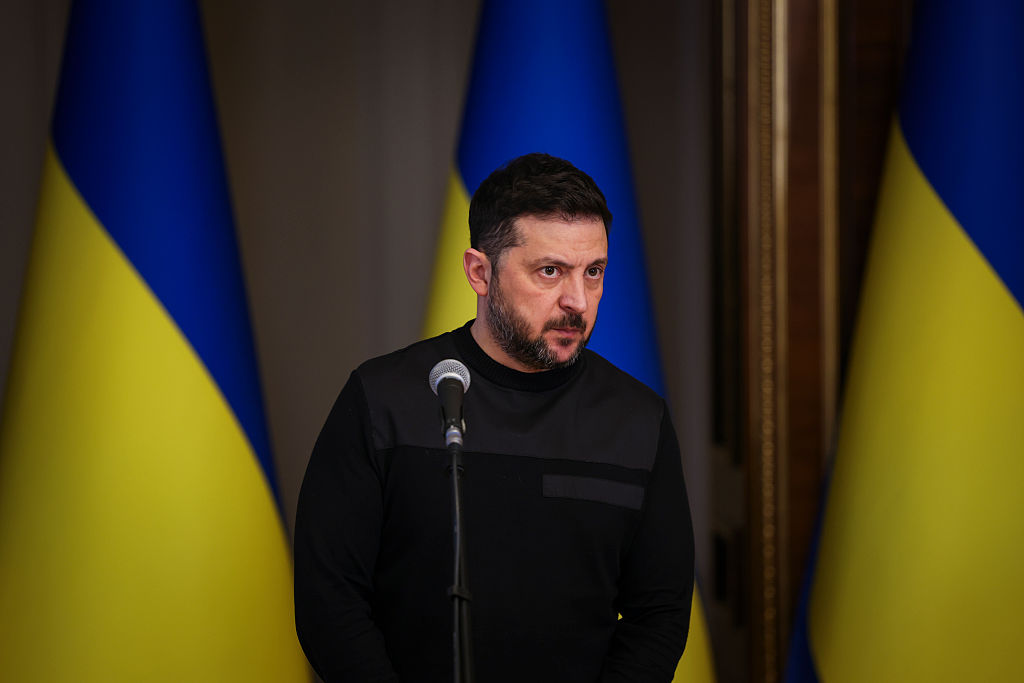
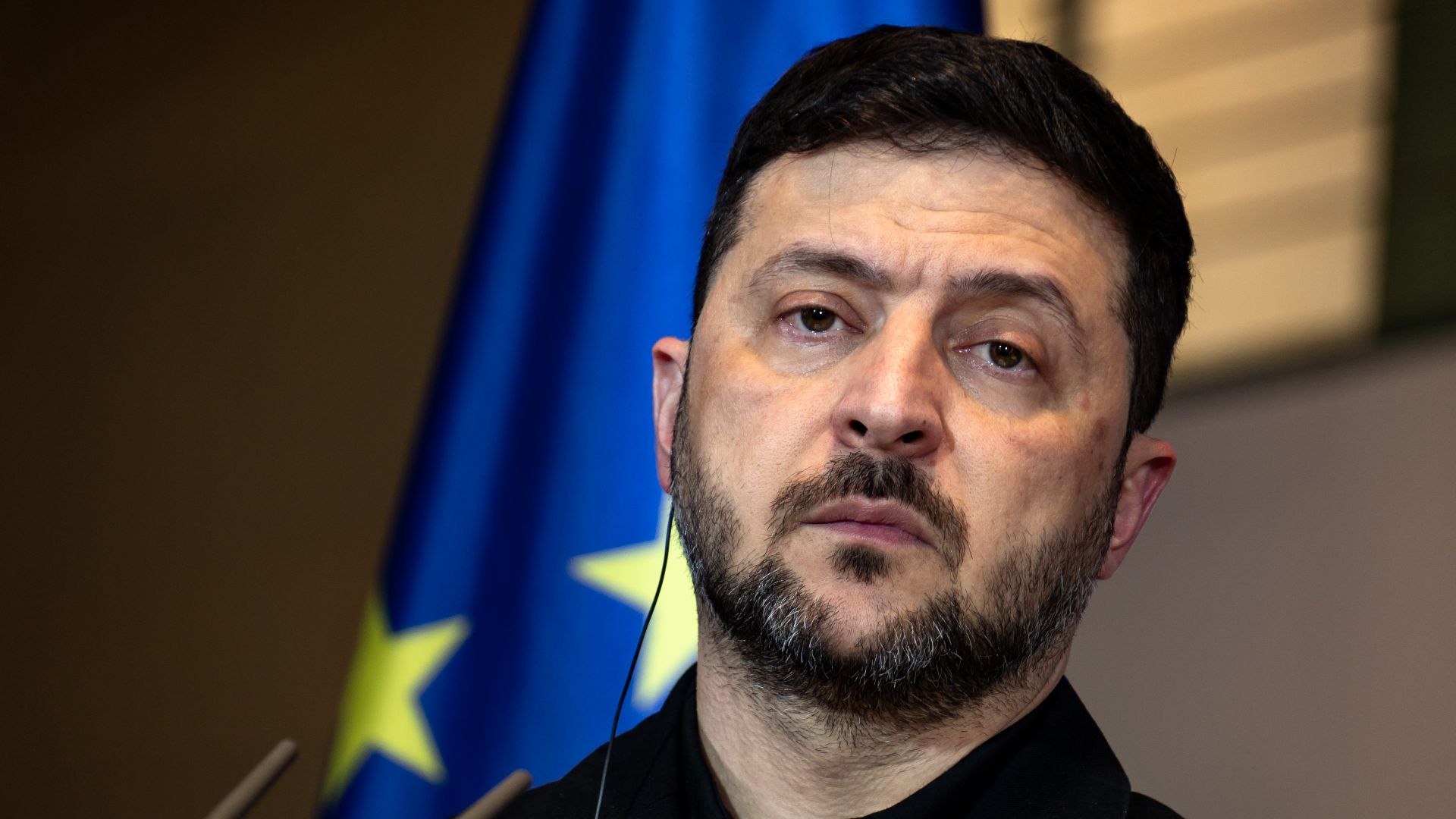
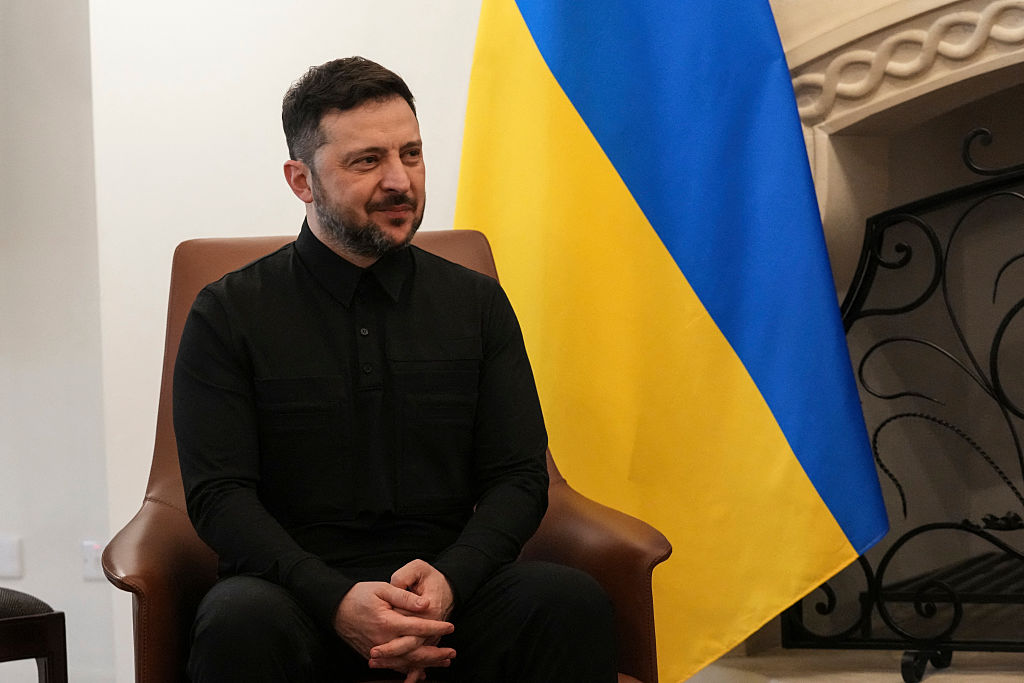
KYIV, UKRAINE - MARCH 3: President of Ukraine Volodymyr Zelenskyy attends a meeting of the National Security and Defense Council of Ukraine, held with a focus on the "Comprehensive Resilience Plans for Ukrainian Cities and Regions", on March 3, 2026 in Kyiv, Ukraine. The session was attended by the President of Ukraine, the Prime Minister of Ukraine, heads of local state administrations from the majority of the country's regions, and other senior officials. Participants discussed security issues, infrastructure recovery, ensuring energy resilience, and preparations for the upcoming winter. (Photo by Maksym Kishka/Frontliner/Getty Images)
According to the Ukrainian Volodymyr Zelenskyy, US President Donald Trump has been reaching out with requests that Ukraine aid the US in combating Iranian kamikaze drones. The US asked for help in defending its Gulf allies from Iranian strikes that have dramatically escalated the conflict. Zelenskyy claimed in comments on March 5 that US officials had instructed him to provide Ukrainian specialists who can guarantee the safety of American allies. On Trump’s part, he said he would he’d take ‘any assistance’ he can get from Ukraine.
A change of tune
After years of insulting Volodymyr Zelenskyy and Ukraine as a power, Donald Trump is switching his tune and asking the country for assistance. According to Zelenskyy, Ukraine is willing to help the US in exchange for diplomatic gains against Russia. Russian President Vladimir Putin has been a staunch critic of Donald Trump’s war on Iran, and after years of Donald Trump supporting Putin’s invasion of Ukraine, Kyiv see’s an opportunity to gain the United States’ favour. Donald Trump has previously called Zelenskyy a dictator, encouraged Ukraine to cede land to Russia, and claimed that the country is already ‘obliterated’.
Zelenskyy willing to play ball
Volodymyr Zelenskyy has made it clear that he’s willing to aid the US, given a series of conditions. Ukraine is willing to aid the US as long as it doesn’t weaken the country’s own defence, and benefits its standing in its defence against Russia. Zelenskyy suggested in particular that Ukraine would be willing to exchange Ukrainian interceptor drones for more US Patriot air defences to protect against Russian ballistic missiles. There have been rumours circulating about Ukraine’s dwindling supply of interceptor missiles, but Zelenskyy acknowledged the risks of Ukraine’s current defence situation, but maintained that he is keen to leverage global affairs for strategic advantages.
Zelenskyy speaks with Gulf countries
Ukrainian President Volodymyr Zelenskyy has reportedly had conversations with a number of Gulf countries attacked by Iran. Zelenskyy spoke with the United Arab Emirates, Kuwait, Qatar, Bahrain, and Jordan in the last two days. Zelenskyy reportedly promised ‘concrete steps’ to help defend their military installations and civilian infrastructure from Iranian attacks. As of March 5, the UAE reported that 1,072 drones and 204 missiles had targeted its territory. Bahrain reported approximately 70 missiles and 59 drones targeting the kingdom. Kuwait announced that 178 missiles and 384 drones targeted the country, most of which were intercepted by Kuwaiti air defences. Qatar reported that 120 missiles and 53 drones were launched toward its territory, with Qatari air defences intercepting the majority of incoming projectiles.
Donald Trump’s war on Iran
On February 28, 2026, the US government and Israel undertook a joint operation in Iran, with the US subsequently declaring it was at war with the country. The attacks triggered retaliatory strikes from Iran, targeting US and Israeli military bases across the Middle East. According to Donald Trump, there is no timeline for this war, and the US will continue its operations in the country until it sees a significant regime change, as well as an end to Iran’s supposed nuclear program.
US and Israeli strikes killed Iran’s Supreme Leader, Ali Khamenei, on Day One of the war, completing Trump’s supposed goal. Khamenei has been using deadly violence against civilian protesters in Tehran, and his killing has been the only positive piece of Donald Trump’s illegal intervention. Donald Trump changed his reasoning for attacking Iran after Khamenei’s death, instead claiming he attacked Iran because he had certain information that Iran was going to attack Israel and the United States. Israel calls the strategy ‘forward defence’.
Now Lebanon and the rest of the Gulf countries have been sucked into the conflict. Iran has struck US infrastructure in nine different nations, and the Lebanese-based, Iranian-funded group Hezbollah has announced it’s ready for open war with Israel. Donald Trump’s war on Iran has threatened global trade routes and sunk the global stock markets, as important Middle Eastern energy hubs are threatened. Wall Street has opened to lethargic prices every day since the war began, and even though it has recovered every day, it’s impossible to deny the impact of Trump and Israel’s war on Iran.
(Photo by The White House via X Account/Anadolu via Getty Images)
Le 4 mars, le Sénat américain a rejeté une proposition visant à restreindre le pouvoir de Donald Trump sur l’armée concernant les actions en Iran. Trump, qui utilise le pouvoir présidentiel de « commandant suprême » pour contrôler directement l’armée américaine, a été critiqué par des experts en droits de l’homme du monde entier pour ce qu’ils qualifient d’« actions militaires illégales ». La résolution bipartisane visant à restreindre les pouvoirs de Trump a été rejetée par 52 voix contre 47 au sein de la chambre du Sénat, qui compte 100 membres. La résolution, présentée par le sénateur Tim Kaine, démocrate de Virginie, a été soutenue par la majorité des démocrates et seulement une poignée de républicains.
Résolution visant à restreindre les pouvoirs du président
La résolution a été présentée par le sénateur Tim Kaine, démocrate de Virginie. M. Kaine, qui a été gouverneur de Virginie de 2006 à 2010, est membre du Sénat américain depuis 2013. La résolution visait à ordonner le retrait des troupes américaines d’Iran. Selon la loi américaine, seul le Congrès a le droit de déclarer les États-Unis en état de guerre, et non le président. Alors que le monde parle de guerre contre l’Iran, Donald Trump a largement évité d’utiliser ce terme.
Techniquement, il n’a pas déclaré être en guerre contre l’Iran, utilisant plutôt des expressions telles que « opérations militaires » et « opérations de combat majeures », bien qu’il ait utilisé le mot « guerre » à plusieurs reprises lors de points presse sur le sujet de l’Iran. Pour un président connu pour ses déclarations mélodramatiques et ses diatribes décousues, son évitement du mot « guerre » semble étonnamment stratégique. Le sénateur Kaine a prononcé un discours enflammé avant que les législateurs ne votent sur le projet de loi, tentant de galvaniser ses collègues de l’autre côté de l’hémicycle.
À la fin de son discours, Kaine a crié :
« Membres du Sénat, c’est la guerre ! » Kaine a affirmé que ces actions mèneraient inévitablement à une guerre totale. L’Iran, Israël et le Hezbollah, financé par l’Iran et basé au Liban, ont tous déclaré être prêts pour une guerre totale.
Détails de la résolution
La résolution bipartite a publié cinq conclusions citées comme preuves de la nécessité de retirer les troupes d’Iran. Selon les législateurs américains, les actions de Trump en Iran sont des actions de guerre, et Trump ne peut ordonner les attaques que si le Congrès a déclaré l’état de guerre.
La résolution précise que le président n’a le pouvoir constitutionnel de mener des actions militaires que pour défendre les États-Unis contre une attaque, et non pour mener des actions offensives agressives. La résolution visait à mettre en œuvre la résolution sur les mesures de guerre de 1973. Selon cette résolution, le président est tenu d’informer le Congrès des actions militaires importantes 48 heures avant le début des hostilités. Donald Trump est autorisé à entreprendre certaines opérations militaires sans déclaration de guerre, mais les législateurs américains affirment qu’il a dépassé les limites.
La guerre de Donald Trump contre l’Iran
Le 28 février 2026, le gouvernement américain et Israël ont mené une opération conjointe en Iran, les États-Unis déclarant par la suite qu’ils étaient en guerre avec ce pays. Les attaques ont déclenché des représailles de la part de l’Iran, qui a pris pour cible des bases militaires américaines et israéliennes à travers le Moyen-Orient. Selon Donald Trump, cette guerre n’a pas de calendrier précis et les États-Unis poursuivront leurs opérations dans le pays jusqu’à ce qu’ils constatent un changement de régime significatif et la fin du programme nucléaire présumé de l’Iran.
Les frappes américaines et israéliennes ont tué le guide suprême iranien, Ali Khamenei, dès le premier jour de la guerre. Khamenei a recouru à une violence meurtrière contre les manifestants civils à Téhéran, et son assassinat a été le seul élément positif de l’intervention illégale de Donald Trump. Tout comme Maduro au Venezuela, Ali Khamenei était un dirigeant cruel et impopulaire, la majorité du pays souhaitant son départ. Cela dit, le fait d’être impopulaire ne justifie pas une ingérence internationale illégale, et tout comme au Venezuela, Donald Trump a enfreint le droit international pour obtenir ce qu’il voulait.
Aujourd’hui, le Liban et les autres pays du Golfe ont été entraînés dans le conflit. L’Iran a frappé des infrastructures américaines dans neuf pays différents. La guerre de Donald Trump contre l’Iran a menacé les routes commerciales mondiales et fait chuter les marchés boursiers mondiaux, car d’importants centres énergétiques du Moyen-Orient sont menacés.