Catégories
Uncategorized

Canada Post: Why your mail service isn’t supposed to make a profit

Canada Post is a money pit.

This is the message from critics and the Conservative caucus – that Canada Post costs the government too much money, and it needs to be culled. It’s true that Canada Post loses money hand over fist. It posted annual losses of $1.57 billion in 2025, a record-breaking loss. That $1.57 billion loss was attributed to a serious drop in parcel volumes in 2025. Canada Post transported nearly 33 per cent fewer parcels in 2025 due to service disruptions and a growing mistrust in the organization. With options like UPS, FedEx, Intelcom, and Puralator (owned by Canada Post) offering cheaper premiums for small packages and boasting convenient return services, Canada Post is no longer the go-to service for Canadians. This is the issue.

Mail carriers are a service, not a business

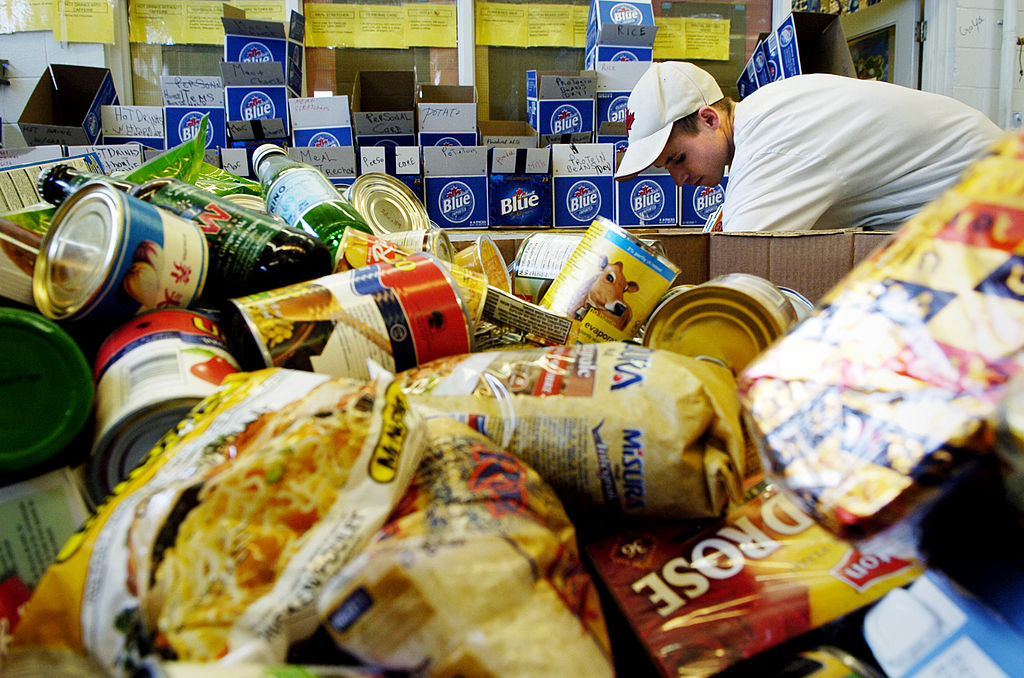
It seems as though there’s a misconception surrounding Canada Post’s purpose. Canada Post does not exist to make a profit; it exists to provide a service to Canadians. Even more than that, its purpose is to provide access to information for Canadians living in rural and remote areas. For decades, Canada Post was the only link that rural and Northern communities had with mainland Canada. Hundreds of thousands of Canadians relied on Canada Post to communicate with loved ones and receive packages. Hundreds of Northern communities even relied on Canada Post to deliver groceries to supermarkets. Canada Post does not exist to make a profit; it exists to provide Canadians with a service, specifically Canadians who need the service. Canada Post delivers to more than 150 remote communities that are only accessible by plane, sending more than 300 flights to those communities each week. More than 40 per cent of Canadians reported that they relied strongly on Canada Post in 2025, according to the CFIB.

Why does Canada Post lose so much money?

In 2025, Canada Post reported a record-breaking loss of $1.57 billion. That number is nearly double the organization’s loss in 2024, which totalled $841 million. Since 2018, the service has lost money every single year, totalling losses of more than $6 billion. The consistent losses have caused Conservative politicians to argue for the privatization of Canada’s postal service in order to cut expenses, but historically, privatizing social services ends up hurting Canadians more than helping them (see examples like the drive-test system in Ontario, or the privatization of CN Rail in the 1990s, both of which have ended up costing Canadians every year since).

There’s a simple answer as to why Canada Post is losing money: letters. Yes, package transportation dropped nearly 33 per cent, but with competing companies, it’s a larger issue. The simple answer is that we don’t send as much mail as we used to. According to Canada Post, in 2006, Canadian households received seven letters a week; in 2025, they received only two. In 2006, Canada Post transported 5.5 billion letters across Canada; in 2025, they only transported 2 billion. Canada Post always competed with companies like Intelcom, UPS, and FedEx for packages, but it controlled the letters completely. Now, with Canada Post’s largest revenue stream slashed by global digitization, they need to find other sources of income, not try to slash the bottom line.

With Canada Post’s losses drawing the ire of Canadians and politicians, the service is completely restructuring its mail delivery systems to save money. Canada Post will be cancelling door-to-door delivery for four million addresses, instead switching to community mailboxes, something that 75 per cent of the country already uses. While this change will save money, Canada Post plans on also cutting its delivery workforce by 30 per cent. This is where the problems begin. Canada Post should exist for two reasons. To provide mail to Canadians and to provide jobs for Canadians. If Canada Post slashes it’s workforce by 30 per cent, the organization will save nearly $400 million annually, but Canadians will also lose millions. The average Canada Post letter carrier makes a base salary of $50,000. With Canada Post boasting more than 15,000 letter carriers, Canadians will lose up to $250 million in salary. Canada Post needs to stop the bleeding, but cutting $250 million in salaries is not the way to do it. The Canadian Union of Postal Workers has called the plan an ‘assault on workers’ and claimed that Canada Post is using its losses as an excuse to cut jobs.

« Slashing good jobs and cutting services across the country will not solve Canada Post’s problems. You cannot cut your way to growth, »

-Canadian Union of Postal Workers

The (possible ) solution

There isn’t one single solution to Canada Post’s financial struggles. The organization faces serious systemic problems and has now lost the support of many Canadians. What needs to happen is a shift in how we perceive Canada Post and how the government supports it. There are millions of Canadians who understand how vital Canada Post is to remote communities, and there are very few Canadians who want to see jobs cut. Canada Post needs to look at other nationalized postal services and mimic their structures. While Canada Post experiences drops in packages, Die Post (Swiss Mail) reported a rise in packages in 2025, as did Deutsche Post DHL. Both of those services also reported a profit (though government funding made up a significant chunk of the profit). Those services thrive because the people of the country trust them. Canada Post needs to be an attractive option for Canadians. With strikes effectively shutting down service for parts of 2025, Canadians no longer trust Canada Post and look to other, more reliable options that are often cheaper as well. Canada needs to put some lipstick on its pig.

There is also another, more dramatic, and implausible solution: Amazon. If Amazon used Canada Post for more than 50 per cent of its deliveries, the service would benefit greatly. Before the Canada Post strikes of 2024 and 2025, Amazon was already relying on private carriers, but during those strikes, Amazon restructured to only use Canada Post when it had to. That means only remote communities receive Amazon packages from Canada Post. In a perfect world, the Canadian government would be able to force Amazon to use Canada Post, but there is a litany of laws preventing it. Canada’s (extremely broken) competition act forbids the government from forcing a private corporation to use a government-run service, and there are a series of trade agreements that would also be stretched if Canada banned Amazon from using certain private services.

Getty Images

What the government can do is take a page out of America’s book and make Canada Post the most convenient option by pressuring private firms. This choice would almost certainly draw criticism from capitalists and international markets, but it would also reinvigorate Canada Post. If the government were to impose new regulatory standards catered to Canada Post, it could pressure private carriers while benefiting Canada Post. For example, the government could say that all mail carriers in Canada must offer service to remote communities. Right now, this is Canada Post’s biggest advantage. Nearly every single private carrier uses Canada Post for ‘last-mile’ deliveries. Intelcom, FedEx, Amazon, and DHS all rely on Canada Post planes to deliver packages to remote communities. The Canadian government could also impose taxes on private delivery networks, but the decision could potentially violate international trade agreements if other countries believe the taxes are designed to target foreign firms.

While there is no simple path to saving Canada Post, it’s clear that slashing jobs and the service will not be the solution. You cannot cut your way to growth. Growth and security cost money, and the Canadian government needs to make Canada Post a priority.

Catégories
Uncategorized

Trump reportedly unhappy with Iran ceasefire proposal

Efforts to end Donald Trump and Israel’s War on Iran stalled once again on Tuesday after Trump reportedly rejected a ceasefire proposal from Iran. Iran’s proposal failed to include plans to end its nuclear programme until the war has reached a final conclusion. But Trump wants the nuclear programme to be dismantled now, not later. In a post on Truth Social, Trump revealed some of the contents of Iran’s message, and Trump’s message was impressively positive. Trump claimed that Iran informed him they are in a ‘state of collapse’ and that they want the US to open the Strait of Hormuz as Iran finds a new leader.

Since several senior Iranian political and military figures were killed in U.S.-Israeli strikes, Iran no longer has a single, undisputed cleric at the pinnacle of power, which has given Trump solid ground to negotiate terms in his favour. The US killed Ayatollah Ali Khamenei on the first day of war, leading to Trump claiming victory on day one. His son, Mojtaba, was elevated in his place afterwards, and has assembled a hardline cabinet. Many of the Iranian leaders killed by the US were political moderates, fighting for a ceasefire. Many of them have been replaced by hardline conservatives who are pro-war.

«Iran has just informed us that they are in a ‘State of Collapse’. They want us to ‘Open the Hormuz Strait,’ as soon as possible, as they try to figure out their leadership situation (Which I believe they will be able to do!).»

-U.S. President, Donald Trump on Truth Social

Iranian Foreign Minister Abbas Araqchi ​travelled in and out of Islamabad twice during the weekend, meeting with leaders regarding peace talks. According to Reuters, a proposal carried by Araqchi to Islamabad over the weekend envisioned talks in stages. A first stage would require an end to the war, including guarantees that the US cannot restart it afterwards. Negotiators would then resolve the ​U.S. Navy’s blockade of Iran’s trade by sea and the blockade of the Strait of Hormuz, which Iran aims to reopen under its control. Only then will Iran be willing to look into negotiations regarding other items, including its nuclear programme. A potential disarming of the programme could look similar to the 2015 nuclear deal between the US and other global powers.

Strait of Hormuz standoff

As of April 28, the US and Iran are engaging in a large-scale Western standoff surrounding the Strait of Hormuz. The small waterway that transports a fifth of the world’s oil has been a key pillar of Trump’s war on Iran. Earlier in April, Iran had created a blockade in the strait, firing on vessels attempting to pass through in hopes of affecting oil prices in the Western hemisphere. The US responded by creating a blockade of its own with fleets of ships targeting vessels leaving Iranian ports. Iran announced that it would lift its blockade on April 17, but reversed its decision on April 19, firing on multiple vessels passing through the waterway.

Getty Images

Now, both the US and Iran have a blockade affecting traffic through the Strait, and oil prices will continue to suffer. Since the start of the war, the price of global crude has risen nearly 50 per cent, with American gas prices rising $1.30/gallon, and Canadian gas prices rising 30 cents a litre. Americans are feeling the effects of Trump’s war, and the ripples are creating waves in any country that relies on oil imports. Now, electric vehicle sales are skyrocketing in European markets, and with Canada and the US committing to EV factories, Trump’s war on Iran is beginning to define the auto industry as a whole.

War on Iran

On February 28, 2026, the US government and Israel undertook a joint operation in Iran, with the US subsequently declaring it was at war with the country. The attacks triggered retaliatory strikes from Iran, targeting US and Israeli military bases across the Middle East. According to Donald Trump, there is no timeline for this war, and the US will continue its operations in the country until it sees a significant regime change, as well as an end to Iran’s supposed nuclear program.

US and Israeli strikes killed Iran’s Supreme Leader, Ali Khamenei, on Day One of the war, completing Trump’s supposed goal. Khamenei has been using deadly violence against civilian protesters in Tehran, and his killing has been the only positive piece of Donald Trump’s illegal intervention. Donald Trump changed his reasoning for attacking Iran after Khamenei’s death, instead claiming he attacked Iran because he had certain information that Iran was going to attack Israel and the United States. Israel calls the strategy ‘forward defence’. Now, after 51 days of war, both Iran and the US continue to posture and are engaging in a standoff surrounding the Strait of Hormuz. Donald Trump needs to alleviate pressure on oil markets in order to further commit financially to the War, and Iran is trying to balance its own exports while putting pressure on the West. The result has been overwhelmingly negative for all civilians involved.

Getty Images
Catégories
Uncategorized

U.S. Special Forces Soldier Pleads Not Guilty to Using Classified Info to Win $400,000 on Polymarket

Gannon Ken Van Dyke, a 38-year-old active-duty U.S. Army Special Forces soldier stationed at Fort Bragg, pleaded not guilty in Manhattan federal court to charges that he used classified information about the operation to capture Venezuelan President Nicolás Maduro to generate more than $400,000 in profits on the prediction market Polymarket. Prosecutors allege that Van Dyke, who was involved in planning and executing the January operation, leveraged sensitive, nonpublic intelligence to place bets on the outcome of the mission before it became public knowledge, turning a military operation into a personal financial opportunity.

According to federal authorities, Van Dyke placed a series of wagers in the days leading up to the raid, betting on both U.S. military involvement in Venezuela and Maduro’s removal from power. Investigators say he spent roughly $32,000 across multiple bets, including predictions that Maduro would be «out» of Venezuela by the end of January, ultimately turning those wagers into more than $400,000 in winnings. The bets were placed hours before the operation, at a time when the information remained classified and restricted to a limited group within the military.

Getty Images

Authorities further allege that Van Dyke attempted to conceal his actions after the operation became public. According to court filings, he transferred his winnings through cryptocurrency accounts and sought to delete his Polymarket account in the hours following the raid. Prosecutors argue that these steps were taken to obscure the origin of the funds and avoid detection, pointing to what they describe as deliberate efforts to cover his tracks after profiting from the classified information tied to the mission.

«Gannon Ken Van Dyke allegedly betrayed his fellow soldiers by utilizing classified information for his own financial gain.»

James C. Barnacle Jr., FBI Assistant Director

Van Dyke faces multiple federal charges, including unlawful use of confidential government information for personal gain, theft of nonpublic government information, commodities fraud, wire fraud, and engaging in unlawful monetary transactions. He was released on a $250,000 bond with conditions that include travel restrictions and surrendering his passport and firearms. One of his lawyers argued before the court that his client had been charged «with something that is not a crime», maintaining that the case raises complex legal questions about prediction markets and the use of information.

Getty Images

The case is being closely watched because it represents one of the first criminal prosecutions involving alleged insider trading on a prediction market, an emerging sector where users can bet on real-world events. Federal officials have emphasized that the allegations go beyond gambling, framing the case as a breach of trust tied to national security. An FBI official said «Gannon Ken Van Dyke allegedly betrayed his fellow soldiers by utilizing classified information for his own financial gain», underscoring the seriousness of the charges and the implications for military conduct.

Getty Images

The investigation also comes amid broader scrutiny of unusual betting and trading activity linked to geopolitical events during Trump’s second term, including movements observed ahead of tariff announcements and military operations. Analysts and regulators have raised concerns about whether individuals with access to sensitive information may be exploiting prediction markets or financial systems. Van Dyke’s case is now seen as a test of how authorities will address those risks. His next court appearance is scheduled for June 8, where proceedings are expected to continue as the legal arguments develop.

Getty Images
Catégories
Uncategorized

Trump Adds His Face to U.S. Passports

Donald Trump, who has long attached his name to buildings and brands, is now extending that imprint to one of the most official documents issued by the U.S. government. Since returning to the presidency, his name or image has appeared across federal symbols, including large banners in Washington, D.C., the 2026 national parks pass and proposed commemorative designs tied to the United States’ 250th birthday. The latest move, a limited-edition U.S. passport featuring Trump’s image, has drawn new scrutiny because it places the sitting president inside a document used by American citizens around the world. The passports are expected to be issued this summer as part of the America250 celebrations.

The State Department announced that the special passports will be released in limited numbers to mark the 250th anniversary of American independence. State Department spokesperson Tommy Pigott said «As the United States celebrates America’s 250th anniversary in July, the State Department is preparing to release a limited number of specially designed U.S. Passports to commemorate this historic occasion. These passports will feature customized artwork and enhanced imagery while maintaining the same security features that make the U.S. Passport the most secure documents in the world,» he said. Reports indicate the commemorative design will include an image of Trump inside the passport, alongside patriotic imagery connected to the Declaration of Independence and the anniversary celebrations.

State Department

According to reporting on the design, the special-edition passport will feature Trump’s portrait on an interior page, with his signature shown in gold and imagery connected to the Declaration of Independence. Another page is expected to show John Trumbull’s painting of the signing of the Declaration, while the back cover will include a version of an early American flag and the number 250. The commemorative passports will not replace standard U.S. passports. They are expected to be available only in limited quantities, with standard versions remaining available through the usual application process. The State Department has said the documents will retain existing security features.

«As the United States celebrates America’s 250th anniversary in July, the State Department is preparing to release a limited number of specially designed U.S. Passports to commemorate this historic occasion. These passports will feature customized artwork and enhanced imagery while maintaining the same security features that make the U.S. Passport the most secure documents in the world.»

-U.S. State Department spokesperson, Tommy Pigott

The passport announcement follows other efforts to place Trump’s name or image on public-facing government symbols during his second term. The Department of the Interior previously unveiled America250-related national park passes, including a design featuring Trump alongside George Washington. The administration has also been tied to commemorative coin proposals for the United States’ 250th birthday that include Trump’s likeness. Those moves have added to criticism that federal anniversary celebrations are being used to elevate the president personally, rather than only to commemorate national history. Supporters have presented the designs as patriotic tributes connected to the Semiquincentennial, while critics have described them as unusually personalized for government materials.

Getty Images

Trump’s name has also been added to major Washington institutions. The John F. Kennedy Center for the Performing Arts has been pushed toward the new name The Trump Kennedy Center, with reporting also identifying the fuller institutional wording as The Donald J. Trump and The John F. Kennedy Memorial Center for the Performing Arts. The move followed Trump’s takeover of the Kennedy Center board, though legal questions remain over whether the building’s statutory name can be changed without congressional approval. Separately, the United States Institute of Peace was rebranded as the Donald J. Trump Institute of Peace after the administration moved against the congressionally created organization and installed Trump’s name on the building.

Getty Images

The passport design places that broader pattern into a new context, because passports are not ceremonial merchandise or optional campaign imagery, but official documents used to identify American citizens abroad. While the commemorative version is expected to be limited and optional, the image of a sitting president inside a U.S. passport is an unusual step that has already drawn attention beyond the anniversary program itself. The administration has framed the design as part of the country’s 250th anniversary celebration, but the decision also fits into a larger political project in which Trump’s name, face and signature have become increasingly visible across federal spaces, public institutions and symbolic national materials.

Getty Images
Catégories
Uncategorized

King Charles’ Congress Speech Clashes With Trump’s Agenda

King Charles III addressed a joint session of Congress during his four-day state visit to the United States, delivering a speech that emphasized transatlantic unity at a moment he described as «in times of great uncertainty, in times of conflict, from Europe to the Middle East». Throughout his remarks, the British monarch underscored the importance of the enduring relationship between the United States and its allies, touching on NATO, environmental challenges, judicial independence, trade partnerships, and support for Ukraine — all areas that have been tested during Donald Trump’s second presidency. He said «I pray with all my heart that our alliance will continue to defend our shared values with our partners in Europe and the Commonwealth and across the world, and that we ignore the clarion calls to become ever more inward looking.»

A central theme of the speech was NATO, which Charles framed as a cornerstone of shared security between North America and Europe. He said «From the depths of the Atlantic to the disastrously melting ice caps of the Arctic, the commitment and expertise of the United States Armed Forces and its allies lie at the heart of NATO, pledged to each other’s defence, protecting our citizens and interests, keeping North Americans and Europeans safe from our common adversaries.» The emphasis on collective defense stood in contrast to Trump’s repeated calls for allies to increase contributions and his broader skepticism toward multilateral security arrangements.

Getty Images

Charles also invoked historical cooperation to reinforce the importance of maintaining those alliances, reminding lawmakers of moments when partners responded directly to American leadership. He stated «In the immediate aftermath of 9/11, when NATO invoked Article Five for the first time, and the United Nations Security Council was united in the face of terror, we answered the call together, as our people have done so for more than a century, shoulder to shoulder through two world wars, the Cold War, Afghanistan, and moments that are defined our shared security.» The reference served as a reminder of reciprocal commitments at a time when transatlantic unity has faced renewed strain.

«America’s words carry weight and meaning, as they have since independence. The actions of this great nation matter even more.»

-King Charles III, address to Congress

The king also highlighted the war in Ukraine as a defining test of that unity, urging continued support for Kyiv. He said «That same unyielding resolve is needed for the defence of Ukraine and her most courageous people. It is needed in order to secure a truly just and lasting peace.» His remarks aligned with European leaders who have pushed for sustained backing of Ukraine, even as debates continue in Washington over the scope of American involvement. The statement underscored a broader call for consistency in defending democratic partners under pressure.

Getty Images

Environmental concerns, a long-standing focus for Charles, also featured prominently in the address, drawing a contrast with U.S. policy shifts in recent years. He said «Yet, even as we celebrate the beauty that surrounds us, our generation must decide how to address the collapse of critical natural systems, which threatens far more than the harmony and essential diversity of nature. We ignore at our peril the fact that these natural systems — in other words, nature’s own economy — provide the foundation for our prosperity and our national security.» The remarks reflected his continued advocacy for climate action and environmental stewardship.

«In the immediate aftermath of 9/11, when NATO invoked Article Five for the first time, and the United Nations Security Council was united in the face of terror, we answered the call together, as our people have done so for more than a century, shoulder to shoulder through two world wars, the Cold War, Afghanistan, and moments that are defined our shared security.»

-King Charles III, address to Congress

Charles also pointed to the economic ties binding the United States and the United Kingdom, emphasizing the scale of trade and investment between the two countries. He said «We celebrate the $430 billion in annual trade that continues to grow. The $1.7 trillion in mutual investment that fuels that innovation, and the millions of jobs on both sides of the Atlantic, supported across both economies.» He further stressed the importance of stable institutions, adding «The rule of law, the certainty of stable and accessible rules, an independent judiciary, resolving disputes and delivering impartial justice: these features created the conditions for centuries of unmatched economic growth in our two countries.» He concluded by underscoring America’s global role, stating «America’s words carry weight and meaning, as they have since independence. The actions of this great nation matter even more.»

Getty Images

5 Inspiring Reading Spots (and 4 That Aren’t Great for Concentration)

It is well known that the motivation to fully immerse oneself in reading can be greatly influenced by the environment in which one engages in this activity. Furthermore, in today’s society, where distractions can be constant due to information and communication technologies, it is necessary to choose a suitable place to engage in intensive and inspiring reading. Whether at home or outdoors, various types of spaces can prove to be highly conducive—or, conversely, not very conducive—to concentrating on reading.

Catégories
Uncategorized

Opinion: Kash Patel is on thin ice… and he knows it

The United States’ FBI director is an infamous character in Trump’s circus of a cabinet. Kash Patel, 46, has made a fool of himself dozens of times, both before and after being appointed as the head of the FBI – the worlds third most significant special investigation bureau. Since his appointment in February 2025, Patel has routinely shown his incompetence, and utter lack of experience in relation to his new position. While Trump has been brushing Patel’s controversies under the proverbial rug, The Atlantic released what can only be described as a hit piece on April 17, titled ‘The FBI Director Is MIA’. The article breaks down Patels unprofessionalism, excessive drinking, and concerning habits in great detail, including featured interviews from White House staffers and FBI officials to verify the authors claims.

Before we break down all of the accusations voiced in the article, context is important. After the article was released, Patel announced he would be suing the publication for $250m, claiming defamation. According to Patel, The Atlantic did not give him the opportunity to dispute these claims before the story was published, and that all of the information included was false. The FBI released a quote attributed to Patel who reportedly told The Atlantic “Print it, all false, I’ll see you in court—bring your checkbook.” The Atlantic printed it, and will now have to face the spurned Patel in court.

While Patel claims The Atlantic failed to go through the proper systems to print the story, the publication claims otherwise. Reporter Sarah Fitzpatrick asked both The White House, and the Justice Department about the information, and according to her, neither of them disputed any of the claims made. Fitzpatrick sent a detailed list of 19 questions to both groups, and the only response tangible enough to use was from spokesperson Karoline Leavitt. According to Leavitt,

“Crime across the country has plummeted to the lowest level in more than 100 years and many high profile criminals have been put behind bars. Director Patel remains a critical player on the Administration’s law and order team.”

-Karoline Leavitt

While the ‘hit piece’ was certainly anonymously sourced, it included a dozen different sources from within the US government and the FBI. Additionally, Sarah Fitzpatrick fact-checked the story correctly by going through the White House and DoJ before going to print. Patel claims that Fitzpatrick did not give enough time for the government to provide an in-depth answer, but the White House was provided with two hours to dispute any of the facts in the article, and it didn’t.

“Patel has accomplished more in 14 months than the previous administration did in four years. Anonymously sourced hit pieces do not constitute journalism.”

-Attorney General Todd Blanche (who is no stranger to controversy himself)

Patels patented ‘freak-outs’

While the laundry list of reported odd behaviour exhibited by Patel is long enough to drain your fabric softener, it didn’t all begin in a vacuum. Certainly, his past (and present) is marred with drunken photos and videos, but Patel’s red flags didn’t begin on day one; they were slowly hoisted over the last year. See, rumours have been circulating that Kash Patel has long since fallen out of favour with his benefactor, Donald Trump. After Attorney General Pam Bondi was suddenly (and thankfully) canned by Trump, multiple reports were released that the underperforming Patel was next. Patel, who frequently struggles with media addresses, has continually made the FBI appear incompetent in front of the press, and it seemed only a matter of time before he would be dumped. The video of Patel partying like a frat boy with the US men’s hockey team (on the taxpayers’ dime, no less) also put a sour taste in the mouths of Americans on both sides of the political spectrum. Most Americans don’t want the director of the FBI to remind them of their out-of-control little brother hopped up on Four-Lokos at an Alabama tailgate.

The Atlantic and Sarah Fitzpatrick released an article claiming that Patel was on the chopping block, citing multiple sources from inside Trump’s cabinet. It seems Patel is aware as well. On April 10, Kash Patel was struggling to get into an internal communication system. Whether he forgot his password or was just struggling with the computer as a whole, we don’t know. What we do know is what Patel did next. In a moment of panic, Patel scrambled to assemble aides and political allies to announce that he had been fired from Trump’s cabinet. Nine separate sources confirmed this moment with The Atlantic, and two of those sources called it a major ‘freak out’. As the news swept through the FBI and Congress, both parties frantically contacted the White House to find out who the new FBI director would be. It turned out to still be Patel. Kash Patel had not been fired; he had just failed to correctly log into the internal system. According to the FBI, it was a technical error. Regardless, instead of handling the situation with poise and composure, you would hope the FBI director has, Patel lost it and cried his own firing from the rooftops of DC.

Accountability, abundance, and alcohol

Kash Patel’s seemingly erratic behaviour can certainly be chalked up to his anxiety regarding job security, but according to The Atlantic’s sources, his drinking is another serious issue in the White House. Everybody is familiar with Patel’s drinking antics (I’ll refer you to the locker room video from Italy in February), and it’s common knowledge that Donald Trump disapproves. The president famously doesn’t drink, and his brother died aged 42 due to his alcoholism. The DoJ’s handbook reads that “an employee is prohibited from habitually using alcohol or other intoxicants to excess.” This includes an employee’s actions outside of work hours. The department’s inspector general has advised employees that excessive drinking can and will impair their judgment; it can also make them vulnerable to exploitation or coercion by foreign adversaries.

According to Fitzpatrick and The Atlantic, Patel’s drinking is the worst-kept secret in the White House. Multiple sources confirm that Kash Patel frequently becomes ‘visually intoxicated’ at Ned’s (a private club in DC) in front of White House officials and other administrative staff members. Patel also reportedly frequently drinks to excess in the Poodle Room, in Las Vegas, where he spends many of his weekends. Reportedly, early in Patel’s tenure as FBI director, meetings and briefings had to be rescheduled for later in the day as a result of his alcohol-fueled nights. This fact was independently confirmed by six different individuals working under Patel. There were reportedly multiple days when Patel’s security staff could not wake him in time for work, and one instance where the federal government had to use breaching equipment (usually reserved for SWAT) to burst open a locked door that Patel was behind, unconscious after a night of drinking.

Drinking and denying

Patel’s alcohol consumption has apparently become such a story in the White House that some staffers and FBI members are allegedly questioning how many of Patel’s missteps have been due to his drinking. After Charlie Kirk was killed in Indiana, Patel quickly shared inaccurate information about active law enforcement investigations. Patel also almost immediately claimed that the FBI had “detained a person of interest” in the Brown University shooting in December. That person was released just hours after the post. Just days before the US attacked Iran in February, Patel fired members of a counterintelligence squad that was devoted, in part, to Iran. According to reports from inside the FBI, the firings were rushed and caused the US to be vulnerable at a crucial moment. With the US currently in an informal state of war, nobody is sleeping well thinking about Kash Patel’s control over the FBI.

Patel has also made a habit of pressuring his own employees. According to The Atlantic, Patel has been having FBI employees polygraphed in an effort to identify leakers. Distrust for Patel seems like a virus spreading through the FBI and into the government. His public obsession with ‘anti-Trump’ enemies (that probably got him his appointment in the first place) has created major rifts in the FBI, and his decisions have consistently weakened the agency. A current official described people inside the bureau as feeling “besieged, disillusioned—or even angry”.

With Patel in charge of the FBI, officials claim the agency is weaker today than it was before he was hired. How long Patel can hold out against his critics is anybody’s guess, but the longer he goes, the more irreparable the damage will be.

Catégories
Uncategorized

Channing Tatum responds to rumors of an engagement between his ex and Harry Styles

  • Channing Tatum may be reacting to rumors that Zoë Kravitz is engaged to Harry Styles.
  • Tatum and Kravitz were a couple from 2021 to 2024 and were briefly engaged.
  • Their split is reportedly due to a peaceful parting of ways, according to Page Six.
  • Recent photos show Zoë Kravitz with Harry Styles, wearing a ring that is fueling the rumors.
  • A cryptic poem posted by Channing Tatum has sparked curiosity and could be an indirect reaction.

Channing Tatum appears to be reacting to rumors of his ex, Zoë Kravitz, getting engaged to singer Harry Styles. Over the past few days, this potential announcement has sparked a major reaction on social media and in the press.

Channing Tatum and Zoë Kravitz were a couple from 2021 to 2024. Initially very private, they eventually made their relationship public through several public appearances. Their relationship seemed solid, to the point that they were briefly engaged. However, despite this significant milestone, they ultimately decided to end their relationship. According to a source cited by Page Six, their breakup was not due to a conflict, but rather a gradual drifting apart over time, with each going their separate ways, without any hard feelings or lingering tension.

Recently, photos of Zoë Kravitz alongside her partner of the past few months, Harry Styles, have been widely circulated. The two celebrities were spotted walking together. In these photos, the actress is wearing a ring that could be an engagement ring, which quickly fueled speculation about a possible proposal.

Shortly after these images were released, Channing Tatum shared a cryptic poem on his social media. Without directly mentioning Zoë Kravitz or Harry Styles, the tone and timing of this post intrigued many online users. Some see it as a subtle, even symbolic, reaction to the news, while others believe it could simply be a coincidence or a personal reflection with no direct connection to the situation.

Getty Images

The famous post

In a story on his Instagram page, Channing Tatum shared a poem by John Roedel. The famous post published by the actor quickly sparked reactions. The actor shared this message without ever naming anyone. However, the timing of this post, which came shortly after rumors of Zoë Kravitz’s engagement to Harry Styles, quickly fueled speculation. For many internet users, these words could be an indirect reaction to the news.

“My brain and my heart got divorced. Ten years ago. Over who was to blame for the mess I’ve become. In the end, they couldn’t be in the same room with each other,” Channing Tatum shared.

Channing Tatum a publié ce poème lundi.
Instagram – ChanningTatum

In a relationship himself

Even though this post might suggest a possible reaction from Channing Tatum, everything indicates that he is currently thriving in his love life. The actor is indeed in a relationship with Australian model Inka Williams, with whom he has reportedly been dating since 2025.

The two seem to be living a fairy-tale romance, despite their age difference, which doesn’t go unnoticed. Inka Williams is 26 years old, while Channing Tatum is 46—a 20-year age gap. A difference that sometimes sparks comments, but which doesn’t seem to hinder their relationship in the slightest. On the contrary, they appear close and happy, suggesting that the actor has indeed turned the page on his past.

So, mere coincidence or a direct reaction?

Getty Images

Trump Uses Shoooting To Promote His Ballroom

Donald Trump moved quickly to link a violent security incident at the White House Correspondents’ Dinner to his long-standing push for a new ballroom at the White House, turning a moment of crisis into a political and legal argument.

The Summer House reality TV house is on the market for $5.6 million

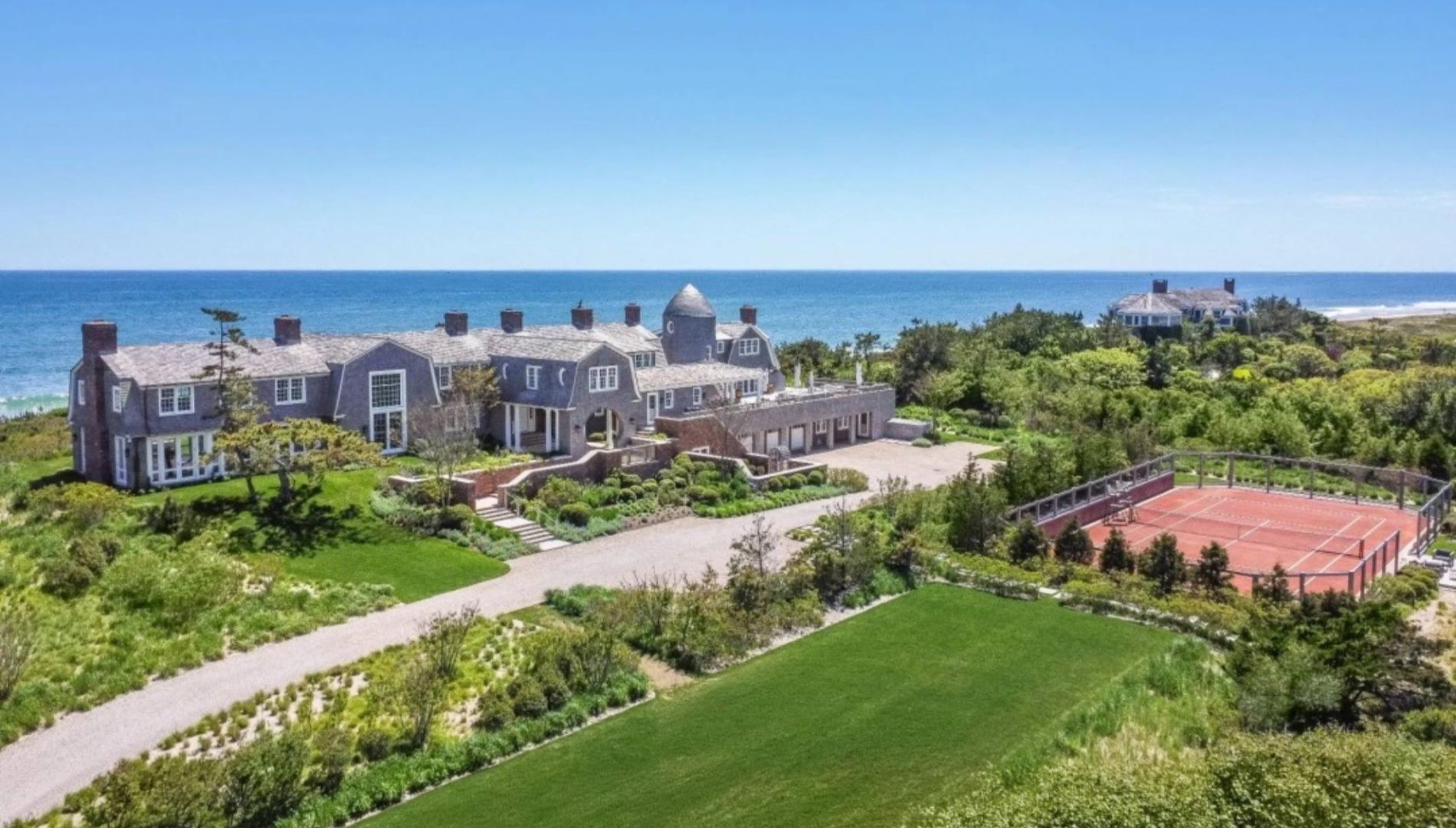
Calling all reality TV fans and lovers of exceptional properties: the famous home that served as the backdrop for the eventful summers in the series Summer House has just hit the market. Located at 2136 Deerfield Rd in Sag Harbor, this spectacular residence is listed at $5,650,000. Much more than just a beach house, this traditional-style property sits on 4.3 acres of land, ensuring absolute privacy for those who wish to experience the Hamptons lifestyle on a grand scale. With 7 bedrooms and 8.5 bathrooms spread across more than 8,700 square feet, it embodies the pinnacle of contemporary luxury.