Categories
Mobile Syrup

Elon Musk wants to go up against Vladimir Putin in ‘single combat’

Tesla and SpaceX CEO Elon Musk has challenged Russian President Vladimir Putin to a “single combat,” and the stakes are Ukraine. That’s enough internet for today.

Musk announced the banter challenge via his Twitter, and even tagged the Kremlin’s official English account. However, Putin is unlikely to see the Tweet since he’s banned the platform in Russia.

Musk, 50, has some experience in Karate, Taekwondo, Judo and Brazilian Jiu-Jitsu, but isn’t likely a match for Putin. The 69-year-old is a 9th Dan black belt in Taekwondo (or at least, he was until recently when the honorary title was revoked) and a former lieutenant colonel at KGB (Komitet Gosudarstvennoy Bezopasnosti).

It has become evident that Musk condemns the illegal invasion of Ukraine by the hands of Russia. He recently sent over several Starlink terminals to help keep the country stay connected to the rest of the world and has been vocal about the conflict on his Twitter.

Image credit: Vocativ, Shutterstock

Categories
Mobile Syrup

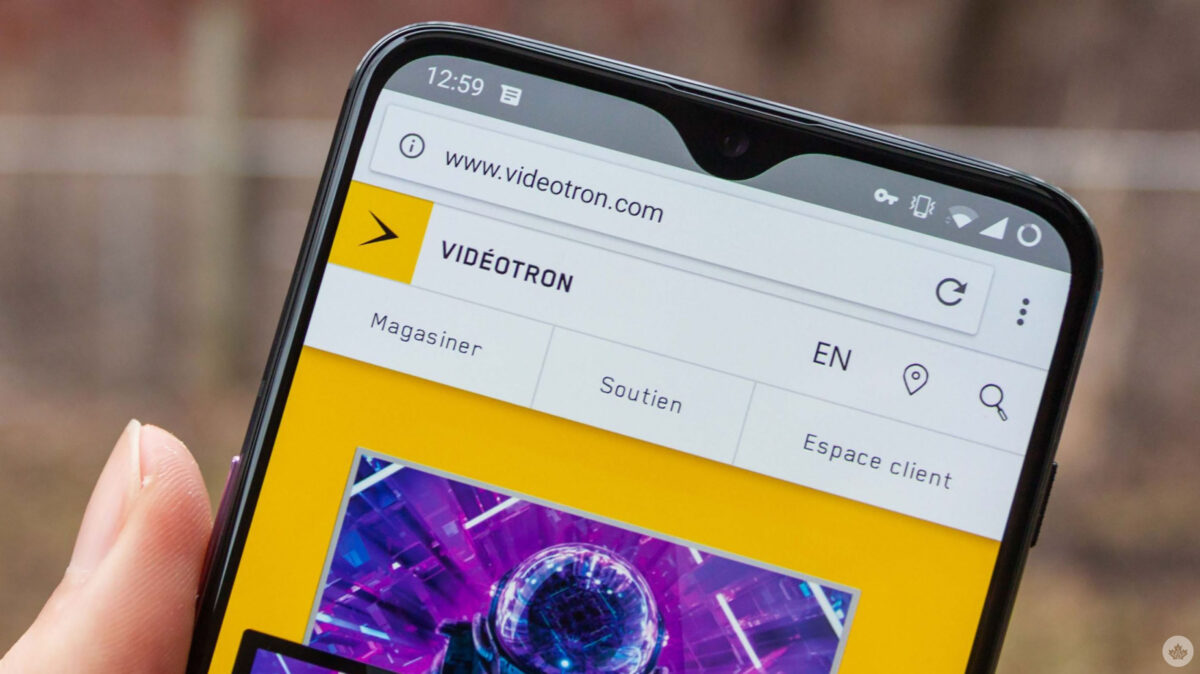
Vidéotron customers can now access Ukraine 24

Vidéotron has added ‘Ukraine 24’ to its channel lineup.

The Ukrainian-language news channel is available on illico starting today. It will be offered to Helix TV customers starting March 16th. A free preview is available for all customers for 30 days.

Several other Ukrainian channels are also on Helix TV, including Ukrainian state broadcaster, UATV, and 1+1 International.

The move is in addition to the company’s earlier announcement of suspending all long-distance charges on calls from Canada to Ukraine until March 31st.

Source: Vidéotron

Categories
Mobile Syrup

Samsung announces the Galaxy A event for March 17

After releasing its flagship S22 lineup and the S21 FE in 2022, Samsung is readying up to release its new A-series devices on Thursday, March 17th. This marks the company’s third major release of the year.

Samsung has started sending out invites to the event, which is scheduled for 10am ET/7am PT on March 17th.

While we are not absolutely certain as to which A-Series devices Samsung aims to release at the event, likely contenders are the Samsung Galaxy A53 and the 6.7-inch Galaxy A73, the latter of which had its renders leaked recently. The predecessors to the above-mentioned devices, the A52 and the A72, were released around the same time last year, so it would make sense to upgrade them around the same time.

The A-series focuses on affordability while not missing out on key features and optimal specifications. From what we know so far, the A73 will reportedly sport a 6.7-inch Super AMOLED Infinity-O display with a Full HD+ resolution, a 120Hz refresh rate and an in-display fingerprint reader.

The device is also rumoured to feature a quad-camera setup on the rear, with the primary camera hosting a 64-megapixel sensor, giving it ample room to compete with Apple’s latest affordable device offering — the iPhone SE (2022). 

You can follow along with MobileSyrup’s coverage of the event on our homepage as well as on Twitter, Facebook and Instagram or check out the showcase for yourself on Samsung’s YouTube channel or through its website on Thursday, March 17th at 10am ET/7am PT.

Image credit: Samsung 

Source: Samsung

Categories
Mobile Syrup

Rogers and Sheridan to focus on 5G autonomous vehicle research in new partnership

Rogers and Sheridan College have entered a two-year partnership to advance 5G autonomous vehicle research and development.

The research will be completed through Sheridan’s Centre for Mobile Innovation. It will combine navigation, diagnostics, and infotainment systems into vehicles through 5G technology.

5G research will focus on autonomous public transportation and delivery systems, driverless taxis, and assisted driving options.

“5G innovation is opening up a whole new world of opportunities for Canadians and businesses, and our partnership with Sheridan continues to build on our strong partner ecosystem,” Jorge Fernandes, chief technology officer at Rogers, said in a statement.

Researchers and students will also combine machine learning with traffic modeling to help Rogers develop services for vehicles operating on its 5G networks.

It will focus on navigation, diagnostics and infotainment. Connectivity will be explored through transport systems using cellular vehicle-to-everything, technology that allows vehicles to communicate.

“Together, we have an opportunity to lead autonomous vehicle research and innovation in Canada that will make meaningful economic impacts, while also providing our students relevant problem-solving skills and expertise as they proceed on their career path,” Andrea England, Vice-Provost of Research at Sheridan, said in a statement.

Image credit: Rogers

Source: Rogers

Categories
Mobile Syrup

Meta-owned Instagram now banned in Russia

After warning its people that they have 48 hours to retrieve their photos and video from Instagram on Friday, March 11th, Russia has followed through and has banned the Meta-owned social media app in the nation, according to The Washington Post.

Russia’s communication and mass media state regulator Roskomnadzor was behind the ban, and notes that it comes after a temporary change in Meta’s hate speech policy that allows people from Armenia, Azerbaijan, Estonia, Georgia, Hungary, Latvia, Lithuania, Poland, Romania, Russia, Slovakia and Ukraine to publish posts that call for violence against Russian troops along with the Russian and Belarusian presidents.

Since then, Meta has backtracked its policy and has now banned people from posting about a head of state’s death, according to Reuters, but that is unlikely to change Russia’s decision.

Meta-owned Facebook and Instagram are now banned or restricted in some capacity in the nation, whereas WhatsApp has avoided all scrutiny.

Source: The Washington Post

Categories
Mobile Syrup

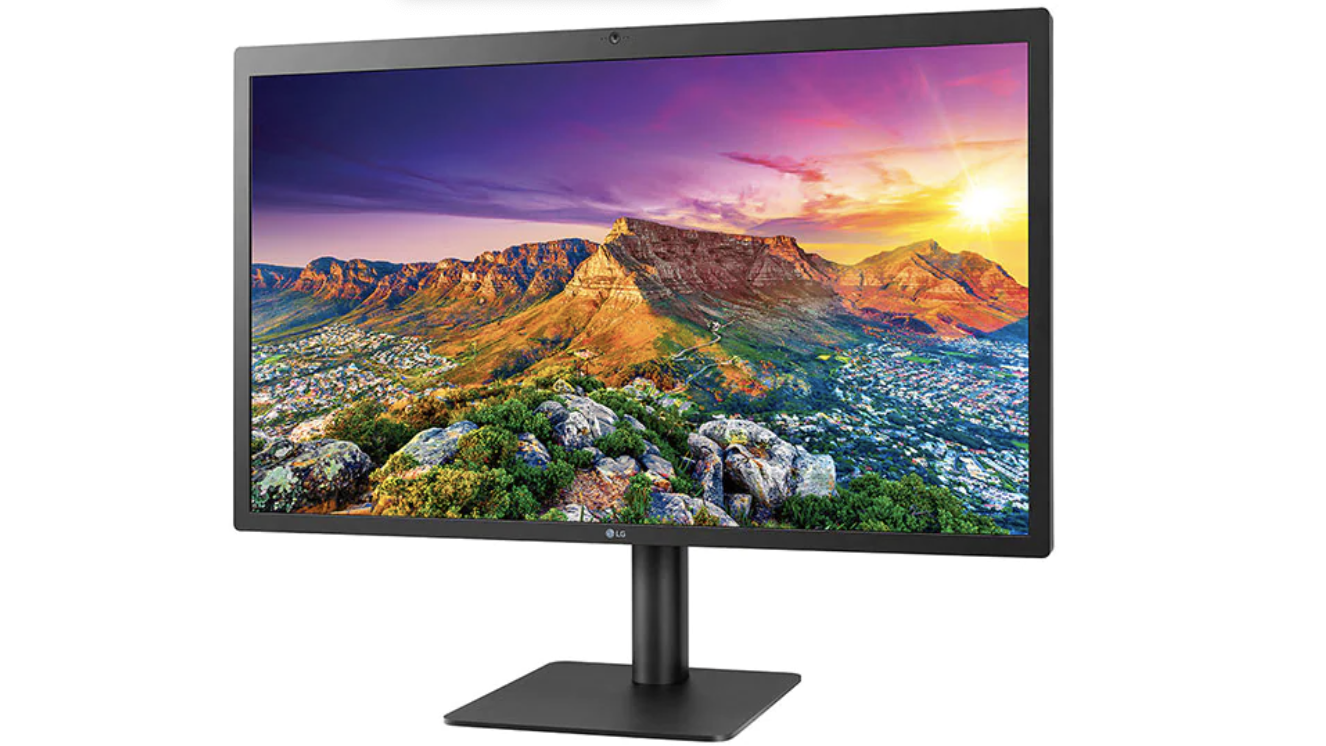
Apple removes LG’s UltraFine 5K monitor from its website

Apple no longer sells LG’s UltraFine 27-inch 5K monitor on its website.

A search for the display states “the product you’re looking for is no longer available,” pushing visitors to view similar products.

MacRumors first reported the change.

The removal comes less than a week after Apple launched its new Studio Display.

The 27-inch display features 5K resolution, and the screen goes up to 600 nits of brightness. There’s also a 12-megapixel webcam and three microphones powered by the A13 Bionic chipset. Further, the display features ‘True Tone,’ which adapts to the light in the room. As well, buyers can opt to get a nano texture applier to the glass to reduce reflections.

The display starts at $2,000. With add-ons, its costs $2,900.

Image credit: LG

Via: MacRumors

Categories
Mobile Syrup

Ghostwire: Tokyo’s world is deeply engrossing so far, even if the combat isn’t

After a few hours with Ghostwire: Tokyo‘s first two chapters, I’m happy to say the game is off to a pretty good start.

For those unfamiliar, the latest game from Tokyo-based Tango Gameworks (The Evil Within) tells the story of a modern-day Tokyo that sees most of its inhabitants mysteriously disappear as deadly spirits called “Visitors” take over. Amid the chaos, a young man named Akito is bonding with a spirit detective, KK, and together, the two set out to investigate.

So far, the plot itself is unfolding somewhat slowly, with many questions still remaining. All I really know so far is that Akito is looking for his ailing sister, who was kidnapped by the Visitors, while KK himself has a shady past he largely keeps to himself. What this means is that neither character is particularly interesting at the moment, and I don’t find myself yet invested in their personal goals. That said, there’s an admittedly amusing rapport between the two, especially as you explore the city. In one moment, Akito might scold KK for leaving his base messy, leading KK to dryly ask if he’d prefer to clean it instead. In another, KK expresses impatient frustration should Akito enthusiastically stop to pet a dog or shop. (And yes, there’s both English and Japanese audio, the latter of which I’d recommend for the most immersive experience.)

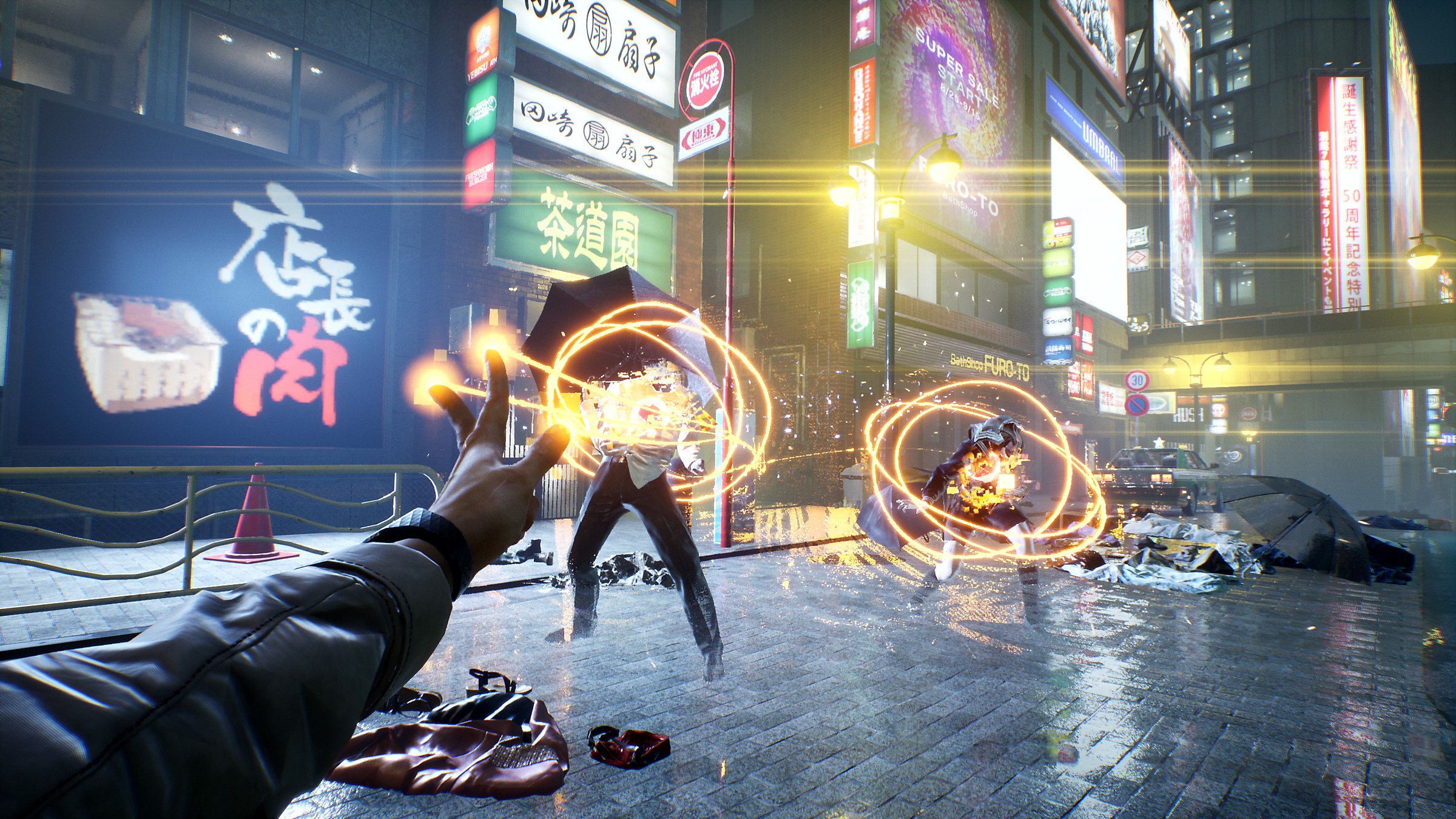
On a broader level, though, Ghostwire‘s setting feels like a character of its own, and its most deeply compelling one, at that. The bright lights of buildings, convenience stores and cars suggesting a lived-in city are brilliantly juxtaposed with the dreary, almost noir-esque rainy aesthetic, creating an engrossing atmosphere, especially in first-person. It’s often creepy, but it’s never outright horror, if you’re someone who gets spooked easily. While the actual graphical fidelity is underwhelming, especially for a PS5- and PC-only title, the universally strong art direction makes up for that. You’ll especially appreciate the views from rooftops, which you’ll eventually be able to access using winged spirits for a nice added layer of verticality.

Ghostwire Tokyo Visitor

That said, Tango’s Tokyo manages to be sizeable enough to encourage exploration but not so bloated as to feel overwhelming. Instead, Ghostwire is more so about creating an overall eerie vibe that’s bolstered by a detailed city and delightful collectibles to teach you about Japanese culture. As someone who was fortunate enough to travel to Tokyo for the first time right before the pandemic, I adore how true-to-life Ghostwire‘s rendition feels.

But even removing that, I’m enjoying the game’s approach to sidequests. Periodically, you’ll come across friendly spirits that require assistance, such as cleansing a haunted home or finding out what happened to someone’s sibling. What’s great about these is they’re effectively short stories — 30-minutes-or-less escapades which flesh out both the folklore-inspired supernatural world and Atiko and KK’s personalities. They also net you decent amounts of rewards put towards upgrading your abilities and buying items, which make them fulfilling from a progression standpoint, as well. Chief among these is your collection of displaced innocent souls, which can be converted into XP and money.

Ghostwire: Tokyo dog

Now, if you’re wondering why I’ve spent this long talking about everything but the combat, that’s because it’s Ghostwire‘s weakest element so far. To be clear: it’s by no means bad. In fact, it’s even cool to a degree. Through KK, Akito can use different forms of elemental magic — known here as “Weavings” — to fight off the Visitors. The mix of hand animations and particle effects makes magic look wonderfully flashy, while the DualSense adds a layer of punchiness through satisfying vibrations. From a presentational level, at least, it’s pretty unique.

The problem, though, is that it’s otherwise just serviceable and lacking in depth at present. Sure, it’s neat how each spell so far has its own use case. Wind Weavings are your basic rapid-fire blasts, while Fire Weavings cause powerful concentrated explosions and Water Weavings cover a wider range. Deal enough damage and you’ll expose an enemy’s core, which you can target for instant execution. But as a whole, there hasn’t been much variety in how I actually approach encounters. The enemy types up until this point, while certainly effectively creepy in their demonic, Slender Man-esque appearances, don’t really require any kind of strategy beyond getting blasted with your Weavings. And while there’s a stealth system for quick takedowns when behind an enemy or from afar with a bow, it feels very rudimentary. Hopefully, something expands with the combat soon to give it some substance to go with its ample style.

Ghostwire Tokyo combat

Because otherwise, Ghostwire is proving quite enjoyable. The core dynamic between the leads is fun, the Tokyo setting is beautifully realized and the sidequests offer gratifying glimpses into a rich culture. Those are the reasons to play for now, rather than the supernatural battles.

I’ll have more on Ghostwire: Tokyo in the coming days ahead of its March 25th on PlayStation 5 and PC on March 25th. In the meantime, there’s a free KK-focused visual novel prequel available on the PlayStation Store.

Image credit: Bethesda

Categories
Mobile Syrup

Only Apple’s iPhone 14 Pro devices will get the A16 chip: report

A new report from often-reliable TF International Securities Apple analyst Ming-Chi Kuo says that only Apple’s higher-end Pro model iPhone 14 devices will feature its new A16 chip.

If this rumour is accurate, this would mark a fundamental shift in Apple’s smartphone strategy.

Kuo tweeted the news from his new Twitter account, stating that Apple’s mid-range iPhone 14 smartphones will still feature the same A15 chip as the iPhone 13 and the new iPhone SE (2022).

In the past, Apple has included its new smartphone chip in its entire lineup of new iPhones for that year. Kuo goes on to say that all four iPhone 14 devices will feature 6GB of RAM, but that the Pro models will feature LPDDR 5 memory and the standard iPhone 14s will offer LPDDR 4X RAM.

Kuo also says that Apple is ditching the mini from its 2022 lineup and will instead offer a 6.1-inch iPhone 14 and iPhone 14 Pro and a 6.7-inch iPhone 14 Max and iPhone 14 Pro Max.

It’s unclear if Apple’s decision to limit the A16 to its higher-end 2022 devices is tied to the ongoing worldwide chip shortage or if it’s a strategic move on the tech giant’s part. In other Apple-related news, Kuo also recently tweeted that Apple’s 2023 Mac mini will feature the same form factor as its predecessor.

Apple is expected to reveal its 2022 iPhone lineup this fall.

Source: @mingchikuo Via: MacRumors 

Categories
Mobile Syrup

iPhone SE (2022) Review: A powerful, budget-friendly relic

The iPhone SE (2020) felt dated back when I reviewed it two years ago, and the nearly identical iPhone SE (2022) is an absolute relic in today’s smartphone landscape.

It features the same 4.7-inch display with chunky bezels, haptic Touch ID Home Button, camera array, and iPhone 8-like design as its predecessor.

Switching from using the iPhone 13 Pro to the iPhone SE (2022) over the last few days has been an understandably jarring experience — but this entry-level device isn’t designed for my taste in smartphones, and not everyone needs the latest and greatest when it comes to tech.
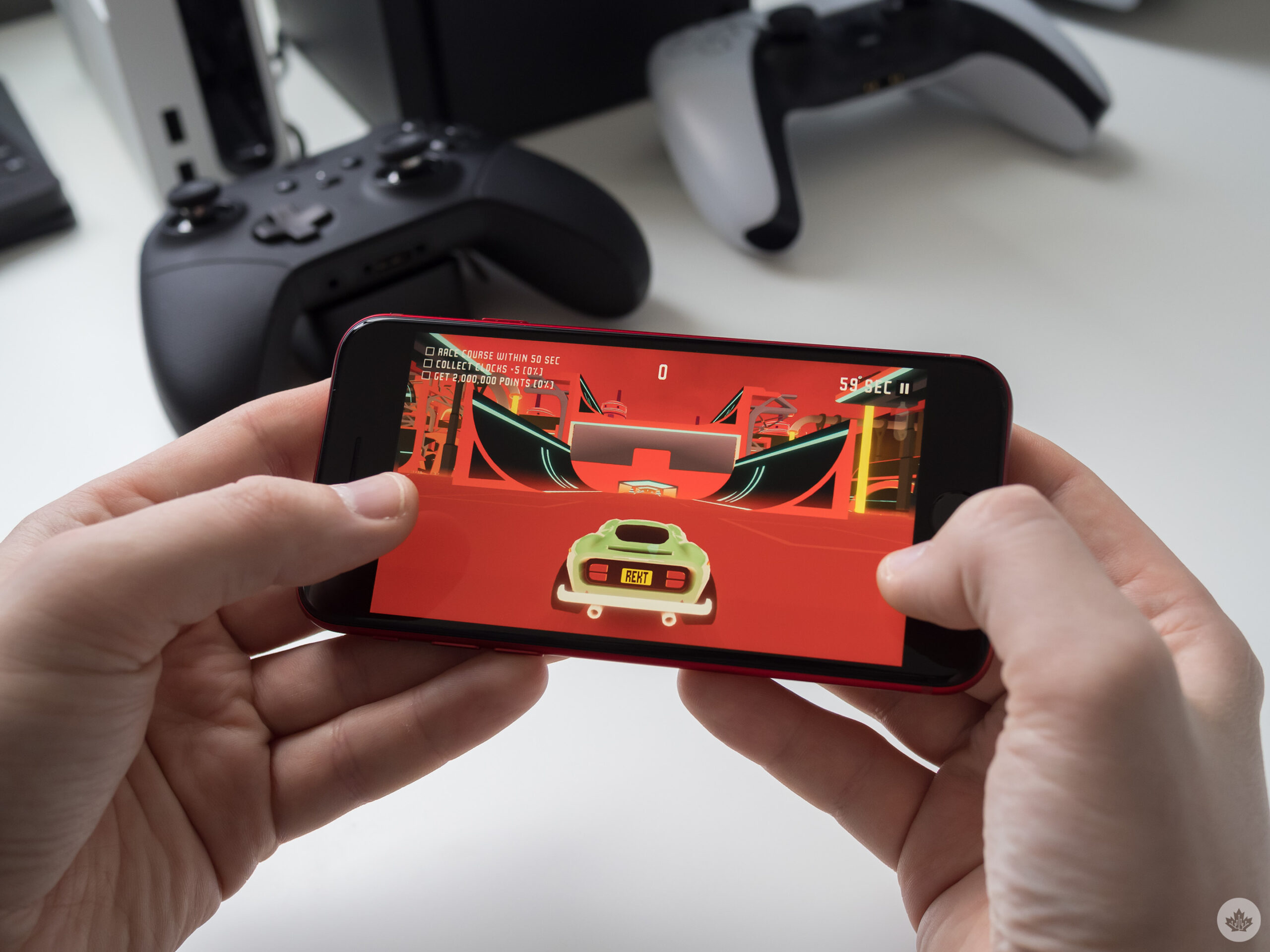
With that in mind, there are notable hardware changes under the hood with Apple’s new iPhone SE, including the iPhone 13 series’ powerful A15 Bionic chip, 5G connectivity, better battery life and more durable glass on the front of the back of the device.

Still, the overall design of the iPhone SE (2022) feels ancient, and it’s difficult not to imagine a device that features a more iPhone 11-like design with no Home Button and Face ID compatibility.

iPhone SE (2022)

iPhone SE (2020)

Display

4.7-inch, Retina HD, LCD display, 1334 x 750 pixels, HDR 10, Dolby Vision

4.7-inch, Retina HD, LCD display, 1334 x 750 pixels, HDR 10, Dolby Vision

Processor

Apple A15 Bionic

Apple A13 Bionic

RAM

4GB

3GB

Storage

64GB, 128GB, 256GB

64GB, 128GB, 256GB

Dimensions (in.)

138.4 x 67.3 x 7.3mm

138.4 x 67.3 x 7.3mm

Weight

148g

148g

Rear Facing Camera

12-megapixel (f/1.8, OIS, wide angle)

12-megapixel (f/1.8, OIS, wide angle)

Front Facing Camera

7-megapixel (f/2.2)

7-megapixel (f/2.2)

OS

iOS 15

iOS 13

Battery

1821mAh

Network Connectivity

LTE/ 5G

GSM/HSPA/LTE

Sensors

Touch ID, accelerometer, gyro, proximity, compass, barometer

Touch ID, accelerometer, gyro, proximity, compass, barometer

SIM Type

Nano SIM, eSIM

Nano SIM, eSIM

Launch Date

March 18, 2022

April 15, 2020

Misc

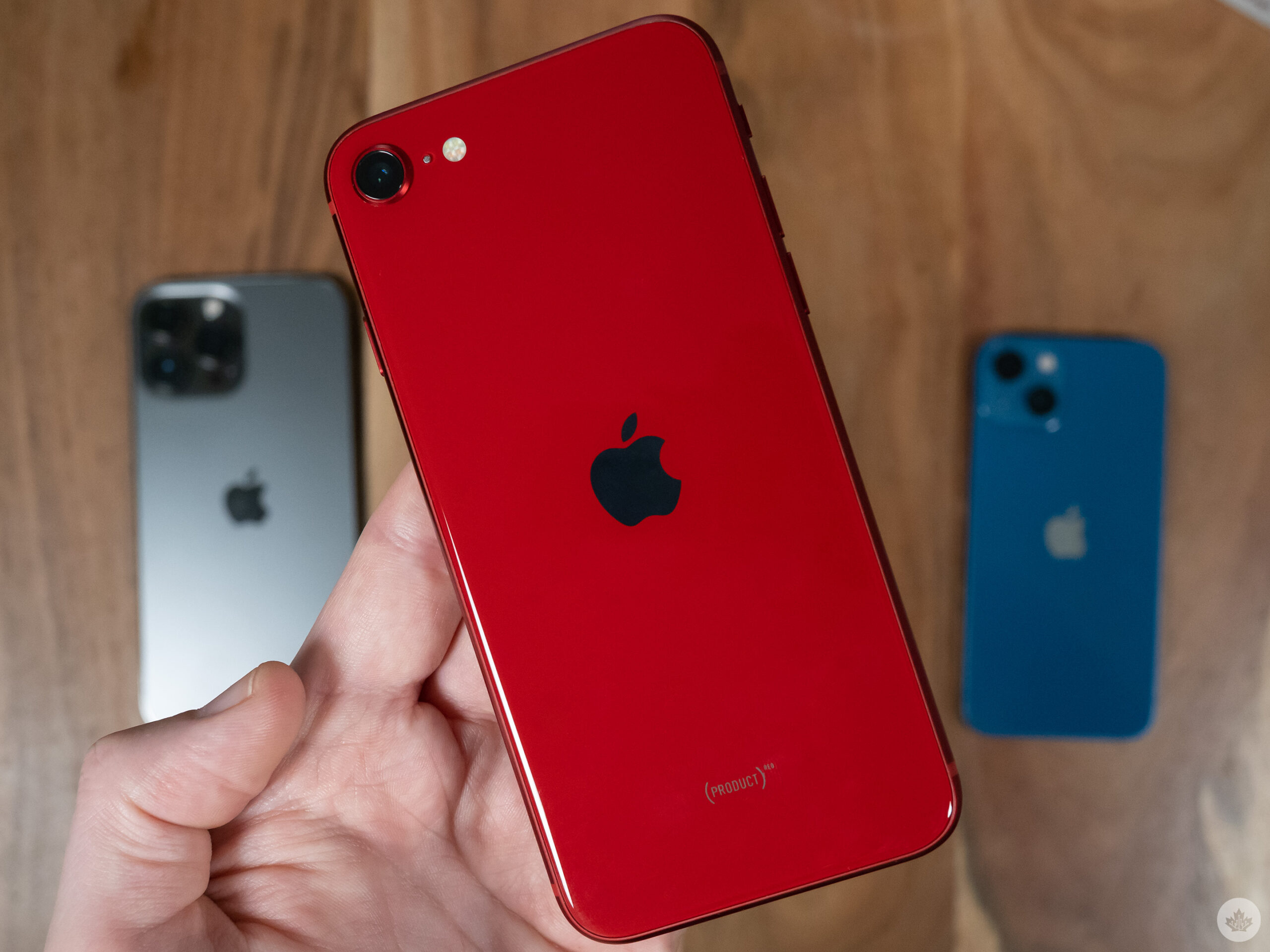
Colours: Starlight, Midnight, Product Red

Colours: Black, White, Product Red

Display

iPhone SE (2022)

4.7-inch, Retina HD, LCD display, 1334 x 750 pixels, HDR 10, Dolby Vision

iPhone SE (2020)

4.7-inch, Retina HD, LCD display, 1334 x 750 pixels, HDR 10, Dolby Vision

Processor

iPhone SE (2022)

Apple A15 Bionic

iPhone SE (2020)

Apple A13 Bionic

RAM

iPhone SE (2022)

4GB

iPhone SE (2020)

3GB

Storage

iPhone SE (2022)

64GB, 128GB, 256GB

iPhone SE (2020)

64GB, 128GB, 256GB

Dimensions (in.)

iPhone SE (2022)

138.4 x 67.3 x 7.3mm

iPhone SE (2020)

138.4 x 67.3 x 7.3mm

Weight

iPhone SE (2022)

148g

iPhone SE (2020)

148g

Rear Facing Camera

iPhone SE (2022)

12-megapixel (f/1.8, OIS, wide angle)

iPhone SE (2020)

12-megapixel (f/1.8, OIS, wide angle)

Front Facing Camera

iPhone SE (2022)

7-megapixel (f/2.2)

iPhone SE (2020)

7-megapixel (f/2.2)

OS

iPhone SE (2022)

iOS 15

iPhone SE (2020)

iOS 13

Battery

iPhone SE (2022)

iPhone SE (2020)

1821mAh

Network Connectivity

iPhone SE (2022)

LTE/ 5G

iPhone SE (2020)

GSM/HSPA/LTE

Sensors

iPhone SE (2022)

Touch ID, accelerometer, gyro, proximity, compass, barometer

iPhone SE (2020)

Touch ID, accelerometer, gyro, proximity, compass, barometer

SIM Type

iPhone SE (2022)

Nano SIM, eSIM

iPhone SE (2020)

Nano SIM, eSIM

Launch Date

iPhone SE (2022)

March 18, 2022

iPhone SE (2020)

April 15, 2020

Misc

iPhone SE (2022)

Colours: Starlight, Midnight, Product Red

iPhone SE (2020)

Colours: Black, White, Product Red

The dated iPhone 8-like look returns
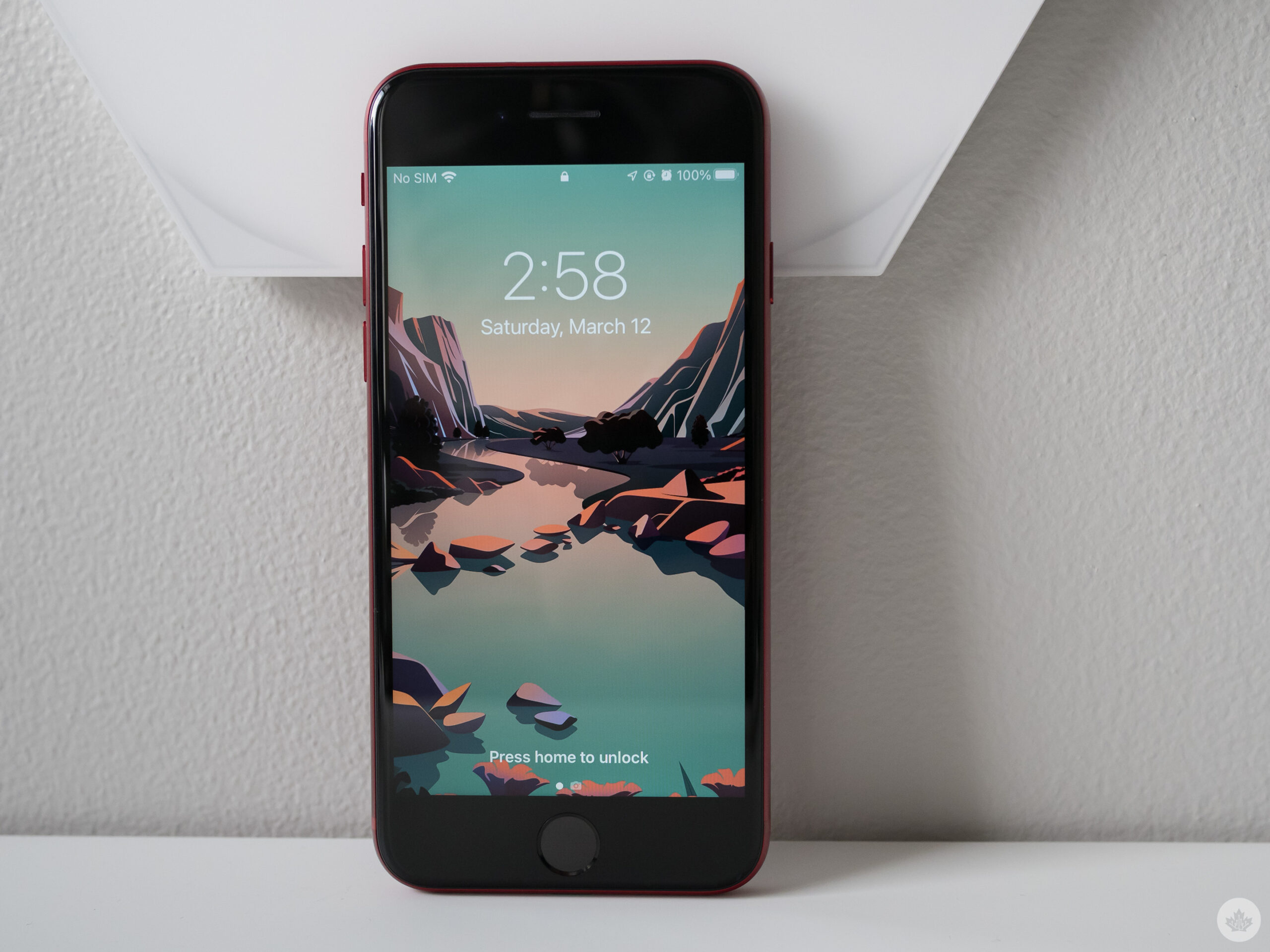
iPhone SE 2022 screen

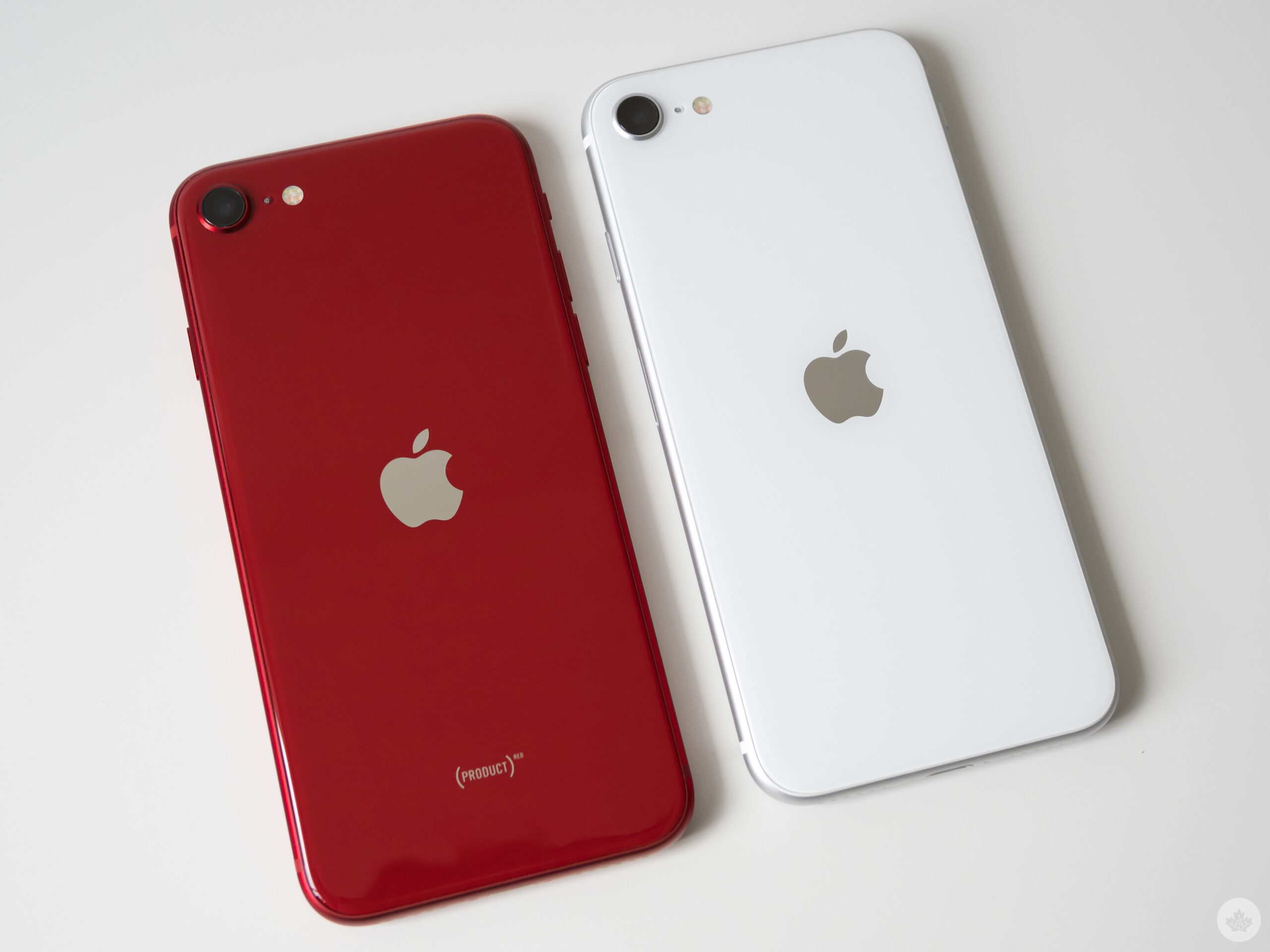
Both smartphones look identical when the iPhone SE (2020) is placed directly beside the iPhone SE (2022).

The 3rd-gen iPhone SE features the same 1334 x 750-pixel resolution display, rounded design and, of course, physical Home Button. The new iPhone SE’s LCD display is passable, but it looks dated compared to more modern smartphones. Its colours are washed out and the lack of a higher refresh rate is noticeable after primarily using devices for the past few years that feature between a 90Hz and 120hz screen. The screen blur is real and very apparent, but of course, like a lot of the new iPhone SE’s shortcomings, these are issues a lot of people may not notice.

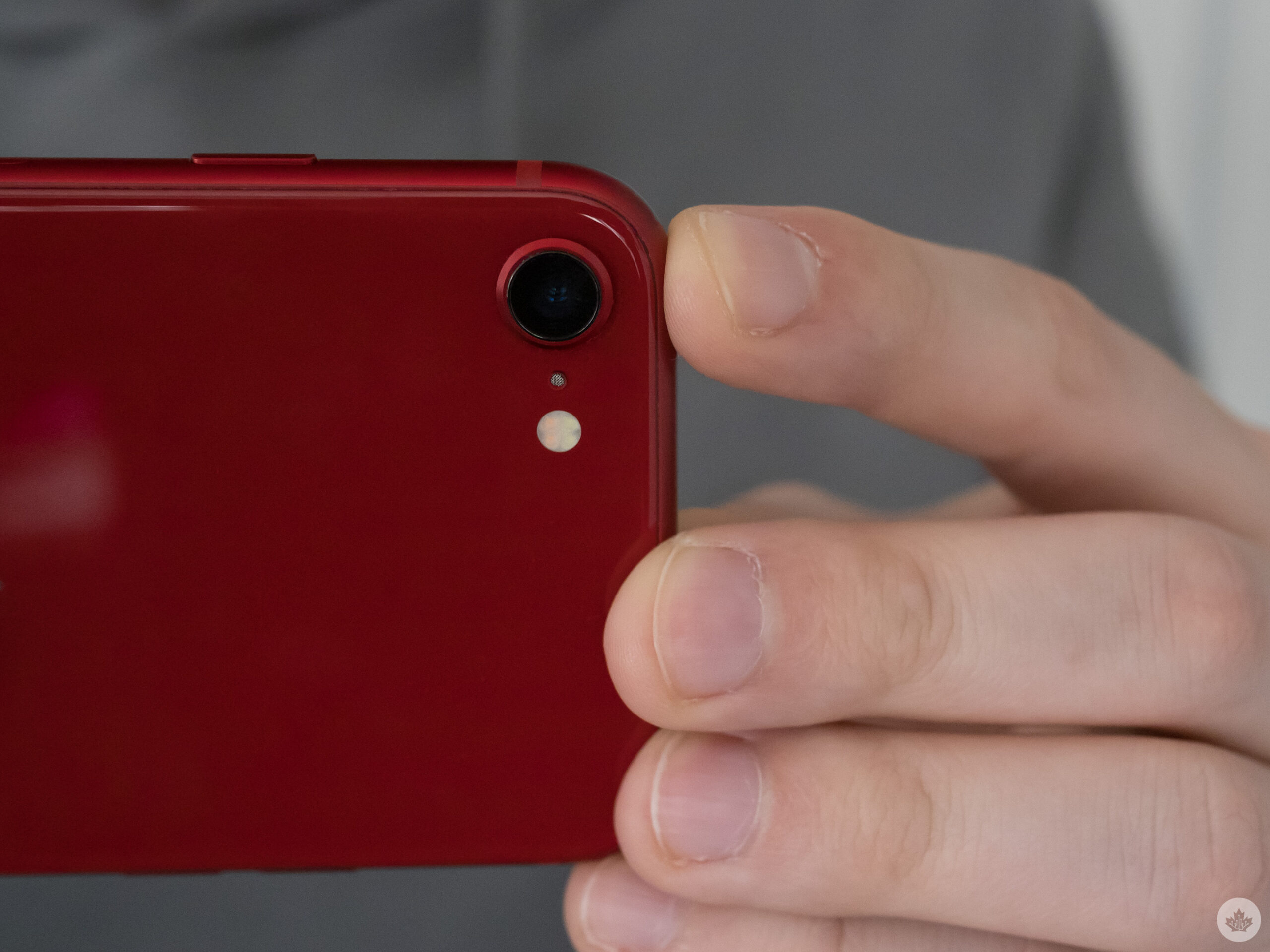
The sole 12-megapixel f/1.8 camera lens is back in a single camera bump on the iPhone SE (2022)’s rear, but thanks to the A15 chip, it borrows computational photography features like ‘Deep Fusion’ from Apple’s modern iPhone models (more on this later).

The front and rear of the iPhone SE (2022) features more durable glass this year. That said, this isn’t the same ‘Ceramic Shield’ technology featured in the iPhone 13 series. Instead, it’s the glass Apple uses on the rear of iPhone 13 devices. While Apple is likely embellishing a little when it says the 3rd-gen iPhone SE features “the toughest glass in a smartphone front and back,” the device’s build is still likely more durable than 2020’s iPhone SE.

It’s also worth pointing out that I found it difficult to switch back to a physical Home Button given I’ve been using Apple’s more intuitive swipe navigation since the release of the iPhone X. Again, this is likely part of the iPhone SE line’s appeal though. On that note, it would have been great to see Apple add Face ID to the new SE, but unfortunately, that didn’t happen this year.

There’s an argument defending this dated design that I’ll delve into later, but for now, if you were hoping the 3rd-gen iPhone SE would be the device to update the lines’ time-capsule look, the 2022 edition isn’t it.
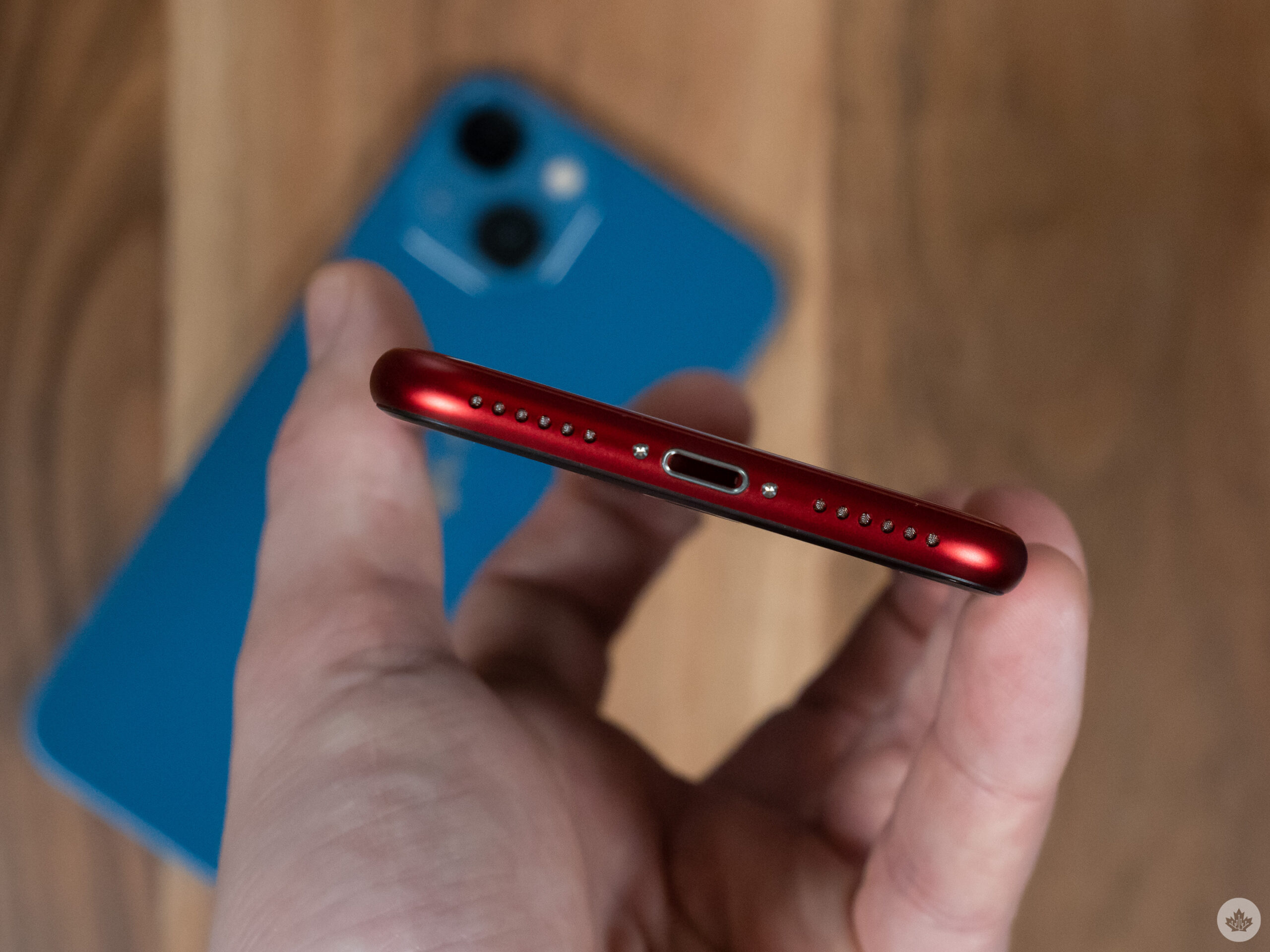
iPhone SE (2022) Lightning port

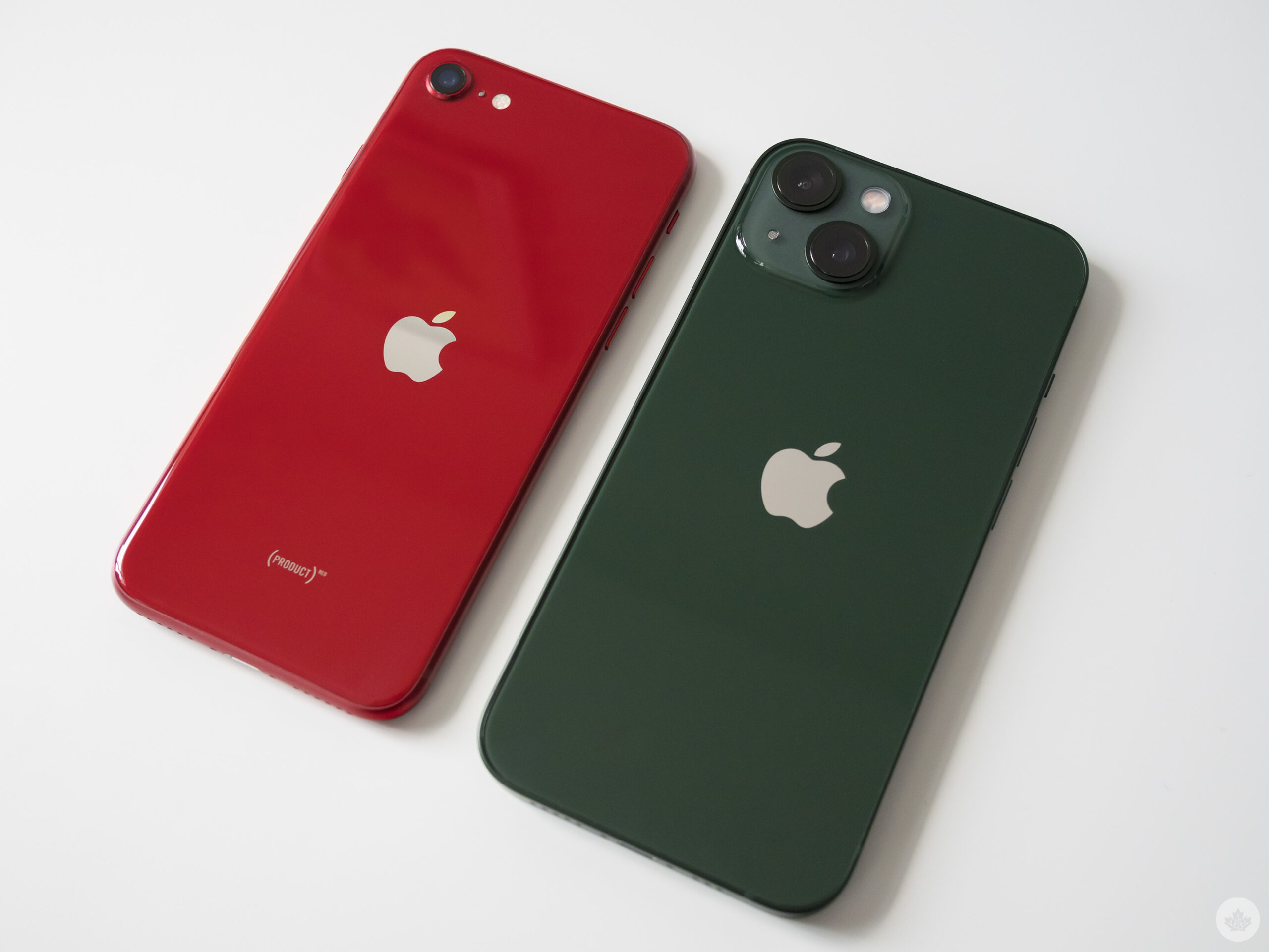
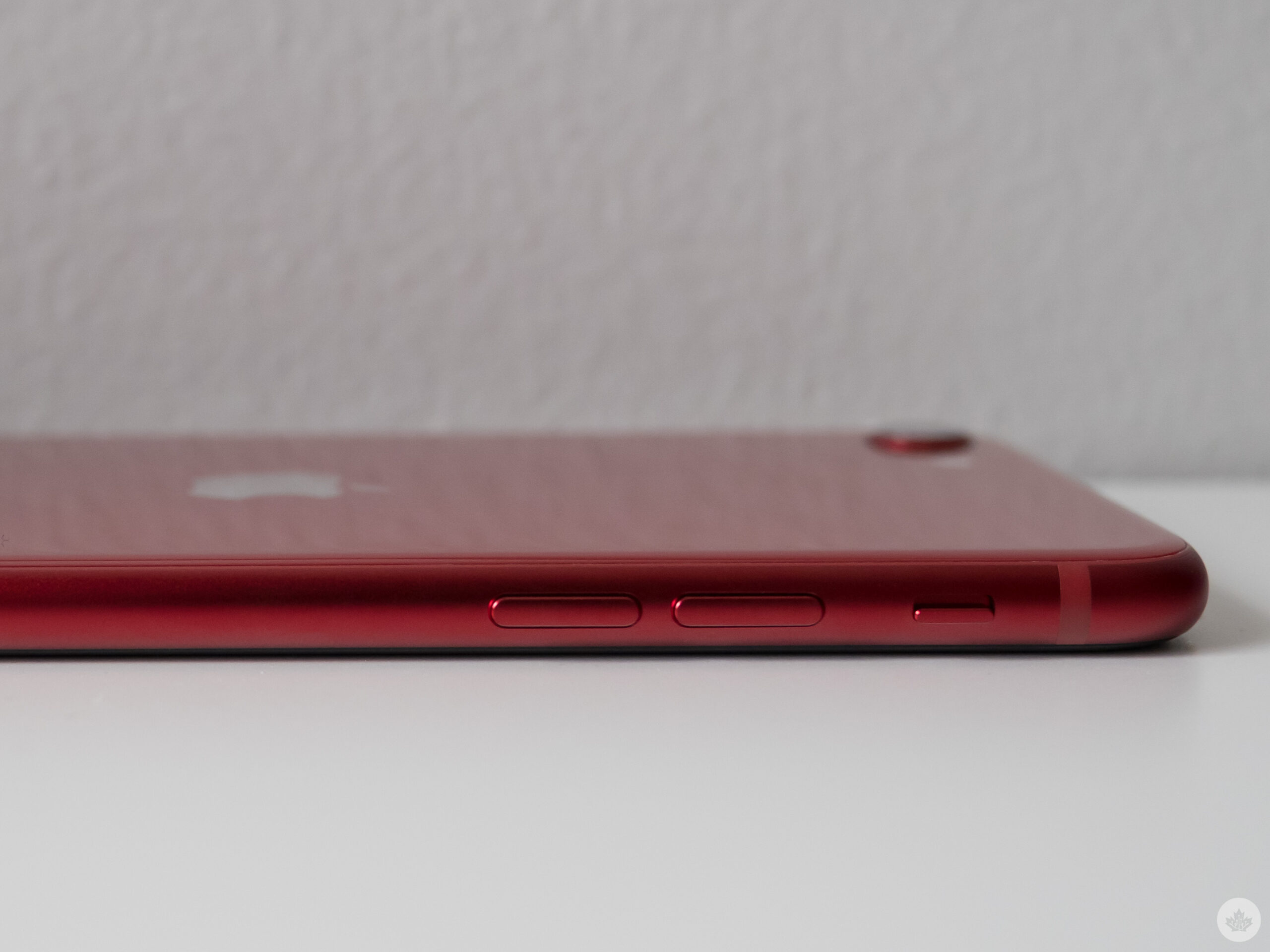
Other returning features include IP67 water and dust resistance, Qi wireless charging and very similar colour options: ‘Midnight’ (black), ‘Starlight’ (white) and ‘Product Red’ (red). The storage options also remain the same at 64GB, 128GB and 256GB.

So what’s actually new?
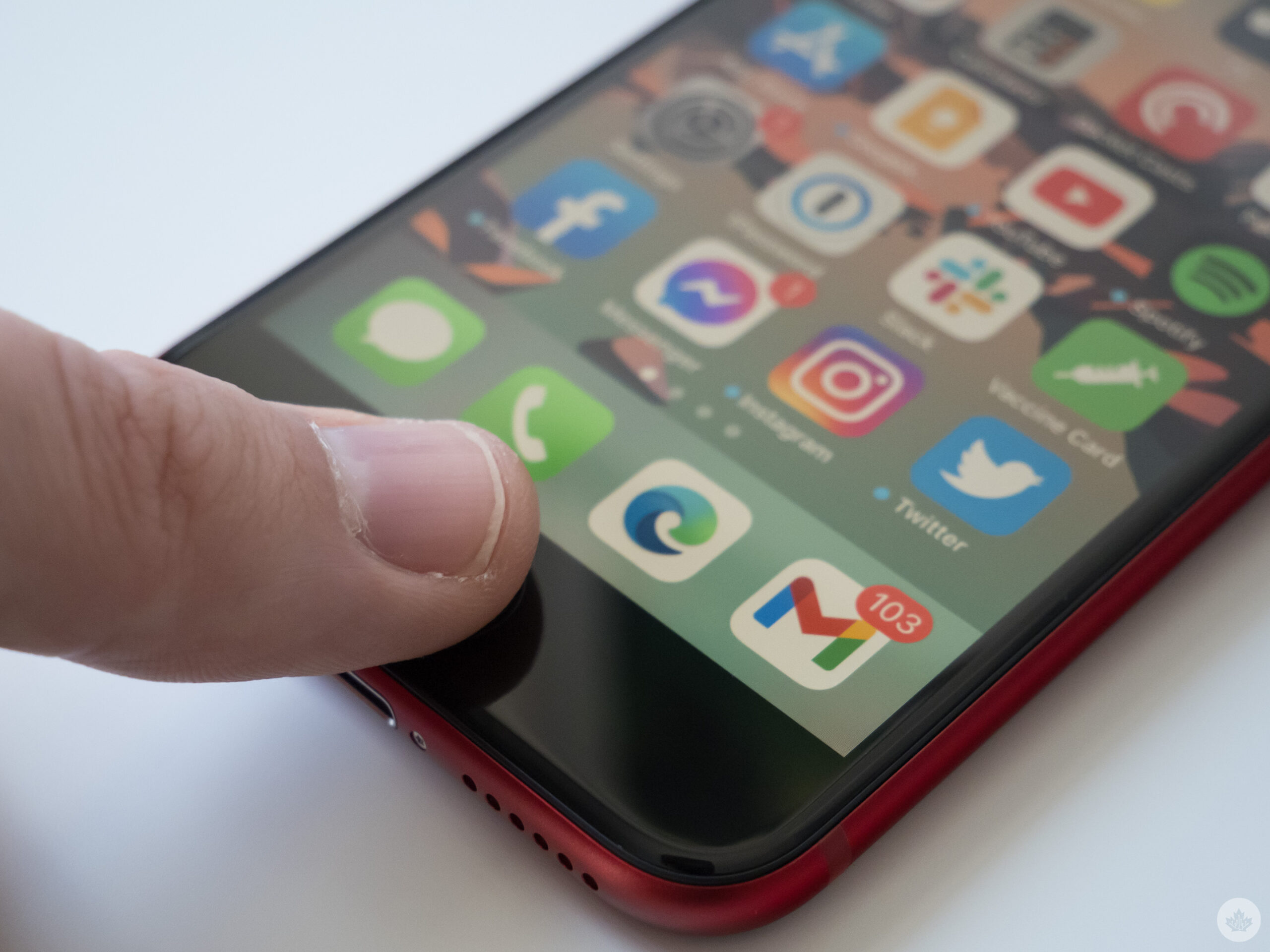
iPhone SE (2022) fingerprint sensor

This year, the most significant addition to the iPhone SE is Apple’s powerful A15 Bionic chip. With the new chip, the device hits the impressive 1,734 single-core and 4,651 multi-core score, putting it in the range of the iPhone 13 Pro in terms of power (1,737/4,817) thanks to its lower-resolution, smaller display. Its multi-core score is lower than the iPhone 13 Pro, but this was also the case with the 2nd-gen iPhone SE when compared to the iPhone 11 Pro.

But if you’re buying an iPhone SE, you probably aren’t checking Geekbench scores for your device. Instead, the iPhone SE (2022)’s target audience just wants a phone that performs better than the iPhone 6, iPhone 7 or iPhone 8 they’re clinging to. Based on my experience, the iPhone SE offers smooth performance across the board, whether you’re swiping through iOS 15, have 15 Safari tabs open at once, or playing relatively resource-intensive titles like Apple Arcade’s Fantasian.

iPhone SE 2022 benchmarks

Next, there’s the new 5G support. While I agree modern smartphones should support 5G, the speed boost isn’t as significant as Canadian carriers make it out to be. In essence, Canadians who live in more populated areas with 5G coverage will sometimes hit data speeds roughly 15-25 percent faster than what they experienced on LTE. This is great, sure, but it’s also a boost in performance I’d argue the average smartphone user probably won’t notice.

It’s also worth mentioning that, like the iPhone 13 series and the iPhone 12 series, the iPhone SE (2022) doesn’t support mmWave 5G in Canada and is only compatible with the sub-6 GHz version of the next-gen wireless technology. In the context of the Canadian market, this isn’t an issue because mmWave 5G doesn’t exist here and likely never will.

The iPhone SE (2022) also features marginally improved battery life thanks to the power efficiency of the A15 chip. Anecdotally, I found the performance to be very similar to the iPhone SE (2020)’s, with the new SE’s battery easily lasting well into the evening on a full charge with moderate use.

The same camera, with upgrades
iPhone SE (2022) camera

Contrary to what some earlier rumours indicated, the iPhone SE (2022) features the same single 12-megapixel f/1.8 rear shooter as its predecessor. The upgrades this year include ‘Deep Fusion’ Sweater Mode, ‘HDR 4,’ and the ‘Photographic Styles’ Apple brought to the iPhone 13 series last year. All of these are welcome additions to the new SE, but I’m fond of HDR 4 in particular, which helps illuminate faces under challenging lighting.

However, the camera doesn’t feature the iPhone 13’s ‘Cinematic mode’ or even ‘Night mode.’ Though Cinematic mode is hit or miss, Night mode is useful when you’re snapping photos under low-light conditions, and it’s disappointing the iPhone SE doesn’t offer this feature despite it being available in iPhones as far back as the iPhone 11.

The questions at hand here are, how do the iPhone SE (2022)’s photos compare to the iPhone SE (2020)’s and also, what is the image quality trade-off compared to the iPhone 13 series?

From left to right: iPhone SE (2022), iPhone SE (2020) and iPhone 13 Pro.

The difference between the three shots of my partner (see above) are pretty negligible. With the 3rd-gen iPhone SE, there’s additional detail captured in her face and a slightly wider range of colours compared to the iPhone SE (2020). You’ll also notice that her skin tone is more washed out with the 2nd-gen iPhone SE. The iPhone 13 Pro, as expected, features more shadows and depth, resulting in a vibrant, three-dimensional image. Still, all three shots are very similar, which is a testament to Apple’s prowess in the smartphone camera space.

Overall, it’s impressive the iPhone SE (2022)’s camera quality is so close to the iPhone 13 Pro’s, though to be fair, the 2nd-gen iPhone SE is near that mark as well.

From left to right: iPhone SE (2022), iPhone SE (2020) and iPhone 13 Pro.

The next comparison is far harder to discern the differences in quality. For example, while the bushes in the back of the photo (see above) are slightly more clear with the iPhone SE (2022) compared to the iPhone SE (2020), the photos otherwise look nearly identical to my eye. The iPhone 13 Pro photo, on the other hand, is overall crisper and offers colours that are more true to the dreary conditions I shot the image under. That said, some people may prefer the brighter, more yellow-infused look of the 2nd and 3rd-gen iPhone SE. The iPhone 13 Pro photo also offers greater contrast than the iPhone SE (2022), though only by a small margin.

In general, the experience of just pointing and shooting a photo with the iPhone SE (2022) is impressive. Like its predecessor, the phone struggles with backlit photos and other challenging lighting situations, but the results are generally outstanding even under low-light.

IMG_0009
IMG_0029
IMG_0028
IMG_0027
IMG_0026
IMG_0025
IMG_0024
IMG_0021
IMG_0014
IMG_0013
IMG_0010
iphone-se-2020-comparison-11
IMG_0031
IMG_0037
IMG_0032

The 7-megapixel f/2.2 selfie shooter also seems to perform reasonably well but doesn’t seem to offer much of an improvement over the last iPhone SE.

Who is the 3rd-gen iPhone SE for?
iPhone SE (2022) side view

The iPhone SE series is always challenging to review because the smartphones lack nearly every feature I care about. Optical zoom? Nope. A great display resolution with a refresh rate above 60Hz? Definitely not. What about a Night shooting mode, a sleek design and Face ID? Also no.

These features matter to me and are why I’d rather pay the extra money and opt for the iPhone 13 or iPhone 13 Pro, but when it comes to the iPhone SE (2022)’s target audience, most of this higher-end functionality isn’t important.

This device is designed for people still using an iPhone 6, iPhone 7, iPhone 8 or even an earlier version of Apple’s smartphone. They want a familiar user experience that offers reliable performance and a camera capable of snapping good photos. More importantly, they want to pay a reasonable price. The new iPhone SE checks all of those integral boxes.

Sure, these people could opt for the $679 iPhone 11 and likely get a more modern iPhone experience, but I think the physical Home Button is necessary for the iPhone SE’s audience (at least for now) as much as I’d like to see it disappear. You could also easily make the argument that even Google’s $799 Pixel 6 is a better buy and a more capable smartphone than the iPhone SE (2022), though I think the average iPhone SE user would never consider making the jump to Android.

iPhone SE users like what they like, and that’s part of why they’re not willing to move to a more modern iPhone.

Categories
Mobile Syrup

Apple reportedly doesn’t plan to release new, larger-screen iMac

Following Apple’s announcement of the Mac Studio and Studio display, the company quietly discontinued its 27-inch Intel-powered iMac.

Rumours indicated that Apple planned to launch a new iMac Pro, but now 9to5Mac says this isn’t the case. Citing information from the sources that revealed plans for the Mac Studio, 9to5 says Apple has no plans to launch a larger-screen iMac in the near future.

Instead, Apple is working on the next wave of Macs with the new M2 chip. That includes a new MacBook Air, MacBook Pro, and Mac mini.

9to5Mac also reported that information applies to large-screen iMac models as well as iMacs with Pro, Max, or Ultra chips. The next iMac Apple has in the works will reportedly be a 24-inch iMac expected in 2023, but it won’t feature Apple’s high-end processors.

All that said, it’s worth keeping in mind that plans can change. Moreover, rumours can be inaccurate at times, or not reveal the whole story. As it stands, it sounds like there won’t be any larger-screen or high-end iMacs arriving anytime soon.

Source: 9to5Mac