Categories
Mobile Syrup

Streaming in Canada on Amazon Prime Video, Apple TV+, Crave, Disney+ and Netflix [Jan. 24-30]

Every week, MobileSyrup outlines some of the most notable movies and TV shows that recently hit Canadian streaming platforms.

Our ‘Streaming in Canada’ column typically focuses on new content from Amazon Prime Video, Crave and Netflix, but other services like Apple TV+ and Disney+ will be mentioned when relevant. Premium video on demand (PVOD) platforms are also fair game as movies continue to come to digital early amid the COVID-19 pandemic.

Finally, we’ll highlight shows or movies that are made by Canadian companies, involve notable Canadian cast or crew and/or are filmed in Canada.


Amazon Prime Video

The Legend of Vox Machina [Amazon Original]

The Legend of Vox Machina is based on the popular Dungeons & Dragons webseries Critical Role and features Matthew Mercer, Ashley Johnson, Travis Willingham, Laura Bailey, Liam O’Brien, Taliesin Jaffe, Marisha Ray and Sam Riegel reprising their respective roles.

Amazon Prime Video Canada premiere date: January 28th, 2022 (first three episodes, three new episodes every Friday)
Genre: Animated fantasy
Runtime: 12 episodes (around 30 minutes each)

Stream The Legend of Vox Machina here.

An Amazon Prime Video subscription is included at no additional cost with an Amazon Prime membership, which costs $79/year.

The full list of movies and shows hitting Amazon Prime Video Canada this month can be found here.


Apple TV+

The Afterparty [Apple Original]

After a high school reunion leads to someone’s death, a detective grills each partygoer to discover the culprit.

The Afterparty was created by Christopher Miller (The Lego Movie) and features an ensemble cast that includes Tiffany Haddish (Girls Trip), Sam Richardson (Veep), Ike Barinholtz (MADtv), Ben Schwartz (Parks & Recreation) and Illana Glazer (Broad City).

Apple TV+ Canada premiere date: January 28th, 2022 (first three episodes, new episodes every Friday)
Genre: Comedy, mystery
Runtime: Eight episodes (around 30 minutes to one hour each)

Stream The Afterparty here. It’s worth noting that the entire first episode of the series is available for free on YouTube.

Apple TV+ costs $5.99/month in Canada.


Crave

The Gilded Age

After the death of her father, a young woman in 1882 moves from rural Pennsylvania to New York City to live with her rich aunts, getting caught up in a social war between the upper class.

The Gilded Age was created by Julian Fellowes (Downton Abbey) and stars Christine Baranski (The Good Wife), Cynthia Nixon (Sex and the City), Carrie Coon (The Leftovers), Louisa Jacobson (Native Son) and Morgan Spector (The Plot Against America).

Crave premiere date: January 24th, 2022 (first episode, new episodes every Monday at 9pm ET)
Genre: Historical drama
Runtime: Nine episodes (around one hour each)

Stream The Gilded Age here.

Reminiscence

In the climate change-ravaged near future, a man uses a machine that can access people’s memories to search for his missing love.

Reminiscence was written and directed by Lisa Joy (Westworld) and stars Hugh Jackman (Logan), Rebecca Ferguson (Dune), Thandiwe Newton (Westworld) and Cliff Curtis (Fear The Walking Dead).

Original theatrical release date: August 20th, 2021
Crave premiere date:
January 28th, 2022
Genre: Neo-noir, sci-fi, thriller
Runtime: 1 hour, 56 minutes

Stream Reminiscence here.

A standard Crave subscription is priced at $19.99/month, with Starz costing an additional $5.99/month. A mobile-only subscription is also available for $9.99/month.

The full list of movies and shows hitting Crave this month can be found here.


Disney+

The Ice Age Adventures of Buck Wild [Disney+ Original]

Buck embarks on an adventure in the Dinosaur World with Crash and Eddie.

The Ice Age Adventures of Buck Wild was directed by John C. Donkin (Ice Age franchise) and features Simon Pegg returning to voice Buck, while Utkarsh Ambudkar (The Mindy Project), Justina Machado (One Day at a Time) and Vancouver’s Vincent Tong (My Little Pony franchise) join the cast.

It’s worth noting that the film was animated by Vancouver-based Bardel Entertainment (Rick & Morty).

Disney+ Canada premiere date: January 28th, 2022
Genre: Animated comedy
Runtime: 1 hour, 22 minutes

Stream The Ice Age Adventures of Buck Wild here.

Marvel’s Hit-Monkey [Star Original]

A wronged Japanese macaque is mentored by the ghost of an American assassin as he wages war against Tokyo’s criminal underworld.

Based on Daniel Way and Dalibor Talajić’s Marvel Comics character of the same name, Hit-Monkey was created by Will Speck and Josh Gordon (Blades of Glory) and features the voices of Ally Maki (Wrecked), Jason Sudeikis (Ted Lasso), Olivia Munn (The Newsroom), George Takei (Star Trek) and Fred Tatasciore (the Hulk in various Marvel animated titles).

Original TV premiere date: November 17th, 2021
Disney+ Canada premiere date:
January 26th, 2022
Genre: Animated, adult
Runtime: 10 episodes (24 to 30 minutes each)

Stream Marvel’s Hit-Monkey here.

A Disney+ subscription costs $11.99/month or $119.99/year in Canada.

The full list of movies and shows hitting Disney+ this month can be found here.


Netflix

Getting Curious with Jonathan Van Ness [Netflix Original]

In this podcast spin-off, Queer Eye‘s Jonathan Van Ness explores various topics, including snacks, hair and bugs.

Netflix Canada premiere date: January 28th, 2022
Genre: Reality
Runtime: Six episodes (25 to 27 minutes each)

Stream Getting Curious with Jonathan Van Ness here.

Snowpiercer (Season 3)

Six months after the events of Season 2, Layton continues to search the globe for livable conditions while Wilford seeks vengeance.

Based on Bong Joon-Ho’s 2013 film of the same name and the 1982 French graphic novel Le Transperceneige (which the film also adapts), Snowpiercer stars Daveed Diggs (Hamilton), Jennifer Connelly (A Beautiful Mind), Mickey Summer (Frances Ha), Sean Bean (Game of Thrones) and Edmonton’s own Steven Ogg (The Walking Dead).

It’s worth noting that the show is filmed in Vancouver and Langley, B.C.

Original TV broadcast: January 24th, 2022 on TNT (first episode)
Netflix Canada premiere date:
January 25th, 2021 (first episode, new episodes every Tuesday)
Genre: Dystopian thriller
Runtime: TBA

Stream Snowpiercer here.

The Woman in the House Across the Street From the Girl in the Window [Netflix Original]

A heartbroken woman questions whether she witnessed a murder.

The Woman in the House Across the Street From the Girl in the Window was created by Mike Tyson Mysteries‘ Rachel Ramras, Hugh Davidson and Larry Dorf and stars Kristen Bell (The Good Place), Michael Ealy (Barbershop), Tom Riley (The Nevers) and Mary Holland (Happiest Season).

Netflix Canada premiere date: January 28th, 2022
Genre: Black comedy, mystery
Runtime: Eight episodes (22 to 30 minutes each)

Stream The Woman in the House Across the Street From the Girl in the Window here.

Following a recent price increase, a ‘Basic’ Netflix subscription costs $9.99/month, a ‘Standard’ subscription (HD-supported) costs $16.49/month and a ‘Premium’ membership is priced at $20.99/month (4K-supported).

The full list of movies and shows hitting Netflix Canada this month can be found here.


What are you planning on streaming this week? Let us know in the comments.

For more viewing suggestions, check out last week’s Streaming in Canada column.

Image credit: Apple
Categories
Mobile Syrup

Apple says it has 1.8 billion active devices

Following Apple’s impressive quarterly results, the company revealed in an earnings call that it now has 1.8 billion active devices.

That’s up from the 1.65 billion Apple reported a year ago and the 1.5 billion active devices reported in January 2020. CEO Tim Cook didn’t detail how that number breaks down into devices during the call, but The Verge notes that the company crossed the 1 billion active iPhones milestone a year ago.

Apple hit 900 million active iPhone users in 2019 and sold its billionth iPhone in 2016.

The company counts a device as active as long as it has engaged with an Apple service within the past 90 days. With that in mind, the 1.8 billion number covers a wide range of Apple devices.

Google, on the other hand, revealed last year that there were over 3 billion active Android devices with access to the Play Store. However, as The Verge notes, the true number of Android devices is likely much higher when you factor in Android-based devices with alternative app stores (for example, Amazon’s Fire tablets).

Microsoft revealed in January 2022 that there were 1.4 billion active Windows 10 and 11 devices — that includes the Xbox One and Xbox Series X/S, which count as Windows 10 devices.

While interesting, the numbers aren’t necessarily the best for comparisons given that they can cover different devices. For example, Microsoft numbers cover PCs and some Xbox consoles, while Apple’s include Mac computers, iPhones and more. A more interesting comparison, in my opinion, would be the number of active Mac computers to the number of active Windows PCs, or the number of active iPhones to the number of active Android phones.

Source: The Verge

Categories
Mobile Syrup

Google shifts stance on tablets, thinks they’re ‘the future of computing’

Google may finally be giving Android tablets more attention.

According to reports from ComputerWorld and 9to5Google (via The Verge), one of Android’s original founders, Rich Miner, is listed as “CTO Android Tablets” on LinkedIn. Google confirmed to The Verge that Miner is “leading software development for Android for large screens” on the Platforms and Ecosystems team.

Coupled with several job postings uncovered by 9to5 (which include the very bold statement that Google “believe[s] that the future of computing is shifting towards more powerful and capable tablets”), it really looks like Google’s starting to care about Android tablets again.

It’s worth noting that Google already has efforts underway to improve Android tablets, namely the upcoming Android 12L release. Currently in beta, Android 12L is set to improve the large-screen Android experience. While some changes seem to target foldable phones, many can also apply to tablets as well.

This marks a shift for Google, which said its hardware team was done working on tablets back in 2019 after the Chrome OS-powered, Surface-like Pixel Slate flopped. It’s worth noting that the Pixel Slate had nice hardware, but failed as a tablet and as a productivity device. Plus, it cost way too much for what it offered.

Still, it’s a bit strange to see Google about-face on Android tablets. Despite issues with Chrome OS (and the Pixel Slate), it still seems like the obvious choice for a productivity-oriented tablet or 2-in-1 device. Android-powered tablets could work well as media consumption devices, but I just don’t see them beating Chrome OS on the productivity front (even with changes coming in Android 12L). And that’s not for lack of trying.

All that being said, my hope is that improvements to Android as a tablet OS will help manufacturers make something that can better compete with Apple’s excellent iPads. Moreover, I’m already hyped for an incredibly unlikely Pixel tablet, perhaps a ‘Pixel 7’ that resurrects my favourite Android tablet ever.

Source: ComputerWorld, 9to5Google Via: The Verge

Categories
Mobile Syrup

Amazon Canada discounts select Asus laptops up to 34 percent off

Amazon Canada currently has several Asus laptops on sale up to 34 percent off.

Not every Asus laptop is on sale, but those that are cover a nice range of prices and use cases, including Chromebooks, thin-and-light Windows laptops and powerful gaming laptops. Check out the offers below:

You can check out the Amazon Asus sale here.

Categories
Mobile Syrup

Ubisoft saying you ‘don’t get’ NFTs proves just how out of touch gaming companies can be

Earlier this week, Ubisoft made headlines for defending its decision to enter the controversial NFT (non-fungible token) market.

Through its ‘Ubisoft Quartz’ platform, gamers can purchase artificially scarce digital items that can be used in Ghost Recon: Breakpoint. At the time of the announcement, Ubisoft claimed that Quartz “aims at offering you more autonomy and agency when interacting with a new kind of in-game item.”

The response, however, was overwhelmingly negative, and Ubisoft quickly unlisted the video. Many people, including actual Ubisoft developers, responded by saying that this is categorically not something they want in their games.

Now, though, the company is claiming that consumers are to blame.

Speaking to the Australian publication Finder, Nicolas Pouard, vice president at Ubisoft’s Strategic Innovations Lab, made this truly baffling comment when asked about the blowback the company faced.

I think gamers don’t get what a digital secondary market can bring to them. For now, because of the current situation and context of NFTs, gamers really believe it’s first destroying the planet, and second just a tool for speculation. But what we [at Ubisoft] are seeing first is the end game. The end game is about giving players the opportunity to resell their items once they’re finished with them or they’re finished playing the game itself.

So, it’s really, for them. It’s really beneficial. But they don’t get it for now.

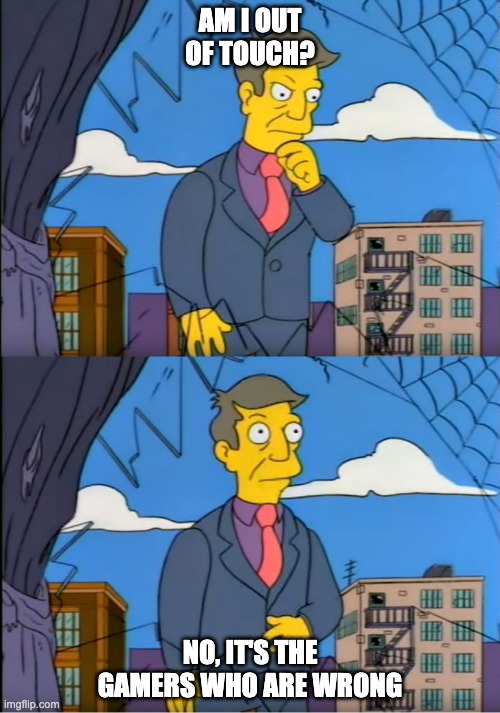
Here’s an idea, Pouard: maybe it’s just because gamers are, justifiably, wary of another dubious, trendy monetization scheme?

The funny thing about the VP’s comments is that he fails to explain at any point in the interview what we’re apparently not getting. He claims they’re “beneficial” for the player without really elaborating. In so doing, he’s proven to be another in a sadly growing list of gaming corporations that keeps touting NFTs as the “future” without providing any real reason for why players should agree.

As it stands, many people are at least somewhat aware of the negative aspects of NFTs. They’re exceptionally bad for the environment, are often based on other people’s stolen artwork and aren’t properly regulated by government bodies. What’s more, you don’t actually “own” what you’re purchasing. As has been explained many times, you’re simply acquiring a certificate claiming you as the owner of the given digital file; there’s absolutely nothing to stop someone from saving it for their own use. Look no further than Twitter users amusingly screenshotting others’ hexagonal NFT profile pictures.

Principal Skinner Simpsons

Admittedly, in many cases, gamers are indeed at fault, but not here.

These are all common, well-founded criticisms against NFTs in general, but it gets even messier in the gaming space. When Ubisoft first launched Quartz, its site also came with the requisitive legal section to cover itself. However, a quick perusal of the fine print shows that Ubisoft doesn’t even seem to really know what it’s doing with NFTs.

As Kotaku notes:

What it didn’t show, of course, is that Ubisoft has no idea what its doing, and Quartz’s fine print says as much. It reveals that because so much of the work is being handed off to the blockchain, Ubisoft has no power to “reverse or cancel transactions,” has “no liability” for claims or damages, is aware that the blockchain “may be subject to specific weaknesses, which make them possibly targets for specific cybersecurity threats,” and has “no liability in the risks implied by the use of this new technology.”

The first gaming giant to get into NFTs, and it’s that clueless? That certainly doesn’t instill confidence, especially while we’ve seen Konami, Sega, EA, Square Enix and even popular actor Troy Baker all support the business practice. Square Enix, in particular, feels painfully tone-deaf; one of the company’s biggest and most iconic games, Final Fantasy VII, is literally about a band of ecoterrorists fighting to topple a megacorporation that’s killing the planet to create energy. Meanwhile, Baker himself acknowledged he knew very little about NFTs, despite publicly partnering with a company that directly deals in them.

And that’s the thing — most of these people or companies don’t care. It should go without saying, but they’re just in it for the money. Ubisoft will just claim NFTs are “beneficial” for players through vague platitudes like “giving players the opportunity to resell their items.” All the while, it’s mostly quiet about the fact that yet-to-be-determined cuts will be taken from these sales from the secondary market platform and even Ubisoft. That’s the real “endgame” that Pouard speaks of — players will sell these in perpetuity, and Ubisoft will profit without having to do a thing. Meanwhile, there’s no guarantee that this market will be operated fairly, or if Ubisoft will indeed even continuously use the “more advanced, energy-efficient [NFT] alternatives” it’s promising for Quartz.

What’s more, have publishers really earned the benefit of the doubt that this will actually benefit players? Consider some of what they’ve done before.

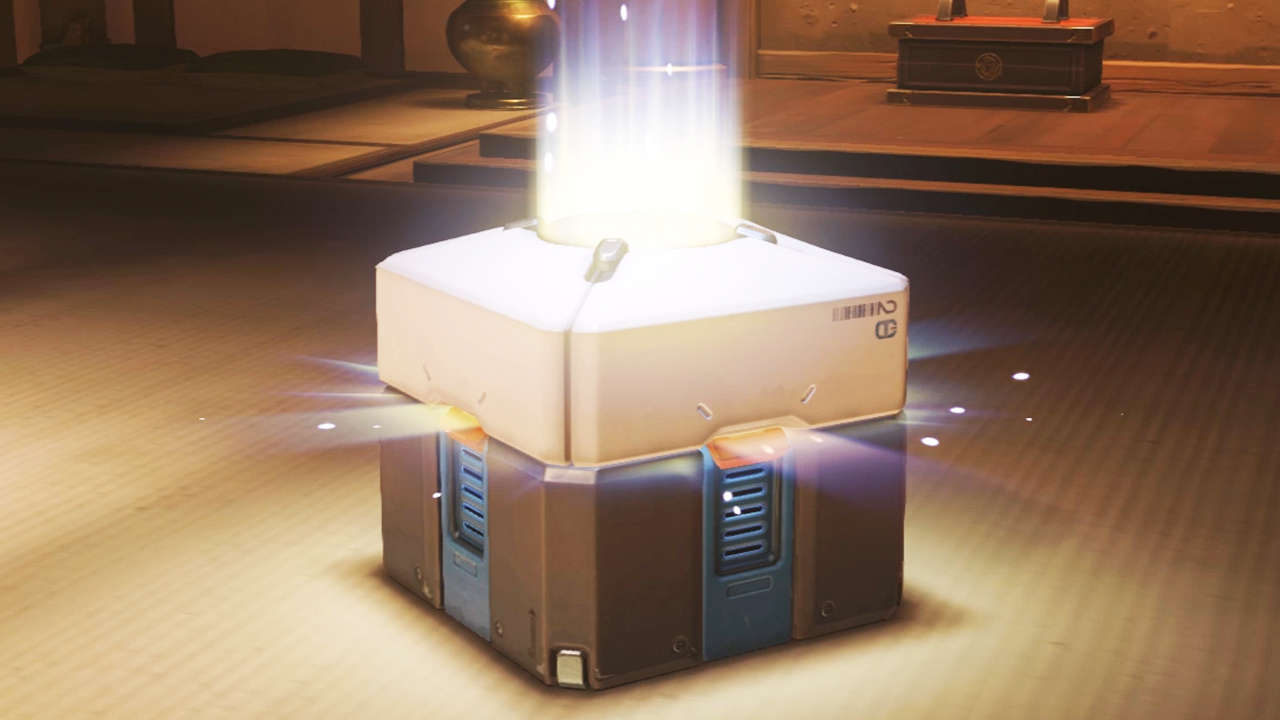
In the PS3/Xbox 360 era, they tried to push “online passes” on people to recoup costs from third-party sales. The Xbox One was also originally set to be “always online” to limit used game sales. Companies like EA have been so aggressive and predatory with microtransactions like lootboxes that entire countries, such as Belgium, have stepped in to attempt to regulate them. We’ve also seen EA market FIFA microtransactions to kids — especially concerning since they’re not unlike gambling. (And lootboxes are still problematic.) Ubisoft made Assassin’s Creed Odyssey more grindy to encourage you to buy an XP boost to level up faster. And in a particularly sinister move, Warner Bros. had Harry Potter mobile game players forced to watch children literally get strangled for a set period of time unless they paid to skip ahead.

Lootbox

It took years for lootboxes to start being regulated. (Image credit: Blizzard)

The point is, gaming companies have a well-documented history of chasing trends and exploring unsavoury business practices that don’t at all benefit players. Having seen what they’ve done, time and time again, it’s completely understandable to be skeptical. The onus isn’t on gamers to just “get” it — you have to win us over.

And so far, they’re not doing that — with players or developers. Indeed, game makers, by and large, have also not expressed much enthusiasm for NFTs. In a recent Game Developers Conference (GDC) survey polling 2,700 developers, 70 percent of respondents said their studios are “not interested” in NFTs. Meanwhile, 21 percent said “somewhat interested” and seven percent said “very interested,” while only one percent noted they’re already developing NFTs in their games.

Per GDC,

“When asked how they felt about the possibility of cryptocurrency or NFTs in games, a few [developers] called it the future of gaming. However, a vast majority of respondents spoke out against both practices – noting their potential for scams, overall monetization concerns, and the environmental impact.”

The monetization concerns are especially notable. On January 8th, Linkin Park’s Mike Shinoda got justifiably ratio’d when he started suggesting questionable use cases for how NFTs would work in games. According to Shinoda, gamers should imagine being able to take a skin from a game like Valorant and carry it over to Call of DutyMinecraft or even social media platforms like Twitter.

In response, countless developers pointed out how this was out of touch and illogical. As indie developer Rami Ismail noted in a reply, the games Shinoda mentioned are from different companies. As such, why would Valorant owner Riot Games sell you a skin that would work in Activision’s Call of Duty, Microsoft’s Minecraft or even non-gaming platforms like Twitter? Beyond the companies having no real incentive to band together to allow this, Ismail said the work to make sure that would even be compatible cross-platform would be difficult, to say the least. Call of Duty developer Chris Pollock even shared a blog post he wrote explaining these hurdles. Meanwhile, Digital Foundry‘s John Linneman questioned which company would even be responsible for ensuring compatibility.

Finally, there’s the whole “play-to-earn” aspect. A recent comment made by Reddit co-founder and noted crypto enthusiast Alexis Ohanian was particularly bleak. “90 percent of people will not play a game unless they are being properly valued for that time,” said Ohanian in a December 23rd, 2021 episode of the Where It Happens podcast. “In five years, you will actually value your time properly, and instead of being harvested for advertisements, or being fleeced for dollars to buy stupid hammers you don’t actually own, you will be playing some on-chain equivalent game that will be just as fun, but you’ll actually earn value and you will be the harvester.”

I dunno about you, but that’s dystopian as hell to me. Unless you’re a streamer, esports athlete or QA tester, the notion that you should be compelled to play a game for some sort of reward is mind-boggling. Aren’t games supposed to be about fun? You can promise rewards like NFTs or crypto or other digital trinkets, but that just loses the plot for me. if I’m not reviewing a game for MobileSyrup, the sole reason I play something is for enjoyment. That’s how it should be. Playing games for fun — what a concept!

Jonah Hill fuck me right

As an example of how backwards and nonsensical this “play-to-earn” mentality is, let’s go back, once more, to Ubisoft and NFTs. Essentially, the company is making you play games for x number of hours — in one case, 600 — to even have the glorious privilege of purchasing an NFT. I’m sorry, what? At least microtransactions that reduce grinding make some degree of sense, even if they’re usually frustrating. You can at least see the appeal in spending money to save time. But what Ubisoft is doing with NFTs demands both your time and your money. How, exactly, does that benefit you?

As YouTuber SkillUp notes, only Ubisoft stands to profit — not just from your money, but from increased engagement (i.e. inflated “monthly active user” counts). You played a game for 600-plus hours and spent real cash to get a unique helmet — congratulations! What a sense of pride and accomplishment you must have.

The whole “play-to-earn” argument is absolute nonsense. If a developer is permitted to make a game that is genuinely fun to play, that sense of enjoyment, in itself, is what you earn. Hell, games already offer various mechanics or metagames if you like to be rewarded for playing more — PSN Trophies, Xbox Live Achievements and Steam Achievements being the prime example of this. The difference, however, is that these are purely optional, free and harmless methods of “earning” something.

The best example of a game being inherently rewarding to play is Final Fantasy XIV. I’ve been slowly going through it since last year (I’ve finally gotten to Shadowbringers!) and I’m finally seeing why everyone hypes up the game. It truly is amazing. And a key reason for that is payoff. Over the course of hundreds of hours of content, FFXIV weaves an incredible, emotional yarn about an extremely compelling cast of characters who struggle and grow over time. That is the reward — the time you’ve invested in the game — the unforgettable journey you’ve gone on  — nets you supremely satisfying narrative moments, as well as new mechanics, dungeons and the like. Regardless of what Square Enix’s CEO may think, no NFT can capture the quality experience that director Naoki Yoshida and his team have actually created.

Ultimately, that’s what gaming is about. I don’t want your NFTs. I don’t care about your NFTs. Monetize a game, if you must, with in-app purchases, but until you can actually give legitimate reasons to want an NFT, keep them out of it. I’m just here to have fun with games, and all these tedious, vague and slimey buzzwords just detract from that.

Categories
Mobile Syrup

Joni Mitchell joins Neil Young in pulling music from Spotify over vaccine misinformation

Canadian singer-songwriter Joni Mitchell joined Neil Young in removing her music from Spotify in response to vaccine misinformation shared on the Joe Rogan Experience podcast.

“I’ve decided to remove all my music from Spotify. Irresponsible people are spreading lies that are costing people their lives. I stand in solidarity with Neil Young and the global scientific and medical communities on this issue,” Mitchell wrote on her website. She also linked to an open letter signed by a coalition of scientists, medical professionals and more calling on Spotify to address misinformation on its platform.

Young similarly criticized Spotify for its lack of misinformation policy, writing that the platform “can have Rogan or Young. Not Both.”

Spotify purchased the Joe Rogan Experience podcast for $100 million USD (about $127.5 million CAD) in 2020 as part of its push into podcasting. The show is one of the most popular podcasts globally, with an estimated audience of 11 million.

An essential part of the story that’s gone relatively unsaid so far is that both Young and Mitchell contracted polio as kids before the vaccine was developed in the 1950s. Some have attributed the musicians’ stand to their experience with polio, which has largely been eliminated thanks to the widespread adoption of the vaccine. According to the World Health Organization, wild poliovirus cases fell over 99 percent from an estimated 350,000 in 1988 to just 33 reported cases in 2018.

COVID-19 vaccines are safe and effective at preventing severe illness, hospitalization, and death from COVID-19. According to the government of Canada’s website, over 77 percent of the population is fully vaccinated against COVID-19 as of January 22nd, 2022.

Following Young’s move away from Spotify, other streaming music platforms moved to capitalize, with Apple Music’s official Twitter account tweeting that it’s “the home of Neil Young” in an apparent dig at Spotify. It’ll be interesting to see if a similar push happens around Mitchell’s music.

For any music lovers out there thinking about following Young and Mitchell and leaving Spotify, check out MobileSyrup’s music streaming explainer to see which other platforms might work for you.

Source: Joni Mitchell

Categories
Mobile Syrup

These OnePlus phones have the latest Android security patch

Getting the proper updates in a timely manner on Android has always been a nightmare, but some manufacturers like Samsung have made strides to make the system better. OnePlus, unfortunately, hasn’t made the same headway.

So far, the company has updated the OnePlus 9 and OnePlus 9 Pro to OxygenOS 12 with the latest Android security updates.

Beyond that, in Canada, the OnePlus Nord N10 5G and the Nord N200 5G have both gotten the latest security patches, but are still running Android 11.

Any OnePlus phones older than that are still stuck on both Android 11 and various states of security updates. This even includes OnePlus’ other major flagships like the OnePlus 8 Pro and the OnePlus 7 Pro with the pop-up selfie cam.

Source: OnePlus, 9to5Google

Categories
Mobile Syrup

TikTokers share winter Tesla woes like frozen door handles and more

Without an engine, it’s harder for electric vehicles to generate heat; a vital component of any vehicle in a Canadian winter.

There’s no denying that most EVs, Teslas included, have already proven they can handle most of what winter has to throw at them. Still, sadly some of the coolest Tesla quirks appear to become pretty annoying in sub-zero temperatures.

@carconfections It’s safe to say that the Tesla Model 3 is not ideal for an ICE STORM! Frozen door handles and more! 😱🥶 #tesla #model3 #winter #ice #frozen ♬ Monkeys Spinning Monkeys – Kevin MacLeod & Kevin The Monkey

Since the door handles are flush with the car, it can become a mission to chip them out of the ice if there is freezing rain. On top of that, the missing engine means it’s harder to chip the ice and clear snow off the car’s hood since the front of the vehicle doesn’t get warm.

TikTok influencer Jay Fay even claims that the lack of heat causes more ice in the wheel wells and on the headlights.

@jf.okay this happens with every car though… #tesla ♬ original sound – J Fay

Other issues that also affect fancier gasoline cars also impact Tesla when there’s snow and freezing rain. For instance, if your side mirrors automatically fold in when you park, they could get stuck this way because of ice. You can disable the auto fold mechanic in the settings.

Source: The Verge 

Categories
Mobile Syrup

Steam’s Lunar New Year Sale discounts hundreds of games

Steam is currently holding a Lunar New Year Sale which offers discounts on thousands of PC games.

The sale started yesterday, January 27th and will end on Thursday, February 3rd.

Check out some notable titles available at discounted prices below:

A full list of titles currently on sale under Steam’s Lunar New Year promotion can be found here.

Image credit: Steam

Source: Steam

Categories
Mobile Syrup

The first episode of Apple TV+’s The Afterparty is free on YouTube

Apple TV+ has launched its latest murder mystery comedy series, The Afterparty. The series premieres today (January 28th) and stars Tiffany Haddish, Sam Richardson, Dave Franco and more. What’s interesting is that Apple TV+ has released the first episode on YouTube.

The first episode is free on Apple TV+ as well.

The series takes place at a high school reunion after-party where ‘Xavier’ (Dave Franco) has been murdered by someone at the after-party. Tiffany Haddish who plays detective Danner is trying to solve this murder mystery.

If you get hooked after the first episode, the next two episodes are already on Apple TV+. Following that the series will hit Apple TV+ weekly until March 4th.

Apple TV+ costs $5.99 CAD/month.

Source: AppleTV+